Share crypto content and earn up to 60% commissions through content mining.
placeholder
gatefun
#OpenAIAnnualRevenueSurpasses40B
OPENAI CROSSES THE $40 BILLION REVENUE RUN RATE: AI ENTERS A NEW FINANCIAL ERA
THE $40 BILLION MILESTONE
OpenAI has reportedly surpassed a $40 billion annualized revenue run rate, roughly doubling its pace from the end of 2025. The latest figure highlights how rapidly demand for AI products is converting into commercial revenue.
But there is an important distinction: this is an annualized revenue run rate, not necessarily $40 billion of revenue already collected during the calendar year.
That distinction matters when evaluating the company's actual financial
CODEX-10.80%
post-image
Falcon_Official
#OpenAIAnnualRevenueSurpasses40B
$40B REVENUE RUN RATE: OPENAI ENTERS A NEW SCALE
OpenAI has crossed a major financial threshold, with its annualized revenue run rate now exceeding $40 billion. The milestone highlights how quickly demand for AI products is translating into commercial revenue and places OpenAI on a very different financial scale from where it stood just months ago.
THE NUMBERS TELL THE STORY
The reported $40 billion+ annualized run rate represents roughly double the pace recorded in late 2025. A run rate is not the same as recognized annual revenue; it estimates what a company would generate over a full year if its current revenue pace continued.
Even with that distinction, the acceleration is significant. OpenAI's growth increasingly comes from multiple customer groups rather than a single product category.
FROM CHATBOTS TO A BROADER BUSINESS
Consumer subscriptions remain an important part of the business, but OpenAI's commercial footprint is expanding through enterprise software, developer products and newer initiatives.
The Codex coding agent has become an important developer-focused product, while ChatGPT Work applications are strengthening the company's enterprise presence.
Enterprise revenue is also becoming increasingly significant, with the business reportedly moving toward a point where corporate revenue could approach the scale of consumer revenue.
That diversification matters because sustainable growth becomes less dependent on individual consumer subscriptions.
THE AI REVENUE RACE IS GETTING BIGGER
OpenAI's progress is happening alongside rapid expansion across the frontier-AI industry.
OpenAI and Anthropic together are reportedly approaching an annual revenue run rate of approximately $120 billion, showing that the market is large enough for multiple leading AI companies to scale simultaneously.
Capital is following that growth. AI startups attracted more than $407 billion in venture funding during the first half of 2026, already exceeding the $264 billion raised throughout 2025.
Approximately half of that first-half funding reportedly went toward OpenAI and Anthropic, demonstrating how strongly investors are concentrating capital around leading AI developers.
VALUATION AND CORPORATE TRANSFORMATION
OpenAI's revenue expansion has also coincided with major corporate and financial developments.
The company completed its transition into a Public Benefit Corporation and closed a major funding round earlier in 2026 at a valuation approaching $900 billion.
That combination of rapidly increasing revenue, substantial private-market valuation and corporate restructuring has intensified speculation around a potential future IPO.
MICROSOFT'S NUMBERS ADD ANOTHER SIGNAL
The scale of OpenAI's ecosystem can also be seen through its relationship with Microsoft.
Microsoft disclosed that OpenAI contributed more than $24 billion to its annual revenue, highlighting how deeply AI demand is now connected with the broader technology infrastructure surrounding the company.
The relationship demonstrates that OpenAI's growth is not occurring in isolation. Its expansion has implications for cloud infrastructure, software, enterprise technology and the wider AI supply chain.
WHY $40 BILLION MATTERS
Crossing a $40 billion annualized revenue pace changes the conversation around frontier AI.
The industry is no longer being measured only by model performance, user growth or funding rounds. Revenue generation is becoming an equally important benchmark.
Consumers are paying for AI assistance. Developers are paying for coding and model access. Businesses are increasingly integrating AI into their workflows.
That creates a much stronger commercial foundation for the enormous investment being made in computing infrastructure and AI development.
THE NEXT TEST
The challenge now is maintaining this growth rate while managing enormous computing costs, competition and the expectations attached to an almost $900 billion private valuation.
For OpenAI, $40 billion is therefore not the finish line. It is a new benchmark.
The next stage will be defined by whether rapid AI adoption can translate into sustained revenue growth, stronger enterprise penetration and increasingly durable economics.
#MyQixiTradingShare
#ContentMining
#GateSquare
@Gate_Square
repost-content-media
  • Reward
  • Comment
  • Repost
  • Share
Slow is fast; never make blind moves.
In trading, staying steady is always more important than moving fast.

Reject the impulse to chase pumps and sell dips, and do not be tempted by short-term market movements; only act when high-certainty signals appear.
Giving up opportunities also means avoiding unnecessary losses.
Put risk control first, develop your own trading rhythm, and move forward steadily—you will go much farther than by rushing for success. #GateLaunchpool瓜分141万枚DOS $BTC
BTC-0.30%
View Original
post-image
  • Reward
  • Comment
  • Repost
  • Share
$TAKE
$TAKE just reclaimed the $0.055 area with a strong 4H candle.
That’s the first sign buyers are stepping back in after the pullback from $0.079.
If $0.055 turns into support, I’d watch $0.067 → $0.079 next.
TAKE22.50%
post-image
  • Reward
  • 3
  • Repost
  • Share
On-ChainCatUnderTheMoonlight:
If 0.055 holds firmly, we can indeed look to the next level.
View More
JUST IN: US Dollar Index eyes sixth straight weekly decline as cooling rate-hike bets trim Fed expectations for 2026. DXY slips on weak retail data and softer inflation signals. $DXY
post-image
  • Reward
  • Comment
  • Repost
  • Share
JUST IN: Israel's Bank Leumi partners Galaxy to launch Bitcoin, Ethereum, Solana trading for 2.5M+ clients by early 2027.
@ethereum
BTC-0.28%
ETH0.42%
SOL0.03%
post-image
post-image
  • Reward
  • Comment
  • Repost
  • Share
Multiple signals suggest #BTCXAU may not yet have found its final low, aligning well with our broader risk outlook.
The rally from the February low appears corrective, and its May high was accompanied by powerful bearish RSI divergence.
Since then, the ratio has rolled over again.
RSI is now entering oversold territory, but there remains room for a deeper momentum extreme before we can confidently identify exhaustion.
Why does #BTCXAU matter?
Because it measures #Bitcoin not against fiat, but against another monetary asset, Gold.
BTC continuing to lose ground against Gold while the Perfect Sto
BTC-0.28%
PSI-6.97%
post-image
  • Reward
  • Comment
  • Repost
  • Share
BTC MARKET TRENDS
gate liveLIVE
2,536
live-coin
  • Reward
  • 4
  • Repost
  • Share
SDyahaya:
To The Moon 🌕
View More
#GateCardTripleUpgrade #GateCardTripleUpgrade
💳 GateCardTripleUpgrade brings attention to the evolution of crypto payment products and the growing connection between digital assets and everyday financial activity. As cryptocurrency adoption develops, users increasingly want simple ways to connect their digital assets with real-world payments. This is where crypto cards can become an important part of the broader ecosystem. 🌍
A major challenge for crypto adoption has always been usability. Holding digital assets is one thing, but using them conveniently in everyday situations is another. Cryp
GT-0.59%
BTC-0.28%
ETH0.42%
post-image
post-image
post-image
  • Reward
  • 4
  • Repost
  • Share
BlacknovaButterfly:
2026 GOGOGO 👊
View More
#GateLaunchpool141MDOS
Gate Launchpool Issue 370 is bringing a new $DOS reward opportunity with 1,410,000 DOS allocated to participants.
The campaign runs from August 10 to August 24 at 19:00 UTC+8, with users able to stake $GUSD, $USDT or $DOS and receive DOS rewards automatically every hour.
The headline number is an estimated up to 245.07% annualized yield, but this is where the details matter. A high APY is not a fixed return. The effective rate can change as the amount of assets in the pools changes, so the better way to evaluate the opportunity is to look at the reward pool, participati
post-image
  • Reward
  • Comment
  • Repost
  • Share
#TetherReservesExceedLiabilitiesBy6.8B
Tether is back in the spotlight with a major transparency milestone that deserves attention across the stablecoin industry.
Tether has announced that KPMG U.S. completed its first full independent financial audit of Tether International’s 2025 financial statements. The audit found that Tether’s reserves exceeded its liabilities by approximately $6.814 billion at the end of 2025.
That number matters because reserves are at the center of the stablecoin trust equation.
USDT is designed to maintain a 1:1 relationship with the U.S. dollar, so users and instit
USDT0.00%
post-image
  • Reward
  • Comment
  • Repost
  • Share
The Picture That Emerges from Tether’s Four Major Audits: $6.8 Billion in Reserve Surplus and Still Unreleased Report
Tether announced the completion of its long-awaited first independent audit. KPMG USA gave Tether International’s financial statements as of year-end 2025 an “unqualified opinion.” This is considered the cleanest opinion an independent auditor can give. The audit revealed that Tether’s assets exceed its liabilities by $6.814 billion.
The Difference Between Audit and Attestation
This development differs significantly from the “attestation” reports previously published by Tether,
USDT0.00%
post-image
  • Reward
  • 1
  • Repost
  • Share
Falcon_Official:
2026 GOGOGO 👊
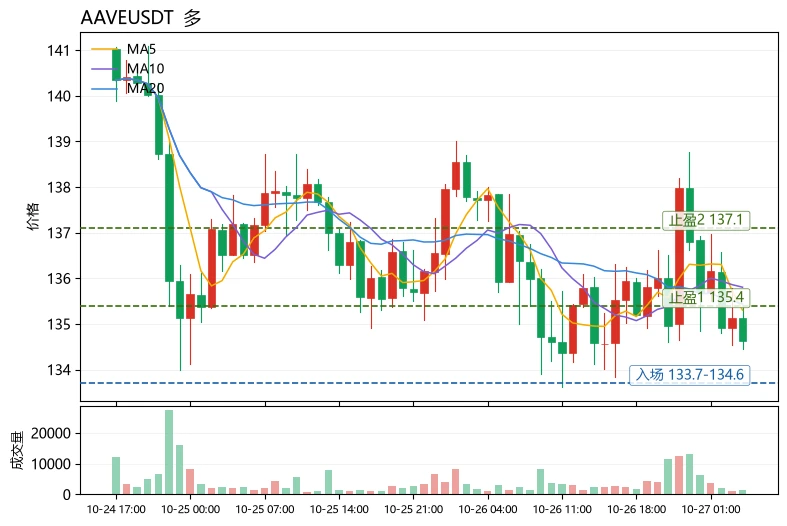
$SNXX Signal】Long: 4H overbought stalling + 1H wick reclaim
$SNXX 4H overbought stalling, 1H wicked down to 14.8 and reclaimed 16.0, funding rate -0.0351%, with shorts paying to hold positions. The 1H MACD histogram contracted to 0.0188, while the 4H contracted to 0.448, and the Bollinger Bands are widening.
🎯Direction: Long
⚡Entry/Limit Order: 15.9221 - 15.9700
🛑Stop-loss: 15.1715
🚀Target 1: 17.1678
🚀Target 2: 17.7666
🛡️Trade Management:
- Execution strategy: After reaching Target 1, reduce the position by 50% and move the stop-loss up to breakeven. If the price falls back to the entry
SNXX10.00%
DOS0.21%
View Original
post-image
  • Reward
  • Comment
  • Repost
  • Share
#GateJulyTransparencyReportReleased
GATE’S TRANSPARENCY JOURNEY: BUILDING TRUST THROUGH DATA, RESERVES & REAL GROWTH
Transparency is becoming one of the most important pillars of the digital-asset industry, and Gate continues to place strong focus on showing users how its ecosystem is developing. The latest transparency updates highlight growth across trading, institutional services, wealth management, TradFi, on-chain infrastructure and global expansion. Gate’s June report, released in July, provides a useful picture of the platform’s direction and the scale of its ecosystem.
1. STRONGER RES
BTC-0.28%
ETH0.42%
post-image
post-image
  • Reward
  • Comment
  • Repost
  • Share
$PAXG
Grinding up from 4303.4, now pressing 4443.1. MAs stacked—price above all three. Break above triggers continuation; rejection retests 4380.6. Momentum building—watch for the close.
Entry Zone: 4382 – 4383
TP1: 4393
TP2: 4415
TP3: 4443
Stop-Loss: 4350
#PAXG #GateLaunchpool141MDOS #GateTop1GrowthInJuly #GateCardTripleUpgrade #SandiskSurges14%OnNewFinancialFramework
PAXG0.41%
post-image
  • Reward
  • 3
  • Repost
  • Share
NewsFlash:
Having MAs all pressing down does look good, but this kind of one-sided grind upward can also retrace quickly once it turns. If the 4380.6 level fails to hold, be careful.
View More
$OKB is rising steadily!
But I still haven't broken even.
OKB2.45%
View Original
post-image
  • Reward
  • Comment
  • Repost
  • Share
#TetherReservesExceedLiabilitiesBy6.8B
Tether's Reserve Cushion: More Than Just Backing Every Dollar
There is a number in Tether's balance sheet that most people scroll past, and it tells a far more important story than the headline "USDT is backed one to one." When we say a stablecoin is fully reserved, we usually mean that for every token in circulation, the issuer holds a dollar of assets. That is the floor. But what matters for genuine safety is what sits above that floor, the layer of extra capital that absorbs market shocks, mark to market swings, and redemption pressure all at once. Te
post-image
HighAmbition
#TetherReservesExceedLiabilitiesBy6.8B
Tether's Reserve Cushion: More Than Just Backing Every Dollar
There is a number in Tether's balance sheet that most people scroll past, and it tells a far more important story than the headline "USDT is backed one to one." When we say a stablecoin is fully reserved, we usually mean that for every token in circulation, the issuer holds a dollar of assets. That is the floor. But what matters for genuine safety is what sits above that floor, the layer of extra capital that absorbs market shocks, mark to market swings, and redemption pressure all at once. Tether calls this its excess reserve buffer, and at the end of 2025 the auditor KPMG verified it at around 6.8 billion dollars. Your framing is exactly right: if the reserves exceed the outstanding liabilities by roughly 6.8 billion dollars, then the company can honor every single outstanding obligation and still be left with a meaningful cushion of its own capital on top.
Let us walk through the arithmetic to see why this cushion is so important. Suppose Tether had a hundred billion dollars of obligations on its books, obligations that in theory could be presented for redemption at any moment. Against that, suppose it held roughly one hundred and six point eight billion dollars in total assets, the bulk of it in short term US Treasury bills, cash, and cash equivalents. The difference between the two is the buffer, about six point eight billion dollars in this scenario. That gap is not a rounding error and it is not a marketing figure. It is the amount by which assets exceed liabilities, and it is the layer that would have to be completely wiped out before even a single USDT token could be at risk of losing its one to one value. In other words, the reserve is overcollateralized by six point eight billion dollars, and that is before counting the fact that the core reserve itself is heavily weighted toward ultra liquid, low risk government debt.
This is the essence of what makes the situation reassuring rather than worrying. Many critics focus on the sheer size of Tether's balance sheet, pointing out that around a hundred and eighty billion dollars of token liabilities is an enormous figure. That is true on its face, but size alone is not a measure of fragility. What matters is the quality and the surplus of the backing. When the reserve is dominated by short dated US Treasury bills, the assets are not speculative bets that can evaporate overnight. They are obligations of the United States government that mature in a matter of weeks or months. When those are combined with physical gold, a strategic Bitcoin position, and a pool of overcollateralized secured loans, the resulting portfolio behaves more like a conservatively managed sovereign wealth fund than a leveraged trading book. And sitting on top of all of that is the excess reserve buffer, the extra six point eight billion dollars that exists purely to absorb damage. That is what the reserve cushion represents in practice.
The historical record reinforces the point. The challenge in the stablecoin industry has never really been that the good days exposed weakness. It has been that stress events, sudden market crashes, panic withdrawals, or sharp drops in the price of volatile assets, reveal whether an issuer can survive when redemptions arrive all at once. An overcollateralized reserve with a dedicated buffer is precisely the structure built to survive those moments. When gold and Bitcoin decline in value, the mark to market losses reduce the buffer before they can touch the core backing of the token. That is the entire point of the cushion. It is the first layer to get scratched, which means the redeemability of USDT itself stays intact far longer under pressure. A stablecoin without such a buffer is one bad week away from a solvency question. A stablecoin with a multi billion dollar cushion can absorb repeated shocks and still stand on its one to one foundation.
The trend line adds even more confidence. Tether's excess reserves have been growing through recent cycles, rising from about 5.6 billion dollars in early 2025 to a record figure in the first quarter of 2026. In that first quarter of 2026, total assets climbed to roughly one hundred and ninety one point seven billion dollars against liabilities of about one hundred and eighty three point five billion dollars, which pushed the net equity buffer to a record area around eight point two billion dollars. That represented growth of roughly forty seven percent year over year in the size of the protective layer. The profitability story is equally telling. Tether generated a net profit of around 1.04 billion dollars in the first quarter of 2026 and booked a much larger profit for the full year of 2025, in the range of roughly ten billion dollars. That steady stream of earnings, derived mostly from the yield on its Treasury portfolio, keeps feeding the buffer and the balance sheet, allowing the company to keep strengthening its capital position rather than merely maintaining it.
To be balanced, the quarter that followed brought the buffer down, and it is worth understanding why before drawing any conclusion. By the end of June 2026, excess reserves had fallen from the record eight point two billion dollars to approximately 4.11 billion dollars, according to the attestation prepared by accounting firm BDO. That was a drop of roughly forty percent in a single quarter, and it happened even while net operating profit rose to about 1.5 billion dollars. Seen in isolation, a shrinking cushion looks alarming, but the cause is largely mark to market movement rather than a hole in the balance sheet. Gold prices fell sharply during that period, down more than fourteen percent over the quarter, and Bitcoin also weakened. Because Tether holds roughly twenty billion dollars of physical gold and around seven billion dollars of Bitcoin as reserve assets, those unrealized losses directly reduced the reported excess reserve buffer, even though the underlying liabilities were still fully covered. In other words, the buffer moved down because a volatile corner of the portfolio lost value, not because the company lost the ability to back its tokens.
The story only becomes fully reassuring when you place that quarter in context. The four point one one billion dollar figure at the end of June 2026 still represents a substantial overcollateralization on a base of roughly one hundred and eighty four billion dollars in liabilities. It remains comfortably above the cushion Tether carried at the end of 2025, before the record first quarter, and it is still a multi billion dollar layer of capital dedicated to protection. Meanwhile, the KPMG audit that verified the 6.8 billion dollar cushion at the end of 2025 marked a meaningful step in the transparency journey, moving Tether from reliance on attestations alone toward a full Big Four financial statement audit for the first time, a process that formally began in March 2026. Attestations give a snapshot of assets at a single moment, whereas an audit examines systems, controls, and reporting over a period. The two are different levels of assurance, and the shift toward a full audit is genuinely constructive for anyone who cares about how the reserve is actually managed.
There is also a distinction worth keeping in mind between reserve composition and reserve safety. Roughly seventy seven percent or more of Tether's reserve sits in cash and cash equivalents, heavily weighted toward US Treasury bills, with smaller positions in precious metals, Bitcoin, secured loans, and other investments. Some commentators question the inclusion of gold and Bitcoin at all, pointing out that volatile assets can fall in value against the dollar the token is meant to track. That is a legitimate observation, and it explains exactly why the excess reserve buffer exists. The whole design is that the volatile holdings are layered on top of a highly liquid, low risk core, and the surplus cushion absorbs their mark to market swings. As long as the overcollateralization survives, and it has, the token's peg and its redeemability remain protected. That is why the more accurate way to read Tether's balance sheet is to watch the buffer rather than fixate on the size of the liability side.
What does all of this mean for the average user of USDT? It means the token is backed by a reserve that exceeds its obligations by billions of dollars, structured mostly in short dated government debt, and topped with a dedicated capital cushion that exists precisely to absorb exactly the kind of shocks that have historically broken less careful issuers. The six point eight billion dollar figure at the heart of this discussion is not a vague number. It is the verified surplus of assets over liabilities, the layer that would have to be erased before even one token dollar could be threatened. When you read the balance sheet as reserved liabilities with a cushion on top, rather than as a precarious tower of debt, the picture shifts from anxiety to something closer to measured confidence. The reserve is not barely adequate. It is deliberately overcollateralized, and the buffer is the reason.
To close the loop on the core idea: if Tether held one hundred and six point eight billion dollars in assets against one hundred billion dollars in obligations, then its reserve liabilities would exceed the bare minimum by roughly 6.8 billion dollars. That is the surplus, the protective pillow, the hidden safety layer. It is the difference between a stablecoin that merely claims to be backed and one that demonstrably carries a cushion large enough to survive stress, absorb mark to market losses, and keep every token redeemable at one dollar. As the attestations continue to show overcollateralization, and as the first full audit moves toward completion, that 6.8 billion dollar number stands as the strongest single answer to the question of whether the reserve is strong enough. It is, and then some.
repost-content-media
  • Reward
  • Comment
  • Repost
  • Share
Learn to accept the imperfections along the way; don’t get carried away in good times, don’t wear yourself down in adversity, stay true to your own logic of judgment, and keep a steady mindset. #外汇黄金 #黄金
GLDX0.43%
PAXG0.41%
View Original
post-image
  • Reward
  • Comment
  • Repost
  • Share
#Web3SecurityGuide 🔐 Web3SecurityGuide is one of the most important topics for anyone interested in blockchain because innovation means little without strong security. Unlike traditional online platforms, blockchain transactions can involve digital assets that may be difficult or impossible to recover after an unauthorized transfer. This makes security awareness essential.
One of the most important principles in Web3 is protecting wallet information. Private keys and recovery phrases should never be shared with strangers, websites, or people claiming to offer technical support. 🚨 Users shoul
BTC-0.28%
GT-0.59%
ETH0.42%
post-image
post-image
post-image
  • Reward
  • 4
  • Repost
  • Share
BlacknovaButterfly:
2026 GOGOGO 👊
View More
$ACE My take-profit was originally set at 0.285, but I couldn't withstand the drop and got scared out.
ACE150.44%
View Original
post-image
  • Reward
  • 1
  • Repost
  • Share
DaVinciTurnsLifeAround:
Nailed it and made money.
Load More

Join 40 M users in our growing community

⚡️ Join 40 M users in the crypto craze discussion
💬 Engage with your favorite top creators
👍 See what interests you
  • Pinned