
Share crypto content and earn up to 60% commissions through content mining.
placeholder
gatefun
[Sports Prediction]🔹Morning Market Updates
gate liveLIVE
2,641
live-coin
  • Reward
  • Comment
  • Repost
  • Share
JUST IN: US, Iran, and Oman edging toward a 60-day provisional deal to reopen the Strait of Hormuz and pause hostilities, with talks resuming in parallel to nuclear negotiations. If confirmed, could ease regional supply disruption risk for crude and crypto markets. $BTC $ETH
BTC0.97%
ETH0.44%
post-image
  • Reward
  • Comment
  • Repost
  • Share
Whale 0x2e80 withdrew another 19k ETH ($35.44 million) from Gemini and staked it. Over the past three weeks, the whale has withdrawn a total of 112k ETH ($208 million) from Gemini and staked it.
ETH0.44%
View Original
post-image
  • Reward
  • Comment
  • Repost
  • Share
#Gate上线宇树科技盘前合约 Unitree Robotics (UnitreeRobotics) is a Chinese high-tech robotics company founded in 2016 and headquartered in Hangzhou, Zhejiang. The company focuses on the independent R&D, production, and sales of high-performance general-purpose legged (quadruped) robots, humanoid robots, and core components, and is committed to applying robotics technology across multiple fields, including scientific research and education, industrial inspection, commercial services, and specialized operations.
IPO Updates (Latest)
Unitree Robotics is preparing for a STAR Market IPO, with the key mileston
UNITREE86.79%
View Original
post-image
post-image
  • Reward
  • 3
  • Repost
  • Share
DuniaForexCrypto:
It’s a bright morning, let’s just go for it.
View More
8.5 ETH Positioning Strategy
  The price is currently around 1872, below the upper Bollinger Band. The short-term MA7 and MA30 are both trending upward, with the short-term bullish structure prevailing. MACD is above the zero axis, and bullish momentum remains, but the price is close to the previous high resistance level at 1881.62. Prioritize waiting for a pullback to stabilize before going long.
  Entry range: Around 1860 (Bollinger middle band + MA30 support)
  Stop-loss defense: 1845 (near the previous low around 1847; abandon the long strategy if it breaks below)
  First target: Around 18
ETH0.53%
View Original
post-image
  • Reward
  • Comment
  • Repost
  • Share
#半导体ETF罕见霸榜资金流前三 Without quick-acting heart-saving pills, you can't keep up with South Korean stocks! It's either a trading halt or on the way to one—why is the South Korean stock market so volatile?
Among Asia's capital markets this year, if one had to choose the “most dramatic” protagonist, it would undoubtedly be———South Korea.
On August 5, global risk assets rose across the board!
Japanese and South Korean stocks both opened sharply higher. As of press time, the Nikkei 225 was up more than 3%, with the index gaining nearly 2,000 points. As of 8:28, South Korea's KOSPI surged nearly 5%, tri
SOXX6.75%
LG4.31%
SK6.94%
MSFT1.07%
View Original
post-image
ThisIsTranslateContent:
#半导体ETF罕见霸榜资金流前三 Without quick-acting heart pills, you can't keep up with South Korea's stock market! It's either hitting a circuit breaker or on the way to one—why is South Korea's stock market so volatile?
If this year's Asian capital markets had to choose the "most dramatic" protagonist, it would undoubtedly be———South Korea.
On August 5, global risk assets rose across the board!
Japanese and South Korean stocks both surged at the open. As of press time, the Nikkei 225 was up more than 3%, with the index gaining nearly 2,000 points. As of 8:28, the KOSPI surged nearly 5%, triggering a circuit breaker, while the Korea Exchange activated the SIDECAR mechanism and suspended programmatic buying of KOSPI stocks.
In just a few months, South Korean investors have almost experienced both heaven and hell, going through every extreme of the bull market, bubble, forced liquidation, panic, and rebound.
Many people also find this strange. Wasn't South Korea's economy previously seen as suffering from sluggish growth? How did its stock market suddenly become the hottest market in the world?
If we stretch the timeline a little further, we will find that this rally is far more than just about AI. The story began more like that of a market underestimated for more than two decades suddenly making a comeback.
It should be noted that for many years, a phrase has circulated among international investors—"Korea Discount." Simply put, if the same outstanding company were listed in the United States, it might be worth 100; if placed in the South Korean market, investors might be willing to value it at only 70 or 60.
The reason is not that South Korean companies are poor. After all, Samsung, Hyundai, LG, and SK are all industry giants globally. The real problem lies precisely in South Korea's capital market.
South Korea's large chaebol groups have long maintained cross-shareholdings and family control. Their companies make enormous profits, but they are by no means friendly to minority shareholders. Many listed companies have ample cash but pay no dividends, conduct no buybacks, and rarely take the initiative to increase shareholder returns. As a result, international capital has long been unwilling to assign them high valuations. "Korea Discount" had almost become an indelible label of South Korea's capital market.
Things began to change last year.
South Korea's new government proposed making capital market reform a very high priority, hoping to turn the "Korea Discount" into a "Korea Premium."
The South Korean government resolved to seriously "fix the stock market." In addition to wanting more capital to recognize the value of South Korean stocks, this was also because South Korean residents have a very high stock ownership rate. Stock market rises and falls can, on a small scale, directly affect ordinary people's wallets; on a larger scale, they affect household wealth, pensions, consumer confidence, and even the entire economic cycle.
South Korea therefore pushed continuously to amend the Commercial Act, strengthen listed-company directors' fiduciary duties toward shareholders, improve corporate-governance transparency, and restrict practices such as spin-off listings that can easily harm the interests of minority shareholders, in the hope that listed companies would truly prioritize investor returns.
And just as the three forces of policy, institutions, and capital began exerting their influence at the same time, AI arrived.
This combination of timing, conditions, and popular support suddenly put South Korea at the center of the global capital stage.
If the United States controls AI's brain, South Korea controls an important part of AI's "blood." Every time a large AI model is trained, high-bandwidth memory chip HBM is indispensable. And the world's strongest HBM producers are Samsung Electronics and SK hynix.
As OpenAI, Microsoft, Google, and Amazon continued expanding their AI data centers, the entire world began competing for chips. South Korea suddenly found itself at the very core of the AI industry chain.
Samsung posted record-high revenue, SK hynix's profits surged several times year on year, and global capital began repricing South Korea. Many people say that South Korean stocks are rising because of AI. More precisely, South Korea is rising on the strength of the "shovel sellers of the AI era."
Even more crucial was South Korean investors' enthusiasm for stocks.
It can be said that South Korean retail investors were largely responsible for pushing the rally to its climax.
As one of the countries with the highest stock-market participation rates in the world, stock trading in South Korea has long ceased to be an investment activity limited to a minority and has instead become a nationwide avenue for building wealth.
In particular, large numbers of young people have flooded into the stock market. South Korean media call these retail investors "Donghak Ants." From university students and young people who have just started working to housewives and retirees, the number of brokerage accounts has grown rapidly, with investors in their 20s and 30s becoming the main source of growth.
Research shows that the number of securities accounts in South Korea surged after the pandemic, with investors aged 20–30 expanding the fastest. Individual investors have also gradually become the largest net buying force in South Korea's stock market.
Many South Korean investors not only buy stocks but also make extensive use of margin financing and leveraged ETFs. Some even developed the attitude that "it's better to be wrong than to miss the bull market."
Margin balances repeatedly hit new records, while the market's wealth effect attracted even more capital, forming a typical positive-feedback loop.
Thus, when prices rose, everyone was a stock-market genius. Once prices fell, leverage positions began to be liquidated, and the snowball instantly became an avalanche.
The South Korean government took emergency action and apologized, restricting leveraged ETFs on individual stocks, raising the investment threshold, tightening margin trading, and requiring issuers to strengthen risk disclosures.
These measures can reduce stampedes, but a deeper problem remains: Samsung and SK hynix together account for nearly half of the KOSPI's market capitalization. As long as these two companies fluctuate sharply at the same time, the entire index is instantly "held hostage."
South Korea's stock market is not as "diversified" as everyone imagines.
Compared with the U.S. S&P 500, although technology stocks carry significant weight, the index is also supported by healthcare, consumer, financial, and energy companies. South Korea, by contrast, is highly concentrated, with Samsung Electronics and SK hynix having an increasingly large impact on the index.
From an extreme perspective, South Korea's stock market is becoming less like a complete economy and more like a "report card" for the AI chip industry.
Imagine South Korea's stock market as a fleet of warships in the Three Kingdoms era, firmly chained together. When the AI cycle is strong, the entire South Korean stock market rises together. If chips encounter even slightly negative news, the entire index experiences violent fluctuations. The market is the world's most adorable when rising and almost impossible to brake when falling—this thrilling phenomenon has become the biggest feature of South Korea's stock market this year.
At the end of July, SK hynix announced its results. Its profits hit a record, but because they failed to meet the market's excessively high expectations, the entire AI sector was caught in a stampede. South Korea's stock-market capitalization evaporated by more than $2 trillion in two days, and regulators urgently studied cooling measures such as restricting leveraged ETFs and raising transaction costs.
There is a saying in capital markets: when positive news is priced in, it becomes negative news. South Korea's stock market has brought this saying to life.
South Korea's stock market is also a mirror of South Korea's economy
South Korea's economy has one particularly pronounced feature: strong exports and weak domestic demand; strong chaebols and weak small and medium-sized enterprises. When chip exports are strong, South Korea's economy tends to perform brilliantly. When the chip cycle declines, the entire economy is affected.
Today, AI has returned South Korea to the center of the global industrial chain, but it also means that South Korea's economy is more dependent on the semiconductor industry than ever before.
Recent market volatility has resulted from the interplay of AI investment expectations, progress in China's semiconductor competition, and changes in global capital's risk appetite.
If we take an even broader and deeper perspective: why does a country's capital market ultimately become known and valued by the world?
There are usually three conditions: its industries ride a major trend, its institutions begin to reform, and global capital reprices it.
South Korea caught the AI wave and also caught the wave of capital market reform. As a result, the "Korea Discount" that had troubled it for more than two decades began to loosen.
But capital markets never have only one sentiment. When prices rise, people believe in the future; when prices fall, it is the future they doubt.
The story of South Korea's stock market is far from over. It may be telling us in advance that future global capital competition will be about more than just companies—it will also be about a country's industrial competitiveness, institutional appeal, and investor confidence.$KR200
repost-content-media
  • Reward
  • 2
  • Repost
  • Share
ThisIsTranslateContent::
Just go for it 👊
View More
Friends, take a look—another major piece of good news! Gate once again takes the lead in launching the popular UNITREE pre-market perpetual contract!
First-hand information at a glance:
Settlement: USDT-only settlement
Leverage range: 1x–10x (freely selectable)
Trading direction: Long & short supported
Learn morehttps://gate.com/zh/futures/USDT/UNITREE_USDT
UNITREE86.79%
View Original
post-image
  • Reward
  • 1
  • Repost
  • Share
ShanDingMediaSiyu:
Good morning! Wishing you prosperity💰
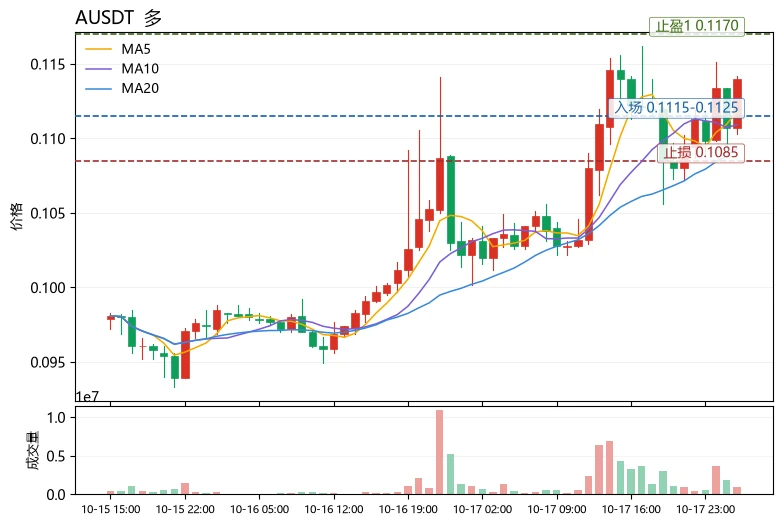
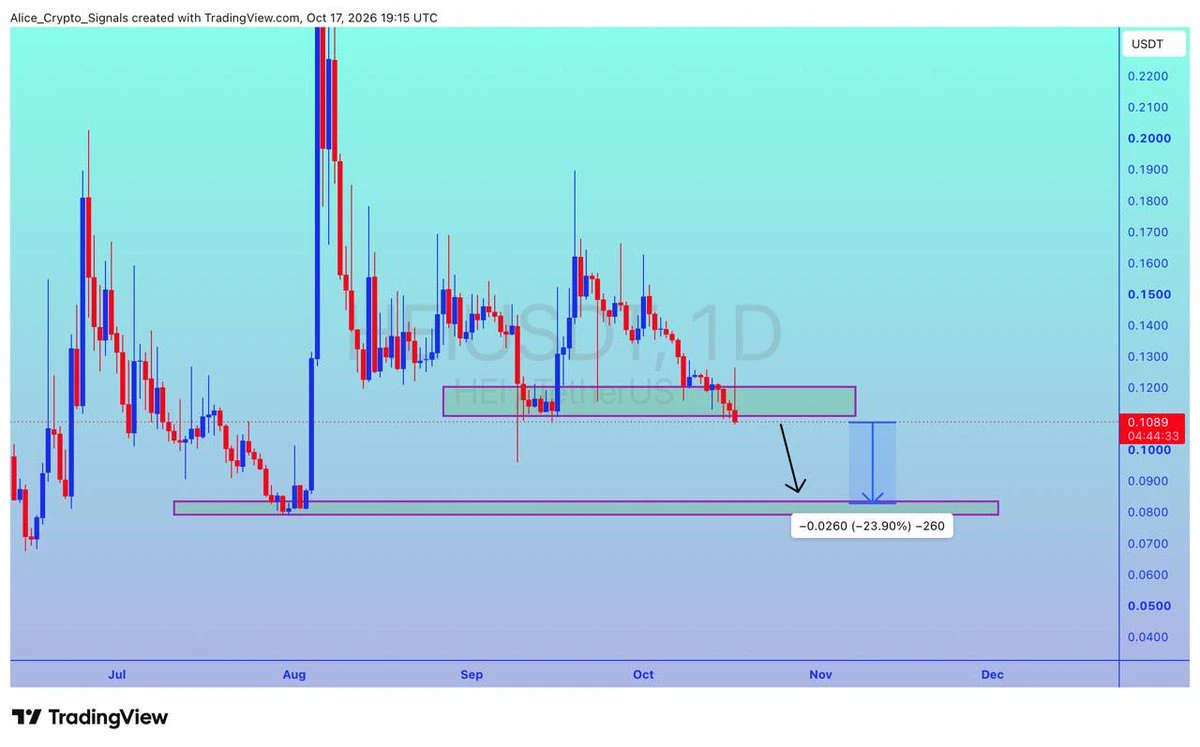
$HEI Signal】Long + 1H breakout / negative funding short squeeze
$HEI 1H RSI 90.66, 4H 86.54, 4H MACD histogram expanding at 0.0050, 1H histogram contracting at 0.0031. Order book buy/sell ratio 1.23, funding rate -0.0001%, OI stable. Price 0.12865 is near the 1H Bollinger upper band at 0.1375.
🎯Direction: Long
⚡Entry/limit order: 0.1282640 - 0.1286500
🛑Stop-loss: 0.1273635
🚀Target 1: 0.1305797
🚀Target 2: 0.1315446
🛡️Trade management:
- Execution strategy: Reduce the position by 50% after reaching Target 1, and move the stop-loss up to breakeven. If the price falls back to the entry level
HEI91.33%
UNITREE86.79%
View Original
post-image
  • Reward
  • Comment
  • Repost
  • Share
BTC 1-hour prediction: short position, 1.06x leverage. Join if interested.
View Original
post-image
  • Reward
  • Comment
  • Repost
  • Share
JUST IN: Rocket Lab lands a $397M Space Force contract to develop, launch, and operate Flatellite satellites for SB-AMTI, signaling a stronger role in U.S. space defense infrastructure. $RKLB
RKLB5.69%
post-image
  • Reward
  • Comment
  • Repost
  • Share
Charlie Munger once humorously said: “If I knew where I was going to die, I would never go there.” In trading, this “place” is overconcentration, frequent trading, and failing to set stop-losses. Those who truly understand the way of trading do not seek a secret formula for winning, but identify and avoid the traps that inevitably lead to failure.
Bitcoin Ethereum
BTC0.97%
ETH0.44%
View Original
post-image
post-image
  • Reward
  • Comment
  • Repost
  • Share
$XAUUSD What the hell did this version update change? The candlesticks for the CFD gold contract are jumping so badly that they’re impossible to read, while the regular gold contract is fine. #黄金 @
XAUUSD0.75%
View Original
post-image
post-image
  • Reward
  • 1
  • Repost
  • Share
AnbeiAiYongzhou:
Mine too.
$BTC 8.5 Bitcoin Trend Analysis
Bitcoin's short-term structure is a bullish continuation pattern; after the consolidation is complete, the price will continue rising.
Currently continuing to hold long positions and waiting for a breakout, with resistance around 71-72.
Risk disclaimer: This is only an analysis of the market structure and does not constitute any trading advice.
#BTC走势分析 #Bitcoin Trend Analysis
BTC0.97%
View Original
post-image
  • Reward
  • Comment
  • Repost
  • Share
#TetherGoldGrows9.5% Tether Gold Grows 9.5%: Why Tokenized Gold Is Becoming a Strategic Asset in the Digital Economy
The global financial landscape is evolving rapidly as traditional assets merge with blockchain technology. While cryptocurrencies such as Bitcoin and Ethereum continue to dominate headlines, tokenized real-world assets are emerging as one of the most important innovations in modern finance. One development attracting growing attention is highlighting renewed interest in digital gold and the expanding role of tokenized assets within diversified investment portfolios.
Gold has ser
XAUT1.01%
RWA4.73%
BTC0.97%
ETH0.44%
  • Reward
  • 3
  • Repost
  • Share
CryptoZyra:
To The Moon 🌕
View More
[New Streamer]World Cup Prediction
gate liveLIVE
1,525
  • Reward
  • 7
  • Repost
  • Share
CryptoShine:
nice streaming ♥️❤️🙈
View More
#GateReserveRatio117%
Gate Reserve Ratio 117%, Comprehensive Market Analysis
Introduction
Transparency has become one of the most important factors in the cryptocurrency exchange industry. Following several high-profile exchange failures in previous years, investors increasingly expect platforms to demonstrate that customer assets are fully backed. In this context, Gate's reported Reserve Ratio of 117% is a notable development, indicating that the exchange holds reserves exceeding the assets it owes to users based on its published proof-of-reserves methodology.
A reserve ratio above 100% gene
post-image
  • Reward
  • 2
  • Repost
  • Share
BtcMinimalist:
A 117% reserve ratio at least shows that the books are genuinely overcollateralized.
View More
I’ve decided to pause Bitcoin market analysis for now‼️ (I’ll resume when liquidity returns)
Because the market has been in sideways resonance for over a month, there have been no major fluctuations during this period, whether in SMS contracts or medium- and long-term positions, while short-term trades have been constantly swept for stop-losses.
Recently, I’ve been studying US stock contracts. Hot money and liquidity are both in US stocks, which should be easier to trade compared with Bitcoin.
BTC1.03%
View Original
post-image
  • Reward
  • Comment
  • Repost
  • Share
#GateCardUpTo8%Cashback
Features and key promotions offered by Gate Card.
Simplified application process: No additional KYC (Know Your Customer) procedures required beyond proof of address or verified user status.
Rapid approval: Virtual card approval takes approximately 3–5 minutes.
Cashback: Up to 8% cashback on eligible purchases; rewards can be received in USDT or GT tokens.
Welcome rewards: New cardholders receive a 100 USDT voucher and an eSIM data package (valid for a limited time).
Mobile payments: Compatible with Apple Pay and Google Pay.
Global acceptance: Usable wherever Visa or Ma
GT0.00%
USDT0.00%
BTC0.97%
post-image
post-image
post-image
post-image
post-image
post-image
  • Reward
  • 7
  • Repost
  • Share
CryptoDiscovery:
2026 GOGOGO 👊
View More
BTC overhead resistance
1. First resistance: $64,200–$64,800 (short-term holder concentration zone)
2. Strong resistance: $65,000. A daily close firmly above this level is needed to build momentum for a further test of around $66,000.
Downside support
1. First support: $62,800–$63,200, a level that bulls have defended repeatedly recently
2. Key strong support: $62,000. A decisive break below it would open up further downside for bears, with $60,000 next in view.
Macro fundamentals
1. Expectations for Fed rate cuts continue to be pushed back, while U.S. Treasury yields remain elevated, weighing
BTC0.97%
UNITREE86.79%
View Original
post-image
post-image
DOGEUSDT
Short
Isolated 10X
Return %
+0.98%
Entry Price(USDT)
0.07017
Mark Price(USDT)
0.0701
  • Reward
  • Comment
  • Repost
  • Share
8.5 ETH around 1880; [unclear wording]; targets 1830/1800
Friends looking to go long should watch the area around 1830; if support holds, buy the pullback.
On the ETH 1H chart, after falling from the previous high of 1898, the price has continued to fluctuate around the 1860-1880 range.
The current price is 1873. Short-term moving averages are gradually flattening, and the price has moved back near the moving averages, with bulls and bears entering a tug-of-war.
Focus first on the 1830-1850 support below, and watch whether the price can break through the 1900 round-number level above.
ETH0.44%
View Original
post-image
  • Reward
  • Comment
  • Repost
  • Share
Load More

Join 40 M users in our growing community

⚡️ Join 40 M users in the crypto craze discussion
💬 Engage with your favorite top creators
👍 See what interests you
  • Pinned