Share crypto content and earn up to 60% commissions through content mining.
placeholder
gatefun
SNDK
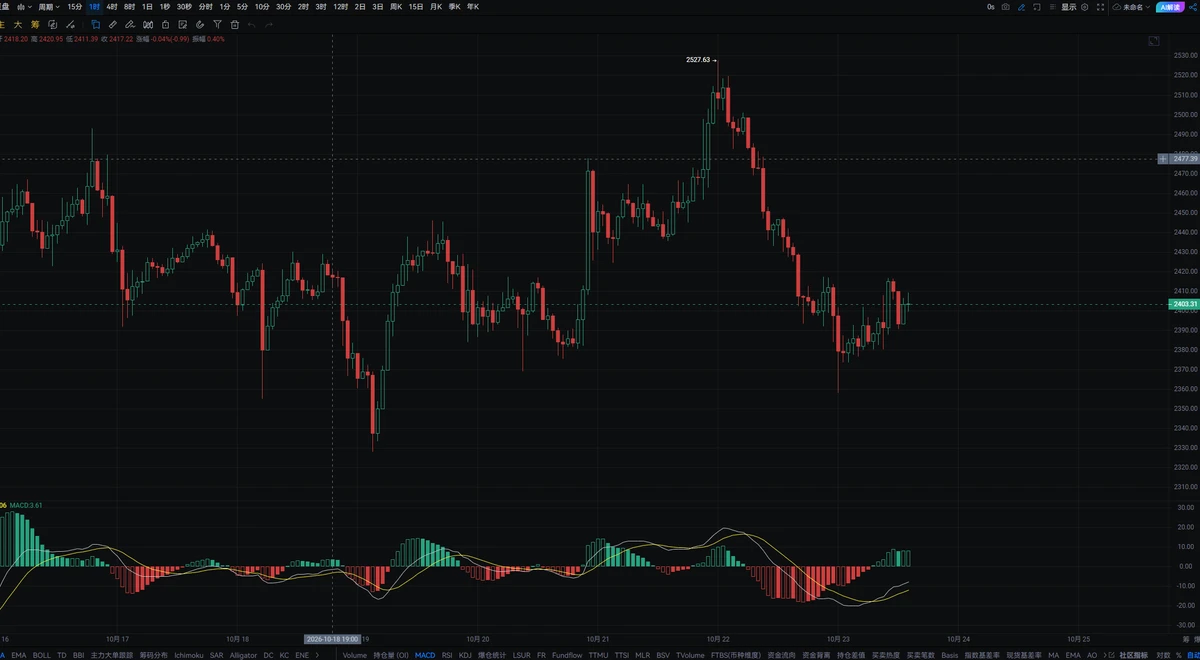
After exiting my long positions last night, I went to sleep with no position. Although I missed this round of downside and didn't catch the short trade, I took it calmly.
The market never runs out of opportunities, so there's no need to feel anxious about missing one.
I'm currently not keen on shorting SNDK. I plan to wait for a pullback to around 1680 or 1650 before considering a long entry. Friday will most likely bring some good returns.
Good opportunities come from waiting, not chasing. Wait for the right volatility—staying flat is also a strategy.
$BTC $ETH $SNDK
BTC1.23%
ETH-0.23%
SNDK-0.28%
View Original
post-image
  • Reward
  • Comment
  • Repost
  • Share
#SK海力士涨超8% Surges straight up! Korean stocks rise over 3%, SK hynix gains over 8%, and the U.S. demands that South Korea make memory chips its top priority for investment in the U.S.
On August 18, Asia-Pacific stock markets opened mixed. South Korean stocks surged strongly, driven by memory chip giants, with the Korea Composite Stock Price Index (KOSPI) rising over 3% intraday and breaking through the 7,200-point mark; Japanese stocks, meanwhile, moved lower against the trend, with the Nikkei 225's decline briefly widening to 0.8%. Behind this stark contrast is the interplay between持续 rising A
View Original
post-image
ThisIsTranslateContent:
#SK海力士涨超8% Straight-line surge! Korean stocks rise over 3%, SK Hynix jumps over 8%, U.S. asks South Korea to prioritize memory chips as its top investment focus in the U.S.
On August 18, Asia-Pacific stock markets opened mixed. South Korean stocks surged, led by memory chip giants, with the Korea Composite Stock Price Index (KOSPI) rising over 3% intraday and breaking through the 7,200-point mark; Japanese stocks, meanwhile, moved lower against the trend, with the Nikkei 225's decline at one point widening to 0.8%. The stark contrast reflects the interplay between sustained AI memory demand and intense negotiations over U.S. semiconductor industry policy.
01 Korean stocks surge in a straight line: Memory chip giants lead the gainsSouth Korean stocks rose rapidly after opening today. As of press time, the Korea Composite Stock Price Index (KOSPI) was up over 3%, breaking through 7,200 points intraday and gaining more than 150 points from the previous trading day.
The leading force was unsurprisingly the semiconductor sector. SK Hynix rose over 8% intraday, reaching as high as 8.57%, with its share price at approximately 1.75M won, once again nearing its record high.
As a core global supplier of HBM (high-bandwidth memory), SK Hynix's leading position in the AI memory sector continues to attract strong capital interest. Samsung Electronics followed closely, rising nearly 5% intraday and reaching as high as 4.74%, with its share price at approximately 284.5k won. Samsung's comprehensive presence across the memory chip sector has likewise benefited from the explosive growth in memory demand driven by the expansion of AI computing power.
In addition, SK Square rose over 5%, Samsung Life Insurance gained over 3%, and shipping giant HMM once surged more than 9%. The overall market showed a pattern dominated by technology stocks, with broad gains among heavyweight stocks.
It is worth noting that the South Korean stock market had previously been closed for a public holiday, creating pent-up demand for gains at today's open. The overall U.S. semiconductor sector strengthened last Friday, while positive signals regarding AI memory demand over the weekend jointly drove today's strong performance in Korean stocks.
02 U.S. pressure: Memory chips become South Korea's "top priority" for investment in the U.S.
As Korean stocks surged, a message from Washington was reshaping the global layout of South Korea's semiconductor industry. According to reports from 36Kr and several other media outlets, the United States has asked South Korea to make memory chip production facilities its first priority investment project in the U.S. This request was a key topic at a closed-door trade meeting held by South Korea's presidential office on August 13. Previously, the South Korean government had planned to prioritize the energy sector as its first major investment project in the U.S. However, the U.S. is adjusting its priorities and making additional demands, forcing South Korea to reconsider the order of its investments. This is not the first time the U.S. has pressured South Korean memory chip companies. As early as July this year, U.S. Commerce Secretary Howard Lutnick publicly singled out Samsung Electronics and SK Hynix at the groundbreaking ceremony for Micron Technology's new factory in New York State, calling on the two Korean companies to build new memory chip production facilities in the U.S. Lutnick said at the time that he hoped South Korean companies would expand memory chip capacity in the U.S. to ease the global memory chip supply shortage caused by the rapid development of AI.
More threateningly, the U.S. also holds the "tariff stick." In January this year, Lutnick signaled that overseas memory manufacturers that failed to invest in and build factories in the U.S. could face semiconductor tariffs of up to 100%. This combination of "carrot and stick" has a clear objective—to build a U.S.-centered memory chip supply chain. For South Korean companies, this is a difficult choice: on the one hand, building factories in the U.S. can avoid tariff risks and bring them closer to U.S. customers; on the other hand, the costs of electricity, water, talent, and supply chains in the U.S. are far higher than in South Korea, while large-scale overseas investment could weaken the competitiveness of South Korea's domestic industry. SK Hynix has previously said it is evaluating the possibility of building a memory chip factory in the U.S. and needs to comprehensively consider conditions including electricity, water, talent, and supply chains. Samsung Electronics has taken a more cautious stance. The market interprets the U.S. pressure as "indirect endorsement" of the long-term competitiveness of South Korean memory chip companies—precisely because Samsung and SK Hynix dominate the global memory market, the U.S. is so eager to bring production capacity onto its soil. This also partly explains the strong performance of the two stocks today.
03 Japanese stocks move lower against the trend: Middle East tensions and economic data exert dual pressure!
In stark contrast to the heat in Korean stocks, Japanese stocks continued to move lower after opening today. As of press time, the Nikkei 225 had fallen approximately 0.5% to 0.8%, trading in the 68,600-68,900 range, failing to hold the 69,000-point mark reclaimed in the previous trading session. Japanese stocks weakened mainly under pressure from three factors:
First, tensions in the Middle East have intensified again. Nuclear talks between the United States and Iran have reached an impasse, while geopolitical risk premiums have pushed international oil prices above $90 per barrel. As one of the world's major energy importers, Japan is highly sensitive to oil prices; high oil prices directly erode corporate profits and household consumption capacity.
Second, U.S. Treasury yields have risen. Global bond yields have continued to climb, with Japan's 10-year government bond yield rising to approximately 2.95%. Rising yields weigh on stock market valuations, with the impact particularly significant on high-valuation technology stocks.
Third, Japan's economic data fell short of expectations. Data released Monday showed that Japan's annualized GDP growth rate in the second quarter was only 1.1%, far below the market expectation of 2.0%. Private consumption was flat, while corporate investment fell 1.2%, indicating a weak recovery in domestic demand. By sector, Japanese technology stocks performed unevenly. Memory chipmaker Kioxia rose approximately 1.8%, following the global uptrend in memory chips; however, large technology stocks such as SoftBank came under pressure, weighing on the index.
04 The underlying logic: The AI memory supercycle and geopolitical competition intertwine
The divergence between Japanese and South Korean stocks today appeared on the surface to be a matter of daily gains and losses, but underneath it reflected the interaction of two major themes.
The first theme: the supercycle in AI memory demand. As the scale of large-model training and inference continues to expand, high-end memory chips such as HBM (high-bandwidth memory) and DDR5 are in short supply. As the undisputed leader in HBM, SK Hynix is directly benefiting from explosive demand from AI chipmakers such as NVIDIA and AMD. Samsung Electronics is likewise benefiting from the industry's upcycle through its full product-line presence in DRAM and NAND flash memory. The memory chip industry is highly cyclical, but the incremental demand brought by AI is widely considered structural rather than a short-term fluctuation. This is the core reason the market is willing to assign leading memory chip companies a higher valuation premium.
The second theme: the geopolitical restructuring of the semiconductor supply chain. The U.S. is using multiple means, including tariff threats, subsidy incentives, and diplomatic pressure, to drive semiconductor production capacity back to the U.S. From TSMC building factories in the U.S. to Samsung and SK Hynix being asked to expand production there, the global semiconductor supply chain is undergoing profound geopolitical restructuring. As a memory chip powerhouse, South Korea is at the center of this geopolitical competition. The U.S. demands bring both pressure and opportunity—investing in the U.S. can provide guaranteed access to the U.S. market and government subsidies, but at the cost of high production expenses and the risk of hollowing out South Korea's domestic industry. For investors, the core question is: To what extent will South Korean companies ultimately meet U.S. demands? How will this affect their long-term profitability and the global competitive landscape?
05 What to watch next
Whether today's strength in Korean stocks can continue will depend on several key variables:
First, the South Korean government's final position on investment in the U.S. The government originally planned to announce its first investment project in the U.S. later this month. Whether it will shift to a memory chip project after the U.S. pressure will be the most important policy signal in the near term.
Second, the third-quarter earnings guidance from SK Hynix and Samsung Electronics. Memory chip price trends and the progress of HBM capacity expansion will directly determine the earnings sensitivity of the two companies.
Third, developments in the Middle East. If oil prices continue to rise, they will affect global inflation expectations and central bank policy paths, thereby suppressing overall stock market valuations.
Fourth, subsequent moves in U.S. semiconductor policy. Whether the threat of 100% tariffs will materialize, and whether the U.S. will introduce more restrictions targeting overseas memory chips, will profoundly affect the industry landscape.
Driven by both AI memory demand and geopolitical competition, the rally in South Korea's semiconductor sector may only just be beginning. However, investors should also beware of volatility risks arising from policy uncertainty and high valuations. The divergence between Japanese and South Korean stocks today is a microcosm of global capital repricing between the AI wave and geopolitical risks. Going forward, every policy signal and data change could become a catalyst for the next market move.#我的七夕交易分享 $SKHY
repost-content-media
  • Reward
  • 1
  • Repost
  • Share
ThisIsTranslateContent::
Just send it 👊
Layout: Bitcoin, Ethereum, Dogecoin
gate liveLIVE
1,638
  • Reward
  • 3
  • Repost
  • Share
TalkingAboutMemeAsTheCoinMakes:
Entering by buying the dip 😎
View More
A frightening scene occurred recently😱
A 2-year-old child clung to a truck and traveled 10 kilometers before being spotted by traffic police
Here’s what happened,
A 2-year-old child suddenly disappeared from his mother’s side
When he was found again, everyone broke out in a cold sweat
He had actually been hanging onto the back of an ice delivery truck, traveling with it for about 10 kilometers, while his parents remained completely unaware…
Fortunately, he was spotted by a passing traffic officer
This happened in Thailand’s Sakon Nakhon Province
After the child went missing, his family was ex
View Original
post-image
  • Reward
  • Comment
  • Repost
  • Share
#GateRecordsOver273MIn7-DayNetInflows
Gate’s rising inflows: confidence signal or early rally setup?
Gate has reportedly recorded more than $273 million in net inflows over the past 7 days, putting it among the top three centralized exchanges globally. Recent DeFiLlama data also shows that exchange net flows can shift quickly, so the direction matters more than any single number.
What makes this interesting is the change in sentiment. Strong net inflows suggest that capital is moving onto the platform rather than simply leaving the market. That can indicate users are preparing to trade, accum
BTC1.19%
post-image
post-image
  • Reward
  • 3
  • Repost
  • Share
ShainingMoon:
To The Moon 🌕
View More
MarsCoin surges 400x before crashing 90 ! Behind the extreme vola
gate liveLIVE
1,426
  • Reward
  • Comment
  • Repost
  • Share
$SPCX It kept trying to break above 150 yesterday
Unfortunately, it failed, and now it has fallen to around 143 in pre-market trading
The Nasdaq index has turned from positive to negative, and many U.S. stocks have started to fall
If SPCX fails to hold above 150, it will drop to around 140
It will reach 135 and continue testing its IPO price of 135, which many people are anticipating
The market sentiment has changed now. If the AI sector cools down, SanDisk will plunge
A bunch of people showed off celebrity holdings when SPCX was rising
So why didn't we see them buying when it fell to 105?
Th
SPCX0.61%
View Original
post-image
  • Reward
  • 3
  • Repost
  • Share
CTAHunter:
This kind of pre-market plunge is the most frightening, but looking at it the other way, if it really reaches 135, it might just be a chance to pick up cheap tokens. The key is whether you’re willing to wait.
View More
Aiming to exit $ada soon around $0.1729 area
ADA-1.82%
  • Reward
  • Comment
  • Repost
  • Share
#我的七夕交易分享 South Korean Stocks Live|South Korea's KOSPI Continues to Surge, Up 2.81%; Semiconductors Explode Again as Memory Stocks Continue to Heat Up
The Asia-Pacific market continued to show clear structural momentum in early trading, with South Korea's KOSPI index moving higher to 7173.84 points, up 2.81%. It opened at 7127.77 points today, reached an intraday high of 7173.84 points and a low of 7102.65 points, maintaining a strong upward trend throughout the session.
South Korea's semiconductor heavyweights rose across the board, with the memory sector serving as the core driver of this r
View Original
post-image
ThisIsTranslateContent:
#我的七夕交易分享 Korean Stocks Live | South Korea's KOSPI Continues to Surge, Up 2.81%; Semiconductors Explode Again as Memory Stocks Continue to Heat Up
The Asia-Pacific market continued to display clear structural moves in early trading, with South Korea's KOSPI index climbing further to 7173.84, up 2.81%. It opened at 7127.77 today, reached an intraday high of 7173.84 and a low of 7102.65, and generally maintained a strong upward trend throughout the session.
South Korea's semiconductor heavyweight stocks collectively rallied, with the memory sector serving as the core driver of this round of gains.
Looking at the overnight U.S. market close alongside the Asia-Pacific morning session, signals from global hardware and semiconductors have become highly consistent. All three major U.S. stock indexes closed lower overnight, and the overall market mood was weak, but memory chips, optical communications, and semiconductor equipment followed independent upward trends. SanDisk, Micron, and SK hynix all rose, while optical module and equipment stocks also strengthened sharply. Capital did not exit across the board, but instead concentrated on the main theme of the memory cycle bottoming out and recovering. South Korea's stock market itself has a high weighting in semiconductors, and memory giants such as Samsung have a major impact on the index.
The profitable performance of overseas hardware sectors overnight directly carried over into the Asia-Pacific morning session, driving the KOSPI sharply higher and further strengthening overseas funds' expectations of a turning point in the memory industry. This strong performance in overseas markets will directly carry over into the A-share opening, providing a sentiment boost to domestic memory chip, optical communications, and semiconductor equipment sectors. However, it is essential to distinguish between the two: strong gains overseas are a sentiment catalyst, not a guarantee that A-shares will rise in tandem. Historically, there have been many instances in which overseas semiconductors surged, related A-share sectors opened sharply higher, and then in-market funds used the positive news to take profits, resulting in a high open followed by a decline. Therefore, one should not become overly optimistic simply because overseas markets are booming.
In practical terms, focus on two key points:
First, watch the extent of the higher open. If the opening gain is substantial, remain highly alert to profit-taking pressure;
Second, watch trading volume after the open. Only if the higher open is supported by increased volume will the sector have a foundation for further gains; if prices surge sharply but trading volume fails to keep up, be wary of short-term funds taking profits.
At the broader market level, U.S. stocks closed lower overall overnight, and the external market environment is not particularly favorable. Today's A-share market is more likely to offer structural opportunities, so expectations for a broad-based rally should be kept in check. Opportunities are mainly concentrated within the semiconductor hardware theme, and differentiation will also emerge within the sector. Memory and optical components have greater elasticity, followed by equipment, while some heavyweight equipment and communications equipment stocks will experience relatively milder volatility.
Overall, expectations for the overseas cycle are continuing to heat up, but A-shares' own positioning structure and the willingness of in-market funds are the core factors determining how far the market can go. Overseas strength can serve only as a catalyst, not as the sole basis for buying.
Can the semiconductor sector ride the tailwinds from overseas markets today and produce an independent rally? Feel free to share your views in the comments.
Market information is for reference only and does not constitute investment advice.$Samsung Electronics
repost-content-media
  • Reward
  • 1
  • Repost
  • Share
ThisIsTranslateContent::
Just send it 👊
$Qenis wtfffff
post-image
  • Reward
  • Comment
  • Repost
  • Share
🚨 JAPAN IS SELLING OFF
🇯🇵 The Nikkei just snapped a five-day winning streak as rising oil prices and higher bond yields hit Japanese stocks.
The market had been running hot.
Now the risk-off trade is back. 📉
#Japan #Nikkei #StockMarket
post-image
  • Reward
  • Comment
  • Repost
  • Share
#GateDebutsMOUTAIAnd9OtherA-Shares
🚀 Gate Debuts MOUTAI & 9 Other A-Share Assets
Gate is taking another step toward connecting traditional financial markets with the crypto ecosystem by introducing MOUTAI and nine additional A-share assets to its platform.
This development is important because China’s A-share market represents some of the world’s most recognized companies and brands. MOUTAI, one of China’s best-known consumer brands, is particularly notable and adds a strong traditional-market name to Gate’s growing range of tokenized assets.
🔗 Bridging Traditional Finance & Crypto
The expa
RWA0.00%
BTC1.19%
post-image
  • Reward
  • Comment
  • Repost
  • Share
#GateDebutsMOUTAIAnd9OtherA-Shares
Gate continues expanding its trading ecosystem by introducing MOUTAI and nine additional A-Shares, creating a broader range of market opportunities for users interested in traditional equities alongside digital assets. This development reflects the growing connection between global financial markets and crypto trading platforms.
The addition of MOUTAI is particularly notable because the company is one of the most recognized names in China’s consumer sector. Bringing exposure to such an established market leader gives traders another way to follow movements i
post-image
  • Reward
  • Comment
  • Repost
  • Share
📰 Gate Square Daily|August 18
3 minutes every day to quickly stay on top of market trends
Hot news, market changes, and market movements—all in one easy-to-understand graphic
After catching up on the news, don’t just be a bystander
💬 Have an opinion? Come chat on Gate Square
Share your market insights, trading ideas, and market observations to let more people see your views.
View Original
post-image
  • Reward
  • 7
  • Repost
  • Share
ShainingMoon:
To The Moon 🌕
View More
#GateDebutsMOUTAIAnd9OtherA-Shares
Gate Just Opened the Door to China's A-Shares for Global Crypto Investors
In a move that marks a genuine turning point for the convergence of crypto and traditional finance, Gate officially announced that its Futures Stocks segment will launch live trading of ten perpetual contracts tied to major Chinese A-share companies, including none other than the legendary Kweichow Moutai. The trading goes live at 06:00 UTC on August 18, 2026, and brings ten heavyweight Chinese companies into a USDT-margined perpetual contract format, allowing users to go both long and
post-image
post-image
post-image
  • Reward
  • 2
  • Repost
  • Share
ShainingMoon:
To The Moon 🌕
View More
GN everyone. Been very busy at work.
Making gains while I'm at work.
Stay disciplined everyone!
Time to shut down for the evening.
Everything is fine! 🔥🐶🔥
post-image
  • Reward
  • Comment
  • Repost
  • Share
A-shares can be traded via contracts now?
Moutai, China Shenhua, Yangtze Power, Midea, Haiguang Information... 10 popular A-shares have assembled.
If you could only choose one:
Which one would you most want to trade?
Are you more bullish now, or would you rather go short?
Post with the hashtag #Gate首发上线茅台等10只A股 to share your choice, or directly show your trading strategy.
$CHINA SHENHUA $YANGTZE $HYGON $MIDEA $MOUTAI
YANGTZE0.00%
HYGON0.00%
MIDEA0.00%
MOUTAI0.00%
View Original
post-image
  • Reward
  • 4
  • Repost
  • Share
HighAmbition:
2026 GOGOGO 👊
View More
#GateEventPointsSystemLaunched Gate Event Points System is now launched, bringing a simple new way for users to participate in eligible Gate events and collect points. Stay active, complete available activities, track your progress, and look for more opportunities as the system continues to grow.
post-image
  • Reward
  • 4
  • Repost
  • Share
ShainingMoon:
To The Moon 🌕
View More
🟢 $PIEVERSE LONG
🎯 Entry: 1.0020 – 1.0050
🛑 Stop Loss: 0.9610
🎯 TP: 1.0205 - 1.0672 - 1.0969
post-image
  • Reward
  • Comment
  • Repost
  • Share
On August 18, spot gold fell from 4439 to 4397 in the morning, perfectly matching the setup zone given by Mingyuan earlier and yielding around 42 points. From the four-hour perspective, bearish sentiment is relatively strong, with the main focus at noon on short positions.
$XAU Mingyuan 8/18 noon: Short around 4310-4330, targeting around 4380-4350.
XAU0.06%
View Original
post-image
  • Reward
  • Comment
  • Repost
  • Share
Load More

Join 40 M users in our growing community

⚡️ Join 40 M users in the crypto craze discussion
💬 Engage with your favorite top creators
👍 See what interests you
  • Pinned