Square
Following
Hot
News
Notifications
Profile
Share your thoughts
placeholder
Article
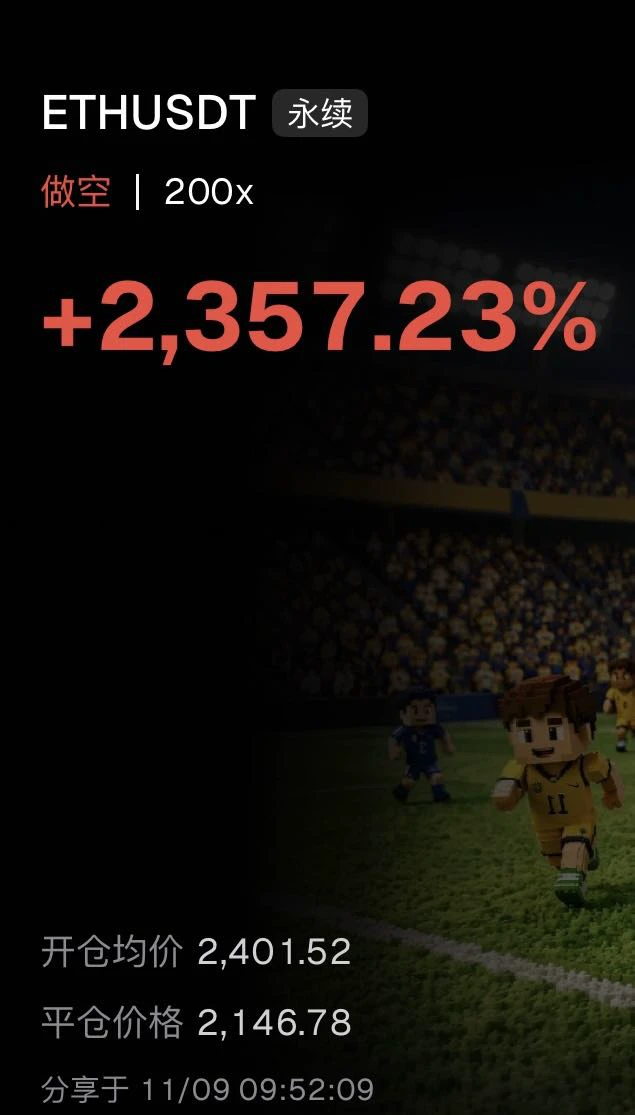
$ETH
Another win in the bearish market, with a single trade returning 23x
The major downtrend channel fully opened up. We positioned short around 2401.52 on the rebound, trading with the trend. The market remained under pressure and continued to weaken, allowing us to take profit at 2146.78 and capture the full decline of over 250 points. The 200x leveraged short trade earned a 2357.23% return in a single trade.
#70%山寨币跌破200日均线
Support levels have been breached one after another, and the bearish trend is far from over. Every rebound is an opportunity to enter short at a higher level.
Identif
post-image
ETH-1.26%
Apple is also stepping up its AI arms race! The CEO is personally urging the software team, and Siri
live-cover
LIVE1,836
Trenches
ZIG
Z
bade
b
ZIG
0x8c...1145
Market Cap
$.
Change
.
24h Vol
$.
Holders
.
BTC
B
bade
b
BTC
C5xp...pump
Market Cap
$.
Change
.
24h Vol
$.
Holders
.
STONK
S
bade
b
STONK
6GmA...UNgx
Market Cap
$.
Change
.
24h Vol
$.
Holders
.
ANSEM
A
bade
b
ANSEM
9cRC...pump
Market Cap
$.
Change
.
24h Vol
$.
Holders
.
牛逼
牛
bade
b
牛逼
0x96...7777
Market Cap
$.
Change
.
24h Vol
$.
Holders
.
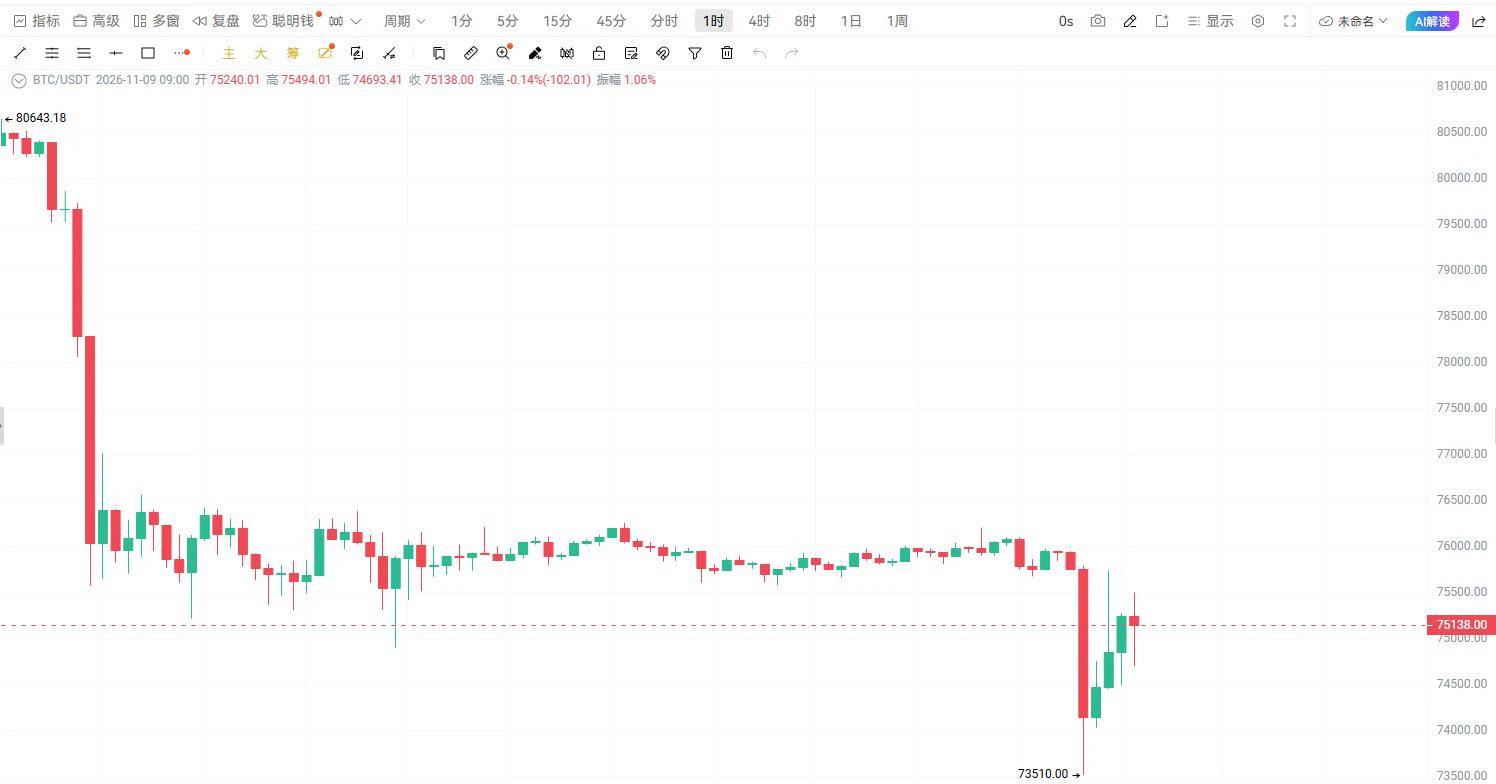
November 9 $BTC Focus on shorting rebounds, entering and exiting quickly.

【Today's Strategy】
Short entry range: Set up on a rebound to 75000—75700
Stop-loss: Above 76300
Take-profit: Target 73800—73400

【Core Rationale】
The 1-hour chart has seen two rounds of high-volume declines, followed by sideways consolidation and another breakdown to a new low. The overall downtrend is clear, with bears fully in control. The 75000—75700 range is a former consolidation platform that has shifted from support to resistance, where trapped holders and profit-taking create concentrated selling pressure. A reb
post-image
BTC-0.65%
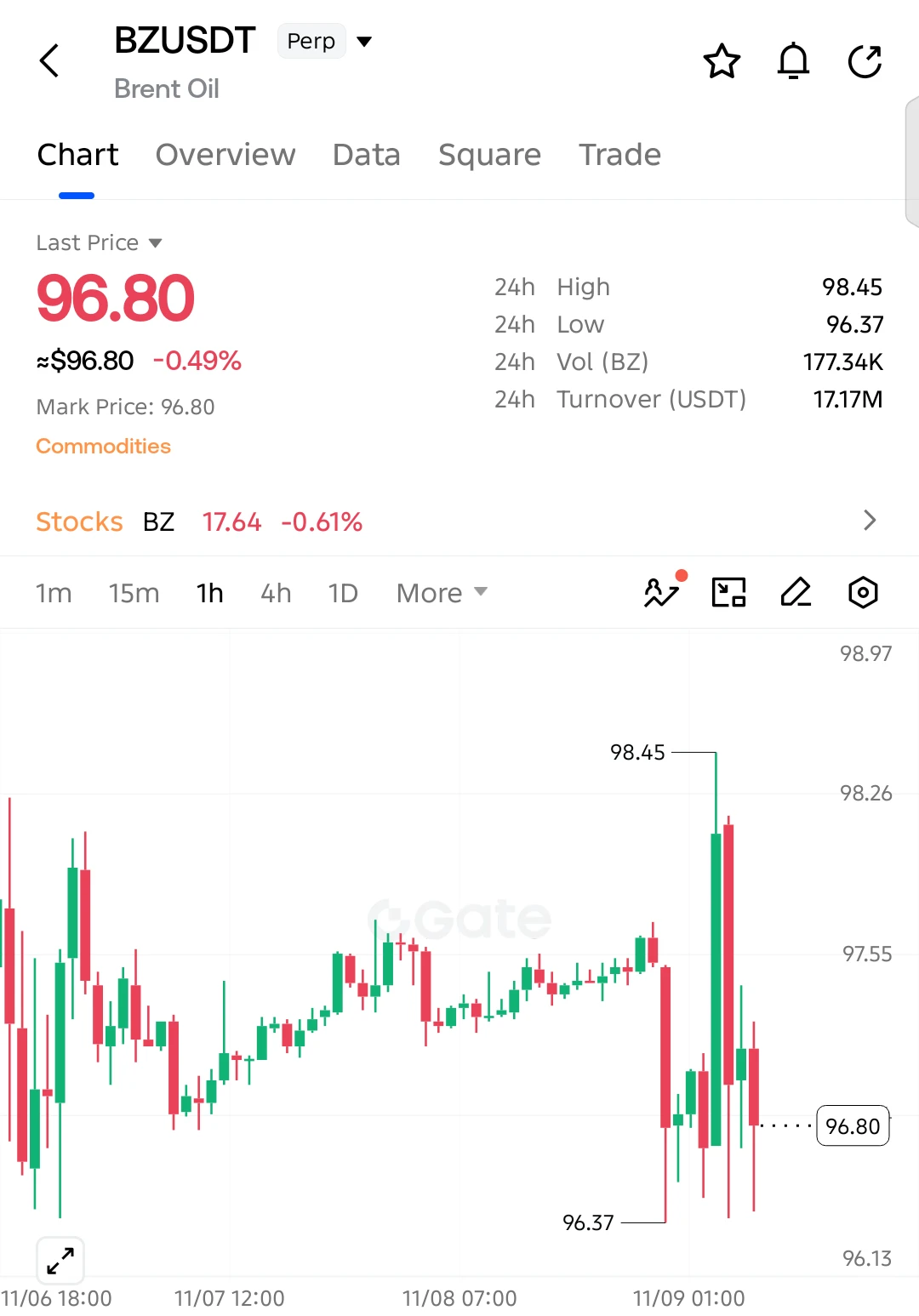
$BZ SHORT SETUP — SHARP REJECTION FROM 98.45!

$BZ is facing renewed selling pressure after a strong rejection from 98.45. Buyers failed to sustain the breakout, putting the 96.37 support level back in focus!

Entry: 96.80
SL: 97.60

TP1: 96.13
TP2: 95.60
TP3: 95.00
Final Target: 94.40

The latest sharp rejection shows sellers defending higher prices, while repeated volatile moves suggest buyers are struggling to maintain control. A breakdown below 96.37 could open the door toward 95.60 and potentially lower.

Invalidation: A sustained recovery above 97.60 weakens the bearish setup.

Keep your
post-image
BZ-1.18%
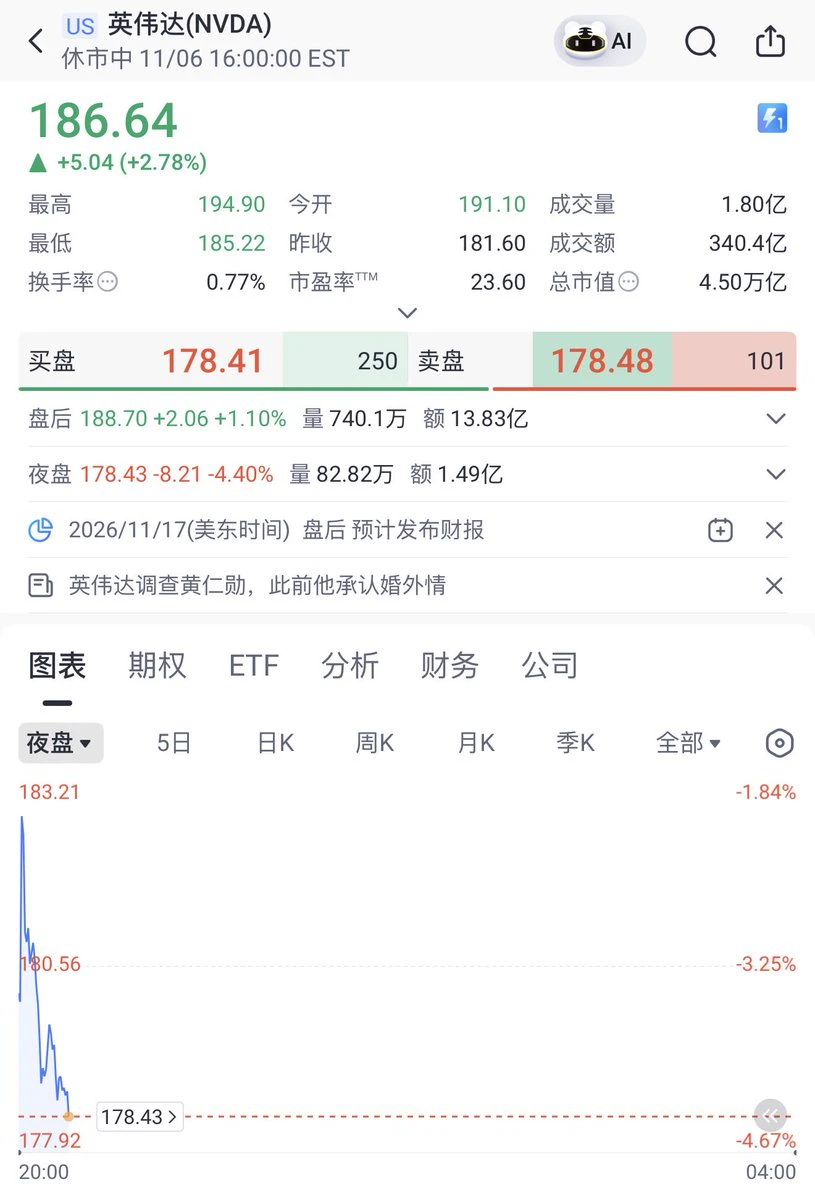
Every individual stock has its moment of blowing up
First it was META, then GOOG
Now it's Nvidia
NVDA is headed for $150 this time
Thank you, Jensen Huang!
P.S. Don't buy individual stocks; only buy index funds
It's such a simple principle, yet so many people just won't listen
Some people are even proud of going all-in and heavily investing in INTC and GOOG
And they brag about their 10% annualized returns
Is that really your stock-picking skill, or is Wall Street just rewarding you?
Don't you have any sense of that?
😅😅😅
post-image
GOOG+0.71%
NVDA+2.80%
INTC+8.00%
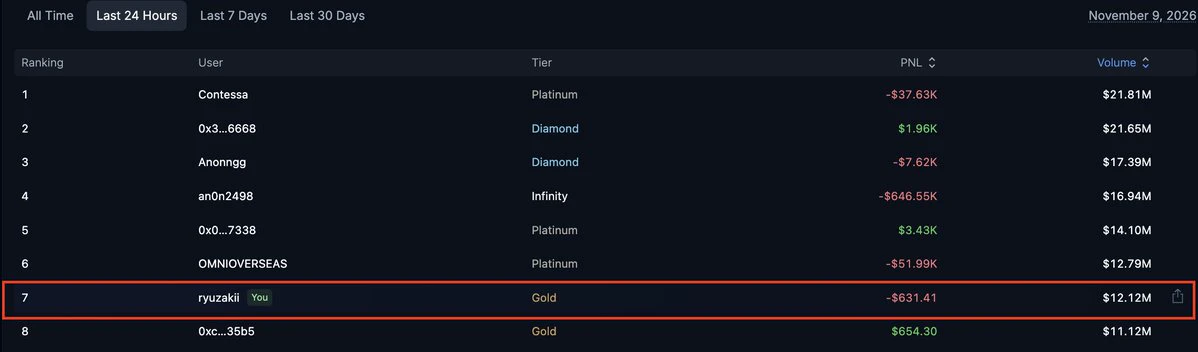
variational ranked #7 in the daily volume
$12m volume in 1 hour
was scalping like crazy in bitcoin and nivida
taking small profit but 1 bad trade and negative -$631
next week points will be worth it
targeting 400 points this week
$150/ per point coded
join :
code : OMNIRYUZAKI ( 18% points boost )
variational airdrop is going be generational
keep farming airdrops
post-image
BTC-0.67%
AIRDROP+0.00%
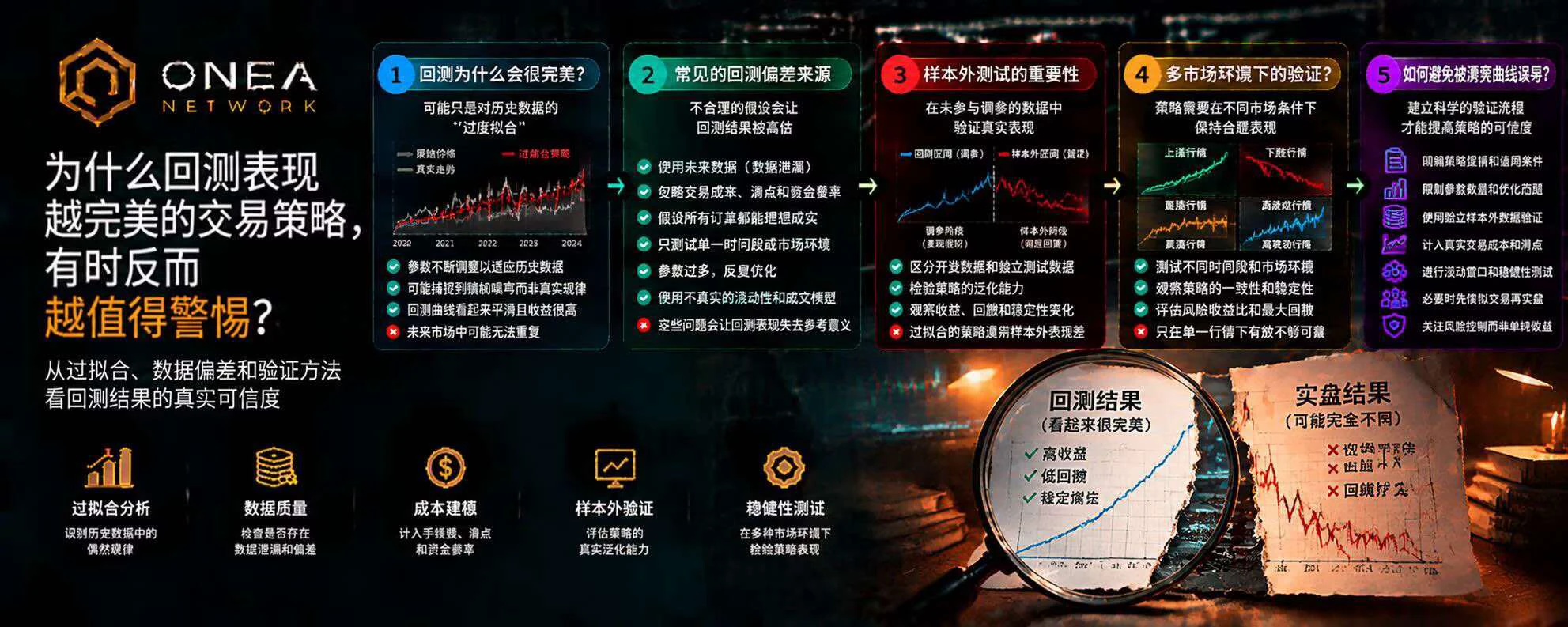
Why might an edge gradually disappear as more people adopt similar trading strategies?

A trading strategy is backtested and performs well.

More and more traders discover similar signals and begin entering at similar prices, and taking profits and stopping out at similar levels.

At first, the strategy remains effective.

But after some time, traders begin to notice that price action after entry has changed, slippage has increased, profit potential has narrowed, and previously stable performance has begun to fluctuate.

Why?

One easily overlooked fact is:

A trading strategy's edge comes not
post-image
Why can a small adverse price move cause huge losses when using high leverage?

In the cryptocurrency market, some traders use high leverage because they want to control a larger position with less margin.

But they often overlook a key issue:

Leverage amplifies not only potential gains, but also the rate of losses relative to your own margin.

When the price moves against you, your margin can shrink rapidly. If your account equity falls below the platform’s maintenance margin requirement, forced liquidation may be triggered.

I. How exactly does leverage amplify risk?

Suppose you put up 1,0
post-image
Why Do Some Trading Strategies Make Money in Backtests but Fail to Cover Trading Costs in Live Trading?

A trading strategy shows profits every month in backtests.

But once you start trading for real, you find that your account returns are far below expectations. You may even get the market direction right, yet your account balance keeps declining.

The problem may not be that you misread the market, but that you underestimated trading costs.

Profits in a backtest are only theoretical results. Returns after deducting actual trading costs are closer to the money you can really keep.

I. Tradi
post-image
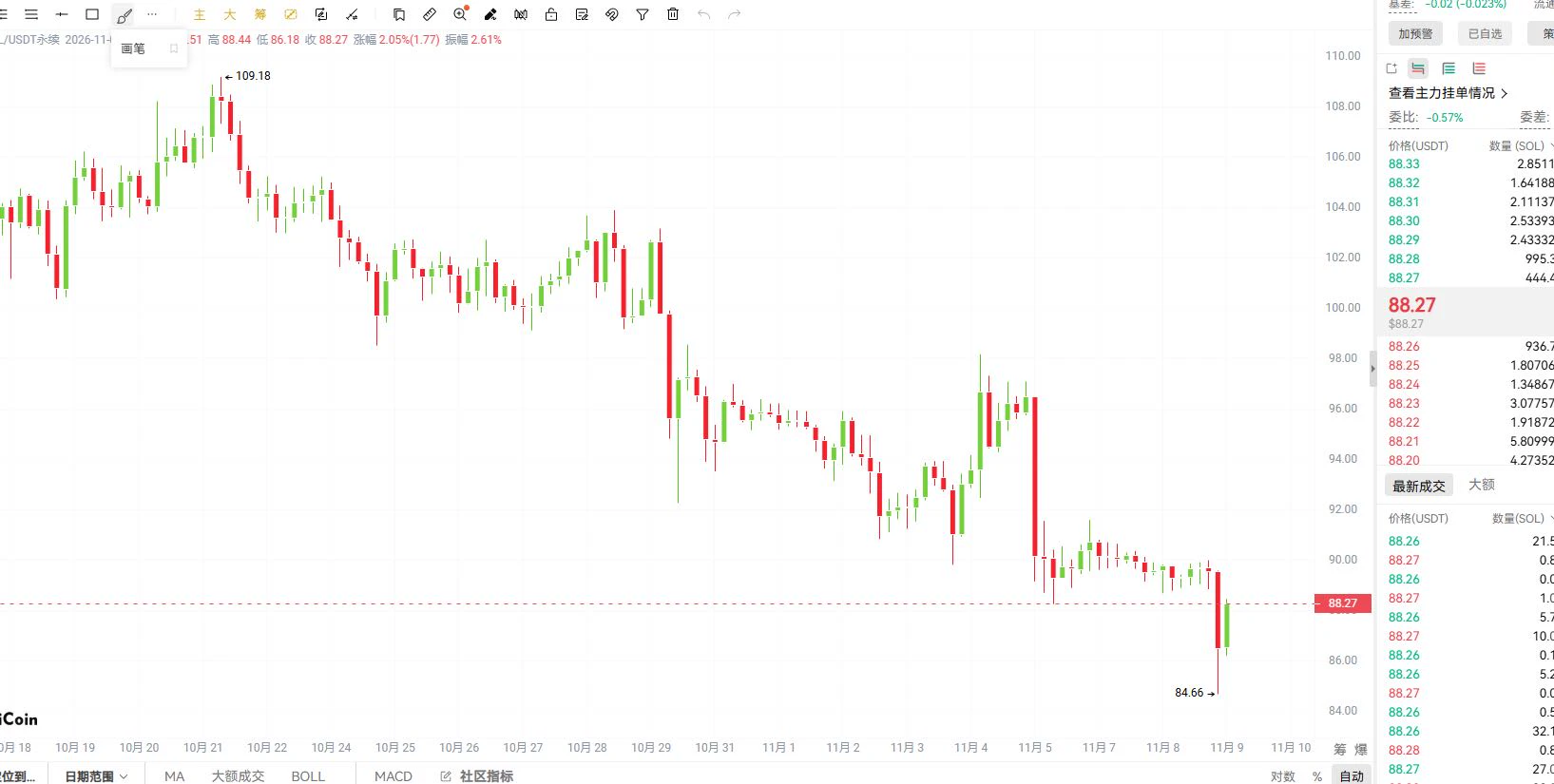
U Sister 11.9 Monday$SOL Strategy

Entry: Short on a rebound near 88.5–89; stop around 90.3; target 86.5–84.5

In the early hours, price broke down on heavy volume in tandem with the broader market, falling straight below the 88.5–90.2 high-level consolidation range and briefly wicking down to 84.66. It then rebounded from oversold conditions along with the market and is now consolidating around 87.8. Short-term moving averages have turned down, creating clear resistance. The lower edge of the previous consolidation range has completely shifted from support to resistance. Overall, the market
post-image
SOL-0.74%
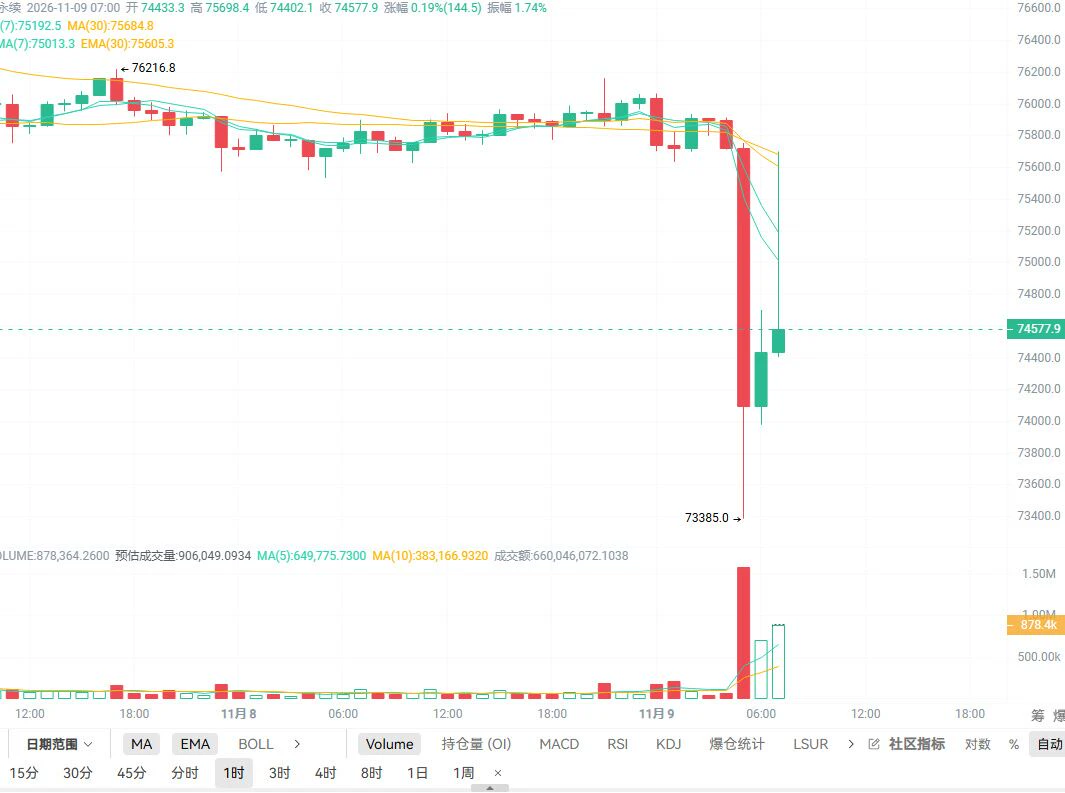
On November 9, BTC saw a weak recovery after a high-volume breakdown; short into the rebound
Entry timing: Price rebounds to the 75000–75600 zone
Stop-loss: 76300
Take-profit targets:
First target: 74000–73600
Second target: 73400–73000

【Key Takeaway】
On the 1-hour chart, price plunged on heavy volume this morning, forming a large bearish candle with a body exceeding 2,000 points. It broke decisively below all short- and medium-term moving averages—MA7, MA30, and EMA30—and completely invalidated the previous consolidation range of 75500–76200, with a low of 73385. The drop was accompanied by
post-image
BTC-0.67%
Nvidia's stock decline is just the beginning? The Jensen Huang controversy could make the entire AI sector nervous!

A controversy at one company first affects its own stock price, but when that company is Nvidia, things may not be so simple.
Nvidia's position in the AI industry is too important. From GPU manufacturing to cloud computing and large model training, the entire AI investment boom depends on it. In a sense, Nvidia's stock price is not just a stock; sometimes it is also a barometer of market confidence in the AI industry.
The issues arising from the Jensen Huang controversy could af
NVDA+2.80%
  • 1
How do you set a reasonable risk-reward ratio in BTC trading? Win rate isn’t everything!
In BTC trading, many people focus heavily on win rate, believing that as long as they make the right call often enough, they can keep making money. But in reality, win rate isn’t the only factor that determines trading results. A trading system with a lower win rate but a reasonable risk-reward ratio may still maintain positive expectancy over the long term.
So, what is the risk-reward ratio?
First, understand the concept of risk-reward ratio. It is the ratio between the potential profit and potential loss
post-image
BTC-0.65%
live market updates
live-cover
LIVE2,050
Why Is the Liquidation Price Different From the Market Price You See?

You open your trading app and see that BTC’s latest traded price has not yet fallen to your liquidation price.

But your account’s risk warning has already changed, or your position has even been liquidated.

Why does this happen?

One important reason is that in futures trading, the market price you see, the price the platform uses to assess liquidation risk, and the price used as a reference for overall market levels may not be the same.

Understanding the differences between the latest traded price, mark price, and index
post-image
BTC-0.65%
Why might a trading strategy's returns come from only a handful of trades?

A strategy has high cumulative returns and a decent win rate.

But if removing its most profitable trades turns the entire strategy from profitable to unprofitable, would you still consider it to have a stable trading edge?

This question is more worth exploring than simply looking at the rate of return.

I. First, see where the returns actually come from

Suppose a strategy completes 100 trades and ends up with a net profit of $1,000.

On the surface, the strategy is profitable.

But a closer breakdown reveals:

* The
post-image
$AIN This pin was drawn by me yesterday. That low at 0.1170 was created by the pile of stop-loss trigger orders I placed. Up 32.48% in 24h, with 45.3M in trading volume—the market looks lively, but do you know how the whales play it? Let me walk through my own trading steps: first, I spread the word in a small group that “AIN will retest 0.12,” then slowly accumulated with buy orders at 0.125. When panic selling pushed it down to 0.1170, I reversed course and drove it through 0.14. Retail traders chasing the rally helped push it to 0.1630, and finally I slowly sold around 0.1589. I didn't dece
AIN+3.85%
Jensen Huang never expected Nvidia’s biggest risk to be not AMD, but a personal controversy involving its CEO!

Who is Nvidia’s strongest competitor? Some say AMD, others say Google’s in-house chips, and still others say custom ASICs in the future. But recently, the market has realized that what may truly be making investors nervous is not a competitor, but a personal controversy involving the CEO.
After Jensen Huang admitted to infidelity in his marriage, Nvidia’s board announced an independent investigation to determine whether he had ever been targeted by a foreign intelligence operation. S
NVDA+2.80%
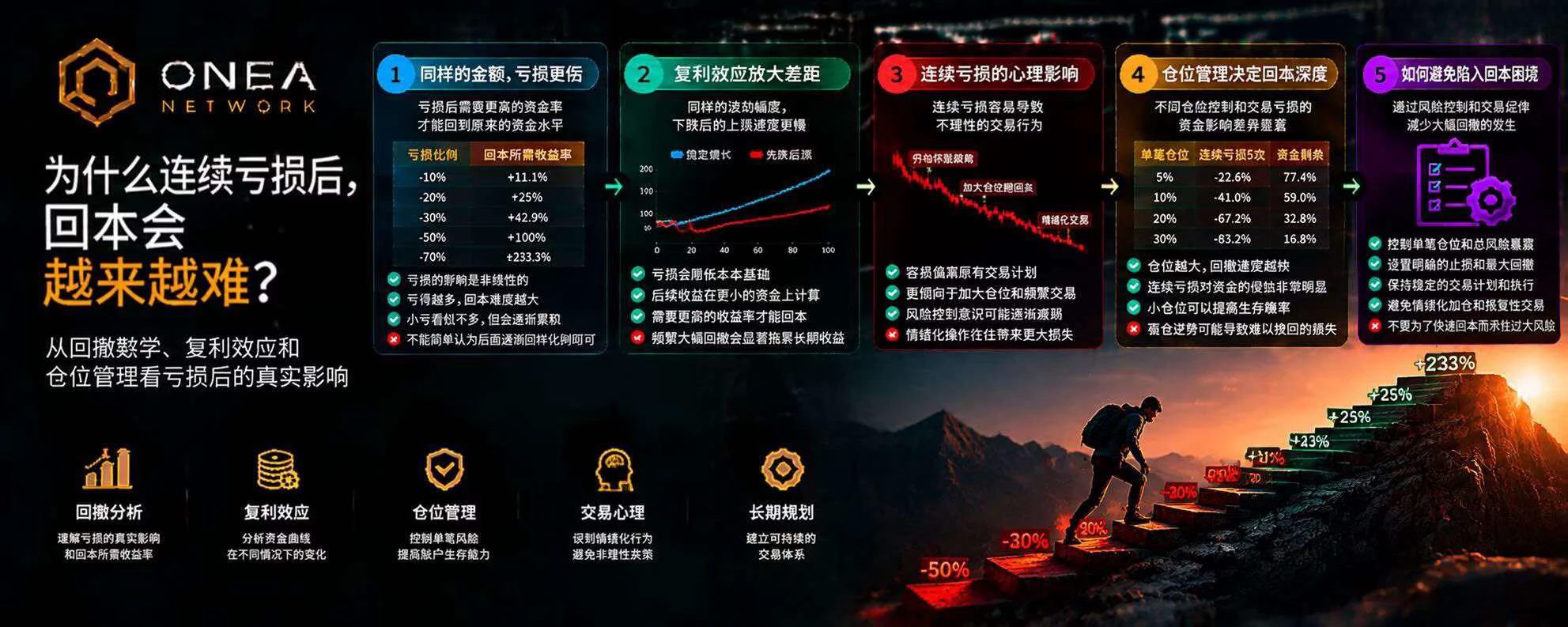
Why does it become increasingly difficult to break even after consecutive losses?

In the trading market, many people have experienced this process:

The account loses 10%, and you feel it is no big deal—you can just earn it back.

After a 20% loss, you start to feel anxious and want to increase your position size to break even faster.

After a 30% loss, you start trading frequently, trying to catch every rebound.

By the time your account has shrunk further, you realize you are already trapped in a cycle that is increasingly difficult to escape.

But the truly brutal part is this: losses and
post-image
Open $SOXS LONG
Using 4% Fund , entry at 70-69
Sl at 68
ROI Targets - 100% , 150% , 200%
SOXS-12.09%
Load More

Join 40 M users in our growing community

⚡️ Join 40 M users in the crypto craze discussion

💬 Engage with your favorite top creators

👍 See what interests you

Trending Topics

USCPIDataIncoming

22.8k Views1.72k Discussing

The U.S. October CPI report will be released on November 10 at 8:30 a.m. ET. September CPI came in at 3.7% year over year, and markets will be watching closely for signs that inflation is cooling, especially in core CPI. A softer-than-expected reading could strengthen rate-cut expectations, while hotter inflation may pressure risk assets through higher Treasury yields and a stronger dollar. How do you think this CPI print will move $BTC, U.S. stocks and gold?

BTCFlashCrash

22.73k Views66.04k Discussing

USAIStocksHitHard

31.41k Views3.75k Discussing

View More