
Square
Following
Hot
News
Notifications
Profile

CryptoEye

vip
No content yet
Peak Tier VIP 52.1 Year(s)
85
Following
9.8k
Followers
30.8k
Liked
Pin
Featured#OneGateWitnessProgram
The crypto industry is evolving faster than ever, and in this rapidly changing environment, information, community participation, and authentic voices have become more valuable than ever. The OneGate Witness Program represents an opportunity for the Gate community to become more than just users — it is about becoming active participants, observers, creators, and voices within the growing Gate ecosystem.
A strong crypto platform is not built only through technology, trading products, or market infrastructure. It is also built through a powerful community that observes de
  • 9
  • 3
#BitcoinDropsBelow$70K
Bitcoin Falls Below $70K: Is This the Start of a Major Crypto Market Shakeout?
Bitcoin's breakdown below the $70,000 mark has sent a powerful signal across the cryptocurrency market. A level that previously represented an important psychological milestone has now become a critical battleground between buyers and sellers.
This decline is creating uncertainty, but it may also reveal important opportunities for investors who understand market cycles and manage risk carefully.
1. Why Is Bitcoin Facing Selling Pressure?
Several factors can contribute to this kind of correcti
BTC-0.67%
#JensenHuangResigns
JensenHuangResigns: A Turning Point for NVIDIA and the Global AI Industry
The reported resignation of Jensen Huang marks a potentially historic moment for the global technology industry. As the co-founder and longtime leader of NVIDIA, Huang has played a central role in transforming the company from a graphics-chip manufacturer into one of the world's most influential artificial intelligence and semiconductor giants.
His leadership helped accelerate the AI revolution, powering advanced data centers, generative AI systems, autonomous technologies, and high-performance compu
post-image
NVDA-1.92%
#USOctoberPPIBelowExpectations
USOctoberPPIBelowExpectations: A Potential Turning Point for Inflation, Federal Reserve Policy, and Crypto Markets
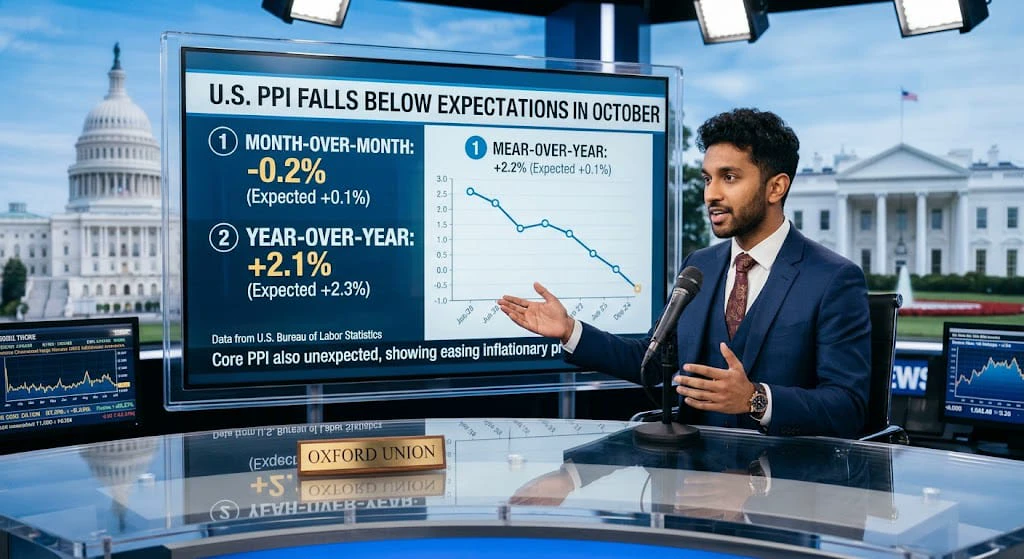
The latest US October Producer Price Index (PPI) report has delivered a signal that financial markets were closely watching. Producer inflation increased less than economists expected, creating fresh discussions about the future direction of US monetary policy, interest rates, equities, and cryptocurrency markets.
According to the November 13, 2026, report, US headline PPI increased by 0.3% month-over-month, below the market forecast of 0.4%. Annua
post-image
BTC-0.67%
ETH-1.26%
#Dr.HanOxfordUnionSpeech
Dr. Han’s Oxford Union Speech: A Powerful Vision for Entrepreneurship in the AI Era 🚀
A remarkable milestone for Gate and its founder, Dr. Han, as he takes the stage at the prestigious Oxford Union to share a powerful message about entrepreneurship, innovation, artificial intelligence, and the future of business.
On November 12, 2026, Dr. Han delivered a keynote speech titled “Start Alone,” reflecting on his remarkable 13-year entrepreneurial journey since founding Gate in 2013. His message was not simply about building a successful company; it was about courage, ind
#GateIPOAccessAnthropic
GateIPOAccessAnthropic: A New Milestone Connecting Artificial Intelligence and Global Stock Market Opportunities 🚀
The future of investing is evolving, and Gate is taking another significant step toward making global financial opportunities more accessible. With Gate IPO Access Phase 3 featuring Anthropic (ANT), Gate is bringing one of the most closely watched AI companies into its growing stock investment ecosystem.
This development represents more than another IPO subscription opportunity. It highlights the growing connection between artificial intelligence, traditi
market update
live-replay-cover
213 views11-14 17:28
00:31:18
The Fed makes major changes to its 2027 meeting schedule! The October meeting will shift to a moneta
live-replay-cover
282 views11-14 16:38
00:32:56
#WhiteHouseSubmitsCFTCAndSECNominations
White House Moves Forward With SEC and CFTC Nominations: What Could This Mean for the Future of Crypto?
The White House's latest move to submit nominations for key positions at the Securities and Exchange Commission (SEC) and the Commodity Futures Trading Commission (CFTC) has placed U.S. financial regulation back in the spotlight.
This development deserves attention because the SEC and CFTC play major roles in shaping the rules governing financial markets, investment activities, derivatives, and the rapidly expanding digital asset industry.
For the cry
CryptoEye
#WhiteHouseSubmitsCFTCAndSECNominations
White House Moves Forward With SEC and CFTC Nominations: What Could This Mean for the Future of Crypto?
The White House's latest move to submit nominations for key positions at the Securities and Exchange Commission (SEC) and the Commodity Futures Trading Commission (CFTC) has placed U.S. financial regulation back in the spotlight.
This development deserves attention because the SEC and CFTC play major roles in shaping the rules governing financial markets, investment activities, derivatives, and the rapidly expanding digital asset industry.
For the cryptocurrency sector, regulatory leadership is not just an administrative matter. It can influence investor confidence, institutional adoption, exchange operations, and the long-term direction of blockchain innovation.
Why Are These Appointments Important?
The SEC oversees securities markets and focuses on investor protection, disclosure requirements, and enforcement of securities laws. Its decisions can significantly affect cryptocurrency projects and companies whose activities fall under securities regulations.
The CFTC, meanwhile, supervises derivatives markets, including futures and swaps, and has jurisdiction over certain commodity-related digital asset activities.
Stronger coordination between these agencies could help reduce regulatory uncertainty and create a more understandable environment for financial businesses.
Potential Consequences for the Crypto Market
The nominations could have several important implications:
Greater Regulatory Clarity: Clearer rules could help crypto businesses understand their legal responsibilities and operate with greater confidence.
Institutional Adoption: Financial institutions may become more comfortable exploring digital assets when regulatory expectations are transparent.
Exchange Compliance: Cryptocurrency exchanges could face more clearly defined standards for reporting, market surveillance, and investor protection.
Blockchain Innovation: Consistent regulatory guidance could encourage responsible development of blockchain technology and financial applications.
Market Confidence: Transparent oversight may help strengthen trust among retail investors and institutional participants.
What About Bitcoin and Ethereum?
Bitcoin and Ethereum could benefit indirectly if the broader U.S. regulatory environment becomes more predictable. Greater institutional participation and improved market infrastructure could support long-term adoption.
However, regulatory appointments do not automatically create bullish momentum. Cryptocurrency prices will continue to depend on liquidity, global economic conditions, investor sentiment, interest-rate expectations, and market demand.
Investors should distinguish between a positive regulatory development and an immediate trading signal.
The Senate Confirmation Process Matters
The nominees must go through the Senate confirmation process before officially assuming their positions. Their eventual policy priorities, regulatory philosophy, and approach to digital assets will be important factors to monitor.
The market should therefore focus not only on the nominations themselves but also on the confirmation process and subsequent regulatory decisions.
Final Thoughts
The White House's SEC and CFTC nominations could represent an important chapter in the evolution of America's financial regulatory framework.
For the crypto industry, the opportunity lies in finding a balance between innovation, market freedom, transparency, and investor protection.
The next phase of financial regulation could influence how traditional finance and digital assets interact for years to come.
The future of crypto will not be shaped by technology alone. Regulatory clarity and institutional confidence will also play a major role.
#WhiteHouse #SEC

repost-content-media
BTC-0.67%
ETH-1.26%
#AnthropicIPO6xOversubscribed #ShareWeekly #WCTCS9
Anthropic’s reported six-times-oversubscribed IPO is more than a headline about one AI company. It is a signal that investors are competing for exposure to the next phase of artificial intelligence: advanced models, AI agents, enterprise software, cloud infrastructure, chips, memory, networking, electricity and data centres. But the most important question is not simply why demand is high. It is whether the business can turn extraordinary AI adoption into durable profits at a valuation that already assumes enormous future growth.

The six-tim
CryptoEye
#AnthropicIPO6xOversubscribed #ShareWeekly #WCTCS9
Anthropic’s reported six-times-oversubscribed IPO is more than a headline about one AI company. It is a signal that investors are competing for exposure to the next phase of artificial intelligence: advanced models, AI agents, enterprise software, cloud infrastructure, chips, memory, networking, electricity and data centres. But the most important question is not simply why demand is high. It is whether the business can turn extraordinary AI adoption into durable profits at a valuation that already assumes enormous future growth.
The six-times figure was reported by Bloomberg and carried by Reuters on November 12. According to that report, orders for the shares were about six times the amount available. The reported terms are preliminary and demand can change before pricing. The proposed offer described in the report involves up to 825 million shares, an indicative price range of $70–$78 per share and a potential valuation of up to $1.4 trillion. The report also says existing backers may receive priority, which could leave other investors with smaller allocations. These are reported offering details, not a promise of listing-day gains. Investors should check the final prospectus and official exchange notices before making decisions.
1. WHY COULD DEMAND BE SIX TIMES HIGHER THAN THE AVAILABLE SHARES?
There is no single reason. Investors are looking at a combination of rapid revenue growth, strong enterprise adoption, Claude’s position in the AI market, the possibility of AI agents changing office work, and the strategic value of owning a leading AI platform before its next growth phase. When a company offers a limited number of shares while many institutions want exposure, demand can exceed supply. Six-times oversubscription means demand is roughly six times the shares on offer; it does not mean the company’s value should automatically rise six times, nor does it mean every applicant will receive shares.
Fourth, scarcity matters. A highly anticipated offering can attract more orders than the number of shares made available. Large asset managers, long-term technology investors, existing shareholders and institutions seeking AI exposure may all compete for an allocation. If existing backers are prioritised, outside demand may remain unfilled. Oversubscription measures demand against the offered supply; it is not a direct measure of the company’s intrinsic value.
2. WHAT IS ANTHROPIC AND WHY DOES CLAUDE MATTER?
Anthropic is an American artificial intelligence company founded by researchers and executives with a focus on developing advanced AI systems. Its Claude family includes models used for writing, reasoning, coding, analysis and enterprise workflows. Claude is offered through consumer-facing products and through tools that developers and businesses can integrate into their own applications.
Anthropic’s November 2026 IPO fact sheet describes Claude as a combination of models, a platform and applications. It reports Q3 2026 revenue of $17.0 billion and a run-rate revenue figure of approximately $81 billion as of October 2026. A run rate is an annualised snapshot based on a recent period; it is not the same as revenue already earned over a full year, and it should not be treated as a guaranteed forecast. The company’s materials also describe more than 11,900 customers with at least $100,000 of trailing-twelve-month revenue as of September 30, 2026, more than 1,900 with at least $1 million, and around 250 with at least $10 million. Those figures help explain why institutions may view Anthropic as an established enterprise business rather than only a speculative research project.
3. WHAT DOES AN IPO MEAN?
IPO stands for Initial Public Offering. It is the process through which a company offers shares to public investors for the first time and seeks to have those shares listed on a stock exchange. Before an IPO, ownership is generally held by founders, employees and private investors. After listing, eligible public-market investors can buy and sell the listed shares through their brokers.
An IPO can help a company raise capital for research, computing infrastructure, hiring, product development and expansion. It can also allow existing shareholders to sell some of their holdings. These are two different things: money from newly issued shares goes to the company, while proceeds from shares sold by existing holders go to those sellers. The final prospectus explains the split, the share classes, voting rights, risks and intended use of proceeds.
4. WHAT DOES 6X OVERSUBSCRIBED ACTUALLY MEAN?
Imagine the company makes 100 million shares available to investors. If investors collectively request 600 million shares, demand is six times the available supply. In a simplified example, the offering is 6x oversubscribed. If every applicant were treated equally, an investor requesting 600 shares might receive only about 100. Real allocations are not necessarily equal: underwriters can consider investor type, order size, price sensitivity, existing relationships and the allocation rules in the offering documents.
The number is a measure of demand, not a forecast of the first trading price. If the offer price is $75 and the stock opens at $90, that would be a 20% increase from the offer price. If it opens at $60, that would be a 20% decline. These are illustrations only, not price targets or predictions for Anthropic. A heavily oversubscribed IPO can still fall if the offer valuation is too high, the market weakens, investors take profits or new information changes expectations.
5. WHY ARE INVESTORS WILLING TO PAY ATTENTION TO THE VALUATION?
The reported potential valuation of up to $1.4 trillion is enormous. At that level, investors are not simply paying for the company’s current revenue. They are also paying for expectations about future AI adoption, model leadership, enterprise spending, global expansion, product margins and the possibility that Claude becomes deeply embedded in business operations.
The key risk is expectation. When a company is priced for exceptional growth, even good results may disappoint if they are not exceptional enough. A 10% revenue beat does not guarantee a share-price rally if investors expected 15%. Equally, a short-term slowdown does not automatically destroy a long-term business if customer retention and unit economics remain healthy. The market reacts to the gap between expectations and actual results.
6. NVIDIA, GPU DEMAND AND AI INFRASTRUCTURE
More Claude usage can require GPUs for training and inference. That can support demand for NVIDIA accelerators, high-bandwidth memory, advanced packaging, networking and storage. NVIDIA is a major supplier, but Anthropic’s growth does not guarantee a fixed increase in NVIDIA revenue or share price. Cloud partners can use several suppliers, and capacity, pricing and competition matter. AMD may also benefit as providers diversify. Watch chip orders, data-centre revenue, margins and capital-spending guidance.
7. DATA CENTRES, CLOUD AND BIG TECH
AI infrastructure needs chips, memory, networking, electricity and cooling. Microsoft Azure, Google Cloud and Amazon AWS can earn more as customers rent computing capacity for AI workloads. However, providers must spend heavily on servers, power connections and facilities. Demand creates value only if revenue covers depreciation, electricity and financing costs. Permits, transformer shortages and grid limits can delay projects. Microsoft can benefit through Azure, Google through cloud and custom chips, and Amazon through AWS. All are also competitors, so Anthropic’s growth does not mean every partner captures equal profit.
8. STOCKS, CRYPTO, GOLD AND OIL
A strong IPO may improve sentiment toward AI-related stocks such as semiconductors, memory, networking, cloud and power infrastructure. Nasdaq sentiment could benefit if investors see durable enterprise AI spending. But rates, Treasury yields, inflation, earnings and the dollar remain major drivers. Rising yields can pressure expensive growth stocks; falling yields can support them. One IPO cannot determine the wider market.
The crypto link is indirect. Better technology sentiment can encourage risk-taking in Bitcoin, but crypto also depends on liquidity, rates, ETF flows, regulation and leverage. Do not assume BTC will rise 3%, 5% or 10% because of this IPO. Watch spot volume, support and resistance, funding and open interest. Gold responds more directly to the dollar, real yields and safe-haven demand. Oil depends mainly on global supply, demand, inventories, OPEC+ policy and geopolitics; data-centre electricity demand is not a direct crude-price signal.
9. INVESTOR CHECKLIST AND MY VIEW
Read the final prospectus. Confirm the offer price, share count, valuation, voting rights, lock-ups, allocation rules and how much money goes to Anthropic versus selling shareholders. Review revenue, margins, cash flow, compute commitments, capital expenditure and customer concentration. Six-times demand can mean smaller allocations; it does not prove the stock is cheap or guarantee profit. For illustration, a $1,000 position falling 10% loses $100 before fees; a 20% fall loses $200. A 10% gain adds $100, but is never guaranteed. IPOs can gap sharply and reverse after an exciting opening. Avoid chasing a price spike or using excessive leverage.
My view is positive on the long-term AI infrastructure opportunity but selective about valuations. Anthropic’s reported $17.0 billion Q3 2026 revenue and approximately $81 billion October run-rate help explain the excitement, but a run rate is an annualised snapshot, not guaranteed future revenue. The company must keep improving Claude, retaining customers, controlling compute costs and converting growth into sustainable cash generation. Watch the final offer price and actual trading: holding above the offer price with healthy volume may indicate demand; falling below it may signal valuation concerns or profit-taking..
$NVDA
repost-content-media
#GateOctoberTransparencyReport
#Gate10月透明度报告
Gate October Transparency Report: A New Milestone in Financial Transparency, Asset Security, and Global Expansion
The release of Gate’s October 2026 Transparency Report highlights an important milestone in the platform’s continued development. At a time when the cryptocurrency industry is increasingly focused on transparency, security, liquidity, and institutional adoption, Gate is demonstrating how a digital asset exchange can evolve into a broader financial services ecosystem.
The October report reflects progress across several important areas
CryptoEye
#GateOctoberTransparencyReport
#Gate10月透明度报告
Gate October Transparency Report: A New Milestone in Financial Transparency, Asset Security, and Global Expansion
The release of Gate’s October 2026 Transparency Report highlights an important milestone in the platform’s continued development. At a time when the cryptocurrency industry is increasingly focused on transparency, security, liquidity, and institutional adoption, Gate is demonstrating how a digital asset exchange can evolve into a broader financial services ecosystem.
The October report reflects progress across several important areas, including derivatives trading, spot market performance, Proof of Reserves, traditional financial assets, wealth management, and global expansion. More importantly, it demonstrates Gate’s ambition to connect digital finance with everyday financial services.
1. Strong Trading Performance and Growing Market Influence
One of the most significant highlights of October was Gate’s trading performance.
According to CoinDesk’s monthly Exchange Review, Gate recorded approximately $394 billion in derivatives trading volume, securing the third position among global centralized exchanges. Its derivatives market share increased to 10.2%, demonstrating its growing influence in the global cryptocurrency market.
Spot trading also remained an important part of this expansion, with approximately $49.8 billion in trading volume during October.
These figures reflect the importance of liquidity, market accessibility, and trading infrastructure in attracting both experienced traders and new participants.
As cryptocurrency markets become increasingly competitive, exchanges must offer more than basic buying and selling services. Reliable execution, diverse trading products, competitive liquidity, and efficient risk management are becoming essential elements of long-term growth.
2. Proof of Reserves: Strengthening User Confidence
Perhaps the most important aspect of Gate’s October Transparency Report is its continued commitment to asset transparency.
According to its latest Proof of Reserves assessment, dated October 18, 2026, Gate reported total platform reserves of approximately $8.688 billion, representing a 5.7% increase from the previous reporting period.
Customer net assets stood at approximately $7.332 billion, while the overall reserve ratio reached 118.49%.
This means the reported reserves exceeded customer net assets by approximately $1.356 billion.
Several major cryptocurrencies also maintained reserve ratios above 100%.
BTC reserve ratio: 121.60%.
ETH reserve ratio: 123.78%.
USDT reserve ratio: 111.68%.
DOGE reserve ratio: 106.76%.
GUSD reserve ratio: 181.11%.
These figures are important because transparency is not simply about publishing impressive numbers. It is about allowing users to understand how their assets are accounted for and whether reported reserves adequately cover customer balances.
Gate uses Merkle Tree technology and zk-SNARK cryptographic verification to support its Proof of Reserves framework, helping users independently verify their inclusion in the reserve process without exposing sensitive personal information.
3. Gate Money: Connecting Crypto With Traditional Finance
Another major development highlighted in the October report is the official launch of Gate Money.
This initiative represents a broader vision for financial services by bringing digital assets, traditional currencies, stocks, ETFs, gold, banking services, and payment capabilities into a more integrated experience.
The financial industry is gradually moving toward a world where users expect access to multiple asset classes without needing to depend on numerous disconnected platforms.
Gate Money aims to address this demand by creating a unified financial environment.
Eligible users in supported regions can access accounts in their own names and manage cross-border transactions. The service supports SWIFT deposits and withdrawals in USD, EUR, GBP, and AED.
This development could make digital financial platforms more practical for everyday financial activities, although availability and regulatory requirements will remain important considerations.
4. Expansion Into Global Stocks and ETFs
Gate is also expanding its presence beyond cryptocurrency trading.
Its global stock trading services now cover five major markets: the United States, Hong Kong, South Korea, Japan, and Taiwan.
The platform supports more than 12,800 stocks and ETFs, creating additional opportunities for users interested in diversified investment exposure.
Cumulative trading volume on gStocks exceeded $8.4 billion, while trading volume during the latest 30-day period surpassed $2.2 billion.
Gate ETF also recorded nearly 20 billion USDT in trading volume during October, with its available trading pairs increasing to 430.
This expansion reflects an important industry trend: the convergence of traditional financial markets and blockchain-based financial infrastructure.
However, broader access does not eliminate investment risks. Different assets continue to carry different market, liquidity, and regulatory risks.
5. Wealth Management and Emerging Financial Opportunities
Gate's wealth management ecosystem also demonstrated notable progress.
Monthly cumulative staking on Gate Launchpool exceeded $575 million, while assets held in Idle Earn surpassed $340 million.
Prediction Markets also continued expanding, with cumulative trading volume exceeding $900 million.
These developments suggest that users are increasingly exploring financial products beyond conventional spot and derivatives trading.
At the same time, Gate Web3 recorded further growth. Monthly Perp DEX trading volume increased by more than 45% month over month, while GateSwap transaction numbers increased by over 46%.
AI-powered trading strategies also gained momentum, with the average daily value of assets managed by AI-generated trading bot strategies increasing by 80.57% month over month.
The growing integration of AI and blockchain could create new opportunities for financial automation, market analysis, and portfolio management. Nevertheless, automated strategies cannot guarantee profits or eliminate market volatility.
6. Global Partnerships and Brand Development
October was also an important month for Gate's international brand presence.
During TOKEN2049 Singapore, Gate Founder and CEO Dr. Han delivered a keynote presentation introducing Gate Money and outlining the company's integrated financial services vision: "One Gate, Everything Money."
Gate also organized its Gate Gala 2026 Awards Dinner at the Raffles Hotel Singapore, bringing together nearly 300 industry representatives and partners.
Additionally, its partnership with Oracle Red Bull Racing continued to strengthen its international visibility during the Singapore Grand Prix.
Such initiatives are important because the future of digital finance will depend not only on technology but also on global partnerships, institutional relationships, regulatory engagement, and community trust.
7. What Could Gate's Next Growth Phase Look Like?
Looking ahead, Gate's October report presents several important opportunities.
First, continued improvements in trading infrastructure could strengthen its position among leading global cryptocurrency exchanges.
Second, the expansion of Proof of Reserves and broader security verification mechanisms could help establish stronger transparency standards across the industry.
Third, Gate Money and its traditional financial offerings could attract users interested in managing multiple asset classes through one financial ecosystem.
Finally, the combination of AI, Web3, payment services, and wealth management could become an important driver of future platform development.
However, sustainable growth will depend on execution, security, regulatory compliance, market conditions, and the ability to maintain user confidence.
Final Thoughts
Gate's October 2026 Transparency Report is more than a collection of trading statistics. It illustrates a broader transformation in the digital finance industry.
With $8.688 billion in reported reserves, a 118.49% overall reserve ratio, strong derivatives market activity, expanding stock and ETF services, and the introduction of Gate Money, the platform is moving toward a more comprehensive financial services model.
The next stage of competition will not be determined by trading volume alone. Transparency, asset protection, innovation, accessibility, and long-term reliability will play equally important roles.
Gate's October developments demonstrate a clear ambition: to connect cryptocurrency trading, traditional investments, wealth management, and everyday payments within one integrated ecosystem.
The bigger question is no longer simply how large a crypto exchange can become, but how much value it can deliver across the future of global finance.
#GateOctoberTransparencyReport
$NVDA
repost-content-media
#ETHBrieflyFallsBelow2000
#ETH一度跌破2000美元
ETH Briefly Falls Below $2,000: Is Ethereum Facing Another Major Correction or Preparing for a Powerful Recovery?
The cryptocurrency market is entering another critical phase as Ethereum (ETH) briefly falls below the psychologically important $2,000 level, raising serious questions about the strength of the current market structure. What initially appeared to be a temporary correction is now attracting greater attention from traders, institutional investors, and long-term Ethereum supporters.
This is more than just another red candle on the chart. Lo
CryptoEye
#ETHBrieflyFallsBelow2000
#ETH一度跌破2000美元
ETH Briefly Falls Below $2,000: Is Ethereum Facing Another Major Correction or Preparing for a Powerful Recovery?
The cryptocurrency market is entering another critical phase as Ethereum (ETH) briefly falls below the psychologically important $2,000 level, raising serious questions about the strength of the current market structure. What initially appeared to be a temporary correction is now attracting greater attention from traders, institutional investors, and long-term Ethereum supporters.
This is more than just another red candle on the chart. Losing an important psychological price level can change market sentiment, increase uncertainty, and trigger additional selling pressure, particularly when leveraged positions are already exposed.
What Is Driving Ethereum's Downward Movement?
Several factors appear to be contributing to Ethereum's recent weakness.
First, broader cryptocurrency market sentiment has deteriorated. Bitcoin's decline and weakness across major digital assets have created a risk-off environment. When investors reduce exposure to risky assets, Ethereum often experiences additional pressure because of its close relationship with the wider crypto market.
Second, expectations surrounding US monetary policy are influencing investment decisions. Persistent inflation concerns and uncertainty about future Federal Reserve interest-rate decisions can make investors more cautious about high-risk investments.
Third, institutional investment flows deserve attention. Continued withdrawals from US spot Ethereum ETFs can weaken immediate buying demand. When institutional capital moves away from an asset during a correction, the market may struggle to establish a sustainable recovery.
Finally, leveraged trading can accelerate price movements. When ETH declines rapidly, leveraged long positions may be liquidated, creating additional selling pressure and increasing short-term volatility.
How Much Further Could ETH Fall?
The most important question now is whether Ethereum can establish a stable foundation below or around the $2,000 psychological threshold.
Here are several important price zones traders should monitor:
$2,000: A major psychological level. Reclaiming it could improve short-term sentiment.
$1,950–$1,900: An important nearby support area where buyers may attempt to defend the market.
$1,800: A potential downside area if selling pressure intensifies.
$1,750–$1,800: A deeper support zone worth monitoring during an extended correction.
If Ethereum loses the $1,900 area with strong selling volume, the possibility of a deeper correction increases. However, these levels are technical reference points, not guaranteed price targets.
Could Ethereum Experience Another Major Downfall?
Yes, further downside remains possible.
If Bitcoin continues declining, institutional outflows accelerate, and macroeconomic uncertainty increases, Ethereum could face additional selling pressure.
One particularly important risk is a chain reaction involving leveraged positions. A sudden breakdown can force traders to close positions, potentially pushing ETH below important support levels before buyers have an opportunity to respond.
Nevertheless, a temporary breakdown does not automatically mean Ethereum's long-term fundamentals have changed.
Ethereum remains one of the most important blockchain ecosystems, supporting decentralized finance, stablecoins, tokenization, smart contracts, and a growing range of blockchain applications.
Its long-term technological relevance should be evaluated separately from short-term price volatility.
What Could Trigger an Ethereum Recovery?
There are several developments that could help ETH regain momentum.
A sustained recovery above $2,000 could restore confidence among short-term traders.
Improving Bitcoin price action could support a broader cryptocurrency market rebound.
Stabilizing institutional ETF flows could provide additional demand.
Softer inflation data and improved expectations surrounding Federal Reserve policy could encourage investors to return to risk assets.
Strong buying volume and improved market participation could help confirm a genuine recovery rather than a temporary bounce.
If these conditions develop together, Ethereum could potentially attempt a recovery toward $2,050–$2,100, followed by higher resistance zones.
However, a brief move above $2,000 is not enough to confirm a bullish reversal. Buyers need to demonstrate sustained strength.
What Should Investors Watch in the Coming Days?
The next few trading sessions could be particularly important for Ethereum.
Traders should monitor Bitcoin's direction, ETF inflows and outflows, derivatives liquidations, trading volume, and upcoming US economic data.
The most important signal will be Ethereum's ability to defend support and reclaim the $2,000 level with convincing buying activity.
If selling pressure continues, downside risks will remain elevated. If buyers successfully absorb the selling pressure, a relief rally could develop.
My Market Perspective:
Ethereum is currently facing a serious technical and psychological test. The fall below $2,000 highlights the fragile condition of short-term market sentiment, but it does not establish the beginning of a permanent bearish trend.
The market needs confirmation before declaring either a recovery or another major breakdown.
For long-term investors, this period highlights the importance of patience, risk management, and understanding the difference between short-term market corrections and long-term blockchain adoption.
For active traders, protecting capital and avoiding excessive leverage should remain priorities.
Final Thoughts
Ethereum's next major move could influence the direction of the broader altcoin market. If ETH stabilizes and regains $2,000, confidence could gradually return. If it loses the $1,900 support area, another wave of downside volatility may emerge.
The question is no longer simply whether Ethereum can recover. The bigger question is whether buyers have enough strength to defend the market against continuing selling pressure.
Watch the levels. Respect the volatility. Follow the fundamentals.
#ETH #Ethereum
repost-content-media
ETH-1.26%
BTC-0.67%
#USJoblessClaimsBeatExpectations
US Jobless Claims Rise Above Expectations: What Does This Mean for the Economy, Federal Reserve, Bitcoin, and Global Markets?
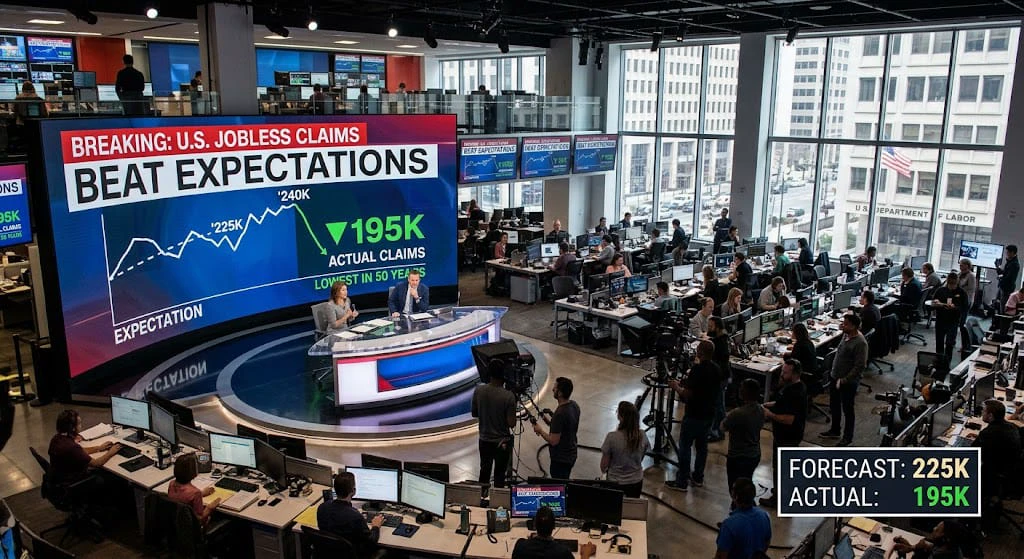
The latest US unemployment claims report has delivered an important economic signal, attracting attention from investors, financial analysts, and cryptocurrency traders worldwide. Initial Jobless Claims increased to 200,000, exceeding market expectations of approximately 194,000–195,000 and rising from the previous revised figure of 191,000.
Although the increase is relatively small, it deserves attention because employment data remain
CryptoEye
#USJoblessClaimsBeatExpectations
US Jobless Claims Rise Above Expectations: What Does This Mean for the Economy, Federal Reserve, Bitcoin, and Global Markets?
The latest US unemployment claims report has delivered an important economic signal, attracting attention from investors, financial analysts, and cryptocurrency traders worldwide. Initial Jobless Claims increased to 200,000, exceeding market expectations of approximately 194,000–195,000 and rising from the previous revised figure of 191,000.
Although the increase is relatively small, it deserves attention because employment data remains one of the most important indicators of economic strength in the United States.
📊 Understanding the Latest Economic Data
The latest figures reveal three important developments:
Actual Initial Jobless Claims: 200,000
Market Forecast: Approximately 194,000–195,000
Previous Reading: 191,000
This means more Americans applied for unemployment benefits than economists anticipated. However, the broader labor market remains relatively resilient, and the four-week moving average stayed unchanged at 195,250.
Continuing unemployment claims also declined by 20,000 to approximately 1.697 million, suggesting that the overall employment picture is more complicated than one weekly number.
🇺🇸 Why Are Jobless Claims Important?
Jobless Claims measure the number of people filing for unemployment benefits for the first time. Investors monitor this indicator because it provides an early picture of employment conditions.
When claims increase consistently, it can indicate that companies are reducing their workforce, economic activity is slowing, and consumer confidence may weaken.
On the other hand, declining claims generally suggest stronger employment conditions and greater economic stability.
The latest report does not establish that the US economy is entering a recession. Instead, it highlights the importance of monitoring employment trends over several weeks.
🏦 What Could This Mean for the Federal Reserve?
The Federal Reserve closely monitors employment conditions when making monetary policy decisions.
If unemployment claims continue increasing, policymakers may become more concerned about economic weakness. This could strengthen arguments for reducing interest rates if inflation also moves toward the Fed's target.
However, if employment remains strong while inflation stays elevated, the Federal Reserve may have less room to ease monetary policy.
This creates an important balance between controlling inflation and supporting economic growth.
Investors should therefore pay attention to upcoming inflation reports, employment figures, wage growth, and Federal Reserve statements.
₿ Potential Impact on Bitcoin and Cryptocurrency Markets
The cryptocurrency market is particularly sensitive to changes in interest-rate expectations, liquidity conditions, and investor sentiment.
Higher-than-expected unemployment claims can create two different market reactions.
First: A Potentially Positive Scenario
If investors interpret rising claims as evidence that the labor market is gradually cooling, expectations of future interest-rate cuts could increase.
Lower interest rates may improve liquidity conditions and encourage investment in risk-sensitive assets, including Bitcoin and other cryptocurrencies.
Second: A Potentially Negative Scenario
If unemployment claims continue rising sharply, investors may become concerned about economic weakness.
During periods of uncertainty, institutional investors sometimes reduce exposure to volatile assets and move toward safer investments.
This could create additional selling pressure across Bitcoin, Ethereum, and the broader cryptocurrency market.
Therefore, one economic report should never be treated as a guaranteed bullish or bearish signal.
📈 What Should Investors Watch Next?
Several indicators will be important in determining the market's next direction:
Future US Jobless Claims reports.
Monthly Nonfarm Payrolls data.
US unemployment and wage growth figures.
Consumer Price Index and Producer Price Index.
Federal Reserve interest-rate decisions.
US Treasury yields and dollar strength.
Bitcoin trading volume and institutional investment flows.
These indicators will help investors understand whether the current employment environment is experiencing temporary fluctuations or a more significant economic slowdown.
🔮 Final Outlook: Opportunity or Warning for Financial Markets?
The latest US Jobless Claims report presents a mixed economic picture. Claims increased to 200,000, exceeding expectations, but the broader labor market continues to show resilience.
For traditional financial markets, the next major question is whether employment conditions will weaken enough to influence Federal Reserve policy.
For cryptocurrency investors, the direction of interest rates, global liquidity, and institutional demand will remain especially important.
My perspective is that investors should avoid making emotional decisions based on a single economic release. A sustained increase in unemployment claims could eventually support expectations of monetary easing, but a sudden deterioration in employment could also create risk-off pressure.
The coming weeks will be important for determining whether the US economy is moving toward a controlled slowdown or facing deeper economic challenges.
The biggest opportunity may emerge when investors understand the relationship between employment, inflation, interest rates, and liquidity rather than reacting to individual headlines.
#USJoblessClaims
repost-content-media
BTC-0.67%
ETH-1.26%
#BTCDown4%
#BTC跌4%
Bitcoin’s Sharp Decline Raises New Questions About the Future of the Crypto Market
The cryptocurrency market is facing another significant test as Bitcoin (BTC) experiences a sharp decline of more than 4%, triggering renewed concerns among investors, traders, and institutional market participants. This is not simply another daily price correction. The speed of the decline, weakening investor confidence, institutional capital outflows, and increasing liquidations suggest that several market pressures are working together.
Bitcoin recently dropped below the psychologically
CryptoEye
#BTCDown4%
#BTC跌4%
Bitcoin’s Sharp Decline Raises New Questions About the Future of the Crypto Market
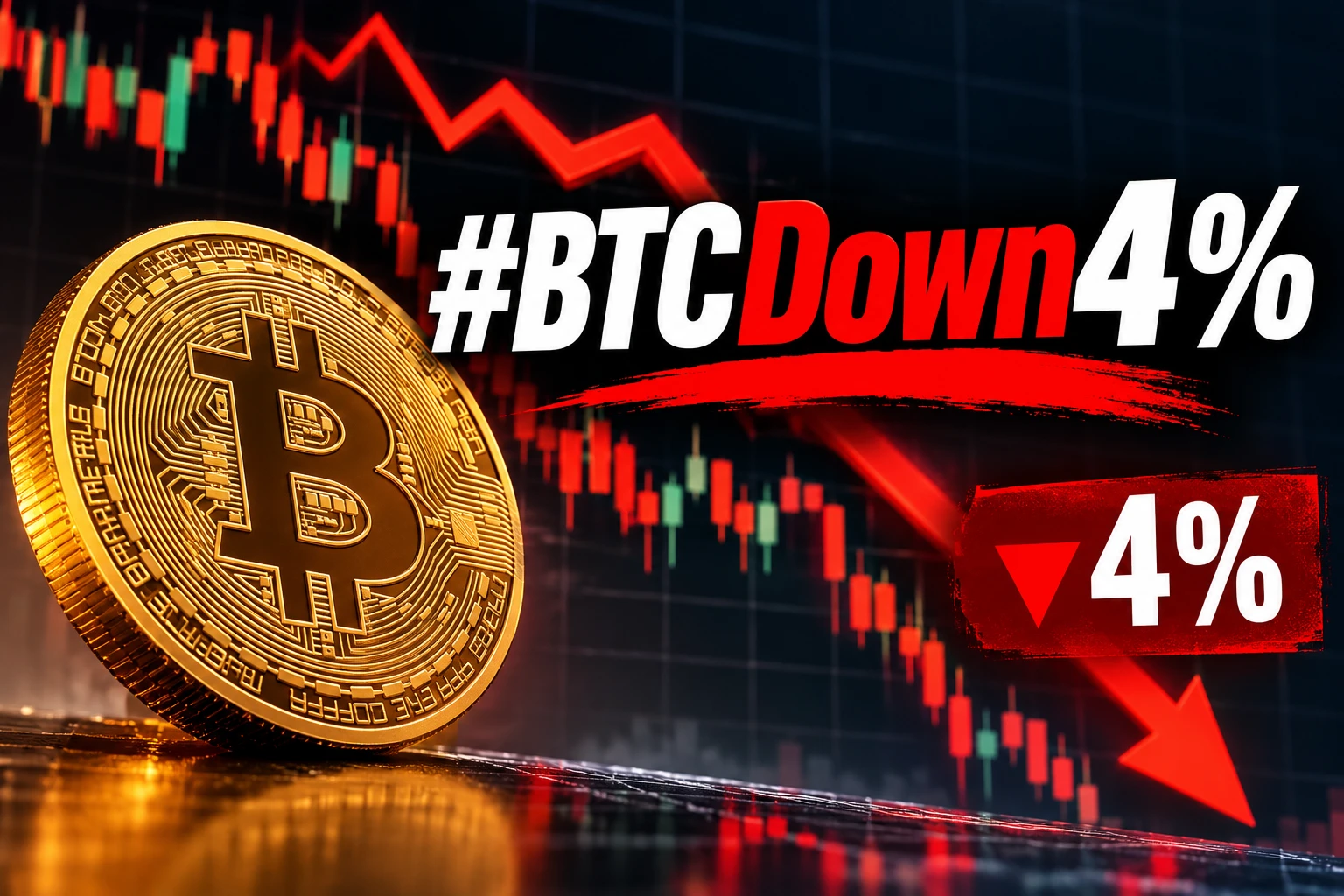
The cryptocurrency market is facing another significant test as Bitcoin (BTC) experiences a sharp decline of more than 4%, triggering renewed concerns among investors, traders, and institutional market participants. This is not simply another daily price correction. The speed of the decline, weakening investor confidence, institutional capital outflows, and increasing liquidations suggest that several market pressures are working together.
Bitcoin recently dropped below the psychologically important $70,000 level, reaching approximately $68,400–$69,000 during November 13 trading. This decline has also placed pressure on Ethereum and other major digital assets, highlighting how closely connected the broader cryptocurrency market remains to Bitcoin's price movements.
But what is actually driving this decline, and should investors expect a recovery or prepare for further downside?
1. Why Is Bitcoin Falling? Understanding the Major Reasons
Federal Reserve Interest Rate Concerns
One of the biggest challenges facing Bitcoin is the changing outlook for US monetary policy. Stronger-than-expected inflation figures have increased expectations that the Federal Reserve could maintain restrictive monetary conditions or potentially raise interest rates.
Higher interest rates generally make traditional financial instruments more attractive compared with riskier assets such as cryptocurrencies. When investors become concerned about tighter monetary policy, they often reduce exposure to speculative investments.
Massive Liquidations in the Derivatives Market
Another major factor is excessive leverage. According to market reporting, approximately $1.47 billion in cryptocurrency positions were liquidated over a 24-hour period, with the majority coming from leveraged long positions.
When Bitcoin falls through important support levels, leveraged traders can face automatic liquidations. These forced sell orders create additional downward pressure, potentially accelerating an already developing correction.
This explains why a decline that initially appears manageable can quickly turn into a much larger market-wide sell-off.
Institutional ETF Outflows
Institutional investment flows are another important factor. US spot Bitcoin ETFs experienced approximately $1.44 billion in cumulative outflows across five consecutive trading sessions through November 11.
This suggests that some institutional investors are reducing their Bitcoin exposure rather than aggressively buying the dip.
Technology Sector Uncertainty
Broader financial markets are also contributing to the pressure. Weakness in technology and artificial intelligence stocks, alongside concerns surrounding Nvidia and its leadership developments, has negatively affected risk sentiment.
Bitcoin increasingly trades alongside broader risk assets during periods of financial uncertainty. When confidence in technology stocks weakens, cryptocurrency markets can experience additional selling pressure.
2. What Does This Decline Mean for the Overall Crypto Market?
Bitcoin remains the leading indicator for much of the cryptocurrency market. Consequently, when BTC experiences a significant correction, altcoins frequently experience even greater volatility.
Ethereum, Solana, XRP, and other major cryptocurrencies may face additional selling pressure as traders reduce risk and move toward cash or stablecoins.
Smaller cryptocurrencies could experience even stronger price movements because their liquidity is generally lower.
However, this environment also creates opportunities for projects with strong fundamentals, genuine adoption, sustainable development, and long-term utility.
The important distinction is between temporary market weakness and fundamental deterioration in individual projects.
3. Could Bitcoin Recover From Here?
Despite the bearish environment, a recovery remains possible.
Bitcoin has historically experienced periods of substantial volatility, and sharp corrections do not automatically indicate the beginning of a prolonged bear market.
The first important development would be BTC establishing support around the $68,000–$69,000 region.
If buyers successfully defend this area and trading volume begins supporting upward movement, Bitcoin could attempt a recovery toward $70,000–$72,000.
A stronger bullish signal would emerge if BTC reclaims the $72,000–$73,000 region and maintains its position above it.
However, investors should remain cautious. If Bitcoin fails to hold its current support region, additional selling could expose lower technical support levels, with approximately $67,000 and subsequently $58,500 becoming areas to monitor.
These are potential technical reference levels, not guaranteed price targets.
4. What Could Trigger Another Market Decline?
Several developments could extend the current correction:
Additional US inflation surprises could strengthen expectations of higher interest rates.
Continued Bitcoin ETF outflows could weaken institutional demand.
Further declines in technology stocks could increase risk aversion.
New waves of leveraged liquidations could accelerate selling.
A stronger US dollar and tighter financial conditions could reduce demand for speculative assets.
If these factors continue simultaneously, Bitcoin could struggle to establish a sustainable recovery.
On the other hand, improving inflation data, stabilizing financial markets, renewed institutional ETF inflows, and declining leverage could create the conditions for a meaningful rebound.
5. What Should Investors Watch Next?
Rather than reacting emotionally to every red candle, market participants should focus on several important indicators:
Bitcoin's ability to defend the $68,000–$69,000 support region.
Changes in US spot Bitcoin ETF inflows and outflows.
Federal Reserve policy expectations and upcoming inflation data.
Futures funding rates and liquidation activity.
Whether Bitcoin can reclaim the $70,000 and $72,000 resistance regions.
These indicators can help distinguish between a temporary liquidation-driven correction and a deeper structural market downturn.
Final Thoughts: Correction or the Beginning of a Bigger Decline?
Bitcoin's latest decline reflects a combination of macroeconomic uncertainty, institutional selling pressure, excessive leverage, and weakening confidence across financial markets.
The current environment is undoubtedly challenging, but it would be premature to declare that Bitcoin's long-term growth story is over.
A short-term bearish outlook remains reasonable while BTC trades below important resistance levels. Nevertheless, a recovery could develop if institutional demand returns, liquidation pressure decreases, and broader financial conditions improve.
For long-term investors, the most important lesson is to prioritize risk management, avoid excessive leverage, and evaluate market fundamentals rather than making decisions based entirely on short-term price movements.
The real question is no longer simply how far Bitcoin can fall. It is whether buyers have enough confidence and capital to turn this correction into the next recovery opportunity.
#BTCDown4%
$NVDA
repost-content-media
BTC-3.45%
NVDA-1.92%
ETH-1.26%
SOL-0.77%
XRP-1.15%
#BTCDown4% #ShareWeekly
Bitcoin is no longer simply approaching the $70,000 support zone. The market has tested and briefly traded below that psychological level, making the next daily and weekly closes extremely important. After struggling around $80,000 earlier in November, BTC fell toward $69,000–$70,000. The latest market snapshot showed BTC near $69,270, down approximately 6.10% over 24 hours and 8.55% over seven days. Its reported 24-hour range was roughly $68,900–$73,858. Market capitalization was around $1.40 trillion, while BTC remained approximately 45.1% below its October 2025 all-
CryptoEye
#BTCDown4% #ShareWeekly
Bitcoin is no longer simply approaching the $70,000 support zone. The market has tested and briefly traded below that psychological level, making the next daily and weekly closes extremely important. After struggling around $80,000 earlier in November, BTC fell toward $69,000–$70,000. The latest market snapshot showed BTC near $69,270, down approximately 6.10% over 24 hours and 8.55% over seven days. Its reported 24-hour range was roughly $68,900–$73,858. Market capitalization was around $1.40 trillion, while BTC remained approximately 45.1% below its October 2025 all-time high near $126,198.
This is a serious correction, but one sharp decline does not by itself prove that a long-term bear market has begun. My view is that Bitcoin is at a decision point: buyers must reclaim lost levels and demonstrate real spot demand, while sellers need a sustained breakdown to prove that lower prices are becoming accepted. I would not call $70,000 a guaranteed floor, and I would not call every rebound a new bull trend.
What the market is telling us
The recent decline has been accompanied by heavy derivatives activity. The latest reported 24-hour futures liquidations were approximately $605.56 million, including about $582.86 million in long liquidations and $22.70 million in short liquidations. Long positions represented roughly 96.3% of the reported liquidations. This points to a painful flush of leveraged bullish positions. It can remove excessive leverage and create conditions for a relief bounce, but liquidation data alone cannot confirm that the bottom is in.
Futures volume was reported near $74.76 billion, compared with approximately $6.39 billion in spot volume. Futures turnover was therefore around 11.7 times spot turnover. Open interest stood near $48.89 billion, down about 4.21% over 24 hours. The weighted funding rate was around 0.0069%. Falling open interest alongside large long liquidations can indicate that crowded positions are being closed. I would still want to see stronger spot buying before treating this reset as a durable bullish signal.
ETF flows are another important piece of the puzzle. Spot Bitcoin ETFs connect traditional investment demand with the BTC market. Continued net outflows can reduce an important source of incremental buying, while several consecutive sessions of net inflows would help confirm that institutional demand is returning. I would watch the flow trend over multiple sessions rather than react to one daily number. A single positive day is encouraging, but a sustained reversal is much more meaningful.
Macroeconomic conditions also matter. Hotter-than-expected US inflation can make investors question how quickly the Federal Reserve can reduce interest rates. If Treasury yields and the US dollar strengthen, liquidity-sensitive assets can face pressure. If inflation cools, yields ease and risk appetite improves, Bitcoin could benefit. The next CPI, employment, Federal Reserve communication and bond-market reaction should therefore be treated as catalysts, not background noise.
The key price map
$68,900–$69,000: This is the recent reported intraday low area. If BTC holds above it and quickly recovers $70,000, it may form an initial short-term base. A repeated test with weaker rebounds would make the support less convincing.
$70,000: The major psychological level. A move back above $70,000 is a first step, not full confirmation. I want to see a daily close above it and a successful retest. If BTC repeatedly closes below $70,000, the market may begin accepting lower prices.
$71,000–$72,000: The first recovery band. Reclaiming this region could indicate that immediate selling pressure is easing. It would be more convincing if spot volume expands and the move is not driven only by short covering.
$73,000–$73,900: The next major resistance zone, with the recent 24-hour high near $73,858. A sustained reclaim of $73,000 and then $73,900 would improve the short-term structure. A rejection here could create another lower high.
$74,000–$75,000: A stronger recovery hurdle. If BTC clears this area and turns it into support, the market could begin targeting $76,000–$77,500. Until then, rallies may remain corrective moves inside a broader decline.
$76,000–$77,500: A larger supply and resistance zone to monitor. A recovery through this band would represent meaningful progress from the $69,000 area, but buyers would still need to challenge $78,000–$80,000.
$78,000–$80,000: The major upside recovery zone. Reclaiming $80,000 would improve confidence and signal that the earlier breakdown is being reversed. A touch is not enough; I would want sustained acceptance above $80,000, stronger spot demand and improving market breadth.
$68,000–$67,000: If the recent low fails and $70,000 cannot be recovered, these are the next downside areas I would monitor. A move into this band would mean the market has extended its correction and buyers need to prove themselves again.
$65,000–$64,000: A deeper bearish scenario, not my base-case prediction. This area would become relevant only if lower supports fail, macro conditions deteriorate and selling pressure remains persistent. Traders should plan for the possibility without assuming it must happen.
How large are the possible moves?
Using $69,270 as an illustrative reference price, a recovery to $70,000 would be approximately +1.05%; $71,000 would be +2.50%; $72,000 about +3.94%; $73,000 about +5.39%; $73,900 about +6.69%; $75,000 about +8.28%; $77,500 about +11.90%; and $80,000 about +15.49%.
On the downside from the same reference, $68,000 would be approximately -1.83%; $67,000 about -3.28%; $65,000 about -6.16%; and $64,000 about -7.60%. These are arithmetic scenario comparisons, not predictions or guaranteed targets. The actual percentages change with the live entry price.
The distance from $69,270 to the October 2025 all-time high near $126,198 is approximately 82.2%. Conversely, the current reference is around 45.1% below that high. This distinction matters: a 45% drawdown from a peak requires a larger percentage gain to recover the same distance. A 45.1% fall cannot be erased by a 45.1% rise.
My answers to the four Gate Square questions
1. If Bitcoin comes near $70,000, what would I do?
I would not make an emotional all-in purchase. Since price has already tested below $70,000, I would first check whether buyers can reclaim and defend that level. A quick recovery above $70,000, followed by a higher low and stronger spot volume, would be an early sign of stabilization. If BTC remains below $70,000 and every bounce is sold, I would stay defensive. My priority would be protecting capital and keeping flexibility.
2. Would I buy the dip?
Yes, but only in stages and only when the price action supports the idea. I would consider a small starter position after a confirmed reclaim of $70,000, not simply because the market has fallen by a certain percentage. A stronger setup would be a move through $71,000–$72,000 followed by a successful retest. A more conservative entry would wait for $73,000–$73,900 to be reclaimed. If BTC breaks below the recent low near $68,900 and cannot recover, I would pause dip buying and reassess lower support zones.
I would divide a planned allocation into portions rather than deploy it all at once. For example, a trader might reserve an initial small portion for a confirmed base, another portion for a reclaim of resistance and the remainder for a later trend confirmation. The exact sizing must depend on account size and acceptable loss; these are examples of process, not fixed investment instructions.
3. Would I reduce my existing position?
If I were carrying an oversized position, especially one using leverage, I would reduce risk when the market repeatedly fails to reclaim resistance or confirms a breakdown below support. I would not wait for liquidation to make the decision for me. Reducing exposure is not the same as abandoning Bitcoin; it preserves the ability to participate if conditions improve. I would never add leverage to recover a loss, move a stop farther away out of fear, or average down without a defined invalidation point.
A long-term spot holder and a short-term futures trader should not use identical rules. A long-term investor may have a planned allocation and a wider time horizon. A short-term trader needs a clear entry, stop, target and maximum loss. Mixing these approaches often turns a manageable trade into an uncontrolled position.
4. Would I wait until BTC reclaims $73,000?
For a larger bullish position, yes. I would prefer a daily close above $73,000–$73,900 and a successful retest rather than chasing a sudden intraday spike. Reclaiming $73,000 would be a useful improvement, but clearing $75,000 would provide stronger evidence that buyers are taking control. If price reaches $73,000 and is rejected again, I would not treat that failed attempt as a confirmed reversal.
Bullish scenario: how could a new recovery develop?
The bullish path begins with BTC defending the recent low around $68,900–$69,000, reclaiming $70,000 and forming higher lows. Buyers would then need to take back $71,000–$72,000, followed by $73,000–$73,900. A sustained move above $75,000 could open a route toward $76,000–$77,500. If that band is reclaimed, $78,000 and $80,000 become the next major tests.
The quality of the rally matters more than the speed. I would look for rising spot volume, several sessions of improving ETF flows, a stable funding rate, open interest rebuilding gradually rather than explosively, and positive market breadth. If price rises while spot demand remains weak and leverage expands rapidly, the rally could be vulnerable to another liquidation event.
From $69,270, a move to $75,000 would be about +8.28%, to $80,000 about +15.49%, and to $85,000 about +22.71%. A more ambitious move to $90,000 would be around +29.91%. These are conditional upside scenarios only; they require resistance to be reclaimed in sequence. They should not be interpreted as a timetable or a promise.
Bearish risk and trading plan
A daily close below $68,900 and failed reclaim puts $68,000 (-1.83%), $67,000 (-3.28%), $65,000 (-6.16%) and $64,000 (-7.60%) in focus. $60,000 means -13.39%; scenarios, not predictions. For a long, wait for $70,000 reclaimed with a higher low; checkpoints: $72,000, $73,900, $75,000 and $80,000. For a short, wait for a failed rebound or confirmed breakdown. Every trade needs an invalidation level, sensible sizing and a stop. Avoid leverage.
Final verdict
I am cautious, not permanently bearish now. Reclaiming $70,000, $72,000 and $73,900 would improve the structure; strength above $75,000 supports recovery. Losing $68,900 puts $68,000, $67,000 and $65,000 in focus. I would buy gradually after stabilization, reduce oversized exposure if support fails, and wait for confirmation before a larger long.
#JensenHuangResigns
$NVDA
repost-content-media
#USOctoberPPIComingSoon
US October PPI: The Inflation Report That Could Change Market Expectations
The countdown to the US October Producer Price Index (PPI) is bringing another important economic event into focus. Investors, traders, and financial analysts are preparing to examine fresh inflation data that could influence expectations surrounding interest rates, monetary policy, and global market sentiment.
But why is this report receiving so much attention?
Because inflation does not begin and end at the consumer level. Before products reach consumers, businesses face production costs, raw
CryptoEye
#USOctoberPPIComingSoon
US October PPI: The Inflation Report That Could Change Market Expectations
The countdown to the US October Producer Price Index (PPI) is bringing another important economic event into focus. Investors, traders, and financial analysts are preparing to examine fresh inflation data that could influence expectations surrounding interest rates, monetary policy, and global market sentiment.
But why is this report receiving so much attention?
Because inflation does not begin and end at the consumer level. Before products reach consumers, businesses face production costs, raw material expenses, transportation charges, energy prices, and other operational pressures. PPI provides valuable insight into these changes by measuring the prices domestic producers receive for their goods and services.
1. Why October PPI Could Be Important
The upcoming report could help determine whether inflationary pressure in the US economy is continuing to cool or showing signs of returning.
A stronger-than-expected reading may indicate that businesses are facing renewed cost pressures. This could make the Federal Reserve more cautious about monetary easing.
Meanwhile, a weaker reading could strengthen confidence that inflation is gradually becoming more manageable.
2. Three Market Reactions Worth Watching
🔴 Bullish Inflation Surprise: If PPI comes in above expectations, markets could interpret it as a warning that inflation remains persistent. Treasury yields and the dollar may strengthen, potentially putting pressure on Bitcoin and other risk-sensitive assets.
🟢 Cooling Inflation: If producer prices increase less than expected, investors may become more optimistic about future interest-rate decisions. This could improve sentiment toward equities and cryptocurrencies.
🟡 Neutral Results: If the numbers match expectations, attention could shift toward core inflation, services prices, and revisions to previous figures.
3. What Could This Mean for Bitcoin and Altcoins?
Crypto markets are particularly sensitive to changes in liquidity expectations and broader economic conditions.
Bitcoin may experience short-term price fluctuations as traders adjust their positions. Ethereum and altcoins could also react depending on overall market confidence and institutional risk appetite.
However, lower PPI does not automatically guarantee a crypto rally, just as higher PPI does not necessarily mean a prolonged market decline.
4. The Federal Reserve Factor
The Federal Reserve's decisions depend on multiple economic indicators, including inflation, employment, consumer spending, and economic growth.
October PPI will therefore be one more important data point in determining whether inflation is moving toward the Fed's long-term target.
Investors should avoid making major decisions based on a single economic release.
5. The Bigger Investment Perspective
This report is an opportunity to understand the relationship between economic data and financial markets.
Professional investors will likely examine not only the headline number but also core PPI, monthly changes, annual trends, and the details behind the report.
The smartest strategy is to prepare for volatility rather than predict every market movement.
Final Thoughts
US October PPI is more than an inflation statistic. It is another important signal that could influence monetary policy expectations and investor confidence.
Whether the numbers surprise markets positively or negatively, the reaction will depend on how they compare with expectations and what they suggest about the future economic environment.
In today's interconnected financial system, understanding macroeconomic developments is becoming increasingly important for every serious market participant.
Watch the data. Understand the signals. Trade with discipline. 🚀
#USOctoberPPI
repost-content-media
BTC-0.67%
ETH-1.26%
#USOctoberPPIComingSoon
US October PPI: The Inflation Report That Could Change Market Expectations
The countdown to the US October Producer Price Index (PPI) is bringing another important economic event into focus. Investors, traders, and financial analysts are preparing to examine fresh inflation data that could influence expectations surrounding interest rates, monetary policy, and global market sentiment.
But why is this report receiving so much attention?
Because inflation does not begin and end at the consumer level. Before products reach consumers, businesses face production costs, raw
CryptoEye
#USOctoberPPIComingSoon
US October PPI: The Inflation Report That Could Change Market Expectations
The countdown to the US October Producer Price Index (PPI) is bringing another important economic event into focus. Investors, traders, and financial analysts are preparing to examine fresh inflation data that could influence expectations surrounding interest rates, monetary policy, and global market sentiment.
But why is this report receiving so much attention?
Because inflation does not begin and end at the consumer level. Before products reach consumers, businesses face production costs, raw material expenses, transportation charges, energy prices, and other operational pressures. PPI provides valuable insight into these changes by measuring the prices domestic producers receive for their goods and services.
1. Why October PPI Could Be Important
The upcoming report could help determine whether inflationary pressure in the US economy is continuing to cool or showing signs of returning.
A stronger-than-expected reading may indicate that businesses are facing renewed cost pressures. This could make the Federal Reserve more cautious about monetary easing.
Meanwhile, a weaker reading could strengthen confidence that inflation is gradually becoming more manageable.
2. Three Market Reactions Worth Watching
🔴 Bullish Inflation Surprise: If PPI comes in above expectations, markets could interpret it as a warning that inflation remains persistent. Treasury yields and the dollar may strengthen, potentially putting pressure on Bitcoin and other risk-sensitive assets.
🟢 Cooling Inflation: If producer prices increase less than expected, investors may become more optimistic about future interest-rate decisions. This could improve sentiment toward equities and cryptocurrencies.
🟡 Neutral Results: If the numbers match expectations, attention could shift toward core inflation, services prices, and revisions to previous figures.
3. What Could This Mean for Bitcoin and Altcoins?
Crypto markets are particularly sensitive to changes in liquidity expectations and broader economic conditions.
Bitcoin may experience short-term price fluctuations as traders adjust their positions. Ethereum and altcoins could also react depending on overall market confidence and institutional risk appetite.
However, lower PPI does not automatically guarantee a crypto rally, just as higher PPI does not necessarily mean a prolonged market decline.
4. The Federal Reserve Factor
The Federal Reserve's decisions depend on multiple economic indicators, including inflation, employment, consumer spending, and economic growth.
October PPI will therefore be one more important data point in determining whether inflation is moving toward the Fed's long-term target.
Investors should avoid making major decisions based on a single economic release.
5. The Bigger Investment Perspective
This report is an opportunity to understand the relationship between economic data and financial markets.
Professional investors will likely examine not only the headline number but also core PPI, monthly changes, annual trends, and the details behind the report.
The smartest strategy is to prepare for volatility rather than predict every market movement.
Final Thoughts
US October PPI is more than an inflation statistic. It is another important signal that could influence monetary policy expectations and investor confidence.
Whether the numbers surprise markets positively or negatively, the reaction will depend on how they compare with expectations and what they suggest about the future economic environment.
In today's interconnected financial system, understanding macroeconomic developments is becoming increasingly important for every serious market participant.
Watch the data. Understand the signals. Trade with discipline. 🚀
#USOctoberPPI
repost-content-media
BTC-0.67%
ETH-1.26%
#Dr.HanOxfordUnionSpeech
#Dr.Han牛津辩论社演讲
From One Founder to an AI-Powered Enterprise: Dr. Han’s Oxford Message Reveals the Future of Entrepreneurship
The Future Belongs to Those Who Know How to Think, Lead, and Build With AI.
What if building a successful business no longer required a large office, an expensive workforce, or millions in initial capital? What if one ambitious individual, supported by artificial intelligence, could accomplish what previously required an entire department?
This is one of the most important questions emerging from the AI revolution, and it closely reflects th
CryptoEye
#Dr.HanOxfordUnionSpeech
#Dr.Han牛津辩论社演讲
From One Founder to an AI-Powered Enterprise: Dr. Han’s Oxford Message Reveals the Future of Entrepreneurship
The Future Belongs to Those Who Know How to Think, Lead, and Build With AI.
What if building a successful business no longer required a large office, an expensive workforce, or millions in initial capital? What if one ambitious individual, supported by artificial intelligence, could accomplish what previously required an entire department?
This is one of the most important questions emerging from the AI revolution, and it closely reflects the message shared by Gate Founder and CEO Dr. Han during his keynote speech at the prestigious Oxford Union.
His speech, built around the philosophy of “Start Alone,” offered an important perspective on entrepreneurship, personal responsibility, technological progress, and the changing relationship between humans and artificial intelligence.
But the deeper message was not simply that people should start businesses alone. It was about understanding how to transform an individual vision into something much bigger through persistence, intelligent decision-making, and technology.
🎓 1. The Meaning Behind Dr. Han’s “Start Alone” Philosophy
One of the strongest lessons from Dr. Han’s 13-year entrepreneurial journey is that every major business begins with a decision.
Before there is a company, there is an idea. Before there is a team, there is an individual willing to accept uncertainty. And before there is success, there are countless challenges that test a founder's patience and determination.
Starting alone does not mean believing that one person can do everything forever. It means taking responsibility for the first step instead of waiting for perfect conditions.
Many potential entrepreneurs spend years waiting for sufficient investment, the right partners, professional connections, or an ideal economic environment.
However, opportunities rarely arrive in perfect packaging.
Dr. Han’s entrepreneurial philosophy highlights an important reality: progress begins when someone is willing to take action despite uncertainty.
Gate’s 13-year journey provides the broader context for this message. Building a business over such a period requires adaptation, strategic thinking, continuous learning, and the ability to respond to changing market conditions.
🤖 2. Boss + AI: A New Model of Entrepreneurship
Perhaps the most interesting idea associated with Dr. Han’s speech is Boss + AI.
This concept represents a fundamental change in how individuals can organize and operate businesses.
Traditionally, an entrepreneur needed multiple people to manage research, marketing, customer communication, financial analysis, content creation, administration, and technical development.
Today, AI tools can assist with many of these responsibilities.
A founder can use AI to:
Research markets and identify emerging opportunities.
Analyze competitors and understand customer behavior.
Develop marketing strategies and professional content.
Automate repetitive administrative tasks.
Generate ideas, organize information, and improve productivity.
Support software development and technical problem-solving.
Provide faster access to knowledge and learning resources.
This does not mean AI automatically creates a successful company. Rather, it gives individuals additional capabilities that were previously expensive or difficult to access.
The entrepreneur remains responsible for setting objectives, evaluating information, managing risks, and making final decisions.
In simple terms, AI can increase execution capacity, but the human founder must provide direction.
🧠 3. Why Human Judgment Still Matters
One of the biggest mistakes people could make during the AI revolution is assuming that access to powerful technology guarantees success.
It does not.
AI can generate hundreds of business ideas, but it cannot guarantee that customers will purchase the resulting products.
It can analyze market information, but the quality of its conclusions depends on the available data and the questions being asked.
It can help develop a strategy, but entrepreneurs must still understand competition, timing, financial limitations, and customer expectations.
This is why decision-making remains one of the most valuable entrepreneurial skills.
A successful founder must know when to move forward, when to change direction, when to invest, and when to stop pursuing an unsuccessful idea.
Technology can make execution faster, but poor decisions can also become more expensive when executed faster.
The real competitive advantage comes from combining human judgment with AI-powered capabilities.
🌍 4. AI Is Lowering the Barriers to Starting a Business
For decades, launching a business often required substantial resources.
A person might need employees, office space, specialized software, professional consultants, and significant operational expenses.
AI is changing this structure.
An independent developer can build prototypes faster. A small marketing agency can serve more clients. A content creator can research and produce material more efficiently. A student with a valuable idea can explore a business opportunity without immediately building a large organization.
This creates opportunities for people who previously lacked access to traditional business resources.
However, lower entry barriers also mean greater competition.
If everyone can access similar AI tools, simply using AI will not make a business unique.
The difference will come from creativity, customer understanding, execution quality, trust, and the ability to solve real problems.
📈 5. From Individual Effort to Building a Powerful Team
Another important lesson behind the Start Alone philosophy is understanding the difference between starting independently and growing independently.
A founder may begin with AI assistance and limited resources, but sustainable growth eventually requires more than individual productivity.
As a company expands, it needs people who bring different experiences, technical expertise, leadership abilities, and creative perspectives.
AI can help coordinate work and reduce unnecessary complexity, but human collaboration remains essential for building strong organizations.
The smartest entrepreneurs will not necessarily replace every employee with AI.
Instead, they will identify where technology creates efficiency and where human talent creates additional value.
The future is not simply about humans versus machines. It is about productive cooperation between human intelligence and artificial intelligence.
💡 6. The New Competitive Advantage: Learning Faster
In the traditional business environment, experience and access to specialized knowledge often created significant advantages.
AI is making knowledge more accessible.
A person can explore unfamiliar industries, understand complex concepts, test business ideas, and develop new skills much faster than before.
This creates an important opportunity for younger entrepreneurs and people entering the digital economy.
But information alone is not enough.
The real advantage belongs to those who can transform information into practical knowledge, knowledge into decisions, and decisions into measurable results.
Continuous learning, experimentation, and adaptability will become increasingly important.
🔮 7. What Does This Mean for the Future?
The next generation of successful businesses may not necessarily begin with hundreds of employees or massive investments.
Some could begin with a founder, a clear vision, a laptop, and a carefully selected collection of AI tools.
As AI capabilities improve, smaller teams may achieve greater operational output.
This could create new opportunities across technology, education, financial services, digital commerce, research, and creative industries.
Nevertheless, entrepreneurs must remain aware of cybersecurity, data privacy, regulatory requirements, financial risks, and the limitations of automated systems.
The companies that succeed will be those that combine innovation with responsibility.
🏆 Final Thoughts: Start Alone, But Think Beyond Yourself
Dr. Han’s Oxford Union appearance offers an important reminder for the next generation of entrepreneurs.
You do not need to wait until everything is perfect to begin. You need a meaningful idea, the courage to take responsibility, and the willingness to learn through experience.
AI is creating extraordinary opportunities, but technology itself is not the destination.
The real destination is building something useful, sustainable, and valuable.
Start Alone. Think Strategically. Execute With AI. Grow With People.
That is the entrepreneurial mindset that could define the next decade.
The biggest opportunity in the AI era may not belong to those who have the most resources. It may belong to those who learn fastest, make better decisions, and know how to combine human ambition with technological intelligence.
💬 Let's discuss: If you were starting a business from zero today, what would be your first priority: developing an innovative idea, mastering AI tools, finding customers, or building the right team?
Share your perspective on Gate Square.
#DrHan
repost-content-media
Load More