Share crypto content and earn up to 60% commissions through content mining.
placeholder
gatefun
#TetherReservesExceedLiabilitiesBy6.8B
Tether’s first full audit changes the transparency conversation
Tether has reached an important milestone with its first-ever full financial audit. According to the information provided, KPMG issued an unqualified opinion, confirming that Tether’s reserves exceeded its liabilities by $6.814 billion.
The headline number is significant, but the verification process is what makes this development particularly interesting.
Auditors reportedly physically counted every gold bar held by Tether, rather than relying solely on information provided by custodians. T
USDT0.00%
post-image
  • Reward
  • Comment
  • Repost
  • Share
💖 Gate Community’s Qixi-exclusive effects are live!
Heart rain and flower effects are here to set the festive mood. Celebrate Qixi with us! 🥳
💫 Unlock Qixi-exclusive features by interacting:
1️⃣ Trigger a shower of hearts with any post
2️⃣ Unlock the Qixi-exclusive flower effect with any like
3️⃣ Send “Qixi/🥰” to trigger a screen full of hearts
4️⃣ Add a Qixi avatar frame to your profile
👉️ Try it now: https://www.gate.com/post
Post, like, chat, and watch livestreams—let’s celebrate Qixi together!
Note: Update to the app version v8.31.0 or above to enjoy the effects.
[@Gate_Square
post-image
  • Reward
  • Comment
  • Repost
  • Share
#OpenAIAnnualRevenueSurpasses40B
OpenAI Annual Revenue Surpasses $40 Billion
The Milestone That Shook the AI World
One of the biggest numbers in technology just got even bigger. According to Bloomberg, reported on August 13, 2026, OpenAI's annualized revenue run rate has now surpassed $40 billion, roughly doubling its pace from the end of 2025. That means the company behind ChatGPT is now pulling in the equivalent of over $3.3 billion in revenue every single month, a level of monetization that very few software companies in history have ever reached this quickly.
To put this into perspective,
post-image
  • Reward
  • Comment
  • Repost
  • Share
$AKE Signal】1H Volume Breakout, Long Attack
$AKE 1H volume breakout, current price 0.01112, directly target longs. RSI 1H 77.57, 4H MACD bullish expansion, order book depth imbalance 5.99%, Bid/Ask 1.13, with solid bids below. Buyers are continuously pushing prices higher, with a 60%+ surge over 15 minutes and strong bullish momentum. However, the 1H MACD histogram is shrinking, and a rapid pullback is possible if volume weakens. OI is stable, and the funding rate is 0.0082%, with longs not overly crowded. Exercise caution when chasing in the overbought zone; with a risk-reward ratio of 1.5,
AKE71.27%
BTC-1.19%
ETH-0.61%
SOL-0.68%
DOS1.36%
View Original
post-image
  • Reward
  • Comment
  • Repost
  • Share
#SandiskSurges14%OnNewFinancialFramework
SANDISK SURGES 14%: THE NEW FINANCIAL FRAMEWORK CHANGES THE AI MEMORY STORY
THE BIG MARKET MOVE
$SNDK became one of the biggest semiconductor movers after Sandisk unveiled an aggressive long-term financial framework at its Investor Day. Shares jumped roughly 14% on August 13 as investors reacted to management's outlook for sustained revenue growth, significantly higher margins and stronger free-cash-flow generation.
This was not simply a reaction to one quarterly earnings number.
The market was responding to a much bigger change in expectations for ho
post-image
  • Reward
  • Comment
  • Repost
  • Share
I've been working on on-chain strategies recently. For speed, I enabled QuickNode RPC, thinking subscribing would be enough. I checked the bill today and cried myself unconscious 🥲
View Original
post-image
  • Reward
  • Comment
  • Repost
  • Share
40x leveraged BTC long position ! Whale bets on Bitcoin upside , c
gate liveLIVE
2,087
live-coin
  • Reward
  • Comment
  • Repost
  • Share
Someone asked: I want to backtest six months of Polymarket data, but the free quota isn’t enough. Should I just buy PMData Plus?
Don’t rush to buy it.
What you may be missing isn’t “more data,” but a different type of data:
For signal direction only → official prices-history
For calculating spreads, depth, and slippage → historical order book L2
For researching a specific wallet → address activity / on-chain trades
For starting to store continuous order book data today → collect it yourself via the official WebSocket
You can check PMXT for free L2 first, but be sure to check the latest files a
View Original
post-image
  • Reward
  • Comment
  • Repost
  • Share
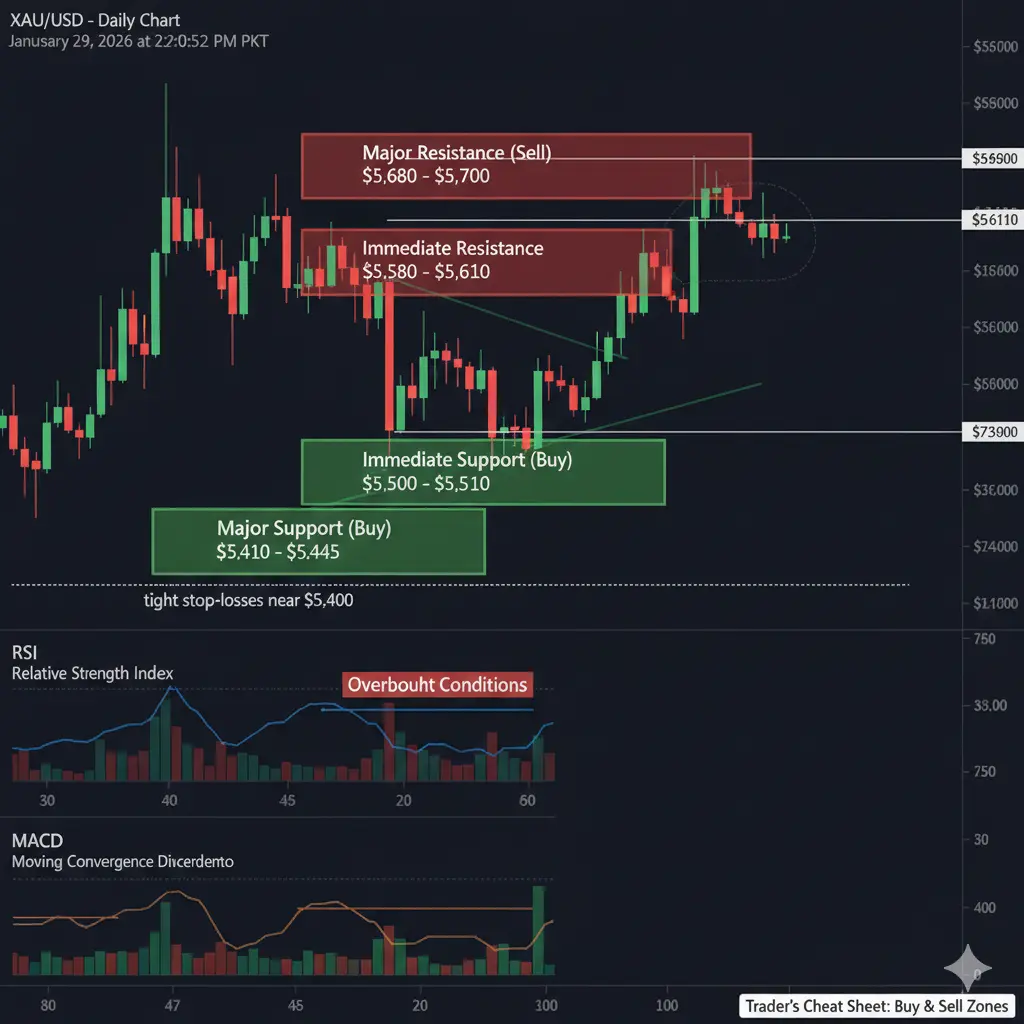
As long as XAUUSD does not make a higher high, there is potential for a decline. For scalping, do not hold positions for too long.
$XAUUSD
XAUUSD0.92%
View Original
post-image
post-image
post-image
Cryptocurrency_ALERT
XAUUSD 5-minute did not form a Lower High, but instead formed a lower low—is the price not strong enough to rise??.
#GateSquareQixiCelebration
$XAUUSD
repost-content-media
  • Reward
  • 9
  • Repost
  • Share
BurnerAddressFlow:
Yesterday I got greedy for one more leg and ended up giving back all my profits. Seriously, don’t drag it out!
View More
#TetherReservesExceedLiabilitiesBy6.8B
A $6.8 BILLION BUFFER CHANGES THE STABLECOIN TRANSPARENCY STORY
Stablecoins have become critical infrastructure for crypto markets, but one question has remained constant: how much confidence can users place in an issuer's reserves?
Tether's latest milestone puts a substantial number behind that question. On August 13, 2026, Tether announced that KPMG had completed a comprehensive independent audit of Tether International's financial statements for the year ended December 31, 2025.
The result: reserves exceeded liabilities by $6.814 billion.
THE NUMBER T
USDT0.00%
BTC-1.19%
post-image
Falcon_Official
#TetherReservesExceedLiabilitiesBy6.8B
A $6.8 BILLION BUFFER CHANGES THE STABLECOIN TRANSPARENCY STORY
Stablecoins have become critical infrastructure for crypto markets, but one question has remained constant: how much confidence can users place in an issuer's reserves?
Tether's latest milestone puts a substantial number behind that question. On August 13, 2026, Tether announced that KPMG had completed a comprehensive independent audit of Tether International's financial statements for the year ended December 31, 2025.
The result: reserves exceeded liabilities by $6.814 billion.
THE NUMBER THAT MATTERS
The $6.814 billion figure represents the difference between the assets held by Tether and the obligations owed to USDT holders at the audited year-end.
That distinction is important.
Rather than simply showing that reserves exist, a full financial audit provides an externally examined view of the company's financial statements, controls and reporting. It therefore represents a deeper level of verification than the quarterly attestations the market has historically relied upon.
For an industry where transparency has frequently been debated, that difference matters.
WHAT DOES A $6.8B SURPLUS ACTUALLY MEAN?
USDT is designed to maintain a 1:1 relationship with the U.S. dollar, supported by reserve assets.
A reported $6.8 billion excess of reserves over liabilities creates a significant financial buffer. It means the audited year-end asset position exceeded the obligations represented by the liabilities on the balance sheet.
Tether's reserve portfolio has been heavily weighted toward liquid assets, particularly U.S. Treasury bills, while also including exposure to assets such as Bitcoin and gold.
The company's financial performance has also been substantial, with reported profits exceeding $10 billion during the first nine months of 2025.
BUT THE TIMING MATTERS
There is an important distinction investors and market participants should keep in mind.
The KPMG audit covers the financial position as of December 31, 2025.
More recent quarterly reporting presented a different snapshot, with excess reserves narrowing to approximately $4.1 billion by mid-2026.
That does not invalidate the audited result. It simply highlights the difference between an audited historical financial statement and a more recent reserve attestation.
Markets should therefore evaluate both pieces of information rather than treating one figure as a permanent balance.
WHY THE AUDIT IS A BIG DEAL
USDT sits at the center of the digital-asset economy.
It is widely used for trading, settlement, liquidity management and transfers across crypto markets. Because of that scale, confidence in the issuer's ability to meet its obligations is more than a corporate issue it can influence the stability of a much broader financial ecosystem.
A clean independent audit showing a $6.814 billion reserve surplus gives users, institutions and regulators an externally verified reference point.
That is the real significance of the announcement.
FROM TRUST TO VERIFICATION
For years, the stablecoin industry has operated under intense scrutiny over reserve transparency.
Quarterly attestations provide valuable snapshots, but a comprehensive independent audit represents a different standard of financial examination.
Tether's latest milestone therefore moves the conversation from:
“Are the reserves really there?”
toward:
“How consistently can the industry maintain independently verified transparency?”
That shift could prove more important than the headline number itself.
THE BIGGER STABLECOIN PICTURE
Stablecoins are increasingly becoming the settlement layer connecting crypto markets with broader digital finance.
As adoption grows, transparency expectations will inevitably rise alongside it. Institutions and regulators are likely to demand clearer information about reserves, liabilities, liquidity and financial controls.
Tether's audited $6.814 billion surplus sets a measurable benchmark for that discussion.
The most important takeaway is not that one audit ends every debate. It is that independent verification provides a stronger foundation for confidence than claims alone.
For the stablecoin sector, that is a meaningful step toward a more transparent and institutionally mature financial system.
#MyQixiTradingShare
#ContentMining
#GateSquare
@Gate_Square
repost-content-media
  • Reward
  • Comment
  • Repost
  • Share
We made it clear that the rebound would be limited. The evening rebound faced resistance, and we gave a level around 1900. The current pullback touched a low of 1863, offering only 29 points of room; overall volatility was not significant!#GateLaunchpool瓜分141万枚DOS $ETH
ETH-0.64%
View Original
post-image
post-image
  • Reward
  • Comment
  • Repost
  • Share
#GateLaunchpool141MDOS Gate Launchpool |
Gate Launchpool continues to give crypto users another way to explore newly introduced token opportunities through staking-based rewards.
📊 Market Snapshot
• Platform: Gate Launchpool
• Event: #GateLaunchpool141MDOS
• Model: Stake eligible assets → receive token rewards
• Reward timing: Hourly distribution may apply
• Participation: Based on the individual project’s eligibility rules
• Risk level: Crypto assets remain highly volatile
For traders and long-term crypto participants, Launchpool can be an interesting way to stay connected with new projects
post-image
  • Reward
  • Comment
  • Repost
  • Share
SPCX pulled back as expected after reaching resistance—has the rebound ended?
Here is the conclusion first—the decline from 149.6 should still be viewed as a correction of the rally from 104.85 to 149.6, as long as the body of the daily candle does not break below 130.65. As long as this level holds, the rebound structure has no chance of being broken, and there is still room to the upside once the correction ends.
Looking back at this market move, it is actually quite interesting.
When I judged on August 5 that SPCX was about to begin a major rebound, the market consensus was “it will fall be
SPCX-3.17%
View Original
post-image
post-image
  • Reward
  • Comment
  • Repost
  • Share
#TetherReservesExceedLiabilitiesBy6.8B
Tether's Reserve Cushion: More Than Just Backing Every Dollar
There is a number in Tether's balance sheet that most people scroll past, and it tells a far more important story than the headline "USDT is backed one to one." When we say a stablecoin is fully reserved, we usually mean that for every token in circulation, the issuer holds a dollar of assets. That is the floor. But what matters for genuine safety is what sits above that floor, the layer of extra capital that absorbs market shocks, mark to market swings, and redemption pressure all at once. Te
post-image
HighAmbition
#TetherReservesExceedLiabilitiesBy6.8B
Tether's Reserve Cushion: More Than Just Backing Every Dollar
There is a number in Tether's balance sheet that most people scroll past, and it tells a far more important story than the headline "USDT is backed one to one." When we say a stablecoin is fully reserved, we usually mean that for every token in circulation, the issuer holds a dollar of assets. That is the floor. But what matters for genuine safety is what sits above that floor, the layer of extra capital that absorbs market shocks, mark to market swings, and redemption pressure all at once. Tether calls this its excess reserve buffer, and at the end of 2025 the auditor KPMG verified it at around 6.8 billion dollars. Your framing is exactly right: if the reserves exceed the outstanding liabilities by roughly 6.8 billion dollars, then the company can honor every single outstanding obligation and still be left with a meaningful cushion of its own capital on top.
Let us walk through the arithmetic to see why this cushion is so important. Suppose Tether had a hundred billion dollars of obligations on its books, obligations that in theory could be presented for redemption at any moment. Against that, suppose it held roughly one hundred and six point eight billion dollars in total assets, the bulk of it in short term US Treasury bills, cash, and cash equivalents. The difference between the two is the buffer, about six point eight billion dollars in this scenario. That gap is not a rounding error and it is not a marketing figure. It is the amount by which assets exceed liabilities, and it is the layer that would have to be completely wiped out before even a single USDT token could be at risk of losing its one to one value. In other words, the reserve is overcollateralized by six point eight billion dollars, and that is before counting the fact that the core reserve itself is heavily weighted toward ultra liquid, low risk government debt.
This is the essence of what makes the situation reassuring rather than worrying. Many critics focus on the sheer size of Tether's balance sheet, pointing out that around a hundred and eighty billion dollars of token liabilities is an enormous figure. That is true on its face, but size alone is not a measure of fragility. What matters is the quality and the surplus of the backing. When the reserve is dominated by short dated US Treasury bills, the assets are not speculative bets that can evaporate overnight. They are obligations of the United States government that mature in a matter of weeks or months. When those are combined with physical gold, a strategic Bitcoin position, and a pool of overcollateralized secured loans, the resulting portfolio behaves more like a conservatively managed sovereign wealth fund than a leveraged trading book. And sitting on top of all of that is the excess reserve buffer, the extra six point eight billion dollars that exists purely to absorb damage. That is what the reserve cushion represents in practice.
The historical record reinforces the point. The challenge in the stablecoin industry has never really been that the good days exposed weakness. It has been that stress events, sudden market crashes, panic withdrawals, or sharp drops in the price of volatile assets, reveal whether an issuer can survive when redemptions arrive all at once. An overcollateralized reserve with a dedicated buffer is precisely the structure built to survive those moments. When gold and Bitcoin decline in value, the mark to market losses reduce the buffer before they can touch the core backing of the token. That is the entire point of the cushion. It is the first layer to get scratched, which means the redeemability of USDT itself stays intact far longer under pressure. A stablecoin without such a buffer is one bad week away from a solvency question. A stablecoin with a multi billion dollar cushion can absorb repeated shocks and still stand on its one to one foundation.
The trend line adds even more confidence. Tether's excess reserves have been growing through recent cycles, rising from about 5.6 billion dollars in early 2025 to a record figure in the first quarter of 2026. In that first quarter of 2026, total assets climbed to roughly one hundred and ninety one point seven billion dollars against liabilities of about one hundred and eighty three point five billion dollars, which pushed the net equity buffer to a record area around eight point two billion dollars. That represented growth of roughly forty seven percent year over year in the size of the protective layer. The profitability story is equally telling. Tether generated a net profit of around 1.04 billion dollars in the first quarter of 2026 and booked a much larger profit for the full year of 2025, in the range of roughly ten billion dollars. That steady stream of earnings, derived mostly from the yield on its Treasury portfolio, keeps feeding the buffer and the balance sheet, allowing the company to keep strengthening its capital position rather than merely maintaining it.
To be balanced, the quarter that followed brought the buffer down, and it is worth understanding why before drawing any conclusion. By the end of June 2026, excess reserves had fallen from the record eight point two billion dollars to approximately 4.11 billion dollars, according to the attestation prepared by accounting firm BDO. That was a drop of roughly forty percent in a single quarter, and it happened even while net operating profit rose to about 1.5 billion dollars. Seen in isolation, a shrinking cushion looks alarming, but the cause is largely mark to market movement rather than a hole in the balance sheet. Gold prices fell sharply during that period, down more than fourteen percent over the quarter, and Bitcoin also weakened. Because Tether holds roughly twenty billion dollars of physical gold and around seven billion dollars of Bitcoin as reserve assets, those unrealized losses directly reduced the reported excess reserve buffer, even though the underlying liabilities were still fully covered. In other words, the buffer moved down because a volatile corner of the portfolio lost value, not because the company lost the ability to back its tokens.
The story only becomes fully reassuring when you place that quarter in context. The four point one one billion dollar figure at the end of June 2026 still represents a substantial overcollateralization on a base of roughly one hundred and eighty four billion dollars in liabilities. It remains comfortably above the cushion Tether carried at the end of 2025, before the record first quarter, and it is still a multi billion dollar layer of capital dedicated to protection. Meanwhile, the KPMG audit that verified the 6.8 billion dollar cushion at the end of 2025 marked a meaningful step in the transparency journey, moving Tether from reliance on attestations alone toward a full Big Four financial statement audit for the first time, a process that formally began in March 2026. Attestations give a snapshot of assets at a single moment, whereas an audit examines systems, controls, and reporting over a period. The two are different levels of assurance, and the shift toward a full audit is genuinely constructive for anyone who cares about how the reserve is actually managed.
There is also a distinction worth keeping in mind between reserve composition and reserve safety. Roughly seventy seven percent or more of Tether's reserve sits in cash and cash equivalents, heavily weighted toward US Treasury bills, with smaller positions in precious metals, Bitcoin, secured loans, and other investments. Some commentators question the inclusion of gold and Bitcoin at all, pointing out that volatile assets can fall in value against the dollar the token is meant to track. That is a legitimate observation, and it explains exactly why the excess reserve buffer exists. The whole design is that the volatile holdings are layered on top of a highly liquid, low risk core, and the surplus cushion absorbs their mark to market swings. As long as the overcollateralization survives, and it has, the token's peg and its redeemability remain protected. That is why the more accurate way to read Tether's balance sheet is to watch the buffer rather than fixate on the size of the liability side.
What does all of this mean for the average user of USDT? It means the token is backed by a reserve that exceeds its obligations by billions of dollars, structured mostly in short dated government debt, and topped with a dedicated capital cushion that exists precisely to absorb exactly the kind of shocks that have historically broken less careful issuers. The six point eight billion dollar figure at the heart of this discussion is not a vague number. It is the verified surplus of assets over liabilities, the layer that would have to be erased before even one token dollar could be threatened. When you read the balance sheet as reserved liabilities with a cushion on top, rather than as a precarious tower of debt, the picture shifts from anxiety to something closer to measured confidence. The reserve is not barely adequate. It is deliberately overcollateralized, and the buffer is the reason.
To close the loop on the core idea: if Tether held one hundred and six point eight billion dollars in assets against one hundred billion dollars in obligations, then its reserve liabilities would exceed the bare minimum by roughly 6.8 billion dollars. That is the surplus, the protective pillow, the hidden safety layer. It is the difference between a stablecoin that merely claims to be backed and one that demonstrably carries a cushion large enough to survive stress, absorb mark to market losses, and keep every token redeemable at one dollar. As the attestations continue to show overcollateralization, and as the first full audit moves toward completion, that 6.8 billion dollar number stands as the strongest single answer to the question of whether the reserve is strong enough. It is, and then some.
repost-content-media
  • Reward
  • Comment
  • Repost
  • Share
#BitcoinTrendReversalSignalEmerges
Bitcoin Trend Reversal Analysis: Early Signs of a Shift from Bearish to Bullish
As of August 14, 2026, Bitcoin is trading at approximately $62,902, showing the first meaningful signs that its sustained bearish trajectory may be transitioning toward a bullish reversal. This analysis examines the technical, on-chain, macro, and sentiment signals that together point to a critical inflection point. However, the signals are early and mixed, and confirmation is far from complete. This is not investment advice.
Current Price and Trend Context
Bitcoin's current spot
post-image
  • Reward
  • Comment
  • Repost
  • Share
#BitcoinTrendReversalSignalEmerges
Bitcoin is once again giving traders something important to watch.
The emergence of a potential trend-reversal signal does not mean that a new bull run is guaranteed. It means market participants may be seeing changes in momentum, structure, liquidity, or sentiment that could potentially signal a shift in Bitcoin's current trend.
This is where discipline becomes more important than excitement.
Bitcoin rarely moves in a straight line. A reversal can begin quietly, with momentum indicators improving, selling pressure weakening, support levels holding, and buye
BTC-1.19%
post-image
  • Reward
  • Comment
  • Repost
  • Share
$SNDK #SandiskSurges14%OnNewFinancialFramework
SanDisk Takes Center Stage in Memory Sector with New Financial Targets
SanDisk sent a strong signal in the memory and storage sector with its three-year financial framework announced at its 2026 Investor Day. The company's targets, covering fiscal years 2028-2030, are seen as an ambitious step toward changing the traditional memory cycle perception. Following this announcement, SNDK shares rose by approximately 14%.
SanDisk's New Financial Targets
The company announced the following targets for the next three years:
• Revenue Growth: A target of
SNDK6.68%
post-image
  • Reward
  • Comment
  • Repost
  • Share
I’m dying laughing—here’s the conversation:
The first time—
A: Hi, beautiful.
Me: I’m not a beauty (mainly because I’m not beautiful).
A: A guy? 😂
The second time—
B: Hi, bro.
Me: Is it possible I’m not a bro? (Since we had to send voice messages, I was afraid I’d scare him, because I have scared someone before @Gate_luqingxiao)
B: A younger brother? A college guy? 😂😂
The third time—
I was talking about playing soccer in high school and said I had slide-tackled a girl.
C: I want to know whether anything happened between you and that girl afterward. 😂😂😂
The fourth time—
D: Are you a beaut
View Original
post-image
  • Reward
  • Comment
  • Repost
  • Share
The S&P 500 has hit another record high, but honestly, the closer it gets to 8,000 points, the less I want to blindly call for more upside. 👀On August 13, the S&P 500 touched 7,800 points intraday for the first time, just seven days after breaking above 7,700 points on August 4. Although it ultimately closed at 7,798.99, failing to hold above 7,800, it still set a new record closing high. The logic behind this rally is clear: U.S. July PPI came in below expectations, further easing rate-hike pressure; corporate earnings are still growing, while AI continues to provide the market with room for
SPYX0.02%
SPX-0.19%
RDDT13.94%
View Original
post-image
  • Reward
  • 2
  • Repost
  • Share
EmotionThermometer:
At high levels, you really need to stay alert. The same negative news can be a golden opportunity at the bottom, but at the top it could trigger a waterfall.
View More
Load More

Join 40 M users in our growing community

⚡️ Join 40 M users in the crypto craze discussion
💬 Engage with your favorite top creators
👍 See what interests you
  • Pinned