Square
Following
Hot
News
Notifications
Profile
Share your thoughts
placeholder
Article
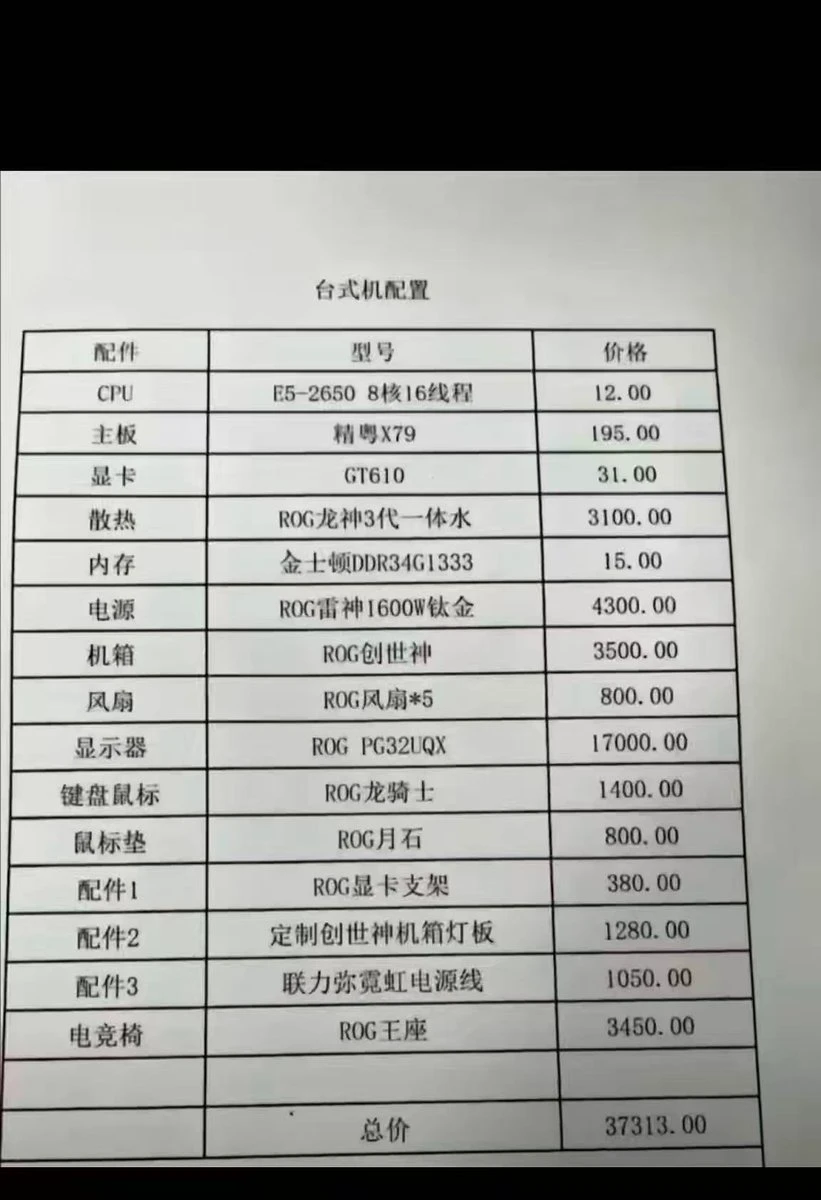
This PC cost 37,000. What do you guys think of the specs—are they beastly?
post-image
  • 1
Why Do Stop-Losses Keep Getting Hit, Only for the Market to Move as Expected Afterward?

In cryptocurrency trading, many people have experienced this:

You buy BTC, and a slight price dip triggers your stop-loss. Just after you sell, the market starts rising again. The same thing happens when shorting: the price first moves up and hits your stop-loss, then suddenly drops.

Why do your stop-losses keep getting hit?

First, your stop-loss may be set too close to the current price. Cryptocurrency markets are volatile, and normal price pullbacks over short periods are common. If the stop-loss dist
post-image
BTC-0.67%
Trenches
mihao
m
bade
b
mihao
4Cxj...pump
Market Cap
$.
Change
.
24h Vol
$.
Holders
.
AGT
A
bade
b
AGT
0x5d...e274
Market Cap
$.
Change
.
24h Vol
$.
Holders
.
FOOD
F
bade
b
FOOD
FTu5...pump
Market Cap
$.
Change
.
24h Vol
$.
Holders
.
IDOL
I
bade
b
IDOL
0x3b...ab07
Market Cap
$.
Change
.
24h Vol
$.
Holders
.
AI
A
bade
b
AI
2T56...pump
Market Cap
$.
Change
.
24h Vol
$.
Holders
.
Turns out AI data centers are this noisy.
In cryptocurrency trading, many people believe that as long as they can accurately predict whether BTC will rise or fall, they can earn consistent returns. But reality is often the opposite: some traders are right fairly often, yet their accounts never grow steadily. The problem may not be direction, but position sizing.

Why is position sizing so important?

First, oversized positions can magnify losses. With the same 2% drop in BTC, a trader with a small position may experience only normal volatility, while a heavily invested trader using high leverage could suffer severe losses or even face
post-image
BTC-0.65%
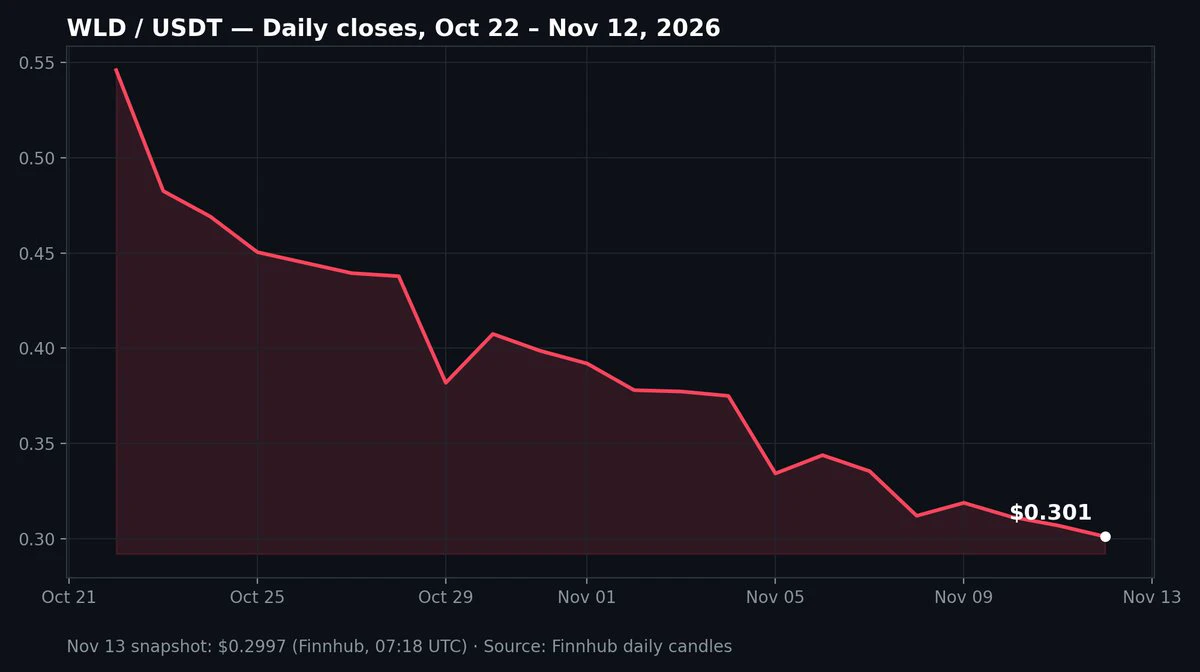
World now counts 40M users and nearly 20M Orb-verified humans — the network keeps growing while $WLD keeps bleeding. When adoption and price disagree this hard, something has to give. What breaks first: price snaps up, or growth stalls?
post-image
WLD-5.61%
Why Do You Always Call the Direction Right but Still Fail to Make Money?

In crypto trading, there is a particularly frustrating situation:

You correctly predict that BTC will rise, but end up making no money; you spot a downtrend in advance, yet your account still takes a loss.

Why do you still fail to make money even when you get the direction right?

In fact, predicting the direction is only one part of trading. What really determines the outcome also includes your entry price, position size, stop-loss settings, and execution discipline.

First, timing your entry is crucial. Suppose BTC r
BTC-0.65%
crypto market update
live-cover
LIVE1,895
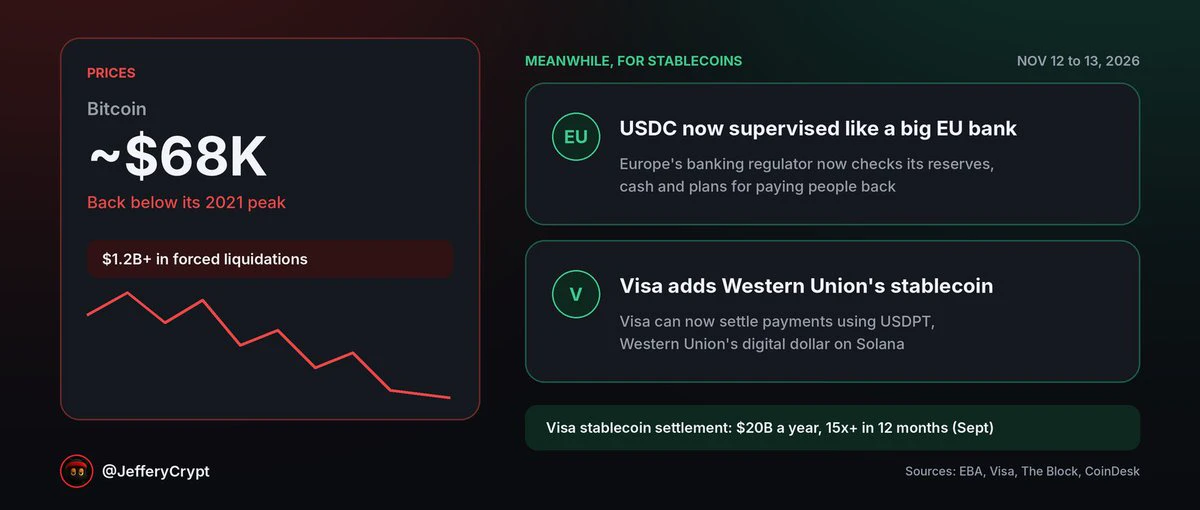
Bitcoin is back near $68K and the timeline feels like a funeral.
But yesterday, two things happened that got far less attention than the price.
Europe’s banking regulator started directly supervising USDC.
It now checks USDC’s reserves, its cash and its plans for paying people back, the kind of close watch usually kept on banks.
On the same day, Visa added Western Union’s stablecoin to its payment network.
A company that has moved money across borders for over 150 years now has its own digital dollar, and Visa can use it to settle payments.
Visa says its stablecoin settlements were already run
post-image
BTC-0.67%
USDC+0.01%
V-1.24%
UNION+1.62%
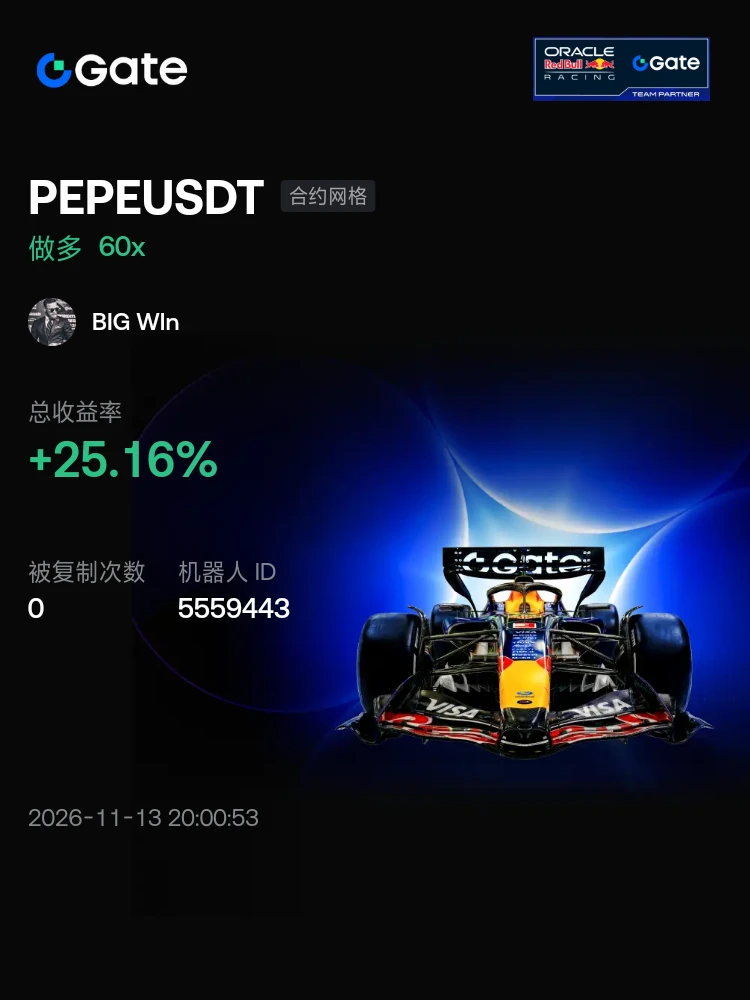
#交易机器人 I'm using a PEPEUSDT contract grid bot on Gate—join me in copy trading
post-image
Double Rewards in the Convert Lucky Draw

https://www.gate.com/campaigns/7021?ref=VFLFVAWKBQ&ref_type=132

- Trade $100 using Convert
- Pair ___ USDT / USDG
post-image
USDG+0.02%
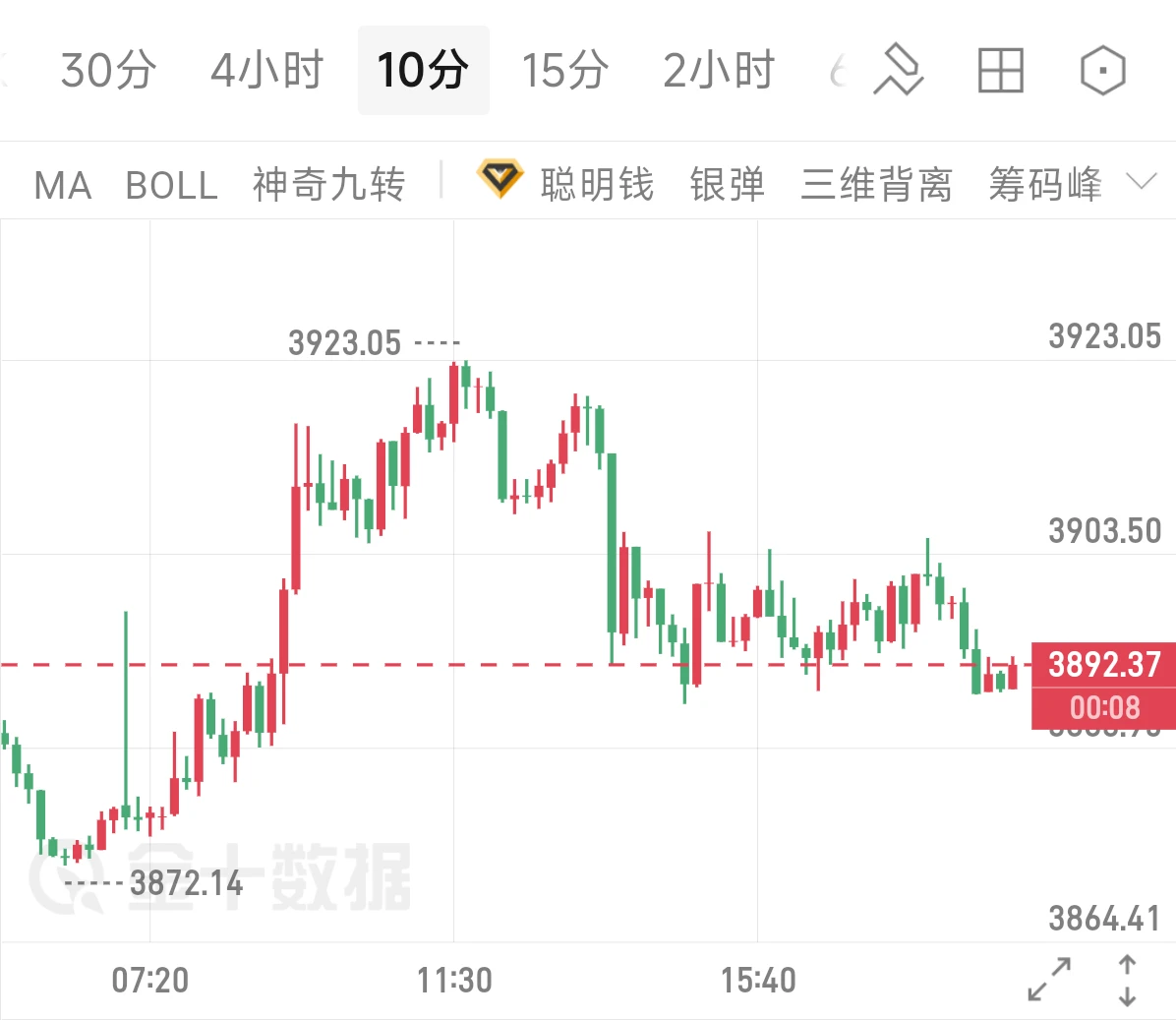
11.13 Gold Evening Update: Rally Meets Resistance and Weakens in Choppy Trading! Bearish Gold Bias Remains Unchanged

Gold dipped to support at 3872 during the morning session before rebounding for a recovery. It climbed to around 3923 intraday, where it met resistance and pulled back. Bulls failed to extend the gains, and prices continued to drift lower in choppy trading in the afternoon. Gold is currently trading near 3892, with rebound momentum continuing to fade. Overall, it is consolidating weakly after a rally and pullback.

Technical outlook: On the 10-minute chart, gold rallied and the
post-image
GLDX-0.40%
PAXG+0.37%
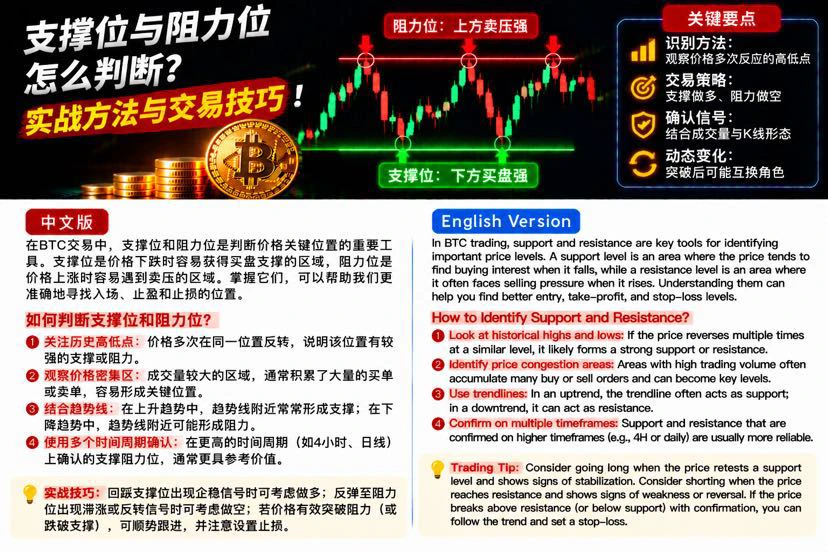
In BTC trading, there is a market phenomenon worth paying close attention to: after the price breaks below an important support level, an area that previously supported price increases may instead become resistance during the next rebound.

Why does this change occur?

First, the confidence of existing buyers changes. When BTC finds support in a certain price zone multiple times, many traders choose to buy there. But once the price decisively breaks below that zone, those who had been waiting to buy may start to sit on the sidelines, weakening buying pressure in the market.

Second, trapped tr
post-image
BTC-0.67%
In-Depth Analysis of Bitcoin On-Chain Data: Unrealized Losses Continue to Widen, with the Zero Line as a Critical Make-or-Break Threshold

I. Key Market Data

Bitcoin dipped to the $68k level and has remained below the short-term holder average cost of $75.43k for 5 consecutive days. The price-to-cost ratio is about 0.9, leaving short-term entrants with overall unrealized losses of around 10%. Pressure from underwater holders continues to build, adding to the selling pressure that could weigh on any short-term rebound.

II. MVRV Z-Score Signals

Over the same period, the MVRV Z-Score fell 0.13
BTC-0.67%
How Should You Manage Position Size? How Can Scientific Position Sizing Control Risk and Generate Steady Profits?

In cryptocurrency trading, many people analyze BTC’s price movements every day, but rarely seriously consider one question: Even if you’re right, how much capital should you put in?

In fact, many traders don’t lose because they get the direction wrong, but because they mismanage their position size.

Suppose your trading account has 1000 USDT. If you put all your funds into every trade, a sudden market move could cause serious losses. Even if the market later moves as you expecte
BTC-0.65%
Altcoins rise faster, so why do they fall even harder?

Many cryptocurrency investors have had this experience:

When a bull market arrives, BTC rises 10%, while some altcoins can rise 30% or even 50%. Watching other coins surge, it’s easy to feel that simply buying altcoins can earn you higher returns than Bitcoin.

But when the market reverses, things can be very different.

Why do altcoins often rise faster and fall harder?

First, altcoins usually have less market depth than Bitcoin. When large amounts of capital flow in, limited sell orders can be quickly exhausted, sending prices up rapi
post-image
BTC-0.67%
When making AI short dramas, don’t let the protagonist look like a different actor with every shot change. 😂
BeefTV lets you connect character reference images, scenes, storyboards, and videos on a single canvas.
If you want to try it, start with a story of your own and give it this prompt:
“Break it into 6 shots, listing the shot size, action, dialogue, and duration. Create only a storyboard table for now; don’t generate images or videos.”
Once you’ve confirmed the story, connect the same character design images to each shot. You can link the storyboard, first frame, and video, then edit onl
post-image
How should you read on-chain data? How can large transfers reveal market trends?

In the cryptocurrency market, many people watch candlestick charts and trading volume every day, but overlook a very important source of information: on-chain data.

Especially when Bitcoin sees a large transfer, many traders immediately speculate: Is a whale preparing to sell? Are institutions buying in large amounts?

But do large transfers really mean that prices are about to change?

First, distinguish between funds flowing into and out of exchanges. A large amount of BTC transferred to an exchange may mean h
post-image
BTC-0.67%
Consecutive losses are when many futures traders are most likely to lose confidence.

Some people start doubting their trading system after two or three losses. After a string of losses, others rush to change indicators and entry conditions, or even keep increasing their position sizes, hoping to quickly make back their losses.

But the question is: Do consecutive losses really mean a strategy has failed?

Not necessarily. To determine whether a trading strategy has failed, you need to look at at least five things.

First, examine the trade sample. Three to five losses do not prove a strategy
post-image
Load More

Join 40 M users in our growing community

⚡️ Join 40 M users in the crypto craze discussion

💬 Engage with your favorite top creators

👍 See what interests you

Trending Topics

JensenHuangResigns

516.7K Views8.2K Discussing

Jensen Huang has resigned as NVIDIA CEO and stepped down from the board. CFO Colette Kress will serve as interim CEO while NVIDIA considers internal and external successors. $NVDA fell more than 10% in premarket trading following the announcement. With one of AI’s most influential leaders stepping aside, markets are now reassessing NVIDIA’s leadership stability, AI strategy, and long-term valuation.

GateIPOAccessAnthropic

280.8K Views2.6K Discussing

Dr.HanOxfordUnionSpeech

144.6K Views473 Discussing

View More