#WarshSaysFedDecidesIfAIInflation
AI Is Not The Inflation Problem. The Real Question Is Whether The Fed Can Manage The AI Boom.
The biggest economic debate right now is not whether artificial intelligence will transform the world.
Everyone already knows it will.
The bigger question is: Can the economy absorb this historic wave of AI investment without creating another inflation problem?
That was the key message from Fed Chair nominee Kevin Warsh during his testimony before the Senate Banking Committee.
Many investors focused on one part of his comments: AI-driven investment is pushing up prices.
But the deeper message was more important.
Warsh is not saying AI itself is inflationary.
He is saying the outcome depends on how the Federal Reserve responds.
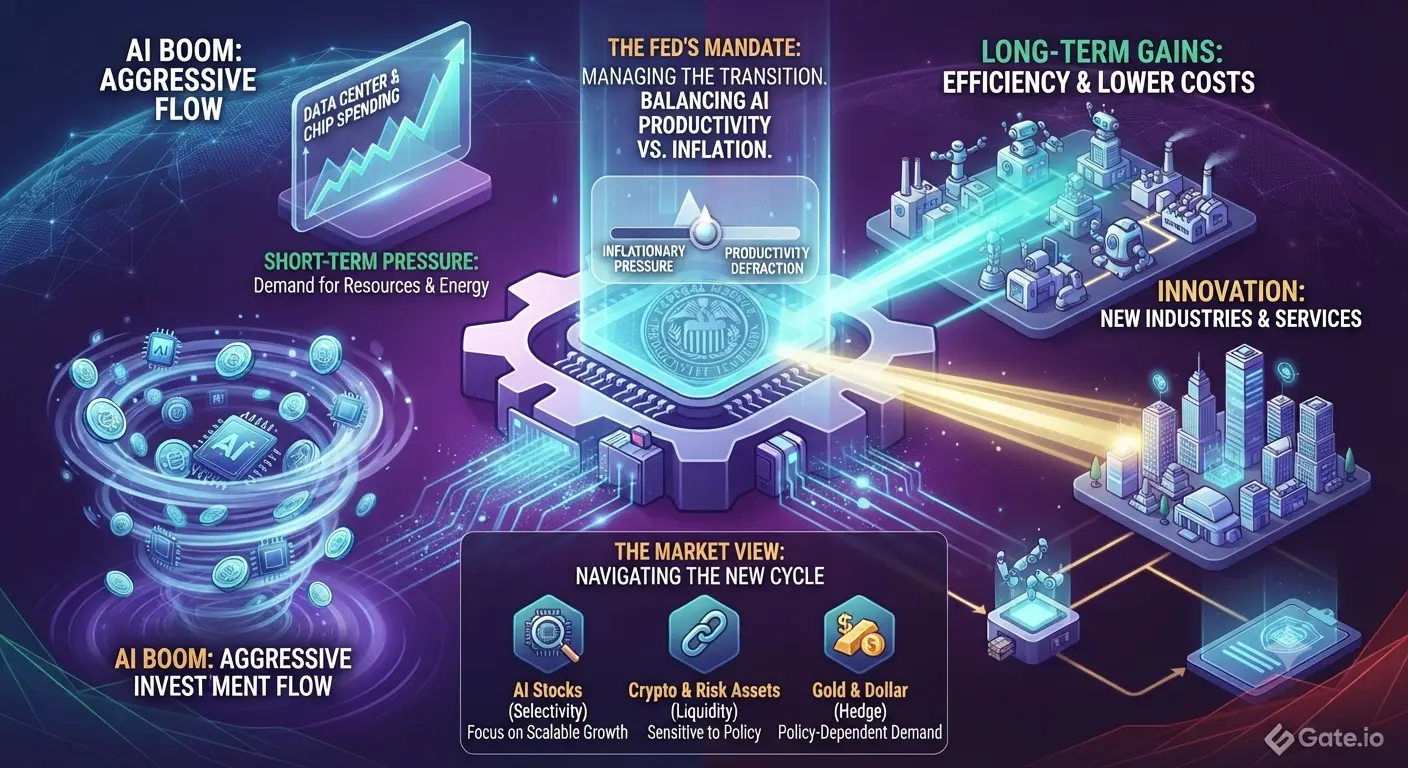
AI investment is creating one of the largest technology expansions in modern history. Companies are spending aggressively on data centers, advanced semiconductors, cloud infrastructure, and energy capacity.
This spending creates demand.
More demand means pressure on resources, construction costs, chip supply, and specialized workers.
In the short term, that can contribute to higher prices.
But Warsh believes AI has another side that markets cannot ignore.
Over time, AI could increase productivity, improve efficiency, reduce operating costs, and create entirely new industries. If productivity growth becomes stronger than price pressures, AI could become a deflationary force rather than a permanent inflation driver.
The technology itself is not the final answer.
The Fed's policy decisions are.
This is why Warsh emphasized that the Federal Reserve must decide whether AI-related economic activity becomes a temporary price adjustment or a longer-term inflation challenge.
Another important point from his testimony was his caution around recent inflation data.
June CPI showed improvement, but Warsh argued that one positive report is not enough to declare victory.
According to him, inflation data does not always capture the full picture of future price pressures. Some effects appear with delays, especially when major investment cycles are accelerating.
His message was clear:
The Fed cannot become comfortable too early.
The phrase "zero tolerance" for persistent inflation shows that policymakers remain focused on preventing inflation from becoming deeply embedded in the economy.
For financial markets, this creates an interesting situation.
Impact on AI Stocks
The long-term AI story remains powerful. Massive investment from technology companies shows strong confidence in future demand.
However, higher interest rates can pressure valuations because investors place a lower value on future earnings when borrowing costs remain elevated.
The AI revolution can continue, but markets may become more selective.
Impact on Crypto
Crypto remains highly sensitive to liquidity conditions.
If the Fed stays restrictive for longer, risk assets may face pressure as investors demand higher returns and reduce exposure to speculative markets.
However, if AI-driven productivity eventually supports stronger economic growth and inflation cools naturally, the environment could become more favorable.
Impact on Gold and Dollar
Gold faces a balancing act.
Higher rates and a stronger dollar can create short-term pressure because gold does not generate yield.
But if AI investment contributes to persistent inflation concerns, gold may regain demand as a hedge against purchasing power erosion.
The U.S. dollar could remain supported if markets believe the Fed will maintain a disciplined approach toward inflation.
My Market View
The most interesting part of Warsh's comments was not that AI could raise prices.
The market already understands that.
The real message was that innovation and monetary policy are now connected more closely than ever.
AI has the potential to become one of the biggest productivity engines in history.
But every major economic transformation creates challenges during the transition period.
The winners will not only be the companies building AI technology.
The winners will also be the investors who understand how policy, inflation, and liquidity shape market cycles.
Right now, the market is watching AI growth.
The Fed is watching inflation.
The next phase of the economy will depend on how these two forces interact.
#SummerCreationCamp
@Gate_Square
@GateSquare
AI Is Not The Inflation Problem. The Real Question Is Whether The Fed Can Manage The AI Boom.
The biggest economic debate right now is not whether artificial intelligence will transform the world.
Everyone already knows it will.
The bigger question is: Can the economy absorb this historic wave of AI investment without creating another inflation problem?
That was the key message from Fed Chair nominee Kevin Warsh during his testimony before the Senate Banking Committee.
Many investors focused on one part of his comments: AI-driven investment is pushing up prices.
But the deeper message was more important.
Warsh is not saying AI itself is inflationary.
He is saying the outcome depends on how the Federal Reserve responds.
AI investment is creating one of the largest technology expansions in modern history. Companies are spending aggressively on data centers, advanced semiconductors, cloud infrastructure, and energy capacity.
This spending creates demand.
More demand means pressure on resources, construction costs, chip supply, and specialized workers.
In the short term, that can contribute to higher prices.
But Warsh believes AI has another side that markets cannot ignore.
Over time, AI could increase productivity, improve efficiency, reduce operating costs, and create entirely new industries. If productivity growth becomes stronger than price pressures, AI could become a deflationary force rather than a permanent inflation driver.
The technology itself is not the final answer.
The Fed's policy decisions are.
This is why Warsh emphasized that the Federal Reserve must decide whether AI-related economic activity becomes a temporary price adjustment or a longer-term inflation challenge.
Another important point from his testimony was his caution around recent inflation data.
June CPI showed improvement, but Warsh argued that one positive report is not enough to declare victory.
According to him, inflation data does not always capture the full picture of future price pressures. Some effects appear with delays, especially when major investment cycles are accelerating.
His message was clear:
The Fed cannot become comfortable too early.
The phrase "zero tolerance" for persistent inflation shows that policymakers remain focused on preventing inflation from becoming deeply embedded in the economy.
For financial markets, this creates an interesting situation.
Impact on AI Stocks
The long-term AI story remains powerful. Massive investment from technology companies shows strong confidence in future demand.
However, higher interest rates can pressure valuations because investors place a lower value on future earnings when borrowing costs remain elevated.
The AI revolution can continue, but markets may become more selective.
Impact on Crypto
Crypto remains highly sensitive to liquidity conditions.
If the Fed stays restrictive for longer, risk assets may face pressure as investors demand higher returns and reduce exposure to speculative markets.
However, if AI-driven productivity eventually supports stronger economic growth and inflation cools naturally, the environment could become more favorable.
Impact on Gold and Dollar
Gold faces a balancing act.
Higher rates and a stronger dollar can create short-term pressure because gold does not generate yield.
But if AI investment contributes to persistent inflation concerns, gold may regain demand as a hedge against purchasing power erosion.
The U.S. dollar could remain supported if markets believe the Fed will maintain a disciplined approach toward inflation.
My Market View
The most interesting part of Warsh's comments was not that AI could raise prices.
The market already understands that.
The real message was that innovation and monetary policy are now connected more closely than ever.
AI has the potential to become one of the biggest productivity engines in history.
But every major economic transformation creates challenges during the transition period.
The winners will not only be the companies building AI technology.
The winners will also be the investors who understand how policy, inflation, and liquidity shape market cycles.
Right now, the market is watching AI growth.
The Fed is watching inflation.
The next phase of the economy will depend on how these two forces interact.
#SummerCreationCamp
@Gate_Square
@GateSquare