




















The September 15 Date for the Clarity Act Officially Announced: Senate Process Begins
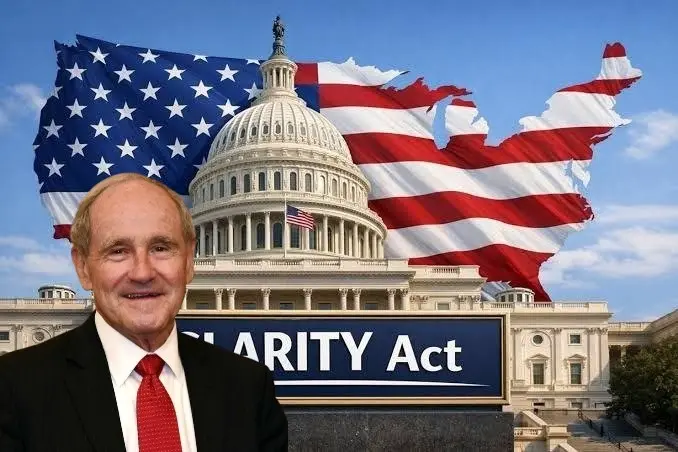
Senator Jim Risch's confirmation that the process for the Clarity Act will begin on September 15th is one of the long-awaited developments. His warning that "the stakes can't be higher" clearly demonstrates the importance both sides place on this legislation.
Why September 15th? Why is the Timing Critical?
Following the missed opportunity for a vote in August, the Senate's recess delayed the process until mid-September. September 15th stands out as one of the first working days after the recess. However, this date has special significance: the legislative calendar is quite limited before the November midterm elections. Therefore, September is seen as the "last chance window" for the Clarity Act.
How the Process Works
60 votes are needed to pass the law in the Senate. Currently, Republicans hold 53 seats, meaning at least 7-8 Democrats are needed. This shows that a bipartisan compromise is indispensable.
The bill has already passed two different Senate committees (Banking and Agriculture). Now, these two versions need to be combined and then presented to the entire Senate.
Controversial Issues
Among the biggest obstacles to the law are:
1. Ethics Rules: Democrats are demanding stricter regulations on income earned by public officials from crypto assets.
2. DeFi Developers: Whether legal protection will be provided to developers of decentralized finance protocols is being debated.
3. Consistency Between Federal and State Laws: It is unclear whether the CLARITY Act will override certain state laws (e.g., New York's BitLicense).
Implications for the Market
The CLARITY Act aims to resolve the jurisdictional confusion between the SEC and the CFTC and to clarify which digital assets are considered "commodities" and which are considered "securities." If this clarity is achieved:
· For Institutions: It could make it easier for banks and traditional financial institutions to move into digital assets. • For exchanges: Clearer rules may emerge regarding which tokens can be listed. • For investors: More products and a more transparent market environment may emerge.
Summary
When the Senate returns on September 15th, all eyes will be on the CLARITY Act. Time is running out, and the 60-vote threshold is still pending. Developments in September will play a critical role in determining the future of crypto regulations in the US and the medium-term direction of the markets.
This post is not investment advice and is for informational purposes only regarding market conditions.
#CLARITYActVoteWindowClosing
Senator Jim Risch's confirmation that the process for the Clarity Act will begin on September 15th is one of the long-awaited developments. His warning that "the stakes can't be higher" clearly demonstrates the importance both sides place on this legislation.
Why September 15th? Why is the Timing Critical?
Following the missed opportunity for a vote in August, the Senate's recess delayed the process until mid-September. September 15th stands out as one of the first working days after the recess. However, this date has special significance: the legislative calendar is quite limited before the November midterm elections. Therefore, September is seen as the "last chance window" for the Clarity Act.
How the Process Works
60 votes are needed to pass the law in the Senate. Currently, Republicans hold 53 seats, meaning at least 7-8 Democrats are needed. This shows that a bipartisan compromise is indispensable.
The bill has already passed two different Senate committees (Banking and Agriculture). Now, these two versions need to be combined and then presented to the entire Senate.
Controversial Issues
Among the biggest obstacles to the law are:
1. Ethics Rules: Democrats are demanding stricter regulations on income earned by public officials from crypto assets.
2. DeFi Developers: Whether legal protection will be provided to developers of decentralized finance protocols is being debated.
3. Consistency Between Federal and State Laws: It is unclear whether the CLARITY Act will override certain state laws (e.g., New York's BitLicense).
Implications for the Market
The CLARITY Act aims to resolve the jurisdictional confusion between the SEC and the CFTC and to clarify which digital assets are considered "commodities" and which are considered "securities." If this clarity is achieved:
· For Institutions: It could make it easier for banks and traditional financial institutions to move into digital assets. • For exchanges: Clearer rules may emerge regarding which tokens can be listed. • For investors: More products and a more transparent market environment may emerge.
Summary
When the Senate returns on September 15th, all eyes will be on the CLARITY Act. Time is running out, and the 60-vote threshold is still pending. Developments in September will play a critical role in determining the future of crypto regulations in the US and the medium-term direction of the markets.
This post is not investment advice and is for informational purposes only regarding market conditions.
#CLARITYActVoteWindowClosing