

Share your thoughts
placeholder
Article
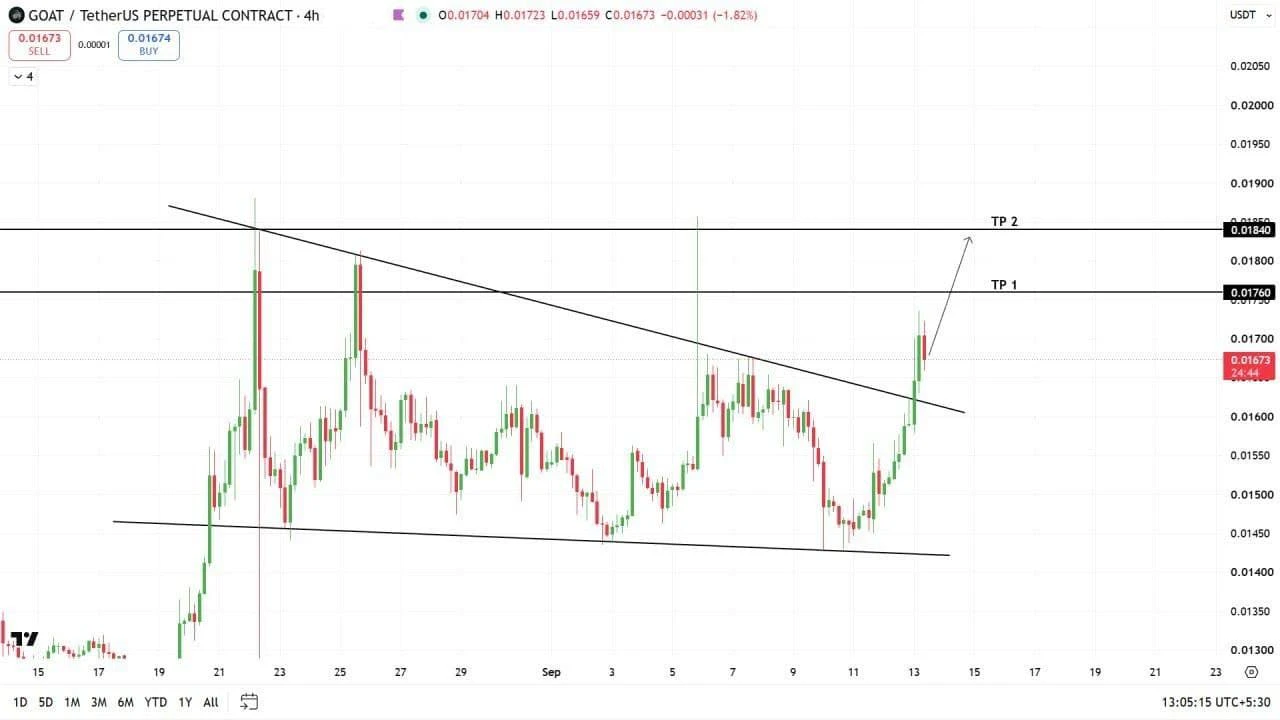
Guys, I’m going to keep an eye on $GOAT USDT here.
Price has broken above the descending trendline on the 4H chart, and if the breakout holds, I’m expecting a move toward the upper resistance levels.
Entry: 0.0167–0.0169
TP1: 0.01760
TP2: 0.01840
SL: 0.01600
I’m watching for confirmation above the breakout area. If momentum stays strong, those upper targets could come into play soon. Trade with proper risk management.
$GOAT ‌
post-image
GOAT-0.89%
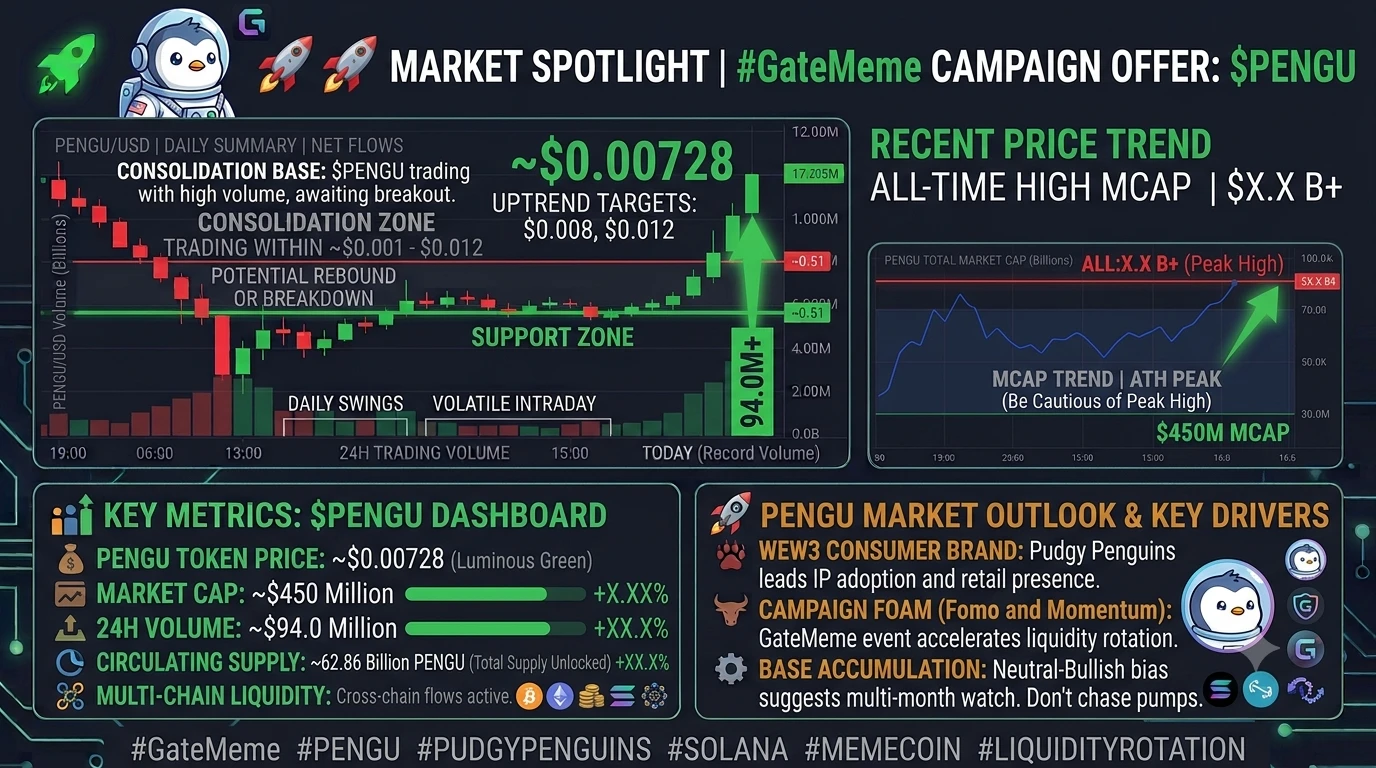
As liquidity rotates heavily across the Solana and multi-chain meme sectors during the **#GateMeme** event, **Pudgy Penguins ($PENGU )** stands out as a prime, high-utility contender. Backed by a globally recognized Web3 consumer brand with major retail presence, $PENGU bridges real-world culture with explosive meme market dynamics.
📊 𝐊𝐞𝐲 𝐌𝐞𝐭𝐫𝐢𝐜𝐬
• Current Price: ~$0.00728
• Market Capitalization: ~$450 Million
• 24H Trading Volume: ~$94.0 Million
• Circulating Supply: ~62.86 Billion PENGU
• Primary Chain: Solana (Multi-chain cross-liquidity)
• Market Bias: Neutral-Bullish / Base Ac
post-image
PENGU-1.03%
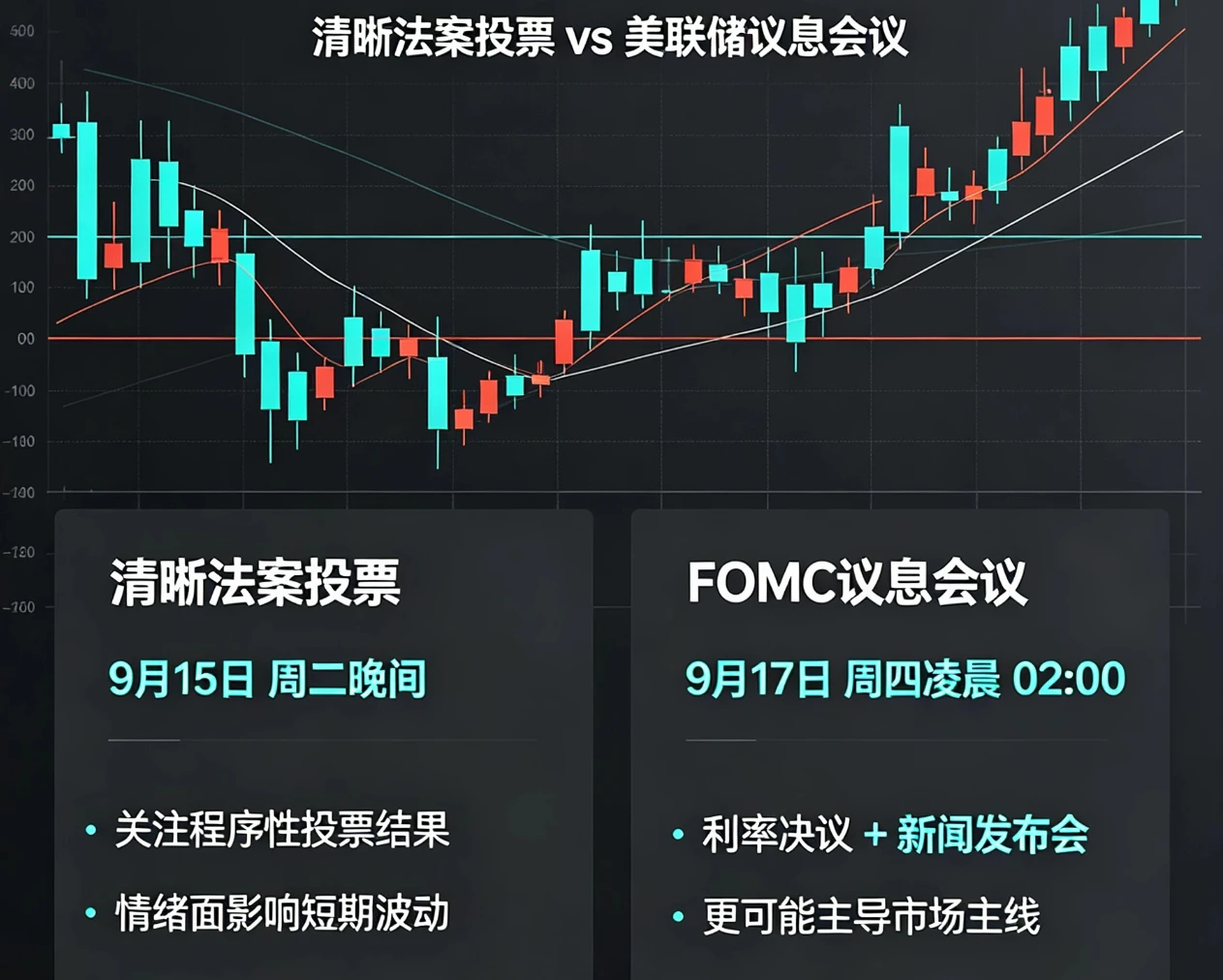
$ETH $BTC Two major events are arriving in quick succession this week: first, the Senate vote on the CLARITY Act on Tuesday evening, followed by the Federal Reserve’s rate decision early Thursday morning.

This CLARITY Act vote is merely procedural, but the threshold is high, so another delay remains possible. Regardless of whether it passes or falls through, the market will see a wave of emotional volatility. The Fed’s rate decision is the real main event, as whether it raises rates will directly determine the market’s broader direction for the period ahead.

Market volatility will continue
post-image
ETH+0.22%
BTC+0.83%
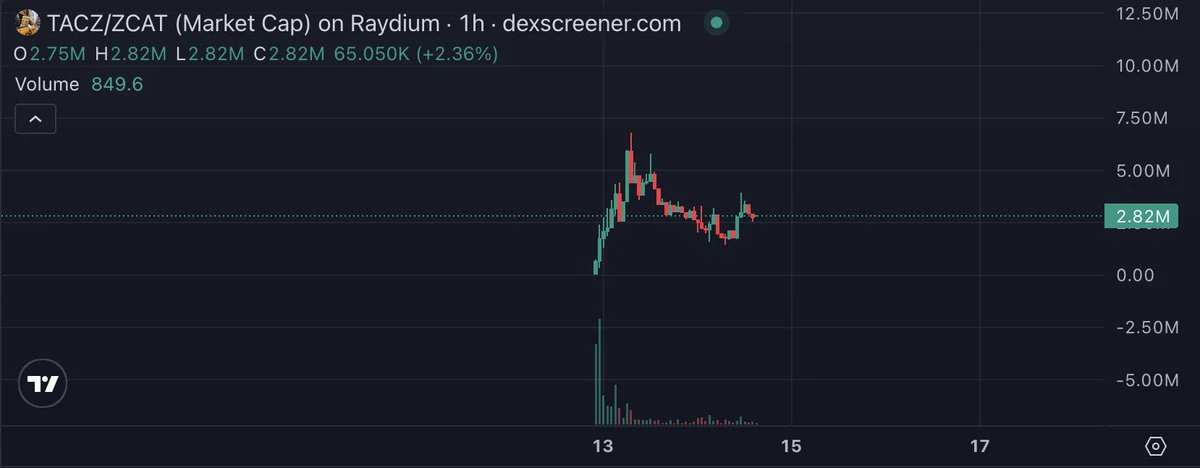
What an absolute beast of a coin
This is btw
The second best thing to happen on $STONK since
This is going to rip so much higher soon
SCREENSHOT THIS
post-image
BTW+37.94%
#PumpFunHolderRewards
🚀 #PumpFunHolderRewards
Pump.fun has introduced Holder Rewards, a new feature designed to reward long-term holders instead of active traders. Under this model, eligible token holders automatically receive a share of trading fees simply by holding participating tokens. Rewards are distributed multiple times throughout the day, creating a stronger incentive to build long-term communities rather than short-term speculation.
Another major change is that Cashback Mode has been removed for new standard token launches. Project creators can now choose the Holder Rewards model,
PUMP-2.00%
SOL+0.87%
MEME+0.18%
#摩根大通将Meta目标价上调至820 JPMorgan: Meta’s models and agents are in place, upgraded to a moderately positive view!
Met
The relevant market price has rebounded 20% from its recent low but is still down 1% year to date, while the S&P 500 has risen 12% over the same period. The core judgment of this JPM report is that Meta’s in-house model team has essentially achieved its goal of “entering the frontier within one year.” From July’s Muse Spark 1.1 to the recent 1.3, it can now rank alongside the Claude and GPT series on benchmarks including agents, coding, instruction following, and long context. This
post-image
ThisIsTranslateContent:
#摩根大通将Meta目标价上调至820 JPMorgan: Meta’s models and agents are in place, upgraded to a moderately positive view!
Met
The relevant market price has rebounded 20% from its recent low, but is still down 1% year to date, while the S&P 500 has risen 12% over the same period. The core judgment of this JPM report is that Meta’s in-house model team has largely delivered on its goal of reaching the frontier within a year. From July’s Muse Spark 1.1 to the recent 1.3, it can now rank alongside the Claude and GPT series on benchmarks covering agents, coding, instruction following, and long-context capabilities. This model capability is the prerequisite for Meta to open up revenue streams from agents, enterprise tools, and developer interfaces beyond advertising.
First, the models themselves. Muse Spark 1.3 is the latest version, and the report believes its competitiveness comes from a rapid iteration cycle, attractive pricing, and continuously expanding computing power. The next-generation Watermelon model has undergone more advanced pretraining and is expected to launch soon, while models following Watermelon are already being trained at scale on the Prometheus GW cluster in Ohio. Whether model quality can continue to keep pace will determine the ceiling for all subsequent monetization paths. 1. Muse agent reaches third place in the US App Store free rankings two days after launchMuse is Meta’s consumer-focused personal agent and has launched for US users on iOS, Android, and the web. It uses its own virtual computer to browse websites and operate interfaces, helping users complete tasks such as online shopping, ordering food, filling out forms, and communicating via email and text messages. Its training covers platforms including Instagram, WhatsApp, Spotify, DoorDash, Etsy, Reddit, Yelp, and Outlook/Gmail. Early data provides two reference points: Muse usage reached 10 times the size of the test queue, and it rose to third place in the US Apple App Store’s free app download rankings on the second day after launch. Muse is currently free and provides 100 million tokens per week. The paid tiers offer 500 million tokens per month for $20 per month and 3 billion tokens per month for $100 per month. The report believes Meta’s current focus is not monetization, but building awareness, adoption, and usage habits; it is more likely to adopt a transaction-fee or commission model in the future.
Reaching third place in the free rankings on the second day shows that Meta’s distribution capabilities can indeed quickly put a product in front of users, but download rankings and retention are two different things. I am more focused on whether usage 10 times the size of the test queue can persist after the free quota is exhausted, as this will determine whether the commission model has a real transaction base.
2. Enterprise agents charge by token, with over 1 million businesses already using them weekly
Meta Business Agent is a plug-and-play tool used via subscription. It can answer questions, mention products, schedule appointments, and qualify leads. As of Q2 2026, more than 1 million businesses were using the agent weekly on WhatsApp and Messenger. Business Agent Platform is an API-based enterprise layer that can connect to systems such as Shopify, Zendesk, and Shopee, allowing agents to perform actions on behalf of businesses. The billing model has already been implemented: starting August 1, API and enterprise users will be charged by token, at $2 per 1 million tokens. A single message consumes 20,000 to 25,000 tokens, equivalent to approximately 4 to 5 cents per message. Management also mentioned that enterprise-agent monetization could eventually evolve into an outcome-oriented bidding system similar to the advertising business. The potential of this segment lies in Meta’s existing relationships with millions of advertisers and small and medium-sized businesses, allowing agent adoption to reuse this distribution channel.
3. Model interfaces and coding agents compete for developer share with low pricing$META

repost-content-media
META+0.59%
  • 2
#Gate24HFuturesOpenInterestTops$11.479B For this SNDK move, don’t just look at the K-line—watch U.S. stocks.
It’s not a shitcoin, but a stock perpetual tracking SanDisk’s share price. Last Friday, SanDisk surged 11.9% in a single day to lead the S&P 500. Two more catalysts are ahead: inclusion in the S&P 100 on 9/21, prompting passive buying by index funds, and continued increases in NAND contract prices in Q3, marking a storage supercycle.
The perpetual is currently at 1790, with only ~3% premium to SanDisk’s U.S. closing price—not expensive. Technically, the pullback to 1760 on declining vol
post-image
skyvera
#Gate24HFuturesOpenInterestTops$11.479B For this SNDK move, don’t just look at the K-line—watch U.S. stocks.
It’s not a shitcoin, but a stock perpetual tracking SanDisk’s share price. Last Friday, SanDisk surged 11.9% in a single day to lead the S&P 500. Two more catalysts are ahead: inclusion in the S&P 100 on 9/21, prompting passive buying by index funds, and continued increases in NAND contract prices in Q3, marking a storage supercycle.
The perpetual is currently at 1790, with only ~3% premium to SanDisk’s U.S. closing price—not expensive. Technically, the pullback to 1760 on declining volume held, keeping the structure healthy.
👉 Strategy: Scale into longs above 1760; add to the position after holding above 1801 with rising volume. Targets: 1822 → 1850. Cut losses and exit if it breaks below 1760.
$SNDK #GateRWA永续合约持仓量全球第一
SNDK-3.07%
SPX500-0.29%
SPX+2.72%
INDEX+5.23%
#AMD$2TAI2030
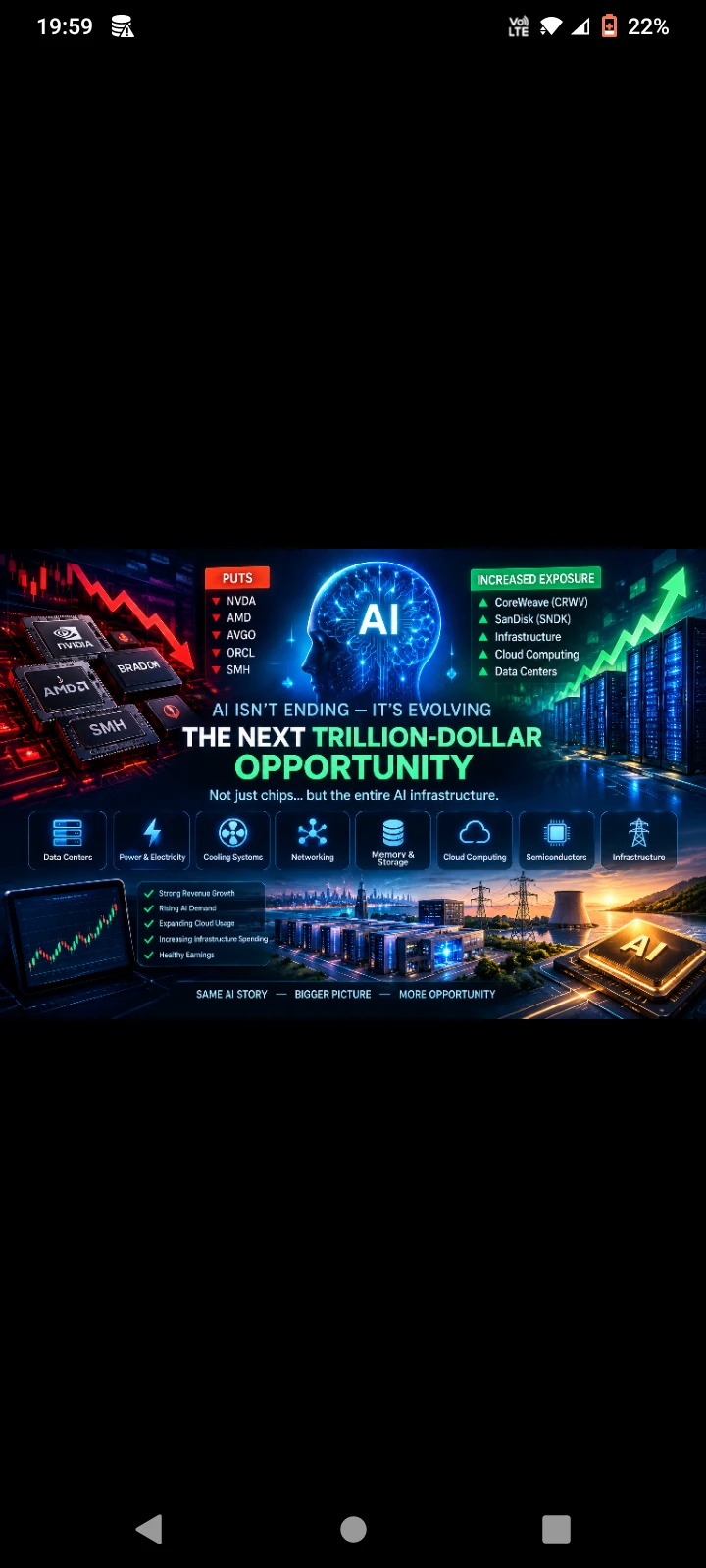
AMD's Two Trillion Dollar Bet: The Quiet Architecture of the AI Economy
There is a particular kind of ambition that reveals itself not in a single announcement, but in the steady accumulation of agreements that, taken together, describe a different future. Over the past twelve months, Advanced Micro Devices has assembled exactly that kind of portfolio. The company has secured multi-gigawatt commitments from three of the most consequential names in artificial intelligence: OpenAI, Meta, and Anthropic. And at a conference in New York earlier this month, its chief financial officer
User_any
#AMD$2TAI2030
AMD's Two Trillion Dollar Bet: The Quiet Architecture of the AI Economy
There is a particular kind of ambition that reveals itself not in a single announcement, but in the steady accumulation of agreements that, taken together, describe a different future. Over the past twelve months, Advanced Micro Devices has assembled exactly that kind of portfolio. The company has secured multi-gigawatt commitments from three of the most consequential names in artificial intelligence: OpenAI, Meta, and Anthropic. And at a conference in New York earlier this month, its chief financial officer, Jean Hu, placed a number on what that portfolio might ultimately be worth: a total addressable market of between two and three trillion dollars by 2030.
That figure deserves to be read carefully. It is not a revenue forecast. It is an estimate of the size of the opportunity AMD believes it can address. But the distinction matters less than the trajectory it describes. In July, AMD estimated its addressable market would reach roughly two trillion dollars by the end of the decade. Two months later, it raised the upper bound to three trillion. When a company revises its view of its own opportunity upward by fifty percent in a single quarter, it is telling you something about the pace at which the ground beneath it is shifting.
The numbers behind the business are already moving quickly. In the second quarter of 2026, AMD reported total revenue of 11.5 billion dollars. Data center revenue alone reached 6.72 billion dollars, more than double the 3.2 billion dollars generated in the same period a year earlier, and up from 5.8 billion dollars in the prior quarter. That segment now accounts for fifty-eight percent of total revenue, and it is growing at a pace that has made it the largest and fastest-moving part of the company. The demand is coming from two sources: EPYC processors for server CPUs and Instinct accelerators for AI training and inference. Both are benefiting from the same underlying trend, which is the relentless expansion of computing infrastructure required to train and run increasingly capable models.
The customer agreements tell the story more vividly than the revenue figures alone. OpenAI has signed a six-gigawatt commitment, with the first gigawatt of MI450 GPUs scheduled for deployment in the second half of 2026. Meta has signed a comparable six-gigawatt agreement, covering multiple generations of Instinct accelerators. Anthropic has committed to deploying up to two gigawatts of MI450 GPUs through AMD's Helios rack-scale systems, and AMD is investing up to five billion dollars into the company as part of the arrangement. Taken together, these agreements represent twelve gigawatts of committed GPU capacity, a figure that would have been difficult to imagine for AMD's accelerator business even two years ago.
The strategic significance of these deals extends beyond the revenue they represent. For years, the AI accelerator market has been effectively a single-vendor market, with Nvidia capturing the overwhelming majority of spending. The emergence of a credible second source is consequential for every company that depends on AI infrastructure, because it introduces competition into a supply chain that has been characterized by allocation constraints and pricing power concentrated in one firm. AMD's ability to win these commitments suggests that the largest AI developers are willing to invest in a second platform, not necessarily to replace the incumbent, but to ensure that they are not entirely dependent on it. The motivation is partly commercial and partly strategic, and both are rational.
The Helios platform is central to this effort. Announced at AMD's Advancing AI conference in July, Helios is a rack-scale system designed to compete directly with Nvidia's rack-scale offerings. It integrates AMD's Instinct GPUs, EPYC CPUs, and networking components into a single architecture, and it is scheduled to begin shipping in the second half of 2026, with volumes increasing into 2027. The importance of a rack-scale approach is that it allows customers to deploy AI infrastructure more efficiently, with fewer integration challenges and better performance per unit of power and space. For a company like Anthropic, which is building out server infrastructure at a rapid pace, the appeal of a pre-integrated system is straightforward.
The financial implications of this buildout are beginning to show in AMD's guidance. The company has said it expects data center revenue to reach approximately seventy billion dollars in 2027, a figure that would represent a substantial step up from current levels. It has also raised its forecast for the server CPU market to 220 billion dollars by 2030, up from a prior estimate of about sixty billion. These are not modest revisions. They reflect a view that the demand for computing infrastructure is not a cyclical phenomenon but a structural shift, driven by the recognition across every major industry that AI capabilities will be foundational to competitive advantage.
Yet it would be incomplete to describe this story without acknowledging the risks. The commitments from OpenAI, Meta, and Anthropic are large, but they are also concentrated. If any of these customers were to slow their spending, whether because of funding constraints, strategic shifts, or a broader recalibration of AI investment, the impact on AMD's outlook would be significant. The company is also competing against an incumbent that has spent years building not just hardware but an entire software ecosystem around its platform. AMD's software stack, ROCm, has improved considerably, but it remains a work in progress relative to the maturity of the alternative. Finally, the capital intensity of this buildout is substantial. AMD is investing billions into Anthropic and into its own manufacturing and research capacity, and those investments will weigh on near-term profitability even as they lay the groundwork for future growth.
For those who follow digital asset markets, the AMD story offers a useful lens. The AI infrastructure cycle is one of the most powerful forces in the global economy right now, and it is shaping capital flows, energy demand, and corporate strategy in ways that extend far beyond the technology sector. The same data centers that train large language models are being designed to accommodate tokenized financial infrastructure, and the same institutional investors funding AI buildouts are the ones allocating capital to digital assets. The two worlds are becoming harder to separate, and AMD sits at the intersection of them.
What should a careful observer watch in the coming quarters? First, the delivery timeline for Helios. The first deployments are expected in the second half of 2026, and execution on that schedule will determine whether the commitments convert into revenue on the expected timeline. Second, the trajectory of data center revenue. The seventy billion dollar target for 2027 is ambitious, and quarterly progress toward it will be the clearest signal of whether the demand is as durable as the agreements suggest. Third, the broader AI investment environment. The same macroeconomic pressures that weigh on every risk asset, including the Federal Reserve's rate path and the cost of capital, will influence how aggressively AMD's customers deploy their committed capacity.
The deeper truth is that AMD is no longer simply a semiconductor company competing for share in a mature market. It is a participant in the construction of an entirely new layer of economic infrastructure, one that will determine how intelligence is produced, distributed, and consumed for decades to come. The two trillion dollar figure is a measure of how large that infrastructure might become. Whether AMD captures a meaningful share of it will depend on execution, competition, and the willingness of its customers to follow through on the commitments they have made. The rest of us can only watch, calculate, and prepare.
$AMD
$META#ShareWeekly #Gate #STOCKS
repost-content-media
$CRCL plunged to 88 last night and violently rebounded! Strong support has already formed below! The USDC issuer has already been proven countless times! The asset with the strongest backing! At least $1,000 in the bull market! This is absolutely the bottom range of the pullback! Just go long! At dirt-cheap prices, why not load up aggressively instead of chasing higher after it rises??
post-image
CRCL+0.26%
USDC+0.01%
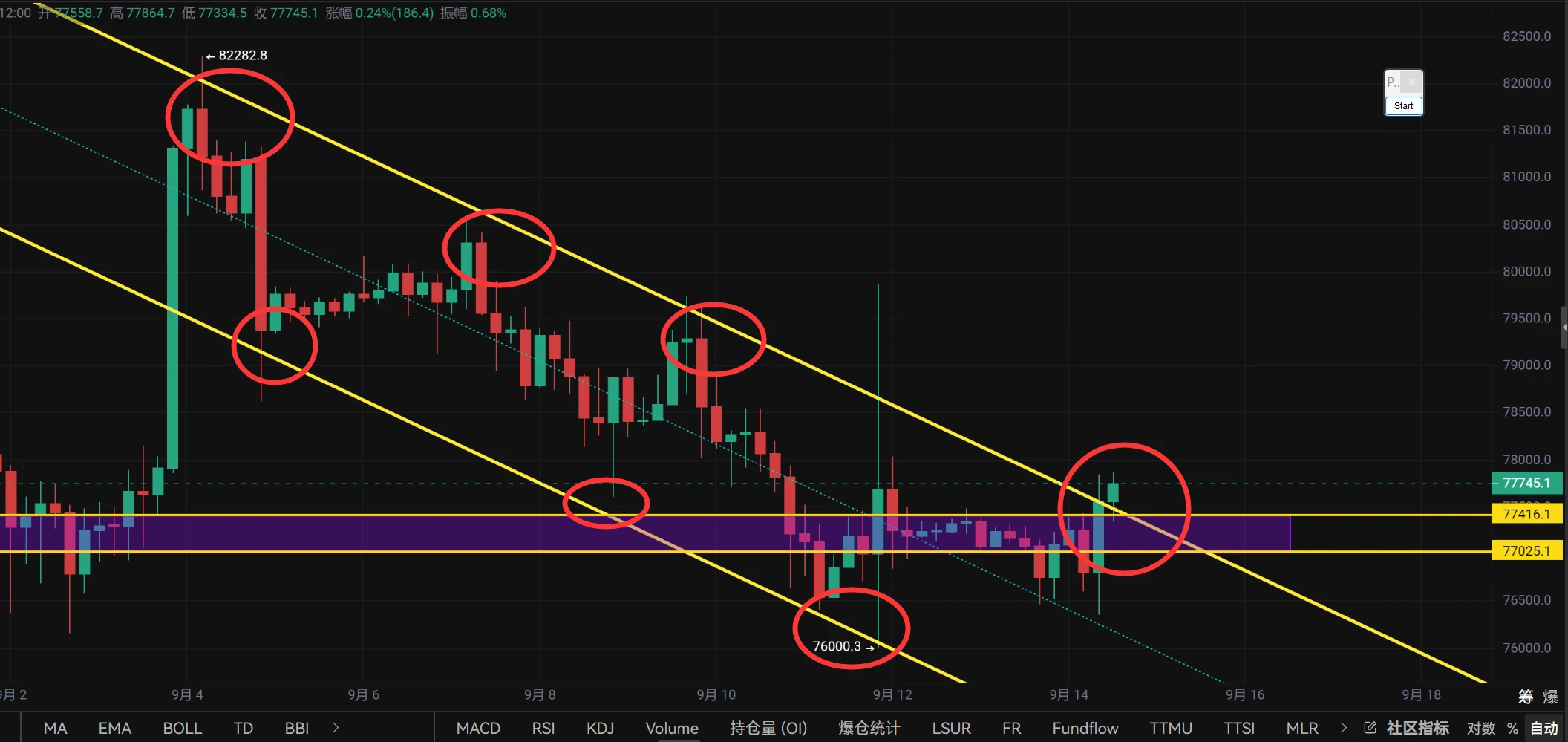
$BTC $ETH 9.14 Afternoon (Bitcoin, Ethereum) Market Outlook
Reviewing the intraday market trend, prices dipped to a low of 76300 in the morning before launching a rapid rebound, climbing as high as 77800 and posting a nearly 1500-point rebound for the day. Many friends have begun wondering whether the turning point for a trend reversal has officially arrived. To find the answer, we cannot make a subjective judgment based solely on a single large bullish candle on the daily chart. Looking at the four-hour chart, this round of decline began from the high of 82200, with prices falling as low as 7
post-image
BTC+0.83%
ETH+0.22%
Market in attack mode, STORJ gets crushed 22% in a day: someone has to step on the landmine first for small-cap coins
Absurd, $STORJ 24h -22.1%, current price 0.0308, BTC is still above 77610, the broader market is in attack mode, yet it’s the only one on its knees. Absolutely filthy.
My view: Short-term bearish; any rebound toward 0.0316–0.0323 is a shorting opportunity.
First, MA7 is below MA30, indicating bearishness across multiple timeframes; second, 30d -32.27%, sitting at 0.057 in the 30-day range; third, with a market cap of only about $15.43 million, any rebound is an exit window.
The
STORJ-22.47%
📅 Snowball Check-in | Day 60 Building a Position | Total Return: +70%
💰 Principal: 6000U | Current: 10,000U | Withdrawn: 200U
⚖️ Position: 50%
🪙 Holdings: $UNI $FIL $CAKE $ZEC
💡 Strategy: $BTC rose 1.2%, the mainstream average gain was +1.87%, 94% of assets rose, trading volume was released, and the money-making effect was evident
UNI+1.29%
FIL+25.78%
CAKE+4.69%
ZEC+0.80%
BTC+0.83%
Worked myself to death for a month, only to scrape together enough for the bus fare home.
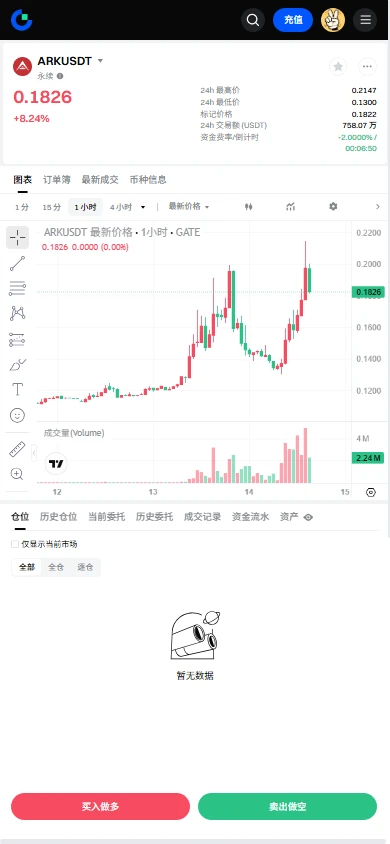
$ARK Signal】Long + 1H breakout/negative funding rate short squeeze
$ARK 1H RSI 71.81, with the price pressing against the upper Bollinger Band at 0.1905, while the 4H MACD histogram continues to expand.
🎯Direction: Long
⚡Entry/limit order: 0.192720 - 0.193300
🛑Stop-loss: 0.183635
🚀Target 1: 0.207798
🚀Target 2: 0.215046
🛡️Trade management:
- Execution strategy: After reaching Target 1, reduce the position by 50% and move the stop-loss up to the breakeven level. If the price falls back to the entry level, exit automatically to protect the principal.
Depth logic: The negative funding rate i
post-image
ARK+12.58%
BTC+0.83%
ETH+0.22%
SOL+0.87%
$XAGUSD ‌🥈 $XAGUSD SILVER AT A CRITICAL DECISION ZONE
Silver is trading around $63.97, with today’s range near $63.70–$64.50. The market is currently dealing with a combination of precious-metal demand, industrial demand, a stronger U.S. dollar and rising expectations for a Federal Reserve rate hike. Recent market analysis has also highlighted that weaker real yields and a softer dollar previously supported silver’s advance.
📊 EMA STRUCTURE
For me, the most important thing now is whether XAGUSD can rebuild a clean short-term bullish EMA structure after the recent pullback.
I want to see:
E
post-image
XAGUSD-1.78%
  • 2
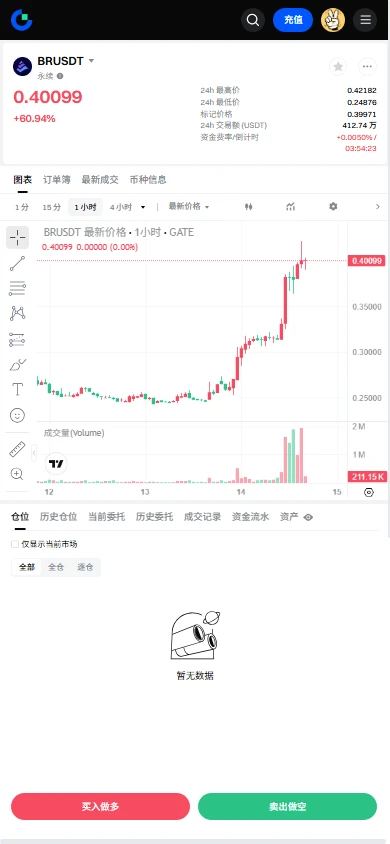
$BR Signal】Go long + buy the pullback following 4H momentum expansion
$BR RSI 90.49, 1H buying is crowded, and the 4H MACD histogram is expanding. The order book bid-ask depth ratio is 1.23, indicating active buying; the funding rate is 0.0495%, and OI is stable. The 1H MACD histogram is shrinking, indicating slowing short-term momentum. Enter long at 0.3846-0.3858, with a risk-reward ratio of 1.50; position is more important than chasing price.
🎯Direction: Long
⚡Entry/limit order: 0.3846326 - 0.3857900
🛑Stop-loss: 0.3819321
🚀Target 1: 0.3915769
🚀Target 2: 0.3944703
🛡️Trade management: -
post-image
BR+57.71%
BTC+0.83%
ETH+0.22%
SOL+0.87%
Layout for Bitcoin, Ethereum, and Dogecoin
live-cover
LIVE1,905
Live trading - Analysis crypto market
live-cover
LIVE1,797
Join the weekly posting event to post, earn points and win big rewards! https://www.gate.com/campaigns/6244?ref=BVIRBA8M&ref_type=132
post-image
discovery
Join the weekly posting event to post, earn points and win big rewards! https://www.gate.com/campaigns/6244?ref=BVIRBA8M&ref_type=132
repost-content-media
Everyone is missing the short setup forming on $CL /USDT right now.

$CL /USDT - SHORT

Trade Plan:
Entry: 99.0 – 99.4
SL: 101.2
TP1: 97.7
TP2: 96.7
TP3: 95.2

Why this setup?
Why now? The 1h price is pinned at 99.2 inside a tight daily range, the 15m RSI sits at 62.64 showing bullish exhaustion, and the 1h ATR of 0.646978 confirms enough volatility to justify a measured move lower. The entry zone between 99.0 and 99.4 offers a precise trigger, with TP1 at 97.7 and TP2 at 96.7 defining the first two profit targets before the deeper objective at 95.2. The invalidation level of 95.8 acts as t
CL+2.97%
Load More

Join 40 M users in our growing community

⚡️ Join 40 M users in the crypto craze discussion

💬 Engage with your favorite top creators

👍 See what interests you

Trending Topics

AnthropicPicksNasdaqForIPO

71.95k Views2.64k Discussing

The related rumor has heated up valuation discussions around unlisted AI companies and also linked SpaceX's secondary-market performance with primary-market sentiment. However, it remains an unconfirmed market rumor for now.

Gate 24H Futures Open Interest Tops $11.479B

4.05k Views118 Discussing

Korea Stocks Plunge 3.14% at Open

44.64k Views4.79k Discussing

View More