
Futures
Access hundreds of perpetual contracts
TradFi
Gold
One platform for global traditional assets
Options
Hot
Trade European-style vanilla options
Unified Account
Maximize your capital efficiency
Demo Trading
Introduction to Futures Trading
Learn the basics of futures trading
Futures Events
Join events to earn rewards
Demo Trading
Use virtual funds to practice risk-free trading
Launch
CandyDrop
Collect candies to earn airdrops
Launchpool
Quick staking, earn potential new tokens
HODLer Airdrop
Hold GT and get massive airdrops for free
Pre-IPOs
Unlock full access to global stock IPOs
Alpha Points
Trade on-chain assets and earn airdrops
Futures Points
Earn futures points and claim airdrop rewards


Promotions
AI
Gate AI
Your all-in-one conversational AI partner
Gate AI Bot
Use Gate AI directly in your social App
GateClaw
Gate Blue Lobster, ready to go
Gate for AI Agent
AI infrastructure, Gate MCP, Skills, and CLI
Gate Skills Hub
10K+ Skills
From office tasks to trading, the all-in-one skill hub makes AI even more useful.
GateRouter
Smartly choose from 30+ AI models, with 0% extra fees


📊 Volatile Market Trading Strategy — Mastering Weekend Risk & Emotional Control
#Volatile Market Trading Strategy
Crypto markets never truly sleep, but weekends often bring a different kind of challenge — low liquidity, unpredictable volatility, and sudden price spikes. For traders, this environment can either create opportunity or lead to unnecessary losses. The difference lies in having a clear strategy, strong defense, and emotional discipline.
This article breaks down how to navigate weekend volatility, protect your capital, and stay mentally balanced when the market becomes uncertain.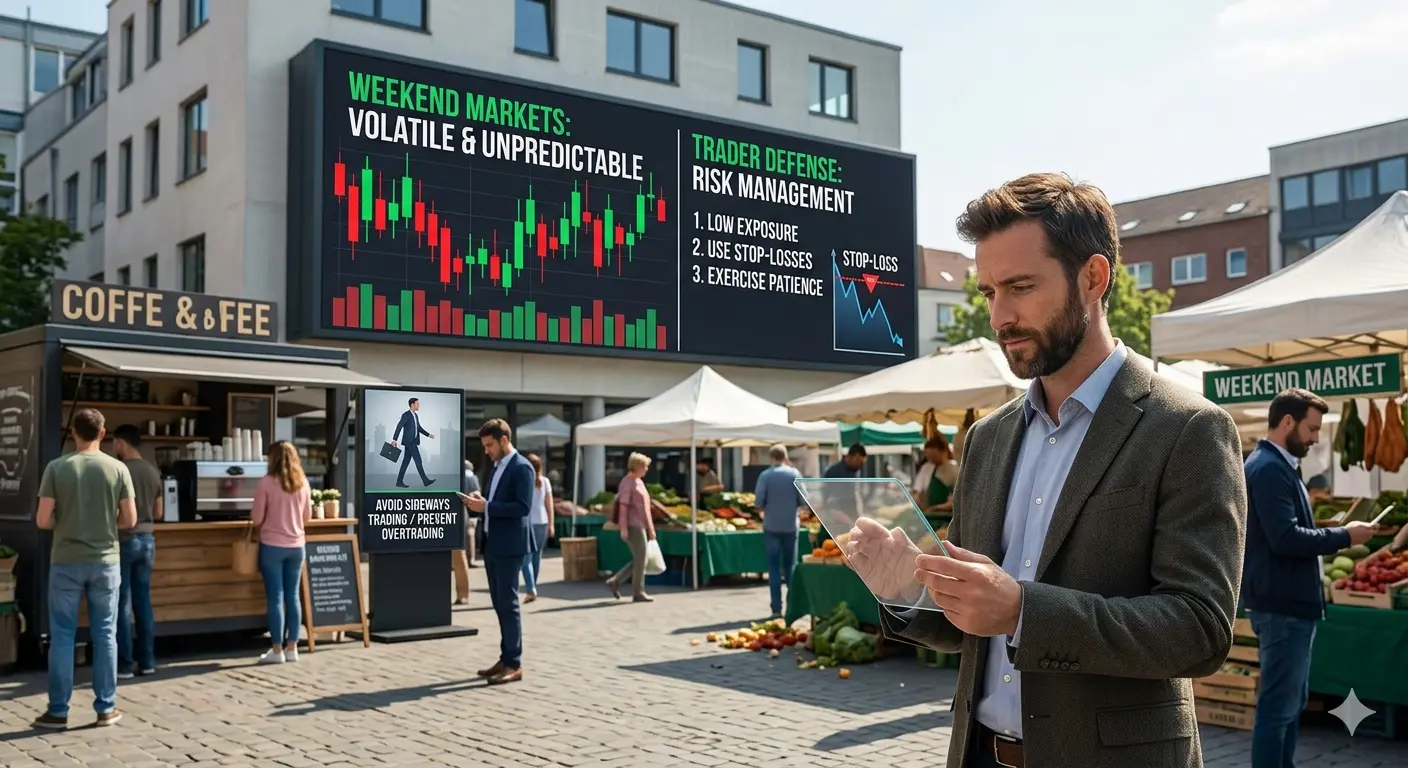
⚔️ 1. Building a Strong Defense Position During Weekend Volatility
Weekend trading requires a shift in mindset from aggression to protection. Unlike weekdays, where volume and structure are more reliable, weekends often produce fake breakouts and erratic moves.
A smart approach is to move into a defensive trading mode, which includes:
Reducing position size to limit exposure
Using lower leverage to avoid liquidation risks
Trading only at key support and resistance levels
Setting clear invalidation zones before entering any trade
Instead of chasing every move, the focus should be on high-probability setups only. In many cases, the best decision is to not trade at all until the market shows clarity.
📌 Key Principle: Protecting capital is more important than chasing uncertain profits.
🛑 2. Avoiding Sudden Drops and Spikes
Weekend volatility is often driven by thin order books, which can cause sharp moves in either direction. Traders who ignore this reality often get caught in unexpected wicks and rapid reversals.
To avoid these traps, a disciplined trader focuses on:
Placing strict stop-loss orders on every trade
Avoiding entries during low liquidity hours
Waiting for confirmation instead of predicting moves
Staying out of the market during uncertain conditions
A practical example: instead of entering a trade during a sudden breakout, waiting for a retest and confirmation can prevent getting caught in a fake move. Sometimes, the safest trade is no trade at all.
📌 Key Principle: Risk management is not optional — it is your first line of defense.
🧘 3. Managing Sideways Markets & Reducing Anxiety
Not every market condition is meant for trading. During sideways or ranging markets, price often moves without clear direction, leading to overtrading and emotional fatigue.
Instead of forcing trades, experienced traders shift their focus to non-trading activities, such as:
Reviewing past trades and improving strategy
Learning new concepts or refining technical skills
Taking breaks to reset mentally
Engaging in activities outside trading to reduce stress
This approach helps maintain emotional balance and prevents impulsive decisions driven by boredom or frustration.
📌 Key Principle: Stepping away from the market is sometimes the smartest move.
🧠 The Psychology Behind Volatile Markets
Volatility doesn’t just test your strategy — it tests your discipline and mindset. Fear of missing out (FOMO) and panic reactions are common during sudden price movements.
Successful traders develop the ability to:
Stay patient during uncertainty
Follow a predefined plan instead of emotions
Accept that missing a trade is better than taking a bad one
Mental strength is what separates consistent traders from those who struggle in volatile conditions.
💡 Final Insight
Weekend markets are not about constant action — they are about smart decision-making, controlled risk, and emotional discipline. By focusing on defense, patience, and structure, traders can avoid unnecessary losses and stay prepared for better opportunities.
📌 Conclusion: In volatile and sideways conditions, success comes from protecting capital, avoiding impulsive trades, and maintaining emotional control. The goal is not to win every trade — but to stay consistent, disciplined, and ready for the right opportunities.