
Futures
Access hundreds of perpetual contracts
TradFi
Gold
One platform for global traditional assets
Options
Hot
Trade European-style vanilla options
Unified Account
Maximize your capital efficiency
Demo Trading
Introduction to Futures Trading
Learn the basics of futures trading
Futures Events
Join events to earn rewards
Demo Trading
Use virtual funds to practice risk-free trading
Launch
CandyDrop
Collect candies to earn airdrops
Launchpool
Quick staking, earn potential new tokens
HODLer Airdrop
Hold GT and get massive airdrops for free
Launchpad
Be early to the next big token project
Alpha Points
Trade on-chain assets and earn airdrops
Futures Points
Earn futures points and claim airdrop rewards


More




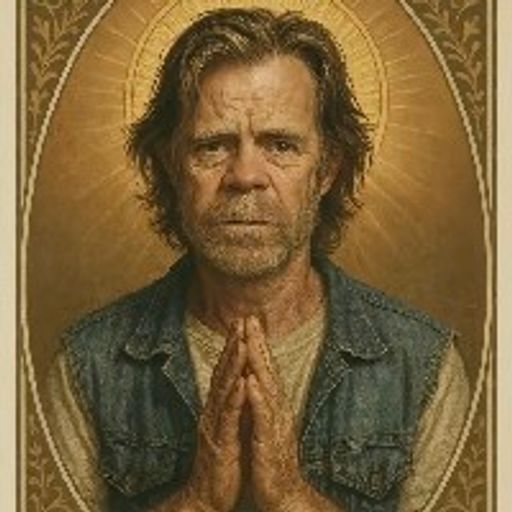
Recently, I've been thinking about this story again—the legendary journey of V God and Ethereum. Honestly, compared to Bitcoin's story, this history is even more poignant.
In 2014, a young Russian guy came to Hangzhou to attend an exhibition and generously distributed 5,000 ETH. At that time, almost everyone doubted him, treating him as a scammer. But who would have thought that these 5,000 free coins would later soar to $150 million. That was V God, Vitalik Buterin.
Interestingly, V God's story begins with a game. Between ages 13 and 16, he was obsessed with World of Warcraft, especially loving the Warlock class. One day, Blizzard updated the game and directly removed his favorite skill. This event made him realize: in a centralized system, players are always at a disadvantage. From then on, he started thinking about whether there was a way to break this model.
At 17, he discovered Bitcoin and was attracted by the blockchain's decentralization features. But as he delved deeper, he found Bitcoin's limitations were too great, and market demand was far from being satisfied. So he decided to create Ethereum.
At the end of 2013, V God published the famous paper "Ethereum: A Next-Generation Smart Contract and Decentralized Application Platform," which analyzed Bitcoin's strengths and weaknesses in detail and outlined Ethereum's limitless potential. The paper caused a sensation upon release and received widespread praise from the Bitcoin community. In May 2014, V God first came to China to prepare for the Ethereum crowdfunding presale. During that trip, he met many industry insiders but also faced mockery and rejection. In July, Ethereum officially launched its crowdfunding, successfully raising 31,000 BTC.
The DAO incident in 2016 became a turning point. That decentralized investment project was hacked, and 3.6 million ETH were stolen. V God and the foundation decided to hard fork to roll back the chain, but some miners insisted that "code is law" and refused to change the on-chain records. As a result, Ethereum split into two chains: ETH and ETC.
The 2017 bull market was truly crazy. Major exchanges listed ETH trading pairs one after another, something unprecedented at the time. Since ETH could only be mined with GPUs, everyone started building mining rigs, causing GPU prices to skyrocket. During that period, ICOs also exploded—projects like EOS and Quantum Chain issued tokens on Ethereum to raise funds, and even a virtual pet project could push ETH prices higher. This trend was only halted by regulatory intervention in September 2017.
March 12, 2020, was a dark day. The Fed triggered a circuit breaker, and ETH plummeted from $1,500 to $87. Many people despairingly sold off. But it was also the year DeFi exploded. Various decentralized finance protocols locked over $10 billion in value, and tokens like YFI surged by thousands or even tens of thousands of times. These projects were built on Ethereum, fueling the ecosystem's revival.
In the 2021 bull run, ETH once surged to $4,850, a 16,000-fold increase from its initial issuance price. Virtual real estate and NFT projects saw skyrocketing prices, and the hype was like a legendary story.
Later, Ethereum completed the transition from PoW to PoS, and Layer 2 networks matured. People discovered new arbitrage opportunities: participating in testnet projects to earn airdrops. Some made hundreds of millions from this.
Now, competition among Layer 2 solutions is intensifying, with projects like ARB, OP, ZKS, STRK showing their strengths. The future of the crypto world is likely to be a battle among Layer 2s.
Honestly, the story of V God and Ethereum is a miracle in the blockchain world. From a gamer’s epiphany to creating industry-changing technology, and now a thriving ecosystem—every step is full of drama. Whether you're a newcomer or a veteran, you should pay attention to Ethereum's development. It’s no longer just an asset; it’s the key to unlocking the future.