


Futures
Access hundreds of perpetual contracts
TradFi
Gold
One platform for global traditional assets
Options
Hot
Trade European-style vanilla options
Unified Account
Maximize your capital efficiency
Demo Trading
Introduction to Futures Trading
Learn the basics of futures trading
Futures Events
Join events to earn rewards
Demo Trading
Use virtual funds to practice risk-free trading
Launch
CandyDrop
Collect candies to earn airdrops
Launchpool
Quick staking, earn potential new tokens
HODLer Airdrop
Hold GT and get massive airdrops for free
Launchpad
Be early to the next big token project
Alpha Points
Trade on-chain assets and earn airdrops
Futures Points
Earn futures points and claim airdrop rewards


More



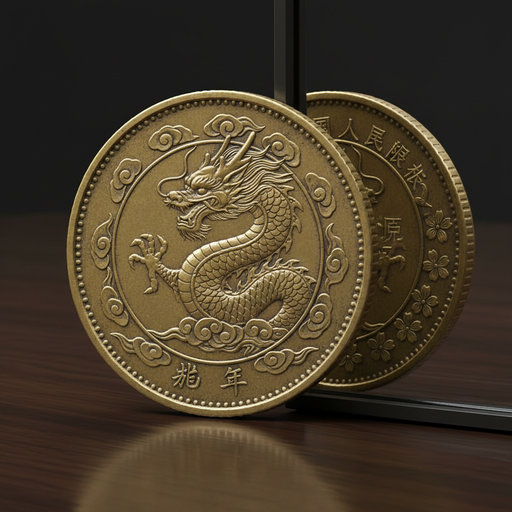


I've noticed something interesting over the past few months. With the volatility we've experienced in the markets in 2025 and early 2026, many people are turning to hybrid solutions to secure their crypto portfolios. Among these solutions, gold-backed tokens are really gaining ground.
So why this enthusiasm for crypto gold? It's simple: it's the perfect combination of blockchain technology and the stability of a traditional asset. You get the liquidity and ease of crypto transactions, but with actual backing in physical gold. This is often called digital gold.
Here's how it works concretely. The issuer first purchases physical gold stored in secure, insured vaults. Then, they issue tokens on the blockchain, where each token represents a specific share of gold, for example, one gram or one troy ounce. The reserves are regularly audited by independent third parties to ensure transparency. It's this public verification that makes all the difference.
The advantages are obvious. First, stability. Unlike Bitcoin or Ethereum, whose prices fluctuate wildly, crypto gold tracks the value of physical gold, which is much less volatile. It's perfect if you're looking to preserve value or hedge against inflation. Gold has always been considered a reliable inflation hedge, and these tokens inherit that trait naturally. Then, there's blockchain transparency and the possibility, on some projects, to convert your tokens into physical gold.
Of course, there are risks. If the issuer or the vault goes bankrupt, you could lose your funds. There are also fraudulent projects claiming to hold gold reserves but actually don't. Regulatory uncertainty also always exists depending on the jurisdiction.
Now, let's look at the main players. Tether Gold (XAUt) has clearly dominated the market since 2020. Each token represents one troy ounce of London Good Delivery gold stored in Switzerland. It's the most established and most liquid. PAX Gold (PAXG) follows closely, with a similar structure and the ability to redeem your tokens for physical gold via Brink's vaults.
After these two giants, which control roughly three-quarters of the gold token market, there are other interesting projects. Quorium Gold (QGOLD) launched in late 2023 on BNB Chain. Kinesis Gold (KAU) offers a unique yield system where transaction fees are redistributed to holders. VeraOne (VRO) launched in 2020 with a maximum purity of 999.9 and the option to convert into legal tender. Novem Gold Token (NNN) stored in Liechtenstein. Gold DAO (GLDT), a decentralized approach to democratize access to gold. Comtech Gold (CGO) based in Dubai. VNX Gold (VNXAU) from Liechtenstein. tGOLD (tXAU) on Ethereum and Polygon launched by a Dubai-based fintech. And more recently, Kinka (XNK) launched in March 2024 by a Japanese company.
What really stands out is the geographical and structural diversity of these projects. You have options based in Europe, the Middle East, and Asia. Some offer yields, others direct conversion, and some decentralized governance.
In summary, if you're tired of the extreme volatility of the crypto market but want to stay exposed to blockchain technology, crypto gold offers an interesting balance. These tokens combine the stability of gold with the efficiency of blockchain. While the overall market remains sluggish, these stable assets show steady growth that practically follows the rise in gold prices itself. Definitely worth considering if you're looking for a secure and diversified exposure in 2026.