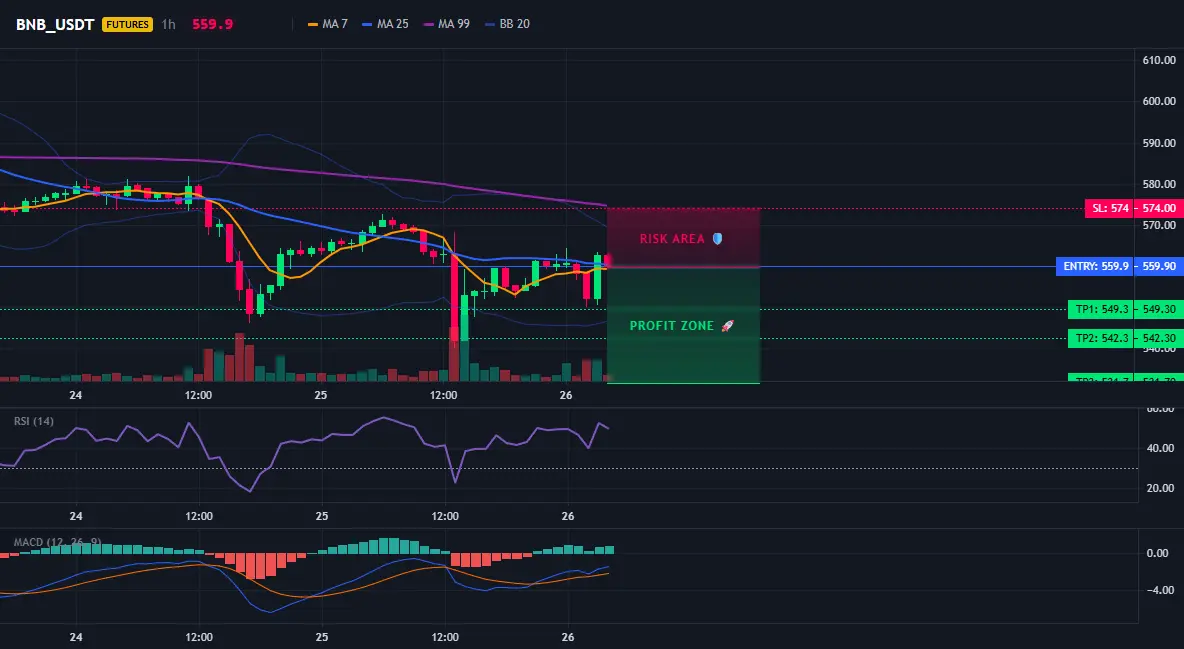


#💥 Nearly $1 Billion in Liquidations in a Single Day! Bitcoin Fights to Defend the $60k Level: Is It "AI Bloodsucking" or the Final Golden Pit?
The crypto market's roller coaster ride over the past two days has pushed countless high-leverage players into the abyss. According to the latest market monitoring data, the crypto market suffered a dramatic liquidity crunch within 24 hours, with total liquidation funds across the network reaching as high as $981.9 million (approximately RMB 7.1 billion). Among them, long positions bore the brunt, accounting for over 80% of liquidations, totaling $789.1 million.
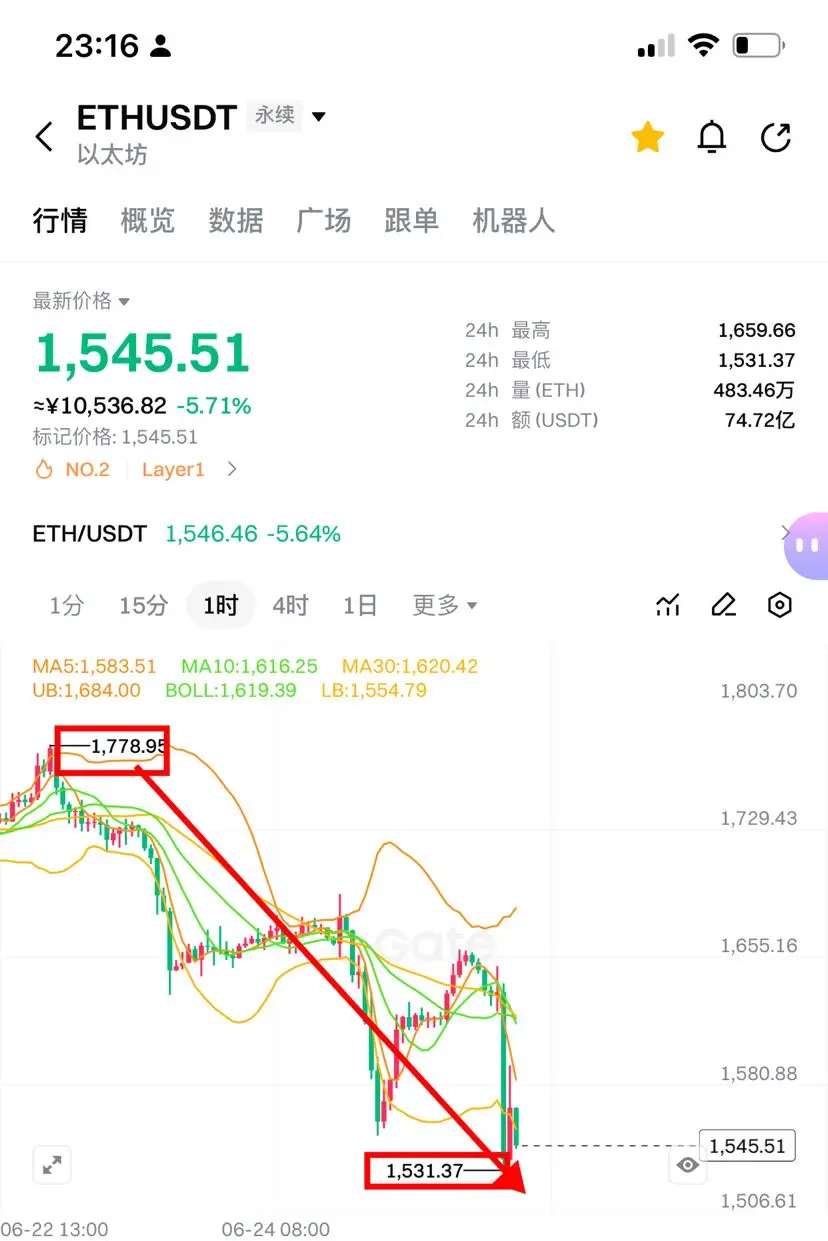
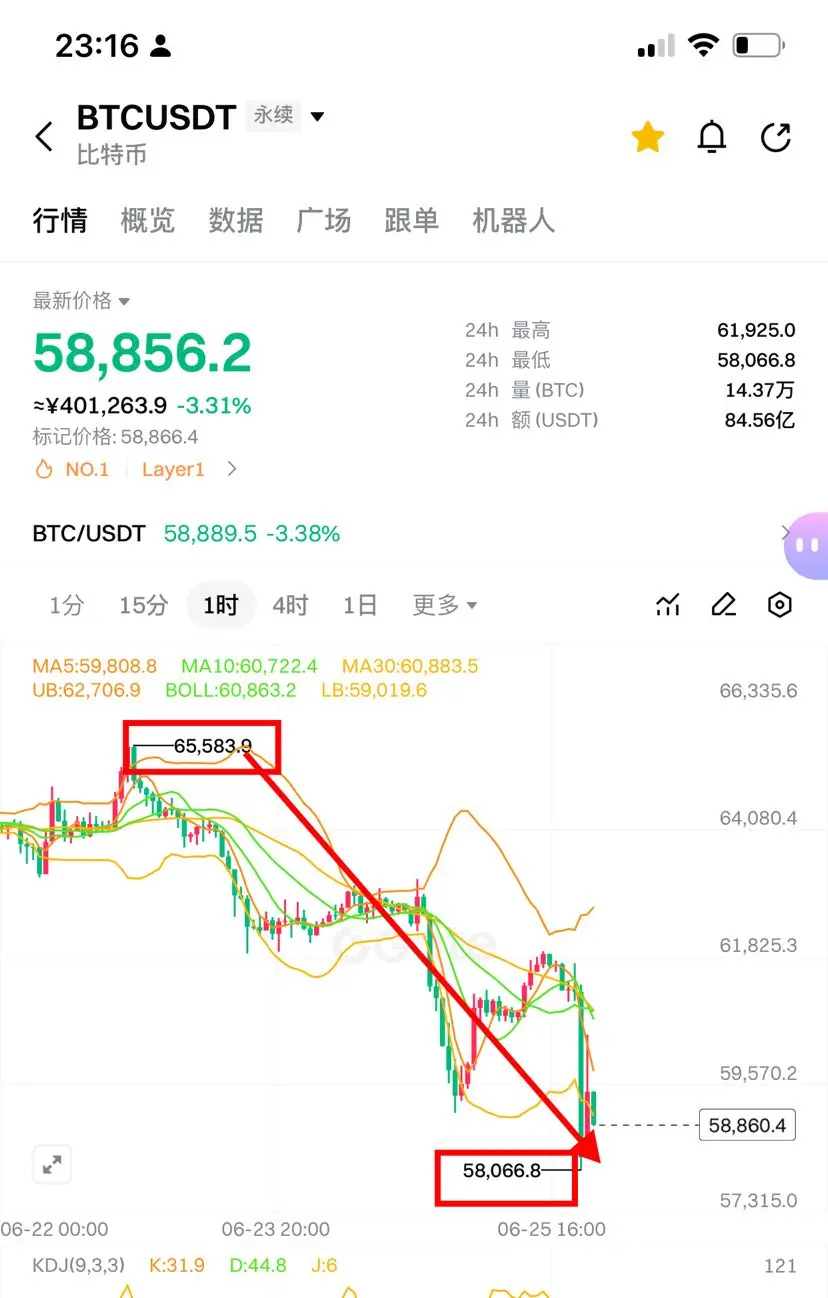
As long positions were trampled en masse, Bitcoin (BTC) prices briefly lost a key psychological level, hovering near $60k. Although it later rebounded to around $65,000 following a macro geopolitical boost (expectations of US-Iran peace talks), market panic and the tug-of-war between bulls and bears remain white-hot.
What forces are tearing apart the 2026 crypto market behind the scenes? Faced with this "golden pit" created by the downturn, what actions are institutions and retail investors taking?
Core Review: Three "Invisible Flying Knives" Draining Crypto Liquidity
Many are asking, without any major exchange collapse or absolute negative industry news, why did such a large-scale single-day washout suddenly occur? The answer lies in macro capital flows and the shift in technological cycles:
1. Strong macroeconomic data stifled rate-cut expectations. Entering mid-2026, US economic activity has shown resilience beyond market expectations. Persistent inflationary pressures have made the Federal Reserve extremely cautious on monetary easing. For high-beta risk assets like cryptocurrencies, every extra day of a high-interest-rate environment increases the cost of incremental liquidity, directly leading to net outflows of approximately $2.43 billion from US spot Bitcoin ETFs in May.
2. AI tech stocks "frantically suck blood," causing a major rotation of funds. It must be admitted that 2026 is a year of explosive growth for frontier AI. The recent rally in US stocks, including Micron Technology, Qualcomm, and the Goldman Sachs tech sector, has captured the absolute attention of global risk capital. A large amount of institutional funds originally planned for digital assets is being "relocated" to AI semiconductors and computing infrastructure on a phased basis. AI is fiercely competing with crypto for existing capital.
3. "News-driven" retail herding and high-leverage liquidations. Earlier, due to geopolitical volatility, the market was filled with cautious defensive sentiment; yet upon news of US-Iran peace talks, a portion of funds eager to buy the dip quickly accumulated massive longs on the leveraged market, only to encounter precise "targeted attacks" by institutions during subsequent technical corrections and liquidity tightening, resulting in a near $1 billion single-day liquidation tragedy.
On-chain data speaks: Are institutions cutting losses or holding the line?
Retail is panicking, but what about compliant funds and Wall Street giants?
According to 21shares' just-released "2026 Mid-Year Crypto Market Audit Report," the underlying skeleton of the market is much more solid than imagined.
Core indicator: Institutional holdings remain at historical highs
Although due to price volatility, the total assets under management (AUM) of global crypto ETPs (exchange-traded products) has shrunk by about 15% year-to-date, falling back to $140 billion. However, the net BTC holdings under global ETPs still stand at 1.25 million BTC, only less than 8% away from the all-time high (ATH).
What does this mean? Real long-term large allocators have not left the market; they are choosing to "hold through volatility." Moreover, from a historical cycle perspective, although the market consensus previously held that "the Bitcoin four-year halving cycle has become invalid in 2026," the actual price action still shows a familiar rhythm: after hitting a peak of $126,000 in October 2025, the magnitude and intensity of this correction are far smaller than the 80%+ crashes seen after previous bull markets. Currently, Bitcoin's price has steadily remained above the global investor average cost basis of $54,000 for several weeks. On-chain fundamentals suggest this is more like a healthy structural deleveraging rather than a full-fledged "crypto winter."
Market Outlook and Posting Guide: The Ultimate Convergence of AI and Web3
As an investor, facing the current $60k level, we need to shift our focus away from short-term K-line charts and look at the broader macro trends.
The core narrative of digital assets in the future is shifting from pure "ideological belief" to **"measurable capital inflows" and "infrastructure deployment."** A highly imaginative space is opening up: as AI agents fully take over commercial society, under the framework of "agentic commerce," blockchain networks will naturally become the best clearing infrastructure for value transfer and settlement among these autonomous AI operating systems.
Several practical suggestions for the community retail players:
Ditch your high leverage: The lesson of nearly $1 billion in liquidations is right before your eyes. In the tight liquidity environment of 2026, spot holdings are the assets that let you sleep at night.
Stick to blue-chip mainstream assets: Experts and on-chain analysts repeatedly warn to stay away from short-term "pump and dump" meme coin traps. Focus your positions on blue-chip assets with strong infrastructure attributes and legal compliance positioning (e.g., those compliant with the Clarity Act and the Genius Act).
Look for real yield sources: As major banking consortia (such as JPMorgan, Citigroup, Bank of America, etc.) accelerate the push for "tokenized deposit networks" this year, the dividends from compliant stablecoins and RWA (Real World Asset tokenization) are exploding. Seek out underlying projects that offer real, sustainable yields.
In one sentence: Every squat is a preparation for the next leap. The defense of $60,000 may be repeated, but as long as institutional positions remain intact and the underlying technology moves forward, staying at the table is what matters most.
The crypto market's roller coaster ride over the past two days has pushed countless high-leverage players into the abyss. According to the latest market monitoring data, the crypto market suffered a dramatic liquidity crunch within 24 hours, with total liquidation funds across the network reaching as high as $981.9 million (approximately RMB 7.1 billion). Among them, long positions bore the brunt, accounting for over 80% of liquidations, totaling $789.1 million.
As long positions were trampled en masse, Bitcoin (BTC) prices briefly lost a key psychological level, hovering near $60k. Although it later rebounded to around $65,000 following a macro geopolitical boost (expectations of US-Iran peace talks), market panic and the tug-of-war between bulls and bears remain white-hot.
What forces are tearing apart the 2026 crypto market behind the scenes? Faced with this "golden pit" created by the downturn, what actions are institutions and retail investors taking?
Core Review: Three "Invisible Flying Knives" Draining Crypto Liquidity
Many are asking, without any major exchange collapse or absolute negative industry news, why did such a large-scale single-day washout suddenly occur? The answer lies in macro capital flows and the shift in technological cycles:
1. Strong macroeconomic data stifled rate-cut expectations. Entering mid-2026, US economic activity has shown resilience beyond market expectations. Persistent inflationary pressures have made the Federal Reserve extremely cautious on monetary easing. For high-beta risk assets like cryptocurrencies, every extra day of a high-interest-rate environment increases the cost of incremental liquidity, directly leading to net outflows of approximately $2.43 billion from US spot Bitcoin ETFs in May.
2. AI tech stocks "frantically suck blood," causing a major rotation of funds. It must be admitted that 2026 is a year of explosive growth for frontier AI. The recent rally in US stocks, including Micron Technology, Qualcomm, and the Goldman Sachs tech sector, has captured the absolute attention of global risk capital. A large amount of institutional funds originally planned for digital assets is being "relocated" to AI semiconductors and computing infrastructure on a phased basis. AI is fiercely competing with crypto for existing capital.
3. "News-driven" retail herding and high-leverage liquidations. Earlier, due to geopolitical volatility, the market was filled with cautious defensive sentiment; yet upon news of US-Iran peace talks, a portion of funds eager to buy the dip quickly accumulated massive longs on the leveraged market, only to encounter precise "targeted attacks" by institutions during subsequent technical corrections and liquidity tightening, resulting in a near $1 billion single-day liquidation tragedy.
On-chain data speaks: Are institutions cutting losses or holding the line?
Retail is panicking, but what about compliant funds and Wall Street giants?
According to 21shares' just-released "2026 Mid-Year Crypto Market Audit Report," the underlying skeleton of the market is much more solid than imagined.
Core indicator: Institutional holdings remain at historical highs
Although due to price volatility, the total assets under management (AUM) of global crypto ETPs (exchange-traded products) has shrunk by about 15% year-to-date, falling back to $140 billion. However, the net BTC holdings under global ETPs still stand at 1.25 million BTC, only less than 8% away from the all-time high (ATH).
What does this mean? Real long-term large allocators have not left the market; they are choosing to "hold through volatility." Moreover, from a historical cycle perspective, although the market consensus previously held that "the Bitcoin four-year halving cycle has become invalid in 2026," the actual price action still shows a familiar rhythm: after hitting a peak of $126,000 in October 2025, the magnitude and intensity of this correction are far smaller than the 80%+ crashes seen after previous bull markets. Currently, Bitcoin's price has steadily remained above the global investor average cost basis of $54,000 for several weeks. On-chain fundamentals suggest this is more like a healthy structural deleveraging rather than a full-fledged "crypto winter."
Market Outlook and Posting Guide: The Ultimate Convergence of AI and Web3
As an investor, facing the current $60k level, we need to shift our focus away from short-term K-line charts and look at the broader macro trends.
The core narrative of digital assets in the future is shifting from pure "ideological belief" to **"measurable capital inflows" and "infrastructure deployment."** A highly imaginative space is opening up: as AI agents fully take over commercial society, under the framework of "agentic commerce," blockchain networks will naturally become the best clearing infrastructure for value transfer and settlement among these autonomous AI operating systems.
Several practical suggestions for the community retail players:
Ditch your high leverage: The lesson of nearly $1 billion in liquidations is right before your eyes. In the tight liquidity environment of 2026, spot holdings are the assets that let you sleep at night.
Stick to blue-chip mainstream assets: Experts and on-chain analysts repeatedly warn to stay away from short-term "pump and dump" meme coin traps. Focus your positions on blue-chip assets with strong infrastructure attributes and legal compliance positioning (e.g., those compliant with the Clarity Act and the Genius Act).
Look for real yield sources: As major banking consortia (such as JPMorgan, Citigroup, Bank of America, etc.) accelerate the push for "tokenized deposit networks" this year, the dividends from compliant stablecoins and RWA (Real World Asset tokenization) are exploding. Seek out underlying projects that offer real, sustainable yields.
In one sentence: Every squat is a preparation for the next leap. The defense of $60,000 may be repeated, but as long as institutional positions remain intact and the underlying technology moves forward, staying at the table is what matters most.