The growth of decentralized finance has continued to drive an increase in on-chain trading volume. As more assets and protocols move onto blockchain networks, users have also raised their expectations for trading efficiency, price quality, and execution experience.
Early DeFi trading mainly relied on a single automated market maker model. As liquidity became increasingly spread across different protocols and blockchain networks, traders often had to switch between multiple platforms to find better prices. This fragmentation increased trading costs and reduced market efficiency.
At the same time, issues such as front-running, wider slippage, and insufficient liquidity began to affect the user experience. As a result, a new category of infrastructure focused on trade optimization and liquidity integration emerged in the market. o1.exchange is one of the products developed in this context.
What Is o1.exchange?
o1.exchange is a decentralized trading platform built for on-chain trading. By aggregating multiple decentralized exchanges and liquidity sources, it provides users with optimized trade execution routes.
Unlike traditional AMM platforms, which mainly rely on a single liquidity pool, the core goal of o1.exchange is to find the best quote across the broader market. The system automatically calculates the optimal trading plan based on factors such as price, liquidity depth, fees, and estimated slippage.
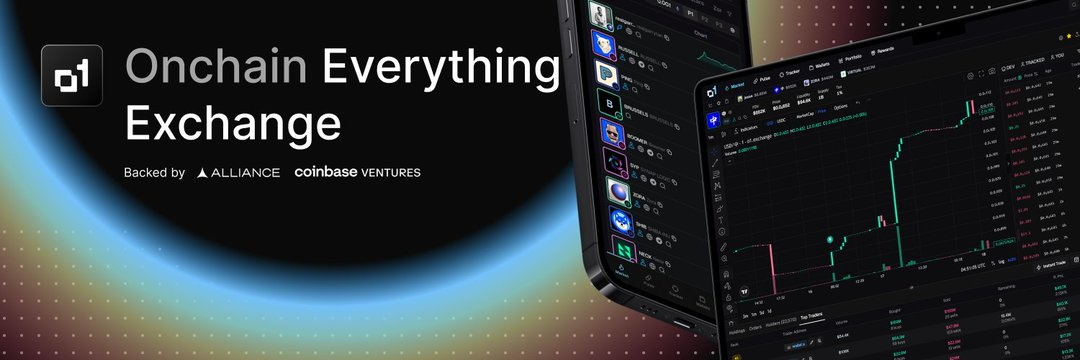
In addition to basic swap functions, the platform also integrates limit orders, TWAP orders, Sniper Order, MEV Protection, and programmatic trading interfaces, allowing on-chain trading to support a wider range of professional use cases.
How Does the Core Architecture of o1.exchange Work?
The core architecture of o1.exchange mainly consists of a trading terminal, an aggregation routing engine, and an on-chain execution module.
When a user submits a trading request, the system first scans multiple liquidity sources, including different AMM protocols and liquidity pools. The aggregator then calculates the optimal route based on real-time market data.
For larger orders, the system may split the trade across multiple liquidity sources to reduce price impact. This multi-path routing mechanism can improve execution efficiency and reduce slippage risk.
Finally, the optimized trading plan is executed through the on-chain routing contract, and the final execution result is returned to the user.
What Trading Methods Does o1.exchange Support?
In addition to basic swap trading, o1.exchange offers several advanced order types.
Limit Order
Limit orders allow users to set a target price in advance, and the trade is executed only when the market reaches the specified price. This method is suitable for traders who want to wait for a particular price range.
TWAP Orders
TWAP, or Time Weighted Average Price, orders split a large trade into several smaller orders and execute them gradually over a specified period.
This mechanism can reduce the market impact caused by a single large transaction and also help lower slippage caused by insufficient liquidity.
Sniper Order
Sniper Order is typically used to quickly capture newly listed tokens or specific market opportunities.
The system automatically executes trades based on trigger conditions set by the user, improving execution speed and response efficiency.
Multi-Wallet Management
The platform supports unified management of multiple wallet addresses, giving high-frequency traders and professional users a more flexible way to manage assets.
How Does o1.exchange Reduce MEV Risk?
MEV, or Maximal Extractable Value, is one of the major challenges in on-chain trading.
When transaction information enters a public mempool, some bots may attempt to extract additional profit through front-running or sandwich trades. This behavior can worsen the execution price for users.
To reduce these risks, o1.exchange introduces transaction protection mechanisms and optimized routing strategies.
The system aims to minimize transaction exposure time and optimize the execution route, thereby lowering the likelihood of front-running or Sandwich Attack.
In addition, automatic slippage management and transaction parameter optimization also help improve execution quality.
What Role Does the O Token Play in the Ecosystem?
O is the native token of the o1.exchange ecosystem.
In most DeFi protocols, native tokens often serve functions such as governance, incentives, and ecosystem coordination. Token holders may participate in protocol governance, community proposals, and ecosystem development activities.
For a trading platform, the native token may also be used for fee discounts, user incentives, or unlocking platform features.
How Is o1.exchange Different From Traditional DEXs?
| Comparison Dimension |
o1.exchange |
Traditional DEX |
| Liquidity Sources |
Multi-protocol aggregation |
Single protocol |
| Price Discovery |
Aggregated quotes |
Single-pool quotes |
| Route Optimization |
Supported |
Usually not supported |
| Advanced Orders |
Supported |
Less commonly supported |
| TWAP Function |
Supported |
Limited support |
| Programmatic Trading |
API supported |
Mostly not supported |
| MEV Protection |
Integrated optimization mechanisms |
Depends on user settings |
In terms of positioning, traditional DEXs are closer to liquidity provision platforms, while o1.exchange is closer to trading execution infrastructure.
What Are the Use Cases of o1.exchange?
o1.exchange can be applied to a variety of on-chain trading scenarios.
Regular users can use its aggregation function to obtain better swap prices. Active traders can use limit orders and advanced order management strategies.
Quantitative teams can connect automated trading systems through APIs. Large-volume traders can use tools such as TWAP to optimize execution efficiency.
As the range of on-chain assets continues to expand, aggregated trading infrastructure will become increasingly important for liquidity discovery and price optimization.
Summary
o1.exchange is an on-chain trading platform that combines DEX aggregation, smart routing, advanced order management, and transaction protection mechanisms. Its core value lies in integrating multiple liquidity sources to provide users with better prices, lower slippage, and a richer set of trading tools.
Compared with the traditional single DEX model, o1.exchange places greater emphasis on trade execution efficiency and a more professional trading experience. Through its aggregator architecture, MEV risk control, and programmatic trading capabilities, the platform is building trading infrastructure for the next generation of the DeFi market.
FAQs
How Does o1.exchange Find the Best Price?
o1.exchange analyzes price and liquidity data from multiple decentralized trading protocols in real time, then calculates the optimal execution route based on factors such as trade size, slippage, and fees.
Does o1.exchange Support Limit Orders?
Yes. Users can set a target price, and the trade will be executed automatically once the market price meets the specified conditions.
What Are TWAP Orders Used For?
TWAP orders can split a large trade into several smaller orders and complete execution gradually over a period of time, helping reduce market impact and slippage risk.
How Does o1.exchange Reduce the Risk of Front-Running?
o1.exchange reduces the impact of front-running and Sandwich Attack on users’ execution prices through mechanisms such as optimized trade routing, shorter transaction exposure time, and automatic slippage management.