Lending protocols are a vital component of the DeFi ecosystem and a core piece of infrastructure for optimizing capital efficiency. As the TON ecosystem continues to grow, the demand for money markets involving stablecoins, liquid staking assets, and other digital assets is rising steadily. EVAA provides liquidity support to the TON network by establishing a native lending market and has become a key building block of the Telegram DeFi ecosystem.
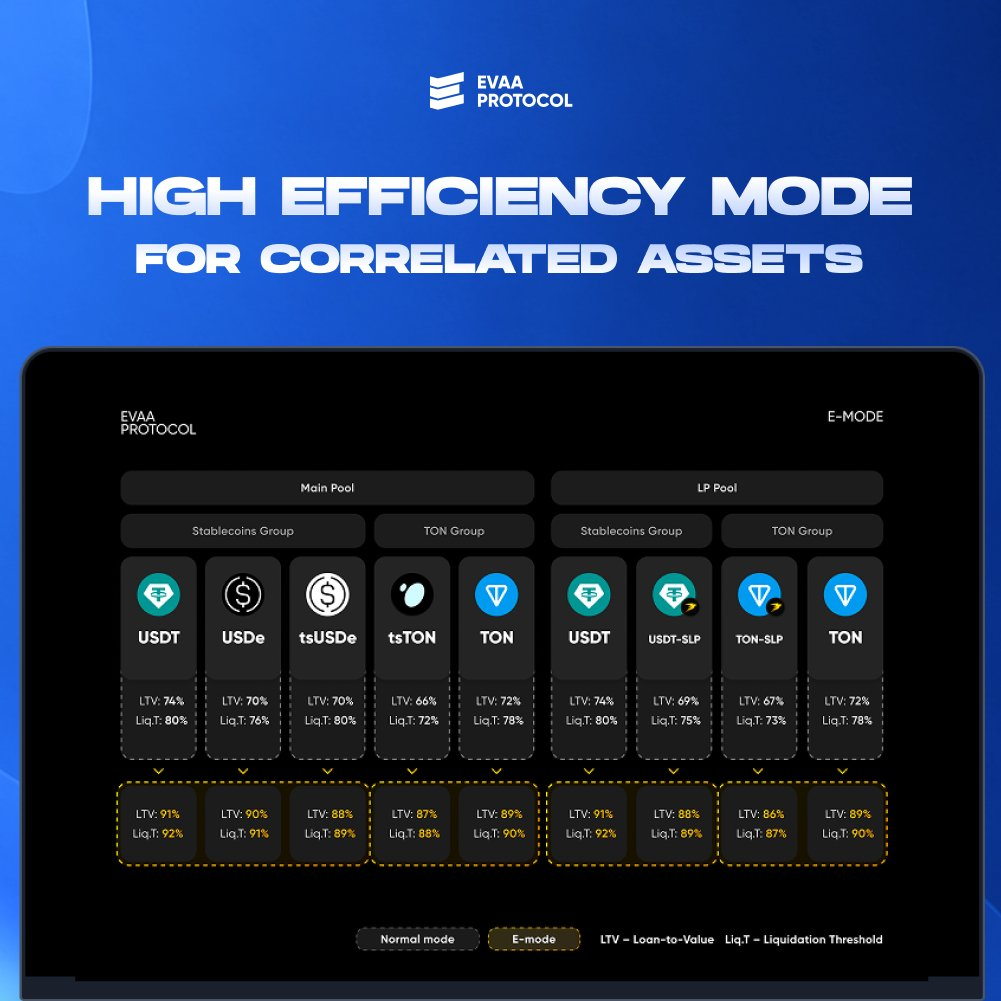
How EVAA’s Liquidity Pool Works
The liquidity pool serves as EVAA’s funding source and operational bedrock.
When users deposit assets into the protocol, funds do not go directly to specific borrowers. Instead, they are pooled together. All borrowing activity draws liquidity from this single pool, eliminating the need for peer-to-peer matching between lenders and borrowers.
This model enhances capital efficiency and ensures that borrowers can access available funds at any time. Meanwhile, depositors earn returns without having to actively seek out lending opportunities.
The larger the liquidity pool, the greater the protocol's overall capital efficiency and market stability typically become.
How Depositors Earn Returns
Depositors are essential players in the EVAA lending market.
After users deposit assets into the protocol, the system records their respective deposit shares. Borrowers pay interest when using the funds, and that interest forms the primary source of depositor returns.
When borrowing demand increases, the capital utilization rate climbs, leading the protocol to raise borrowing rates. As borrowing rates go up, deposit returns follow suit, attracting more liquidity into the market.
This market-driven mechanism allows interest rates to adjust automatically based on supply and demand, with no manual intervention needed.
How Borrowers Access On-Chain Liquidity
Borrowers must first provide collateral assets to the protocol.
EVAA operates on an over-collateralized model, meaning the loan value must be lower than the collateral value. For example, when a user deposits $1,000 worth of assets, the protocol may only allow borrowing of around $700.
The over-collateralization mechanism provides a safety buffer for the protocol, reducing the risk of default caused by market volatility.
Once the loan is completed, borrowers can use the funds for payments, trading, liquidity management, or other DeFi applications without having to sell their original assets.
How EVAA’s Interest Rate Mechanism Adjusts Automatically
EVAA does not use a fixed interest rate model.
Instead, the protocol dynamically adjusts borrowing rates based on capital utilization. Capital utilization typically refers to the proportion of lent funds relative to the total liquidity pool.
When market demand for borrowing intensifies, available liquidity shrinks, and borrowing rates rise. Higher rates encourage more users to deposit assets while curbing some borrowing demand.
When the market has ample liquidity, borrowing rates decline, promoting capital usage.
This dynamic model enables the lending market to automatically balance based on actual supply and demand conditions.
How EVAA’s Risk Management System Works
Risk management is a fundamental pillar for the long-term operation of any lending protocol.
EVAA sets risk parameters for each asset, including collateral ratio, borrowing limits, and liquidation thresholds. Higher-risk assets typically require a higher collateral ratio, while lower-risk assets can achieve greater capital efficiency.
The protocol continuously monitors the health of user positions. When the price of collateral assets changes, the system recalculates the account’s risk level.
The goal of the risk management system is to boost market liquidity and capital efficiency while ensuring the safety of funds.
How EVAA’s Automated Liquidation Mechanism Protects the Protocol
Automated liquidation is designed to prevent bad debt from accumulating.
When the price of collateral assets keeps falling, the borrower’s collateral ratio may drop below the protocol’s safety threshold. Once the liquidation threshold is triggered, the system allows liquidators to repay a portion of the debt and receive the corresponding collateral assets.
This mechanism ensures that all loans in the protocol are backed by sufficient asset value.
While liquidation increases the risk of loss for borrowers, it protects depositors and the entire liquidity pool.
As a result, automated liquidation is a cornerstone of all major DeFi lending protocols.
How EVAA Differs from Traditional Bank Lending
EVAA and traditional banks both provide lending services, but their underlying operating logic differs significantly.
Traditional banks centrally manage customer deposits and determine loan approval processes, while EVAA executes lending rules automatically through smart contracts.
Traditional financial institutions typically rely on credit checks, whereas EVAA relies on an over-collateralization mechanism to control risk.
Furthermore, all transaction records on EVAA are stored on the blockchain, allowing anyone to verify the protocol’s operational status, which enhances transparency.
This open financial model represents a key distinction between the DeFi lending market and the traditional financial system.
Summary
EVAA Protocol builds a native lending market within the TON ecosystem through liquidity pools, over-collateralization, dynamic interest rates, and automated liquidation. Depositors provide liquidity and earn returns, while borrowers gain funding by pledging collateral—all managed automatically by smart contracts.
As a key financial infrastructure of the TON ecosystem, EVAA not only improves the capital efficiency of digital assets but also provides foundational support for stablecoin circulation, yield optimization, and other DeFi applications. Combined with the Telegram Mini App and the TON network, EVAA is opening up on-chain lending services to a broader user base.
FAQs
What is the core function of EVAA Protocol?
The core function of EVAA Protocol is to provide decentralized lending services. Users can deposit digital assets to earn yields or borrow other digital assets by pledging collateral, thereby improving capital efficiency.
Why does EVAA adopt a liquidity pool model?
The liquidity pool model improves capital efficiency and allows borrowers to access liquidity at any time. Compared to peer-to-peer lending, liquidity pools eliminate the need for matching lenders and borrowers, making capital flow more efficient.
Does EVAA require collateral for borrowing?
EVAA uses an over-collateralized lending model. Borrowers must first deposit collateral assets worth more than the loan amount to reduce protocol risk before obtaining a loan.
Is EVAA’s interest rate fixed?
EVAA uses a dynamic interest rate mechanism. Borrowing rates and deposit yields adjust automatically based on market capital utilization, so rates change with shifts in supply and demand.
Why does EVAA need a liquidation mechanism?
The liquidation mechanism prevents bad debt. When the value of collateral assets falls below the safety threshold, the protocol automatically initiates the liquidation process to protect the liquidity pool and depositors’ funds.
What is the biggest difference between EVAA and other DeFi lending protocols?
EVAA’s core differentiator is its TON-native architecture and Telegram integration. Compared to lending protocols primarily deployed on the Ethereum ecosystem, EVAA focuses on serving TON users and offers a more convenient experience through the Telegram Mini App.