A crypto debit card draws from assets you already hold—typically an exchange spot balance—and converts them to fiat when Visa or Mastercard authorizes a purchase. A crypto credit card lets you spend against a credit line that may be unsecured or collateralized with digital assets, with repayment due on a billing cycle. Debit is pay-as-you-go from owned crypto; credit is borrow-now, settle-later, often with APR and liquidation triggers. See Best crypto cards overview and How to get and use a crypto card.
Choosing between a crypto debit card and a crypto credit card comes down to how each purchase interacts with your wallet. Debit products draw on held assets at the point of sale; credit products add a borrowing layer with statement cycles and repayment in fiat or crypto. That structural gap drives differences in limits, fees, custody, and risk.
| Feature |
Debit |
Credit |
| Funding source |
Pre-funded exchange/wallet balance |
Credit line (fiat or crypto-collateralized) |
| Spending ceiling |
Available balance + issuer daily caps |
Credit limit minus utilization |
| Settlement timing |
Real-time conversion at authorization |
Statement cycle; interest if balance carries |
| Collateral |
None beyond held assets |
Often required (e.g., BTC/ETH pledge) |
| Typical rewards |
Cashback on spend volume |
Points/cashback; may tie to staking tiers |
| Default risk |
Declined if balance insufficient |
Credit score / collateral liquidation risk |
| Custody model |
Usually custodial exchange balance |
Custodial or pledged on-platform assets |
The table summarizes mechanism differences, not a ranking. Verify issuer terms in the cardholder agreement before relying on limits or reward rates. Both card types run on Visa or Mastercard rails; what changes is whether each purchase reduces your balance immediately or adds to revolving debt.
Types of crypto cards generally fall into exchange-linked debit cards, collateralized credit cards, and dual-mode hybrids that let users switch settlement paths. MetaMask Card connects a self-custodial wallet to a Visa debit accepted at merchants on standard network rails. Coinbase Card debits a Coinbase account balance and can earn cashback on eligible spend categories. The Crypto.com Visa Signature Credit Card extends revolving credit with tiered rewards unlocked through platform staking. Nexo Card dual-mode lets the same card spend from available funds or draw against crypto-backed credit limits depending on account settings. At checkout the issuer checks balances or collateral, converts or allocates funds, and merchants receive fiat settlement whether the product is debit or credit.
What Is a Crypto Debit Card vs a Crypto Credit Card?
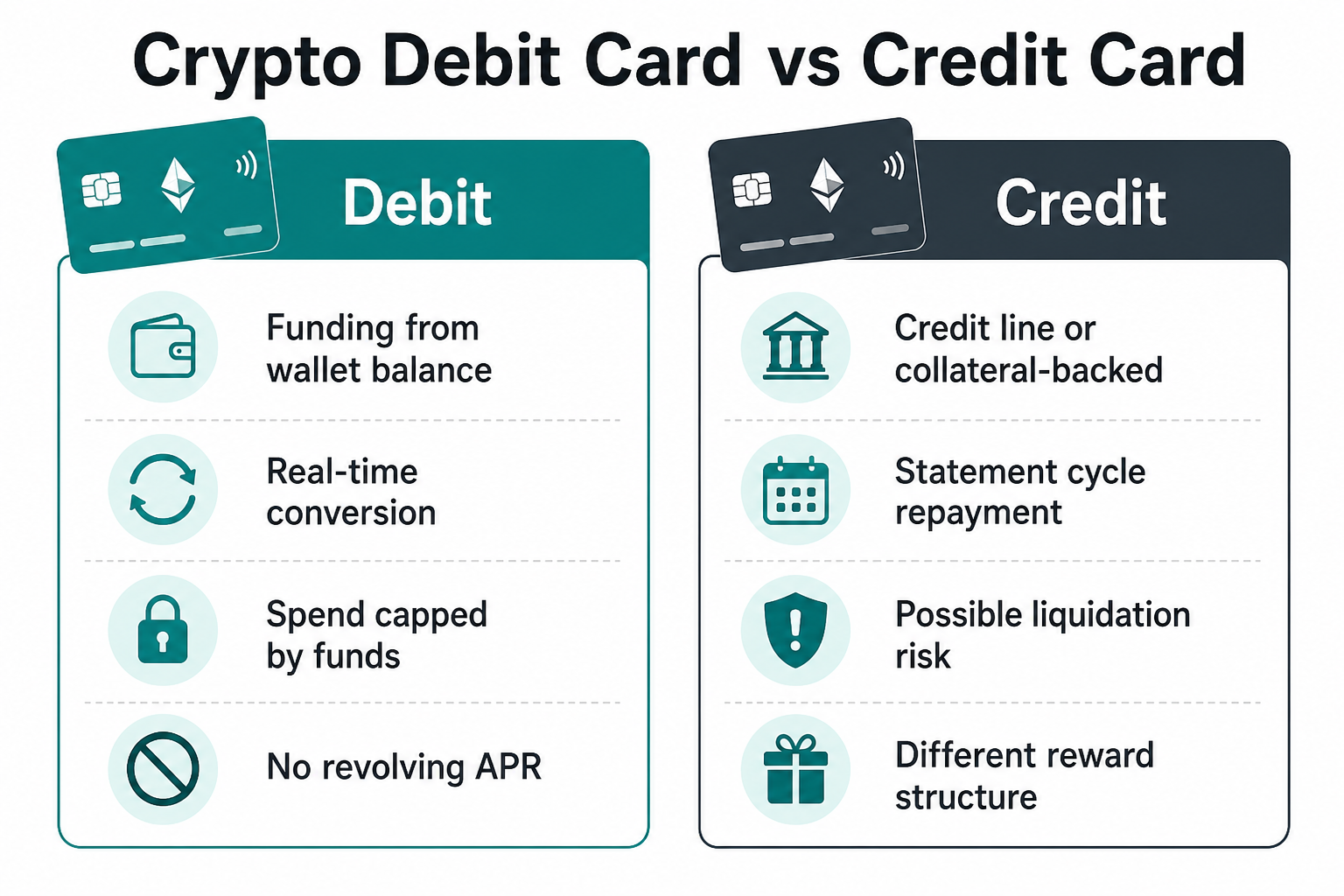
Figure 1. Debit vs credit paths: real-time balance conversion versus credit-line or collateral-backed repayment cycles.
A crypto debit card debits your wallet or exchange account at checkout, converts the amount to fiat, and settles through Visa or Mastercard. You cannot spend beyond your available balance. Exchange-linked Visa debit products such as Gate Card hold funds in your exchange account and decline authorizations when balances are too low. The card is not extending credit—it is routing a real-time sale of digital assets into fiat that the network passes to the merchant.
A crypto credit card extends revolving credit—sometimes unsecured, sometimes secured by on-platform collateral. Purchases accumulate on a statement; repayment may be in fiat or crypto. Deferred repayment introduces interest and, in collateralized models, margin calls if asset values fall. What is a crypto card and how does it work covers authorization and settlement. In collateralized credit programs, pledged BTC, ETH, or stablecoins remain locked on-platform while you spend against a credit limit derived from their market value.
Both products may display a Visa or Mastercard logo and support tap-to-pay at merchants that accept contactless payments, but the legal distinction sits in the cardholder agreement: debit cards require sufficient assets before authorization clears; credit cards may approve transactions up to a limit even when your spot wallet is empty, provided collateral or underwriting supports the line. Some issuers offer optional metal card tiers as premium physical form factors—heavier cards with different reward multipliers—without changing whether the underlying product is debit or credit.
How Do Settlement, Collateral, and Spending Limits Differ?
Debit settlement reduces your balance immediately by the converted fiat amount plus fees. When you tap a crypto debit card at a coffee shop, the issuer typically locks the quoted conversion rate, sells or offsets the equivalent crypto from your exchange balance, and releases fiat to the card network within seconds. Credit settlement follows a billing cycle—you may spend up to your limit even when spot holdings are zero if collateral or creditworthiness supports the line. Collateralized programs lock assets and may liquidate on loan-to-value breaches.
On debit paths, settlement timing is tightly coupled to authorization—some issuers re-quote if prices move before final settlement; others honor the authorized amount. Credit paths decouple spending from immediate disposal: you spend now, receive a statement later, and repay in fiat or crypto. Interest accrues on any balance carried past the grace period.
Collateral rules define the sharpest credit-side risk. A program might grant a $10,000 limit against $15,000 of pledged ETH, implying a loan-to-value (LTV) ceiling around sixty-seven percent. If ETH falls and LTV crosses a maintenance threshold—often seventy to eighty percent depending on issuer policy—the platform may issue a margin call or automatically liquidate a portion of pledged assets to restore the ratio. Debit cards avoid LTV mechanics entirely because you only spend what you already own; the worst case is a declined transaction, not a forced sale of collateral you did not intend to dispose of.
Debit limits equal available balance plus issuer daily caps. Credit limits can exceed liquid holdings when collateral backs the line—you might pledge BTC, receive a fiat line backed by that collateral worth a fraction of its value, and spend while keeping exposure until LTV rules force action. Before using a card abroad, check whether merchants in that region accept the issuer's network and whether your account supports foreign-currency settlement. Crypto-backed credit lines work only where the card is accepted by local Visa or Mastercard acquirers. Debit suits users who want caps tied to owned assets; credit suits those preserving exposure while spending fiat, at liquidation risk. Crypto-backed credit programs may run daily collateral checks; users holding volatile assets should monitor LTV thresholds closely and enable issuer alerts when pledged values move.
Fees, Rewards, and Custody Trade-offs
Debit cards charge conversion spreads and ATM fees; credit adds APR and collateral liquidation fees. Compare net reward after fees. Exchange-linked debit cards use custodial balances; credit cards hold pledged assets on-platform until repayment. Advertised two-percent cashback on debit spend means little if the conversion spread on each purchase costs one point five percent and foreign purchases add a three-percent FX markup.
Conversion spread is the hidden fee on most crypto debit card purchases—issuers quote between mid-market and retail prices. FX fees apply on foreign-currency transactions; ATM withdrawals often carry a flat fee plus a percentage, with daily limits lower than in-store caps. Credit-side stacks add APR, late penalties, and liquidation fees when collateral is sold at LTV breaches. Net-of-fees math should include spread, FX, ATM, APR, and opportunity cost of locked collateral.
Custody differs in who holds keys and when assets move. Exchange-linked debit products such as Gate Card keep spending funds in a custodial exchange wallet; collateralized credit programs lock pledged assets in restricted sub-accounts until repayment. KYC applies to both paths—debit requires identity verification and sanctions screening; credit may add credit checks or enhanced collateral documentation. Issuers may support card use in limited country lists even when the parent exchange serves a wider region.
Reward structures differ by card type and tier. Debit programs may offer flat cashback on everyday merchants; credit programs often earn higher rates on dining, travel, and subscriptions but add APR on carried balances. Metal card tiers on some issuers boost earn rates or waive fees for users who stake platform tokens or maintain minimum account balances. Before comparing headline earn percentages, check whether conversion spreads, FX markups, or tier requirements offset the advertised rewards. Customer support channels—chat, email, or in-app tickets—vary by issuer and may matter when authorization fails at a merchant or funds appear delayed.
When Does a Debit Path (e.g. Gate Card) Fit Better?
A debit path fits when spending should stay bounded by assets on hand. Gate Card illustrates the exchange-linked Visa debit pattern: fund a Gate spot balance and spend at Visa merchants with conversion at checkout rather than extended credit. This suits everyday retail spend and users who treat crypto like a checking account. If your goal is to pay groceries, subscriptions, or travel expenses without introducing borrowing, debit keeps each transaction transparent—you know exactly which assets sold and at what approximate rate.
Debit also fits users who want to avoid LTV monitoring and liquidation—authorization simply fails when balances are insufficient. A debit card is widely accepted at grocery stores, gas stations, and online subscriptions because merchants receive standard Visa or Mastercard settlement. Streaming subscriptions billed to a debit card draw from spot funds each cycle without adding revolving debt. Choose credit when you need liquidity beyond your spot balance or want to borrow against crypto without selling. Best crypto card by use case maps product types to spending profiles. Gate Card and similar exchange debit cards illustrate the debit pattern—not recommendations to choose one issuer over another. Users who fund an exchange account with stablecoins and use a debit card for recurring subscriptions often prefer the transparency of balance-capped spend over crypto-backed credit lines.
Risks and Compliance Checks
Both card types require KYC and may restrict availability by country. Confirm whether the product is legally debit or credit in the cardholder agreement. Debit purchases often realize capital gains on converted crypto; credit may defer disposal until collateral is sold or repaid. Regulatory labels matter: some jurisdictions treat crypto-linked cards as electronic money products, others as credit facilities subject to lending rules.
Compliance differences extend to transaction monitoring—issuers may flag large crypto-to-fiat conversion sequences on debit cards, while credit programs may report utilization to bureaus where unsecured lines exist. Tax treatment remains your responsibility: each debit swipe may constitute a taxable disposal; credit may defer events until collateral is released. Operational risks include exchange downtime during authorization—custodial balances and pledged collateral sit on-platform, so card spending may stop if the exchange halts withdrawals. Issuer support teams can clarify whether a declined transaction reflects insufficient funds, network restrictions, or collateral checks. Run a compliance check on the cardholder agreement to confirm whether the product is legally debit or credit in your jurisdiction, whether merchants in your country are supported on the issuer's network, and whether support can resolve disputes when funds fail to settle.
FAQ
Is a crypto debit card the same as a prepaid card?
Both use pay-first mechanics, but a crypto debit card converts digital assets at purchase while a prepaid card loads fiat in advance. A prepaid card holds a fixed fiat balance you top up by bank transfer or cash; no crypto is involved at checkout. A crypto debit card pulls from a wallet or exchange account and performs conversion in real time when Visa or Mastercard processes the authorization at merchants. Functionally they both decline when funds run out, but tax and tracking differ because debit card paths may trigger capital-gains events on each conversion.
Can I build credit with a crypto credit card?
Only if the issuer reports to credit bureaus in your region. Most crypto debit cards do not involve revolving debt and therefore do not affect credit scores. Unsecured crypto credit cards that report payment history can help or hurt your score like traditional cards. Collateralized credit lines backed by on-platform assets that never report to bureaus build no traditional credit history regardless of on-time repayment—check bureau reporting terms in the card agreement.
Which has lower fees: crypto debit or credit?
Debit avoids interest but may charge conversion spreads; credit may offer higher rewards but adds APR on carried balances. For users who pay statements in full each cycle, credit cards can earn more cashback on subscriptions and travel than debit cards on headline rates. Users who earn staking-linked rewards on a metal tier credit card should check whether those earn rates apply to all merchant categories. For users who carry balances or face volatile collateral on crypto-backed lines, APR and liquidation costs often exceed debit spreads. Model your actual spend volume, FX exposure, and repayment behavior rather than comparing sticker earn rates alone.
Do I still pay tax when I spend crypto on a debit card?
In many countries, card conversion is a taxable disposal. Collateralized credit may defer events until collateral is released—rules vary by jurisdiction. Each debit transaction effectively sells crypto for fiat at the issuer's quoted rate, which tax authorities may treat as a realization event. Credit paths might delay that event until collateral is liquidated or you repay by transferring crypto off-platform. Keep records of conversion rates and timestamps issuers provide.
When should I choose Gate Card or another exchange debit card?
Choose Gate Card or similar exchange-linked Visa debit when you hold assets on that platform, want balance-capped spending, and do not need borrowed liquidity. This card pattern works well for routine retail use where you prefer declines over debt and want conversion handled at checkout. Users who earn rewards on a credit card but repay in full may still prefer a debit card for everyday merchants to avoid collateral checks on crypto-backed credit. If you need a credit limit above your spot holdings, want to preserve exposure without selling, or require traditional credit-bureau reporting, a credit card—or a mix of both card types—may fit better.