A best crypto card comparison in 2026 ranks Visa and Mastercard programs by how they convert cryptocurrency at checkout, what cashback or rebate models they publish, and whether the product is a prepaid debit path or a credit line backed by collateral. Crypto.com Card, Coinbase Card, Nexo Card, and Gate Card each tie purchases to exchange or wallet balances, require KYC for most full-featured tiers, and differ on FX markups, ATM withdrawal rules, and EEA or other regional availability. No issuer fits every profile; match fee dimensions and spending habits to each program's published schedule.
What Criteria Matter When Ranking Crypto Cards?
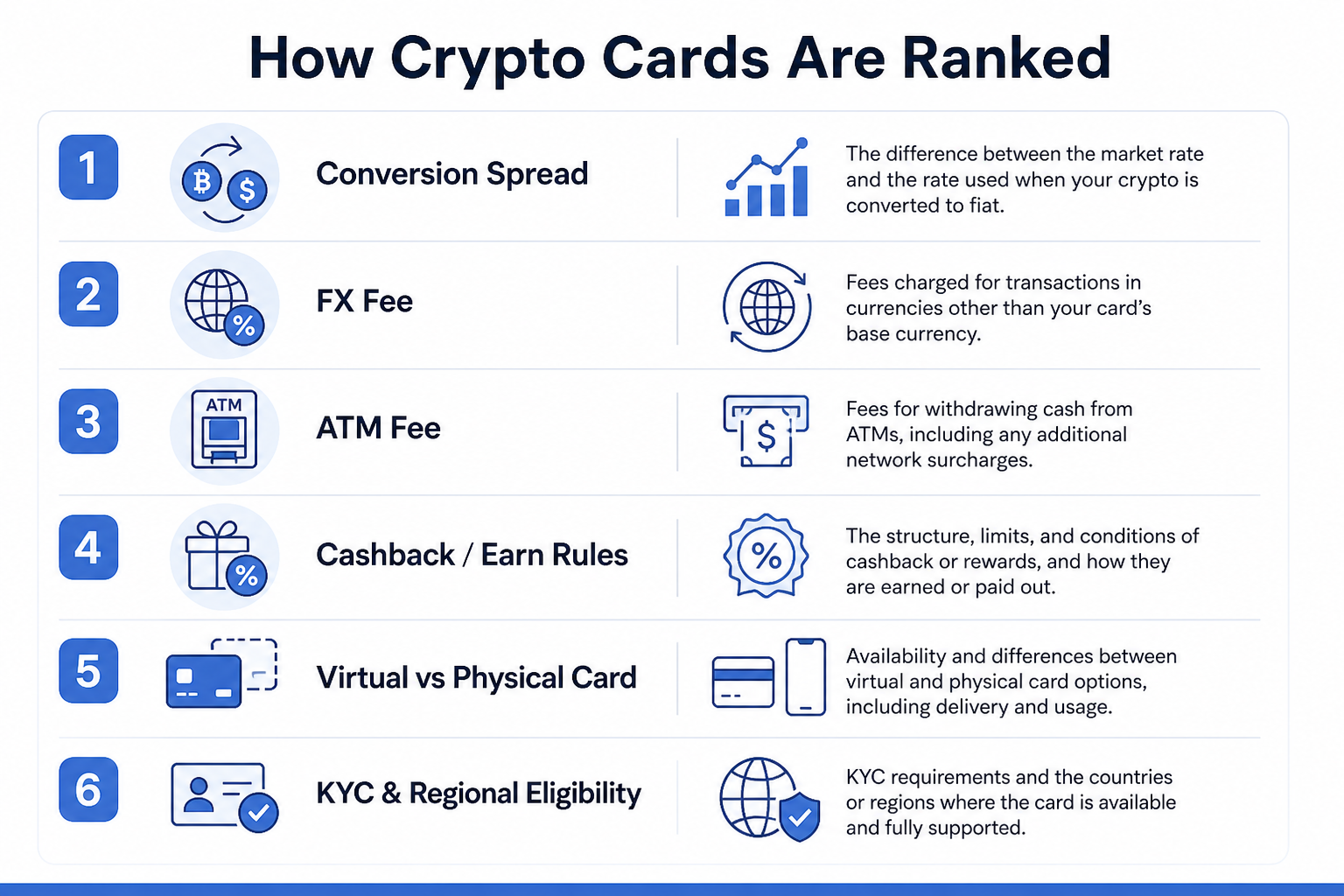
Figure 1. Ranking dimensions: conversion spread, FX, ATM, cashback rules, virtual vs physical form factors, and KYC eligibility.
Crypto cards let holders spend cryptocurrency or stablecoins on Visa or Mastercard rails, usually after real-time conversion or a collateral draw at authorization. Types include prepaid debit cards funded from a wallet, exchange-linked debit cards that pull from trading balances, and crypto credit cards backed by pledged assets. Ranking starts with the spend rail and fee schedule—not marketing slogans such as "swipe anywhere, earn everywhere."
Most products are Visa debit or Mastercard debit cards that pull from a crypto balance, stablecoin pocket, or linked exchange account at authorization. Credit-style products extend lines backed by collateral and change risk when asset values move. Treat issuer fee schedules—not tier names—as primary evidence when you compare crypto cards.
The table below lists comparison dimensions used throughout this guide. Always check each issuer's live fee schedule before relying on a rank.
| Ranking dimension |
What to verify |
Why it affects total cost |
| Conversion spread |
Crypto-to-fiat rate at POS vs index |
Hidden cost on every purchase |
| FX fee |
Non-domestic currency spend |
Travel and cross-border shopping |
| ATM fee |
Withdrawal limits and surcharges |
Cash access vs card spend |
| Cashback / rebates |
Posted earn rates and caps |
Offsets fees only if spend matches tiers |
| Staking / tier locks |
Token lock requirements for rewards |
Opportunity cost beyond headline rates |
| Issuance & delivery |
Virtual vs physical card fees |
One-time cost before first spend |
| Regional eligibility |
KYC jurisdiction and EEA programs |
Product may be unavailable in your country |
Reward tiers that require staking native tokens add volatility and lock-period exposure beyond headline cashback rates. Cards that auto-convert multiple cryptocurrency assets introduce spread risk on each purchase. Apple Pay, Google Pay, and virtual card numbers are limited by issuer and region—confirm wallet pairing before travel. Prioritize mechanisms and fee categories over time-bound promotional rates.
Where Does Gate Card Fit Among Crypto Debit Options?
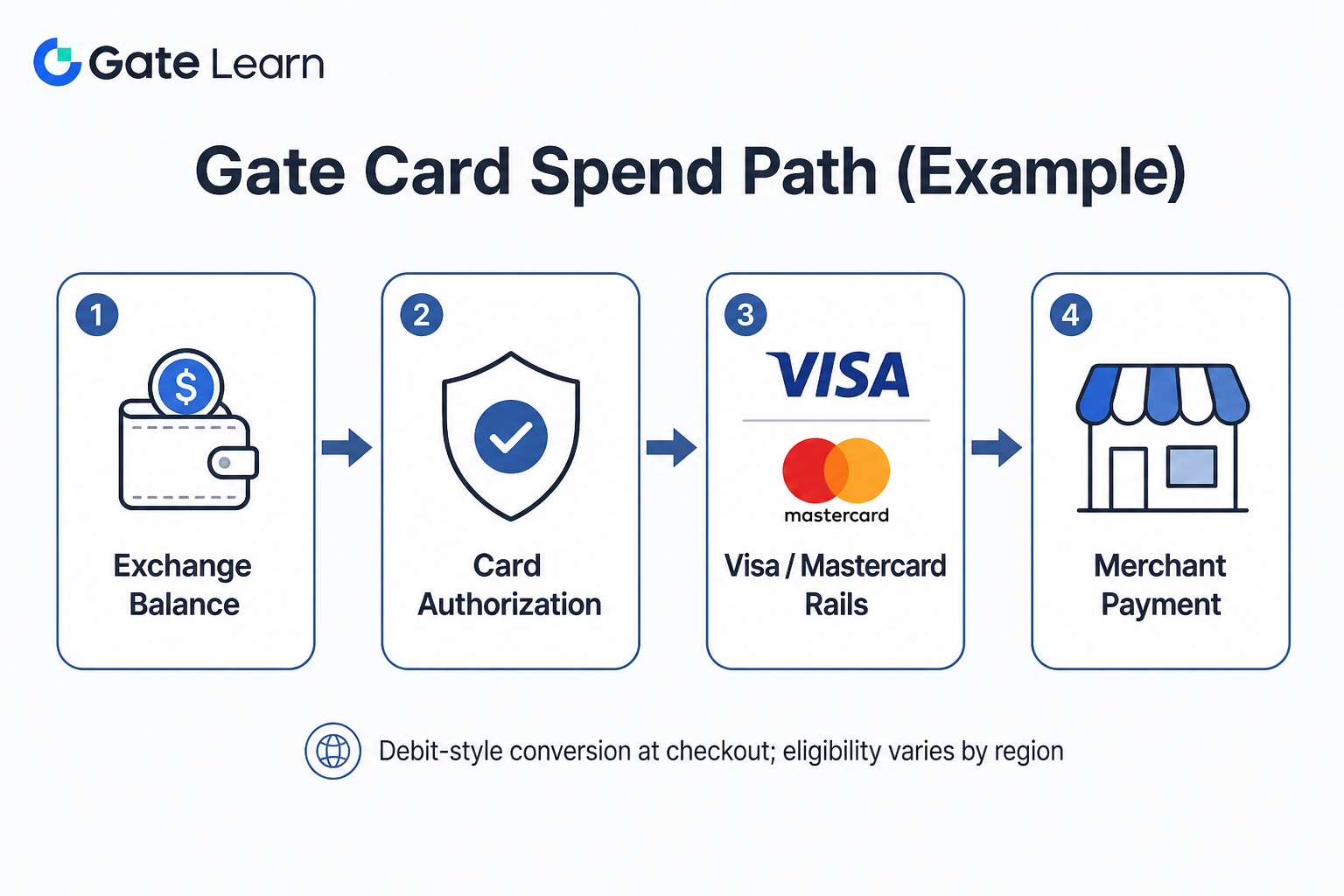
Figure 2. Example Gate Card debit spend path: account balance → authorization → Visa/Mastercard rails → merchant payment (eligibility varies by region).
Gate Card is Gate's Visa debit-style product on Gate's card page. Gate materials cover virtual and physical form factors so users can start online purchases with a virtual card while a physical card ships where support exists. Availability is eligibility-dependent and limited to programs for eligible EEA users and other region-specific rollouts—not universal global issuance.
Gate Card draws from Gate account balances per the product's conversion rules when a purchase settles. Verify conversion spreads, FX on non-local currency spend, ATM charges, and physical card delivery fees on Gate's help center (how to apply for a Gate Card). Gate Card suits users already on Gate who want a Visa path to pay with cryptocurrency-linked assets without moving balances to another wallet—it is one option among Crypto.com Card, Coinbase Card, and Nexo Card, not a default for every jurisdiction.
The issuers below represent distinct reward and funding models when you compare crypto cards; confirm live terms on each site. Adjacent products such as MetaMask Card, Gemini Credit Card, Coinbase One Card, and rewards-linked products like Venmo Credit Card also appear in "best crypto credit cards" roundups—treat them as separate paths with their own KYC, earn rules, and geographic support.
| Card |
Network & style |
Funding / conversion |
Rewards & tiers (check live terms) |
Availability notes |
| Crypto.com Card |
Visa debit tiers |
Exchange wallet; CRO staking tiers in many markets |
Tiered cashback linked to CRO stake levels |
Broad international marketing; KYC and tier rules vary by country |
| Coinbase Card |
Visa debit |
Coinbase balances; auto-convert selected assets |
Cashback on spend in supported regions |
US and select markets; asset list and rates jurisdiction-specific |
| Nexo Card |
Mastercard debit |
Nexo credit line / wallet collateral model |
Cashback on eligible spend per Nexo tiers |
Availability and credit limits depend on Nexo account status and region |
| Gate Card |
Visa debit |
Gate account balances |
Cashback/rebate per Gate Card program terms |
Often described for eligible EEA users; confirm current regions |
Crypto.com Card (including Visa Signature-style tiers in some markets) ties higher cashback to CRO staking so holders earn more when they lock tokens and maintain spend volume. Coinbase Card auto-converts selected cryptocurrency assets from the Coinbase wallet for users already on the exchange; Coinbase One Card packaging, where offered, may bundle membership perks—verify whether rewards are still paid in crypto or fiat. Nexo Card uses a Mastercard debit path backed by collateral and credit-line mechanics: a purchase can draw against pledged assets, and some markets support adding Nexo Card to Apple Pay for contactless checkout. Fit depends on where you custody assets and which fee rows dominate your budget.
Programs change: some issuers have discontinued crypto credit cards, limited cryptocurrency redemption options, or never shipped announced cards. When you compare crypto cards, prefer currently active products with published fee schedules over historical marketing claims.
Crypto Debit Card vs Credit Card: What Changes?
Crypto debit cards authorize against available balances and decline when funding is insufficient—useful for controlled everyday spending. Crypto credit cards extend collateral-backed lines so you can keep market exposure while spending fiat; repayment and liquidation rules apply if collateral values move. "Best crypto credit cards" lists often mix true credit products with dual-mode debit/credit designs—read how each purchase is funded before you choose.
Visa vs Mastercard branding affects merchant acceptance; issuer programs still differ on FX, ATM, and chargeback handling. Virtual card numbers may appear instantly while physical plastic is limited by shipping and region. See crypto debit vs credit cards and mainstream crypto card types for type definitions, and what is a crypto card for settlement mechanics.
How Do You Apply for and Start Using a Crypto Card?
Getting a card usually follows a short path: verify an exchange account, complete KYC, order a virtual or physical card, fund the wallet, and activate spending in the app. Same-day virtual activation is common; physical delivery can be limited by courier coverage. Gate Card applicants use Gate's standard apply flow; Crypto.com, Coinbase, and Nexo publish region-specific steps. Before the first purchase, confirm which cryptocurrency or stablecoin assets fund authorization, how conversion works at checkout, and decline behavior if balances are short. Details: how to get and use a crypto card.
How Should You Choose by Everyday, Travel, or Stablecoin Spend?
Everyday spending favors low conversion spreads and cashback rules without heavy staking locks. Travel spending prioritizes FX transparency, ATM access abroad, and Apple Pay support where available. Stablecoin users should confirm which pegged assets back funding for each purchase and whether extra conversion fees apply. See best crypto card by use case; map your category to the ranking table and shortlist issuers where you pass KYC—including EEA eligibility for Gate Card where applicable.
What Fees and Risks Should Card Users Check First?
Read issuer schedules for conversion, FX, ATM, inactivity, and card delivery fees before heavy use. Each purchase that converts cryptocurrency can create a taxable event when assets become fiat. Counterparty risk applies: balances often sit in a custodial wallet on the issuer platform. Failed authorizations during volatile markets, limited dispute windows, and tier changes when staking rules adjust are common operational risks. Verify live terms—and whether rewards still pay in crypto—before relying on any ranked list.
FAQ
What is the best crypto card in 2026?
There is no single best crypto card for all users; the fit depends on debit vs credit mechanics, how you earn cashback or staking rewards, FX and ATM fees, and whether you pass KYC in the issuer's supported region for your spending pattern.
Is Gate Card available outside the EEA?
Gate Card availability is eligibility-dependent and often limited to eligible EEA users plus other region-specific programs, so confirm current supported countries on Gate's card page and help center before you apply or use the card for spending.
Do crypto cards work on Visa and Mastercard networks?
Most major crypto cards are Visa or Mastercard debit products that use standard payment rails so you can pay merchants worldwide; acceptance follows network rules while each transaction is still funded from cryptocurrency, stablecoin, or wallet balances at the issuer.
How is cashback on crypto cards calculated?
Issuers publish cashback or rebate rates so cardholders can earn rewards tied to spending volume, asset type, or staking tiers; effective rewards net out conversion spreads, FX fees, and any token lock requirements backed by program terms.
Is a crypto debit card the same as a crypto credit card?
No—debit cards pull available wallet balances at each transaction, while crypto credit cards extend credit lines backed by collateralized assets with repayment and liquidation rules that change cost and risk when you use the card to pay.