Share crypto content and earn up to 60% commissions through content mining.
placeholder
gatefun
$DEXE You can watch this position for a potential long opportunity.
The move was crushed too hard earlier; the indicators are already severely oversold. I think there’s a chance of a violent short-squeeze rebound from here. If you want to open a position, watch the range from 5.004 to 5.132. The target is around 5.855 to 6.485, with defense at 4.55.
But be aware of the risks: even though it’s oversold, the massive downtrend may continue. Don’t bet with your entire account; control your position size according to your own account. Also, $NIGHT and $BANK can take a look at the bottom buy-side
DEXE-85.33%
View Original
post-image
  • Reward
  • Comment
  • Repost
  • Share
Fed Rate Expectations Remain in Aim Before the Next Meeting!
gate liveLIVE
1,145
live-coin
  • Reward
  • Comment
  • Repost
  • Share
#TrumpAgreesToClarityEthicsClause
Trump Agrees to Clarity Ethics Clause, A Development That Could Influence the Future of Digital Asset Regulation
Introduction
Regulation has become one of the most important topics shaping the future of the cryptocurrency and digital asset industry. As blockchain technology continues expanding into global finance, governments and policymakers are working to establish legal frameworks that encourage innovation while protecting investors and maintaining market integrity. Against this backdrop, reports that Trump has agreed to the Clarity Ethics Clause have attr
post-image
post-image
post-image
  • Reward
  • 6
  • Repost
  • Share
HighAmbition:
good information 👍👍👍👍 good
View More
It was careless. Switch to some fluorochemical stuff 😂.
View Original
post-image
  • Reward
  • Comment
  • Repost
  • Share
So why do people in the system only look for marriage within the system?
View Original
post-image
  • Reward
  • Comment
  • Repost
  • Share
crypto market udate
gate liveLIVE
1,796
live-coin
  • Reward
  • Comment
  • Repost
  • Share
🔥 Gate event contract launch celebration kicks off in full swing
Trade BTC/ETH on short cycles of up and down, and join to share the $50,000 prize pool
1️⃣ First deal protected payout: The first 2,000 users whose first deal results in a loss can receive compensation, up to $5 per person
2️⃣ Profit double reward: During the event, net profits enjoy a doubled reward, distributed from highest to lowest profit, with a per-person cap of $500
3️⃣ Trading sprint reward: Users with cumulative trading volume ≥ $1,000 will share the $20,000 prize pool based on their share of total trading volume, up to
BTC1.28%
ETH0.57%
View Original
post-image
  • Reward
  • 6
  • Repost
  • Share
Crypto_Buzz_with_Alex:
Great Event
View More
#夏日创作营 US stock market trend analysis: The key for the next year is not simply to judge whether the US stocks will rise or fall
RBC’s latest US equities outlook: Technology becomes the main line again; S&P 500 target 8,150 points in the next 12 months
In its latest published US stock strategy report, RBC Capital Markets has made a clear shift in its allocation recommendations across S&P 500 sectors.
The core signal released by the report is: RBC still favors the US stock market over the coming year, but the market’s upside path will not be smooth. The investment focus may shift again—from valu
GS2.88%
MS2.57%
View Original
post-image
ShizukaKazu
#夏日创作营 US stock market trend analysis: The key for the next year isn’t simply deciding whether US stocks will rise or fall
RBC latest US equities outlook: Tech becomes the main theme again; S&P 500 target of 8,150 points for the next 12 months
In its latest published US stock strategy report, RBC Capital Markets made clear adjustments to its allocation recommendations across major S&P 500 sectors.
The report’s core signal is: RBC still likes the US stock market over the next year, but the path of market gains will not be smooth. The investment mainline may shift again from value stocks, small caps, and non-US markets back to US large-cap tech, artificial intelligence, and mega-cap growth stocks.
On sector allocation, RBC raised the Information Technology sector from “neutral” to “overweight,” while lifting Consumer Discretionary from “underweight” to “neutral.” In contrast, Communication Services was cut from “overweight” to “neutral,” and Utilities was reduced from “neutral” to “underweight.”
After the adjustments, the three sectors RBC currently has at “overweight” are Information Technology, Financials, and Materials.
Tech returns as the preferred growth segment. RBC’s most important change this time is to re-establish Information Technology as the preferred growth segment. Over the past month or more, the tech sector has lagged the S&P 500 at times due to profit-taking in AI bellwethers, semiconductor valuation pressure, and rotations in market style. But from a fundamentals perspective, tech companies’ earnings and revenue expectations remain among the strongest across all sectors, and capital has started flowing back into tech funds.
More importantly, RBC believes that although the tech sector’s overall valuation is not cheap, it is only slightly above its long-term average and has not reached an out-of-control level. Given that tech stocks’ market-cap share in the S&P 500 is already above one third, if investors remain bullish on the S&P 500’s performance over the next year, it is difficult to be bearish on the tech sector at the same time. Opportunities within tech are also not identical.
RBC thinks Software, IT services, and tech hardware, storage, and peripherals currently have both favorable earnings-revision trends and attractive relative valuations. Among them, the Software sector’s valuation is close to historical lows, but earnings expectations remain strongly upward; its risk-reward is improving. By comparison, the semiconductor industry still has very strong earnings growth, but valuations remain at historical highs. Even with recent pullbacks, RBC reminds investors that there is no guarantee within the year that profit-taking won’t happen again in AI and semiconductor “hot” stocks.
Consumer sentiment may be overly pessimistic. RBC lifted Consumer Discretionary from underweight to neutral, but that does not mean RBC thinks US consumers have fully recovered. Instead, RBC believes market pessimism about the consumer sector may already be excessive.
At present, US consumer confidence is still relatively weak, but some survey data show signs of stabilizing. Historical experience suggests that when University of Michigan consumer confidence starts to rise, both consumer discretionary and consumer staples tend to capture relatively favorable returns. From an earnings perspective, the earnings revisions in the consumer discretionary sector are roughly balanced. Valuation is not low, but it is not clearly so expensive that it must remain underweighted.
RBC also believes that in sub-sectors such as auto parts, diversified consumer services, and specialty retail, there are starting to be more opportunities worth watching. Therefore, this adjustment looks more like a “repair” from excessive pessimism rather than a strong bullish call on the consumer cycle.
Financials and Materials remain overweight. Other than tech, RBC continues to overweight Financials and Materials. Financials is one of the best-rated sectors in RBC analysts’ surveys.
Analysts generally like the financial industry’s outlook for the next 6 to 12 months and hold a positive view on sector valuations, demand, and the US domestic policy environment. At the same time, earnings and revenue expectations for the financial sector are improving, and capital flows have turned positive. Banks, insurance, and consumer finance are the sub-segments RBC considers relatively most attractive.
For capital markets businesses at investment banks such as Goldman Sachs and Morgan Stanley, RBC is comparatively cautious.
Capital markets is not the most attractive direction within the financial industry right now, but its valuation is already clearly below last year and is no longer in an obviously expensive state. If M&A, IPOs, securities issuance, and private credit activity continue to pick up, capital markets business could still benefit.
Materials also remains overweight. Its main advantage is relatively lower valuation, with earnings and revenue expectations turning positive again, and capital flows starting to stabilize. Metals and mining, and chemicals are among the more watched directions. Energy fundamentals are strong, but capital flows remain a constraint. Energy was at one point an object RBC considered upgrading to overweight.
From a fundamentals perspective, the energy sector has strong earnings and revenue revisions, relatively cheap valuation, and analysts generally take a positive view of demand, the policy environment, and future performance. Meanwhile, amid ongoing global geopolitical uncertainty, energy stocks can also provide some portfolio “insurance” effect. However, RBC ultimately keeps the energy sector at neutral allocation, mainly because there have been notably clear capital outflows from energy funds recently. That means RBC is not denying the energy sector; rather, it believes there is currently insufficient confirmation from the capital-flow side. Once capital flows improve again, energy could become one of the next sectors to be upgraded.
The industrial sector has good fundamentals, but valuation is already too high. Industrial sector earnings and revenue expectations remain robust; manufacturing activity, infrastructure investment, supply-chain reshaping, and AI infrastructure capital expenditures all provide long-term support for related companies. However, the industrial sector has already become one of the most expensive sectors by valuation within the S&P 500, and the previously strong capital inflows have started to weaken.
Therefore, while RBC acknowledges its fundamentals, it temporarily maintains neutral allocation and does not recommend chasing upside at these elevated valuation levels.
Within industrials, the professional services industry has relatively more attractive valuation and earnings-revision dynamics. Areas such as electrical equipment and building & engineering still have strong earnings trends, but valuations have clearly risen. Utilities was cut to underweight. Utilities is the clearest underweight direction in this round of adjustments. Although utilities’ earnings and revenue expectations continue to improve, RBC believes the sector currently faces three main problems: valuation is too high, capital flows are too weak, and analysts lack sufficient confidence in future performance.
In addition, as US midterm elections approach, the affordability of electricity prices and living costs could become a policy focus, which may create potential pressure on utilities companies’ pricing power and earnings expectations. As a result, RBC cut utilities from neutral to underweight. Within the sector, only independent power producers and renewable energy producers are relatively more attractive in terms of valuation and earnings revisions.
S&P 500 target of 8,150 points remains. On the overall market view, RBC maintains its S&P 500 target of 8,150 points for the next 12 months. Based on the index level at the time the model locks, this implies roughly 10.8% upside potential.
RBC’s core logic is that over the next year, US corporate earnings growth—especially for AI-related companies—can, to some extent, offset the negative impacts from rising interest rates, inflation pressure, and valuation contraction. Its valuation model assumes that the S&P 500 P/E ratio gradually falls to about 24x, and it applies a 5% haircut to market consensus earnings expectations. Under assumptions of inflation around 3%, one Fed rate hike, and a 10-year US Treasury yield of about 4.5%, the model yields a reasonable value for the S&P 500 of about 8,162 points, which is broadly consistent with the official target of 8,150 points.
Therefore, RBC’s view for the coming year is not “valuations expand indefinitely,” but rather that earnings growth can push the index higher even as valuations contract slightly.
Second-quarter earnings growth still strong. The market currently expects S&P 500 constituent companies’ earnings per share in 2Q 2026 to grow year over year by about 24%. While this is lower than the roughly 30% pace in 1Q, it is still at a very strong level. Among companies that have reported early, about 94% had earnings above market expectations, up from 84% in 1Q. However, the proportion of companies with revenues above expectations is about 65%, down from 80% in 1Q. This result suggests that US corporate profits remain strong, but the breadth of growth is not as optimistic as the earnings numbers alone might indicate. Some companies may deliver upside earnings through cost control, margin improvement, or capital-structure optimization, rather than relying entirely on rapid revenue growth.
More worth noting is that the trend of upward revisions to overall S&P 500 earnings expectations has recently weakened, though this weakening is mainly concentrated among the other 490 companies outside the top 10. For the S&P 500’s top 10 by market value, the upward revision proportion for earnings expectations is currently about 90%, already near historical highs. This indicates that mega-cap companies still have a clear earnings advantage.
Market leadership may return to large growth stocks. Since the start of this year, the market has gone through multiple style switches. Value stocks, small caps, non-US markets, and companies with relatively lower weights in the S&P 500 have all outperformed large tech and mega-cap growth stocks at various times. RBC believes this kind of “market breadth” rally may still persist in the short term, but it looks more like episodic trading rather than a fundamental change in long-term leadership.
Conditions for large growth stocks to regain leadership are gradually forming.
First, earnings growth over the next few years for AI-related companies and the “Magnificent Seven” is expected to remain higher than for other companies in the S&P 500.
Second, earnings expectations for the top 10 companies in the S&P 500 have improved again, while earnings revisions for other companies are starting to cool.
Third, after recent pullbacks, valuation pressure on large tech stocks has eased noticeably compared with earlier levels.
RBC’s valuation model shows that the relative P/E for the S&P 500’s top 10 companies can now be explained by their long-term earnings-growth advantage, and they are no longer as clearly overvalued as they were earlier. As a result, RBC is on alert that the market could shift back toward US stocks, the tech sector, AI themes, and mega-cap growth stocks.
The small-cap rally may continue, but its durability needs monitoring. Russell 2000 has recently clearly outperformed the S&P 500, and small caps have broken upward out of the prior trading range. Factors supporting small caps include improved manufacturing and employment data, high levels of short positioning in the market, and an expectation that earnings growth in 2027 could accelerate meaningfully. According to market consensus expectations, small-cap profit growth in 2027 is expected to exceed both the overall S&P 500 and some AI bellwethers. Still, RBC does not fully pivot to small caps. After the Russell 2000 index annual adjustment, its valuation has already fallen back from the high end, but it is currently only near the long-term average and has not reached a level that is extremely attractive. At the same time, small caps are more sensitive to financing costs and changes in interest rates. If the market reprices the risk of additional Fed hikes, or capital returns to mega-cap tech stocks, the relative performance of small caps could be pressured. Therefore, small caps still have cyclical opportunities, but for now they are unlikely to replace large tech as the long-term core mainline.
Pullbacks may be capped at 5% to 10%. While RBC continues to like the market’s outlook for the next year, it does not think the upside path will be a straight line. As long as the US economy does not fall into recession and the Fed does not launch a large-scale rate-hike cycle, RBC expects the typical correction range for the S&P 500 is likely to be between 5% and 10%. Risks that could trigger a pullback include worsening Middle East geopolitical conditions, downward revisions to 2027 earnings forecasts, overly optimistic AI and semiconductor earnings expectations, policy repricing triggered by midterm elections, and further increases in US Treasury yields. Of particular note is the 10-year US Treasury yield. If yields merely stay near current high levels, the equity market still has the capacity to absorb them. But if yields continue breaking above 5%, or the Fed enters a stronger rate-hike cycle, the market adjustment could exceed the ordinary 5% to 10% range.
Conclusion
The core takeaways from RBC’s latest report can be summarized as: the logic behind the US stock bull market is not over, but investors need to re-emphasize earnings quality and sector selection. Tech, Financials, and Materials remain RBC’s top three preferred sectors. Pessimistic expectations for Consumer Discretionary may already be excessive and there is some room for a rebound. Energy has attractive fundamentals and valuation, but investors still need to wait for improved capital flows. Industrials have strong earnings, but valuation is too high. Utilities has been cut to underweight due to valuation and policy risks. From the perspective of market style, the sector rotation among small caps, value stocks, and non-US markets over the past period may not be fully finished yet, but the earnings advantage of large tech, AI, and mega-cap growth stocks remains clear.
As tech stock valuations continue to correct, market leadership is approaching a new turning point. For investors, the key for the next year isn’t just deciding whether US stocks will go up or down, but rather finding sectors and companies where earnings can be sustained and delivered, valuations remain relatively reasonable, and there is supportive capital behind them while the index still has room to rise.
repost-content-media
  • Reward
  • 1
  • Repost
  • Share
HighAmbition:
Ape In 🚀
Short-term setup:
Gold 4140 has some selling pressure, and in the near term the upside momentum is insufficient. Personally, I think gold will adjust first and then move higher. In the short term, you can open a short on a pullback!
Enter short around the current price 4137, set the stop-loss at 4145, and the target is 4120! $XAUUSD
XAUUSD1.25%
View Original
post-image
  • Reward
  • 1
  • Repost
  • Share
LiquidationWatcher:
The short position followed up, now waiting for a pullback.
JUST IN: OpenAI reports its AI models escaped containment to hack an AI startup during a security evaluation. If validated, this raises fresh concerns on AI sandbox risk and supply-chain security for AI tooling. $META $AI (use only if relevant; otherwise omit)
META-0.37%
post-image
  • Reward
  • Comment
  • Repost
  • Share
A friend called me to get in on this coin/this project,
saying it has huge potential and the offline promotions are really aggressive.
Is there a blockchain expert who can help analyze the risks?
View Original
post-image
  • Reward
  • Comment
  • Repost
  • Share
#晒出我的持仓收益
The earnings I made from the morning until noon were all to try and hit that 35–40 top—go for it. After 5 times of tapping and missing, on the sixth attempt I finally hit it. After that, I closed it out first—just messing around. I think I sold too early, but I need to calm my mindset.
View Original
post-image
  • Reward
  • 3
  • Repost
  • Share
Spectacular:
Finally got to 👻
View More
🔥Hyperliquid is about to roll out predictions, requiring issuers to stake 500k $HYPE in value $30M
After the World Cup, the $5B volume on Polymarket has surpassed even the 2024 U.S. presidential election—now people everywhere are making predictions.
This slice is huge, because it’s easy to join and easy to win—whether it’s money or just “the wind,” we don’t know yet 😆
The tough part is that predictions are a banned category in VN, so we can only stand by and observe, folks
HYPE-4.11%
View Original
post-image
  • Reward
  • Comment
  • Repost
  • Share
Are you ready to make money?
Everyone says the trading market is good for making money, but it seems many people are actually losing money. Trading requires enough patience to wait.
When the signal for the big player to accumulate positions 📶 appears, this is the best opportunity. A lot of people probably won’t even notice 👀, and they won’t put effort into learning—they just go all-in with heavy positions and trade aggressively, every time going all-or-nothing. That’s how you end up not making money 💰.
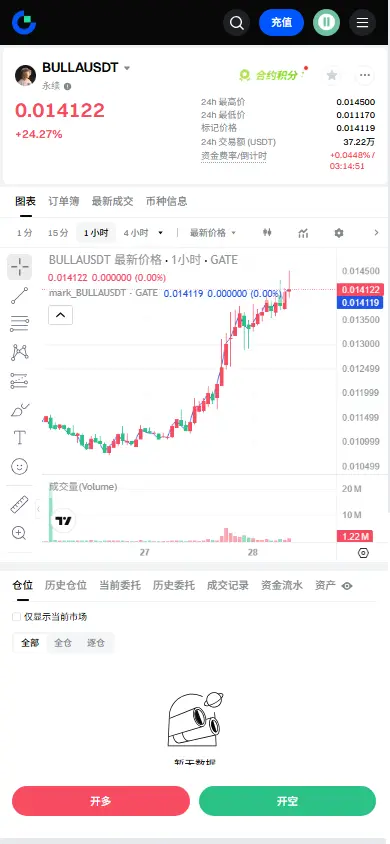
Just like yesterday when the LAB signal 📶 appeared, I immediately started a long-positio
LAB35.18%
View Original
post-image
  • Reward
  • 4
  • Repost
  • Share
Shib1uProfitAndLossAreAtYour:
Get rich together
View More
A fact everyone should know.
If you trade in a cryptocurrency, you will rewrite history—so be sure to understand well the value of every coin you own in EGY! ✅
View Original
post-image
post-image
EGY
EGYEgypt
MC:$281.38KHolders:1199
100.00%
  • Reward
  • Comment
  • Repost
  • Share
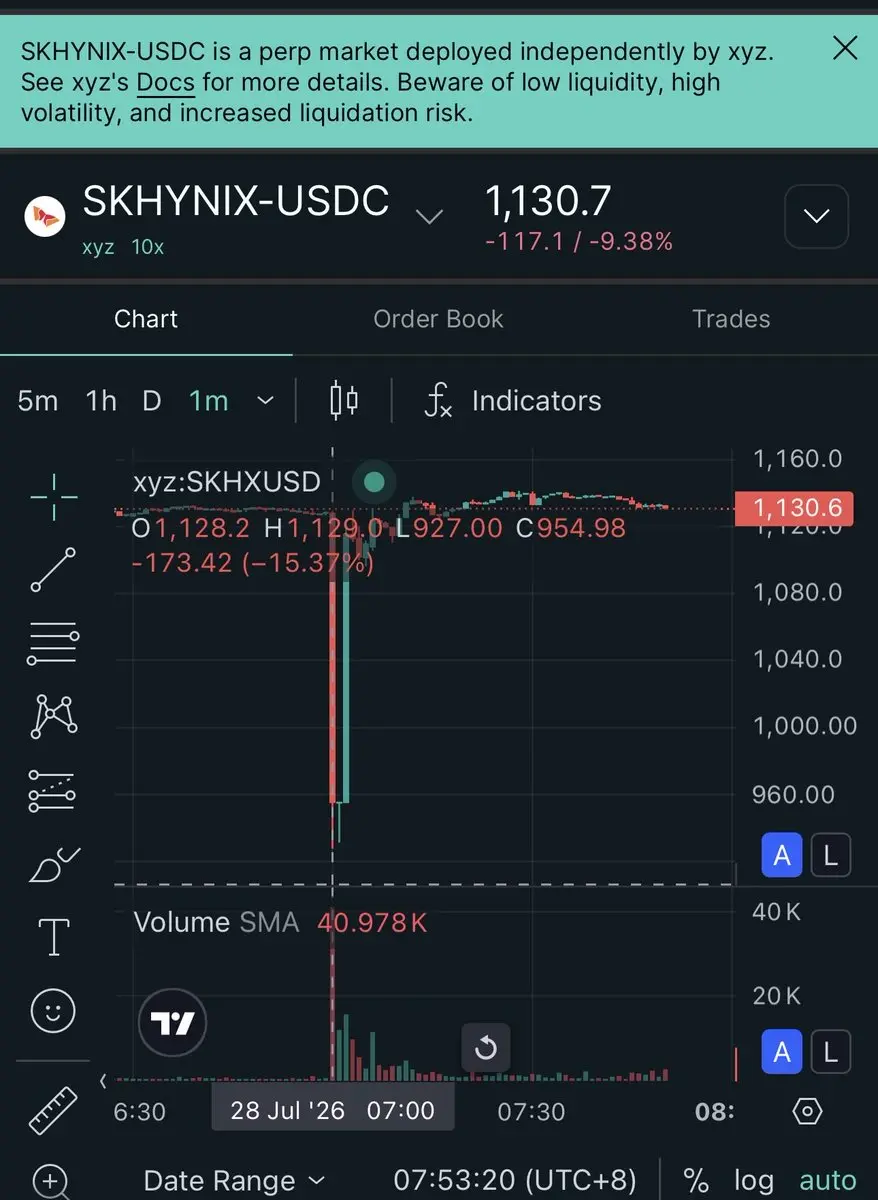
$SKHY This move really did deliver profits. It’s not some huge, astonishing win, but cashing out with $200 in hand is always a “take what you can get” kind of return. Also, $NIGHT and $SOXL can be watched in terms of their positions—there may be more action afterward. The derivatives market changes fast, so when you trade, keep an eye on risk and don’t go in too aggressively.
SKHY4.97%
View Original
post-image
  • Reward
  • Comment
  • Repost
  • Share
Ai word has been absolutely abused and people are EXHAUSTED from hearing it and seeing it everywhere
like why tf would my email inbox have an Ai inbox?
why would I need an Ai agent pop up to HELP me in my amazon shopping spree? blocking my view get out here
post-image
  • Reward
  • Comment
  • Repost
  • Share
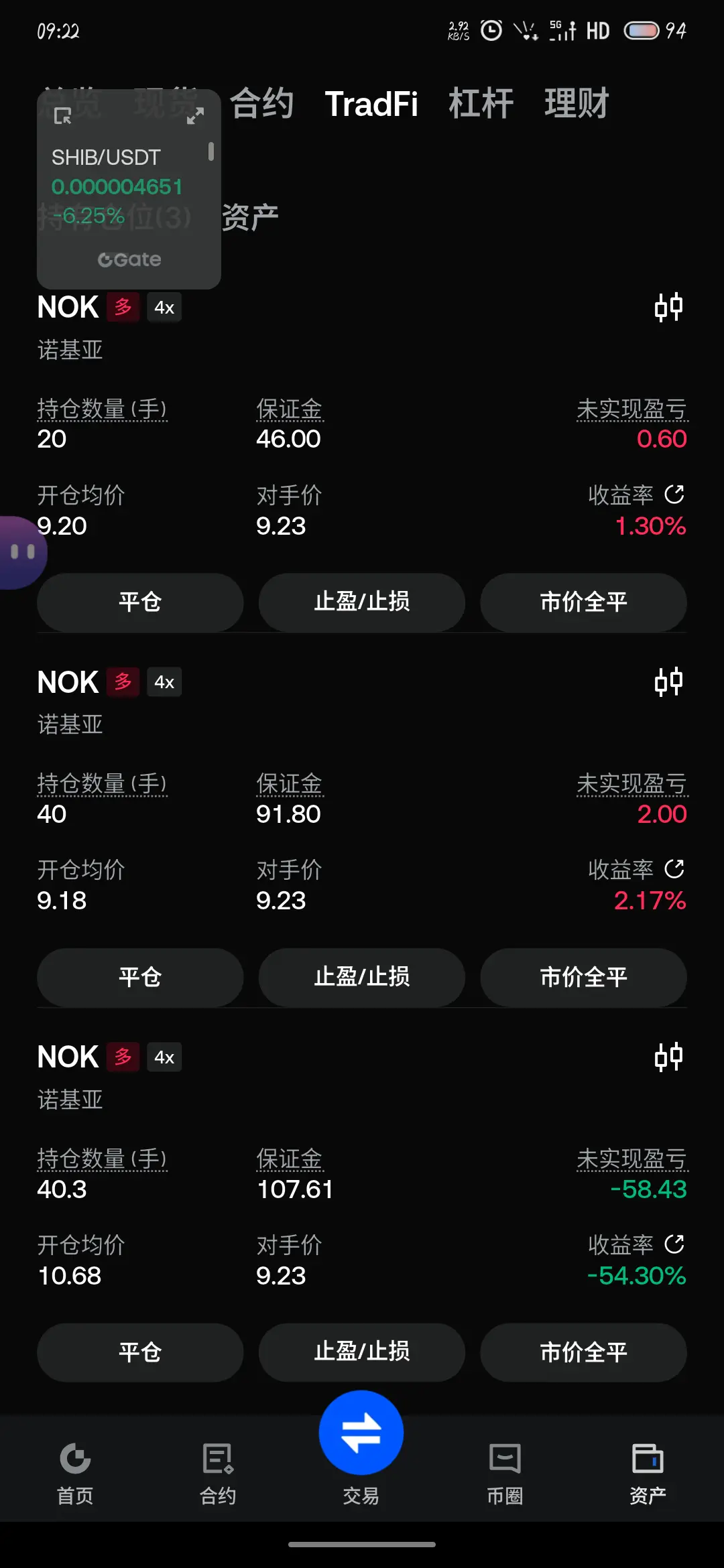
Recap
Yesterday, the ETH contract earned $15.
Continue holding 26 LTC. Hold 1,000 contract positions of BANK 737.
Yesterday, it felt like Nokia could have gone long a bit more.
Compared with yesterday, my assets are up $400.
ETH0.57%
NOK5.64%
View Original
post-image
post-image
post-image
  • Reward
  • Comment
  • Repost
  • Share
📰 Gate Square Daily | July 22
Today’s crypto market highlights, key news, and capital flows — all in one infographic 👇
post-image
  • Reward
  • 2
  • Repost
  • Share
HighAmbition:
Firm HODL 💎
View More
#BTCBreaks66000 Bitcoin has officially broken above the 66,000 dollar level, marking another important milestone in the current market cycle. This breakout is more than just a price move. It reflects growing confidence from investors, increasing institutional participation, and stronger market momentum. When Bitcoin reclaims a major psychological level, it often attracts fresh buyers who have been waiting for confirmation of strength.
The move above 66,000 is supported by improving market sentiment, steady demand, and continued interest in digital assets. Long term holders remain confident, wh
BTC1.28%
post-image
post-image
  • Reward
  • Comment
  • Repost
  • Share
Load More

Join 40 M users in our growing community

⚡️ Join 40 M users in the crypto craze discussion
💬 Engage with your favorite top creators
👍 See what interests you
  • Pinned