Square
Following
Hot
News
Profile
Share your thoughts
placeholder
Article
I only wanted to mooch a breakfast, but the market ended up trapping me for half a year. A few days ago, I stayed up before dawn watching $AKE surge to the highs. Volume failed to follow, and every push higher fell just short. I called it bullish at the time, but with clear resistance overhead—don't chase.

The market is waited out, and profits are held onto.

Shorting from 0.0284075 all the way down to 0.0270009, +117.87% says it all. That was a satisfying bite of profit. Those already in the trade should be waking up smiling. It was truly sluggish earlier, but the result is truly sweet. T
post-image
AKE-1.12%
ZEC-7.10%
LAB-1.34%
10.9 ETH trading strategy
After a rapid decline, Ether bottomed out and rebounded around 2405, and has now entered a period of range-bound recovery, with short-term bullish momentum gradually returning. Focus is currently on the strength of buying support after a pullback. If support holds, there is still room for further rebound.
$ETH #Vitalik警告AI或将加速削弱密码学安全
Focus on going long on pullbacks, waiting for the price to stabilize before entering at an opportune time, and avoid blindly chasing highs. If support breaks, remain on the sidelines for now and wait for a new directional signal.
Entry:
post-image
ETH-3.22%
In the rapidly changing Web3 industry, I increasingly believe:
True competitiveness is not how many people you know or how many events you attend, but how many trends you can understand and how many correct judgments you can make.
Stay curious, stay independent, and stay committed to the long term.
Rather than rushing to become someone riding the wave, I would rather become someone who understands the cycles.
#Web3 #Token2049 .
post-image
U姐 October 9, Friday $SOL Strategy
Entry conditions: After a pullback into the 107.0‑107.8 range, a 4-hour candlestick closes with a long lower wick signaling a bottom, accompanied by increased buying volume providing support. After stability is confirmed, cautiously test a long position with a small allocation.
Stop-loss: If the price decisively breaks below 105.61, fully invalidating the support, immediately abandon the long thesis and exit.
First take-profit target: 113.5
Second take-profit target: 116.5
Market logic: SOL began a sustained decline from its high of 123.76. After bearish pre
post-image
SOL-5.16%
A few days ago, my hand trembled as I set the stop-loss; this morning, I realized that was unnecessary filial piety. A few days ago, before bed, I saw $DOGE 's rebound was running out of steam, with clear resistance above and low trading volume—no one would buy into the move. I said it was bullish at the time; the short position's logic was sound.

Managing risk in advance is called rationality; cutting after taking a loss is called decisively cutting off one's own wrist.

Panic comes from having no plan; losses come from overthinking.

Shorted from 0.09586 to 0.08473, +824.58%—nailed it, a
post-image
DOGE-4.50%
SOL-5.16%
LAB-1.34%
10.9$BTC Silk Road
Market Analysis
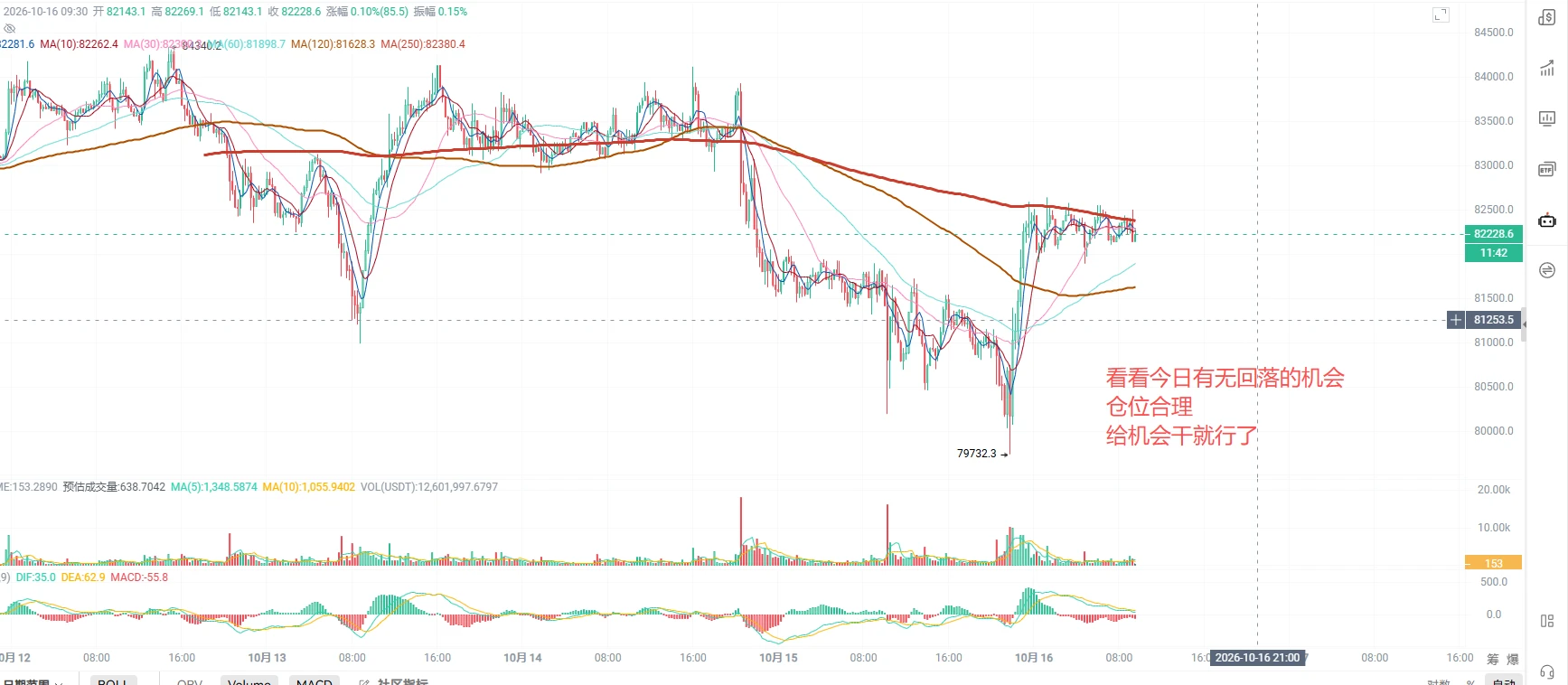
After falling to a low of 80393.56, the market stabilized and rebounded, forming a bottom-recovery structure. The current price is above the middle Bollinger Band, while the Bollinger Bands are gradually narrowing; the MACD DIF has crossed above DEA, forming a golden cross, and the red bars continue to expand, with bullish momentum gradually being released. The short-term trend is showing a strong bias amid volatility, with resistance at 82776.01 and support at 80393.
Strategy (Long)
✅Long rationale: The price has completed a bottoming process, with suppor
post-image
BTC-1.00%
◆ Morning Briefing · October 09
Bonjour. Welcome to Wall Street High Wealth Invest Channel.
Good morning.
【Core Conclusion】
The S&P 500 and Nasdaq experienced a slight Pullback after a sustained advance, constituting normal Consolidation following a Rally. Our position today is: do not chase highs, maintain position discipline, and wait for better entry points.
【Overnight Market】
U.S. stocks closed lower in the previous session, with the S&P 500 at 7,765.4, down 0.47%; Nasdaq at 27,193.3, down 1.25%; and the VIX closing at 15.4, up 2.19%. Over the past week, the S&P 500 is still up 1.29% cumul
post-image
US500+0.16%
ARK+6.01%
TSLA-0.68%
SPCX-4.18%
Market sentiment has entered the “greed” zone again, with the Fear and Greed Index hitting 70 today. You may not usually pay much attention to this figure, but simply put, it combines data such as volatility, trading volume, social media buzz, and Bitcoin dominance into a score from 0 to 100. Below 25 is extreme fear, while above 75 is extreme greed. It is currently right at 70, which falls in the “greed” zone.
What’s interesting is that this index is more useful as a reference when it reaches extreme levels. Extreme fear often appears when the market is deeply oversold and sentiment is at its
post-image
BTC-2.02%
ETH-4.16%
Three aircraft carriers are bearing down, yet Trump calls for a halt! $CL falls to 90.5—who between the bulls and bears is lying?
Three U.S. aircraft carriers are about to arrive in the Middle East. The Pentagon has even drafted the strike plans, but Trump has vetoed them five times, while saying that U.S.-Iran negotiations are “productive.” Saying no while acting otherwise—the aircraft carriers have already set sail.
Geopolitical risks remain, but the situation has not escalated into military action. Oil prices have retreated from 92.88, with the current price at 90.52, below the Bollinger m
post-image
CL+0.73%
NVDA-2.86%
MU-4.83%
SNDK-4.91%
🚨 Starknet considers transitioning from Layer 2 to Layer 1 due to AI and quantum computing
• Starknet is seriously considering changing its operating model instead of remaining an Ethereum Layer 2.
• The next goal: building a network capable of resisting attacks from quantum computers.
🎯 Target deadline: 2027.
If realized, this would be a major shift in Starknet’s development strategy. 👀
post-image
STRK+29.84%
#USGovernmentAddressesMove$670MInCryptoOver32Hours
The $670 Million U.S. Government Crypto Transfers: What It Means for the Market
A headline reporting approximately $670 million in cryptocurrency movements linked to U.S. government-associated addresses has attracted attention. But my first reaction would not be to assume that $670 million has already been sold. A wallet transfer, an exchange deposit and an executed sale are three different events.
The term “addresses” refers to blockchain wallet addresses reportedly associated with the U.S. government, not a public government announcement ab
BTC-0.96%
ETH-3.21%
BNB-4.21%
COIN-3.65%
Crypto Market Updates
live-cover
LIVE1,812
#GateMoneyOfficiallyLaunches Writing
Final Thoughts: The Future of Crypto Payments
Gate Card represents an interesting step toward connecting digital assets with everyday spending. For eligible users, it may offer a convenient way to manage supported payments, online subscriptions, and potential cashback rewards within a broader crypto ecosystem.
However, convenience should always come with responsibility. Before applying, check the card issuer, regional availability, transaction fees, cashback conditions, and security policies. Always use official channels and keep your account protected.
Th
post-image
  • 4
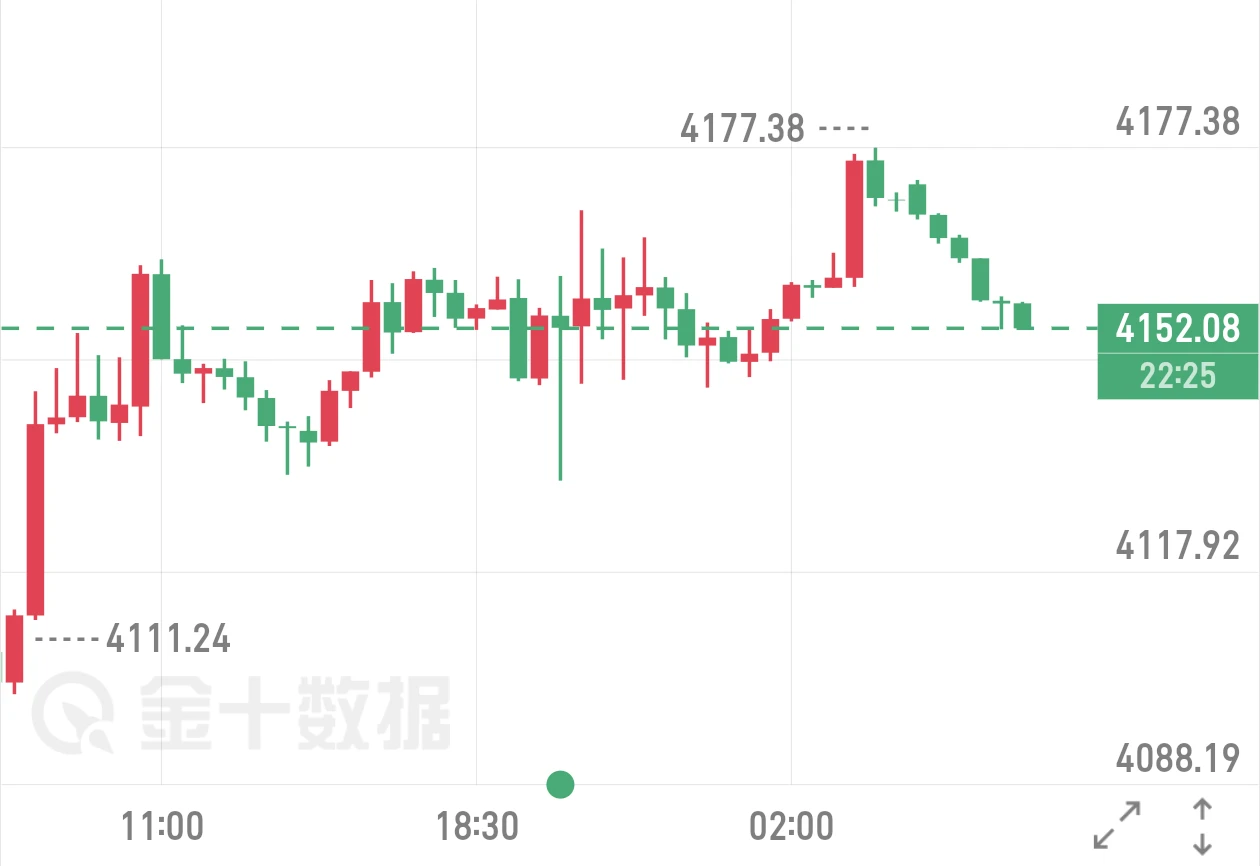
Gold wins twice in a row intraday
Went long at 4166, exited at 4173, 7 points, 1095🔪$XAUT .
post-image
XAUT+0.84%
#FedSeptemberMinutesLeanHawkish
🚨 𝗙𝗘𝗗 𝗠𝗜𝗡𝗨𝗧𝗘𝗦 𝗟𝗘𝗔𝗡 𝗛𝗔𝗪𝗞𝗜𝗦𝗛 🚨
🏦 𝗧𝗵𝗲 𝗦𝗶𝗴𝗻𝗮𝗹:Most Fed officials see another rate hike by year-end as potentially appropriate — but October is not a done deal.
📊 𝗪𝗵𝗮𝘁 𝗺𝗮𝘁𝘁𝗲𝗿𝘀 𝗻𝗲𝘅𝘁?
🔥 Hot CPI → higher-for-longer rates → pressure on risk assets.
🟢 Softer CPI → more room for a Fed pause → potential relief for crypto.
₿ $BTC 𝗧𝗮𝗸𝗲: Don't trade the headlines alone. Watch inflation, Treasury yields and the dollar for confirmation.
🎯 October CPI could shift the market narrative fast. Neither a Fed pause nor another h
post-image
BTC-0.96%
  • 1
#美联储9月纪要偏鹰 #每周来晒 Fed's September Meeting Minutes Send Important Signal: “Insurance Rate Hikes” Are Making a Comeback!
The key change revealed in the Fed's September meeting minutes is not simply a “more hawkish” stance, but the return of risk-management thinking to policy decisions. Barclays believes the minutes show that the Fed is beginning to place greater emphasis on guarding against inflation risks in advance. Some officials believed further tightening remained necessary under the baseline scenario, while others viewed additional rate hikes as “insurance” against the risk of demand exceed
post-image
ThisIsTranslateContent:
#美联储9月纪要偏鹰 #每周来晒 The Fed’s September Minutes Send an Important Signal: “Insurance Rate Hikes” Are Making a Comeback!
The key change revealed in the Fed’s September meeting minutes is not merely a “more hawkish” stance, but the return of risk-management thinking to policymaking. Barclays believes the minutes show that the Fed is beginning to place greater emphasis on proactively guarding against inflation risks. Some officials believed further tightening remained necessary under the baseline scenario, while others viewed additional rate hikes as “insurance” against the risk of stronger-than-expected demand or renewed supply-side shocks. At the September meeting, the Fed raised the federal funds target range by 25 basis points to 3.75%-4.00%, with all participants supporting the decision; most officials believed that one more rate hike before year-end “could be appropriate.” The Committee also emphasized that subsequent policy would depend on economic data and the balance of risks. Goldman Sachs believes the minutes show a strong consensus among officials in favor of further tightening, but that “insurance rate hikes” do not mean future action has been determined, with whether to continue raising rates ultimately depending on inflation and economic data. The two institutions have broadly similar views on the near-term path: no move in October and one more rate hike in December. Their main difference is that Goldman Sachs believes the FOMC may ultimately conclude that no further tightening is necessary as the data change, while Barclays expects rates to remain unchanged for most of 2027 after a December hike.
I “Insurance Rate Hikes” Return: Risk Management Becomes the Policy Logic Again
The minutes show that many participants supported a higher policy-rate path, mainly for risk-management reasons. If demand remains stronger than expected or the supply side is hit by another shock, raising rates in advance could reduce the risk of inflation remaining above target for an extended period. However, some officials believed that further rate hikes were necessary under their baseline scenario, rather than merely serving to guard against potential risks. This distinction determines the flexibility of subsequent policy: if rate hikes are primarily a risk-management measure, the Fed can stop tightening once inflation data improve and the balance of risks changes; if further hikes are necessary under the baseline forecast, it means rates still have room to rise. Barclays believes this is the exact opposite of the logic during the previous rate-cutting cycle. At that time, the Fed believed downside employment risks outweighed upside inflation risks, allowing it to cut rates preemptively; now the balance of risks has tilted back toward inflation, and policy is once again leaving room in advance for a potential inflation rebound.
II Hawkish Bias Clear, but December Still Depends on the Data.
The hawkish judgments in the minutes mainly stemmed from inflation. All participants believed inflation remained elevated and that progress in reducing it had been insufficient in recent months; nearly all officials saw inflation risks as tilted to the upside, with some believing those risks had increased further. At the same time, risks in the labor market were viewed as “broadly balanced” and were no longer considered a major obstacle to further policy tightening. Several officials also believed that the policy rate before the hike was “not restrictive or only mildly restrictive,” while several others raised their estimates of the neutral rate. However, the minutes repeatedly emphasized that policy would “depend on the incoming data.” Goldman Sachs expects another 25-basis-point hike in December, but believes that as more data are released, the Fed will ultimately “likely conclude that further tightening is unnecessary.”
III AI Investment Becomes a New Inflation Variable
Another notable change in these minutes is that AI investment was explicitly identified as a potential source of inflation for the first time. Several officials pointed out that as the effects of AI infrastructure construction gradually emerge and the impact of tariffs gradually fades, core goods inflation could remain elevated; some officials warned that the AI construction boom could push aggregate demand above aggregate supply, creating new inflationary pressure. At the same time, some of the pressure on PCE inflation may simply reflect temporary distortions caused by statistical methodology. A few participants noted that software and asset-management fees had made significant contributions to recent PCE data, and that this impact was expected to fade as the U.S. Bureau of Economic Analysis (BEA) adjusted its statistical methods. According to a Barclays report, Fed staff expected at the September meeting that the BEA revision would lower year-over-year PCE and core PCE growth by approximately 0.2 percentage points, but the actual revision was about twice as large as expected, bringing year-over-year core PCE growth down to 3.0%, with the three-month annualized rate close to 2%. This means that the inflation backdrop at the September meeting was in fact more severe than indicated by the latest data: AI investment could generate genuine demand-driven inflationary pressure, while software and asset-management fees included a degree of statistical distortion. The revision to the latter weakened part of the basis for supporting further rate hikes at the time.
IV Economic Outlook Improves, Leaving Room for a Policy Shift
Fed staff raised their inflation forecasts for 2026 through 2028, expecting the effects of tariffs, geopolitics, and AI-related factors to gradually fade, with inflation eventually returning to the 2% target in 2029, though risks remained tilted to the upside. At the same time, the economic and employment outlook improved. Staff expected real GDP to rebound in the second half of this year and remain above potential growth through 2028; the unemployment rate was expected to remain below its long-run level through 2029. Goldman Sachs noted that some officials attributed the rise in long-term U.S. Treasury yields to a stronger economy, increased expectations of AI-related borrowing, and geopolitical factors, while most officials believed overall financial conditions remained supportive of economic growth. Barclays maintained its baseline expectation of a 25-basis-point hike in December, but believed that the inflation revisions, recent weakness in economic data, and a slowdown in labor supply could ultimately lead the Fed to abandon further rate hikes. Therefore, the current policy path is becoming clearer: the Fed is once again adopting a risk-management approach to rate hikes, but whether this “insurance” is actually needed still depends on subsequent data. If inflation continues to cool, the need for a December hike will diminish; if AI investment drives continued demand expansion and inflation comes under renewed pressure, the case for further tightening will strengthen.
repost-content-media
GS-0.60%
  • 3
#USOpticalCommunicationStocksCloseLower Market Deep-Dive: U.S. Optical Communication Stocks Suffer Sharp Pullback Amid Broader Tech & Hardware Sell-Off
Executive Summary
U.S. optical communication and hardware equities closed significantly lower, joining a broader retreat across technology sub-sectors. Key optical infrastructure providers—including Coherent (COHR), Lumentum (LITE), Corning (GLW), and Ciena (CIEN)—experienced synchronized selling pressure as profit-taking, macroeconomic caution, and evolving hardware architecture debates weighed on market sentiment.
Core Drivers of the Market P
post-image
COHR-9.68%
LITE-5.63%
GLW-6.35%
CIEN-4.61%
MU-4.83%
  • 1
  • 1
BTc market
live-cover
LIVE1,026
‍#Gate与Visa合作推出加密资产关联卡
GatePartnersWithVisaToLaunchCryptoLinkedCard
Crypto Meets Everyday Payments!
Gate is partnering with Visa to introduce a crypto-linked payment card across 40+ countries and territories through its Gate Money ecosystem.
Key Highlights
Global Acceptance: Pay at Visa-accepting merchants across a network of 175+ million merchant locations.
Automatic Conversion: Spend supported digital assets, including USDT, BTC, ETH, and GT, with conversion into local fiat currency at checkout.
Flexible Payments: Use virtual cards for online purchases and supported mobile wallets, or phys
post-image
GT-0.82%
BTC-0.96%
ETH-3.21%
SOL-5.12%
  • 8
  • 1
Load More

Join 40 M users in our growing community

⚡️ Join 40 M users in the crypto craze discussion

💬 Engage with your favorite top creators

👍 See what interests you

Trending Topics

Gate Money Officially Launches

3.48k Views12.91k Discussing

Gate officially launches Gate Money, a global integrated financial services app that brings digital assets, fiat, stocks, ETFs, gold, bank accounts, and payments into one Gate App. Users can manage assets, invest, send and receive funds, convert currencies, and make payments — all from a single account. Which use case are you most excited about? [👉 Learn more](https://www.gate.com/announcements/article/102094)

BTC Pulls Back to 81000

25.4k Views35.65k Discussing

AIStocksFallALABDropsOver9%

24.52k Views541 Discussing

View More