
Square
Following
Hot
News
Profile
Share your thoughts
placeholder
Article
$ZRO Momentum is cooling after a strong rally, and selling pressure is now increasing...📉‼️Short now with 5x leverage: Entry range: $2.36 – $2.40Take profit 1: $2.3368Take profit 2: $2.2800Take profit 3: $2.2200Take profit 4: $2.1751Stop-loss: $2.4966Risk management: When take-profit 1 is reached, partially take profits first and move the stop-loss to the entry price to protect the principal. Click below to short immediately ...👇
post-image
ZRO+14.79%
$MON from 0.03x fall to 0.025
post-image
MON-1.42%
Eshu Live_Over all crypto market updates
live-cover
LIVE2,413
Gate Square Creator Comeback Program | Return to Create & Win Up to 30 USDT
Every creator who puts real effort into their content deserves to be seen.
Whether you share market analysis, trending topics, or your own trading insights, great content deserves more exposure and more rewards.
This October, Gate Square invites creators to come back and unlock multiple creator rewards!
🎁 Comeback Rewards
1️⃣ Keep Creating: Complete 3-day and 7-day posting tasks to unlock 10 USDT and 30 USDT Position Experience Vouchers. Keep posting for 12 consecutive days and earn up to an additional 15 USDT
2️⃣ Cre
post-image
Gate_Square
Gate Square Creator Comeback Program | Return to Create & Win Up to 30 USDT
Every creator who puts real effort into their content deserves to be seen.
Whether you share market analysis, trending topics, or your own trading insights, great content deserves more exposure and more rewards.
This October, Gate Square invites creators to come back and unlock multiple creator rewards!
🎁 Comeback Rewards
1️⃣ Keep Creating: Complete 3-day and 7-day posting tasks to unlock 10 USDT and 30 USDT Position Experience Vouchers. Keep posting for 12 consecutive days and earn up to an additional 15 USDT
2️⃣ Creator Leaderboard: Top 30 creators share leaderboard rewards, with 30 USDT for 1st place
📌 How to Join: Register → Return to Gate Square → Complete posting tasks → Earn rewards
⏰ Campaign Ends: October 31
We look forward to seeing your great insights back on Gate Square!
Register Now:
https://www.gate.com/questionnaire/7930
Campaign Details:
https://www.gate.com/announcements/article/102058
‍#GateSquare #CreatorComeback #GT #Web3 #Crypto
repost-content-media
GT-1.27%
#Ledger攻击均指向CryptoBilis Authorized distributors can fail too? The $86 million theft that exposed a massive blind spot in hardware wallet security
Authorized distributors can fail too? The $86 million theft that exposed a massive blind spot in hardware wallet security Many crypto asset holders firmly believe in a basic rule: as long as they buy a big-brand hardware wallet through an officially authorized distributor, the device is safe and their assets can be secure. But the recent theft of large amounts of assets from Southeast Asian users of Ledger hardware wallets has brutally shattered this
post-image
ThisIsTranslateContent:
#Ledger攻击均指向CryptoBilis Can Authorized Distributors Also Fail? The $86 Million Theft Exposes a Major Blind Spot in Hardware Wallet Security
Can Authorized Distributors Also Fail? The $86 Million Theft Exposes a Major Blind Spot in Hardware Wallet Security Many crypto asset holders firmly believe in a common rule: as long as they buy a hardware wallet from a major brand through an officially authorized distributor, the device is safe and their assets are secure. But the recent large-scale theft of assets from Southeast Asian users of Ledger hardware wallets has shattered this assumption. This security incident, with estimated losses exceeding $86 million, exposes a harsh reality: even hardware wallets purchased through official authorized channels cannot guarantee with 100% certainty that the devices were not tampered with during transportation and circulation.
On October 9, well-known hardware wallet manufacturer Ledger disclosed that it was investigating an asset theft incident concentrated in Southeast Asia. The Ledger devices held by the victims all came from its authorized distributor CryptoBilis in Indonesia, Malaysia, and the Philippines. Blockchain security researcher Specter initially estimated that the stolen assets could exceed $86 million and include various cryptocurrencies such as Bitcoin and Ethereum, although the amount has not yet been independently verified by a third party. According to Ledger's official purchasing guidelines, users can avoid the risk of buying counterfeit products by prioritizing the brand's direct stores or authorized distributors and running the Genuine Check verification when initializing the device for the first time.
The core logic of authenticity verification is to check whether the secure chip inside the device is an original manufacturer's chip. As commonly understood, passing this check means that the entire device was secure from the factory until it reached the user. CryptoBilis was indeed an officially authorized distributor listed by Ledger. Relying on this official endorsement, users lowered their guard, only to ultimately have their assets stolen.
The Security Blind Spot in Authorized Channels: The Chip Is Fine, but the Device May Already Have Been Tampered With
Here lies a technical limitation unknown to most investors: Genuine Check only verifies the secure chip itself and cannot detect whether additional eavesdropping hardware has been installed inside the device casing. Ledger's official documentation has long stated that global supply chains can hardly completely avoid interception and tampering attacks. Authorized status and chip authenticity verification can rule out counterfeit chips, but cannot guarantee that the device was not dismantled and modified after leaving the factory, during the distributor's warehousing and circulation processes.
On the same day that this incident gained momentum, Mark Karpelès, former CEO of the MtGox exchange, posted a disassembled Ledger Nano X on social media and discovered that a set of spy components had been secretly implanted inside the device. The heat-shrink film on the outer packaging made the device appear intact, and an ordinary person could not detect anything unusual. After the casing was opened, a microcontroller, cellular communications module, antenna, and eSIM module were found in the gap behind the OLED screen where cushioning foam had originally been placed. This hardware could read the content displayed on the screen, capture the characters when users entered their recovery phrases, and remotely transmit them through a cellular network.
Simply put: the secure chip remains intact, and the device can pass the Genuine Check, but the newly added eavesdropping hardware watches the screen and secretly captures the recovery phrase as soon as it is displayed. The private key remains stored in the original secure chip, but once the recovery phrase is stolen, hackers can still take control of the wallet's assets.
Security expert 23pds subsequently conducted a technical analysis, stating that if the additionally installed circuit board could read the screen data stream, it could theoretically record the recovery phrase and transmit it remotely. However, the expert also emphasized that this attack path remains only a theoretical inference at present. The sample requires further in-depth analysis pending Ledger's full official investigation. One point must also be clarified: there is currently no direct evidence proving that this modified prototype is connected to the CryptoBilis theft incident. These are two independent leads, but taken together, they bring the supply-chain risks of hardware wallets to the surface.
A Change in the Distributor's Ownership Concealed a Supply-Chain Time Bomb
What is even more thought-provoking about the incident is the change in control of the distributor. Records show that the distributor involved, CryptoBilis, completed an acquisition in March 2026, after which the original founding team withdrew from the company's operations and management. Co-founder Arravind Prabu said publicly that, due to a confidentiality agreement, the acquisition could not be disclosed publicly until October; since August, all company equity has been held by the new actual controlling party. The ownership change and major management turnover closely coincided with the asset theft on the timeline. The ownership change itself cannot directly prove that the new shareholders participated in tampering with devices or stealing assets. But it reveals a major vulnerability in the supply chain: after a brand authorizes a distributor, the distributor may be acquired and its management replaced, while the brand may not be able to immediately reverify or revoke its authorization. If someone inside the distributor has criminal intent, they can unseal brand-new devices in the warehouse, install eavesdropping components, and reseal the outer packaging. Ordinary users have no way to identify this with the naked eye.
After the incident broke out, Ledger urgently required CryptoBilis to suspend all sales and shipments and issued handling advice to users: devices that have not yet been initialized should not be configured; users who have completed initialization and deposited assets should promptly move those assets to a brand-new Ledger device and use a completely new recovery phrase. CryptoBilis has also voluntarily suspended all hardware wallet sales and closed its physical stores. Ledger stated that all reported loss cases came through this distributor channel; users who purchased devices directly from Ledger's official online store have not yet reported similar thefts, and the brand's own backend systems were not breached.
A Fundamental Rethinking of Hardware Wallets: Who Ultimately Bears the Security Responsibility?
For a long time, many crypto investors have treated hardware wallets as the ultimate safe for asset security. The default assumption has been: major brand + authorized distributor = absolute safety. This incident has completely shattered that illusion.
The security model of hardware wallets rests on two premises: first, that the secure chip has no vulnerabilities; second, that the device has not been physically tampered with throughout its journey from the factory to the user. Manufacturers can control secure-chip technology, but supply-chain circulation and third-party distributor warehousing are weak points that brands find difficult to fully control. Genuine verification, as a protective measure, can only answer “is the chip original?” It cannot answer “has additional eavesdropping hardware been installed inside the casing?” An attacker does not need to break the secure chip; they only need to watch the screen and read the recovery phrase to bypass the chip's protection. This type of physical supply-chain attack is extremely difficult to detect, and ordinary users lack the ability to inspect the device internally.
Of course, we cannot entirely dismiss the value of hardware wallets. Compared with hot wallets and exchange custody, hardware wallets remain a relatively reliable option for storing large amounts of crypto assets.
But this incident has taught everyone: an authorized channel is not a safe, and authenticity verification does not mean complete security.
Practical Protection Strategies for Ordinary Users
1. Prioritize the brand's official direct channels. Purchase directly from the hardware wallet brand's official website or official store, avoid third-party authorized distributors where possible, reduce the number of intermediaries, and lower the probability of tampering during transit.
2. Carefully inspect the packaging immediately upon delivery. Check whether the plastic wrapping or seals show signs of resealing. If the packaging is damaged or shows signs of being heat-sealed again, refuse delivery directly and do not initialize the device.
3. Do not display or enter your recovery phrase in a network-connected environment. Even if the device has not been modified, keep the environment clean when entering the recovery phrase, with no cameras nearby and the screen facing away from any electronic devices.
4. Use multisignature and asset diversification strategies for large holdings, and do not place all assets in a single hardware wallet.
5. If you suspect that a device is abnormal, do not transfer any assets into the wallet. Replace the device immediately and replace the entire set of recovery phrases.
Crypto asset security is a complete long chain: chip firmware, manufacturing facilities, warehousing and logistics, distributor management, and user habits—if any link fails, assets could be wiped out. The biggest warning from this $86 million theft is that security verification can only protect against known technical vulnerabilities, but has difficulty resisting deliberate physical tampering within the supply chain. A hardware wallet is not an absolutely safe “get-out-of-jail-free card.” For people holding crypto assets, while trusting brands and authorized channels, they must always maintain vigilance regarding supply-chain risks.
repost-content-media
ETH+0.82%
  • 2
If reports are true that Nvidia is exploring a ~$25B acquisition of Reflection AI, this could be about much more than buying another AI startup.
Reflection AI has already committed to around $7.3B in computing resources through $SPCX and $NBIS.
By bringing the company in-house, Nvidia could keep more AI companies building and running their models on Nvidia chips.
As competition from Chinese AI models grows, owning both the hardware and the software could help Nvidia keep its lead.
This isn’t just another acquisition, it could be a move to strengthen Nvidia’s entire AI ecosystem.
post-image
NVDA-1.52%
SPCX-0.01%
NBIS-5.37%
$RSR ’s price action deserves some discussion.
It’s up 51 points in 24 hours and 40 points over 7 days, but the most crucial thing is—the trading volume is 47 times the usual level. Forty-seven times, holy shit.
But if you watch the chart closely, you’ll know this isn’t the kind of move that shoots straight up—it’s the kind that slaps you back and forth. First it surges, then once the people chasing longs place their orders, bam, a long wick gets slammed down; once the panic sellers finish unloading, whoosh, it gets pulled right back up. Killing both sides back and forth, harvesting longs and s
post-image
RSR+48.89%
such a huge opportunity gap here
secured tech, secured supply chain
post-image
#TSMC #ASMLTSMCQ3EarningsSoon TSMC’s $46.71B Revenue Record Meets ASML’s €12B Quarterly Target: The Next Test for the AI Chip Boom
The AI semiconductor story is entering a crucial earnings week. TSMC has already delivered record third-quarter revenue, but investors are now waiting for the profit breakdown and management’s forward guidance. ASML reports on October 14, followed by TSMC on October 15. Together, these results will help determine whether booming demand for AI chips is translating into sustainable manufacturing growth, stronger margins and enough future equipment orders to support
post-image
TSM-1.52%
ASML-1.18%
Tibo should reset tomorrow, so I’m using Astra Ultra to split some pending tasks into subtasks and opening several windows to work on them before dawn
The different windows are now collaborating without any issues at all
It feels great. The quota is being used up faster, but the token amount doesn’t seem to have decreased much; one reset can get through more than a billion tokens
It’s also possible that the sub-agents are calling cheaper models
post-image
Long ZEC at 1265, take profit at 1340 and lock in big gains
Short ZEC at 1340, currently up 60 points; reduce the position for the bigger picture
post-image
ZEC+2.96%
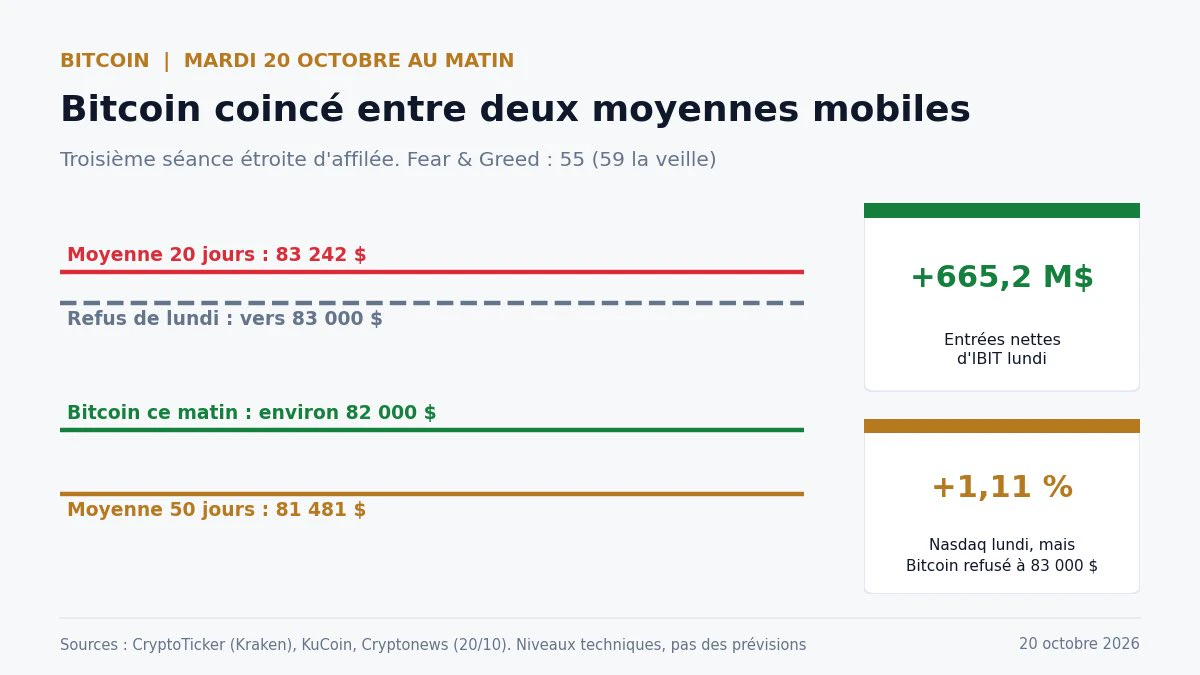
Starlink | Why is BTC still falling? Why take profit near 84000?
Many people saw BTC rebound from 80344 to around 84000 and thought the market was about to reverse.
But in trading, you can't just look at how much the price has risen; you also need to see whether this rally has sustained volume support.
First, a rebound does not equal a reversal.
As shown on the chart, BTC quickly rebounded near 80344, then gradually recovered to above 83000. However, during the rebound, although the price kept rising, it spent more time consolidating around 83000 in the latter half.
This shows that the recover
post-image
BTC-0.56%
ETH+0.83%
$STRK : +322% in 30 days. But are the fundamentals really keeping pace?
Starknet is considering becoming an independent Layer 1 by 2027. An ambition that could explain part of the rise.
→ STRK price: +322%
→ DeFi TVL: only +5% to 7%, at around $168M
post-image
STRK-19.93%
$SNXX This -16% guillotine is the Lunar New Year red envelope the big players are handing retail traders—let’s see if you dare to catch it.
The current price is 11.81, with a 24-hour low of 11.79. In other words, that wick just now hit 11.79 with pinpoint accuracy, only 2 cents below the current price. A trading volume of 170.7M alongside a -16% drop—this isn’t panic selling; it’s position rotation. Open the on-chain data and take a look: in the 11.8–12.2 range, whale addresses have net inflows, while retail wallets are frantically dumping. Who’s buying? Draw your own conclusions.
Technically,
SNXX-15.52%
Happy Thanksgiving go eat some meat.
🇨🇦
post-image
KOL perspective: Ansem urges taking profits in time! Even catching a 100x coin may not guarantee pro
live-cover
LIVE2,071
Bought some of $HOODOG at these levels the perfect dip around 100K 4x below the ath and holding nicely
I see this going 1M mc by community because they will unlock a 1% airdroped to all holders by team. And team did burned 5% of tokens too 🌭
post-image
$W Current price is 0.02583, up 48.36% over 24h, with a trading volume of 60.2M USDT, but RSI is only 54.4. The MACD histogram is -0.0003895 and remains bearish, while MA5=0.02741 is above MA20=0.025693. The amplitude over 30 candlesticks is as high as 56.25%, the funding rate is +0.0013%, and the Fear & Greed Index is 69, in the greed zone. The core contradiction in this data is that the moving averages are in a bullish alignment, but MACD has not turned positive in tandem, forming a typical “price leads, momentum lags” structure.
Teaching point: To determine whether a trend is healthy, do no
post-image
ENA-1.89%
On the 4-hour chart, the earlier rebound encountered resistance after reaching a high near 84,300 and then pulled back under pressure. Rebound momentum has faded, and the KDJ has formed a bearish crossover at a high level and is moving lower, with short-term bears in control. Although briefly oversold, the market will likely stage a strong rebound after the U.S. stock market opens, reaching the 83,500–84,000 range before continuing lower to test support near 82,000!
$BTC #GateWCTCS9全球交易赛 #余币宝USDT享11%年化 #BTC涨1.17%
BTC-0.56%
Strategy holds 848,000 BTC, Michael Saylor hints at next Bitcoin buy
Michael Saylor, Chairman of Strategy, is once again teasing the community with a hint of a new Bitcoin move.
“Always room for more orange.”
⚠️ Personal market analysis only. NFA — manage risk and DYOR.
Educational content, not investment advice or a recommendation to buy, sell, deposit, or withdraw any asset. No paid promotion or referral/affiliate links.
post-image
BTC-0.57%
  • 1
Load More

Join 40 M users in our growing community

⚡️ Join 40 M users in the crypto craze discussion

💬 Engage with your favorite top creators

👍 See what interests you

Trending Topics

GateWCTCS9GlobalTradingCompetition

35.29k Views5.43k Discussing

Gate WCTC S9 Global Trading Competition is officially live, crossing asset boundaries across crypto, stocks, and CFDs with an 8M USDT total prize pool. The Lucky Launchpad guarantees a win every time, new users get a 20 USDT futures voucher upon registration, and the Event Contract PK tournament features a prize pool of up to 400,000 USDT.[👉 Read announcement](https://www.gate.com/announcements/article/102133)

GateXRedBullWinsSingaporeGP

173.77k Views6.47k Discussing

WillYouBuyDipInKoreanStocks

61.6k Views1.78k Discussing

View More