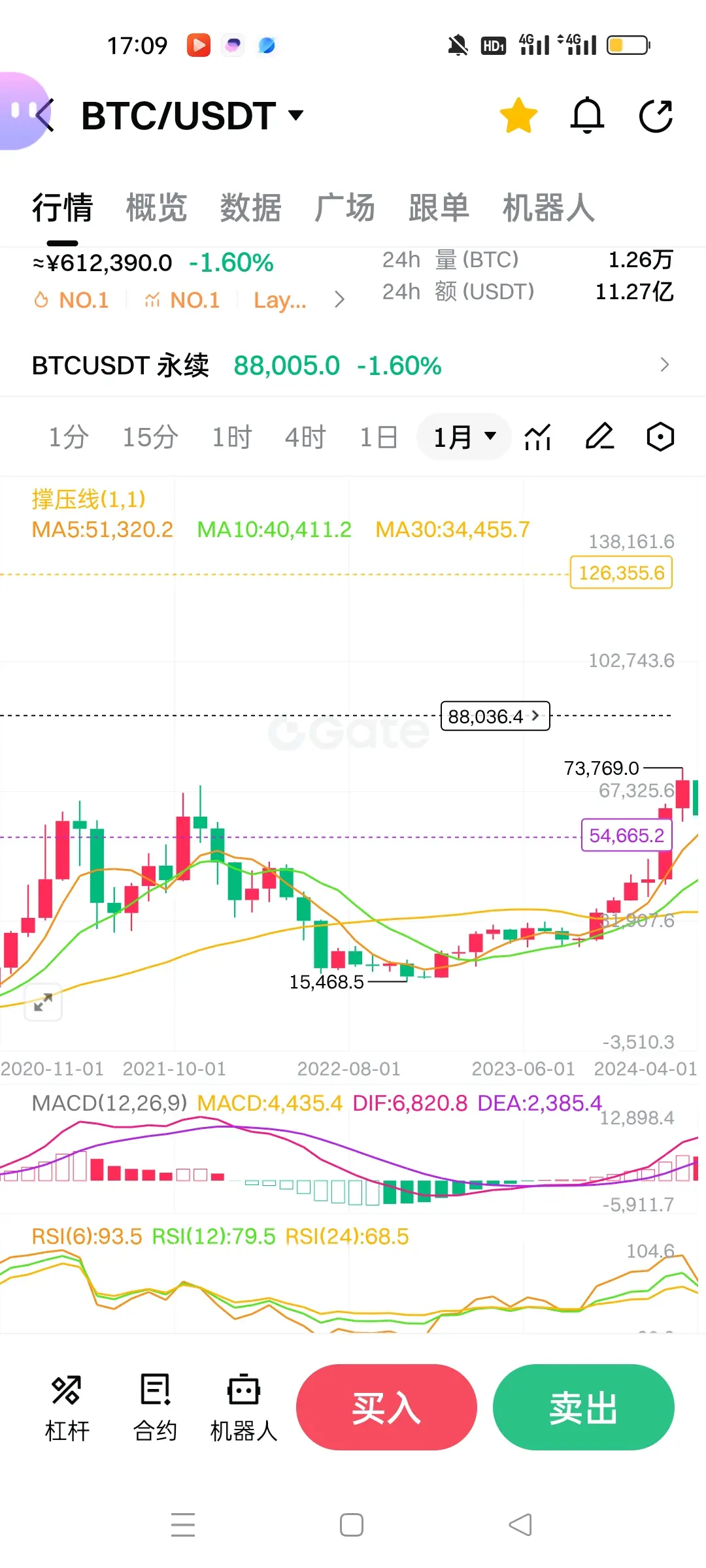
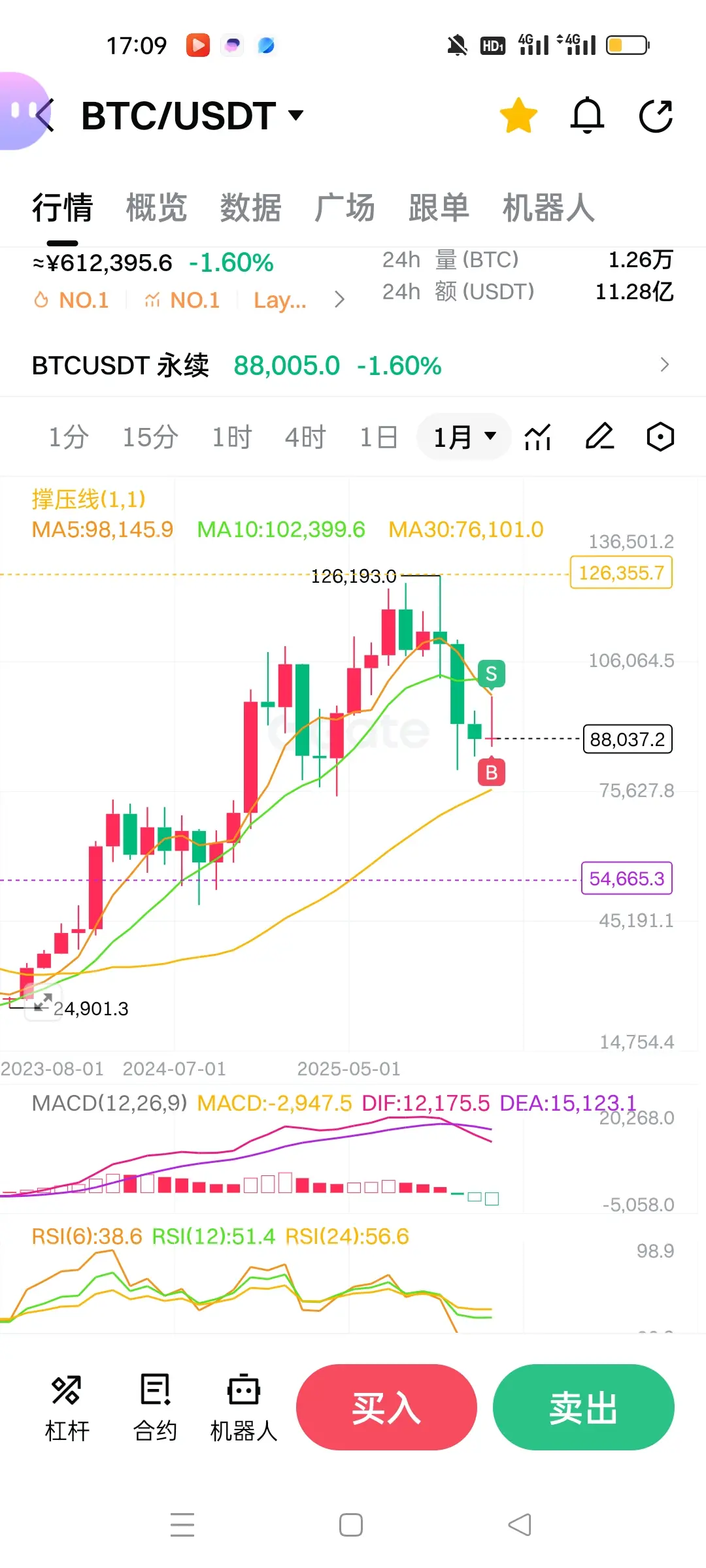
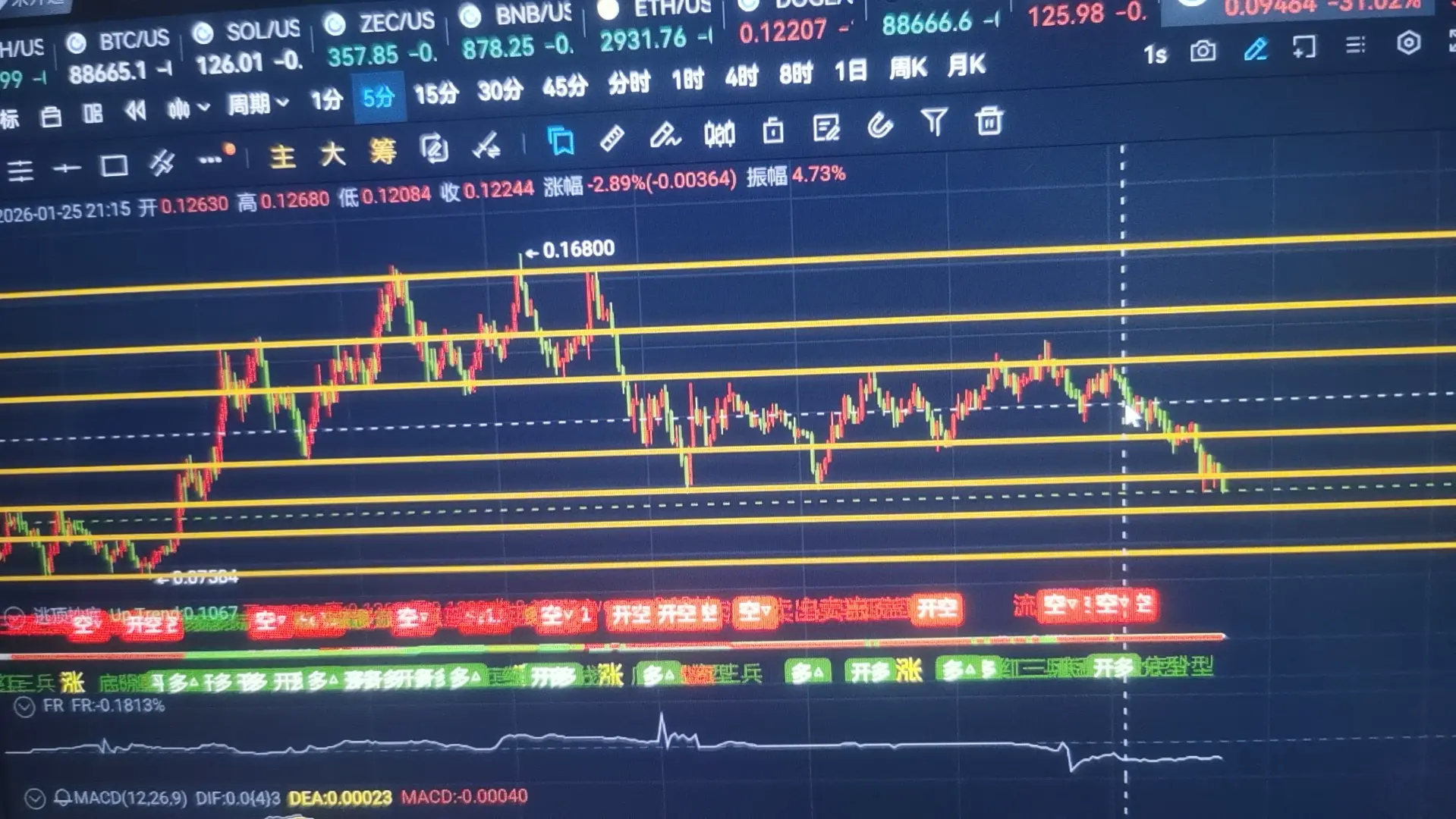
#周末行情分析 As crypto trading cools, Wall Street sets up a new “betting table”
Whether it is an election, a game, an interest rate decision, or whether someone will attend a particular event, all can be converted into contracts with constantly changing prices that can be bought and sold at any time.
In the early hours of February 22, 2026, former U.S. congressman George Santos asked users on social media whether he should wear a low-key, serious suit or a diamond-studded suit when attending the State of the Union address.
Behind this seemingly ordinary post was a trade.
At the time, Santos held contracts on prediction market platform Kalshi that he would attend the State of the Union address. Within hours of the post, the relevant contract price rose from 15 cents to 70 cents, and Santos promptly sold for a profit.
The next day, he posted another video explicitly stating that he would attend, sending the contract price up once again. But about 40 minutes later, Santos instead bought contracts that he would not attend. Later, the train he had booked was canceled, but he did not publicly disclose this information and continued telling users who asked that he would go. Only on the day of the State of the Union did he post that he was stranded at the airport. The “will attend” contract immediately fell from 73 cents to 2 cents, while the inverse contracts he held surged in value.
In July this year, the CFTC (U.S. Commodity Futures Trading Commission) determined that Santos had used public statements and withheld information to influence contract prices in service of his trading positions. It ordered him to return approximately $17.6k in gains, pay a $17.5k fine, and prohibited him from trading in regulated markets for three years.
The case was quite absurd: Santos was both a trader and a source of information, as well as someone capable of influencing the contract outcome. But it also provided an intuitive illustration of prediction markets’ product logic. Whether it is an election, a game, an interest rate decision, or whether someone will attend a particular event, all can be converted into contracts with constantly changing prices that can be bought and sold at any time.
The latest financial reports from Robinhood and Coinb show that prediction markets have begun to become a sizable business.
According to Robinhood’s second-quarter financial report, the company’s event-contract revenue reached $156 million for the quarter, up more than tenfold year over year and already exceeding its $100 million in cryptocurrency revenue. Wall Street research firm Bernstein forecasts that Robinhood’s prediction-market revenue will reach $586 million in 2026 ($150 million in 2025). Coinb disclosed that the number of prediction-market contracts and related revenue grew 106% quarter over quarter, with annualized revenue from the business exceeding $100 million.
However, the prediction-market business appears to be only “one wall” away from the bc industry.
In June, a Georgia user filed a proposed class-action lawsuit against Robinhood, alleging that the company operated unlicensed sports bc under the name of event contracts. The plaintiff said they traded event contracts through Robinhood between 2025 and 2026, losing approximately $400k, including contract losses, commissions, and fees. The plaintiff argued that Robinhood had packaged sports bc as financial trading and offered related products in states that prohibit sports bc.
Prediction markets take over the growth baton as crypto trading cools
This downturn in crypto trading is a simultaneous contraction in token prices, volatility, and spot trading volume.
Coinb disclosed that global crypto spot trading volume fell 25% quarter over quarter in the second quarter, while market volatility declined 14% to a multi-year low. The company’s trading revenue fell 21% quarter over quarter to $599 million, and it recorded a net loss of approximately $360 million. Although subscription and services revenue already accounted for 48% of net revenue, trading activity still directly affects the company’s growth rate.
The financial report showed that 88% of Coinb’s net revenue in the second quarter already came from businesses outside Bitcoin spot trading. The company is attempting to use prediction markets and other business segments to reduce its dependence on a single crypto-asset cycle.
Robinhood’s situation was even more pronounced. The company’s total revenue rose 32% year over year to $1.31 billion in the second quarter, while net profit increased 48% to $573 million, but cryptocurrency revenue fell 38%. Besides options and stocks, prediction markets were the other major support for the growth of its trading revenue.
Ding Yuan, president of Xinhuo Research Institute, told Barron’s Chinese that the cyclical weakness in the crypto market had indeed prompted the two companies to accelerate the expansion of new businesses such as prediction markets: “Prediction markets have relatively low correlation with crypto price cycles, cover sports, macroeconomic, and social events, and have higher trading frequency. Platforms can also leverage their existing user bases for cross-selling.”
Prediction markets provide platforms with a trading rhythm different from that of traditional assets. Trading opportunities in stocks and cryptocurrencies are affected by market conditions, while news and games never stop happening. Elections, inflation data, interest rate decisions, and corporate earnings reports can all form contracts. After entering the sports sector, professional leagues can create new trading targets every day, and most contracts settle within hours or days.
The simpler the product and the faster the outcome is revealed, the more likely users are to trade repeatedly. For platforms, this means higher opening frequency, shorter capital turnover cycles, and a source of fee revenue that does not depend on long-term asset appreciation.
However, the high growth in the second quarter directly benefited from the World Cup.
Blockchain data analytics platform Dune showed that during the World Cup from June 11 to July 19, overall prediction-market trading volume grew approximately 100% compared with the comparable period in the first quarter, before declining after the tournament ended.
Prediction-market trading volume rose significantly during the World Cup
Ding Yuan noted that Robinhood’s and Coinb’s second-quarter financial data ran through June 30, covering only the first half of the World Cup. They therefore cannot fully reflect the traffic generated by the tournament, much less prove that related trading volume remained elevated after it ended. Since prediction markets had not yet reached their current scale during the previous World Cup, the market also lacks comparable data across cycles.
“Event-driven factors are only an amplifier; what truly supports growth is the improvement of trading infrastructure and the compliance environment,” Ding Yuan said. In the past, the main factors constraining prediction markets were fragmented access pathways, insufficient liquidity, and limited retail reach. As CFTC-regulated designated contract markets gradually expand their product offerings, combined with the distribution capabilities of platforms such as Robinhood and Coinb, prediction markets have only now begun to move from the margins toward scale.
How do prediction markets trade, and who is betting!
The trading chain for prediction markets is similar to that of stock and futures markets, but different stages are usually handled by different licensed entities.
At the front end, Robinhood and Coinb acquire customers through their respective apps, while their derivatives brokerage entities are responsible for receiving and transmitting orders. At the back end, exchanges such as Kalshi and ForecastEx design and list contracts and match trades, while clearing organizations handle the settlement of funds and contracts.
Robinhood initially provided event contracts to customers mainly through integration with Kalshi. In June 2026, Rothera, its venture with Susquehanna, began operations. Rothera has a regulated designated contract market and clearing capabilities and is managed by an independent team. Of Robinhood’s $156 million in event-contract revenue in the second quarter, approximately $17 million came from Rothera.
This means Robinhood is no longer merely a retail entry point for prediction contracts, but has begun participating in revenue from exchange and clearing operations. As more orders are routed to the relevant trading facilities, the company may obtain higher economic returns than from simple customer referrals.
As for Coinb, it does have its own exchange. After acquiring FairX in 2022, the company obtained a CFTC-designated contract market, now called CoinbDerivatives. However, as of the second quarter, the prediction contracts Coinb offered to retail customers were still primarily listed by Kalshi, with contract outcomes also determined by Kalshi according to preset rules.
At the end of 2025, Coinb also announced the acquisition of prediction-market startup The Clearing Company.
The latest prediction market on Robihood: candidates for the next head coach of the Kansas basketball team
Does the current growth of prediction markets come from new users, or from the migration of crypto and options users?
Robinhood’s management disclosed at its earnings call that nearly 2 million customers had used prediction markets. The company also said these users were more likely to use other products, such as retirement accounts, at the same time. This gives prediction markets a value more important than fees: They can serve as a low-barrier, high-frequency customer-acquisition channel and then direct users to stock, options, credit card, and wealth-management businesses.
However, this data cannot fully answer the question of where the growth comes from. Of the nearly 2 million users, the company has not disclosed in detail how many are new Robinhood customers and how many were already trading stocks, options, and cryptocurrencies.
One relevant example is that U.K. online trading group IG recently announced the acquisition of U.S. sports platform Underdog to enter the prediction-market sector. According to the acquisition documents it disclosed, a survey it commissioned found significant user overlap among sports betting, stock, cryptocurrency, and options trading.
“Prediction” and “BC”: A blurred boundary
Whether they are “prediction” products or “bc” is the biggest regulatory risk facing prediction markets.
Sports event contracts reveal this contradiction most directly. The same question of whether a team will win is a bet when offered by a bc company, but a derivatives contract when traded on a CFTC-regulated exchange.
Ding Yuan told Barron’s Chinese that the substantive difference between sports event contracts and traditional sports bc lies in their trading structures.
“The former are event contracts regulated by the CFTC. The parties form prices through an order book, with the contract price directly reflecting the market-implied probability. Users can buy and sell to close their positions at any time, while the platform primarily charges trading fees and does not assume betting-counterparty risk. In the latter, the bc operator sets the odds and acts as the counterparty, embedding a fixed house edge, while positions are generally locked until settlement. Prediction markets turn event outcomes into continuously tradable financial instruments, giving users the ability to discover prices and manage positions.”
But from an ordinary user’s perspective, there may be no obvious difference in purpose or profit and loss between buying an event contract that “a certain team will win” and betting that the team will win.
The more important difference lies at the regulatory level.
Traditional sports bc is regulated by individual U.S. states. Operators generally need to obtain licenses state by state and comply with rules on age limits, responsible bc, and self-exclusion. If prediction markets are offered through CFTC-regulated designated contract markets, they may be able to operate in more states.
Sports bc companies are also proactively moving closer to prediction markets. Online bc platform FanDuel has said that prediction markets could help it acquire customers in advance in states where sports bc has not yet been legalized. As of the first quarter of this year, FanDuel’s sports prediction contracts had entered 18 states that had not opened to traditional sports bc, while non-sports event contracts could cover all 50 states.
This shows that prediction markets are not only a product innovation but also a potential channel for bypassing state-level bc license restrictions.
This has created regulatory divisions in the United States. Prediction-market platforms argue that event contracts listed on exchanges registered with the CFTC are derivatives regulated at the federal level. Some states, however, believe that sports contracts are essentially still gambling and should comply with local licensing systems. States including New York, Massachusetts, and Washington have taken legal or enforcement action, while rulings issued by different courts have not been consistent. The CFTC has also yet to issue a “pass.”
Ding Yuan also noted that globally, most European countries classify them under db and impose bans or enforcement actions. Gibraltar issued the first European license under an existing db license, the U.K. requires a bc intermediary license, Canada has begun regulating them as securities derivatives and approving some platforms, the Asia-Pacific region is generally strict, Singapore and Australia explicitly prohibit them as db, and Hong Kong has warned that they may constitute illegal db.
In addition, prediction markets have introduced a type of regulatory challenge rarely faced by traditional securities markets. Stock markets primarily guard against insider trading and price manipulation, while the aforementioned Santos case showed that event contracts must also address a more direct problem: Traders may not only know the outcome in advance but may even be able to influence it.
Some market participants, however, believe that this openness is precisely what makes prediction markets commercially attractive. Real-world events can almost endlessly be converted into contracts, bringing higher trading frequency and shorter settlement cycles.
Robinhood’s and Coinb’s financial reports prove that prediction markets are becoming an important tool for retail financial platforms to reduce the impact of crypto cycles, increase user activity, and expand revenue sources. For now, their continued development still depends on whether trading volume can be sustained after major sporting events end, and whether different types of event contracts will ultimately be classified as financial products or bc$BTC regulation.
Before that question is resolved, prediction markets are both one of the fastest-growing new products in the U.S. fintech industry and potentially its most expensive regulatory bet.
Whether it is an election, a game, an interest rate decision, or whether someone will attend a particular event, all can be converted into contracts with constantly changing prices that can be bought and sold at any time.
In the early hours of February 22, 2026, former U.S. congressman George Santos asked users on social media whether he should wear a low-key, serious suit or a diamond-studded suit when attending the State of the Union address.
Behind this seemingly ordinary post was a trade.
At the time, Santos held contracts on prediction market platform Kalshi that he would attend the State of the Union address. Within hours of the post, the relevant contract price rose from 15 cents to 70 cents, and Santos promptly sold for a profit.
The next day, he posted another video explicitly stating that he would attend, sending the contract price up once again. But about 40 minutes later, Santos instead bought contracts that he would not attend. Later, the train he had booked was canceled, but he did not publicly disclose this information and continued telling users who asked that he would go. Only on the day of the State of the Union did he post that he was stranded at the airport. The “will attend” contract immediately fell from 73 cents to 2 cents, while the inverse contracts he held surged in value.
In July this year, the CFTC (U.S. Commodity Futures Trading Commission) determined that Santos had used public statements and withheld information to influence contract prices in service of his trading positions. It ordered him to return approximately $17.6k in gains, pay a $17.5k fine, and prohibited him from trading in regulated markets for three years.
The case was quite absurd: Santos was both a trader and a source of information, as well as someone capable of influencing the contract outcome. But it also provided an intuitive illustration of prediction markets’ product logic. Whether it is an election, a game, an interest rate decision, or whether someone will attend a particular event, all can be converted into contracts with constantly changing prices that can be bought and sold at any time.
The latest financial reports from Robinhood and Coinb show that prediction markets have begun to become a sizable business.
According to Robinhood’s second-quarter financial report, the company’s event-contract revenue reached $156 million for the quarter, up more than tenfold year over year and already exceeding its $100 million in cryptocurrency revenue. Wall Street research firm Bernstein forecasts that Robinhood’s prediction-market revenue will reach $586 million in 2026 ($150 million in 2025). Coinb disclosed that the number of prediction-market contracts and related revenue grew 106% quarter over quarter, with annualized revenue from the business exceeding $100 million.
However, the prediction-market business appears to be only “one wall” away from the bc industry.
In June, a Georgia user filed a proposed class-action lawsuit against Robinhood, alleging that the company operated unlicensed sports bc under the name of event contracts. The plaintiff said they traded event contracts through Robinhood between 2025 and 2026, losing approximately $400k, including contract losses, commissions, and fees. The plaintiff argued that Robinhood had packaged sports bc as financial trading and offered related products in states that prohibit sports bc.
Prediction markets take over the growth baton as crypto trading cools
This downturn in crypto trading is a simultaneous contraction in token prices, volatility, and spot trading volume.
Coinb disclosed that global crypto spot trading volume fell 25% quarter over quarter in the second quarter, while market volatility declined 14% to a multi-year low. The company’s trading revenue fell 21% quarter over quarter to $599 million, and it recorded a net loss of approximately $360 million. Although subscription and services revenue already accounted for 48% of net revenue, trading activity still directly affects the company’s growth rate.
The financial report showed that 88% of Coinb’s net revenue in the second quarter already came from businesses outside Bitcoin spot trading. The company is attempting to use prediction markets and other business segments to reduce its dependence on a single crypto-asset cycle.
Robinhood’s situation was even more pronounced. The company’s total revenue rose 32% year over year to $1.31 billion in the second quarter, while net profit increased 48% to $573 million, but cryptocurrency revenue fell 38%. Besides options and stocks, prediction markets were the other major support for the growth of its trading revenue.
Ding Yuan, president of Xinhuo Research Institute, told Barron’s Chinese that the cyclical weakness in the crypto market had indeed prompted the two companies to accelerate the expansion of new businesses such as prediction markets: “Prediction markets have relatively low correlation with crypto price cycles, cover sports, macroeconomic, and social events, and have higher trading frequency. Platforms can also leverage their existing user bases for cross-selling.”
Prediction markets provide platforms with a trading rhythm different from that of traditional assets. Trading opportunities in stocks and cryptocurrencies are affected by market conditions, while news and games never stop happening. Elections, inflation data, interest rate decisions, and corporate earnings reports can all form contracts. After entering the sports sector, professional leagues can create new trading targets every day, and most contracts settle within hours or days.
The simpler the product and the faster the outcome is revealed, the more likely users are to trade repeatedly. For platforms, this means higher opening frequency, shorter capital turnover cycles, and a source of fee revenue that does not depend on long-term asset appreciation.
However, the high growth in the second quarter directly benefited from the World Cup.
Blockchain data analytics platform Dune showed that during the World Cup from June 11 to July 19, overall prediction-market trading volume grew approximately 100% compared with the comparable period in the first quarter, before declining after the tournament ended.
Prediction-market trading volume rose significantly during the World Cup
Ding Yuan noted that Robinhood’s and Coinb’s second-quarter financial data ran through June 30, covering only the first half of the World Cup. They therefore cannot fully reflect the traffic generated by the tournament, much less prove that related trading volume remained elevated after it ended. Since prediction markets had not yet reached their current scale during the previous World Cup, the market also lacks comparable data across cycles.
“Event-driven factors are only an amplifier; what truly supports growth is the improvement of trading infrastructure and the compliance environment,” Ding Yuan said. In the past, the main factors constraining prediction markets were fragmented access pathways, insufficient liquidity, and limited retail reach. As CFTC-regulated designated contract markets gradually expand their product offerings, combined with the distribution capabilities of platforms such as Robinhood and Coinb, prediction markets have only now begun to move from the margins toward scale.
How do prediction markets trade, and who is betting!
The trading chain for prediction markets is similar to that of stock and futures markets, but different stages are usually handled by different licensed entities.
At the front end, Robinhood and Coinb acquire customers through their respective apps, while their derivatives brokerage entities are responsible for receiving and transmitting orders. At the back end, exchanges such as Kalshi and ForecastEx design and list contracts and match trades, while clearing organizations handle the settlement of funds and contracts.
Robinhood initially provided event contracts to customers mainly through integration with Kalshi. In June 2026, Rothera, its venture with Susquehanna, began operations. Rothera has a regulated designated contract market and clearing capabilities and is managed by an independent team. Of Robinhood’s $156 million in event-contract revenue in the second quarter, approximately $17 million came from Rothera.
This means Robinhood is no longer merely a retail entry point for prediction contracts, but has begun participating in revenue from exchange and clearing operations. As more orders are routed to the relevant trading facilities, the company may obtain higher economic returns than from simple customer referrals.
As for Coinb, it does have its own exchange. After acquiring FairX in 2022, the company obtained a CFTC-designated contract market, now called CoinbDerivatives. However, as of the second quarter, the prediction contracts Coinb offered to retail customers were still primarily listed by Kalshi, with contract outcomes also determined by Kalshi according to preset rules.
At the end of 2025, Coinb also announced the acquisition of prediction-market startup The Clearing Company.
The latest prediction market on Robihood: candidates for the next head coach of the Kansas basketball team
Does the current growth of prediction markets come from new users, or from the migration of crypto and options users?
Robinhood’s management disclosed at its earnings call that nearly 2 million customers had used prediction markets. The company also said these users were more likely to use other products, such as retirement accounts, at the same time. This gives prediction markets a value more important than fees: They can serve as a low-barrier, high-frequency customer-acquisition channel and then direct users to stock, options, credit card, and wealth-management businesses.
However, this data cannot fully answer the question of where the growth comes from. Of the nearly 2 million users, the company has not disclosed in detail how many are new Robinhood customers and how many were already trading stocks, options, and cryptocurrencies.
One relevant example is that U.K. online trading group IG recently announced the acquisition of U.S. sports platform Underdog to enter the prediction-market sector. According to the acquisition documents it disclosed, a survey it commissioned found significant user overlap among sports betting, stock, cryptocurrency, and options trading.
“Prediction” and “BC”: A blurred boundary
Whether they are “prediction” products or “bc” is the biggest regulatory risk facing prediction markets.
Sports event contracts reveal this contradiction most directly. The same question of whether a team will win is a bet when offered by a bc company, but a derivatives contract when traded on a CFTC-regulated exchange.
Ding Yuan told Barron’s Chinese that the substantive difference between sports event contracts and traditional sports bc lies in their trading structures.
“The former are event contracts regulated by the CFTC. The parties form prices through an order book, with the contract price directly reflecting the market-implied probability. Users can buy and sell to close their positions at any time, while the platform primarily charges trading fees and does not assume betting-counterparty risk. In the latter, the bc operator sets the odds and acts as the counterparty, embedding a fixed house edge, while positions are generally locked until settlement. Prediction markets turn event outcomes into continuously tradable financial instruments, giving users the ability to discover prices and manage positions.”
But from an ordinary user’s perspective, there may be no obvious difference in purpose or profit and loss between buying an event contract that “a certain team will win” and betting that the team will win.
The more important difference lies at the regulatory level.
Traditional sports bc is regulated by individual U.S. states. Operators generally need to obtain licenses state by state and comply with rules on age limits, responsible bc, and self-exclusion. If prediction markets are offered through CFTC-regulated designated contract markets, they may be able to operate in more states.
Sports bc companies are also proactively moving closer to prediction markets. Online bc platform FanDuel has said that prediction markets could help it acquire customers in advance in states where sports bc has not yet been legalized. As of the first quarter of this year, FanDuel’s sports prediction contracts had entered 18 states that had not opened to traditional sports bc, while non-sports event contracts could cover all 50 states.
This shows that prediction markets are not only a product innovation but also a potential channel for bypassing state-level bc license restrictions.
This has created regulatory divisions in the United States. Prediction-market platforms argue that event contracts listed on exchanges registered with the CFTC are derivatives regulated at the federal level. Some states, however, believe that sports contracts are essentially still gambling and should comply with local licensing systems. States including New York, Massachusetts, and Washington have taken legal or enforcement action, while rulings issued by different courts have not been consistent. The CFTC has also yet to issue a “pass.”
Ding Yuan also noted that globally, most European countries classify them under db and impose bans or enforcement actions. Gibraltar issued the first European license under an existing db license, the U.K. requires a bc intermediary license, Canada has begun regulating them as securities derivatives and approving some platforms, the Asia-Pacific region is generally strict, Singapore and Australia explicitly prohibit them as db, and Hong Kong has warned that they may constitute illegal db.
In addition, prediction markets have introduced a type of regulatory challenge rarely faced by traditional securities markets. Stock markets primarily guard against insider trading and price manipulation, while the aforementioned Santos case showed that event contracts must also address a more direct problem: Traders may not only know the outcome in advance but may even be able to influence it.
Some market participants, however, believe that this openness is precisely what makes prediction markets commercially attractive. Real-world events can almost endlessly be converted into contracts, bringing higher trading frequency and shorter settlement cycles.
Robinhood’s and Coinb’s financial reports prove that prediction markets are becoming an important tool for retail financial platforms to reduce the impact of crypto cycles, increase user activity, and expand revenue sources. For now, their continued development still depends on whether trading volume can be sustained after major sporting events end, and whether different types of event contracts will ultimately be classified as financial products or bc$BTC regulation.
Before that question is resolved, prediction markets are both one of the fastest-growing new products in the U.S. fintech industry and potentially its most expensive regulatory bet.