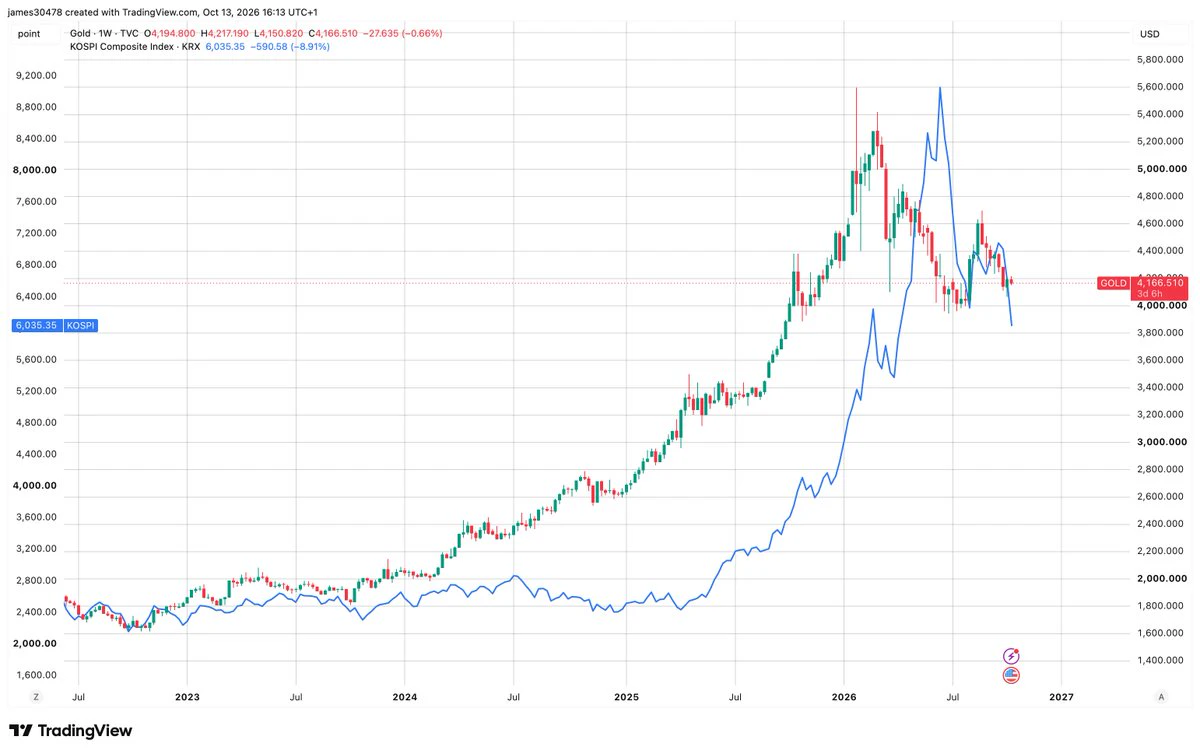








#TomLee警告韩股暴跌或波及加密市场 During trading on October 13 Beijing time, South Korea’s KOSPI index once plunged 7.4% to around 5,914 points, hitting a new low since late July. Blue-chip stocks Samsung Electronics and SK Hynix plummeted 7.7% and 8.8%, respectively.
Reuters data showed that the broader market’s decline had touched 6%, triggering a circuit breaker for algorithmic trading. Meanwhile, Japan’s Nikkei index and Taiwan’s weighted index also fell approximately 2.6% and 2%, respectively, indicating a systemic capital retreat from technology sectors across Asia.
The core catalyst for the plunge was the sudden shift in expectations for the global semiconductor industry. The market is concerned about the technological breakthroughs of Chinese DRAM manufacturer CXMT. CXMT recently announced substantial progress on the next-generation 4F² DRAM cell architecture and plans to launch server memory products by the end of the year. Counterpoint data showed that CXMT’s global DRAM revenue market share surged from 4% in the same period last year to 10% in the second quarter of 2026. This expansion trend has prompted the market to reassess the future pricing power and profit margins of established memory giants.
In addition, Broadcom CEO Hock Tan recently questioned excessive enthusiasm for AI infrastructure investment, intensifying the willingness of capital to take profits on highly valued technology stocks.
Crypto market hit by deleveraging pain
South Korea is not only a major semiconductor exporter but also one of the world’s most active retail crypto markets. Tom Lee, chairman of BitMine and co-founder of Fundstrat, said the plunge in South Korean stocks is highly likely to spill over into the crypto ecosystem through forced liquidations of brokerage margin positions. When investors face margin calls in traditional securities accounts, they are often forced to sell highly liquid digital assets they hold to raise emergency cash. He described the selling pressure currently weighing on Ethereum as short-term pain.
Derivatives data supports this assessment.
According to CoinGlass, approximately $774.1 million in leveraged positions across the crypto market were forcibly liquidated over the past 24 hours, including as much as $688.6 million in long positions, accounting for approximately 89%. Ethereum was among the hardest hit, with approximately $169.2 million in single-day liquidations.
The spot market also came under pressure.
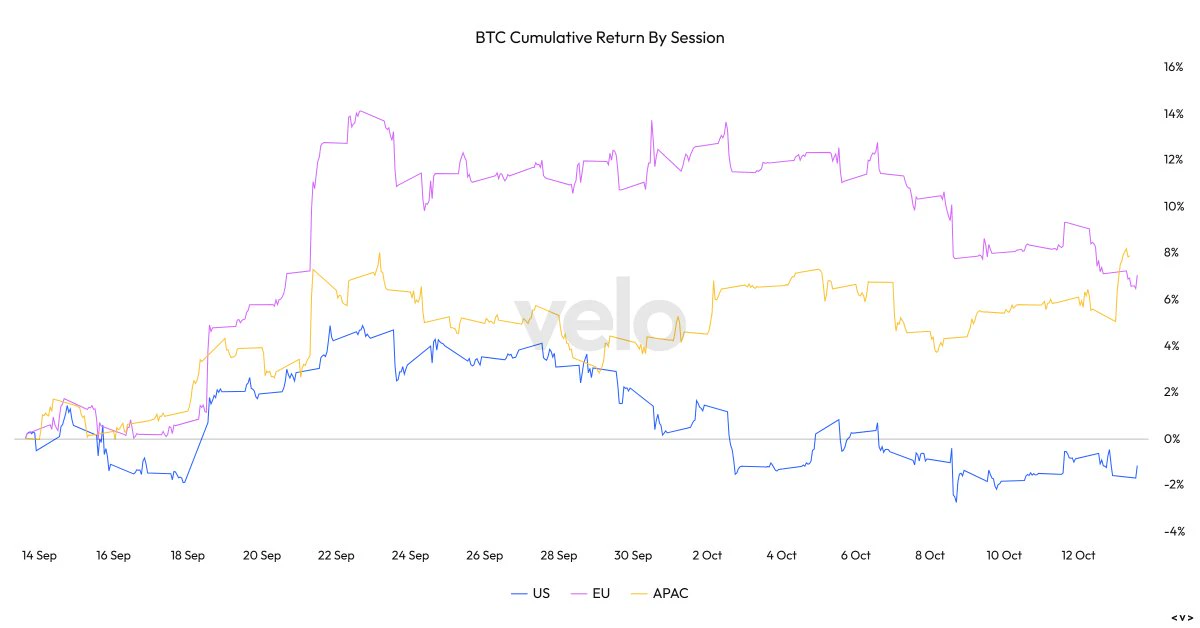
Bn market data showed that Bitcoin briefly fell below the $82,000 level, reaching a 24-hour low of $80,962 and a high of $84,249, with an intraday range exceeding $3,200. Ethereum retreated to the $2,400 range, falling as low as $2,448. CoinGecko data showed that the global crypto market capitalization contracted slightly by 0.7% to $2.88 trillion, while Bitcoin’s market share rose against the trend to 57.3%, reflecting the fact that altcoins face a more severe liquidity drought than Bitcoin during periods of market panic.
Focus on inflation data guidance
Taking a broader view, the sell-off in South Korean stocks is merely a microcosm of the synchronized decline in global risk assets. Persistent geopolitical tensions have pushed Brent crude prices to around $105.9 per barrel. Elevated energy costs have raised deeper concerns among investors about a resurgence of inflation. The US Dollar Index is currently approaching a 18-month high of 102.56, while US Treasury yields remain consolidating at multi-year highs. The strong dollar and high-interest-rate environment constitute a dual macroeconomic headwind for Bitcoin and technology stocks.
The correction in the digital asset market cannot be attributed solely to spillover from the South Korean market; it is the result of multiple factors converging, including a correction in semiconductor valuations, intensifying global competition, geopolitical risks, and expectations of monetary tightening.
Bitcoin is currently less than 1,000 yuan away from the psychological support level of $80,000. The US September Consumer Price Index (CPI), due to be released soon, will be a key turning point determining the market’s direction. Macroeconomic institutions currently broadly expect the inflation indicator to rebound from 3.4% to 3.7%; if the final data shows stronger-than-expected inflation, the higher-for-longer interest-rate narrative will be further reinforced, creating another round of pressure on risk assets that have just undergone deleveraging. #WCTCS9
Reuters data showed that the broader market’s decline had touched 6%, triggering a circuit breaker for algorithmic trading. Meanwhile, Japan’s Nikkei index and Taiwan’s weighted index also fell approximately 2.6% and 2%, respectively, indicating a systemic capital retreat from technology sectors across Asia.
The core catalyst for the plunge was the sudden shift in expectations for the global semiconductor industry. The market is concerned about the technological breakthroughs of Chinese DRAM manufacturer CXMT. CXMT recently announced substantial progress on the next-generation 4F² DRAM cell architecture and plans to launch server memory products by the end of the year. Counterpoint data showed that CXMT’s global DRAM revenue market share surged from 4% in the same period last year to 10% in the second quarter of 2026. This expansion trend has prompted the market to reassess the future pricing power and profit margins of established memory giants.
In addition, Broadcom CEO Hock Tan recently questioned excessive enthusiasm for AI infrastructure investment, intensifying the willingness of capital to take profits on highly valued technology stocks.
Crypto market hit by deleveraging pain
South Korea is not only a major semiconductor exporter but also one of the world’s most active retail crypto markets. Tom Lee, chairman of BitMine and co-founder of Fundstrat, said the plunge in South Korean stocks is highly likely to spill over into the crypto ecosystem through forced liquidations of brokerage margin positions. When investors face margin calls in traditional securities accounts, they are often forced to sell highly liquid digital assets they hold to raise emergency cash. He described the selling pressure currently weighing on Ethereum as short-term pain.
Derivatives data supports this assessment.
According to CoinGlass, approximately $774.1 million in leveraged positions across the crypto market were forcibly liquidated over the past 24 hours, including as much as $688.6 million in long positions, accounting for approximately 89%. Ethereum was among the hardest hit, with approximately $169.2 million in single-day liquidations.
The spot market also came under pressure.
Bn market data showed that Bitcoin briefly fell below the $82,000 level, reaching a 24-hour low of $80,962 and a high of $84,249, with an intraday range exceeding $3,200. Ethereum retreated to the $2,400 range, falling as low as $2,448. CoinGecko data showed that the global crypto market capitalization contracted slightly by 0.7% to $2.88 trillion, while Bitcoin’s market share rose against the trend to 57.3%, reflecting the fact that altcoins face a more severe liquidity drought than Bitcoin during periods of market panic.
Focus on inflation data guidance
Taking a broader view, the sell-off in South Korean stocks is merely a microcosm of the synchronized decline in global risk assets. Persistent geopolitical tensions have pushed Brent crude prices to around $105.9 per barrel. Elevated energy costs have raised deeper concerns among investors about a resurgence of inflation. The US Dollar Index is currently approaching a 18-month high of 102.56, while US Treasury yields remain consolidating at multi-year highs. The strong dollar and high-interest-rate environment constitute a dual macroeconomic headwind for Bitcoin and technology stocks.
The correction in the digital asset market cannot be attributed solely to spillover from the South Korean market; it is the result of multiple factors converging, including a correction in semiconductor valuations, intensifying global competition, geopolitical risks, and expectations of monetary tightening.
Bitcoin is currently less than 1,000 yuan away from the psychological support level of $80,000. The US September Consumer Price Index (CPI), due to be released soon, will be a key turning point determining the market’s direction. Macroeconomic institutions currently broadly expect the inflation indicator to rebound from 3.4% to 3.7%; if the final data shows stronger-than-expected inflation, the higher-for-longer interest-rate narrative will be further reinforced, creating another round of pressure on risk assets that have just undergone deleveraging. #WCTCS9