

Square
Following
Hot
News
Profile
Share your thoughts
placeholder
Article
Insiders are fading the bullish trend on $NEAR /USDT right now.

$NEAR /USDT - SHORT

Trade Plan:
Entry: 5.7767 – 5.8363
SL: 6.1785
TP1: 5.5275
TP2: 5.3415
TP3: 5.0625

Why this setup?
Why now? The daily trend remains bullish, yet the 1h price is pinned at 5.8065, creating a contradiction that favors a short. The 15m RSI reading of 64.08 shows the bounce lacks momentum, while the 1h ATR of 0.119238 confirms the move is volatile enough to target 5.5275 and 5.3415. The entry zone between 5.7767 and 5.8363 offers a precise setup, and the invalidation level at 5.1940 is the line in the sand tha
NEAR+9.58%
48-50, short by 12 votes, and the Voter ID Act just died in the Senate. McConnell crossed party lines along with Collins, Murkowski, and Tillis—four Republicans in total. Before the midterms, this vote was just posturing; it would still take 60 votes to pass. For the $voting rights battle, let’s see how the Democrats respond next week. If you’re watching, follow.
post-image
🔹 Robinhoods on-chain activity cools down: Daily active users down 31 from mid-September, DEX tradi
live-cover
LIVE35
*my thesis was wrong*
post-image
Ledger confirms: one affected device contained an unauthorized hardware implant.
→ Estimated losses: $72M to $93.4M, not verified by Ledger
→ Reseller involved: CryptoBilis, sales suspended
→ Ledger: no indication that its systems were compromised
#HeadToPeshawar
#GateEventMarketVolumeHits73M
Gate’s $126M Net Inflow Signals Growing Attention, but the Next Market Move Will Depend on What Investors Do With Their Capital
In crypto, capital movement often tells an interesting story, but the real opportunity lies in understanding what happens after the money arrives.
Gate reportedly attracted $126 million in net inflows over the past month, ranking third among centralized exchanges, while its global user base surpassed 61 million. These figures highlight the platform’s growing presence, but they also raise a more important question: will this capital remai
BTC+0.82%
GT+1.01%
$TRX TRX | Wave C Points At The Flip Zone Below
By analyzing the TRX (TRON) chart on the Daily timeframe, we can see a market that broke its bullish structure in June and has spent four months building a corrective pattern that is now close to its final leg.
━━━━━━━━━━━━━━━━━━━━
DAILY TIMEFRAME
━━━━━━━━━━━━━━━━━━━━
The uptrend. The move began with the MSS in February and was confirmed by two BOS events through March and April, carrying price from $0.2700 to the May high at $0.3760.
The break. That ended in June. The CHoCH near $0.3200 took out the structure that had held the entire advance — t
post-image
TRX-0.17%
TON's DEX volume hit $13.12M on October 9, its busiest day since June 3. TON DEXs handled $142.28M in the past 30 days, up 24.75% from the 30 days before.
@ton_blockchain
HStikkytokky announces Russ Millions & Digga D will fight on Rainbet's Unhinged Promotions Nov 7th, with rapper Morrison In Russ' corner
post-image
Most traders will get trapped short on $ADA /USDT — but this setup says otherwise.

$ADA /USDT - SHORT

Trade Plan:
Entry: 0.2513 – 0.2525
SL: 0.2576
TP1: 0.2476
TP2: 0.2448
TP3: 0.2405

Why this setup?
Why now? The daily trend is still range-bound, meaning $ADA /USDT has no clear directional momentum and could easily snap either way. The 15m RSI at 44.34 shows mild bearish lean but nothing extreme, so shorting here is a calculated risk rather than a certainty. With the 1h ATR sitting at just 0.002371, expected volatility is low, making the 0.2513 to 0.2525 entry zone a tight but reasonable
ADA+0.64%
🐋 WHALE WATCH : Every time they tell you crypto is slowing down Saylor drops a chart update and reminds everyone what institutional accumulation actually looks like.
=> 848000+ $BTC locked in the vault
=> Zero intention of stopping
=> Theres always room for more orange.
The supply shock is coming for everyone who thinks they have all the time in the world. Position accordingly.
BTC+0.82%
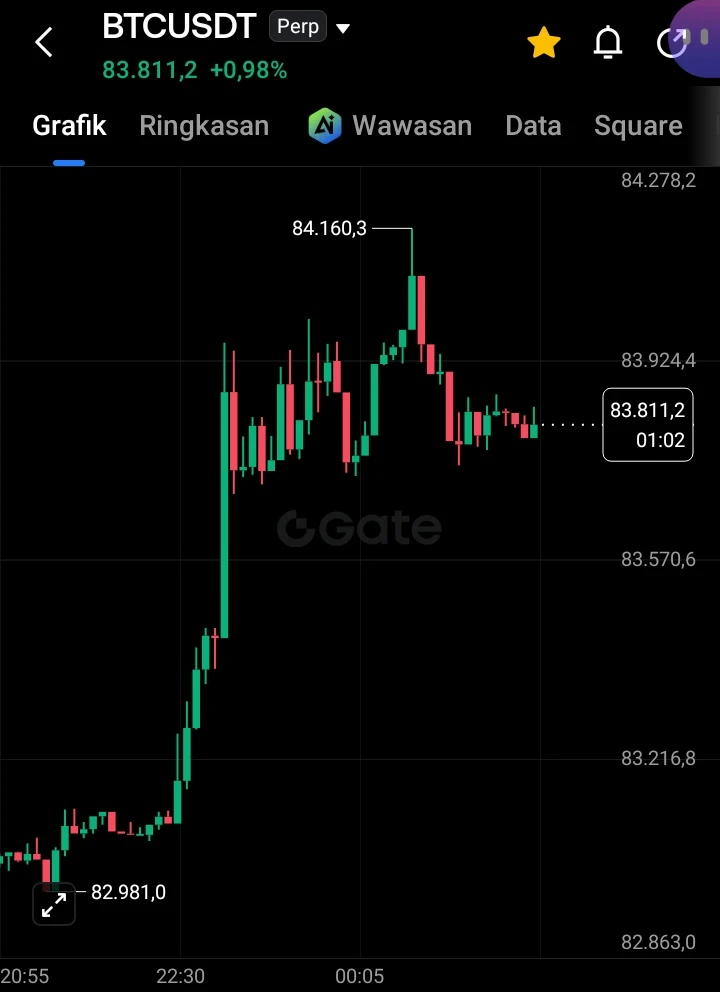
#Bitcoin just reclaimed $84,000! 🚀
Do we trust this small weekend pump?
post-image
BTC+0.82%
$ZEUS has already bought the dip and is just waiting for it to double before selling everything
ZEUS+51.09%
BTC & GT Price Prediction - Will GT Hit $30?
live-cover
LIVE62
$ICP MIRROR IMAGE
ICP+11.39%
The old grain is nearly gone, and the good seedlings have yet to promise a harvest. In my old age I have come to love gruel, yet by year’s end I still lack clothes. Sparrows feed their young beside the mossy well, and roosters crow at the white-plank door. A firewood cart is drawn by a weak horse; in straw sandals I herd great boars. Evening rain splits the red pomegranates, and in early autumn the green taro grows plump. After bringing food to the fields, I rest beneath the mulberry trees, then return through the grass beside the neighboring house. My dwelling is called Fool’s Valley—why both
#WCTCS9 #币圈观察员 1011 Liquidation Crash Anniversary: $19 Billion Wiped Out in One Week!
One year ago on October 11, the crypto market witnessed a single-day liquidation event that went down in industry history, with more than $19 billion in liquidations across the market and Bitcoin falling 12.7% in half an hour.
Many market participants are still considering one question: before a black swan event occurs, the market often has no obvious warning signals. Hardware wallets are currently revealing successive security vulnerabilities, while fake websites continue to target users. Could such security
post-image
ThisIsTranslateContent:
#WCTCS9 #币圈观察员 1011 Anniversary of $19 billion in liquidations!
On October 11 one year ago, the crypto market witnessed a single-day liquidation event that went down in industry history. Total liquidations across the network exceeded $19 billion, and Bitcoin fell 12.7% in half an hour.
Many market participants are still considering one question: before a black swan event occurs, there are often no obvious warning signals in the market. With hardware wallets continuously revealing security vulnerabilities and fake websites persistently targeting users, could such security incidents trigger market panic again, leading to a rapid rebound after a sharp plunge? Answering this question requires reviewing the underlying logic of the 1011 crash, distinguishing the different impacts of two types of risk events on the market, and objectively sorting through the market’s supporting factors and potential risks, without forecasting price movements or providing any investment advice.
I. Reviewing the 1011 Crash: An Extreme Market Move Driven by External News, Leverage, and Liquidity
On October 7, 2025, Bitcoin had just set a new all-time high of $126,080, while market sentiment was elevated and large amounts of long leverage had accumulated in the futures market. Just four days later, around 16:50 Beijing time on October 11, Bitcoin rapidly fell from approximately $116,900 to $102,000 within 30 minutes, a half-hour decline of 12.7%. Total liquidations across the network exceeded $19 billion that day, setting a record at the time.
This crash was not caused by a single factor.
First, external macroeconomic news triggered a collective sell-off in risk assets, causing market sentiment to quickly shift toward risk aversion.
Second, large numbers of long positions in the market were forcibly liquidated, with liquidation sell orders continuing to pressure the market and creating a cascading effect. Multiple trading platforms saw extreme price wicks. ATOM fell to a low of $0.001 on bn, while the same asset reached a low of $3.56 on Coinb; wBETH and BNSOL saw extremely low prices, and the stablecoin USDe briefly depegged to a low of $0.65.
After the event, bn paid approximately $283 million in total compensation to users affected by the price wicks.
Third, on-chain data showed that a whale on Hyperliquid established a Bitcoin short position worth approximately $400 million before the tariff news was released. The move prompted speculation within the industry about insider trading. Arkham labeled it the “Trump insider whale,” but people associated with the address, including Garrett Jin, denied any connection. The insider-trading allegations have not been confirmed to date. From the market’s price action, the 1011 crash was a short-term liquidity cascade caused by the combination of an external macroeconomic shock and a highly leveraged market structure. Such events are characterized by an extremely rapid decline. After leverage has been fully liquidated, selling pressure is quickly released, creating the possibility of a short-term recovery—what market participants describe as a rapid rebound after a sharp drop.
However, this market structure requires several conditions: the market must contain a large amount of highly leveraged long positions, unexpected news must directly shock market expectations, and short-term liquidity must quickly dry up. Without any one of these conditions, it would be difficult to reproduce a move of the same magnitude.
II. A Complete Review of the Facts Surrounding the Current Hardware Wallet Security Incidents
A series of recent hardware wallet-related security incidents has become the core trigger for market concerns about a new wave of panic selling.
Security researcher cyberscrilla discovered fake Ledger websites and fake apps appearing at the top of Google search results, intended to trick users into surrendering their 24-word recovery phrases. Google backend data showed that the fake website received more than 1 million visits in 30 days. Before that, Zscaler detected malicious Google ads in September disguised as official Ledger entry points that redirected users to fake wallet verification pages to steal their recovery phrases. In addition, Ledger is investigating a coin theft case related to Southeast Asian distributor CryptoBilis, involving an estimated $86 million. Ledger officially confirmed that some devices purchased from the distributor contained unauthorized hardware implants. Affected users purchased hardware wallets through CryptoBilis and had their assets stolen after completing initialization. Ledger’s investigation clearly concluded that there was no evidence that Ledger’s own infrastructure, backend systems, or official services had been hacked; the risk was concentrated in the circulation process involving the third-party distributor. After the incident, distributor CryptoBilis suspended sales of all hardware wallet inventory pending the conclusion of the investigation. Ledger issued corresponding user guidance: devices from this channel that have not yet been initialized should not be set up; users who have already completed initialization are advised to migrate their assets to a new Ledger signing device using a completely new recovery phrase. Ledger also reiterated that it will never request users’ 24-word recovery phrases through any channel. Any message requesting a recovery phrase is a scam, and users should obtain updates about the incident only through official channels.
The triggering logic of the hardware wallet theft incident is fundamentally different from that of the 1011 crash.
The 1011 incident was a macroeconomic shock to the valuation expectations of crypto assets as a whole, directly hitting trading positions across the entire market; the hardware wallet theft incident is a single-point risk at the asset storage security layer, mainly affecting users holding spot assets and using hardware wallets, and will not directly trigger large-scale cascading liquidations in the futures market.
III. Current Supporting Factors in the Market
First, technical analysis indicates key support levels recognized by the market.
Some analysts have compared historical market trends and believe that Bitcoin’s current movement resembles its movement from late 2025 to early 2026, with $80,500 serving as a key short-term support level. When the price approaches a key support level, some market funds may step in to absorb selling, helping to ease the intensity of a one-way decline.
Second, the hardware wallet incident is an isolated supply-chain issue, and the manufacturer has proactively taken action. The distributor has suspended sales, the official company has proactively contacted victims and coordinated with law enforcement to pursue the attackers, and it has simultaneously released an asset migration plan for users. After the incident, the manufacturer promptly disclosed the scope of the risk, helping users identify risky devices and reducing the spread of panic. Such public handling can reduce excessive market fear that “hardware wallets across the entire industry have collectively failed.”
Third, the market’s understanding of security incidents has improved.
After multiple security incidents over the past several years, the market is now able to distinguish among different types of risks, including exchange risks, protocol vulnerabilities, supply-chain tampering, and phishing website scams.
Users can distinguish that only devices from a specific distributor channel face the risk of hardware tampering, rather than all Ledger wallets
IV. Potential Negative Factors and Risks Associated with This Hardware Wallet Incident
First, a short-term shock to confidence.
Hardware wallets have long been defined by the industry as a secure solution for offline asset storage. Supply-chain hardware implant attacks have shattered the ingrained belief that “offline means absolutely safe.” Some spot holders may panic and choose to sell their assets to avoid risk, creating short-term selling pressure. If the media continues to spread news of the incident and amplifies panic, prices may experience a short-term pullback. Second, the risk of derivative scams is also increasing.
As the coin theft incident develops, hackers may exploit public panic by releasing large amounts of false information and forging official notices and fake asset migration links to continue stealing users’ recovery phrases. Such secondary scams will continue to erode confidence in the industry and further amplify negative sentiment.
Third, the risk may spread.
If subsequent investigations reveal more victims, the amount involved continues to expand, or similar supply-chain vulnerabilities are discovered at other hardware wallet manufacturers, market panic will intensify and trigger broader spot selling.
Fourth, external macroeconomic variables cannot be ignored. The core trigger of the 1011 crash was external macroeconomic news, while the hardware wallet incident can at most serve as a secondary catalyst. If the hardware wallet incident coincides with external macroeconomic negative factors, the resonance between the two types of negative factors will significantly amplify market volatility.
V. Comparing the Two Types of Black Swan Events and Determining the Core Boundaries for Repeating the Market Move
The 1011 crash was a combination of macroeconomic news and a highly leveraged futures cascade. It was a market-wide valuation shock characterized by an extremely rapid decline. After leverage was cleared out in a single wave, selling pressure was quickly released, creating the possibility of a V-shaped recovery.
The hardware wallet theft incident is a single-point asset storage security event, with its impact concentrated among spot holders and without the underlying conditions to directly trigger cascading futures liquidations.
Relying solely on a hardware wallet security incident, it would be difficult to reproduce a market move involving a 12.7% plunge in half an hour and tens of billions of dollars in liquidations across the network. A rapid rebound after a sharp decline may occur only if multiple conditions below are met simultaneously:
First, the incident continues to escalate, triggering concentrated selling of large amounts of spot assets;
Second, the market has already accumulated substantial long leverage, and spot selling pressure triggers cascading futures liquidations;
Third, external macroeconomic negative factors add to the shock;
Fourth, short-term market liquidity is insufficient.
Without the resonance of these multiple conditions, a hardware wallet security incident alone will most likely bring only short-term volatility or a modest pullback, rather than reproduce last year’s extreme flash crash.
VI. Possible Responses for Market ParticipantsCZ posted an emphasis on the core logic of asset allocation: users should reasonably divide their assets and diversify them between centralized platforms and personal self-custodial wallets based on their own holdings, technical capabilities, and usage needs. Self-custody requires individuals to assume full responsibility for safeguarding private keys and recovering assets, placing higher demands on their personal security practices; platform custody requires users to bear platform credit and counterparty risks. At the same time, maintaining an independent personal wallet can effectively avoid restrictions on asset access caused by platform maintenance or service interruptions, improving the security and stability of asset allocation.
From an objective asset security perspective, follow these feasible response measures.
First, distinguish the scope of the risk.
Distinguish supply-chain hardware tampering risks from phishing website scams, and do not expand the device risk of a single distributor to all hardware wallet products. Do not readily trust unverified rumors on social media; refer only to official hardware wallet announcements.
Second, strictly protect recovery phrases.
No official institution or wallet manufacturer will request a 24-word recovery phrase. Anyone requesting a recovery phrase is a scammer. When downloading wallet software through a search engine or visiting a wallet website, carefully verify the domain name and beware of fake links in search engine advertisements.
Third, check the hardware wallet purchase channel.
If the device was purchased from a third-party distributor, check the official announcement to determine whether it belongs to an affected batch and handle asset migration according to the official guidance. Devices purchased through official direct-sales channels are not involved in this incident.
Fourth, control the use of leverage.
The vast majority of the huge losses in the 1011 crash came from forced liquidations of leveraged futures positions. Leverage amplifies losses caused by price fluctuations, so when market uncertainty rises, the risks brought by leverage need to be fully assessed.
Fifth, develop multidimensional risk awareness.
There is no absolutely secure method of storing assets. Exchange custody, hot wallets, and hardware cold wallets each carry different risks. Asset security is a complete process, not something that can be fully guaranteed by relying on a single device. All hardware wallet products are not secure. At the same time, the market can distinguish phishing scams from underlying system breaches and will not simply equate a coin theft incident through a single channel with the collapse of security across the entire crypto asset system.
Fourth, after experiencing multiple extreme market moves, the crypto market’s leverage level will self-adjust.
After liquidations on the scale of 1011, market participants have become more aware of the risks of high leverage. Without sustained optimism driving leverage higher, it would be difficult to quickly accumulate long leverage on the same scale as the previous year, leaving insufficient conditions for large-scale cascading liquidations.
Conclusion
On the first anniversary of the 1011 crash, the market is once again facing negative security-related news, and many investors will instinctively associate it with last year’s flash crash. However, by breaking down the underlying logic of the two events, it becomes clear that their risk types, scopes of impact, and transmission paths are completely different. A hardware wallet supply-chain attack is a localized risk at the asset storage layer, while the 1011 crash was a systemic cascade formed by the combination of macroeconomic news, high leverage, and a liquidity crunch. Whether the market will experience a sharp decline followed by a rapid rebound depends on whether multiple conditions resonate, and there is no way to predict this in advance. Market participants need not panic excessively, but they should not ignore potential risks. The focus is not on guessing whether prices will rise or fall, but on identifying the boundaries of risk, protecting asset security, and rationally viewing the high volatility inherent in the crypto market.
repost-content-media
ATOM-1.94%
USDE-0.01%
HYPE+1.19%
Despite the bearish sentiment, this 2-week Crypto Total Market Cap chart is bullish!
- Bullish breakout and retest ✅
- The trend ribbon is about to turn bullish ⌛️
TOTAL 2W
post-image
Market View for the week.
US OIL
XAUUSD
GBPCAD
EURNZD
UK 100
Let's goo 🏂💙
post-image
Top 15 Altcoins That Attracted Users This Week: Who's Leading?
Solana is pulling ahead of BNB Chain and Tron in weekly active users, according to fresh data.
Solana recorded 15.9 million weekly active users, a 56.3% increase over the previous period.
⚠️ Personal market analysis only. NFA — manage risk and DYOR.
Educational content, not investment advice or a recommendation to buy, sell, deposit, or withdraw any asset. No paid promotion or referral/affiliate links.
post-image
SOL+0.90%
BNB+0.41%
TRX-0.15%
Load More

Join 40 M users in our growing community

⚡️ Join 40 M users in the crypto craze discussion

💬 Engage with your favorite top creators

👍 See what interests you

Trending Topics

GateAtTOKEN2049

41.5k Views21.86k Discussing

Gate brought a series of major events to TOKEN2049 Singapore! From the official launch of Gate Money to the F1 Red Bull driver meet-and-greet and the Gate Gala, we witnessed a new chapter of "One Gate, Borderless Finance." Which moment from TOKEN2049 stood out most to you?

LedgerLossesNear90Million

39.56k Views303 Discussing

GateWCTCS9GlobalTradingCompetition

34.67k Views5.17k Discussing

View More