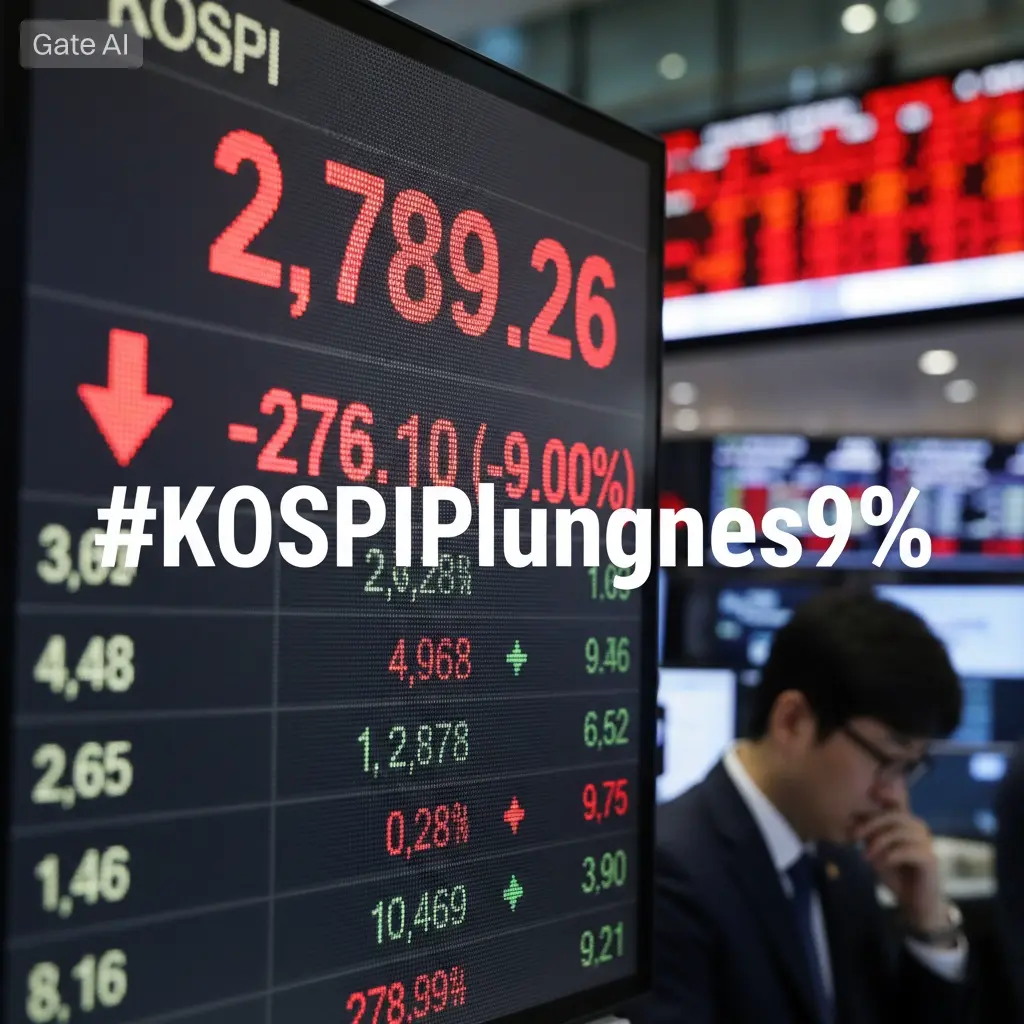











#KOSPIPlunges9%
South Korea’s KOSPI Market Shock: Understanding the Reasons Behind the Sharp Decline and What It Means for Global Markets
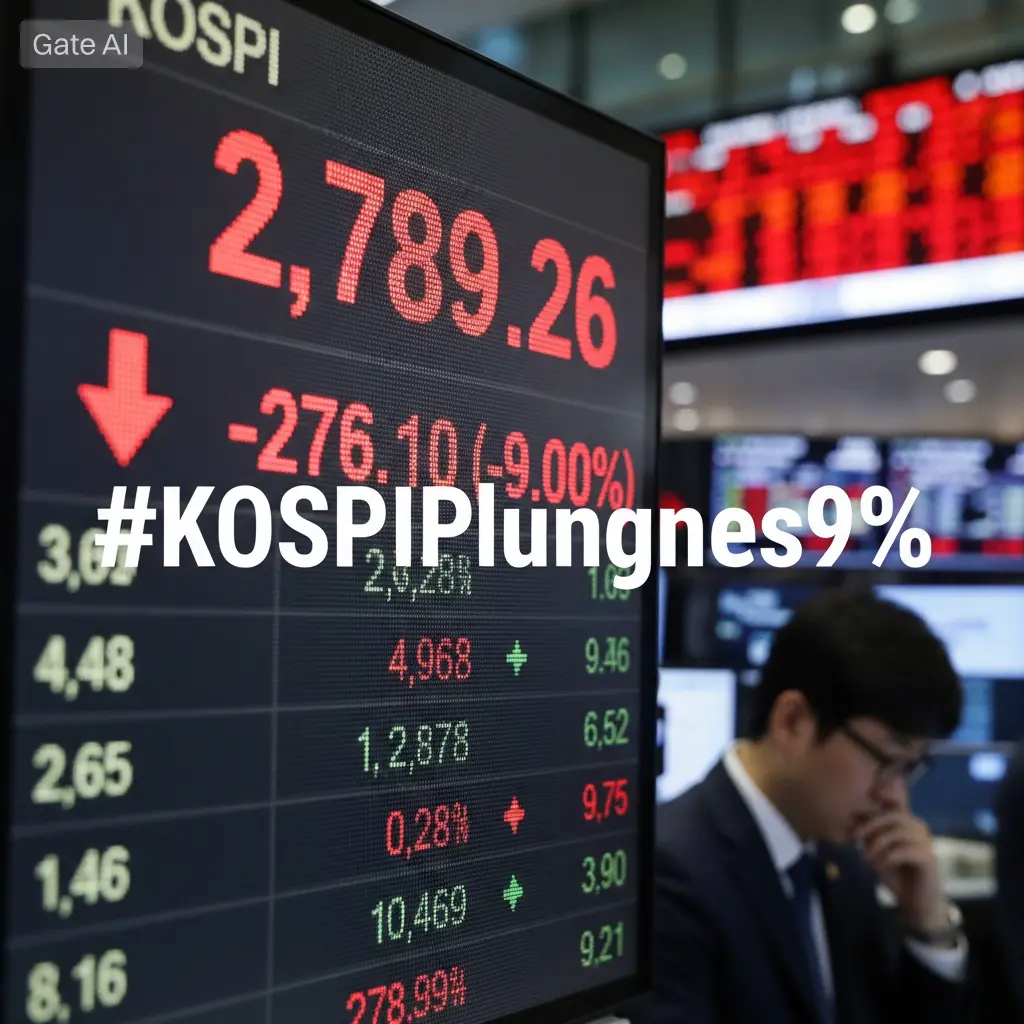
The South Korean stock market has entered a period of intense volatility as the KOSPI index recorded a sharp decline of around 9%, creating strong reactions among investors across Asia and global financial markets. A move of this size represents a major shift in market sentiment and highlights how quickly investors can adjust their positions when uncertainty rises.
The KOSPI is one of Asia’s most closely watched stock indexes because South Korea has a powerful position in the global economy, especially in technology, semiconductor manufacturing, artificial intelligence infrastructure, automobiles, electronics, and advanced industries. When the Korean market experiences a major correction, investors around the world pay attention because it can provide important signals about risk appetite, economic expectations, and future market trends.
A sharp market decline is usually the result of multiple factors combining together. Investor confidence can weaken due to concerns about economic growth, corporate earnings, interest rate expectations, currency movements, geopolitical risks, and changing conditions in global financial markets. When uncertainty increases, many investors choose to reduce exposure to risk assets, creating stronger selling pressure and faster price movements.
One of the most important areas connected to the KOSPI is the semiconductor industry. South Korea is home to some of the world’s largest technology companies and plays a critical role in supplying memory chips and advanced components used in artificial intelligence, data centers, smartphones, and other technologies.
The global AI boom has created significant demand for semiconductor-related companies, but markets are always sensitive to expectations. If investors believe future growth has already been reflected in valuations or if concerns emerge about demand, supply chains, or profitability, technology stocks can experience increased volatility.
Another major factor influencing equity markets is investor psychology. Financial markets are driven not only by economic data but also by expectations and emotions. During periods of uncertainty, fear can spread quickly, causing investors to make defensive decisions. This can create larger price movements as traders react to changing market conditions.
The KOSPI decline also shows how interconnected global markets have become. South Korea’s economy depends heavily on international trade, technology exports, and global demand. Any changes in major economies, including the United States and China, can influence Korean companies and investor sentiment.
For cryptocurrency traders, traditional market movements are also important to monitor. When global stock markets experience strong volatility, overall risk appetite can change across financial markets. Investors may become more cautious, liquidity conditions can shift, and high-risk assets such as cryptocurrencies may experience increased price movements.
However, market corrections do not always represent only negative developments. Significant declines can also create opportunities for investors who focus on long-term fundamentals. Professional market participants often analyze whether price drops are caused by temporary sentiment changes or deeper structural problems.
The next phase of the KOSPI movement will likely depend on several key factors, including economic indicators, corporate earnings reports, global interest rate expectations, technology sector performance, and overall investor confidence. A recovery in market sentiment could help stabilize prices, while continued uncertainty may lead to further volatility.
For traders, this environment highlights the importance of risk management, patience, and avoiding emotional decisions. Large market movements can create opportunities, but they also carry increased risks. Understanding market structure and maintaining a clear strategy are essential during periods of uncertainty.
In my view, the KOSPI’s sharp decline is more than just a single market event. It reflects the broader challenges facing global investors in an environment where technology growth, economic policy, interest rates, and geopolitical factors are all influencing financial markets.
The future direction of the market will depend on how quickly confidence returns and whether investors see the current decline as a temporary correction or a sign of larger changes. Regardless of the short-term outcome, the event serves as a reminder that global markets are deeply connected and that every major movement can create new opportunities for those who stay informed and prepared.
#SummerCreationCamp
South Korea’s KOSPI Market Shock: Understanding the Reasons Behind the Sharp Decline and What It Means for Global Markets
The South Korean stock market has entered a period of intense volatility as the KOSPI index recorded a sharp decline of around 9%, creating strong reactions among investors across Asia and global financial markets. A move of this size represents a major shift in market sentiment and highlights how quickly investors can adjust their positions when uncertainty rises.
The KOSPI is one of Asia’s most closely watched stock indexes because South Korea has a powerful position in the global economy, especially in technology, semiconductor manufacturing, artificial intelligence infrastructure, automobiles, electronics, and advanced industries. When the Korean market experiences a major correction, investors around the world pay attention because it can provide important signals about risk appetite, economic expectations, and future market trends.
A sharp market decline is usually the result of multiple factors combining together. Investor confidence can weaken due to concerns about economic growth, corporate earnings, interest rate expectations, currency movements, geopolitical risks, and changing conditions in global financial markets. When uncertainty increases, many investors choose to reduce exposure to risk assets, creating stronger selling pressure and faster price movements.
One of the most important areas connected to the KOSPI is the semiconductor industry. South Korea is home to some of the world’s largest technology companies and plays a critical role in supplying memory chips and advanced components used in artificial intelligence, data centers, smartphones, and other technologies.
The global AI boom has created significant demand for semiconductor-related companies, but markets are always sensitive to expectations. If investors believe future growth has already been reflected in valuations or if concerns emerge about demand, supply chains, or profitability, technology stocks can experience increased volatility.
Another major factor influencing equity markets is investor psychology. Financial markets are driven not only by economic data but also by expectations and emotions. During periods of uncertainty, fear can spread quickly, causing investors to make defensive decisions. This can create larger price movements as traders react to changing market conditions.
The KOSPI decline also shows how interconnected global markets have become. South Korea’s economy depends heavily on international trade, technology exports, and global demand. Any changes in major economies, including the United States and China, can influence Korean companies and investor sentiment.
For cryptocurrency traders, traditional market movements are also important to monitor. When global stock markets experience strong volatility, overall risk appetite can change across financial markets. Investors may become more cautious, liquidity conditions can shift, and high-risk assets such as cryptocurrencies may experience increased price movements.
However, market corrections do not always represent only negative developments. Significant declines can also create opportunities for investors who focus on long-term fundamentals. Professional market participants often analyze whether price drops are caused by temporary sentiment changes or deeper structural problems.
The next phase of the KOSPI movement will likely depend on several key factors, including economic indicators, corporate earnings reports, global interest rate expectations, technology sector performance, and overall investor confidence. A recovery in market sentiment could help stabilize prices, while continued uncertainty may lead to further volatility.
For traders, this environment highlights the importance of risk management, patience, and avoiding emotional decisions. Large market movements can create opportunities, but they also carry increased risks. Understanding market structure and maintaining a clear strategy are essential during periods of uncertainty.
In my view, the KOSPI’s sharp decline is more than just a single market event. It reflects the broader challenges facing global investors in an environment where technology growth, economic policy, interest rates, and geopolitical factors are all influencing financial markets.
The future direction of the market will depend on how quickly confidence returns and whether investors see the current decline as a temporary correction or a sign of larger changes. Regardless of the short-term outcome, the event serves as a reminder that global markets are deeply connected and that every major movement can create new opportunities for those who stay informed and prepared.
#SummerCreationCamp