Square
Following
Hot
News
Notifications
Profile
Share your thoughts
placeholder
Article
Stop trenching
Find strong community like $Milan and go all in .. there is 98% chances you will lose your money in these new pairs $躺枪
post-image
#ETHDrops5.5%

WORKED FOR 8S
ETH DROPS 5.5%: WHAT TRIGGERED THE SELL-OFF, AND WHAT HAPPENS NEXT?

WHY DID ETHEREUM SUDDENLY FALL?

Is Ethereum facing a deeper correction, or is this another temporary market shock? That is the question many crypto investors are asking after ETH suffered a sharp decline, losing more than 5.5% during the latest wave of market selling.

Ethereum, the second-largest cryptocurrency by market capitalization, has come under significant pressure as investors moved away from riskier assets. The decline was not limited to ETH. Bitcoin and several other major cryptocurre
post-image
ETH-1.26%
Trenches
BTC
B
bade
b
BTC
C5xp...pump
Market Cap
$.
Change
.
24h Vol
$.
Holders
.
ZIG
Z
bade
b
ZIG
0x8c...1145
Market Cap
$.
Change
.
24h Vol
$.
Holders
.
STONK
S
bade
b
STONK
6GmA...UNgx
Market Cap
$.
Change
.
24h Vol
$.
Holders
.
DESSA
D
bade
b
DESSA
npz2...pump
Market Cap
$.
Change
.
24h Vol
$.
Holders
.
Diamond
D
bade
b
Diamond
5VCE...pump
Market Cap
$.
Change
.
24h Vol
$.
Holders
.
What Is a Margin Top-Up? Why Can Adding Funds Delay Liquidation Without Necessarily Saving a Bad Trade?

In crypto futures trading, when prices continue moving against a position, traders may face the risk of insufficient margin. Some choose to add margin, hoping to increase their risk buffer and reduce the likelihood of liquidation. But adding funds can only change a position’s margin status; it cannot guarantee a price reversal, much less fix problems with the original trade rationale.

First, what is a margin top-up?

A margin top-up means adding funds to an existing position to meet margin
post-image
Situational Awareness performance this past month
Don't think about buying the dip this month; that guy put it very well!
Even sitting on the sidelines is fine!
This round of shakeout isn't over yet, and it's easy to get wicked back and forth and stopped out!
Avoid frequent trading and wait for the market to stabilize. The price may not change, but your position could be gone!
My personal view: U.S. stocks have hit new highs for nearly a year straight. With such a huge bubble, how can it be deflated?! Add to that the AI bubble, the Trump drama, and Jensen Huang falling out of the world's top ten. Musk lost $90 billion overnight, and all kinds
  • 1
This latest sell-off in the storage sector has been unusually severe: 😑SanDisk $SNDK$SNDK plunged more than 22% overnight, Micron $MU fell more than 17%, and South Korea’s SK Hynix $SKHYNIX was down more than 13% at one point in early trading. Several leading storage companies were hit by sell-offs almost simultaneously. What’s going on in the market? Here are some of my personal thoughts. Until recently, the market’s pricing logic for storage was very clear: the expansion of AI computing capacity was driving demand for HBM, data center investment was boosting demand for DRAM and NAND, and
post-image
SKHYNIX+1.41%
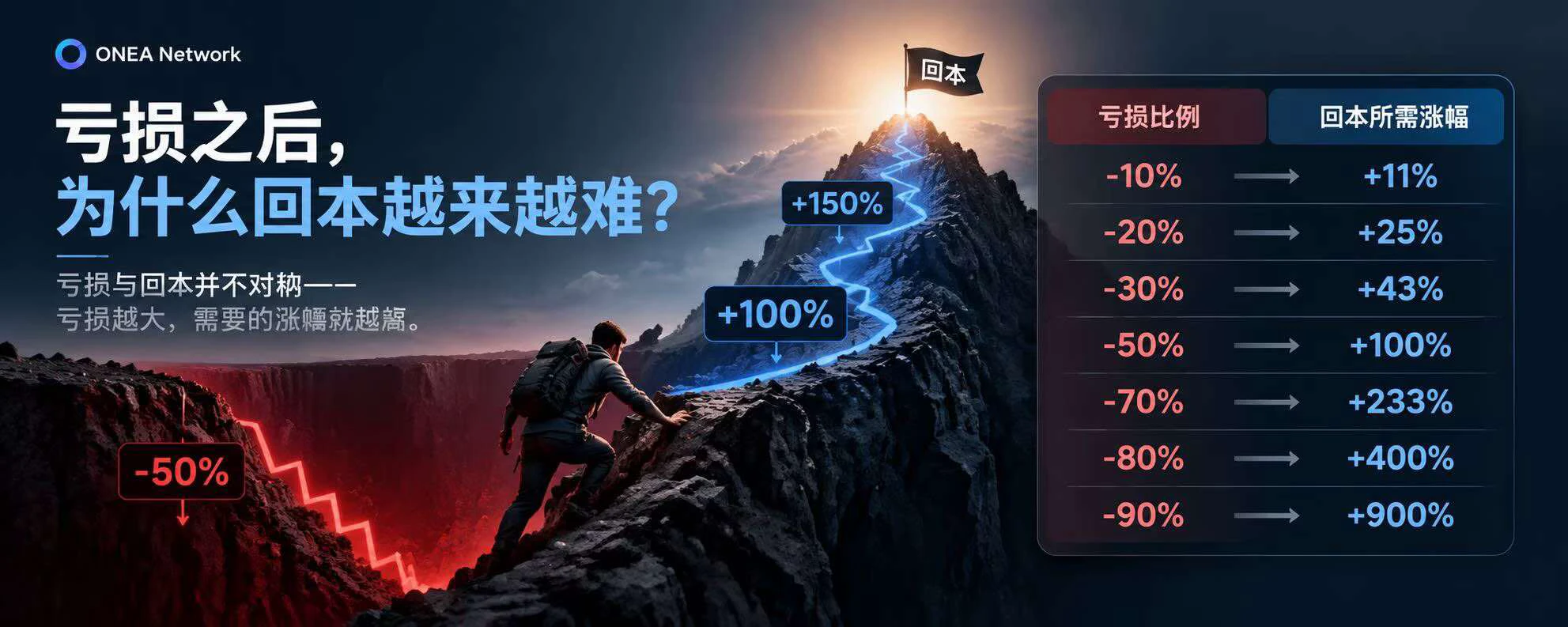
After a Loss, Why Is It Getting Harder to Break Even?

There is a mathematical fact in trading that is easy to overlook:

Losses and breaking even are not symmetrical.

Many people think that as long as the market rises again, they have a chance to earn back what they previously lost. But the problem is that once your account balance has shrunk, the return you need is no longer the same as before.

Suppose you initially have $10,000.

If you lose 10%, your account is left with $9,000. At this point, it needs to rise by about 11.1% to return to $10,000.

If you lose 30%, your account is left wi
post-image
BTC UPDATES
live-cover
LIVE2,054
The broader market has yet to stop bleeding; tonight remains a key battleground

Risk appetite in overseas markets has cooled sharply. U.S. tech stocks tumbled, and the Nasdaq plunged 5.52%, dragging the crypto market lower. The market as a whole has yet to stabilize, making tonight another critical window for market action.

BTC is fluctuating around 76k, down 5.5% over 24 hours after dipping to an intraday low of 75.2k. ETH is weaker, retreating to around 2,230 and falling more than 7% on the day. This downturn is not driven by crypto-specific negative news; the main factor is the spillover
post-image
BTC-0.65%
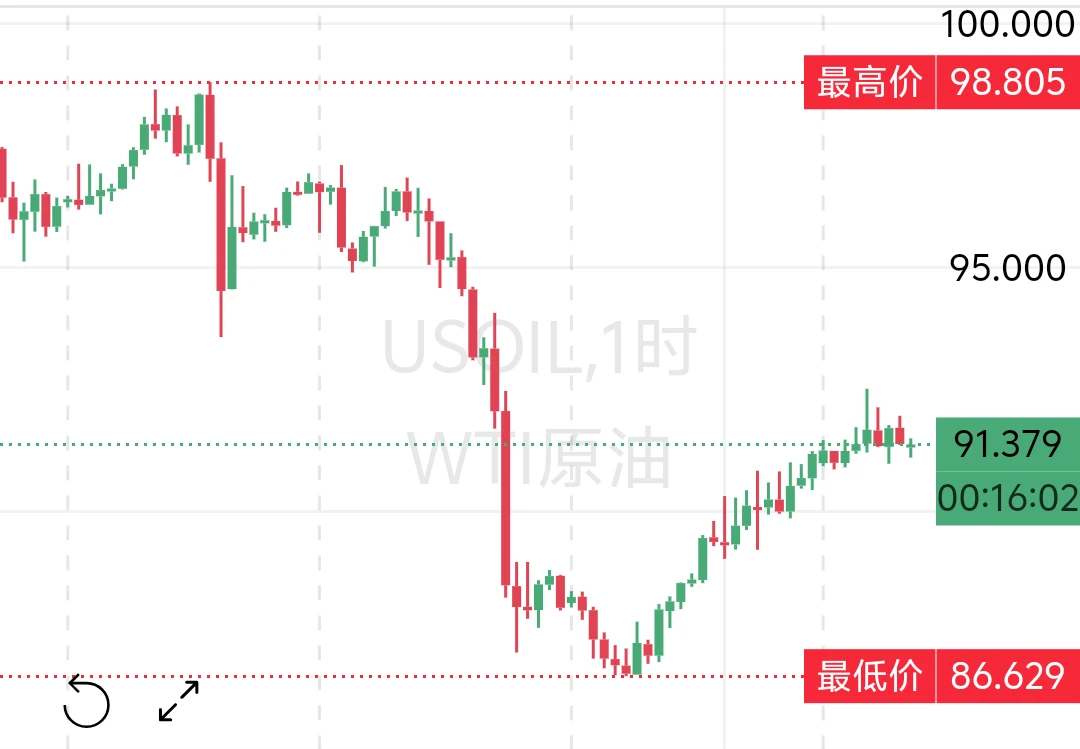
From the hourly chart perspective, crude oil has stabilized at the bottom after a deep earlier decline and staged a strong, sustained rebound. The short-term uptrend remains intact, with bullish momentum dominant. The strategy is to buy dips, with an initial target near 94.
$XAU $BTC #美股史诗级抛售 #10月非农数据聚焦 #Gate股票畅聊季
post-image
XAU+0.38%
BTC-0.65%
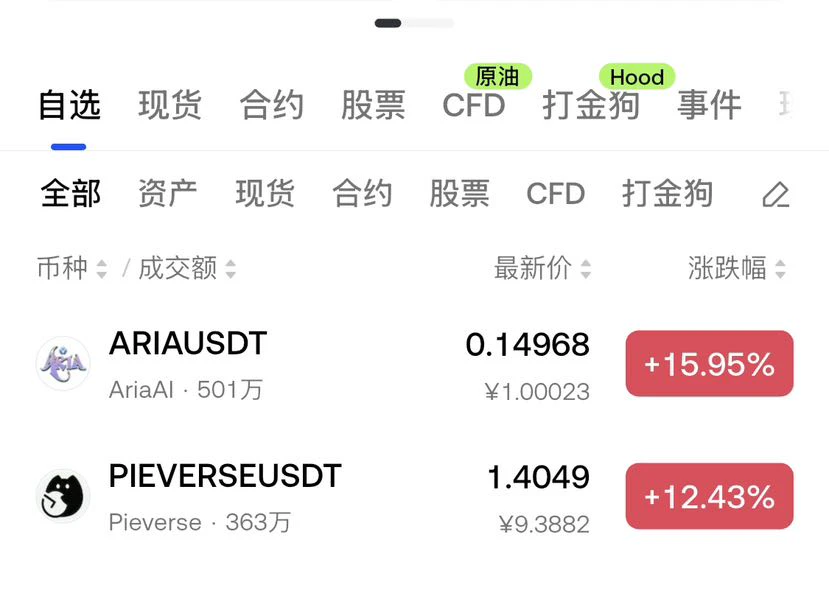
$AIN Found two new favorites again—time to blindly short them
post-image
AIN+3.85%
  • 1
Whenever a big on-chain winner takes off, the market enters the familiar “find the next runner-up” phase. After $JAGENT on BNB Chain sent the Agent ID sector blazing over the past couple of days, several groups have been digging around to see who could take over.
But honestly, after years of chasing new launches on-chain, my experience is that copycat projects that pixel-for-pixel mimic the leader often don’t last three days. Later entrants that truly carve out an independent run are always the ones that, after seeing how their predecessors faced sell pressure, plug the holes in their foundat
post-image
BNB-0.76%
JUST IN: $1.25 billion liquidated from the crypto market in the past 24 hours.

#USStocksFaceHistoricSelloff
post-image
  • 4
Whales Moves in Sync!
live-cover
LIVE2,683
What Is a Stop-Loss Order? Why Is Setting a Stop-Loss Important, Yet Unable to Guarantee an Exit at the Expected Price Every Time?

In cryptocurrency trading, no one can always accurately predict price direction. The purpose of a stop-loss is not to ensure that a trade never loses money, but to limit risk in advance when the market moves against expectations and prevent losses on a single trade from continuing to grow. However, a stop-loss is not an absolute safeguard; execution slippage can still occur in extreme market conditions.

First, what is a stop-loss order?

A stop-loss order is a tr
post-image
# How to Build a Trading Strategy Evaluation Checklist That Suits You?

Earlier, we discussed why trading strategies fail, why backtest profits do not guarantee live-trading profits, and how strategies should be adjusted when market conditions change.

But all these questions ultimately converge on a more practical one:

**What criteria should we use to decide whether a trading strategy is worth continuing to use?**

Many traders are accustomed to looking at a few straightforward numbers: returns, win rate, and maximum drawdown.

These metrics are indeed important, but looking at any one of th
post-image
People with no artistic bone in their body won’t see this video in their feed.
#GateLaunchesPoSECProofOfSecurity

WRITING
GATE LAUNCHES POSEC: A NEW WAY TO MEASURE EXCHANGE SECURITY, WITH 104.58% COLD STORAGE COVERAGE

Imagine waking up one morning and discovering that an exchange has suffered a serious security breach involving its online wallets. The first question that comes to mind is simple: Are customer assets still protected, and does the platform have enough securely stored funds to cover them?

This is an important question for anyone who uses a digital asset exchange. Having enough reserves is one part of security, but knowing how those reserves are stored is
post-image
GT-2.41%
  • 3
How Should Trading Strategies Be Adjusted When Market Conditions Change?

In the previous article, we discussed how to identify changes in market conditions.

But recognizing that the market has changed is only the first step.

What truly determines trading results is what you do next.

When a trending market turns range-bound, a strategy that was previously effective may start triggering frequent stop-losses; when market volatility suddenly rises, even if you correctly predict the direction of a trade, oversized positions, increased slippage, or forced liquidation may still lead to losses.

T
post-image
Load More

Join 40 M users in our growing community

⚡️ Join 40 M users in the crypto craze discussion

💬 Engage with your favorite top creators

👍 See what interests you

Trending Topics

USStocksFaceHistoricSelloff

4.09k Views3.64k Discussing

U.S. stocks suffered a sharp selloff on Thursday, with the Nasdaq closing down more than 5% and the Philadelphia Semiconductor Index falling over 12%. AI and chip stocks including $NVDA and $AMD were hit especially hard. Markets are reassessing AI valuations, data-center spending and future returns. Is this just short-term deleveraging, or the start of a deeper correction in the AI trade? Which sectors are you watching next?

GateLaunchesPoSECProofOfSecurity

14.32k Views591 Discussing

USNonfarmPayrolls

12.42k Views4.05k Discussing

View More