


Square
Following
Hot
News
Notifications
Profile
Share your thoughts
placeholder
Article
What happened to @PercolatorTrade ??
Can't imagine they would rug...
team is doxxed? team wallets drained?
post-image
Sort all market action into four scenarios, and naked-candlestick trading becomes simple. The market may change in a thousand ways, but fundamentally it follows only four patterns. Once you recognize which one is playing out, the right move becomes automatic. Scenario 1: Breakout (the start of a trend) Characteristics: Price breaks through a key level on high volume, with a large-bodied candle closing beyond it. Approach: Don’t chase the first candle; wait for a retest that holds, then enter. Stop-loss: Just inside the breakout level. Trap: A breakout on low volume is probably false. Scenario
post-image
BTC-0.65%
Trenches
ZIG
Z
bade
b
ZIG
0x8c...1145
Market Cap
$.
Change
.
24h Vol
$.
Holders
.
BTC
B
bade
b
BTC
C5xp...pump
Market Cap
$.
Change
.
24h Vol
$.
Holders
.
STONK
S
bade
b
STONK
6GmA...UNgx
Market Cap
$.
Change
.
24h Vol
$.
Holders
.
IDOL
I
bade
b
IDOL
0x3b...ab07
Market Cap
$.
Change
.
24h Vol
$.
Holders
.
scamsem
s
bade
b
scamsem
41Wp...pump
Market Cap
$.
Change
.
24h Vol
$.
Holders
.
Why Did Bitcoin Drop to $76,000 So Fast?
Bitcoin volatility surged tonight (November 5), swinging from $75,000 to $81,000 before retreating to $76,200 at the time of writing.
Think of this crypto market selloff like a chain reaction on a bridge. When a few heavy trucks start shaking and trigger the weight sensors, everyone bolts for the exit. That panic accelerates the price drop rapidly.
⚠️ Personal market analysis only. NFA — manage risk and DYOR.
Educational content, not investment advice or a recommendation to buy, sell, deposit, or withdraw any asset. No paid promotion or referral/affilia
post-image
BTC-0.67%
#GateSocialAnnualStreamerAndCreatorAwards #ShareWeekly

Gate Social 2026 Awards: Recognition Should Reflect Real Contribution, Not Just Activity

Every growing online community needs people who contribute something meaningful. Some members educate others through live discussions, some explain market developments through written analysis, and others help beginners understand the cryptocurrency industry. These contributions may look different, but each one plays an important role in building a stronger community.

This is why I believe the Gate Social 2026 Year-End Community Awards are an impor
CryptoChampion
#GateSocialAnnualStreamerAndCreatorAwards #ShareWeekly

Gate Social 2026 Awards: Recognition Should Reflect Real Contribution, Not Just Activity

Every growing online community needs people who contribute something meaningful. Some members educate others through live discussions, some explain market developments through written analysis, and others help beginners understand the cryptocurrency industry. These contributions may look different, but each one plays an important role in building a stronger community.

This is why I believe the Gate Social 2026 Year-End Community Awards are an important opportunity to recognize the people behind the platform's growth.

According to the official announcement, registration is open for two major categories: Annual Streamer and Annual Creator. Participants have until November 10, 2026, to complete registration, with the registration period running from November 3 to November 10.

The Top 20 participants in each category will receive recognition and rewards. The announced prizes include DJI products, AirPods, projectors and USDT. These rewards make the competition exciting, but I believe the recognition itself should carry an even greater meaning.

Two Categories, Two Different Responsibilities

Annual Streamer and Annual Creator should be evaluated according to the different skills required by each role.

A successful streamer does more than simply start a livestream. Keeping viewers interested requires preparation, communication skills, consistent interaction and a good understanding of the topics being discussed. In crypto streaming, explaining market movements, discussing trading opportunities, understanding risk and responding to audience questions can make a session genuinely educational.

On the other hand, an Annual Creator must communicate ideas through written or visual content. Research, originality, presentation, accuracy and analytical thinking are essential. A good post should not simply repeat market headlines. It should explain what happened, why it matters and what developments readers should monitor next.

Both categories deserve recognition, but their performance should be measured with appropriate criteria.

The Difference Between Posting and Creating Value

One issue I believe deserves serious attention is content originality.

Publishing ten similar posts does not necessarily provide more value than publishing one carefully researched analysis. Likewise, high engagement does not always mean that the information being shared is accurate or useful.

In my opinion, a fair evaluation should consider several factors:

- Originality: Does the participant present independent ideas rather than repeatedly copying existing discussions?
- Research: Are market observations supported by reliable information and meaningful analysis?
- Consistency: Does the participant contribute regularly throughout the competition?
- Educational Value: Can readers or viewers learn something useful from the content?
- Engagement Quality: Are discussions meaningful, with genuine responses rather than activity created only to increase numbers?
- Accuracy and Responsibility: Does the creator explain uncertainty and acknowledge potential risks?

These qualities can help distinguish genuine contributions from activity that only looks impressive on a leaderboard.

Why Fair Competition Matters

Awards become more valuable when participants trust the selection process. A transparent evaluation system encourages creators to improve their work instead of focusing only on increasing publication frequency or engagement numbers.

I would also like to see equal opportunities for different content styles. A detailed market analysis, an educational beginner's guide, a thoughtful livestream and an original industry discussion can all contribute value in different ways.

My Personal Perspective

I appreciate opportunities like Gate Social's annual awards because they encourage people to share knowledge, develop communication skills and become more involved in the crypto community.

My preference is to be recognized through meaningful analysis, original observations and consistent contributions. I believe a strong creator should help readers think independently rather than simply tell them what to believe.

Ultimately, the Top 20 should represent participants who have demonstrated genuine effort, creativity, knowledge and positive community impact throughout the year.

The best award is not just a prize received at the end of a competition. It is the trust and respect earned from the community through the quality of one's work.

What is your opinion? Should Gate Social prioritize originality and research, audience engagement, consistency, or a balanced combination of all three when selecting the Annual Streamer and Annual Creator Top 20?

This is my market perspective, not financial advice.

#WCTCS9 #weeklyshare @Gate_Square #GateSquareTradingChallenge

$BEAMX LONGtrying to stabilize after several hours of selling. A recovery toward the previous hourly range is worth watching.entry: 0.003947tp1: 0.004020tp2: 0.004110sl 0.003720
post-image
BEAMX+5.82%
OpenAI CFO: Data center investments will not change due to the midterm elections.
live-cover
LIVE32
📣 Daily standout post call|Don’t keep great posts to yourself—see you in the comments

Which post have you written recently that you’d most like everyone to take a closer look at? 🔎

Well-grounded market analysis, trading recaps that spell out the wins and losses, clearly explained knowledge sharing… all are welcome.

💬 Leave this in the comments: a link to the original Square post + one thing that makes it worth a look
Feel free to recommend your own post, or share a great post by another author. If you come across an opinion that interests you, open the original post and chat with the aut
GateSquare
📣 Daily standout post call|Don’t keep great posts to yourself—see you in the comments

Which post have you written recently that you’d most like everyone to take a closer look at? 🔎

Well-grounded market analysis, trading recaps that spell out the wins and losses, clearly explained knowledge sharing… all are welcome.

💬 Leave this in the comments: a link to the original Square post + one thing that makes it worth a look
Feel free to recommend your own post, or share a great post by another author. If you come across an opinion that interests you, open the original post and chat with the author about your thoughts.

🕒 We’ll be checking the comments for great content when we select posts this afternoon
🎁 Selected authors get 3 days of traffic support + featured content

The next standout post might be yours 👇

‍#每日神贴 #Gate广场
repost-content-media
$ONG /USDT BREAKDOWN CONFIRMED Sellers Pressing Lower

Pair: $ONG /USDT

Direction: SHORT

Entry: 0.0660500

Stop Loss: 0.0672038

Targets
TP1: 0.0651847
TP2: 0.0646078
TP3: 0.0637424

ONG rejected sharply from the ~0.070 local high and has since broken below MA7 (0.06626), MA25 (0.06715) and MA99 (0.06802) a full bearish MA stack. Price just pushed to a fresh short-term low, confirming continuation of the downtrend after the earlier breakdown.

$ONG ‌
ONG+0.08%
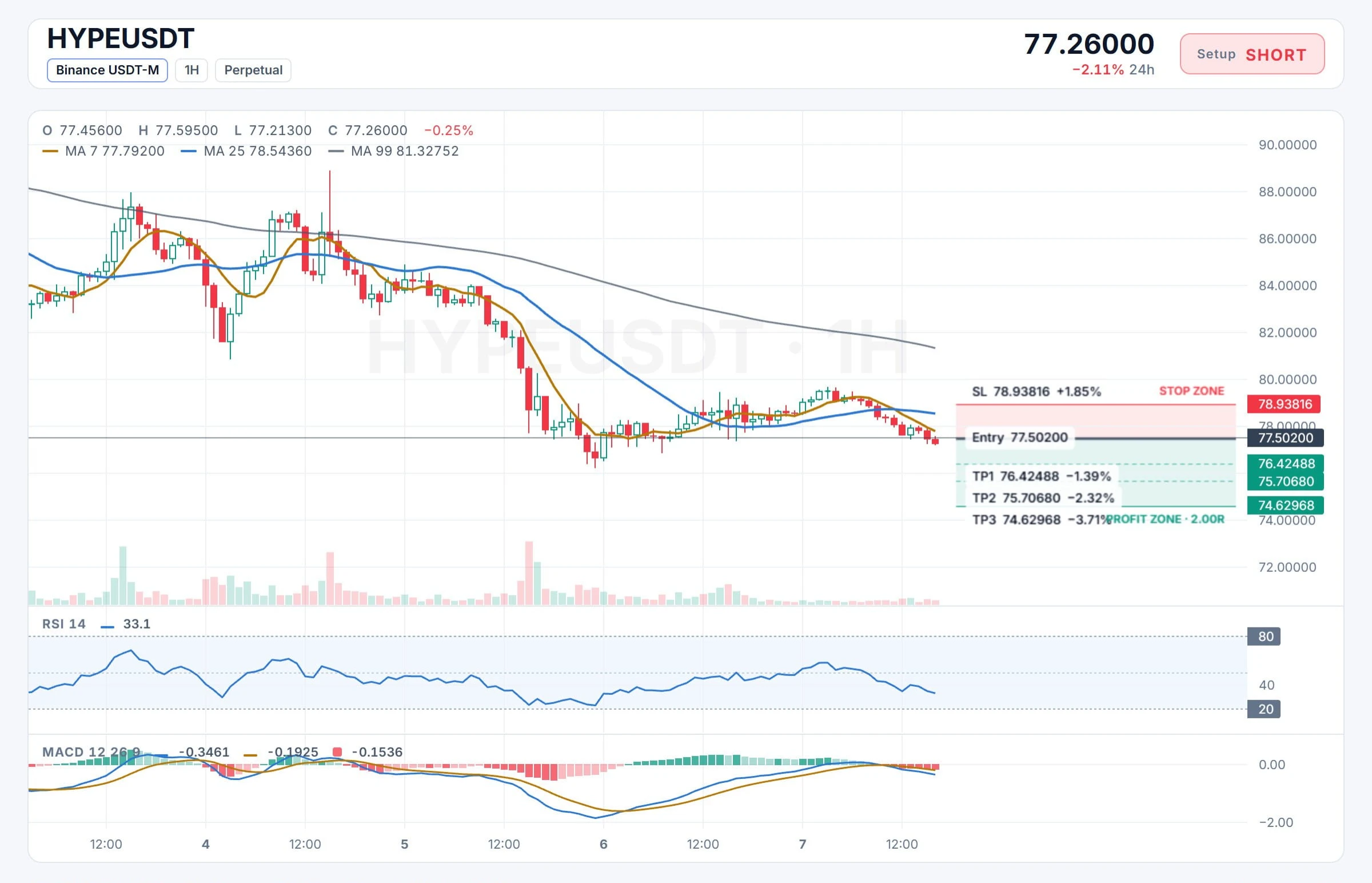
BULLS CAUGHT $HYPE USDT Short Trade Ready to Go

$HYPE /USDT

Trade Direction: SHORT

Entry Price Zone: 77.50200

Take-Profit Levels:
🔹 TP1: 76.42488
🔹 TP2: 75.70680
🔹 TP3: 74.62968

🛑 Stop-Loss Level: 78.93816

$HYPE ‌
post-image
HYPE+0.33%
Berkshire Hathaway reported third-quarter operating earnings of $12.705 billion (down 5.8% year-over-year) while accelerating its share repurchases to a record $9.6 billion under CEO Greg Abel.
‍#ShareWeekly #USAIStocksHitHard
post-image
BRKB-0.20%
$ETH Spot ETF flows ran into trouble again yesterday, with total net outflows of $93.3 million for the day. BlackRock's ETHA led the outflows, shedding $90.8 million in a single day. Although it still has $11.542 billion in cumulative historical net inflows as a cushion, that single-day figure is certainly eye-catching; Grayscale's Mini Trust ETH also saw modest outflows of $1.9 million.

Overall, selling pressure was fairly concentrated. The signal of capital flight cannot be ignored, and position management needs to keep pace.
$BT $ZEC #U.S. October nonfarm payrolls beat expectations, bet
post-image
ZEC+1.16%
“From 200k to 58 million, he says: Only fools can walk away with the money”
I met a veteran a few years ago.
He wasn’t a genius—in fact, he was a bit slow to react and took a long time to think before placing an order.
He entered the market with 200k in capital and turned it into 58 million.
I asked him how, and he gave me a very plain answer:
“In this business, it’s not about who’s smarter. It’s about who trades less.”
I learned from him for a few years. He really only had four rules.
Beginners who follow them often lose less not because of better technique, but because they make fewer moves.
post-image
BTC-0.65%
ETH-1.23%
Copy Trading Live Profit Show
live-cover
LIVE62
A Trading System Isn’t “Designed”—It’s “Found Through Filtering”

Step 1: Track your behavior for 30 days before settling on a system. Each day, note three things: when you have time to watch the charts, what signals make you itch to trade, and how much of a loss makes you uncomfortable. After 30 days, you’ll discover your “physiological parameters”—some people can only trade the Asian session, while others panic as soon as they hold a position overnight. Your system has to fit those parameters; otherwise, even the best strategy will be impossible to follow.

Step 2: Use elimination to narrow
BTC-0.65%
#AsiaPacificStocksPlunge #ShareWeekly

Asia-Pacific Markets Under Pressure: Is the AI Trade Facing a Major Reality Check?

The recent weakness across Asia-Pacific equity markets highlights an important change in global investor sentiment. After a powerful rally driven by artificial intelligence, semiconductor demand, and expectations of long-term technology growth, investors are beginning to question whether some valuations have moved too far ahead of actual business performance.

In my view, this is not simply a normal market correction. It looks more like a selective repricing of companies
CryptoChampion
#AsiaPacificStocksPlunge #ShareWeekly

Asia-Pacific Markets Under Pressure: Is the AI Trade Facing a Major Reality Check?

The recent weakness across Asia-Pacific equity markets highlights an important change in global investor sentiment. After a powerful rally driven by artificial intelligence, semiconductor demand, and expectations of long-term technology growth, investors are beginning to question whether some valuations have moved too far ahead of actual business performance.

In my view, this is not simply a normal market correction. It looks more like a selective repricing of companies that have become heavily dependent on the AI investment cycle. South Korea, Taiwan, and Japan are experiencing different levels of pressure because their market structures and exposure to technology stocks are not the same.

1. The AI Valuation Trade Is Losing Momentum

The correction began with significant weakness in U.S. semiconductor stocks. The Philadelphia Semiconductor Index reportedly dropped around 12% in one session, marking its biggest single-day decline since 2020.

The selling pressure quickly spread throughout Asia. SK hynix and Samsung Electronics experienced intraday declines exceeding 10%, while SoftBank briefly lost nearly 16%.

These movements suggest that investors are reducing exposure to crowded technology positions. The concern is not necessarily that AI demand is disappearing. Instead, the market may be questioning whether current share prices already reflect too much future growth.

This distinction matters because a strong industry can still experience a major stock market correction when valuations become excessive.

2. Why Different Asian Markets Are Reacting Differently

One interesting development is that not every Asian market experienced the same selling pressure.

The Hang Seng Tech Index recovered almost all its early losses after opening lower, while mainland Chinese A-shares showed greater resilience compared with Japanese, South Korean, and Taiwanese equities.

This suggests that investors are becoming more selective rather than abandoning every risky asset simultaneously.

Markets with expensive technology valuations and concentrated semiconductor exposure are facing stronger pressure. Meanwhile, markets with relatively lower valuations and different sector compositions are showing better resistance.

South Korea's finance minister also described the market reaction as excessive and indicated that margin-related rules would be relaxed for three months. This demonstrates that policymakers are paying attention to the potential impact of external volatility.

3. South Korea: High Risk, High Recovery Potential

South Korea is my first market to watch.

Samsung Electronics and SK hynix represent significant parts of its technology investment story. Both companies are closely connected to global memory demand, AI infrastructure, and semiconductor development.

If semiconductor sentiment improves, these stocks could potentially lead a strong recovery. However, concentrated foreign investor positioning and high sensitivity to global technology valuations could create additional volatility.

I would prefer to wait for U.S. semiconductor stocks to stabilize before considering opportunities in this market.

4. Taiwan: Watching TSMC for a Reversal

Taiwan is my second priority.

TSMC remains central to the global semiconductor supply chain, particularly because of its advanced manufacturing capabilities. However, the recent decline has placed considerable pressure on Taiwanese equities, with the index reportedly falling more than 20% from its peak.

After such a substantial correction, valuations and potential entry opportunities deserve attention. Still, a sustainable recovery will depend heavily on whether U.S. semiconductor stocks can establish a stable bottom.

5. Japan: A Different Recovery Story

Japan comes third in my ranking.

The Nikkei has entered technical bear-market territory, but not every sector is equally vulnerable. Traditional manufacturers and automakers, including Toyota, have shown relatively greater resilience compared with highly exposed technology-related assets.

SoftBank remains an important source of volatility because of its technology investment exposure.

Japan could experience an earlier technical rebound, but whether that recovery can continue will depend on global risk sentiment and corporate earnings.

My Market Strategy and Final View

My preferred order of attention is South Korea first, Taiwan second, and Japan third.

However, I am not treating falling prices as automatic buying opportunities. A sharp rebound after heavy selling does not necessarily confirm that a new bullish trend has started.

The signals I want to see are U.S. semiconductor stocks holding their lows for several consecutive sessions, SK hynix and TSMC stopping their downward momentum, and improving market breadth across Asian equities.

For now, capital protection, controlled leverage, and patience are more important than chasing short-term rebounds.

I believe the long-term AI story remains important, but investors must separate genuine business growth from excessive market expectations. The next opportunity may come when valuations become more reasonable and price action begins confirming that selling pressure is fading.

What matters most is not buying the first dip, but identifying the point where the market finally starts recovering with strength.

This is my market perspective, not financial advice.

#亚太股市集体重挫 #WCTCS9 @Gate_Square #GateSquareTradingChallenge
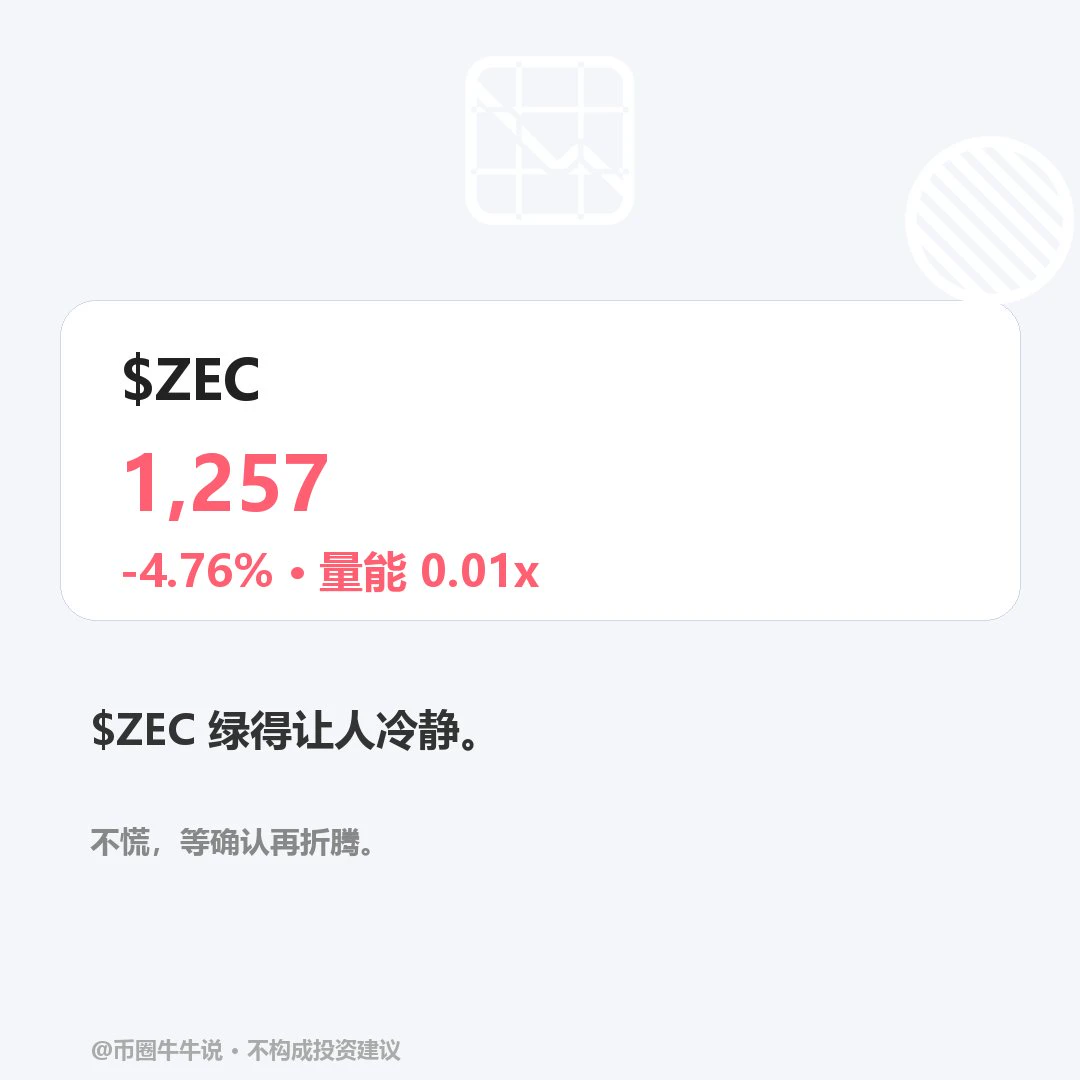
$ZEC Currently trading at 1257.17, down 4.76% over 24H (range: 1236.65–1364.08). Weak on the 1H, with RSI at 21.51, price below the EMA20 at 1278.54, and a volume ratio of 0.008; weak on the 4H, with RSI at 53.60 and price below the EMA20 at 1283.93. A sustained move above the 1364.08 resistance level is worth watching; a break below the 1236.65 support level would weaken the structure. For the review, check whether price holds above 1364.08 and reclaims 1236.65, with volume at only 0.008x. A low-volume hold above resistance, or a breakdown without a reclaim, would invalidate the setup. Market
post-image
ZEC+1.16%
$AKE I’m betting this pullback won’t break 0.0050. If it does, I’ll wash my hair upside down on livestream. It’s at 0.0057 now, up 42% in 24 hours. It hit a high of 0.0066 before getting slammed back down, with trading volume of 413 million—retail traders can’t generate that kind of volume. The group was still calling for it to go to zero this morning, then in the afternoon it shot straight past the previous high—a classic double whammy of futures short liquidations and spot buying. The order book shows bids below 0.0055 getting eaten up fast, while the sell wall above 0.0060 is thick but gets
AKE+6.07%
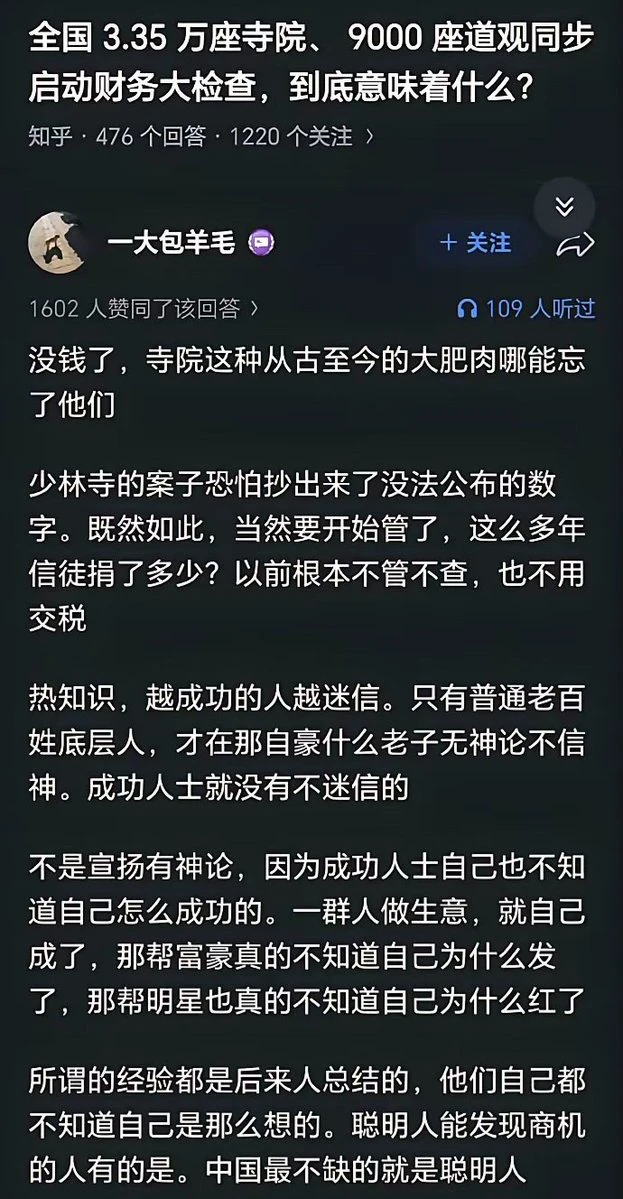
If burning incense and praying to Buddha worked,
ordinary people might not even be able to get through the temple doors.
post-image
Load More

Join 40 M users in our growing community

⚡️ Join 40 M users in the crypto craze discussion

💬 Engage with your favorite top creators

👍 See what interests you

Trending Topics

USAIStocksHitHard

21.44k Views3.68k Discussing

U.S. stocks sold off sharply on Thursday, November 5 (UTC). The Nasdaq closed down around 5.5%, entering correction territory, while the Philadelphia Semiconductor Index plunged roughly 12%, with chip stocks including $NVDA and $AMD posting steep losses. Beyond profit-taking, investors are growing concerned about the pace of AI data center construction, capital spending, and future returns on investment. The key question now is whether the AI sector’s lofty growth expectations need to be repriced. Where do you think the next opportunities will emerge: chip stocks, tech giants, or other sectors?

USNonfarmPayrolls

35.66k Views4.35k Discussing

StakeOnLaunchpoolToShare450KVLX

10.5k Views832 Discussing

View More