












#美股史诗级抛售 #每周来晒 A $2.3 trillion overnight bloodbath! Nasdaq plunges the most since 2020—could the AI rally be about to change course? — Chip stocks are “slaughtered”: short-term deleveraging or the start of a deep correction?
November 5, 2026, is destined to go down in U.S. stock market history.
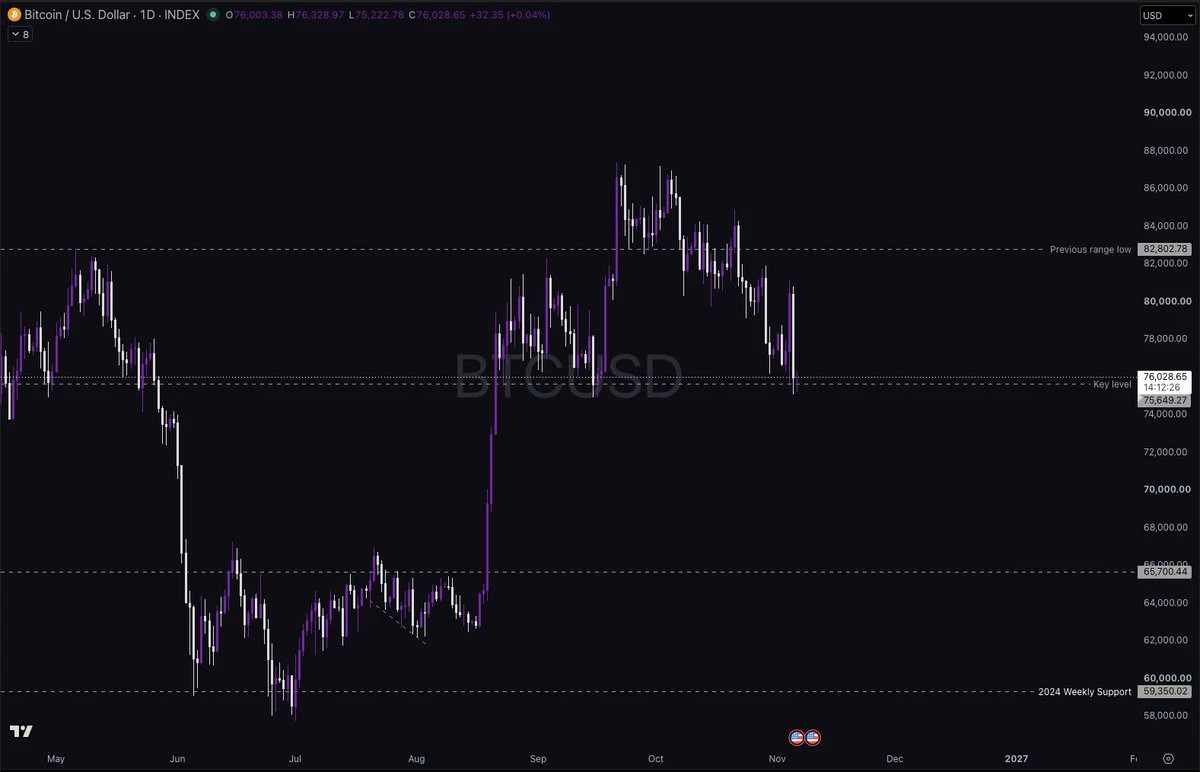
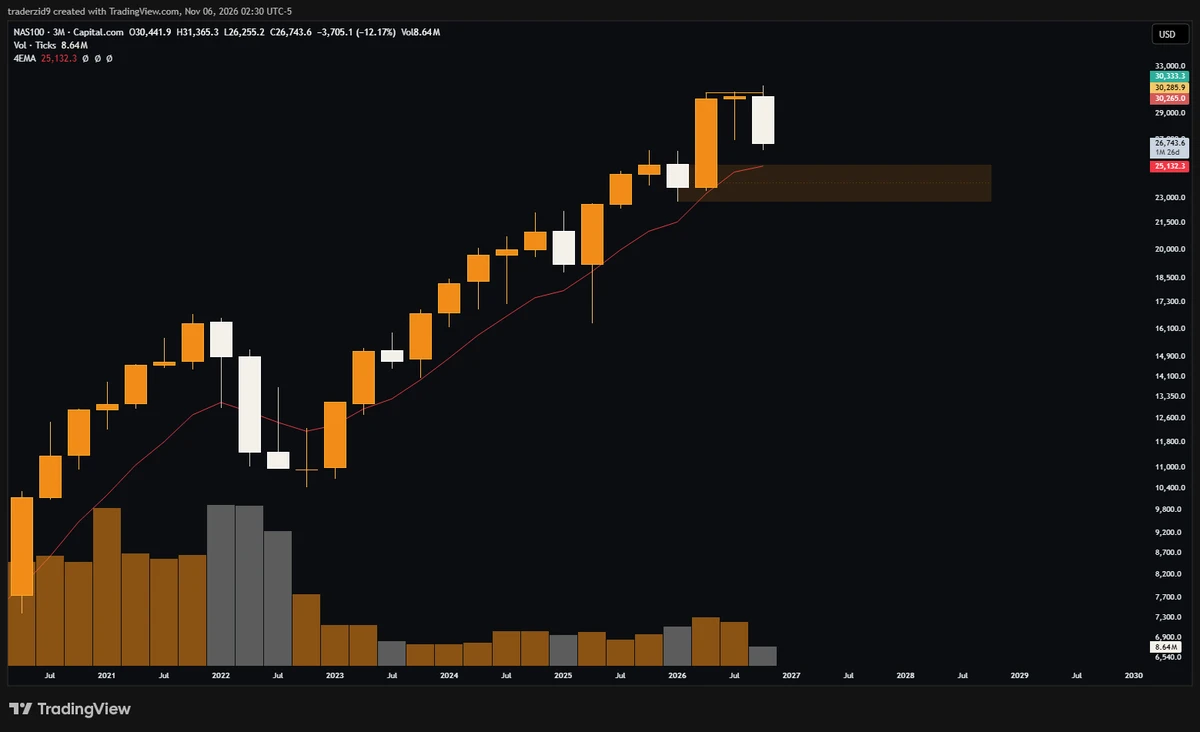
At the close that day, the Nasdaq Composite plunged 5.5% to 24315, officially entering correction territory; the Nasdaq 100 sank 6.4%, wiping out about $2.3 trillion in market value in a single day and marking its biggest one-day drop since March 2020. The S&P 500 fell 4.4% to a three-month low. The Magnificent Seven lost a combined $1.04 trillion in market value in a single day—a day’s losses wiped out a whole year’s gains for many people.
At the center of the storm was the most crowded trade of the past two years: AI.
I. Chip stocks are “slaughtered”
The Philadelphia Semiconductor Index plunged 12% in a single day, its biggest drop since 2020. Almost every individual stock was routed:
- Nvidia fell about 9%, losing nearly $450 billion in market value in a single day. Since its October high, it has fallen about 25%, wiping out nearly $1.4 trillion in value and all of its gains for the year;
- AMD and Micron fell more than 17%, SanDisk plunged more than 22%, and Intel fell about 10%;
- Tesla fell more than 10%, and Oracle fell more than 7%;
- Optical communications, memory, and semiconductor equipment stocks all plunged, with selling pressure spreading to financials and healthcare. The fear gauge surged, and Japanese and South Korean stocks both entered bear markets.
II. The trigger: a “sea change”
This sell-off was not triggered by earnings disappointments, but by a policy earthquake.
After Democrats won both chambers of Congress in the midterm elections, investors began reassessing the policy risks facing the AI industry: stricter AI regulation and local restrictions on data center construction could both slow investment in U.S. AI infrastructure.
This is no groundless fear. Citi Research data show that by October, more than 500 bans and permitting moratoriums targeting data centers had been proposed or imposed across the U.S.—while around mid-2025, the number was virtually zero. Data center operators and related energy companies were hit at the same time, and the bond market is also warning in advance about the sustainability of the AI construction boom.
III. The key question: deleveraging or a deep correction?
The market is split between two camps.
The “sentiment-driven pricing” camp sees this as short-term deleveraging: evidence on the demand side has not deteriorated. A leading optical transceiver company said that orders from major customers now largely cover all of 2027, with some customers already providing demand guidance for 2028. Institutions including BOC International Securities have stated clearly that short-term event-driven disruptions are merely “sentiment-driven pricing” and do not change the industry’s favorable outlook. AMD CEO Lisa Su was even more direct, saying “the market can sometimes be a little short-sighted,” and that computing demand should be viewed over a three-to-five-year horizon.
The “sea change” camp warns that this is the beginning of a deep correction: regulatory risk is a new and irreversible variable; 500 data center bans are not sentiment, but a real permitting reality. The bond market has already sounded the alarm through yields, and high valuation premiums are being systematically compressed—the Nasdaq 100 has fallen to a six-and-a-half-month low, and its valuation reset is far from complete.
My view leans toward a middle ground: this is a combination of a “policy shock + sharp deleveraging in a crowded trade.” The evidence so far does not support a deep correction driven by “AI demand being disproven,” but it is also too soon to casually call this a golden buying opportunity. What’s falling is policy uncertainty and crowded positioning, not demand disappearing.
IV. The litmus test: watch four signals over the next 2-4 weeks
The market will decide based on data and earnings. Avoid catching falling knives; wait for confirmation:
1. Cloud providers’ capital expenditure guidance—whether they cut guidance for next quarter is the most direct evidence of whether AI investment is slowing;
2. Nvidia’s earnings guidance—whether demand for AI computing power still exceeds supply will settle the question;
3. Data center legislation and bans—whether regulatory risk is being absorbed or escalating;
4. Nonfarm payrolls and interest rates—if employment data are moderate and rate-hike expectations cool, the sharp drop looks more like deleveraging; if rate hikes become locked in, it will be a double blow from rates and policy.
V. What to watch next👀
Short term (before policy and data come through): Among the tech giants, companies with “cash flow + monetization of applications” are more resilient. Companies like Microsoft, with visible AI revenue and ample cash flow, are less directly affected by data center bans than pure-play computing-power stocks, making them destinations for funds seeking safety.
Medium term: Chip stocks have the greatest rebound potential after being oversold, but wait for confirmation of a reversal. A 12% single-day drop in the Philadelphia Semiconductor Index is historically oversold. The most room to recover is in areas with high demand visibility among memory, optical modules, and advanced packaging (where orders already cover 2027)—but the regulatory narrative has not been fully priced in, so catching the falling knife remains risky.
Tactically: Use defensive sectors as a hedge. Treasuries, gold, and utilities offer allocation value amid policy and interest-rate uncertainty, but if the AI theme is still alive, they are hedges, not core holdings.
Conclusion
After a historic plunge, the most valuable thing is not your position size, but your judgment. This downturn does not test whether “AI has a future,” but whether “the evidence supporting what you believe is solid enough.” Orders, guidance, legislation, interest rates—before all four cards are revealed, patience is worth more than courage.#Gate股票畅聊季