
Square
Following
Hot
News
Notifications
Profile
Share your thoughts
placeholder
Article
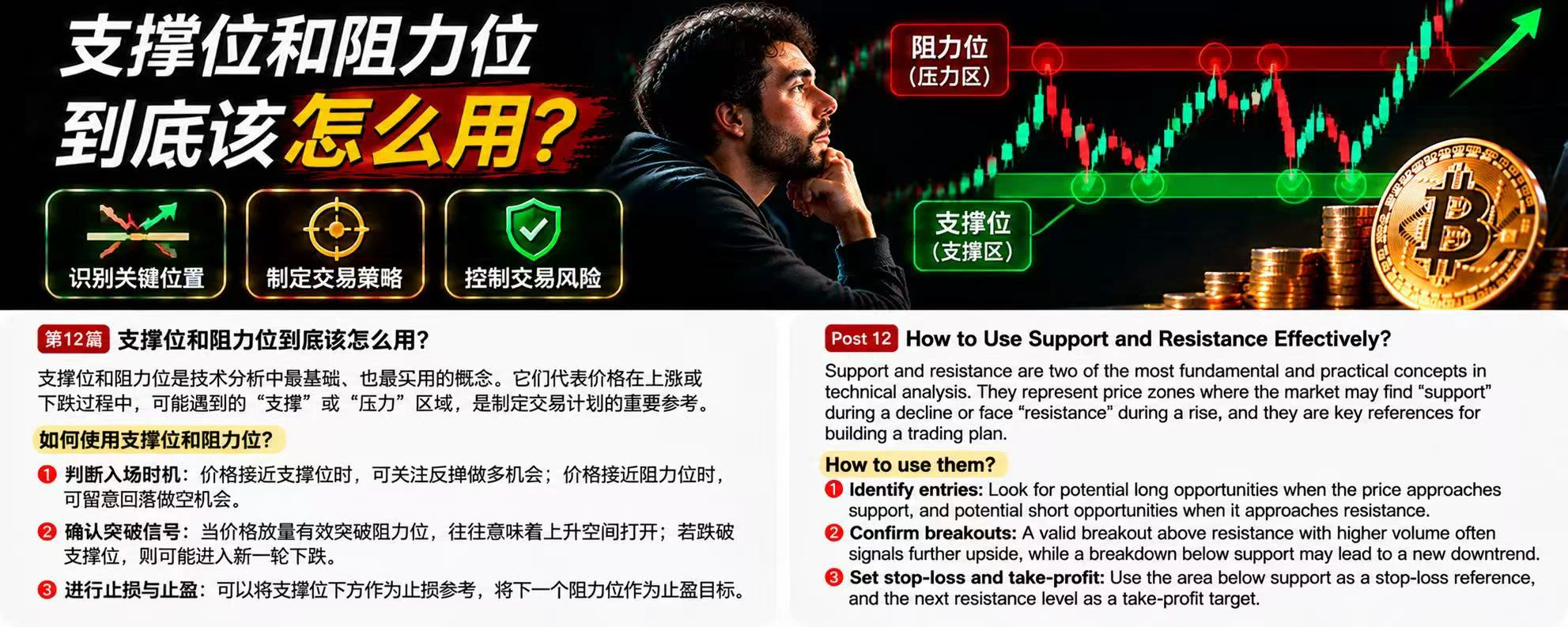
Many traders see RSI above 70 and assume the market has risen too much and prices are about to fall, so they rush to open short positions. But in real market conditions, especially during a strong uptrend, BTC may continue rising even after RSI enters overbought territory, and may even stay at elevated levels for a long time.

Why does this happen?

First, the trend is strong. In a clear uptrend, buying pressure remains stronger than selling pressure, and RSI may stay above 70 for an extended period. This does not mean prices are about to reverse; instead, it may indicate that bullish momentum
post-image
BTC-0.67%
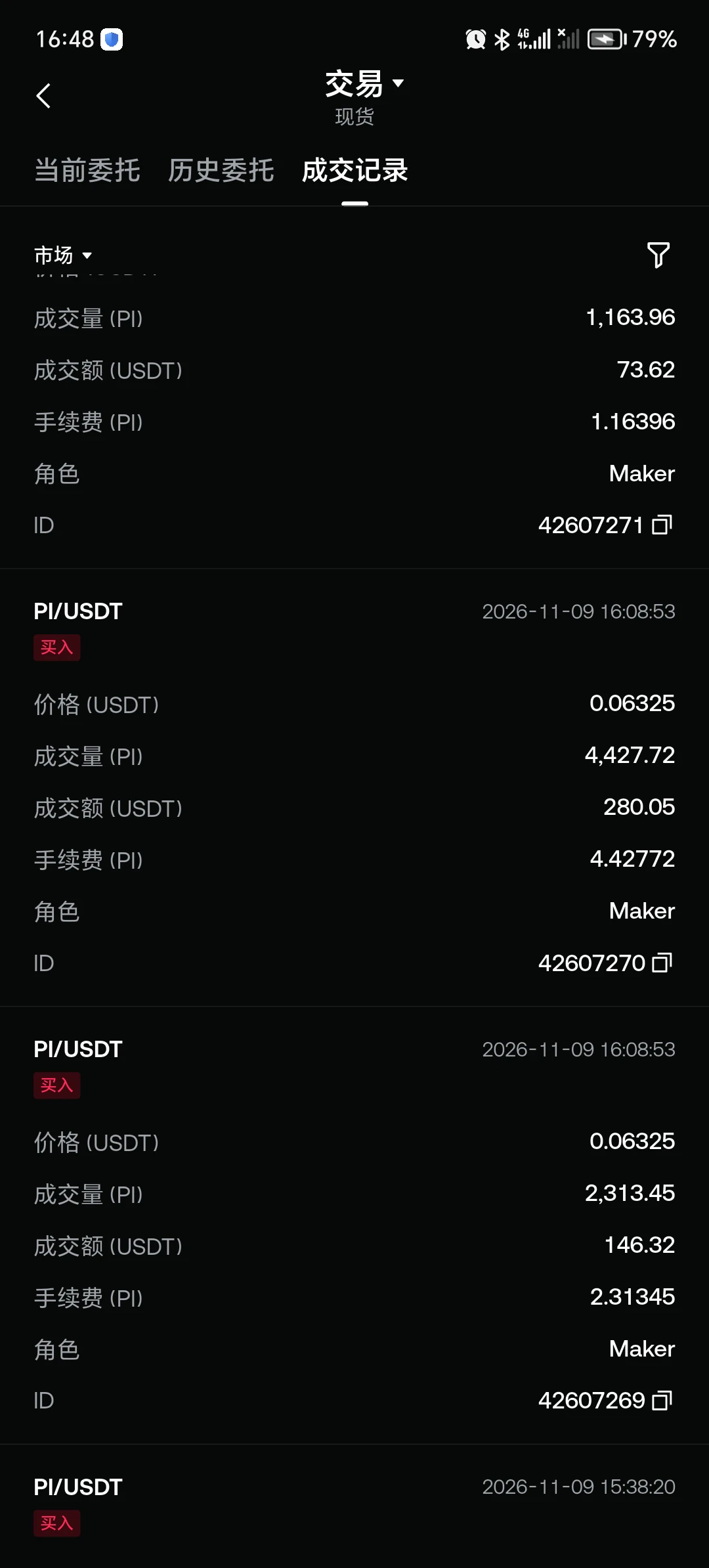
$PI Buy tens of thousands to show some support for Wang Lian
post-image
PI-0.60%
Trenches
mihao
m
bade
b
mihao
4Cxj...pump
Market Cap
$.
Change
.
24h Vol
$.
Holders
.

PIEVERSE
P
bade
b
PIEVERSE
0x0e...25a9
Market Cap
$.
Change
.
24h Vol
$.
Holders
.

HOLD
H
bade
b
HOLD
4iJ7...pump
Market Cap
$.
Change
.
24h Vol
$.
Holders
.
X
X
bade
b
X
9VZe...pump
Market Cap
$.
Change
.
24h Vol
$
Holders
.
AGT
A
bade
b
AGT
0x5d...e274
Market Cap
$.
Change
.
24h Vol
$.
Holders
.
Why can your account's overall risk be far higher than expected even when you've only made a few trades?

Many traders review their positions one by one, but overlook a more important question: Do these trades share a common source of risk?

Suppose you hold long positions in BTC, ETH, and SOL at the same time. On the surface, you hold three different assets; but if they're all affected by a broad market decline, a contraction in liquidity, or a drop in risk appetite, all three trades could lose money together.

These are three often-overlooked issues in portfolio risk.

I. Correlation risk: d
post-image
BTC-0.67%
ETH-1.26%
SOL-0.77%
Why Can Actual Risk Keep Increasing Even as Unrealized Account Gains Grow?

Many traders actually start taking on greater risks after making a profit.

A trade makes money, so they increase their position size; the account posts consecutive gains, so they raise their leverage; the market keeps rising, and they start to feel they have figured out how it works.

But one fact is easy to overlook:

Growing unrealized gains do not mean risk is decreasing; and the more you earn, the more losses you are not necessarily able to withstand.

I. Why Is It Easy to Relax Risk Controls After Making a Profit
post-image
CRYPTO MARKET UPDATES
live-cover
LIVE1,913
How to identify a false breakout? Avoid getting trapped in a bull trap!

In BTC trading, one of the market moves most likely to mislead traders is a false breakout. The price suddenly breaks through a key resistance level, and many people see the candlesticks surge quickly and assume a new rally has begun, rushing to go long. However, the price soon falls back into its previous range, leaving those who bought at the top in a difficult position.

So, how can you identify a false breakout?

First, see whether volume confirms the move. A genuine, strong breakout usually needs volume support. If t
post-image
Profitable in backtests, losing in live trading: How do you tell whether it’s an execution problem or the strategy has stopped working?

Why can a strategy perform well on historical data, yet produce completely different results once real capital is committed?

When traders incur losses, their first reaction is often to change parameters, add indicators, or even scrap the entire strategy.

But the problem may lie at different stages. Making blind adjustments without identifying the cause may only make the strategy more and more complex.

I. Step one: Compare key backtest and live-trading metr
post-image
I'm trading on Gate, a top-tier exchange with a 13-year track record. Come join me and dive into the hottest events right now! https://www.gate.com/campaigns/6502?ref=VLARBF1YAG&ref_type=132
post-image
Why does the price move in its original direction after you get stopped out?

You go long BTC and set a stop-loss.

The price falls, triggering your stop-loss and closing your position.

But a few minutes later, the price starts rising again, even reaching your original target.

You might wonder: Was your stop-loss targeted? Is the market deliberately shaking retail traders out?

This can certainly be frustrating, but before drawing conclusions, you need to distinguish between several different causes.

A stop-loss being triggered does not necessarily mean your trade thesis was wrong; a subseq
post-image
BTC-0.67%
Chinese Long-Form | Why Does an Effective Trading Strategy Suddenly Stop Working?

Many traders run into the same problem:

A strategy delivers consecutive profits, and its backtest curve looks great, but a few months later, with the same parameters and signals, it starts losing frequently in live trading.

Is the problem really with the strategy itself?

Not necessarily. A strategy’s effectiveness often depends on the market environment it operates in, not on how much profit it has generated in the past.

There are at least four market conditions worth watching:

1. Trend structure changes

T
post-image
What Is Bitcoin Halving? New Coin Supply, Market Expectations, and Price Volatility

Bitcoin halving has always been a closely watched event in the cryptocurrency market.

Many investors believe that halving means a reduction in Bitcoin supply, so the price should rise. But this reasoning overlooks an important question: a slower rate of supply growth does not mean the market price will necessarily rise.

To understand the significance of halving, we need to look at Bitcoin’s issuance mechanism, miner revenue, market expectations, and actual demand.

1. What Is Bitcoin Halving?

The Bitcoin ne
post-image
BTC-0.67%
Many traders, after suffering losses in their accounts, immediately think about making the money back as quickly as possible. But there’s an important mathematical point that is often overlooked: the percentage loss and the percentage gain needed to break even are not symmetrical.

Suppose your account originally had 1000 USDT.

If you lose 10%, your account is left with just 900 USDT. To get back to 1000 USDT, you need to gain 100 USDT, or about 11.11%—not 10%.

If you lose 20%, your account is left with 800 USDT, and you need a 25% gain to break even.

If you lose 30%, your account is left w
post-image
Which signals indicate that BTC’s upward momentum is weakening as it rises?

In crypto trading, many people see BTC repeatedly hitting new highs and assume the uptrend remains strong. But rising prices do not necessarily mean upward momentum is always robust. What truly matters is whether the market forces behind the price are changing.

There are four signals worth watching closely.

First, trading volume continues to contract. If the price keeps rising while trading volume gradually declines, the capital driving further price gains may be weakening.

Second, the RSI shows a bearish divergenc
post-image
Gate Square New Creator Program: Post to Earn Rewards and Enjoy Double Exposure for 14 Days https://www.gate.com/campaigns/6880?ref=VLARBF1YAG&ref_type=132
post-image
When a Trading Strategy Draws Down, Should You Stick With It or Stop in Time?

Many traders face a difficult problem:

A strategy performs well in historical backtests. But after being deployed in live trading, it suffers a string of losses.

At this point, it’s easy to make one of two mistakes:

One is to conclude that the strategy has failed after just a few losses and constantly switch approaches.

The other is to keep believing the strategy will eventually recover, no matter how much the losses grow.

In reality, you can’t determine whether a strategy has failed just by looking at whether
post-image
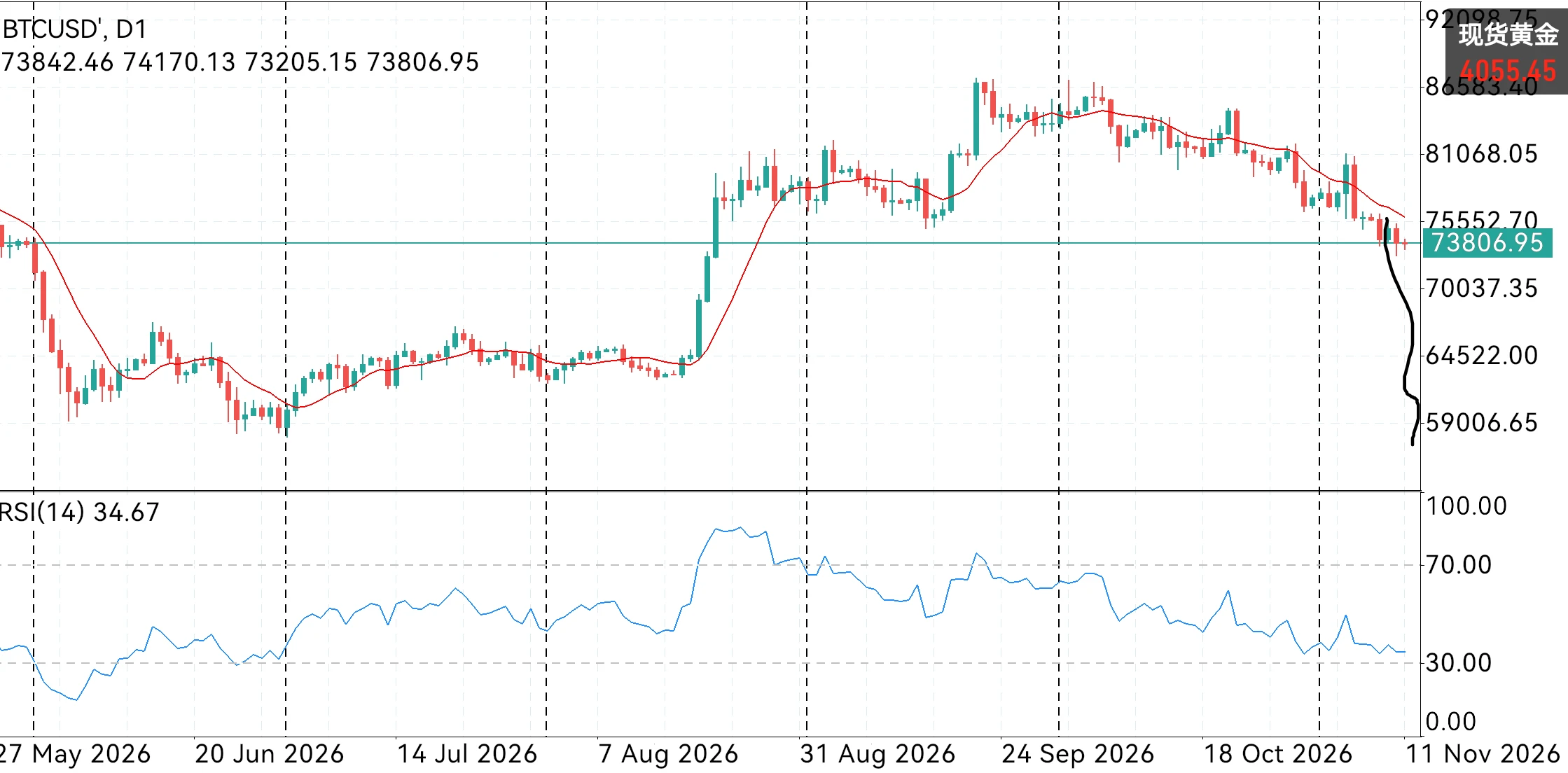
Wednesday's market action: a slow boil! The rebound lacks strength; still short!

With yesterday's CPI-driven bearish setup, both gold and Bitcoin took a leg down, in line with the trend! In the morning, the market rebounded somewhat on Trump's conciliatory remarks, but the move lacked strength in the afternoon and quickly stalled. We still need to follow the trend and stay short! No change to the swing and long-term outlook!

Bitcoin, short around 743, targeting 728-719
Gold, short around 4065, targeting 4038-18

That's all for now. Wishing everyone all the best and happy trading!
#美国10月CPI全面
post-image
BTC-0.67%
XAUT+0.30%
BTC markets predictions
live-cover
LIVE1,809
How Much Should You Lose on a Single Trade? Manage Risk Scientifically to Achieve Consistent Long-Term Profits!

In crypto futures trading, many people spend every day studying when BTC will rise or fall, but rarely take the time to calculate one thing: if a trade goes wrong, how much of a loss can they actually afford?

In reality, correctly predicting market direction is only part of long-term trading. Risk management is what determines whether an account can survive over time.

First, set your risk per trade in advance. You can use 1% of your account balance as your risk budget for each tra
post-image
BTC-0.65%
InvestIQ & TradeIQ, 28-29 Nov, Delhi 🔥
I’m coming back as a speaker once again, with the FinGrad Team.
Let's bring the Super Vibe again! 🚀
🎟️ Book your tickets now:
See you there! 🤝
post-image
In BTC trading, many people see a long upper wick on a candlestick and assume the market is about to fall. But does a long upper wick really mean the trend is reversing?

Not necessarily.

A long upper wick usually indicates that the price encountered selling pressure as it rose. Buyers tried to push the price higher, but faced selling at higher levels, and the price eventually pulled back from its high.

When assessing a long upper wick, focus on three things.

First, where it appears. If a long upper wick forms near a key resistance level from earlier, that area may have strong selling press
post-image
BTC-0.67%
Load More

Join 40 M users in our growing community

⚡️ Join 40 M users in the crypto craze discussion

💬 Engage with your favorite top creators

👍 See what interests you

Trending Topics

GateGlobalComplianceExpansion

15.89k Views351 Discussing

Gate continues to expand its global compliance footprint, now covering 81 regulated jurisdictions across Europe, North America, Asia, and Oceania. From MiCA and U.S. state-level MTLs to Japan’s FSA, Dubai, and Australia-related regulatory approvals, global exchanges are entering a new stage of compliance competition. Do you think regulatory strength will become as important as products and liquidity for exchanges in the future?

USOctoberCPIBeatsExpectations

87.04k Views2.65k Discussing

AnthropicIPOValuationCouldReach1.4T

12.22k Views1.61k Discussing

View More