Square
Following
Hot
News
Notifications
Profile
Share your thoughts
placeholder
Article
Morning BTC strategy trade
Entered at 73280, exited at 74160, 9K in gains secured
$BTC #美国10月CPI全面超预期
After yesterday’s CPI data came out, the market dropped to a new low of 726, then climbed back to around 734 and started moving sideways. This morning, I decisively called a long trade.
900 points of real profit locked in
Have all the longs been swept out in this market lately?😂
BTC-0.65%
How Should Hot and Cold Wallets Be Used Together? From Daily Operations to Long-Term Asset Storage

In the Web3 world, wallets are important tools for managing digital assets. However, when choosing a wallet, many newcomers focus only on ease of use and overlook the differences between wallets in security, operation, and suitable use cases.

How should you choose between a hot wallet and a cold wallet?

The answer is not simply that cold wallets are necessarily right for everyone. Instead, you should understand their respective features and establish a reasonable asset management approach base
post-image
Trenches
mihao
m
bade
b
mihao
4Cxj...pump
Market Cap
$.
Change
.
24h Vol
$.
Holders
.
HOLD
H
bade
b
HOLD
4iJ7...pump
Market Cap
$.
Change
.
24h Vol
$.
Holders
.
PIEVERSE
P
bade
b
PIEVERSE
0x0e...25a9
Market Cap
$.
Change
.
24h Vol
$.
Holders
.
X
X
bade
b
X
9VZe...pump
Market Cap
$.
Change
.
24h Vol
$.
Holders
.
DacityCoin
D
bade
b
DacityCoin
DKYc...pump
Market Cap
$.
Change
.
24h Vol
$.
Holders
.
High volatility in ZEC, a single-asset coin: summary at the very bottom✅💷
#$ZEC
A full analysis of ZEC (Zcash) falling from its all-time high, rebound structure, support and resistance, and potential continuation of the decline

I. Clarifying the high points (distinguishing three highs)

1. Ancient ATH (initial listing spike in 2016): approximately $3191.93; another data source recorded a spike to $5941.8 at the same time
This was an extreme spike when ZEC had just launched, with very little circulating supply and severely distorted liquidity. Trading was sparse, making it of little referenc
ZEC+1.29%
  • 4
  • 2
Setting a stop-loss does not mean you are guaranteed to exit at the expected price.

Many traders believe that once they set a stop-loss in advance, their maximum loss is already determined. But in real markets, the stop trigger price and the final execution price may not be the same.

Why is that?

I. Market volatility: Prices can quickly move past the stop level

When the market suddenly becomes highly volatile, prices may move past your stop trigger price in a very short time. If the next available execution price is already worse, the actual loss may exceed your original plan.

II. Insuffi
post-image
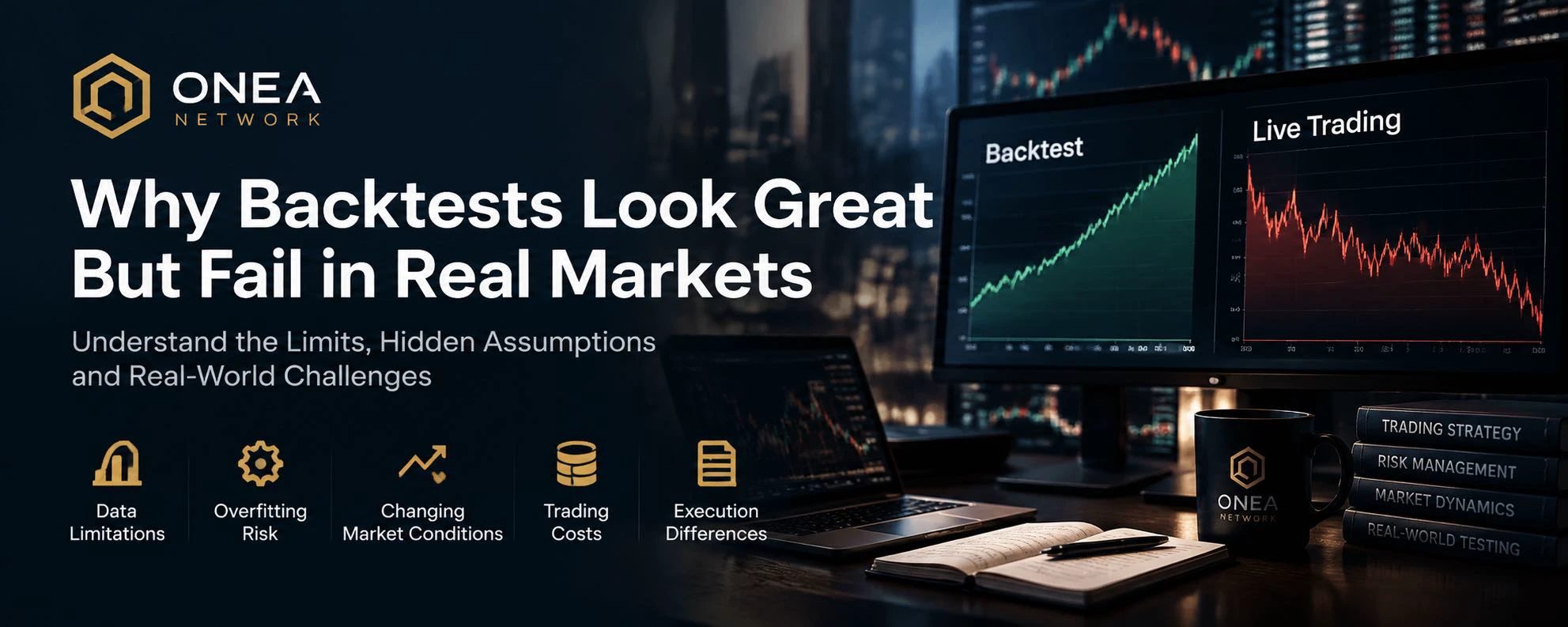
Why might a trading strategy that performed exceptionally well on historical data gradually fail in real markets?

A beautiful backtest curve does not mean the strategy has a stable edge in live trading.

The problem is often not that backtesting is worthless, but that we may overestimate what historical data can prove.

There are four key reasons worth paying attention to.

1. Overfitting: The strategy has memorized history without truly understanding the market.

Constantly adjusting parameters until the historical profit curve looks good can easily make a strategy fit past noise rather than
post-image
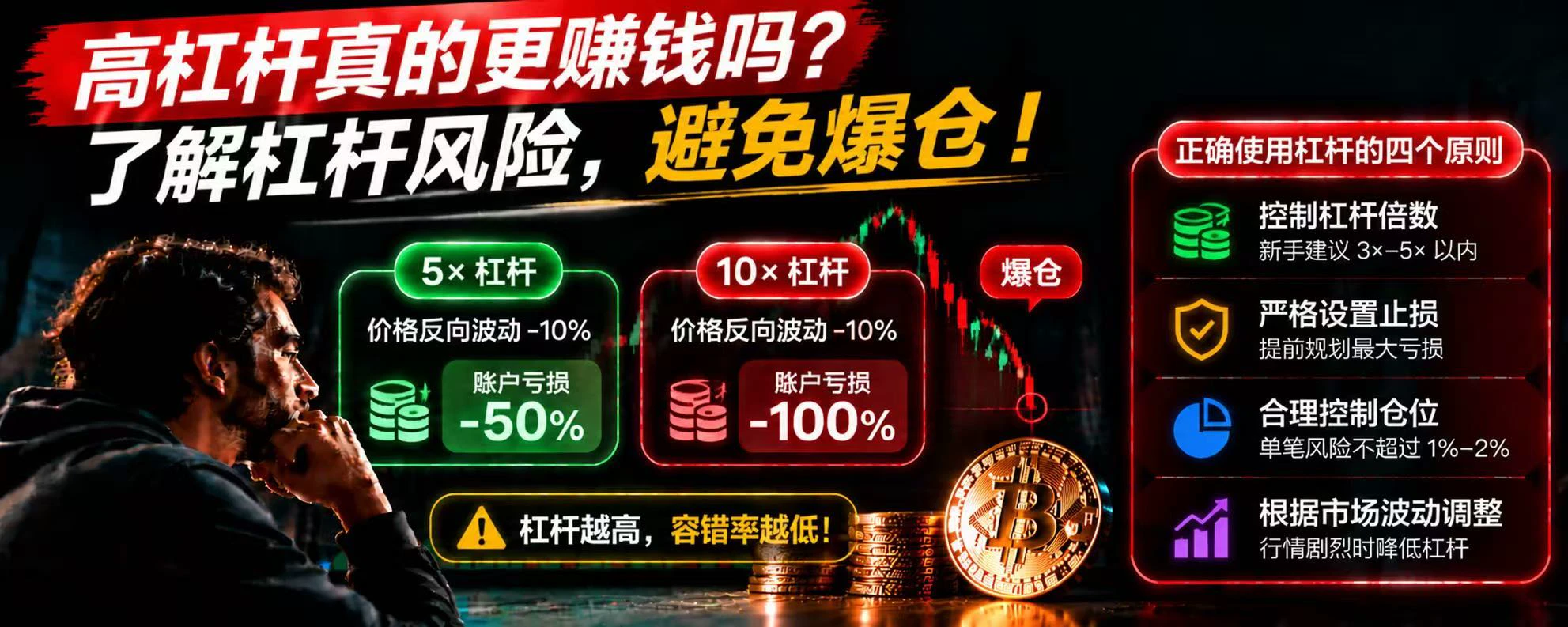
In crypto futures trading, 10x leverage may not sound particularly high, but many traders underestimate the risks behind it.

Suppose you have 1,000 USDT and use 10x leverage. This means you can open a notional position worth about 10,000 USDT (depending on the margin mode and trading fees).

If the market price moves 1% against you, your position will incur an unrealized loss of about 100 USDT, equivalent to 10% of your capital. If the price moves 5% in the opposite direction, the unrealized loss could theoretically reach 500 USDT.

This does not yet account for trading fees, funding rates, o
post-image
$ETH I'll open a tiny position and see what he's up to—then it suddenly rips up for a few candles
post-image
ETH-1.23%
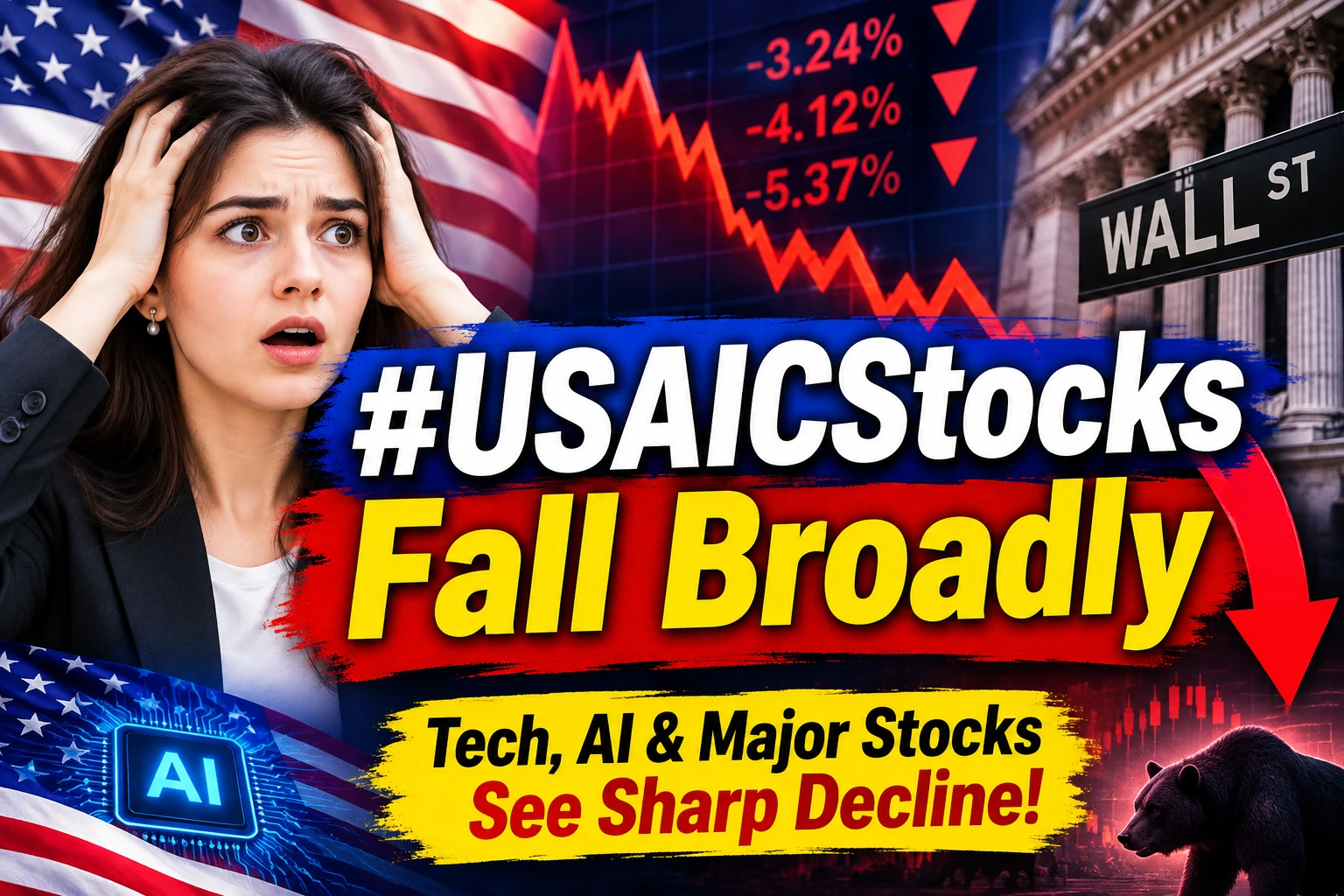
#USAICStocksFallBroadly
US AI Stocks Fall Broadly: Understanding the Pressure on Technology Markets
Introduction
The artificial intelligence (AI) industry has become one of the most influential forces shaping the global financial markets. Over the past several years, AI-related companies have attracted enormous investor attention because of their potential to transform industries, increase productivity, and create new revenue opportunities. However, when US AI stocks fall broadly, the market receives an important reminder that even the strongest long-term investment themes can experience sign
post-image
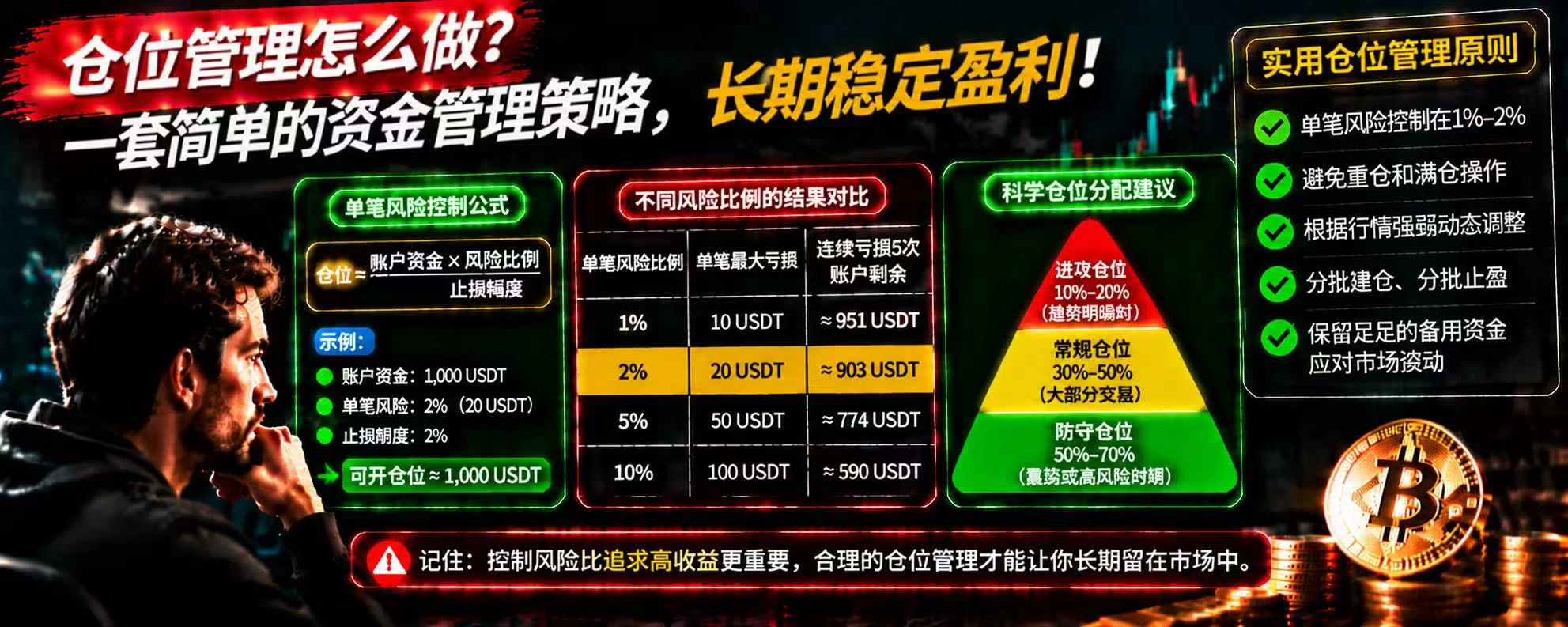
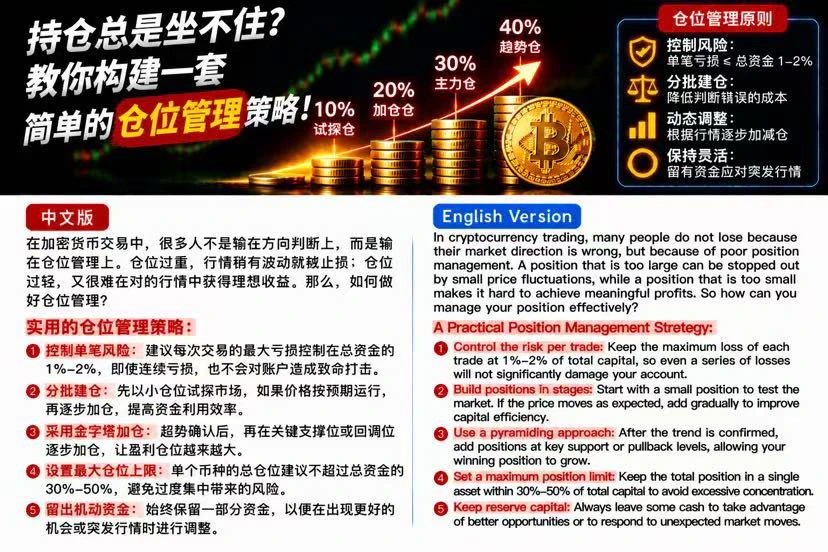
In cryptocurrency trading, many people believe that as long as they can accurately predict whether BTC will rise or fall, they can earn profits consistently. But reality is often the opposite: some traders are right fairly often, yet their accounts never grow steadily. The problem may not be direction, but position sizing.

Why is position sizing so important?

First, oversized positions can magnify losses. If BTC falls 2%, a trader with a small position may experience only normal volatility, while a trader with a large position and high leverage could suffer severe losses or even face liquida
post-image
BTC-0.65%
Profitable in backtests, losing in live trading: How do you tell whether it’s an execution problem or the strategy has stopped working?

Why can a strategy perform well on historical data, yet produce completely different results once real capital is committed?

When traders incur losses, their first reaction is often to change parameters, add indicators, or even scrap the entire strategy.

But the problem may lie at different stages. Making blind adjustments without identifying the cause may only make the strategy more and more complex.

I. Step one: Compare key backtest and live-trading metr
post-image
Why does a larger position make it easier to lose money even when the market moves in your favor?
In crypto trading, many people believe that once they’ve correctly read the market, they should increase their position as much as possible. After all, for the same price movement, a larger position means more profit.
But reality is often much harsher: sometimes, even when you correctly predict the market direction, an oversized position forces you out before the move really takes off.
Why does this happen?
First, the larger your position, the more sensitive your account is to price fluctuations.
post-image
5 Most Common Mistakes When Backing Up Your Seed Phrase—You Might Be Making Them Too

In the cryptocurrency world, many people know that seed phrases are important, but not everyone knows how to back them up properly.

Some take screenshots of their seed phrases and save them on their phones, some upload them to cloud drives, and others think that as long as they remember their password, they can easily recover their wallet even if they forget their seed phrase.

These seemingly convenient practices can actually expose digital assets to unnecessary risks.

Today, let’s look at the five most co
post-image
What Is a Private Key? Why Is It the Core of Your Digital Asset Security?

In the Web3 world, you may often hear the saying: “Not your keys, not your coins.”

But what exactly is a private key? Why is it so important? If you don’t have the private key, does that mean the assets aren’t yours?

To truly understand how digital asset security works, you first need to understand the role private keys play in the blockchain ecosystem.

1. What exactly is a private key?

Simply put, a private key is secret information used to generate a digital signature. In many blockchain systems, wallets use priva
post-image
Common ways wallets get compromised go far beyond losing a seed phrase

In the Web3 world, many people believe that as long as they keep their seed phrase and private key safe, their digital assets are secure enough.

But the reality is far more complicated.

Some users have never disclosed their seed phrase, yet lose assets because of a malicious approval; some connect to websites that appear legitimate, but unknowingly sign dangerous transactions; others have sensitive information on their devices stolen after downloading unknown software.

Wallet security is not just about protecting a secr
post-image
#China

China’s tech stocks closed higher Wednesday, helped by fresh talk that memory-chip prices may be starting to rise.
post-image
CHIP+4.26%
Analysis new crypto coin
live-cover
LIVE2,170
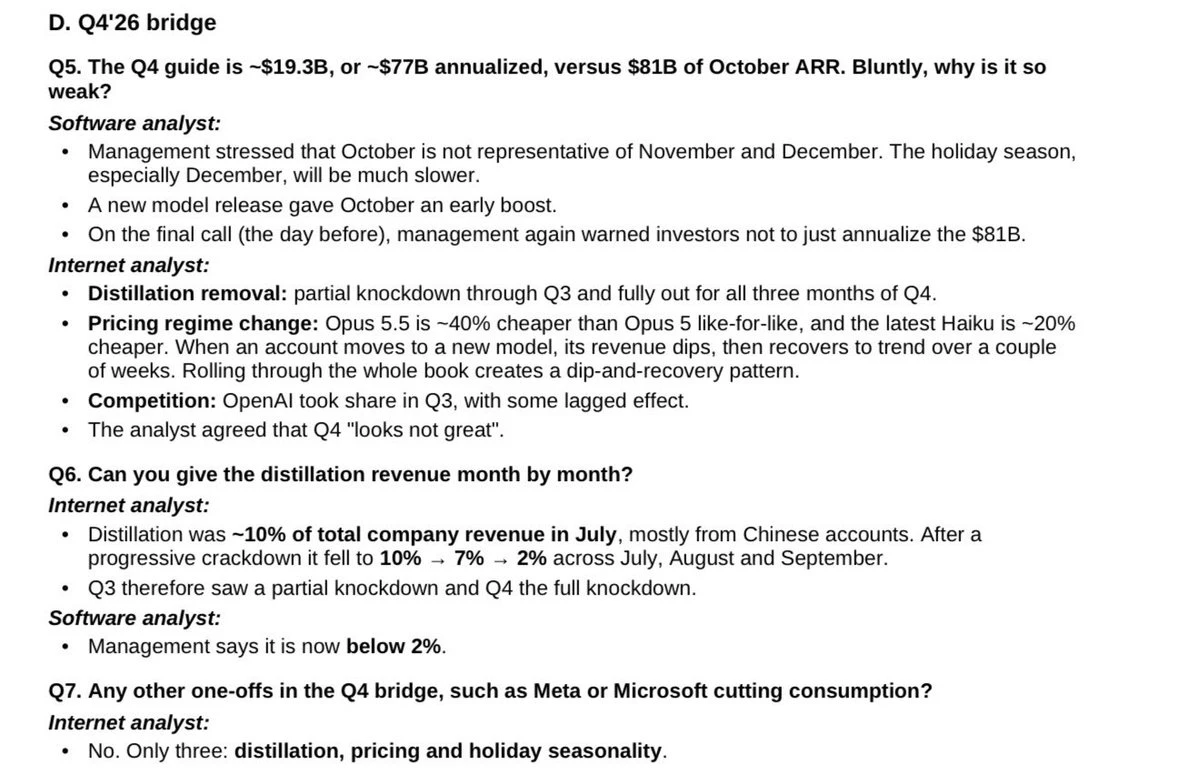
Apparently, Anthropic gave conservative Q4 guidance because engineers tend to take time off in December.
Seems like a sensible approach.
post-image
What Is a Gas Fee? Why Does the Cost of the Same Transaction Keep Changing?

In the cryptocurrency market, some users may encounter this situation:

The transfer amount hasn’t changed, so why is the fee I pay today different from yesterday’s? Sometimes a simple transaction costs very little, while at other times it costs much more.

This involves an important concept: the Gas fee.

Understanding Gas fees can help you make sense of transaction costs and make more informed decisions when using wallets, DEXs, and other Web3 applications.

1. What Is a Gas Fee?

A Gas fee is a fee users pay on som
ETH-1.26%
BTC-0.67%
What Opportunities Does DeFi Offer, and What Risks Does It Hide? Understanding the Mechanics Behind Returns

In the Web3 world, DeFi (decentralized finance) is often associated with concepts such as lending, liquidity mining, and yield farming.

Some people seek new financial opportunities through DeFi, while others suffer losses chasing high returns.

So where do DeFi returns actually come from? Why can some protocols offer higher returns, and what risks lie behind them?

To understand DeFi, it is not enough to look at yields. It is also important to understand how funds flow, how returns are
post-image
Load More

Join 40 M users in our growing community

⚡️ Join 40 M users in the crypto craze discussion

💬 Engage with your favorite top creators

👍 See what interests you

Trending Topics

GateGlobalComplianceExpansion

15.43k Views345 Discussing

Gate continues to expand its global compliance footprint, now covering 81 regulated jurisdictions across Europe, North America, Asia, and Oceania. From MiCA and U.S. state-level MTLs to Japan’s FSA, Dubai, and Australia-related regulatory approvals, global exchanges are entering a new stage of compliance competition. Do you think regulatory strength will become as important as products and liquidity for exchanges in the future?

USOctoberCPIBeatsExpectations

85.78k Views2.62k Discussing

AnthropicIPOValuationCouldReach1.4T

11.72k Views1.6k Discussing

View More