Share your thoughts
placeholder
Article
Everyone is sleeping on ZEC while the daily trend screams bullish.

$ZEC /USDT - LONG

Trade Plan:
Entry: 1464.23 – 1476.53
SL: 1411.37
TP1: 1514.64
TP2: 1544.14
TP3: 1588.40

Why this setup?
Why now? Because every technical layer currently aligns for a long setup with rare conviction. The daily trend is firmly bullish, giving us the higher-timeframe tailwind that too few traders are respecting right now. The 15m RSI at 43.73 shows room to climb before reaching overbought territory, so buyers are not exhausted yet. The 1h ATR of 24.586796 confirms enough volatility to generate meaningful mo
ZEC-5.31%
  • 1
With market action, the more impatient you are, the more it grinds you down—until you give up, then it finally moves.
When I checked the charts after lunch, $ONE was bottoming without breaking down. The key level held, so I said longs could be tried with proper risk management—don’t go all-in and force it. From 0.000713 to 0.00374, +8365.4% secured. Feels really good; time for a nice meal.
The market is the cure for all forms of defiance, especially for those who think they’re the smartest. Don’t let profits inflate your ego, and don’t despair over drawdowns.
Take 80% off the table first, and
post-image
ONE+71.39%
ADA-4.19%
SOL-4.24%
Breakout or consolidation What’s your next BTC target?
live-cover
LIVE1,313
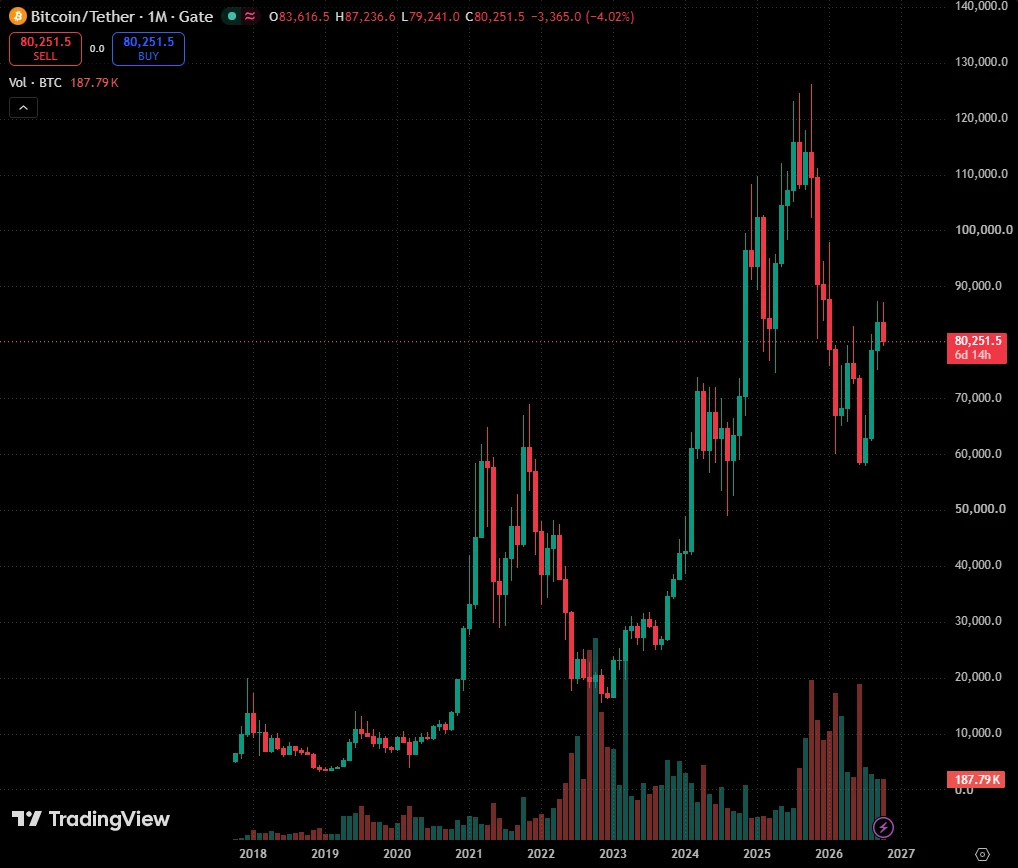
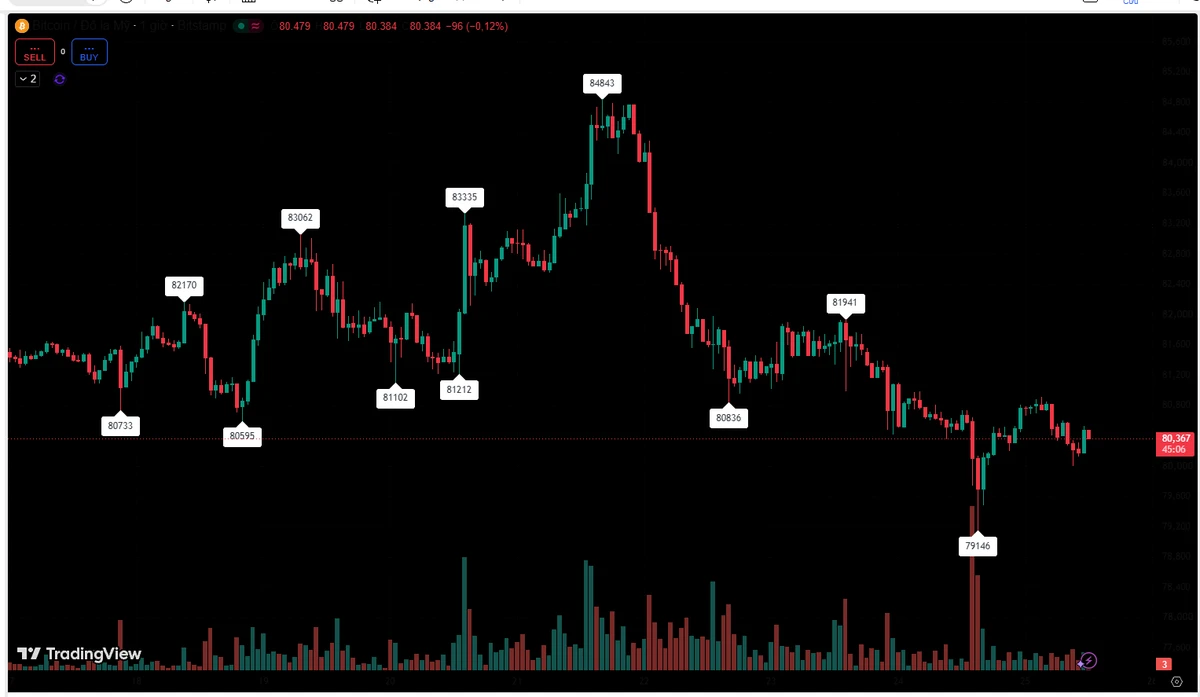
$BTC is looking interesting around the $81K area 👀
After the sharp recovery from the September lows, Bitcoin has reclaimed the $80K zone and is now testing the upper part of the recent range.
I’m watching two levels closely:
→ $80K — key support
→ $83K–$84K — major resistance
If BTC can hold above $80K and buyers push through $83K–$84K with strong volume, the structure could continue improving.
But if $80K is lost again, I’d expect the market to cool off and retest lower support.
For now, I’m watching price action and volume rather than chasing the move.
What are you watching here — breakout
post-image
BTC-0.97%
  • 3
Future Trends in Crypto:
1. Institutional players are entering not to take over retail investors’ bags, but to control the fee-generating nodes.
The institutions that truly make money in the future will become increasingly concentrated in infrastructure sectors such as trading, custody, clearing, stablecoins, payments, asset issuance, and liquidity management. They will profit not simply from rising token prices, but from the fees generated by the continuous operation of the entire market.
2. The crypto market will gradually shift from “human trading” to “machine trading.”
In the future, large
post-image
Market Alert

$XAU /USDT - SHORT

Trade Plan:
Entry: 4380.99 – 4382.69
SL: 4388.67
TP1: 4376.71
TP2: 4373.30
TP3: 4368.17

Why this setup?
Technical setup found.

Debate:
Thoughts?

⚠️ Personal market analysis only. NFA — manage risk and DYOR.
Educational content, not investment advice or a recommendation to buy, sell, deposit, or withdraw any asset. No paid promotion or referral/affiliate links.
XAU-0.20%
JUST IN: launches "Genius Alpha" tag offering higher visibility to projects for a $300 fee. Could increase platform differentiation but no quality guarantee implied. $GeniusFUN (ticker if applicable)
post-image
GENIUS+4.40%
#日本央行加息至1.25%创31年新高 #Gate广场中秋团圆局 Japan raises rates by 25 basis points to 1%, a 31-year high—why did the yen fall instead of rise?
On September 18, the Bank of Japan raised its policy rate by 25 basis points to 1.25%, the highest level since April 1995. This was another rate hike after the BOJ raised rates from 0.75% to 1% in June this year, and was an important step in Japan’s move away from its long-standing ultra-loose monetary policy. But the market saw an apparently “unreasonable” result: Japan raised rates, yet the yen did not rise and instead continued to fall. As of the afternoon of Se
post-image
ThisIsTranslateContent:
#日本央行加息至1.25%创31年新高 #Gate广场中秋团圆局 Japan Raises Interest Rates by 25 Basis Points to 1%, a 31-Year High—Why Did the Yen Fall Instead of Rise?
On September 18, the Bank of Japan raised its policy rate by 25 basis points to 1.25%, the highest level since April 1995. This was another rate hike after the Bank of Japan raised rates from 0.75% to 1% in June this year, and marked another important step in Japan’s move away from its long-standing ultra-loose monetary policy. But the market produced a seemingly “counterintuitive” result: Japan raised interest rates, yet the yen did not rise and instead continued to fall. As of the afternoon of September 18, the yen briefly fell to around 157.76 against the US dollar, down more than 1% intraday; its cumulative decline against the US dollar this week also reached approximately 2.6%.
So why did the yen fall despite the Bank of Japan raising interest rates? The answer is not complicated. What truly determines exchange rates has never been a single rate hike itself, but rather how interest rates will evolve in the future and whether the interest-rate gap between Japan and the United States will genuinely narrow.
I. The yen rate hike failed to drive the yen higher, with the yen falling more than 1% against the US dollar after the hike.
According to conventional logic, when a country’s central bank raises interest rates, domestic asset yields increase, potentially attracting capital inflows and supporting the local currency. But the yen’s problem is precisely this: Japan raised rates, but the market believes the pace of future rate hikes may not be as fast as expected.
On September 18, the Bank of Japan voted 7–2 to approve a 25-basis-point rate hike to 1.25%. This was the highest level in 31 years, but two members voted against it, calling for the rate to remain at 1%. The market subsequently interpreted the result as indicating that the Bank of Japan was not internally united in supporting faster tightening. At the same time, the Federal Reserve also raised its policy rate by 25 basis points this week to 3.75%–4%.
In other words, although Japan raised rates, the United States raised rates by the same amount, so the Japan-US interest-rate gap remained substantial.
More importantly, the market trades not on “whether rates will be raised today,” but on “how much further they can rise in the future.” If Japan’s rate rises from 1% to 1.25% while US rates remain far above Japan’s, the change in the interest-rate gap caused by a single hike is actually limited.
Therefore, the market did not buy large amounts of yen simply because Japan raised rates. Instead, after confirming that the Bank of Japan had not signaled a stronger series of rate hikes, it increased demand for the US dollar again. This is why the seemingly contradictory scene emerged: the Bank of Japan raised rates, yet the yen fell. In reality, this does not mean the rate hike failed; rather, the market repriced the “pace of future rate hikes.”
II. Whether the yen will see another rate hike this year, with market expectations failing to increase.
This may be the question the market cares about most after the Bank of Japan’s rate hike on September 18. The Bank of Japan did raise rates, but it did not clearly tell the market: When will the next hike come? The 7–2 vote at the September 18 meeting itself showed that divisions remain within the Bank of Japan over the pace of rate hikes. If all nine voting members had supported a hike, the market might have found it easier to conclude that Japanese monetary policy was entering a clearer tightening cycle. But two members publicly opposed the hike. Therefore, market bets on whether Japan will continue raising rates this year did not increase significantly because of this hike.
Bank of Japan Governor Kazuo Ueda also emphasized after the meeting that there is no pre-set fixed pace for future rate adjustments, and no mechanical arrangement to “raise rates once every three months.” The central bank will reassess the situation at each meeting based on changes in prices, wages, the economy, and financial markets.
Of course, Ueda did not close the door on further rate hikes. He said that if inflation risks rise significantly, the Bank of Japan would not rule out raising rates by 50 basis points at once, or even implementing consecutive hikes at subsequent meetings. This statement is highly important. It means that the Bank of Japan has gradually shifted the discussion from “whether to raise rates” to “how quickly to raise them.” For now, however, the Bank of Japan still wants to avoid tightening financial conditions too quickly. The reason is practical: Japan’s economy still needs time to adjust to higher interest rates, while corporate financing costs, real estate, financial assets, and household loans will all be affected. Therefore, whether the yen can truly strengthen in the future depends not only on how high Japanese interest rates reach, but also on whether the market believes the Bank of Japan will continue raising rates. If expectations of future hikes continue to intensify, the yen may regain support; if rate hikes enter a slow, gradual phase, the Japan-US interest-rate gap may continue to weigh on the yen for a long time.
III. Japan’s inflation in August 2026 was already close to the Bank of Japan’s target.
Why must the Bank of Japan continue considering rate hikes now?
One answer is inflation. Data released by Japan’s Ministry of Internal Affairs and Communications on September 18 showed that Japan’s nationwide CPI rose 1.9% year-on-year in August 2026; excluding fresh food and energy, CPI also rose 1.9% year-on-year. In other words, Japan’s inflation has moved increasingly close to the Bank of Japan’s 2% target. More importantly, the Bank of Japan is concerned not only with the current CPI figure, but also with whether rising costs can continue to be passed on to businesses and consumers. Rising energy prices, yen depreciation, and higher prices for semiconductors and other goods could all increase corporate costs. If companies can pass higher costs on to consumers, the initial shock from energy and import prices could gradually evolve into broader domestic inflation. This is the biggest difference between the Bank of Japan today and in the past.
Over the past several decades, Japan’s biggest concern was deflation. Companies were reluctant to raise prices, households were reluctant to spend, wage growth was weak, and the central bank could only stimulate the economy through extremely low or even negative interest rates. Now, however, the Bank of Japan is beginning to worry about another problem: could inflation shift from being “too low” to exceeding its target? The Bank of Japan’s July outlook report forecast that core CPI excluding fresh food would rise by an average of 2.5% in fiscal 2026, while real GDP would grow 0.6%. The report also noted that oil prices, yen depreciation, and higher semiconductor prices driven by AI demand could all push prices higher.
Therefore, the Bank of Japan’s policy logic is changing: previously, it sought ways to push inflation higher; now, it must prevent inflation from rising too quickly. This is also an important signal that Japan has entered the monetary-policy normalization phase.
IV. Japan’s negative-interest-rate era has come to a complete end.
Viewed over a longer period, the significance of the September 18 rate hike goes far beyond 25 basis points. It means that Japan’s decades-long ultra-loose monetary policy is truly approaching its end.
In March 2024, the Bank of Japan ended its negative-interest-rate policy and simultaneously exited its yield-curve-control policy. Since then, Japanese interest rates have gradually begun returning to normal levels.
In June 2026, the Bank of Japan raised its rate to 1%; in September, it raised it further to 1.25%. Moving from negative rates to 1.25% may look like merely a change in a few numbers, but it actually represents a major turning point in Japan’s financial environment.
In the past, Japan relied on extremely low interest rates to stimulate the economy for an extended period. The defining feature of this policy was cheap borrowing. Corporate financing costs were low, household borrowing costs were low, and Japan was also one of the world’s largest sources of low-cost financing. As a result, large amounts of capital flowed overseas, forming the famous “yen carry trade.”
Now, as Japanese interest rates continue to rise, this logic is changing. Japanese companies and households will face higher borrowing costs in the future, but savers and banks will also begin receiving higher interest income.
More importantly, the yields on Japanese assets themselves are rising. If Japan continues to raise rates and the yen gradually strengthens, the past model of “borrowing cheap yen and investing in high-yield overseas assets” will face increasing constraints. This does not mean the yen carry trade will suddenly disappear, but it does mean that the environment on which it depends is changing.
In the past, Japan’s biggest advantage was cheap yen. In the future, Japan may develop a different kind of advantage: higher domestic yields, a stronger yen, and domestic capital flowing back.
Therefore, what is truly worth watching about Japan’s rate hikes is not why the yen fell 1% today. It is that Japan is gradually changing from an economy that has long exported low-cost funds into one where domestic interest rates and asset yields are both beginning to rise. This may mean that the contraction of the yen carry trade is not necessarily the end of Japan’s investment story. On the contrary, it may be the starting point for renewed changes in Japan’s financial markets and capital-flow dynamics.$USDJPY
repost-content-media
USDJPY+0.58%
U.S. crypto ETFs saw $70.7M in net outflows last week, but the numbers hide a big divergence.
🟠 Bitcoin : +$6.1M
🔵 Ethereum: -$140.6M
🟣 Solana: +$60.7M
⚡ Hyperliquid: +$3.1M
$BTC ETFs recovered sharply late in the week, with $433M flowing in Friday as BTC reclaimed $80K.
Solana also stood out, with BSOL attracting $58.7M, nearly 97% of the category's weekly inflows.
But Ethereum remained the weak spot, losing $140.6M despite a strong Friday inflow.
post-image
BTC+6.16%
ETH+7.79%
SOL-4.23%
HYPE-3.30%
Market Alert

$UNI /USDT - LONG

Trade Plan:
Entry: 8.787 – 8.877
SL: 8.397
TP1: 9.158
TP2: 9.376
TP3: 9.702

Why this setup?
Technical setup found.

Debate:
Thoughts?

⚠️ Personal market analysis only. NFA — manage risk and DYOR.
Educational content, not investment advice or a recommendation to buy, sell, deposit, or withdraw any asset. No paid promotion or referral/affiliate links.
UNI-3.23%
Market Alert

$PEPE /USDT - SHORT

Trade Plan:
Entry: 0 – 0
SL: 0
TP1: 0
TP2: 0
TP3: 0

Why this setup?
Technical setup found.

Debate:
Thoughts?

⚠️ Personal market analysis only. NFA — manage risk and DYOR.
Educational content, not investment advice or a recommendation to buy, sell, deposit, or withdraw any asset. No paid promotion or referral/affiliate links.
PEPE+5.46%
$M Over 24 hours, it ran from 1.27 to 1.71 before crashing back to 1.54. I was there for the entire 18% swing, so let me first explain my trades.
At 2:17 a.m., $M was still hovering around 1.29 when trading volume suddenly surged. I judged that major players were accumulating, so I entered with a 1.30 limit order, keeping the position at 15% of my total capital. At 6:40 a.m., it surged to 1.68. Watching the order book, I saw the bids beginning to thin out, so I placed a take-profit order for half the position at 1.65. I wanted to bet that the remaining half would break through the previous hig
IN+0.33%
$ZEC Current price 1473.47, with resistance at 1507.55 (MA20) and support at 1440.41 (lower Bollinger Band). In the same time window, $SUI rose 4.88% and $EPIC rose 12.26%, while $ZEC fell 5.16%, making it the only declining asset among the three candidates; its relative weakness is already evident on the chart.
The technical picture is also unfavorable: MA5=1474.06 has fallen below MA20=1507.55, with the short-term moving average flattening and weakening; RSI=39.8 is approaching the weak zone but is not yet oversold, indicating that downside momentum still has room to play out; the MACD h
post-image
ZEC-5.31%
SUI+0.50%
EPIC+13.39%
We’re live. If you want to discuss your positions, coins, or strategies, join the livestream chat.
post-image
🌈 Gate Live Streaming Inspiration - September 20
Recommended hot topics:
🔹Bitcoin’s market cap surpasses Tesla’s! Returning to the global top 15 by market cap, how much further can BTC rise?
🔹Michael Saylor discusses digital assets again! Says the best way to protect innovation is to expand adoption—what will drive Crypto’s next growth cycle?
🔹Strategy leads the Nasdaq 100 over the past month! Bitcoin’s rebound has boosted MSTR—can the rally continue?
🔹SOL rises above $111! Spot ETF inflows exceed $28 million—is institutional capital beginning to accumulate Solana?
🔹SpaceX’s weighting wi
GateLiveChinese
🌈 Gate Live Streaming Inspiration - September 20
Recommended hot topics:
🔹Bitcoin’s market cap surpasses Tesla’s! Returning to the global top 15 by market cap, how much further can BTC rise?
🔹Michael Saylor discusses digital assets again! Says the best way to protect innovation is to expand adoption—what will drive Crypto’s next growth cycle?
🔹Strategy leads the Nasdaq 100 over the past month! Bitcoin’s rebound has boosted MSTR—can the rally continue?
🔹SOL rises above $111! Spot ETF inflows exceed $28 million—is institutional capital beginning to accumulate Solana?
🔹SpaceX’s weighting will rise to 2.82%! Nasdaq 100 rebalancing brings passive capital—will the stock receive a new catalyst?
🔹Trump says AI development will not be restricted! He also plans to establish an “AI czar”—will the US AI race accelerate further?
🔹Iran proposes conditions for negotiations with the US! Awaiting Trump’s decision, will the US-Iran conflict see a turning point?
🔹Iran engages Qatar and Pakistan to mediate! Signals of US-Iran negotiations intensify—how will oil prices and global markets react?
Go live on any topic for a chance to be featured on the official website homepage!
🔥 More topic inspiration and tips: https://www.gate.com/help/community-center/live_chat/49345
repost-content-media
BTC-0.98%
TSLA-0.49%
MSTR+16.35%
SOL-4.23%
SPCX-1.29%
  • 2
🚀🔥 Another massive victory! 🔥🚀LONG $AGL delivered a strong +160.45% gain! 💰📈
🎯 Full take-profit achieved! 💥 Another explosive move. Another target hit! 🏆 Congratulations to everyone who followed this trade—another massive victory! 🔥💰 The winning streak continues! More signals, more targets, more victories! 🚀🔥
post-image
$1000 to $100,000 Crypto Trade Challenge Today
live-cover
LIVE820
$APT The key short-term levels are 0.707 and 0.753. The current price of 0.725 is stuck below the Bollinger middle band, with a bearish bias.
The Fear & Greed Index is 71, and the market remains in the greed zone. However, with BTC stagnating at high levels, funds are clearly rotating into catch-up assets such as XTZ. APT is down 3.46% over 24h, with a trading volume of only 25.3M, making it a weak sector being drained of liquidity. Technically, MA5=0.726 has fallen below MA20=0.7299, the MACD histogram at -0.003769 remains bearish, and RSI 50.6 is neutral to weak, with insufficient rebound mo
post-image
APT-5.21%
BTC-0.98%
XTZ+7.89%
DASH-7.62%
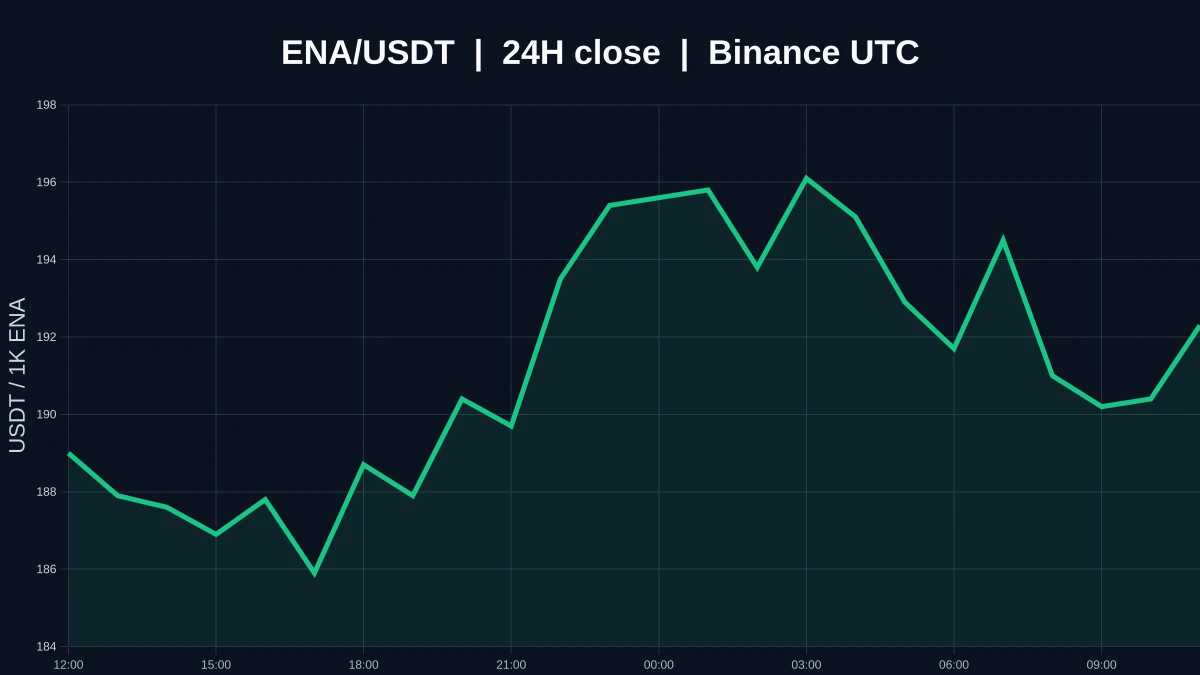
Insiders are not sleeping on $ENA /USDT right now.

$ENA /USDT - LONG

Trade Plan:
Entry: 0.18889 – 0.19307
SL: 0.17094
TP1: 0.20601
TP2: 0.21603
TP3: 0.23106

Why this setup?
Why now? The daily trend is firmly bullish, setting the stage for continuation. The 1h price is anchored near 0.19126, giving us a precise reference to gauge momentum. The 15m RSI sits at 34.85, signaling oversold conditions that often precede a bounce. With the 1h ATR at 0.008351, we know the volatility is contained enough for a clean push toward targets. The entry zone between 0.18889 and 0.19307 offers a defined ri
ENA+7.88%
Load More

Join 40 M users in our growing community

⚡️ Join 40 M users in the crypto craze discussion

💬 Engage with your favorite top creators

👍 See what interests you

Trending Topics

MSTRTopsNasdaq100

72.33k Views2.59k Discussing

Strategy (MSTR) has gained about 48% over the past month, making it the best-performing stock in the Nasdaq 100, while Bitcoin rose roughly 12% over the same period. The company holds 845,050 BTC with a cumulative cost basis of about $63.73B. MSTR is not a pure Bitcoin proxy — its price swings can be more extreme. Can this rally last?

BTCRetakes80K

56.13k Views59.76k Discussing

GarrettJinHolds320MInZEC

37.14k Views1.4k Discussing

View More