










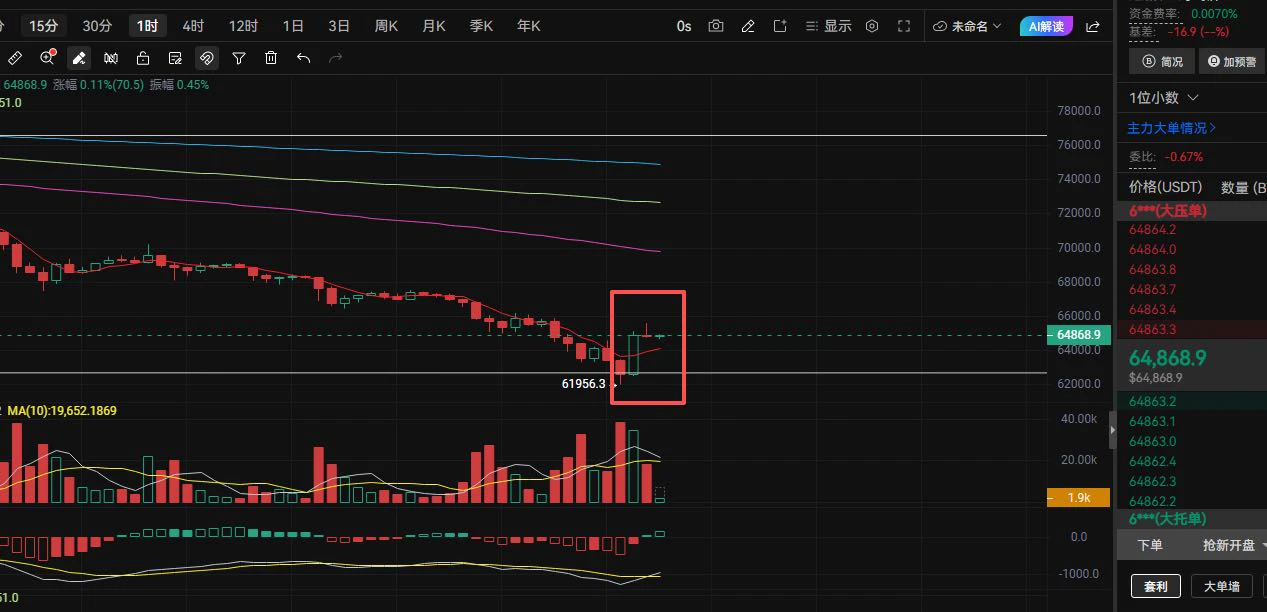
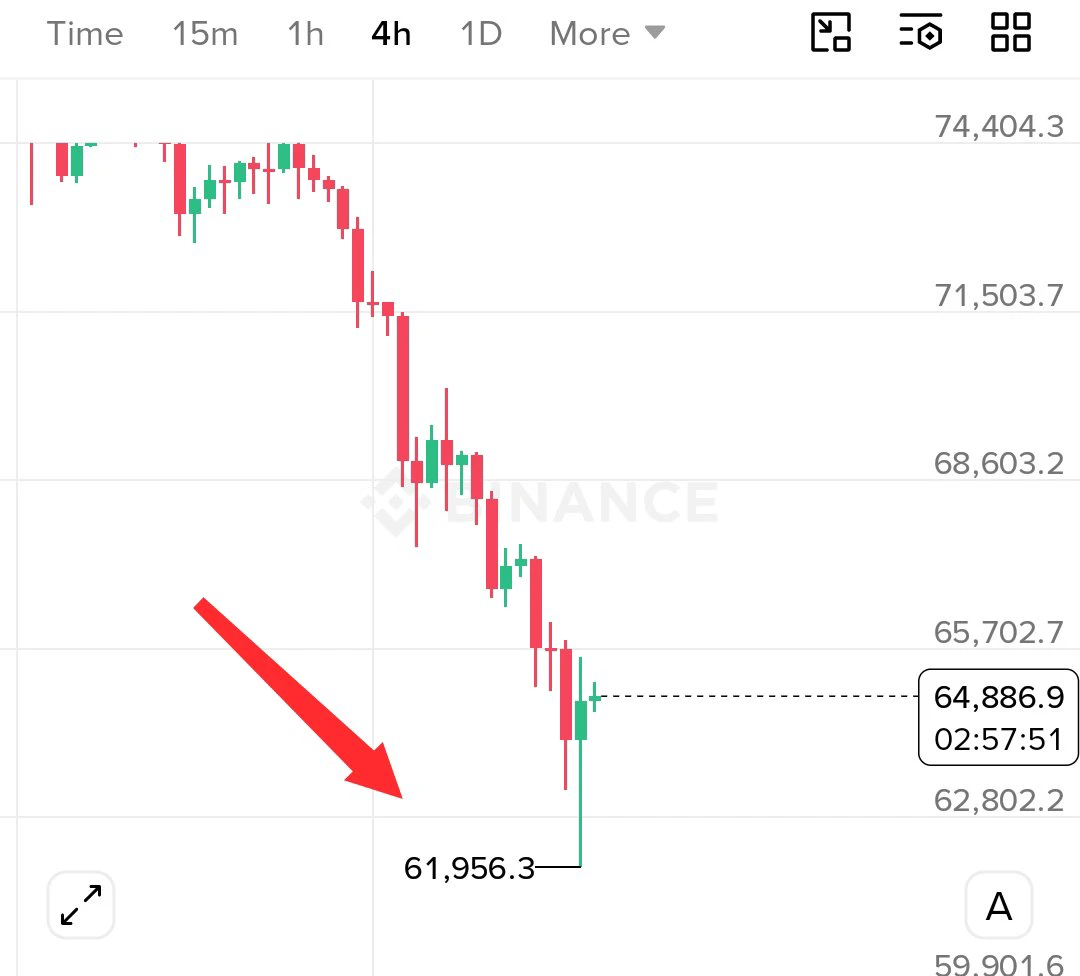
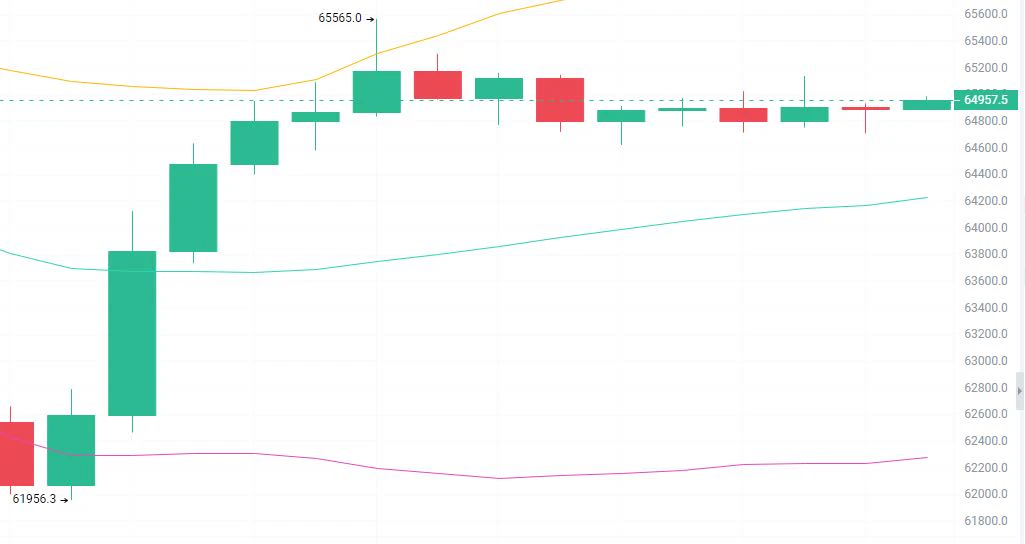



#比特币跌破7万美元 #WCTCS9 Bitcoin plunges below $65,000 overnight! Down 14% in a week—where’s the bottom?
$65,000 isn’t just an ordinary round-number threshold: Bitcoin was still above $75,000 on November 7, and lost nearly a sixth of its value in a week. CoinDesk’s figures show it fell 13.5% over the past week, hitting its lowest level since mid-August and a three-month low.
The timeline makes it clear how the decline unfolded. First, on Thursday, Nvidia CEO Jensen Huang resigned, sending AI stocks sharply lower and dragging Bitcoin below $72,000 that day; on Friday, it briefly fell to $67,500, then rebounded to around $69,000 but couldn’t hold there; trading volume was low over the weekend, and selling quickly intensified, with Bitcoin breaking below $65,500 on Saturday night and failing to hold $65,000 early today.
Why the drop? First, the most direct factor: U.S. spot Bitcoin ETFs have been seeing persistent outflows. On November 13, they recorded net outflows of $185 million in a single day, marking seven consecutive trading days of outflows and a cumulative $1.91 billion; BlackRock’s largest ETF saw more than $2 billion in outflows over nine trading days. These ETFs were the biggest buyers over the past two years. Now that buyers have turned into sellers, there are suddenly far fewer people willing to step in.
Next, leverage and the broader environment. CoinGlass data show $1.47 billion in liquidations across the market over the past 24 hours, most of them bullish long positions. When prices fall, traders who borrowed to go long are forced to liquidate, and those liquidations push prices down further. Meanwhile, U.S. October CPI came in above expectations, producer prices rose 6.5% year over year—the biggest increase since November 2022—and the market has largely priced in a Fed rate hike in December. The 10-year Treasury yield surged to 5.17%, while the dollar hit a 19-month high.
Analyst James Check says this is Bitcoin’s fourth “capitulation” since its all-time high. The current price has entered what he calls the “deep value zone”; the previous times were in February and late June this year, and before that, near the end of the 2022 bear market. Many sellers had chased the rally above $80,000 in September and are now selling at a loss at prices they once hoped to buy at. But he also cautioned that entering the value zone doesn’t mean the bottom is in.
During this downturn, whales have accumulated about 47,000 BTC, while mid-sized holders have sold even more—some are buying the dip, while others are rushing for the exits.
Ether is down 18% in a week, falling below $1,800; XRP is down 16.3%, and Solana is down 18%. The Fear and Greed Index has dropped to 15, its lowest level since June.
Next, watch three things: the $60,000–$65,000 support zone, Nvidia’s earnings report next Tuesday, and the dollar and Treasury yields. $BTC