Crypto_Beauty

vip
Active for: 0.4y
Peak Tier 5
No content yet
Pin
#GateSquarePizzaDay
#BTC
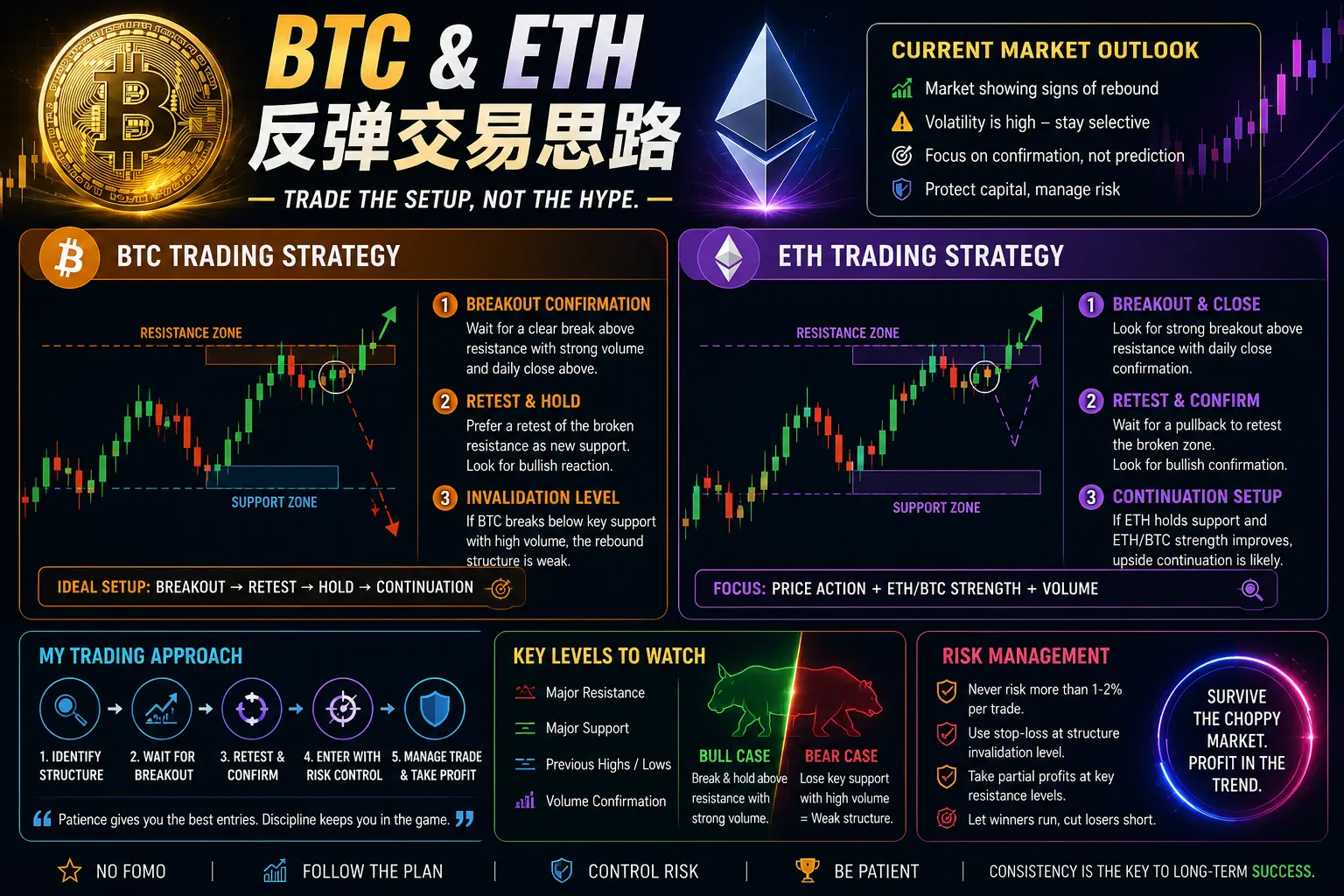
As of May 21, 2026, Bitcoin is trading around $77,410, showing a clear consolidation phase after extreme volatility earlier in the year. The market has been moving between approximately $60,074 (February low) and $97,860 (January high), reflecting a transition from aggressive volatility into a more balanced accumulation structure.
Earlier in the cycle, Bitcoin also reached a major all-time high near $126,000 (October 2025), driven by strong ETF inflows and institutional participation. However, that momentum faded as liquidity tightened and profit-taking increased acr
BTC0.80%
post-image
post-image
post-image
  • Reward
  • 14
  • 1
  • Share
ThisIsTranslateContent::
坚定HODL💎
View More
TODAY MARKET UPDATES
live-cover
7 views
2026-07-26 16:58
Ended • No Replay
  • Reward
  • Comment
  • Repost
  • Share
TODAY MARKET UPDATES
735 views
2026-07-26 16:04
  • Reward
  • Comment
  • Repost
  • Share
TODAY MARKET UPDATES
752 views
2026-07-26 14:43
  • Reward
  • 2
  • Repost
  • Share
Crypto_Beauty:
To The Moon 🌕
View More
TODAY MARKET UPDATES
418 views
2026-07-26 13:52
  • Reward
  • Comment
  • Repost
  • Share
TODAY MARKET UPDATES
125 views
2026-07-26 13:21
  • Reward
  • Comment
  • Repost
  • Share
TODAY MARKET UPDATES
1,619 views
2026-07-26 12:06
  • Reward
  • Comment
  • Repost
  • Share
I'm trading on Gate, a top-tier exchange with a 13-year track record. Come join me and dive into the hottest events right now! https://www.gate.com/campaigns/5452?ref=VQCRB1XCBW&ref_type=132
post-image
  • Reward
  • Comment
  • Repost
  • Share
I'm trading on Gate, a top-tier exchange with a 13-year track record. Come join me and dive into the hottest events right now! https://www.gate.com/campaigns/5364?ref=VQCRB1XCBW&ref_type=132
post-image
  • Reward
  • Comment
  • Repost
  • Share
TODAY MARKET UPDATES
728 views
2026-07-26 10:45
  • Reward
  • Comment
  • Repost
  • Share
TODAY MARKET UPDATES
311 views
2026-07-26 09:29
  • Reward
  • Comment
  • Repost
  • Share
#IntelQ2RevenueSurges25%
Intel's Biggest Comeback in 15 Years?
Intel has officially delivered one of the most surprising earnings reports in the semiconductor industry, proving that the turnaround story is becoming more than just a promise. After years of losing market share, suffering manufacturing delays, and falling behind competitors in AI infrastructure, the company is finally showing measurable operational improvements. Revenue has returned to strong double-digit growth, profitability is improving rapidly, AI-related demand continues accelerating, and the new management team is executi
MissCrypto
#IntelQ2RevenueSurges25%
Intel's Biggest Comeback in 15 Years?
Intel has officially delivered one of the most surprising earnings reports in the semiconductor industry, proving that the turnaround story is becoming more than just a promise. After years of losing market share, suffering manufacturing delays, and falling behind competitors in AI infrastructure, the company is finally showing measurable operational improvements. Revenue has returned to strong double-digit growth, profitability is improving rapidly, AI-related demand continues accelerating, and the new management team is executing a disciplined transformation strategy that investors have been waiting to see for years. While risks remain significant, Intel has clearly moved from survival mode into the rebuilding phase, making it one of the most closely watched semiconductor companies heading into the second half of 2026.
Q2 2026 Earnings Shocked Wall Street
Intel reported $16.13 billion in Q2 revenue, representing approximately 25.4% year-over-year growth, the strongest quarterly revenue expansion since 2011. The company also delivered Non-GAAP EPS of $0.42, crushing analyst expectations near $0.22, an earnings surprise of almost 92%. Just one year ago Intel reported a Non-GAAP loss, making this turnaround even more impressive.
Operating cash flow climbed to roughly $7.0 billion, comfortably above expectations, while Non-GAAP gross margin improved from 29.7% last year to 41.8%, reflecting dramatically better manufacturing efficiency, stronger product mix, and improving factory utilization. Operating margin also swung from -3.9% to 17.2%, showing that Intel's restructuring efforts are finally translating into real financial improvement.
Although GAAP EPS remained deeply negative because of a massive non-cash CHIPS Act accounting adjustment worth around $13.6 billion, most professional investors focused on operating performance rather than accounting noise.
Business Segments Driving Growth
Intel's recovery is no longer dependent on a single business.
Client Computing Group (CCG) generated nearly $8.9 billion, growing 13% YoY, supported by continued demand for Core Ultra processors designed for AI PCs, robotics, industrial computing, and enterprise systems.
The biggest star was the Data Center & AI division, producing approximately $6.3 billion in revenue with an exceptional 59% annual growth rate. Demand for Xeon processors, AI infrastructure, cloud computing, enterprise inference workloads, and hyperscale deployments continues strengthening despite intense competition from AMD and NVIDIA.
Intel Foundry generated roughly $5.8 billion in revenue, up 31% YoY. External foundry revenue remains relatively small, but management continues improving yields while reducing long-term operating losses. Although the foundry still lost around $2.1 billion during the quarter, investors increasingly believe profitability is achievable over the coming years if execution continues.
Lip-Bu Tan Is Changing Intel's Culture
CEO Lip-Bu Tan has transformed Intel's operating philosophy since taking leadership.
Instead of spending aggressively without guaranteed returns, Tan introduced a disciplined "no blank check" investment strategy. Future manufacturing expansion now depends on confirmed customer commitments before billions of dollars are invested.
The company has reduced R&D and SG&A expenses significantly, simplified organizational layers, completed most workforce restructuring, accelerated decision making, and improved accountability across every business unit.
Rather than chasing market share at any cost, Intel is focusing on profitable growth, manufacturing efficiency, customer satisfaction, AI infrastructure, advanced packaging, and long-term cash generation.
This cultural transformation may ultimately become more valuable than any single product launch.
18A Process Technology Could Be Intel's Biggest Competitive Weapon
Perhaps the most important milestone is Intel's 18A process technology.
Risk production has successfully begun while Panther Lake processors are entering high-volume manufacturing using ASML High-NA EUV lithography. If Intel executes this roadmap successfully, it will validate years of investment aimed at regaining manufacturing leadership.
18A is expected to improve performance, reduce power consumption, and strengthen Intel's position in notebooks, AI PCs, enterprise computing, and future server products.
Investors are watching manufacturing yields extremely closely because successful 18A execution could dramatically improve investor confidence and eventually attract major external foundry customers.
Advanced Packaging: Intel's Secret AI Advantage
While much attention focuses on manufacturing nodes, Intel's advanced packaging strategy may become one of its strongest competitive advantages.
Projects across Malaysia, New Mexico, and South Korea are expanding Intel's capacity for EMIB and Foveros technologies.
Unlike traditional approaches, Intel's EMIB architecture enables extremely large AI chip designs without requiring expensive full-size silicon interposers, offering potentially better scalability and lower production costs.
Intel has already demonstrated packaging designs exceeding 10,000 mm², opening opportunities for next-generation AI accelerators, supercomputers, cloud infrastructure, defense applications, and custom silicon customers.
As AI chips become increasingly complex, packaging itself could become one of the industry's highest-margin businesses.
Global Expansion Continues
Intel also announced approximately €5 billion ($5.7 billion) in additional investment for its Irish manufacturing campus while maintaining approximately $20 billion in planned 2026 capital expenditure.
Management continues expanding manufacturing capacity across the United States and Europe while strengthening partnerships with Foxconn, SambaNova, and multiple hyperscale customers.
These investments position Intel for long-term AI infrastructure demand rather than short-term cyclical recovery.
Current Stock Performance
Intel currently trades around $91-$97, after reaching highs above $142 earlier this year.
The stock has gained roughly 170% during 2026 following an impressive 84% advance in 2025, making Intel one of the strongest-performing large-cap semiconductor stocks over the last two years.
Following earnings, shares initially surged above $106, but profit-taking and concerns regarding foundry losses triggered a healthy pullback.
Despite this correction, the long-term trend remains constructive as improving fundamentals continue supporting investor confidence.
Technical Analysis
Current technical structure remains cautiously bullish.
Support Levels • $98 (major neckline) • $91-$95 (current demand zone) • $85 (strong trend support) • $55 (long-term structural support)
Resistance Levels • $105-$112 • $120 • $133-$142 (major historical resistance)
RSI remains near 64, suggesting bullish momentum without entering extreme overbought territory.
MACD continues printing positive momentum while volume accumulation remains healthy, indicating institutional participation has not
disappeared despite recent consolidation.
2026-2027 Price Outlook
Bullish Scenario
If Intel successfully commercializes 18A, wins meaningful external foundry customers, expands AI server market share, and narrows foundry losses faster than expected, shares could recover toward $120-$142, while an exceptionally strong execution cycle could eventually push the stock toward $150-$200.
Base Scenario
If execution remains steady without major surprises, Intel could gradually trade between $100-$120 over the next 12 months as profitability improves and investor confidence increases.
Bearish Scenario
If manufacturing delays return, foundry losses widen, AMD gains additional server market share, or AI spending slows significantly, shares could revisit the $70-$85 region before stabilizing.
What Traders Are Watching
The market is no longer debating whether Intel is improving—it is debating how valuable that improvement will ultimately become.
Bullish investors highlight: • 25% revenue growth • 59% AI/Data Center growth • Massive margin expansion • Strong operating cash flow • Better manufacturing execution • Improving management discipline • AI infrastructure demand
..
Bearish investors remain concerned about: • Continued Foundry losses • Premium valuation • Execution risk • AMD competition • NVIDIA's AI dominance • High capital expenditure • Possible macro slowdown
The truth probably lies somewhere between both extremes. Intel has unquestionably repaired much of its operational foundation, but sustaining premium valuation requires continued flawless execution over multiple quarters.
Final Outlook
Intel today looks fundamentally different from the company investors criticized only two years ago. Revenue growth has accelerated, profitability is recovering, manufacturing execution has improved, AI demand continues expanding, and management has restored confidence through disciplined capital allocation rather than ambitious promises.
The next major catalysts include Panther Lake commercialization, additional 18A progress, external foundry customer announcements, AI accelerator expansion, improving foundry profitability, and continued strength in Data Center revenue.
For long-term investors, Intel remains one of the semiconductor sector's highest-risk but also potentially highest-reward turnaround opportunities. If management continues executing at the current pace, today's recovery story could eventually evolve into one of the largest corporate transformations the technology industry has witnessed in more than a decade.@Gate_Square #SummerCreationCamp
repost-content-media
  • Reward
  • Comment
  • Repost
  • Share
#IntelQ2RevenueSurges25%
Intel Q2 2026 Earnings: AI Boom Powers the Fastest Growth in Over a Decade — Is Intel Entering a New Bull Cycle?
Intel has delivered one of the biggest earnings surprises of 2026, reinforcing the narrative that artificial intelligence is reshaping the semiconductor industry far beyond GPU manufacturers. The company's second-quarter earnings, released on July 23, 2026, demonstrated that Intel is benefiting from the accelerating demand for AI infrastructure, enterprise computing, cloud expansion, and foundry services. After years of restructuring and intense competition
MissCrypto
#IntelQ2RevenueSurges25%
Intel Q2 2026 Earnings: AI Boom Powers the Fastest Growth in Over a Decade — Is Intel Entering a New Bull Cycle?
Intel has delivered one of the biggest earnings surprises of 2026, reinforcing the narrative that artificial intelligence is reshaping the semiconductor industry far beyond GPU manufacturers. The company's second-quarter earnings, released on July 23, 2026, demonstrated that Intel is benefiting from the accelerating demand for AI infrastructure, enterprise computing, cloud expansion, and foundry services. After years of restructuring and intense competition, Intel is now showing tangible evidence that its turnaround strategy is beginning to produce measurable financial results.
The market responded positively because this was not simply a revenue beat—it represented broad-based operational improvement across multiple business segments. Revenue reached a record 16.1 billion dollars, exceeding Wall Street expectations of 14.4 billion dollars by nearly 1.7 billion dollars. Revenue increased 25% year over year, marking Intel's strongest quarterly growth since 2011. Non-GAAP earnings per share came in at 0.42 dollars, almost double the analyst consensus of 0.22 dollars, while GAAP operating income reached 1.796 billion dollars, translating into an operating margin of 11.1%. Cash flow from operations climbed to 7.0 billion dollars, highlighting the company's improving financial flexibility and ability to continue investing in advanced manufacturing.
One of the biggest contributors to this performance was Intel Foundry. Revenue from the foundry business surged 31% year over year to 5.8 billion dollars, indicating growing customer confidence in Intel's manufacturing roadmap. This is particularly significant because Intel's long-term strategy depends not only on selling processors but also on becoming a major global semiconductor manufacturer capable of competing with TSMC and Samsung. Every quarter of sustained foundry growth increases investor confidence that Intel can establish itself as one of the world's leading contract chip manufacturers.
Artificial intelligence continues to be the primary growth engine. While Nvidia dominates AI accelerators and GPUs, Intel has started benefiting from the explosive demand for CPUs supporting AI servers, enterprise infrastructure, edge computing, and cloud deployments. Large enterprises are investing heavily in AI-ready data centers, increasing demand for Xeon processors and advanced server platforms. As AI adoption expands globally, Intel is positioned to benefit from infrastructure spending across multiple industries rather than relying solely on consumer PC sales.
Intel also strengthened its strategic partnerships during the quarter. The company expanded collaboration with Google Cloud to optimize AI infrastructure while also securing a significant manufacturing agreement with a major hyperscale cloud provider. These agreements improve revenue visibility over the coming years and validate Intel's manufacturing capabilities. Such partnerships may encourage additional customers to adopt Intel Foundry Services as companies seek supply-chain diversification outside Taiwan.
Management's guidance for Q3 further increased investor optimism. Intel expects revenue between 15.8 billion and 16.8 billion dollars, comfortably above Wall Street estimates. Expected Non-GAAP EPS of 0.38 dollars also exceeded consensus expectations of 0.27 dollars, suggesting that management sees continued demand strength rather than a temporary earnings spike. Guidance often carries more weight than historical earnings because it reflects management's confidence in future business conditions.
Intel stock has reflected this improving outlook. Shares currently trade near 106 dollars, giving the company a market capitalization above 477 billion dollars. Since January 2026, the stock has gained approximately 150%, while the twelve-month return has exceeded 320%, making Intel one of the strongest-performing semiconductor companies this year. Such a dramatic recovery illustrates how quickly investor sentiment can change when operational execution improves.
Wall Street remains divided on Intel's valuation despite recent strength. The average analyst target sits around 98.50 dollars, slightly below the current market price. However, several firms remain highly bullish. Susquehanna increased its target from 80 dollars to 115 dollars after the earnings report. Citi maintains a target of 130 dollars, while Tigress Financial projects 140 dollars. Morgan Stanley remains more cautious with a 75 dollar target, and Loop Capital continues to hold one of the most bearish views at 25 dollars. Overall, published targets range from 45 dollars to 160 dollars, highlighting how uncertain Intel's long-term outlook remains despite improving fundamentals.
From a technical perspective, Intel continues to display constructive price action. The stock previously formed a double-top pattern near 133.15 dollars, leading to a healthy correction before stabilizing. The neckline around 98 dollars now serves as major support. As long as shares remain above this level, the longer-term uptrend remains intact. Immediate resistance lies near 115 dollars, followed by the psychologically important 130 dollar level. The stock continues trading above both its 50-day and 200-day moving averages, confirming a bullish long-term trend. Rising volume after earnings indicates increased institutional participation, which often strengthens the sustainability of price trends.
Momentum indicators suggest that bullish sentiment remains dominant, although short-term overbought conditions may lead to temporary pullbacks. Traders should watch whether any correction occurs on declining volume, as that would indicate healthy profit-taking rather than a reversal of the broader trend.
Several important catalysts could drive Intel's next phase of growth. The upcoming Panther Lake processor launch is expected to strengthen Intel's competitive position in client computing. Intel's 18A manufacturing process has reportedly achieved approximately 85% production yields, representing a significant milestone in manufacturing efficiency. Higher yields reduce production costs, improve margins, and increase customer confidence. Continued expansion of AI workloads, enterprise digital transformation, edge computing, autonomous systems, and cloud infrastructure should further support long-term processor demand.
Nevertheless, investors should remain aware of several risks. AMD continues gaining market share in high-performance server processors and could pressure pricing. TSMC remains the global leader in advanced manufacturing technology, creating intense competitive pressure for Intel Foundry Services. Geopolitical tensions involving semiconductor supply chains remain an ongoing uncertainty. Consumer PC demand has not fully stabilized and could weigh on Intel's Client Computing Group if economic conditions weaken. Although operating profitability has improved significantly, Intel still reported a substantial GAAP net loss of approximately 11 billion dollars, reminding investors that the turnaround is still underway rather than fully complete.
For traders, several strategies can be considered depending on risk tolerance. Conservative investors may wait for pullbacks toward the 98 dollar support zone before accumulating shares. Swing traders could target the 115 dollar resistance initially, with a secondary objective around 130 dollars if momentum remains strong. Long-term investors may prefer a dollar-cost averaging approach, gradually building positions while reducing the impact of volatility. A stop-loss below 95 dollars would help manage downside risk should the technical structure fail.
Looking beyond 2026, analyst expectations remain optimistic. Base-case forecasts generally place Intel between 90 and 105 dollars by year-end after periods of consolidation.
Moderate valuation models project 90.97 to 104.82 dollars, while highly optimistic scenarios suggest prices could eventually exceed 221 dollars if Intel's foundry expansion achieves sustained success. Longer-term forecasts extending toward 2030 envision valuations approaching 259 dollars, assuming Intel successfully executes its manufacturing roadmap, captures meaningful foundry market share, and maintains leadership in AI infrastructure. Consensus estimates currently expect approximately 11.4% annual revenue growth for full-year 2026.
Overall, Intel's Q2 2026 earnings represent one of the strongest signs yet that the company's multi-year turnaround strategy is gaining momentum. Strong revenue growth, expanding operating margins, rising foundry revenue, improving manufacturing yields, healthy cash generation, and optimistic forward guidance collectively strengthen the investment case. While competitive pressures from AMD, Nvidia, and TSMC remain significant, Intel is demonstrating that it can still compete effectively in the AI era.
The coming quarters will be critical. Investors should closely monitor Panther Lake adoption, Intel Foundry customer wins, progress of the 18A manufacturing process, AI server demand, cloud partnerships, quarterly cash flow, operating margins, and overall execution. If management continues delivering results at this pace, Intel may transition from being viewed as a turnaround story to becoming one of the semiconductor sector's strongest long-term growth companies.@Gate_Square #SummerCreationCamp
repost-content-media
  • Reward
  • Comment
  • Repost
  • Share
#UStoImpose10To12.5PercentTariffsOn60Economies
#UStoImpose10To12.5PercentTariffsOn60Economies has become a major topic across global financial markets as investors evaluate the potential impact of expanded trade tariffs on international commerce, inflation, supply chains, and economic growth. Tariffs are taxes imposed on imported goods, and changes in trade policy can significantly influence manufacturing costs, business investment, consumer prices, and cross-border trade. With dozens of economies potentially affected, businesses and policymakers are closely monitoring how these measures coul
BTC0.80%
ETH2.42%
MissCrypto
#UStoImpose10To12.5PercentTariffsOn60Economies
#UStoImpose10To12.5PercentTariffsOn60Economies has become a major topic across global financial markets as investors evaluate the potential impact of expanded trade tariffs on international commerce, inflation, supply chains, and economic growth. Tariffs are taxes imposed on imported goods, and changes in trade policy can significantly influence manufacturing costs, business investment, consumer prices, and cross-border trade. With dozens of economies potentially affected, businesses and policymakers are closely monitoring how these measures could reshape global trade dynamics.
Trade tariffs can have both opportunities and challenges. On one hand, they may encourage domestic production and support local industries by making imported products relatively more expensive. On the other hand, higher import costs can increase expenses for manufacturers that rely on global supply chains, potentially leading to higher prices for businesses and consumers. Companies operating across international markets may also adjust sourcing strategies, production locations, and investment plans in response to changing trade policies.
Global supply chains have become highly interconnected, making international trade policy an important factor for many industries. Sectors such as technology, semiconductors, automobiles, consumer electronics, manufacturing, and retail often depend on components sourced from multiple countries. Changes in tariff structures can influence production costs, corporate profitability, and the competitiveness of businesses operating in global markets. As a result, investors closely follow trade developments alongside corporate earnings and macroeconomic indicators.
Financial markets frequently respond to major trade policy announcements. Equity markets may experience increased volatility as investors assess the potential impact on corporate revenues and economic growth. Currency markets can also react as expectations for trade balances and economic performance evolve, while commodity markets may reflect changes in global demand and manufacturing activity. Businesses often emphasize flexibility and supply chain diversification to navigate periods of policy uncertainty.
The cryptocurrency market is also influenced by broader macroeconomic conditions. Trade policies that affect inflation expectations, investor confidence, and global liquidity can indirectly influence digital assets such as Bitcoin and Ethereum. As institutional participation in cryptocurrencies continues to grow, macroeconomic developments—including trade policy, monetary decisions, and geopolitical events—play an increasingly important role in shaping market sentiment.
Long-term investors recognize that trade policy is only one factor influencing global markets. Innovation, productivity, technological advancement, consumer demand, and business fundamentals remain the primary drivers of sustainable economic growth. Diversification, continuous research, and disciplined risk management continue to be essential strategies for navigating periods of uncertainty and adapting to changing market conditions.
The discussion surrounding #UStoImpose10To12.5PercentTariffsOn60Economies highlights the close relationship between international trade and global financial markets. As governments continue balancing economic priorities, businesses and investors will remain focused on how evolving trade policies shape supply chains, inflation, and long-term growth opportunities. Staying informed and maintaining a long-term perspective will remain critical in today's interconnected global economy.
#UStoImpose10To12.5PercentTariffsOn60Economies #GlobalTrade #GlobalMarkets
repost-content-media
  • Reward
  • Comment
  • Repost
  • Share
#UStoImpose10To12.5PercentTariffsOn60Economies
Trump's administration has imposed new tariffs ranging from 10% to 12.5% on 60 economies, effective July 24, 2026. This aggressive trade policy shift is sending shockwaves through global financial markets, with significant implications for both traditional equities and the cryptocurrency sector.
The tariff structure creates a two-tier system. Seventeen economies that have committed to enforcing forced labor import prohibitions face a 10% tariff rate, including Canada, India, Mexico, and the United Kingdom. The remaining countries, including major
BTC0.80%
ETH2.42%
MissCrypto
#UStoImpose10To12.5PercentTariffsOn60Economies
Trump's administration has imposed new tariffs ranging from 10% to 12.5% on 60 economies, effective July 24, 2026. This aggressive trade policy shift is sending shockwaves through global financial markets, with significant implications for both traditional equities and the cryptocurrency sector.
The tariff structure creates a two-tier system. Seventeen economies that have committed to enforcing forced labor import prohibitions face a 10% tariff rate, including Canada, India, Mexico, and the United Kingdom. The remaining countries, including major trading partners like the European Union, Japan, South Korea, Switzerland, and Taiwan, are hit with a steeper 12.5% rate. This differentiation attempts to pressure nations into aligning with US labor standards while maintaining leverage through punitive trade measures.
The immediate market reaction has been pronounced. According to Yale Budget Lab estimates, these tariffs will cost the average American household between $550 and $1,500 annually. Consumer prices are projected to rise by 0.4% to 1.1%, with apparel, footwear, metals, electronics, and automobiles bearing the brunt of cost increases. The Atlantic Council projects these tariffs could generate up to $166 billion in annual revenue for the US government, but at the expense of global trade flows.
The cryptocurrency market has shown heightened sensitivity to these developments. Bitcoin, currently trading in the $64,000 to $66,000 range, has experienced significant volatility in response to tariff announcements. Historical data shows Bitcoin dropped 12.4% within two hours on October 10, 2025, when Trump announced 100% tariffs on Chinese imports, falling from approximately $124,714 to the $102,000 zone. This demonstrates how aggressively risk assets react to trade war escalations.
Current market conditions show Bitcoin down approximately 45.5% from its all-time high of $126,198 reached on October 6, 2025. Ethereum hovers near $1,750 to $1,900, down about 30.4% from its peak of $4,953. The total cryptocurrency market capitalization has shed approximately 25.9% from January 2026 highs, wiping out roughly $1 trillion in value.
The correlation between tariff announcements and crypto price action follows a predictable pattern. Short-term volatility spikes as investors flee risk assets, followed by periods of consolidation. Bitcoin dominance has climbed to approximately 57-59% as capital retreats from altcoins into the relative safety of the largest cryptocurrency. Ethereum has shown relative stability, with ETF inflows of approximately $70.5 million while Bitcoin ETFs experienced outflows, suggesting selective institutional interest rather than wholesale exit from digital assets.
The macroeconomic implications extend beyond immediate price movements. Tariffs function as taxes on imports, raising prices and slowing economic activity. This creates a stagflationary environment where inflation rises while growth falters. For cryptocurrencies, this presents a dual narrative. In the short term, reduced liquidity and risk-off sentiment pressure prices downward. However, the long-term thesis strengthens as Bitcoin's role as an inflation hedge and alternative store of value gains credibility.
Federal Reserve policy becomes the critical variable. If economic growth slows significantly, the Fed may pivot toward rate cuts, injecting liquidity that historically benefits risk assets including cryptocurrencies. Conversely, persistent inflation could force continued hawkish policy, maintaining pressure on speculative assets. The market currently prices in this uncertainty, with volatility expected to persist through the coming months.
Supply chain disruptions will particularly affect sectors critical to crypto infrastructure. Semiconductor shortages, already strained by geopolitical tensions, could worsen as tariffs on Asian manufacturing hubs take effect. Mining equipment, hardware wallets, and data center components face potential cost increases of 10% to 12.5%, indirectly raising operational costs for blockchain networks.
The regulatory dimension adds another layer of complexity. The Supreme Court's February 2026 ruling striking down Trump's previous emergency-powers tariffs forced this new approach under Section 301 of the Trade Act of 1974. Legal challenges are already emerging, with small businesses filing suits arguing these tariffs exceed presidential authority. Uncertainty around implementation creates additional market volatility.
For crypto investors, the strategic outlook requires balancing short-term caution against long-term opportunity. Technical analysis shows Bitcoin holding critical support at $58,000 to $60,000. A breakdown below this range could trigger deeper corrections toward $52,000 or lower. Conversely, reclaiming $70,000 would signal renewed bullish momentum. Ethereum's ability to maintain $1,500 to $1,600 support is equally crucial for altcoin market stability.
The tariff policy represents more than immediate price impact. It signals a structural shift toward economic nationalism that could reshape global capital flows for years. Countries affected by these tariffs may accelerate dedollarization efforts and explore alternative settlement systems, potentially benefiting decentralized finance protocols and non-dollar stablecoins over the medium term.
Institutional adoption continues despite macro headwinds. Corporate treasury allocations to Bitcoin, while slowing, have not reversed. The approval of spot ETFs in major markets created permanent infrastructure for institutional participation that persists through volatility cycles. This underlying demand provides a floor for prices even during risk-off periods.
Geopolitical escalation remains the wildcard. The concurrent tensions in the Middle East, with oil prices exceeding $85 per barrel and Brent crude closing above $100, compound inflationary pressures. Energy costs directly impact mining economics and data center operations, creating additional operational challenges for the crypto ecosystem.
The next 30 to 60 days will prove decisive. Trade negotiations, Fed policy signals, and geopolitical developments will determine whether current levels represent accumulation opportunities or the beginning of deeper corrections. Investors should monitor ETF flow data, futures funding rates, and on-chain metrics for early signals of trend reversals.
In conclusion, Trump's 10% to 12.5% tariffs on 60 economies create immediate headwinds for cryptocurrency markets through reduced liquidity and risk-off sentiment. Bitcoin and Ethereum face continued volatility with downside risks toward $58,000 and $1,500 respectively if support levels fail. However, the long-term structural case for digital assets as inflation hedges and alternatives to traditional finance strengthens as trade wars and currency conflicts intensify. The current environment favors patient capital with multi-year time horizons over short-term speculation.
@Gate_Square #SummerCreationCamp
repost-content-media
  • Reward
  • Comment
  • Repost
  • Share
#EsportsTradingSeason
#EsportsTradingSeason is gaining attention as the global esports industry continues expanding and creating new opportunities across entertainment, technology, and digital markets. Esports has evolved from a niche gaming community into a worldwide industry with millions of players, passionate fans, professional teams, and large-scale tournaments attracting global audiences. As competitive gaming continues growing, the connection between esports, digital assets, and innovative trading platforms is becoming an increasingly interesting area for the modern digital economy.
Th
ESPORTS-38.71%
MissCrypto
#EsportsTradingSeason
#EsportsTradingSeason is gaining attention as the global esports industry continues expanding and creating new opportunities across entertainment, technology, and digital markets. Esports has evolved from a niche gaming community into a worldwide industry with millions of players, passionate fans, professional teams, and large-scale tournaments attracting global audiences. As competitive gaming continues growing, the connection between esports, digital assets, and innovative trading platforms is becoming an increasingly interesting area for the modern digital economy.
The rise of esports has transformed gaming into a professional ecosystem supported by sponsorships, streaming platforms, advertising, merchandise, tournaments, and community engagement. Professional players and teams now operate like traditional sports organizations, building global brands and attracting significant investments. This rapid growth has created new opportunities for fans and participants to engage with esports beyond simply watching competitions.
Technology plays a major role in the expansion of esports. Advanced analytics, artificial intelligence, blockchain technology, and digital platforms are helping improve player performance, enhance fan experiences, and create new ways for communities to interact. Data-driven insights allow teams to analyze strategies, while digital ecosystems provide fans with more interactive experiences and opportunities to participate in the growth of competitive gaming.
Trading and digital markets connected to esports are also attracting interest as users explore new ways to engage with emerging industries. From event-based markets to digital collectibles and blockchain-powered experiences, technology is creating innovative connections between gaming communities and financial ecosystems. However, participants should always understand market risks, platform rules, and the nature of any trading activity before participating.
The esports industry continues benefiting from a young, global, and highly engaged audience. Unlike traditional entertainment sectors, esports combines competition, technology, social interaction, and digital ownership, creating a unique environment for innovation. As internet access improves and gaming communities continue expanding worldwide, esports is expected to remain one of the fastest-growing areas of digital entertainment.
Artificial intelligence and blockchain are likely to play an even greater role in the future of esports. AI can support game analysis, content creation, and personalized experiences, while blockchain technology can introduce new models for ownership, rewards, and community participation. These innovations may help create a more connected ecosystem where players, teams, fans, and developers can benefit from continued growth.
Responsible participation remains important as digital markets continue evolving. Understanding risks, conducting research, and making informed decisions are essential when exploring any trading or investment-related opportunities. The excitement surrounding emerging sectors should always be balanced with careful analysis and proper risk management.
The momentum behind #EsportsTradingSeason reflects the growing intersection of gaming, technology, and digital finance. As esports continues reaching new audiences and adopting innovative technologies, it represents a powerful example of how digital communities are shaping the future of entertainment and online interaction.
#EsportsTradingSeason #GamingIndustry #DigitalEconomy
repost-content-media
  • Reward
  • Comment
  • Repost
  • Share
#EsportsTradingSeason
#EsportsTradingSeason — Turn Your Game Knowledge Into Real Rewards on Gate
The 2026 summer esports season is electrifying the world. From the Esports World Cup to LPL and LCK showdowns, legendary titles like League of Legends, Counter-Strike 2, Dota 2, VALORANT, Honor of Kings, and PUBG are delivering unforgettable matches every single day. Now imagine turning your passion for these games into tangible rewards. That is exactly what Gate is offering through the Esports Trading Season — a limited-time campaign with a massive 200,000 USDT prize pool that lets you predict ou
MissCrypto
#EsportsTradingSeason
#EsportsTradingSeason — Turn Your Game Knowledge Into Real Rewards on Gate
The 2026 summer esports season is electrifying the world. From the Esports World Cup to LPL and LCK showdowns, legendary titles like League of Legends, Counter-Strike 2, Dota 2, VALORANT, Honor of Kings, and PUBG are delivering unforgettable matches every single day. Now imagine turning your passion for these games into tangible rewards. That is exactly what Gate is offering through the Esports Trading Season — a limited-time campaign with a massive 200,000 USDT prize pool that lets you predict outcomes of the biggest esports events and earn real incentives along the way. Whether you are a hardcore fan who knows every roster change or a casual viewer who just loves watching great matches, this campaign transforms your esports awareness into an opportunity you should not miss.
The campaign runs from July 20, 2026 at 08:00 UTC through August 10, 2026 at 08:00 UTC, giving you three full weeks of action. Participation is straightforward. Log in to your Gate account, visit the campaign page, and hit Register Now. Then navigate to the Gate Polymarket esports section through the Alpha area on the Gate App homepage. There you will find prediction markets covering individual matchups, tournament champions, and other outcomes across the hottest esports events. Use the USDT already in your account to place predictions on who will win, who will advance, or which team will claim the title. Every prediction you make counts toward your weekly task progress and your leaderboard ranking, meaning each trade is a step closer to rewards.
Let me break down the three ways you can earn within this campaign, because understanding these details is key to maximizing what you walk away with.
Campaign 1 is the New Esports Prediction User Reward, designed specifically for first-timers. If you have never tried Polymarket esports predictions before, this is your welcoming gift. Complete your first prediction trade of at least 100 USDT in any eligible esports market, and you receive a 5 USDT Prediction Voucher instantly. This offer is limited to the first 500 eligible users, so early registration matters. That 5 USDT voucher can then be used to place additional predictions, effectively giving you free capital to explore more markets and build confidence in the system before committing larger amounts. It is a smart onboarding mechanism that rewards curiosity and initiative.
Campaign 2 is the Weekly Prediction Trading Tasks, which resets every seven days from your registration time and runs for three consecutive weeks. This structure means you have three independent chances to hit volume targets and unlock vouchers. The weekly targets and their corresponding rewards are clearly scaled. Reach 5,000 USDT in weekly cumulative prediction trading volume and you unlock a 5 USDT Prediction Voucher. Hit 20,000 USDT and the voucher jumps to 10 USDT. At 50,000 USDT you earn a 20 USDT voucher. The serious traders who push to 200,000 USDT in a single week receive a 100 USDT voucher, and those who reach the elite 500,000 USDT threshold earn a 200 USDT voucher. These vouchers can only be used within eligible Gate Polymarket esports markets and cannot be withdrawn, transferred, or redeemed for cash, but they serve as powerful fuel for more predictions. Importantly, weekly task rewards can be stacked alongside leaderboard rewards and any championship prediction incentives, so nothing cancels out anything else. Each week is a fresh opportunity, and the progressive scale means even moderate activity earns something back while high-volume trading unlocks substantial bonus capital.
Campaign 3 is the Esports Prediction Trading Leaderboard, and this is where the biggest prizes live. After the campaign concludes, the top 100 users by cumulative valid prediction trading volume who also meet minimum volume thresholds will share 50,000 USDT. The distribution is dramatic at the top. First place receives 10,000 USDT provided they have reached at least 10 million USDT in cumulative volume. Second place earns 6,000 USDT with a 6 million minimum. Third place takes 4,000 USDT with a 4 million minimum. Ranks 4 through 10 share 10,000 USDT equally among themselves, each requiring at least 1 million in volume. Ranks 11 through 30 share another 10,000 USDT equally with a 100,000 minimum. Ranks 31 through 100 share 10,000 USDT proportionally based on each user's volume relative to the group total, with a 10,000 minimum threshold. This means even if you are not pushing millions in volume, reaching the 31 to 100 tier with consistent activity can still deliver a meaningful reward slice. The leaderboard is determined strictly by cumulative valid prediction trading volume. If two users hold the same volume, the one who reached it first gets the higher rank. Anyone who ranks within a reward tier but falls short of the minimum volume requirement for that tier will not receive the reward, and undistributed amounts will not be reallocated. Final rankings are based on Gate's backend records and are definitive.
Beyond these three structured campaigns, the total event prize pool of 200,000 USDT includes the leaderboard's 50,000 plus newcomer rewards, weekly vouchers, and any additional championship prediction incentives running concurrently. This is not a token gesture. It is a serious commitment from Gate to the esports community, bridging competitive gaming excitement with financial opportunity in a way that few platforms have attempted at this scale.
The esports titles covered span the most watched competitive games on the planet. League of Legends with its LPL, LCK, and international circuits. Counter-Strike 2 at the Esports World Cup and beyond. Dota 2 with its prestigious ESL Pro Tour championship. VALORANT's growing tournament ecosystem. Honor of Kings expanding globally. PUBG's battle royale competitions. Each of these games generates dozens of predictable outcomes every week — which team wins a series, which player tops the kill leaderboard, which region claims the championship trophy. The Polymarket format lets you trade on these outcomes with USDT, and the market pricing itself reflects the community's collective assessment of probabilities, giving you real-time sentiment data to inform your own predictions.
For anyone who has spent years watching esports, studying team meta strategies, tracking roster substitutions, and understanding how map pools affect outcomes, this campaign is your chance to put that knowledge to work. The edge you already have as a fan — knowing that a particular team thrives on a specific map, recognizing when a star player is in peak form, understanding coaching style differences — translates directly into better prediction decisions and therefore higher trading volume returns on the leaderboard. Casual fans benefit too. The newcomer voucher gives you a risk-free entry point to learn how prediction markets work, and the weekly tasks reward consistency over heroics. You do not need to be a whale to participate meaningfully.
A few important conditions to keep in mind. You must register on the campaign page and complete identity verification to qualify. Only trades made after successful registration count. Prediction Vouchers from weekly tasks are distributed automatically after each weekly cycle ends. Leaderboard rewards are distributed within 14 business days after the campaign concludes and markets settle. Wash trading, self-trading, matched trading, and market manipulation are strictly prohibited and will disqualify you. Multiple accounts under the same verified identity are treated as one participant. API users, market makers, corporate and institutional accounts are not eligible. This campaign is organized independently by Gate and is not affiliated with or endorsed by EWC, tournament organizers, or game publishers. Prediction market services may have regional restrictions, so verify your eligibility based on your jurisdiction. This is not investment advice or a guarantee of returns. Prediction markets carry price volatility, liquidity, settlement, and compliance risks. Participate thoughtfully.
The timing is perfect. Major esports tournaments are running right now through early August, which means there is a constant stream of prediction opportunities throughout the entire campaign window. Every day brings new matches, new markets, and new chances to accumulate volume and climb the leaderboard. Three weeks of nonstop esports action paired with a 200,000 USDT prize pool is a rare alignment. If you have been watching esports without ever finding a way to monetize your fandom, this is the door that just opened. Register, predict, trade, and let the games you love pay you back.
@Gate_Square #SummerCreationCamp
repost-content-media
  • Reward
  • Comment
  • Repost
  • Share
#GUSDYieldRisesto3.8%
#GUSDYieldRisesto3.8% — Earn More With GUSD as Stablecoin Opportunities Expand on Gate
In the evolving world of digital assets, stablecoins are becoming an increasingly important tool for users who want access to crypto markets while maintaining a more stable value compared with highly volatile assets. The latest development around GUSD highlights the growing demand for reliable yield opportunities, as GUSD yield rises to 3.8%, creating a new opportunity for users looking to optimize their stablecoin holdings. This increase reflects the expanding role of stablecoins in t
GUSD-0.08%
MissCrypto
#GUSDYieldRisesto3.8%
#GUSDYieldRisesto3.8% — Earn More With GUSD as Stablecoin Opportunities Expand on Gate
In the evolving world of digital assets, stablecoins are becoming an increasingly important tool for users who want access to crypto markets while maintaining a more stable value compared with highly volatile assets. The latest development around GUSD highlights the growing demand for reliable yield opportunities, as GUSD yield rises to 3.8%, creating a new opportunity for users looking to optimize their stablecoin holdings. This increase reflects the expanding role of stablecoins in the crypto ecosystem, where users can combine stability, flexibility, and potential earnings in a single financial strategy.
GUSD, a regulated stablecoin designed to maintain a 1:1 value with the US dollar, provides users with a convenient way to hold digital dollars while participating in blockchain-based financial services. With the yield increasing to 3.8%, users now have the opportunity to explore additional earning potential from their stablecoin assets instead of leaving funds unused. This development demonstrates how stablecoin products continue to evolve beyond simple transactions, becoming a key part of modern digital finance.
For crypto users, stablecoins offer several advantages. Unlike traditional cryptocurrencies that can experience significant price movements, stablecoins are designed to provide price stability while still benefiting from the efficiency of blockchain technology. Users can transfer funds quickly, access global markets, and participate in various earning opportunities without constantly worrying about large price fluctuations. The rise of GUSD yield shows how platforms are continuously creating more value for users through innovative financial solutions.
On Gate, users can take advantage of stablecoin opportunities by managing their digital assets efficiently and exploring available earning options. A higher yield environment allows users to potentially generate additional returns while maintaining exposure to a stable digital asset. Whether you are a long-term crypto participant or someone who prefers lower-volatility opportunities, stablecoins like GUSD provide an alternative approach to managing funds within the Web3 ecosystem.
The growth of stablecoin yields also reflects a broader trend in the crypto industry. As more users seek practical ways to use digital assets in everyday financial activities, stablecoins are becoming a bridge between traditional finance and blockchain technology. They provide liquidity, support trading activities, and enable users to access decentralized financial services with greater convenience.
A 3.8% yield opportunity highlights the importance of understanding different crypto financial products and choosing strategies that match individual goals. Users should always consider factors such as market conditions, platform terms, liquidity requirements, and risk management before participating in any earning product. Responsible asset management remains essential in the fast-changing digital economy.
The future of stablecoins continues to look promising as adoption increases and more financial services integrate blockchain technology. With improved yield opportunities, stronger infrastructure, and wider use cases, stablecoins are becoming one of the most important components of the crypto ecosystem.
For users who believe in the long-term development of digital finance, the rise of GUSD yield to 3.8% represents another step toward a more flexible and efficient financial future. Stablecoins are no longer just a way to store value — they are becoming powerful tools for accessing new opportunities in the digital economy.
Stay updated, explore new possibilities, and make informed decisions in the evolving world of crypto.
@Gate_Square
#GUSDYieldRisesto3.8% #Stablecoin
repost-content-media
  • Reward
  • Comment
  • Repost
  • Share
#GUSDYieldRisesto3.8%
GUSD Yield Rises to 3.8% — A Smart Move for Gate Users
Gate has officially raised the GUSD minting yield to 3.8% APR, and this is something worth paying close attention to. Whether you are a casual holder or someone who actively manages positions across multiple products, this update changes the math in your favor. Let me break down what this means, how it works, and why it could be one of the most practical decisions you make this year on Gate.
First, what is GUSD and why does it matter now more than ever. GUSD is not just another stablecoin floating around the market.
MissCrypto
#GUSDYieldRisesto3.8%
GUSD Yield Rises to 3.8% — A Smart Move for Gate Users
Gate has officially raised the GUSD minting yield to 3.8% APR, and this is something worth paying close attention to. Whether you are a casual holder or someone who actively manages positions across multiple products, this update changes the math in your favor. Let me break down what this means, how it works, and why it could be one of the most practical decisions you make this year on Gate.
First, what is GUSD and why does it matter now more than ever. GUSD is not just another stablecoin floating around the market. It is a principal-protected flexible wealth management product built inside the Gate ecosystem. The yield behind it does not come from speculative trading or risky DeFi pools. It comes from real revenue streams — Gate ecosystem income, Treasury RWA backed by US government bonds, and high-quality stablecoin-backed yield-generating assets. That means your return has a foundation that is far more solid than what most yield products offer in crypto right now. When you hold GUSD, you are essentially parking your capital in a vehicle that earns from real-world financial instruments while staying fully accessible in the crypto space.
Now the 3.8% APR itself. Let me put this in practical terms. If you mint 10,000 GUSD using USDT, USDC, or USD1 at a 1:1 ratio, you are earning roughly 380 GUSD per year just by holding it. That yield is calculated starting from the day after your subscription and is distributed daily before 12:00 UTC in the form of GUSD. You do not need to claim it manually or wait for weekly or monthly payout cycles. Every single day, your balance grows. The compound effect over months is noticeable, especially when you factor in that this yield is added to your Spot or Unified account automatically, meaning it too becomes eligible for further earning strategies.
The minting process is straightforward and designed for maximum convenience. You take your USDT, USDC, or USD1 and mint GUSD at exactly 1:1. No slippage, no conversion loss, no complicated bridging. One unit of USDC becomes one unit of GUSD, and that unit starts earning 3.8% from the next day. The choice of input currency is important because it means you can decide which of your stablecoin holdings to convert without needing to swap between them first. If you have idle USDC sitting in your account, you mint directly. If you have USD1 from a previous staking campaign that just ended, you roll it straight into GUSD. No extra steps, no extra fees, no unnecessary friction.
Redemption is equally smooth. Since July 17, 2026, Gate launched the fast fee-free redemption feature for GUSD. Within the dynamic fee-free quota of the currency you originally used to mint, you can redeem GUSD back to USDT, USDC, or USD1 in real time at 1:1 with zero fees. The assets are credited instantly back to your Spot or Unified account. This is critical because many yield products in crypto lock your funds for fixed periods or charge penalties for early exit. With GUSD, you earn yield daily and you can exit whenever you want without sacrificing your principal or paying redemption costs. That combination of daily compounding yield and full liquidity is rare in any financial product, whether traditional or crypto.
Beyond the base 3.8% APR, Gate also offers a bonus APR mechanism. Max APR equals estimated APR plus bonus APR, and the bonus component is distributed daily in the form of GT tokens. This bonus APR and interest boost are part of the platform's permanent reward mechanism, designed to provide higher APR for specific subscription amounts. The rewards are dynamically adjusted based on market conditions and distributed until the allocated pool is exhausted. So your actual return could be higher than 3.8% depending on how the bonus tiers apply to your subscription size and the current market dynamics. Keep an eye on the subscription page for the latest displayed rates, because Max APR fluctuates.
Now here is where the real strategic advantage kicks in. GUSD is not just something you hold passively. You can deploy it into other Gate financial products simultaneously and still keep earning the minting yield. Launchpool is a prime example. When you use GUSD to subscribe to a Launchpool event, you earn whatever that Launchpool offers in terms of project token rewards, and at the same time your GUSD balance continues to generate the 3.8% minting yield. That is dual income on the same capital. Pre-IPOs work the same way, excluding Simple Earn and Dual Investment which are carved out from this stacking benefit. So if you are someone who already participates in Launchpool or Pre-IPO events, switching your input currency to GUSD instead of USDT or USDC means you capture an additional yield layer that was previously unavailable to you.
Even GUSD acquired through spot trading, deposits, or lending qualifies for minting rewards. Every GUSD unit in your account, regardless of how it arrived, participates in the daily yield distribution. This opens up interesting strategies. You could buy GUSD on the spot market during a dip or through a strategic entry, and that purchase itself starts generating 3.8% from the next day. Or you could receive GUSD through a lending repayment or a transfer from another user, and those units also earn. The system does not discriminate based on source — it only cares that you hold GUSD in eligible accounts.
The broader context makes this yield even more compelling. Traditional high-yield savings accounts in the US right now are offering around 4.16% APY on the best terms, but those require minimum deposits of ten thousand dollars, come with withdrawal restrictions, and are subject to tax reporting and institutional counterparty risk. GUSD offers 3.8% with no minimum lock period, real-time redemption, daily distribution, and the flexibility to simultaneously deploy into crypto yield products. For anyone operating primarily in the crypto space, this is arguably a more practical and versatile option than parking funds in a traditional bank account.
Gate's decision to raise the GUSD yield to 3.8% and simultaneously improve the redemption experience signals a clear intention. They want GUSD to become the default stablecoin holding for users who care about yield without sacrificing liquidity. The USD1 Soft Staking campaign recently concluded on July 21, and Gate has been actively guiding users from that program into GUSD minting as the next natural step. The platform has stated that new phases of the USD1 staking campaign will be planned in the future, but for right now GUSD is the primary yield vehicle, and the 3.8% rate makes it competitive with anything else available in the stablecoin yield landscape.
From a risk perspective, GUSD sits in a relatively favorable position compared to many DeFi yield alternatives. The yield sources are Gate ecosystem revenues and Treasury RWA, which are fundamentally different from the algorithmic or speculative yield mechanisms that have failed catastrophically in past crypto cycles. Principal protection means your base capital is not exposed to market volatility in the way it would be if you were lending stablecoins to unknown borrowers or depositing into uninsured protocol pools. Combined with 1:1 minting and redemption, the structural risk is significantly lower than what most yield-seeking crypto users accept on a daily basis without even realizing it.
For practical action, the path is clear. If you have idle stablecoins — USDT, USDC, or USD1 — sitting in your account doing nothing, mint them into GUSD today. The yield starts calculating tomorrow. If you are already participating in Launchpool or Pre-IPO events, consider switching your subscription currency to GUSD so you stack the minting yield on top of the product return. If you are looking for a place to park capital that earns daily while remaining fully withdrawable, GUSD at 3.8% APR with instant fee-free redemption is one of the most efficient options available on Gate right now. Watch the subscription page for Max APR updates, because the bonus tier in GT tokens can push your effective return even higher depending on your position size. This is not a complicated strategy. It is a straightforward, low-friction, high-flexibility yield opportunity that Gate has built specifically for its users, and the 3.8% APR makes it genuinely worth acting on.
@Gate_Square #SummerCreationCamp
repost-content-media
  • Reward
  • Comment
  • Repost
  • Share
#SECPushesFor24HourTrading
#SECPushesFor24HourTrading has become a major discussion point as financial markets continue moving toward a more flexible, technology-driven trading environment. The possibility of extended market hours reflects the growing demand for faster access, global participation, and improved connectivity between investors across different time zones. As digital platforms and financial technologies continue evolving, markets are exploring new ways to provide investors with greater convenience and accessibility.
Traditional stock markets have historically operated within fix
MissCrypto
#SECPushesFor24HourTrading
#SECPushesFor24HourTrading has become a major discussion point as financial markets continue moving toward a more flexible, technology-driven trading environment. The possibility of extended market hours reflects the growing demand for faster access, global participation, and improved connectivity between investors across different time zones. As digital platforms and financial technologies continue evolving, markets are exploring new ways to provide investors with greater convenience and accessibility.
Traditional stock markets have historically operated within fixed trading hours, creating limitations for investors who want to respond quickly to global events, economic data releases, and company developments outside regular sessions. A move toward longer trading availability could allow market participants to react more efficiently to important information and reduce the impact of overnight gaps caused by delayed responses.
Technology is one of the biggest factors enabling the evolution of modern financial markets. Advanced trading platforms, automation, artificial intelligence, and improved market infrastructure are making continuous access increasingly possible. As investors around the world become more connected, demand for seamless and efficient trading experiences continues to rise.
Extended trading hours could also create new opportunities for global participation. Investors from different regions may benefit from greater flexibility, allowing them to engage with markets according to their own schedules rather than being limited by specific geographic trading sessions. This could contribute to a more interconnected financial ecosystem where information flows faster and markets respond more dynamically.
However, 24-hour trading also brings important considerations. Longer market access may increase volatility, require stronger risk management systems, and demand greater investor awareness. Liquidity levels, market transparency, cybersecurity, and operational reliability will remain critical factors in ensuring that expanded trading environments function effectively and securely.
The growth of digital assets has already demonstrated the demand for continuous markets. Cryptocurrency markets operate around the clock, allowing users to trade at any time and providing valuable insights into how global participants interact with always-available financial systems. Traditional markets exploring extended hours reflect the broader trend toward faster, more accessible, and technology-powered financial services.
For investors, evolving market structures highlight the importance of education, discipline, and responsible decision-making. Greater access creates more opportunities, but successful investing still depends on research, risk management, and understanding market conditions rather than simply increasing trading activity.
The discussion surrounding #SECPushesFor24HourTrading reflects the future direction of global finance, where technology, accessibility, and innovation continue reshaping how people interact with markets. As financial systems adapt to changing investor expectations, the focus will remain on creating efficient, transparent, and secure environments for participants worldwide.
#SECPushesFor24HourTrading #FinancialMarkets #TradingInnovation
repost-content-media
  • Reward
  • Comment
  • Repost
  • Share
#SECPushesFor24HourTrading
SEC Pushes for 24-Hour Trading: A New Era for U.S. Stock Markets
The U.S. Securities and Exchange Commission has taken a landmark step toward reshaping the American stock market landscape. On July 23, 2026, the SEC officially announced that it will host a public roundtable meeting on September 17, 2026, at its Washington D.C. headquarters. The primary objective of this meeting is to discuss and debate the preparations required for transitioning the U.S. stock market toward a 24-hour trading system. This announcement has sent ripple effects across the global financia
NDAQ1.81%
MissCrypto
#SECPushesFor24HourTrading
SEC Pushes for 24-Hour Trading: A New Era for U.S. Stock Markets
The U.S. Securities and Exchange Commission has taken a landmark step toward reshaping the American stock market landscape. On July 23, 2026, the SEC officially announced that it will host a public roundtable meeting on September 17, 2026, at its Washington D.C. headquarters. The primary objective of this meeting is to discuss and debate the preparations required for transitioning the U.S. stock market toward a 24-hour trading system. This announcement has sent ripple effects across the global financial community, as it signals a potential paradigm shift in how investors access and trade equities in one of the world's most influential markets.
The upcoming roundtable is not merely a procedural gathering. It represents a critical inflection point where regulators, market participants, broker-dealers, clearing agencies, and industry experts will come together to examine the multifaceted challenges and opportunities associated with extending trading hours. The discussion will cover several key areas including the infrastructure requirements necessary to support overnight trading operations, operational frameworks for maintaining market stability during extended hours, clearing and settlement procedures that can handle continuous activity, and the regulatory safeguards needed to protect investors in a round-the-clock environment.
One of the most significant developments preceding this roundtable is Nasdaq's receipt of SEC approval to implement 23-hour trading five days a week. This approval marks a historic transition from the traditional market structure that has governed U.S. equity trading for decades. Under the new Nasdaq framework, the existing separate Pre-Market Hours, Regular Market Hours, and Post-Market Hours sessions will be consolidated into a single Day Session running from 4:00 AM to 8:00 PM Eastern Time. Additionally, a completely new Night Session will be introduced, operating from 9:00 PM to 4:00 AM the following calendar day. This structure essentially bridges the gap that previously existed between market close and the next day's pre-market opening, creating a near-continuous trading environment where only one hour of downtime remains each weekday.
The implications of Nasdaq's approved model extend beyond just extended hours. On days when Nasdaq is closed for business, the closure will become effective at 8:00 PM ET on the calendar day prior to the closure date. The market will then reopen at 9:00 PM ET on the closure date itself, unless the closure falls on a Friday, in which case the market will reopen on Sunday evening at 9:00 PM ET. This scheduling approach ensures maximum continuity while still accommodating necessary maintenance and settlement periods.
The push toward 24-hour trading is not isolated to the United States. The London Stock Exchange is reportedly exploring the launch of an overnight trading platform in early 2027, reflecting a broader global trend among major exchanges to expand their operating hours. This international momentum underscores the competitive pressure driving exchanges to adapt to the demands of an increasingly interconnected global economy where capital flows across borders and time zones without pause.
Proponents of extended trading hours present several compelling arguments in favor of 24-hour market access. Perhaps the most significant advantage is improved accessibility for international investors. Traders and investors located in Asian, European, and other non-U.S. time zones have long faced the challenge of participating in American markets during hours that are inconvenient or incompatible with their local business days. A 24-hour trading model would eliminate this barrier, allowing global participants to engage with U.S. equities at times that align with their own schedules and market activities. This expanded accessibility could attract substantial new capital flows into American markets, potentially increasing overall market participation and improving the depth and quality of price discovery.
Another key benefit is the ability for investors to respond immediately to breaking news, geopolitical events, and economic developments regardless of when they occur. Under the current system, significant events that happen outside regular trading hours often lead to gap openings when the market resumes, creating volatility spikes that can be difficult for investors to navigate. Continuous trading would allow for more gradual price adjustments as information is absorbed into market prices throughout the day and night, potentially reducing the severity of overnight gap risk.
However, the transition to 24-hour trading raises serious concerns that must be carefully addressed. The most prominent worry centers on liquidity during overnight hours. Trading volumes during current extended hours sessions are already significantly lower than during regular market hours, and expanding further could exacerbate this problem. Lower liquidity naturally leads to wider bid-ask spreads, meaning investors may face higher transaction costs when trading outside peak hours. Additionally, reduced liquidity can amplify price volatility, creating conditions where relatively small orders can trigger disproportionately large price movements.
Retail investor protection is another critical concern. Critics argue that extended trading hours could encourage excessive and impulsive trading behavior among individual investors who may lack the sophisticated analytical tools, real-time data access, and risk management frameworks available to institutional participants. The combination of easy access and overnight volatility could create a dangerous environment where retail traders make poorly informed decisions during thin market conditions. Organizations like Better Markets have explicitly opposed 24-hour trading approvals, arguing that the financial industry could use the combination of continuous access and promotional inducements to effectively encourage retail investors into harmful trading patterns.
The SEC has acknowledged these concerns and has emphasized that investor protection remains a fundamental priority throughout this transition process. The September 17 roundtable will specifically examine how broker-dealers can fulfill their responsibilities during overnight operations, what disclosure requirements should be implemented to ensure investors understand the risks of trading during low-liquidity periods, and how clearing and settlement systems can maintain operational resilience under continuous processing demands.
While traditional markets are still navigating the complex path toward 24-hour trading, Gate has already established itself as a platform providing continuous market access to its users. Gate's 24-hour trading services enable investors to engage with markets around the clock, offering the flexibility and convenience that modern global traders require. This proactive approach to continuous trading demonstrates Gate's commitment to meeting the evolving needs of its user base and positions the platform ahead of the curve as the broader industry moves toward always-on finance.
The SEC's September 17 roundtable represents a pivotal moment in the ongoing evolution of financial markets. As the United States and other major economies work toward removing the temporal barriers that have traditionally constrained equity trading, the decisions and frameworks established in the coming months will fundamentally reshape how investors interact with capital markets worldwide. The promise of 24-hour trading lies in its potential to democratize access and create a truly global marketplace, but its success will ultimately depend on the ability of regulators and industry participants to balance innovation with the robust protections that keep markets fair and functional for all participants.
@Gate_Square
#SummerCreationCamp
repost-content-media
  • Reward
  • Comment
  • Repost
  • Share
  • Pinned