USDJPY Seeks Equilibrium Around 159: The Gap Between the Fed and the BOJ
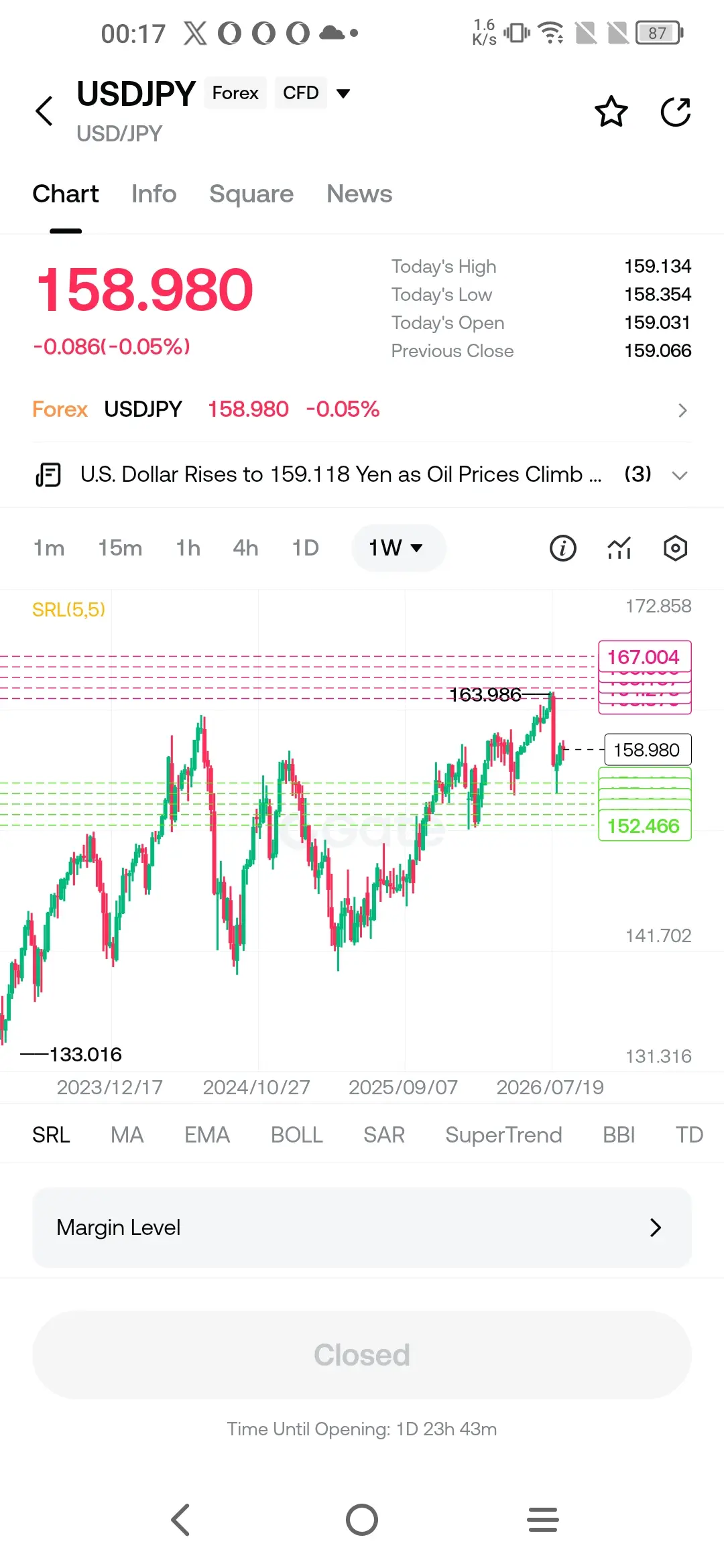
The USDJPY pair is trading sideways around 158.98. After falling to 158.35 during the day, the pair recovered with buying pressure and approached the 159.04-159.15 region again. This movement shows the dollar's resilience against the yen on a day when it is generally weak.
The 200-day moving average at 158.31 acts as the lower limit, while the 100-hour and 200-hour moving averages act as the upper limit. A drop below 158.31 could target 157.97 and 157.25, while a move above 159.15 could bring the 159.60 and 159.98-160.00 band into play.
The SRL(5,5) indicator is at 163.98, while the current price at 158.98 is trading below this band. This indicates that the pair is trading below its long-term average and the main trend is still downward.
The current level of USDJPY reflects the policy divergence between the two central banks. The rise in US 30-year Treasury yields to their highest levels since 2007 is the main factor supporting the dollar. In contrast, while Japan's 10-year Treasury yield has reached 2.93%, its highest level since September 1996, the BOJ's reluctance to raise interest rates and weakness in economic data (GDP below expectations, consumption flat, corporate investment declining) are creating new pressure.
The rise in oil prices (Brent in the $89 range) is also supporting demand for the dollar due to increased inflationary concerns. The lack of a diplomatic solution on the US-Iran front is putting upward pressure on energy prices.
The market is debating whether the Fed will surprise with a rate hike at its Jackson Hole meeting next week. The probability of a September hike is priced into the market at around one-third. On the BOJ side, the 31.3 trillion yen debt service burden and the assumption of a 3% interest rate are limiting the BOJ's room for maneuver.
For Gate users: This trend in USDJPY could serve as an early warning system for crypto markets, particularly in terms of carry trade positions and risk appetite. The weakness in the yen suggests that Japanese investors are continuing to shift towards overseas assets, while a strong dollar could put pressure on risky assets. The Jackson Hole meeting and US CPI data will be the main factors determining the pair's direction in the coming period.
$USDJPY
DYOR 🔎 NFA ✔️
#GateStockInsightsChallenge
The USDJPY pair is trading sideways around 158.98. After falling to 158.35 during the day, the pair recovered with buying pressure and approached the 159.04-159.15 region again. This movement shows the dollar's resilience against the yen on a day when it is generally weak.
The 200-day moving average at 158.31 acts as the lower limit, while the 100-hour and 200-hour moving averages act as the upper limit. A drop below 158.31 could target 157.97 and 157.25, while a move above 159.15 could bring the 159.60 and 159.98-160.00 band into play.
The SRL(5,5) indicator is at 163.98, while the current price at 158.98 is trading below this band. This indicates that the pair is trading below its long-term average and the main trend is still downward.
The current level of USDJPY reflects the policy divergence between the two central banks. The rise in US 30-year Treasury yields to their highest levels since 2007 is the main factor supporting the dollar. In contrast, while Japan's 10-year Treasury yield has reached 2.93%, its highest level since September 1996, the BOJ's reluctance to raise interest rates and weakness in economic data (GDP below expectations, consumption flat, corporate investment declining) are creating new pressure.
The rise in oil prices (Brent in the $89 range) is also supporting demand for the dollar due to increased inflationary concerns. The lack of a diplomatic solution on the US-Iran front is putting upward pressure on energy prices.
The market is debating whether the Fed will surprise with a rate hike at its Jackson Hole meeting next week. The probability of a September hike is priced into the market at around one-third. On the BOJ side, the 31.3 trillion yen debt service burden and the assumption of a 3% interest rate are limiting the BOJ's room for maneuver.
For Gate users: This trend in USDJPY could serve as an early warning system for crypto markets, particularly in terms of carry trade positions and risk appetite. The weakness in the yen suggests that Japanese investors are continuing to shift towards overseas assets, while a strong dollar could put pressure on risky assets. The Jackson Hole meeting and US CPI data will be the main factors determining the pair's direction in the coming period.
$USDJPY
DYOR 🔎 NFA ✔️
#GateStockInsightsChallenge