Square
Following
Hot
News
Profile

noobclaw

vip
Active for: 13.4y
Peak Tier 5
No content yet
44
Following
58
Followers
149
Liked
A noteworthy data point about derivatives protocols: Lighter’s price-to-earnings ratio is twice that of Hyperliquid. This actually reflects a market disagreement over who can capture the next wave of on-chain derivatives trading volume. Hyperliquid has won over a group of high-frequency traders with high throughput and low latency, while Lighter is taking a more lightweight approach, trying to attract long-tail users with a lower barrier to entry. The twofold difference in P/E indicates that capital is willing to pay different premiums for different narratives. But a high P/E also means expect
post-image
LIT-0.99%
HYPE-0.87%
New York and Wyoming signed a memorandum of cooperation on crypto regulation, coordinating license reviews across states and accelerating approvals within six years. Regulators are beginning to replace fragmented approaches with cooperation, giving exchanges and projects a clearer path. This is positive for the industry, reducing redundant compliance costs.
U.S. Treasury yields are surging and global liquidity is tightening—what does this mean for the crypto market? Simply put, money has become more expensive, putting pressure on risk assets. But the crypto market is not monolithic: on-chain activity for Bitcoin and Ethereum remains active, while DeFi protocol TVL remains resilient, indicating that the underlying logic of crypto-native demand has not changed. Short-term market volatility is inevitable, but the long-term trend depends on innovation and adoption. Rather than being led around by macro sentiment, it is better to focus on real on-chai
post-image
BTC-0.03%
ETH-0.34%
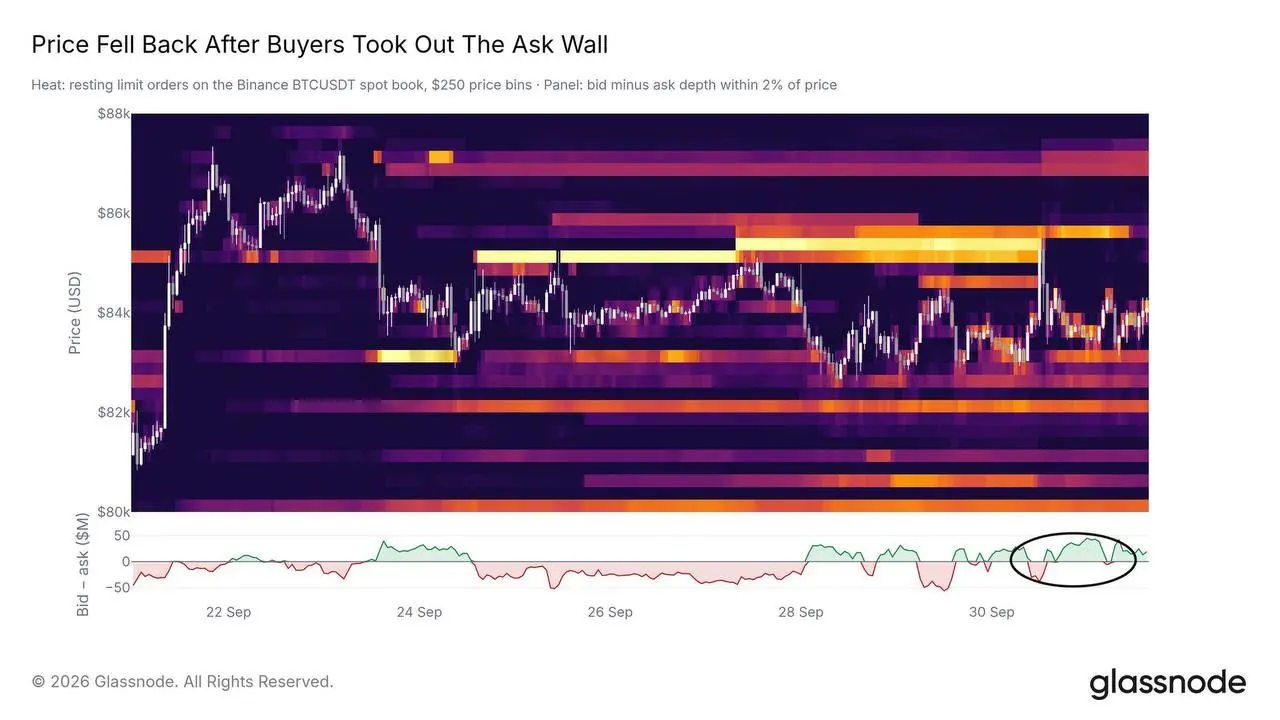
The latest report from on-chain data platform Glassnode points out that the sell wall around $85k has been absorbed by buyers, and the remaining sell orders also appear to have been withdrawn. This means liquidity pressure above has eased significantly, resistance to upward price movement has weakened, and momentum could accelerate once a breakout occurs.
The disappearance of the sell wall usually reflects a shift in market sentiment: either sellers believe the current price is no longer worth selling at, or buying power is strong enough to absorb the selling pressure directly. In either case,
post-image
BTC-0.03%
SI’s rally this time is pretty fierce, jumping 21.96% in one hour and sending its market cap straight past $50 million. For a project of $SI ’s size to produce this kind of slope means it isn’t just scattered capital testing the waters—consensus formed rapidly and concentrated within a short period. On-chain projects like this often rise fast and fall just as quickly. The key is to watch position changes and futures funding rates over the next 24 hours: if the rate turns positive while open interest doesn’t decline, it means the bulls haven’t dispersed yet. But my consistent approach is: don’t
post-image
SI-17.07%
The 72-hour update on the Ledger supply-chain tampering incident is here: it has been confirmed that all the stolen coins came from the Southeast Asian distributor CryptoBilis. The hardware wallet’s main supply chain was not compromised; the issue occurred at the distribution stage. So, buy wallets only through official channels and don’t be tempted by low prices. Cold wallets are still secure, but distribution channels also need to be watched.
A life insurance company backed by Sam Altman's money recognizes only Bitcoin across its entire system, and recently raised another $37.5 million. The story itself isn't complicated, but the signal behind it is quite interesting.
Traditional insurance companies hold piles of cash and invest in bonds and stocks, yet even beating inflation is difficult. Now some are doing the opposite, converting all their reserve assets into BTC. Their clients are not ordinary people, but high-net-worth families from Asia, Europe, and the Middle East. What do these people's money fear most? Inflation and freeze
post-image
BTC-0.03%
Bitcoin’s market cap dominance is nearing 60%, while USDT’s share has slipped to 6.3%. This combination is quite interesting. We usually look at BTC.D and stablecoin dominance together to get a rough read on market sentiment: BTC.D rising + USDT falling means capital hasn’t left the market, but is shifting from cash positions into risk assets.
Does this structure look like the period before the trend started in 2021? Back then, BTC also absorbed liquidity first, raised its dominance, and then capital gradually flowed into other sectors. Of course, the pace may be slower this time, given the ch
BTC-0.03%
MEME-1.42%
Tracking fuel carbon emissions data on-chain—this is an interesting angle. The Brazilian oil giant brought Cardano into two research projects, not to hype crypto, but to prevent the same emissions reduction from being counted twice while tracking fuel data throughout the entire process from production to use. Put simply, it uses blockchain’s immutability to create a publicly verifiable underlying ledger for clean energy’s environmental accounting. This kind of real-world application is much more substantive than merely talking about TPS; the value of public chains ultimately comes back to solv
ADA-0.48%
GPT-6 Astra deciphered a secret code from Napoleon dating back 217 years, with the model taking just 6 hours to crack it. This makes me think of cryptography on today’s blockchains: humanity has used history to prove that encryption can lock away secrets, while AI uses computing power to prove that decryption can pierce through time. Web3’s mission is not to lock on-chain data in a safe, but to put the power to unlock it in users’ hands.
Bitwise launched the first NEAR spot ETF in the United States, ticker NRR, trading on NYSE Arca. The ETF not only allows traditional brokerage accounts to hold NEAR directly, but also offers staking rewards. NEAR has nearly tripled since August, and as an AI-focused public blockchain, it is clearly attracting significant attention. The entry of traditional capital is positive for the crypto industry, but short-term volatility risks are also high, so don’t focus only on the uptrend.
post-image
The Solana Foundation has developed an open-source settlement program, reducing institutional transaction times from several days to a few seconds, with JPMorgan providing key recommendations. Traditional finance is entering the space, and on-chain settlement efficiency is vastly superior—this is a real-world use case.
SOL-0.19%
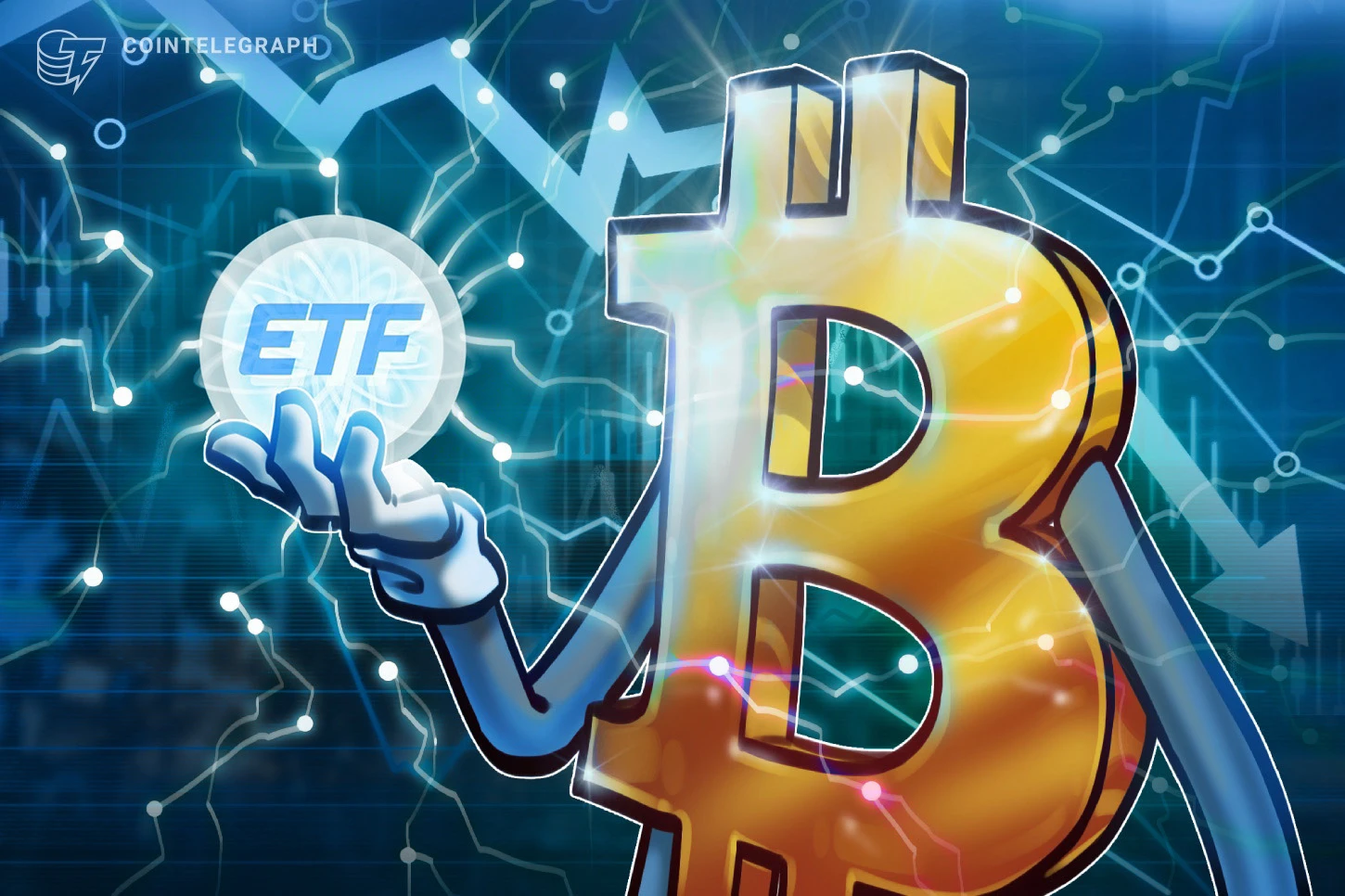
Bitcoin ETF net inflows reached $119 million; money is still flowing in despite the price drop, suggesting institutions are accumulating at lower levels. Ethereum ETFs have seen net outflows for six consecutive days, with $408 million flowing out. The divergence is clear in the short term: BTC is being treated as a safe-haven asset, while ETH is still flushing out excess speculation. Play it safe and don’t rush to buy the dip.
post-image
BTC+0.57%
ETH-0.45%
Printing AI prompts in a physical book sounds like an absurd joke, but the underlying technical logic is actually rooted in the same principle as blockchain—both run into the fact that “machine traces cannot be completely erased.”
First, the news itself: When 《終焉路獨行》 was published, wording such as the AI editing instruction “As an AI language model, please assist with editing” was left directly in the main text, forcing the publisher to urgently recall and destroy the books. This shows that even in a traditional process like publishing a book, AI has become so deeply involved that editors no l
The Fear & Greed Index fell to 73. It is still in the greed zone, but has clearly cooled off. This shows that the urge to chase highs is fading and the market is starting to calm down. At times like this, the biggest danger is thinking you’re buying the dip when you’re actually only halfway down. Don’t fight the index; keeping your position size comfortable is what matters most.
post-image
Bitcoin wrapped up September at a “limit-up” pace, posting its best performance for the period in history. Now, as October arrives, the Uptober narrative is in full swing—but with U.S. Treasury yields surging to 5.3% and the shadow of rate hikes still lingering, macro headwinds are blowing straight into crypto. I took a look at the historical data: October’s average gains are indeed eye-catching, but the past does not guarantee the future. Market sentiment now feels like a spring being pulled in opposite directions: on one side is the anticipation surrounding the approaching halving, and on th
post-image
BTC-0.03%
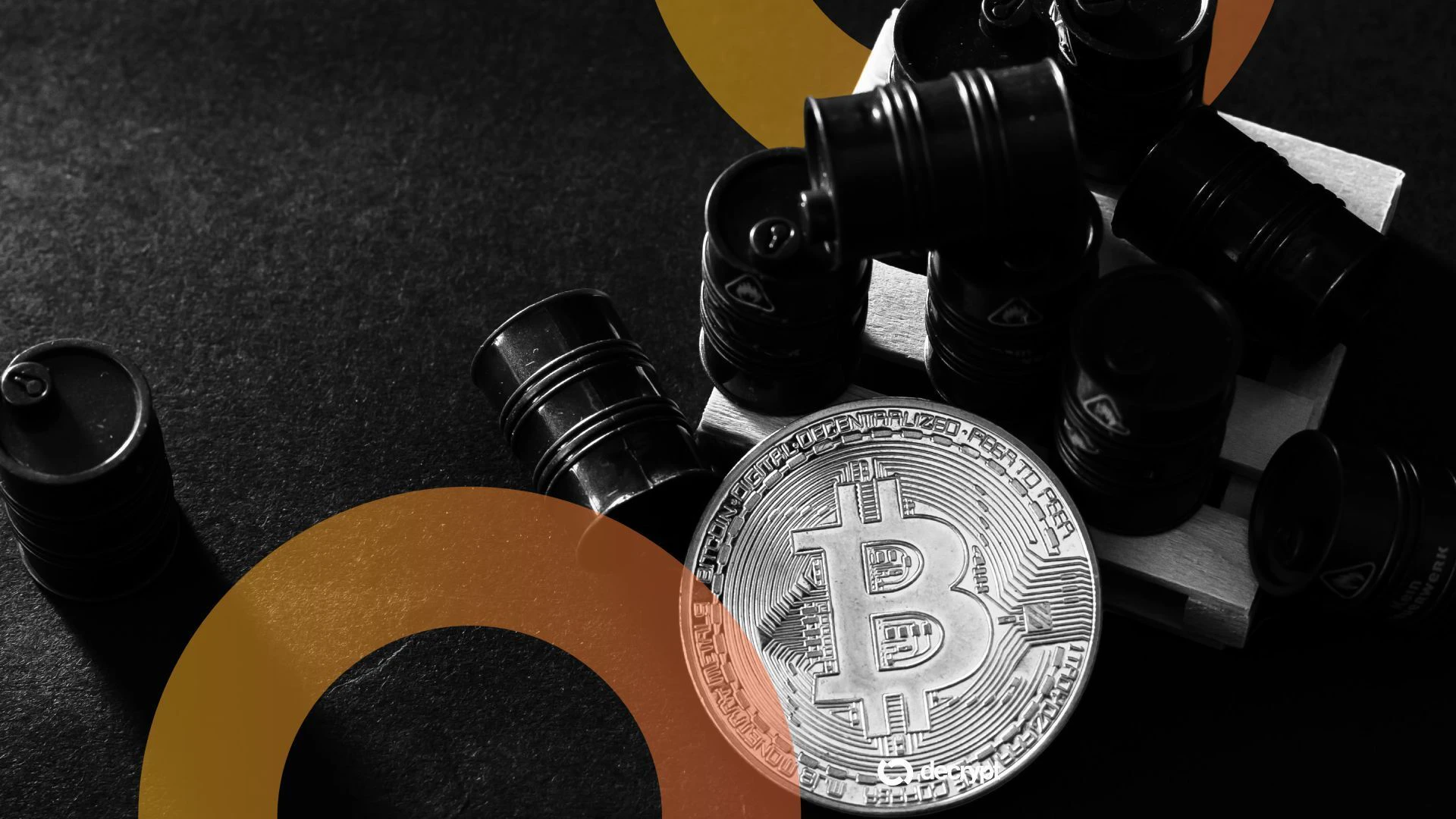
US Treasury yields remain high, putting pressure on non-yielding assets, but $BTC remains steady around 84K, with spot ETFs recording net inflows for eight consecutive days. Institutions have not fled; they are simply more sensitive to crude oil prices for the time being.
post-image
BTC+0.57%
Regulating cross-border stablecoins has always been a headache. Every country regulates them separately, but if a risk emerges, who will provide the backstop? Without a unified crisis-management mechanism, cross-border stablecoins are effectively operating in a regulatory vacuum. The FSB has once again issued a call ahead of the G20 Summit, saying this gap must be addressed. I think the direction is right, but implementation will be difficult. Countries have a strong sense of financial sovereignty—who would be willing to cede regulatory authority? A more realistic approach might be to start wi
BTC-0.03%
In this NFT recovery, the focus isn’t how much profile-picture NFTs have risen again, but how the form itself is being re-experimented with. The narrative around composable, programmable NFTs is gaining depth, which is more worth watching than a simple price rebound.
post-image