Square
Following
Hot
News
Notifications
Profile

miss_1903

vip
No content yet
Peak Tier VIP 53.5 Year(s)
416
Following
1.2k
Followers
31.8k
Liked
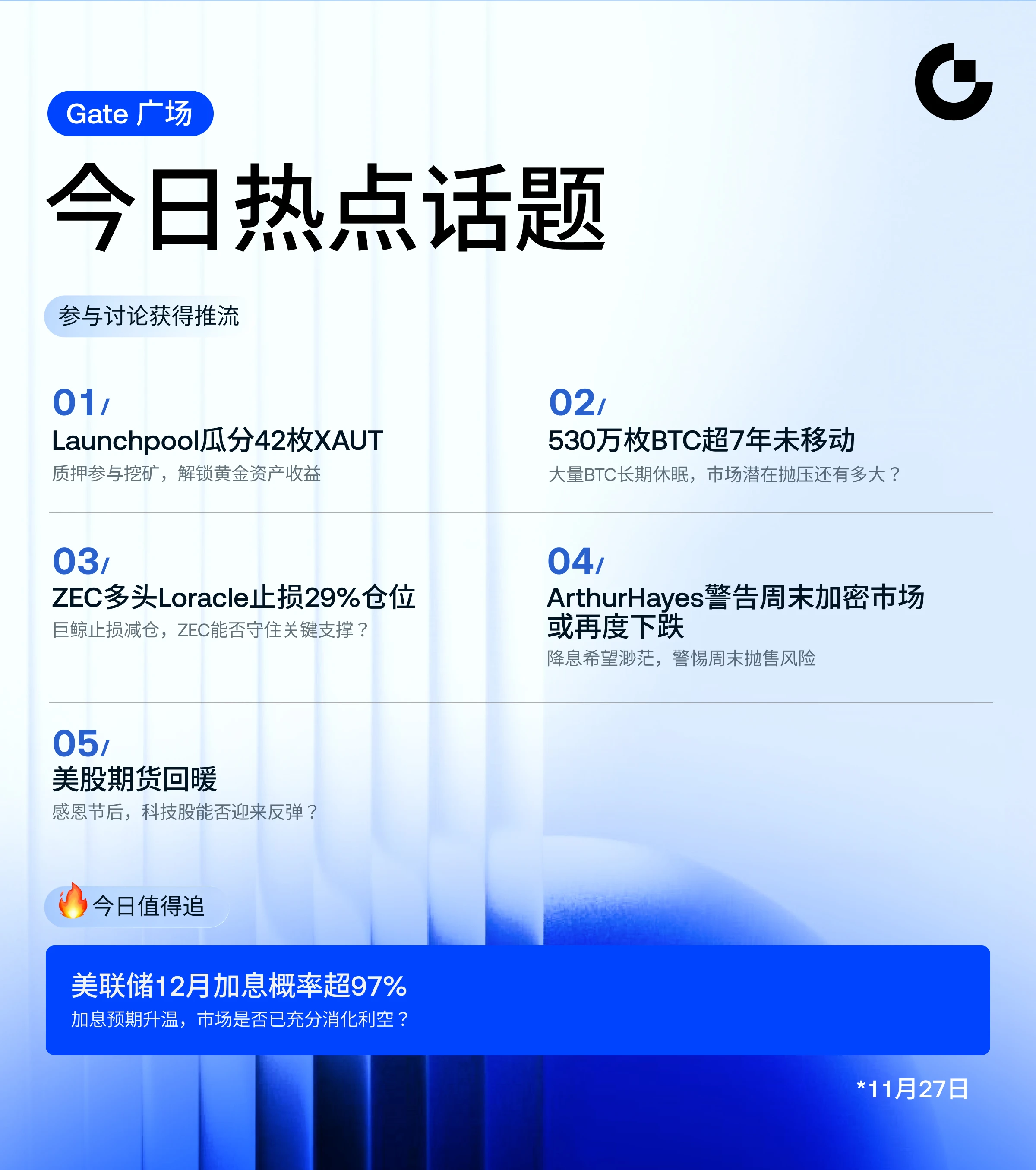
#ZEC多头Loracle止损29%仓位
Is Loracle Reducing Its ZEC Long Position a Warning Sign?

A cautious bearish signal

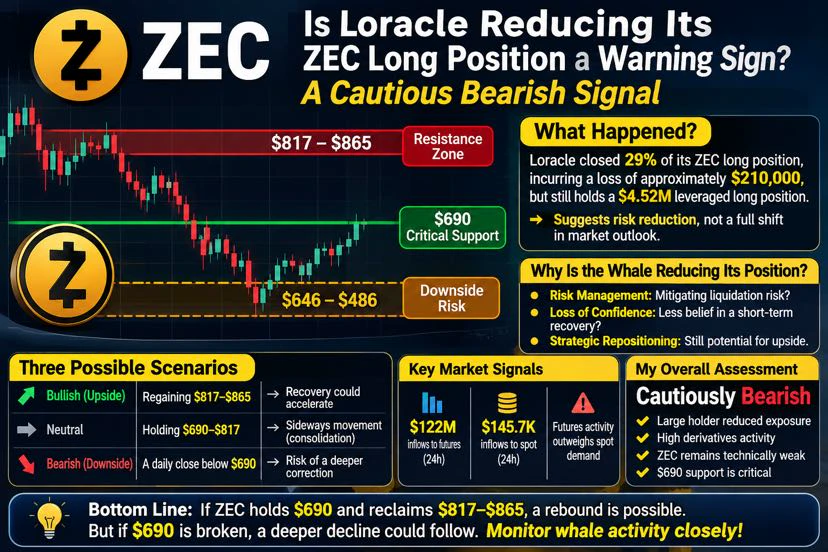
Loracle’s decision to close 29% of its ZEC long position—incurring a realized loss of approximately $210,000—is noteworthy; however, it does not necessarily imply an expectation of a major collapse.

The most significant detail is that the investor has maintained the remainder of their $4.52 million leveraged long position.

This suggests a reduction in risk rather than a complete shift in the market outlook. Nevertheless, should ZEC experience another sharp decline, leveraged long posit
ybaser
#ZEC多头Loracle止损29%仓位
Is Loracle Reducing Its ZEC Long Position a Warning Sign?
A cautious bearish signal
Loracle’s decision to close 29% of its ZEC long position—incurring a realized loss of approximately $210,000—is noteworthy; however, it does not necessarily imply an expectation of a major collapse.
The most significant detail is that the investor has maintained the remainder of their $4.52 million leveraged long position.
This suggests a reduction in risk rather than a complete shift in the market outlook. Nevertheless, should ZEC experience another sharp decline, leveraged long positions could quickly become vulnerable.
My initial assessment: This is not definitive proof that the uptrend has ended; rather, it serves as a cautionary note regarding short-term volatility and the risk of liquidation.
1. Why is this "whale" reducing its position?
According to a report dated November 27, Loracle opened a leveraged long position on November 25 at a price of approximately $726.27 and subsequently scaled it up significantly. The partial closure reportedly resulted in a realized loss of about $210,000.
There are three possible interpretations for this:
* Risk management: The investor may be mitigating the risk of liquidation following unexpected volatility.
* Loss of confidence: The partial exit could indicate a weakening belief in a short-term recovery.
* Strategic repositioning: The fact that a $4.52 million position remains intact suggests the investor still sees potential for an upward move. The key point here is that a large investor (a "whale") reducing their position does not automatically signal the opening of a "short" position. It is necessary to monitor whether other major investors follow suit.
2. ZEC technical outlook
Short-term bearish trend
Current market data points to three significant price zones:
Resistance zone
$817–$865
Breaking above this zone and sustaining a close—or remaining—above it would strengthen expectations for a recovery.
Critical support
$690
Maintaining this level could support a new short-term recovery.
Downside risk
$646–$486
Falling below the $690 level could bring lower support levels into play; $486 stands out as a potential target in a deeper decline scenario.
Another cause for concern is that activity in ZEC derivatives markets appears stronger than demand in the spot market. According to the data, approximately $122 million has flowed into futures markets over the last 24 hours, while only $145,700 has entered the spot market.
This suggests that the recovery is driven more by speculative, leveraged trading than by a genuine, underlying desire to buy the asset. 3. Three possible scenarios
Bullish (Upside) Regaining the $817–$865 level Recovery could accelerate
Neutral Maintaining the $690–$817 range Sideways movement (consolidation)
Bearish (Downside) A daily close below $690 Risk of a deeper correction
4. My overall assessment
While a technical recovery is possible, I remain cautiously "bearish" (leaning toward the downside) in the short term.
The reasons for this are as follows:
* A holder of a large "long" position has reduced their exposure (position size).
* Activity in the derivatives market is high, which increases the risk of liquidations.
* ZEC remains technically weak on the daily timeframe.
* The $690 support zone is critically important.
That said, there are also long-term fundamental developments for Zcash worth monitoring. The NU7 upgrade was implemented in November, and work on quantum resistance is currently underway.
In conclusion: If buyers can successfully defend the $690 level and reclaim the $817–$865 range, ZEC could see a rebound. However, if the $690 level is decisively broken, a new wave of "long" position liquidations could accelerate the decline.
I would not interpret the $4.52 million position still held by Loracle as evidence that an uptrend is about to begin. Likewise, I do not view the 29% reduction in the position as a harbinger of a collapse.
Before making a decision regarding the direction, I suggest you closely monitor the $690 support level and any shifts in the positions held by "whales" (large-scale investors).
$ZEC ‌
$GT ‌
repost-content-media
#美股宏观周 #Gate股票畅聊季 Why Has Nvidia’s Rebound Stalled Again? What Other Signals Should Investors Watch for in the AI Chip Leader’s Stock?

Nvidia’s recent share-price moves once again highlight an easily overlooked issue in tech stock trading: fundamentals matter, but the market’s views on management, corporate governance, and future expectations can also affect short-term valuations. On November 23, news that Jensen Huang had resumed the role of Nvidia CEO drove a sharp rebound in the stock, and the market briefly thought the company was back on its familiar strategic track. But after the reboun
ThisIsTranslateContent:
#美股宏观周 #Gate股票畅聊季 Why Has Nvidia’s Rebound Stalled Again? What Other Signals Should Investors Watch for in the AI Chip Leader’s Stock?
Nvidia’s recent share-price moves once again highlight an easily overlooked issue in tech stock trading: fundamentals matter, but the market’s views on management, corporate governance, and future expectations can also affect short-term valuations. On November 23, news that Jensen Huang had resumed the role of Nvidia CEO drove a sharp rebound in the stock, and the market briefly thought the company was back on its familiar strategic track. But after the rebound, the stock quickly came under pressure. Market data shows that Nvidia closed at $149.30 on November 25, down 3.91%. More notably, S&P Global Ratings subsequently placed Nvidia’s credit rating on negative watch over concerns involving management and corporate governance risks. This means Nvidia’s current challenges are no longer limited to demand for AI chips; the market is also reassessing the company’s governance and long-term business stability.
I. Why Didn’t Huang’s Return Keep the Stock Rising?
Nvidia is one of the most important companies in the current wave of AI infrastructure investment. In recent years, global cloud providers have steadily increased their AI capital expenditures, driving rapid growth in GPU demand. Thanks to its chip performance, software ecosystem, and system solutions, Nvidia has established a strong competitive advantage in AI computing.
As a result, changes in Huang’s management role can easily affect market expectations. But a CEO’s return cannot automatically resolve every issue. Investors also need to consider whether the board can effectively fulfill its oversight responsibilities, whether the company’s governance framework is sufficiently robust, and whether related investigations and regulatory issues could affect its long-term operations. On November 25, S&P Global Ratings placed Nvidia’s credit rating on negative watch, signaling that the market has begun to reassess governance risks. Note that this does not mean the rating has already been downgraded, nor does it mean the company’s chip orders are in trouble.
For investors who hold or are watching Nvidia stock, management and governance, customer demand, and supply chain deliveries all need to factor into their assessment, beyond share-price fluctuations. If you plan to trade U.S. stocks such as Nvidia, preparing funds is also part of the practical process.
II. Nvidia’s Core Value Still Comes from Its AI Computing Ecosystem
In the long term, Nvidia’s competitiveness is about more than a single GPU. AI computing requires chips, networking, server systems, and software tools to work together. With its CUDA ecosystem, GPU products, networking equipment, and complete systems, Nvidia has built a relatively comprehensive solution. That is why cloud providers and enterprise customers often prioritize Nvidia’s product lineup when building AI data centers. But the competitive landscape is also changing.
AMD continues to advance its data center GPU business, while cloud providers are developing their own chips to reduce reliance on a single supplier. Meanwhile, improvements in model inference efficiency could also reshape demand across different types of computing hardware. Nvidia remains an industry leader, but the market will continue to watch whether it can maintain its product iteration speed, customer stickiness, and profit margins.
III. If AI Demand Is Still There, Why Are Chip Stocks Starting to Pull Back?
Investment in AI infrastructure is substantial, but share prices are not determined by demand alone.
The market also considers three questions:
First, can cloud providers sustain their capital expenditures? If major customers begin to slow data center construction, growth in chip purchases could be affected.
Second, will competition squeeze profit margins? As AMD, custom chips, and other accelerated computing solutions advance, Nvidia needs to keep demonstrating the advantages of its products in performance, energy efficiency, and overall system costs.
Third, have current valuations already priced in future growth? If the market has priced in very optimistic revenue and profit expectations, the stock may not rise in tandem even if the company continues to grow.
Therefore, Nvidia’s recent pullback should not simply be interpreted as AI demand disappearing. It is more likely that the market has started assessing growth expectations, governance risks, and valuation levels at the same time.
IV. What Signals Should Investors Watch for Next?
For Nvidia, the key short-term indicators are whether the share price can stabilize and whether there is further progress on corporate governance issues.
In the medium to long term, investors should track whether data center revenue and order growth continue; whether new-generation GPU products are delivered on schedule; whether gross margins can remain high; whether cloud providers continue to increase capital expenditures; and whether corporate governance and credit-rating watch issues are resolved.
In particular, a negative credit-rating watch is not the same as a stock rating. The former primarily concerns credit risk and governance assessments and should not be directly equated with analysts being bearish on the stock.
Conclusion: Nvidia Remains a Core AI Play, but Valuation Cannot Be Driven by Faith Alone
Nvidia remains a key player in the global AI computing supply chain, with GPUs, networking, and its software ecosystem forming its long-term competitive advantages. But as the company grows larger, the market’s expectations of it will rise as well. In addition to chip demand and financial performance, governance, capital expenditures, and the competitive landscape can all affect the valuation investors are willing to pay.
The long-term direction of the AI industry may not have changed, but for Nvidia’s stock to regain sustained upward momentum, its performance, governance, and market expectations will ultimately all need to provide answers. $NVDA ‌
repost-content-media
🎯 Share your trades and win 20 USDT in our weekly picks!

What event market or event contract trades are worth sharing?
Post screenshots of real trades, positions, or settlements, along with your trading rationale or takeaways, for a chance to win 👇

🏆 Weekly Top Pick: 20 USDT
⭐ Best Content Award: 10 USDT
🍀 Lucky Participant Award: 5 USDT
The two categories are judged separately each week. All rewards are experience vouchers for the corresponding category, and high-quality trade posts may also receive official exposure.

✍️ After signing up, tag #Gate事件市场 or #Gate事件合约,在 and post an orig
GateSquare
🎯 Share your trades and win 20 USDT in our weekly picks!
What event market or event contract trades are worth sharing?
Post screenshots of real trades, positions, or settlements, along with your trading rationale or takeaways, for a chance to win 👇
🏆 Weekly Top Pick: 20 USDT
⭐ Best Content Award: 10 USDT
🍀 Lucky Participant Award: 5 USDT
The two categories are judged separately each week. All rewards are experience vouchers for the corresponding category, and high-quality trade posts may also receive official exposure.
✍️ After signing up, tag #Gate事件市场 or #Gate事件合约,在 and post an original trade recap on Gate Square. Whether you made a profit or a loss, we welcome you to share your real experience.
👉 Sign up now and give this trade another chance to win
https://www.gate.com/zh/campaigns/7219
repost-content-media
  • 2
#感恩有你,
#ThankfulForYou
Here’s a heartfelt and sincere Thanksgiving message you can share on Gate Square:

Sometimes a post, a little comment, or a sincere exchange of ideas can give you a completely different perspective.
A huge thank you to @Surrealist5N1K @Crypto_Buzz_with_Alex @KatyPaty for always being there for us on this journey through the crypto world with your analyses and heartfelt conversations, and for all your hard work and unwavering support! We’re so glad to have you.
Durin
  • 4
#美联储12月加息概率超97%

• Current Expectations: According to CME FedWatch data, investors are pricing in a 97% to 99% probability of a 25-basis-point rate hike at the FOMC meeting on December 8-9, 2026.
• Pricing Status: A quarter-point (25 bps) hike is largely priced in. However, Fed Governor Christopher Waller's remarks that a more aggressive 50-basis-point move may also be necessary, and the Fed's hawkish stance on inflation under Chair Kevin Warsh, are keeping uncertainty alive. Although the market has digested the 25-basis-point hike, messages signaling that rates will stay "higher for longer"
CME+0.50%
  • 9
#美股期货回暖

• After Thursday, when US stock exchanges were closed for a holiday, pre-market index futures are seeing strong relief buying ahead of the market’s early close on Friday, November 27 (21:00 TSI). Nasdaq 100 futures are up 2.4% - 2.8%, while S&P 500 futures are trading up around 1.65% - 1.7%.
• Recovery Prospects: Expectations that the US’s new tariff plans may be softer than feared, along with a rebound in AI stocks, are supporting risk appetite. However, recent net outflows from US spot Bitcoin ETFs and thin trading volumes in the market, which will close early for Black Friday, may
post-image
NAS100-0.07%
SPX500+0.19%
BTC-0.60%
  • 8
#纳指100逼近熊市AI交易遭遇抛售
Technology stocks are undergoing a sharp correction amid expectations of interest rate hikes and concerns about high valuations:
Index Performance: The Nasdaq 100 (NDX) fell to 25,029 on November 20 after reaching a peak of 28,437 at the beginning of November, and closed yesterday (November 25) at 26,047 points. The pullback from the index's record highs triggered debate in the market about whether it is nearing bear market (20% decline) territory.
• Pressure on AI Stocks: Despite strong earnings reports, daily sell-offs of up to 8% in Nvidia (NVDA) shares and double-digit
post-image
NVDA+0.81%
MU+7.08%
ARM+6.24%
  • 8
#BTC温和回升

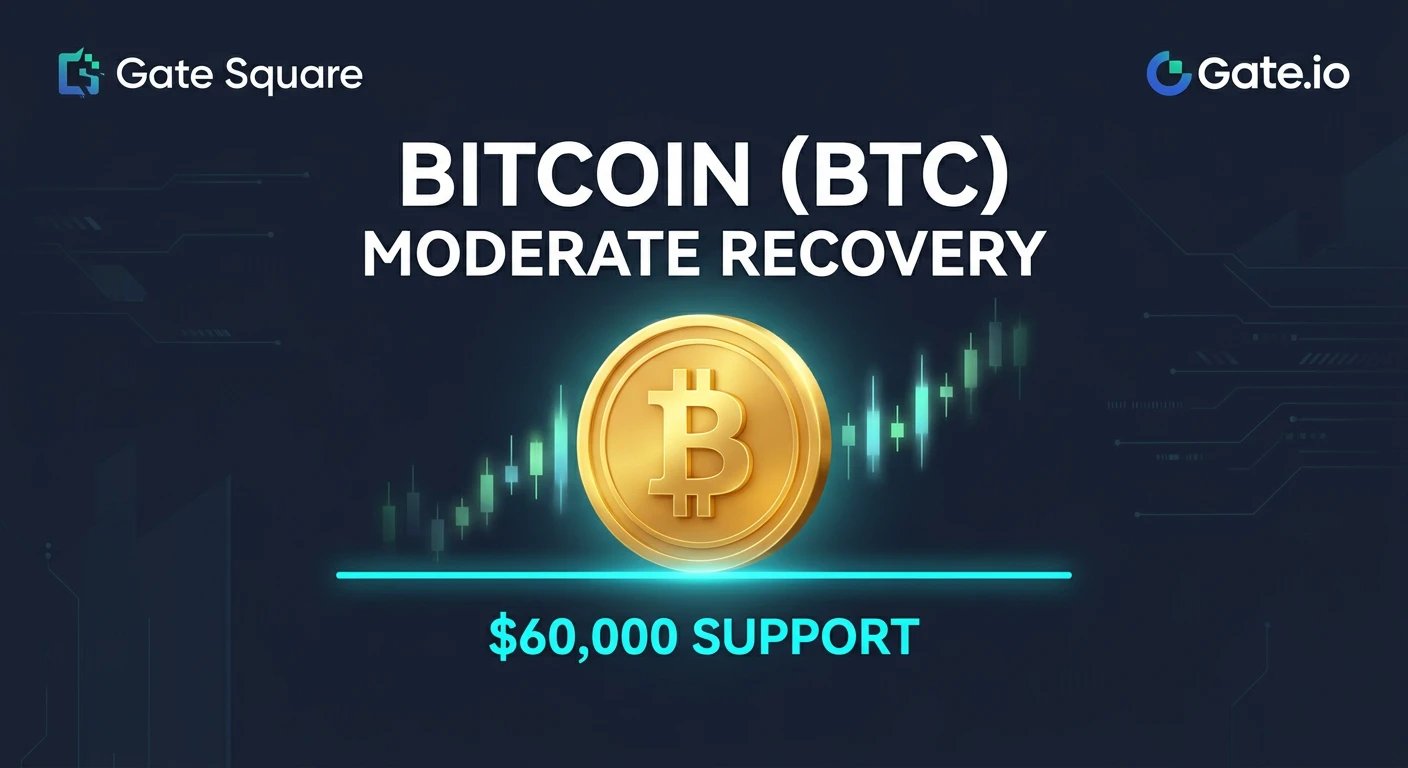
Bitcoin, which plunged sharply throughout November due to macro pressures and ETF outflows, is trying to hold at a critical psychological level:
Current Price and Monthly Performance: BTC began November at $77,648, fell to $56,228 on November 21 (an intraday low of ~ $55,150), then stabilized around $60,480 today after bargain buying.
Institutional Flows: Net outflows of approximately $3.47 billion from U.S. spot Bitcoin ETFs throughout November have emerged as the biggest obstacle to gains.
• Technical Outlook: While holding the $60,000 support provides short-term relief, analysts
post-image
BTC-0.67%
  • 9
#10月PCE通胀升至近三年高位

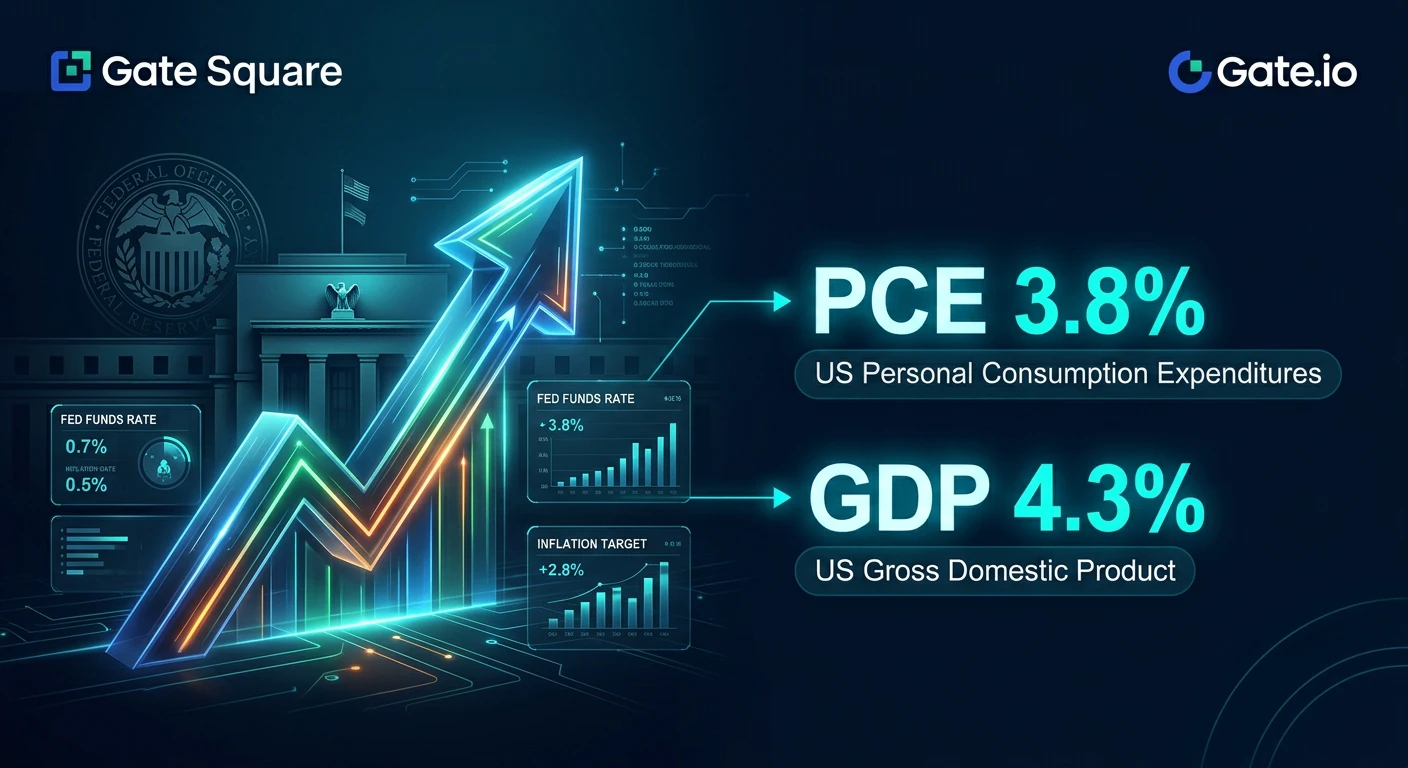
Data released yesterday (November 25) by the U.S. Bureau of Economic Analysis (BEA) radically changed market expectations for interest rates:
Headline and Core PCE: Annual inflation in personal consumption expenditures (PCE), closely watched by the Fed, rose from 3.6% in September to 3.8% in October. Core PCE, which excludes food and energy, came in at 3.3%, above expectations of 3.2%, reaching its highest level since November 2023.
Record GDP Growth: U.S. third-quarter GDP growth was revised up to 4.3% from an initial estimate of 3.4%. AI investments and strong consumer spe
post-image
  • 8
#特斯拉与SpaceX合并谈判推进

In a Tesla and SpaceX merger scenario, management, valuation, and regulatory pressures outweigh technological synergies in the short term. Recent developments reported by sources such as the Financial Times and Reuters regarding this historic deal, which is expected to reach a combined value of approximately $3.5 trillion, highlight serious structural risks alongside its integration potential.

The potential share-swap merger under discussion between Tesla and SpaceX, expected to reach a combined value of approximately $3.5 trillion, has sparked a polarized market debate ov
post-image
TSLA+5.22%
SPCX+4.92%
  • 21
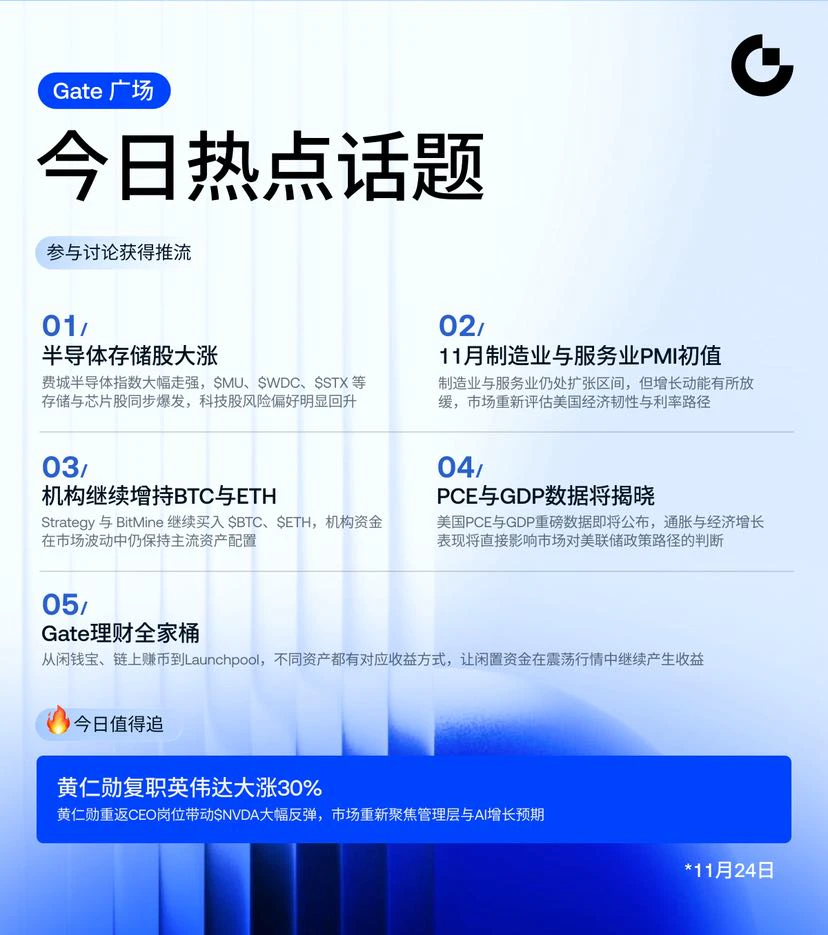
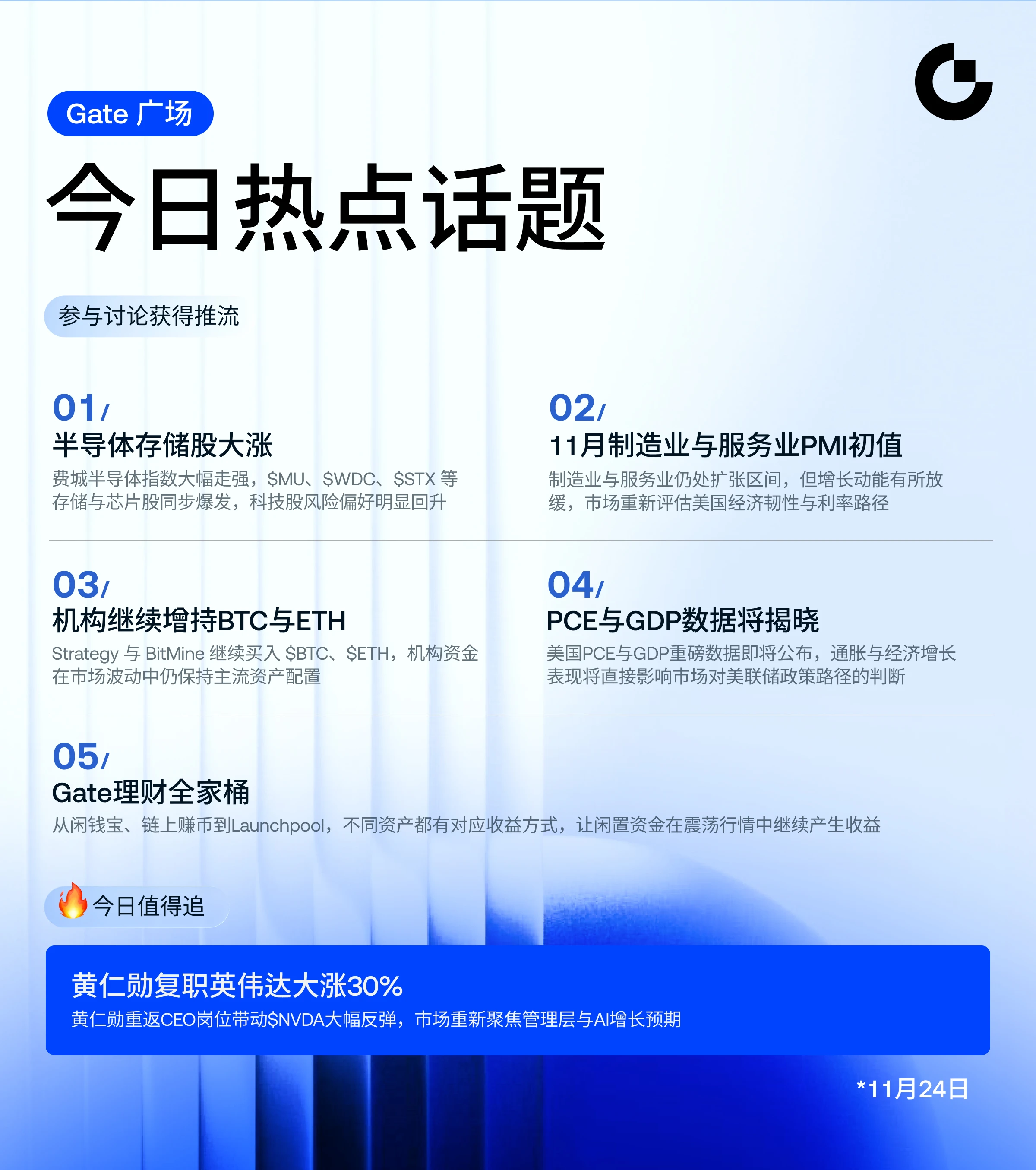
#PCE与GDP数据将揭晓

PCE and GDP Data: The Market May Remain Cautious

In light of current data and market expectations, the figures due to be released are more likely to make the market more cautious (and even reinforce pricing for tighter policy) than to strengthen expectations of interest rate cuts.
Headline PCE is expected to rise to 3.8% year over year, while Core PCE, the Fed’s primary focus, is expected to increase to 3.2%. These rates remain well above the Fed’s 2% long-term target.

Third-quarter GDP growth is expected to be revised upward to the 3.5% - 3.6% range. Strong economic activity
post-image
  • 18
#Anthropic市值跌破万亿美元

Following Anthropic’s (ticker: ANT) IPO in November 2026, its market value challenged the $2 trillion threshold before retreating toward below $1 trillion—a move seen not merely as normal profit-taking and a settling after the euphoria, but also as the start of a fundamental repricing of AI valuations.
ANT+10.98%
  • 16
#JensenHuangReturnsNvidiaSurges30%
The US stock market is facing another volatile week. After last week's sell-off, where the Nasdaq dropped about 10% and the S&P 500 fell nearly 9%, we saw a sharp rebound yesterday. However, today in premarket trading, index futures and tech stocks are slipping back into the red.
Several key factors are weighing on prices right now:
Re-evaluating AI spending. Investors are growing tired of waiting for returns on multi-billion-dollar investments in data centers and AI models. The market is now demanding real, immediate profits from tech giants rather than jus
KatyPaty
#JensenHuangReturnsNvidiaSurges30%
The US stock market is facing another volatile week. After last week's sell-off, where the Nasdaq dropped about 10% and the S&P 500 fell nearly 9%, we saw a sharp rebound yesterday. However, today in premarket trading, index futures and tech stocks are slipping back into the red.
Several key factors are weighing on prices right now:
Re-evaluating AI spending. Investors are growing tired of waiting for returns on multi-billion-dollar investments in data centers and AI models. The market is now demanding real, immediate profits from tech giants rather than just future promises. Even the recent Anthropic IPO failed to bring optimism back to the sector.
The situation around Nvidia. The company has been in the spotlight due to export control investigations and a delayed earnings report. Yesterday, the stock jumped over 30% on news of Jensen Huang returning as CEO, pulling the broader market up with it. Still, volatility remains high, and traders are already taking profits on part of that rally today.
Macroeconomics and the Fed. Inflation remains sticky, and labor market data gives the Federal Reserve room for further interest rate hikes. For growth stocks, expensive borrowing costs are always a serious headwind.
Right now, the market is going through a tense repricing of assets, with capital rotating out of overheated tech names into clearer, more defensive plays.
How are you handling this volatility: buying the dip, or staying in cash until things settle down?
#ShareWeekly $NVDA ‌
$MU ‌$AMD ‌$ANT ‌
repost-content-media
  • 15
  • 1
#机构继续增持BTC与ETH
Yes, continued institutional buying can be a significant signal that the market is stabilizing; however, it does not serve as definitive proof that the market has reached its bottom.

The acquisitions made by Strategy and BitMine convey an encouraging message: major institutional players continue to accumulate Bitcoin and Ethereum, despite market volatility.

What makes this particularly interesting is the difference in the strategies pursued by these institutions:

* Strategy: The addition of 457 BTC reinforces its long-term conviction in Bitcoin, even amidst uncertain market
ybaser
#机构继续增持BTC与ETH
Yes, continued institutional buying can be a significant signal that the market is stabilizing; however, it does not serve as definitive proof that the market has reached its bottom.
The acquisitions made by Strategy and BitMine convey an encouraging message: major institutional players continue to accumulate Bitcoin and Ethereum, despite market volatility.
What makes this particularly interesting is the difference in the strategies pursued by these institutions:
* Strategy: The addition of 457 BTC reinforces its long-term conviction in Bitcoin, even amidst uncertain market conditions.
* BitMine: The addition of 7,819 ETH demonstrates that institutional interest in Ethereum persists, reflecting confidence in the asset's long-term potential.
Why are these acquisitions significant?
There are three key reasons that investors should note:
* Confidence during uncertainty: Institutional accumulation during market corrections may indicate that some major investors view lower prices not as a reason to exit the market, but as an opportunity.
* Long-term positioning: These purchases suggest that large-scale firms are maintaining their long-term digital asset strategies, despite short-term downward pressure on prices.
* Absorption of supply: Consistent buying can help alleviate selling pressure and build a more solid foundation for a future price recovery.
Nevertheless, an important distinction must be made: institutional accumulation does not necessarily imply a broad-based market recovery. In fact, there was recently a net outflow of approximately $1.8 billion on a weekly basis from spot Bitcoin ETFs in the United States. This indicates that institutional demand has followed a variable pattern.
What should investors watch for moving forward?
* Whether Bitcoin can maintain its critical technical support levels.
* Whether Ethereum can regain upward momentum.
* Whether inflows into ETFs will make a steady comeback.
* Whether institutional buying will persist over several consecutive weeks.
* Whether trading volume will increase alongside a price recovery.
My assessment of the market outlook:
I view these purchases not as definitive proof that the market has hit bottom, but rather as a potential early signal that confidence is beginning to return.
The most notable indicators would be a reduction in selling pressure alongside continued institutional accumulation, an improvement in ETF inflows, and stronger price action.
If these conditions begin to align, the current volatility could, over time, evolve into a healthier phase of accumulation.
The real question here is not just whether institutions are buying, but whether these purchases are significant enough to shift the overall market trend.
This is precisely where investors should focus their attention.
$BTC ‌$ETH ‌
repost-content-media
  • 16
#机构继续增持BTC与ETH
Despite the volatile trend in the crypto market, recent buying news from institutional players is creating a striking counterbalance to the widespread fear in the market. However, large players buying does not mean the downtrend is completely over; rather, it shows that long-term accumulation strategies are continuing resolutely.
Looking at the latest balance sheets, we see two major institutions pursuing a similar vision through different assets:
• Strategy: Added another 457 BTC to its portfolio, bringing its total reserves to over 851,000 BTC, and continued positioning Bitco
post-image
  • 16
#PCEAndGDPData
PCE and GDP Arrive Together: Wednesday 08:30 Is Critical

On Wednesday, November 25, at 08:30 ET, two major data sets will be released at the same time. October PCE and the second estimate for Q3 GDP.

This is the busiest day of the week. Because two data sets can change rate hopes at the same time.

PCE: What Is Expected?

Headline PCE is expected to rise 0.3% month over month. Annual pace is expected at 3.8%. September was 3.6%.

Core PCE is expected to rise 0.3% month over month. Annual pace is expected at 3.3%. September was 3.1%.

So the message is clear: Inflation is not
discovery
#PCEAndGDPData
PCE and GDP Arrive Together: Wednesday 08:30 Is Critical
On Wednesday, November 25, at 08:30 ET, two major data sets will be released at the same time. October PCE and the second estimate for Q3 GDP.
This is the busiest day of the week. Because two data sets can change rate hopes at the same time.
PCE: What Is Expected?
Headline PCE is expected to rise 0.3% month over month. Annual pace is expected at 3.8%. September was 3.6%.
Core PCE is expected to rise 0.3% month over month. Annual pace is expected at 3.3%. September was 3.1%.
So the message is clear: Inflation is not falling, it is edging up. The Fed target is 2%. The current picture is far from target.
GDP: Is Growth Strong?
Q3 first estimate was 3.4%. The second estimate is expected in the 3.5% to 3.6% range. Q2 was 2.2%. So growth picked up speed.
Nominal GDP reached $33.010 trillion. Strong consumption and business investment carried growth. Net exports pulled growth a bit lower.
What Will the Market Watch?
1. If PCE comes in at 0.3% or below: Rate cut hopes rise. Risk assets get room to breathe.
2. If PCE comes in above 0.3%: Inflation worry rises. A rate cut moves further out. Pressure rises.
3. If GDP comes in above 3.5%: Growth is strong, but it will be read together with inflation. Strong growth plus high PCE tires the market.
The most critical case: Strong GDP plus high PCE. This means growth exists, inflation is not falling. This picture is the hardest one for a rate cut.
Watch List
At 08:30 ET: PCE, GDP, jobless claims, durable goods orders. At 14:00 ET: Beige Book.
Do not enlarge a position before the data. The first move after the data often misleads. The close tells more.
What do you think will happen on Wednesday? Will PCE or GDP move the market more? Write it in one sentence.
#WCTCS9 #ShareWeekly
$GT $ETH $BTC $SOL $ELX
repost-content-media
  • 17
#机构继续增持BTC与ETH In the current volatile market, continued institutional accumulation of BTC and ETH is a somewhat positive sign of a potential bottom, but these two purchases alone are not enough to confirm that the market has stabilized. They show that some institutions are still willing to buy at lower levels and that selling pressure may be getting absorbed. Whether prices can truly stop falling still depends on whether overall buying demand persists.

What these purchases indicate
Strategy continues to accumulate BTC: It bought 457 BTC from November 16–22 at an average price of about $64,89
ThisIsTranslateContent:
#机构继续增持BTC与ETH In the current volatile market, continued institutional accumulation of BTC and ETH is a somewhat positive sign of a potential bottom, but these two purchases alone are not enough to confirm that the market has stabilized. They show that some institutions are still willing to buy at lower levels and that selling pressure may be getting absorbed. Whether prices can truly stop falling still depends on whether overall buying demand persists.
What these purchases indicate
Strategy continues to accumulate BTC: It bought 457 BTC from November 16–22 at an average price of about $64,898, bringing its total holdings to 851,305 BTC. The purchase price was below its average cost of about $75,446, making this an addition after a pullback.
BitMine continues to accumulate ETH: It added 7,819 ETH in one week, bringing its holdings to about 6.0856 million ETH, or about 4.98% of the total ETH supply. It has become a major concentrated holder of ETH.
Why this cannot yet be treated as a direct signal of stabilization
Relatively limited scale: Strategy spent only about $29.6 million this time, compared with a total cost of about $64.23 billion for its holdings. For the market as a whole, this looks more like an individual company building its position according to plan than a broad shift by institutional capital.
Buying may not support prices immediately: Even after institutions buy the dip, exchange balances, leveraged liquidations, and macro risks may continue to put downward pressure on prices. There have also been instances where institutional accumulation was followed by further short-term price declines.
Stabilization requires confirmation from both prices and flows: Typically, prices need to remain stable within key ranges for a sustained period, spot buying needs to persist, exchanges need to see net outflows, and related ETFs need to shift from net redemptions to net inflows. A single week of accumulation is only an early signal.
Three things to watch next
Whether Strategy and BitMine continue buying for several consecutive weeks;
Whether BTC can hold its recent support zone and ETH can recover from its weakness;
Whether spot Bitcoin and Ethereum ETFs see sustained net inflows.
So, a more accurate assessment is that institutional accumulation lowers the probability of a further sharp decline and provides an anchor for demand. However, stabilization of the trend still needs confirmation from prices and overall fund flows. #WCTCS9 $BTC ‌$ETH
repost-content-media
  • 13
#VerstappenWinsLasVegasGrandPrix

Red Bull team's Dutch driver Max Verstappen won the Las Vegas Grand Prix, the 21st race of the Formula 1 World Championship.

Race Summary and Podium

Starting from pole position, Verstappen finished first in the 50-lap night race at the 6.2-kilometer Las Vegas circuit in Nevada, USA, with a time of 1 hour, 27 minutes and 39.624 seconds, in a high-paced contest in which the lead changed hands 35 times (34 according to some sources).
Crossing the finish line ahead of his rivals in 1 hour, 27 minutes and 39.624 seconds, Verstappen claimed his 4th race win of th
post-image
  • 17
🎁 Season 2 of Square Comment Rewards is here! Get 10 USDT for your first comment and win up to 100 USDT per week
Share your views, talk about your experiences, or ask for details. Leave thoughtful comments for a chance to earn rewards 👇

🎉 Get rewarded for your first comment
After signing up, post your first valid comment under someone else’s post to receive a 10 USDT Futures Position Trial Voucher

📅 Comment thoughtfully every day to unlock bigger rewards
Post at least 1 valid comment each day. Comment on 2 days in a week to unlock 20 USDT, or on 7 days to earn up to 100 USDT in Futures P
GateSquare
🎁 Season 2 of Square Comment Rewards is here! Get 10 USDT for your first comment and win up to 100 USDT per week
Share your views, talk about your experiences, or ask for details. Leave thoughtful comments for a chance to earn rewards 👇
🎉 Get rewarded for your first comment
After signing up, post your first valid comment under someone else’s post to receive a 10 USDT Futures Position Trial Voucher
📅 Comment thoughtfully every day to unlock bigger rewards
Post at least 1 valid comment each day. Comment on 2 days in a week to unlock 20 USDT, or on 7 days to earn up to 100 USDT in Futures Position Trial Vouchers.
You don’t need to check in consecutively, and first-comment and check-in rewards can be combined!
👉 Sign up now and start with your first comment today
https://www.gate.com/campaigns/7143
repost-content-media
  • 20
Load More