GateUser-c25a653c

vip
Age 0.3 Year
Peak Tier 0
Loves listening to old stories: from ICO to DeFi Summer. Focuses on narrative dissemination and community sentiment, enjoys using retro metaphors to describe the market.
ETF capital backflow + Sheriff Association turning neutral, the advancement of the CLARITY Act is indeed changing the game's landscape, and Trump's endorsement of crypto gains sends a clear signal. Whether this policy floor can support the market still depends on follow-up liquidity.
View Original
CoinNetwork
CoinWorld news, as the CLARITY Act advances, U.S. President Trump defends crypto gains, and market demand for ETFs rebounds. This policy shift highlights the interplay between regulation, politics, and market liquidity. Although the market environment remains fragile after weeks of risk reduction, investors are watching whether new ETF demand can stabilize Bitcoin. The Major County Sheriffs' Association in the U.S. has shifted to a neutral stance, after previously opposing the CLARITY Act, which aims to protect non-custodial developers and decentralized platform builders. Latest data shows that U.S. spot Bitcoin ETFs attracted net inflows of $221.7 million on Thursday, ending a 10-day streak of outflows. Bitcoin price rebounded to $61k after briefly falling below $59k.
  • Reward
  • Comment
  • Repost
  • Share
Ancelotti grafted European tactics into Brazil’s DNA, and the result tonight will come down to whether they can withstand Norway’s vertical strikes — 3:1 sounds reasonable to me, but the process will be absolutely nerve-wracking.
View Original
2In1
#PredictWorldCup🇧🇷vs🇳🇴
There are matches that transcend the mere arithmetic of rankings and statistics—encounters where history, culture, and the very essence of how two nations understand the beautiful game collide upon a single patch of grass. The Round of 16 showdown between Brazil and Norway at New York's MetLife Stadium on July 5, 2026, promises to be precisely such an occasion. This is not merely a contest between the five-time world champions and a Scandinavian nation seeking its first deep run in the tournament; it is a philosophical debate played out in real-time, a dialectic between the spontaneous genius of the South and the disciplined pragmatism of the North.
To understand Brazil's position entering this knockout fixture, one must appreciate the profound psychological weight that accompanies the canary-yellow jersey. The Seleção carries not just the hopes of 215 million Brazilians but the accumulated mythology of a footballing tradition that has defined global perceptions of the sport for nearly a century. When a Brazilian child first kicks a ball on the dusty streets of Rio or the concrete favelas of São Paulo, they inherit a lineage that includes Pelé, Garrincha, Zico, Ronaldo, Ronaldinho, and now, Vinícius Júnior.
Yet this 2026 iteration arrives at the Round of 16 with an unusual air of vulnerability. Carlo Ancelotti, the Italian maestro who became Brazil's first-ever full-time foreign manager, has attempted to graft European tactical discipline onto the inherently improvisational Brazilian DNA. The results have been mixed—a commanding 3-0 victory over Scotland in their opening fixture showcased the team's devastating potential, but a subsequent draw against Haiti exposed the lingering questions about midfield control and defensive organization.
The absence of Lucas Paquetá and Casemiro has robbed Brazil of its traditional midfield spine, forcing Ancelotti to rely on less experienced combinations that have struggled against high-intensity pressing. The confirmed injury to Raphinha, who will miss the Norway encounter due to a muscle problem sustained in training, further complicates the manager's tactical calculations. Raphinha's ability to stretch defenses and provide width has been a crucial element of Brazil's attacking strategy; his absence may force a reshuffling that sees Rodrygo deployed in a wider role or necessitates a more narrow, possession-based approach through the center.
Brazil's defensive vulnerabilities are particularly concerning given the opponent they face. The Seleção has already conceded goals from set pieces and transitions—precisely the scenarios in which Norway excels. Ancelotti's decision to employ attacking full-backs who push high up the pitch creates space behind them that Norway's forwards will look to exploit with direct running. It is a calculated risk that reflects Brazil's footballing identity: they would rather lose playing their way than win through defensive caution.
If Brazil represents football's aristocracy, Norway arrives as the ambitious challenger with nothing to lose and everything to prove. For a nation of just 5.5 million people—roughly equivalent to the population of the Brazilian state of Bahia alone—to reach the World Cup Round of 16 is already an achievement of historic proportions. But this Norwegian side, led by the phenomenon that is Erling Haaland, harbors ambitions that extend beyond mere participation.
Haaland's presence transforms Norway from a plucky underdog into a genuine threat capable of upsetting any opponent on any given day. The Manchester City striker has already netted five goals in this tournament, placing him among the leading contenders for the Golden Boot. More significantly, he has demonstrated an ability to score against any caliber of opposition—from the organized defenses of African teams to the technically gifted backlines of European sides. His combination of physical presence, explosive acceleration, and predatory finishing instinct makes him the most feared striker in world football.
But to reduce Norway to a one-man team would be to do a disservice to the collective spirit that has carried them to this stage. Their qualification from Group I—finishing second behind France but ahead of Senegal and Iraq—required resilience and tactical intelligence. After suffering a heavy 1-4 defeat to France in their opening match, they demonstrated remarkable character to bounce back with victories over Senegal and Iraq, adapting their approach to maximize their strengths while minimizing exposure to their weaknesses.
Norway's tactical approach under their current management emphasizes verticality and directness. They are comfortable ceding possession to opponents, content to defend compactly and launch rapid transitions when the ball is recovered. This strategy plays directly into their strengths: Haaland's ability to run behind defensive lines, the crossing quality of their wide players, and the aerial threat posed by their center-backs during set pieces. Against Brazil's high defensive line and attacking full-backs, these weapons become particularly potent.
The concerns for Norway lie in defensive solidity and squad depth. Their backline has shown susceptibility to technical players who can operate in tight spaces, and their bench lacks the game-changing options available to Brazil. If the match remains tight entering the final half-hour, Brazil's ability to introduce fresh legs of equivalent quality may prove decisive.
The choice of MetLife Stadium as the venue adds another layer of narrative intrigue to this encounter. Located in East Rutherford, New Jersey, just across the Hudson River from Manhattan, this 82,500-capacity arena represents the commercial and cultural heart of American soccer. For Brazil, playing in a stadium with such a significant Brazilian-American population in the surrounding region may feel like a home away from home; the yellow shirts will be visible throughout the stands, and the familiar rhythms of samba will echo through the concourses.
For Norway, the setting carries different symbolism. The New York metropolitan area has one of the largest Scandinavian populations in the United States, and the Norwegian consulate has reportedly organized significant support for their national team. The opportunity to play in the shadow of the world's most famous skyline, in a stadium that has hosted Super Bowls and international concerts, represents the kind of stage that Norwegian football has rarely occupied.
The playing surface and conditions will also factor into tactical considerations. July in New Jersey brings heat and humidity that may favor Brazil's technical players accustomed to similar conditions, though Norway's fitness preparation and sports science approach has reached levels that minimize such advantages. The pitch dimensions at MetLife, slightly narrower than some international standards, may compress the play in ways that benefit Norway's compact defensive structure.
Ancelotti's tactical decisions will reveal much about how he has come to understand this Brazil squad. The temptation will be to dominate possession, to suffocate Norway with technical superiority and create chances through intricate passing combinations. But this approach carries risks: committing too many players forward leaves space for Haaland to exploit, and Norway has demonstrated their capacity to punish overextension.
Alternatively, Brazil could adopt a more patient, controlled approach, maintaining defensive shape and waiting for moments of individual brilliance to unlock the Norwegian defense. This would represent a departure from traditional Brazilian identity but might be the pragmatic choice in a knockout situation where a single mistake can end a campaign.
Norway's manager faces his own dilemmas. The temptation to sit deep and invite Brazilian pressure, hoping to catch them on the break, must be balanced against the reality that sustained defensive concentration against such technically gifted opponents is mentally exhausting. Norway may look to disrupt Brazil's rhythm through physicality in midfield, pressing selectively to force errors in dangerous areas.
Set pieces represent a significant opportunity for both sides. Norway's height advantage, particularly with Haaland attacking deliveries, makes them dangerous from corners and free-kicks. Brazil, aware of Norway's defensive struggles in this area, will likely prioritize delivery quality and movement to exploit these vulnerabilities.
Football matches are ultimately decided not by tactical diagrams but by human beings carrying their own narratives, pressures, and dreams. Vinícius Júnior, Brazil's talismanic winger, arrives at this tournament carrying the weight of being the team's primary creative force. His battles against racial abuse in Spanish football have hardened him, transforming a prodigiously talented youngster into a mature leader who understands his platform's significance. A strong World Cup performance would cement his status as the global game's preeminent entertainer.
For Haaland, this match represents another chapter in his relentless pursuit of greatness. Already a Premier League champion and Champions League winner with Manchester City, the World Cup represents one of the few remaining frontiers for a player who seems destined to rewrite goal-scoring records. His Norwegian heritage—his father Alfie played for Nottingham Forest, Leeds United, and Manchester City—connects him to a footballing lineage that understands both English and Scandinavian football cultures. The opportunity to eliminate Brazil, to announce Norway's arrival as a force in world football, carries significance beyond personal achievement.
Neymar's role adds another layer of intrigue. Now 34, this is almost certainly his final World Cup. The Brazilian superstar has battled injuries throughout his career, and his effectiveness has waned from the peak that saw him challenge Messi and Ronaldo for individual supremacy. Yet his capacity for decisive moments remains undiminished; a substitute appearance against Norway could provide the creative spark that unlocks a stubborn defense. The emotional dimension of Neymar's potential farewell tour adds poignancy to Brazil's campaign.
Predicting football matches is a fool's errand, yet the exercise forces us to articulate our understanding of what we have observed. Brazil enters as favorites, their superior individual talent and collective experience providing the foundation for advancement. But the margin between these teams is narrower than the historical records suggest.
I anticipate a match of dramatic swings, where Norway takes an early lead through a set piece or Haaland brilliance, forcing Brazil to chase the game. The Seleção's response will reveal their character—whether they possess the patience to break down organized defense or succumb to the desperation that has undone previous Brazilian sides in crucial moments. Eventually, Brazil's superior depth and technical quality should prevail, but not without surviving genuine scares.
The scoreline flatters Brazil slightly; the match will be tighter than three goals to one suggests. But Vinícius Júnior's brilliance, supplemented by contributions from Rodrygo and perhaps a cameo from Neymar, will prove sufficient to overcome Norway's valiant challenge. Haaland will score, maintaining his remarkable tournament, but Brazil's collective quality will advance them to a quarterfinal meeting that awaits the winner.
repost-content-media
  • Reward
  • Comment
  • Repost
  • Share
Using 0.8x leverage to turn it into tens of millions in monthly profits—the risk control skills are even more worthy of attention than the returns.
View Original
CoinNetwork
Coin World News: SPCX long position reduced by 4,381.26 tokens, approximately $714,950.68, with a position size of $5,875,622.78 and an average price of $159.30. Current profit/loss is +$36,088.97 (+5.83%), with the current price at $160.28 and the liquidation price at $147.06. This swing trader has a capital size of $30 million, often opening a $25 million semiconductor position with high leverage, and simultaneously placing take-profit or reverse position orders. The overall leverage is 0.8, with a monthly profit of $10 million.
  • Reward
  • 1
  • Repost
  • Share
Ai_Power:
To The Moon 🌕
Bro who got in at 60k, this wave feels really good.
View Original
YakuzaTheoryTrends
$BTC Those who got in around 60k, have profits, right!
  • Reward
  • 1
  • Repost
  • Share
Ai_Power:
To The Moon 🌕
Back in the DeFi Summer days, your wallet used to have only ETH and a few LP pools—open MetaMask and you could see everything at a glance. Now? Mainnet, Arb, Base, Sol—phone wallets, extension wallets, hardware wallets... your assets are scattered the way you used to tune a radio. Turn the dial and you get one station, turn it again and you get another—and sometimes you even forget which address still has something tucked away in it.
Recently, I’ve been watching that whole restaking narrative: yield stacking on yield. Some call it a nesting doll, others a flywheel. As for me, I just don’t want
ETH1.38%
ARB0.16%
SOL-0.60%
View Original
  • Reward
  • 1
  • Repost
  • Share
Ai_Power:
To The Moon 🌕
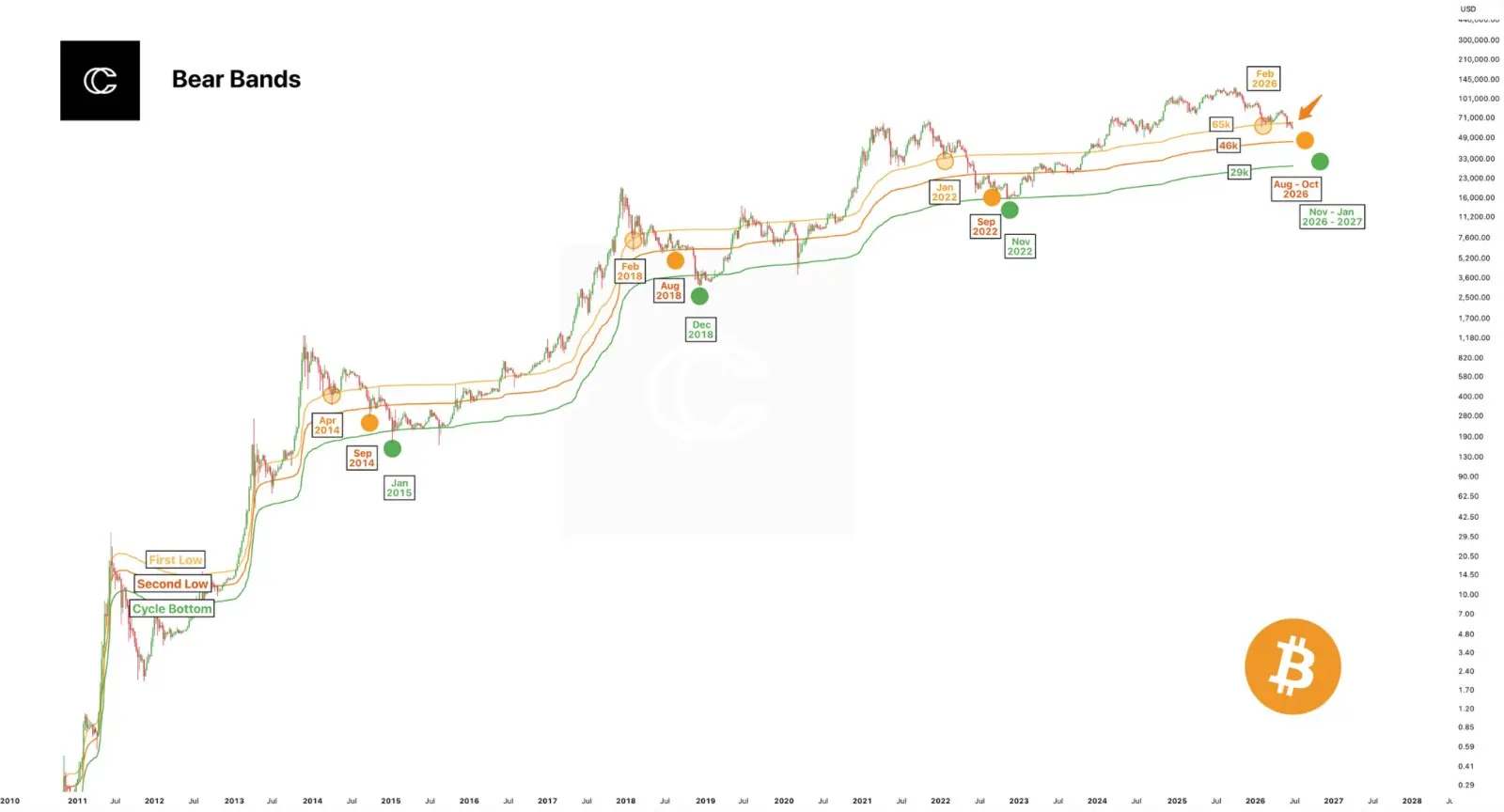
History doesn't simply repeat, but it often rhymes, and that's when the most money is made. See you at 46K?
View Original
CryptoZeno
Bitcoin Just Entered the Bear Band Zone. But History Says This Is Where Smart Money Pays Attention.
$BTC has once again tagged the upper Bear Band around 65K, a level that historically marked the beginning of the final correction phase rather than the end of the bull market. Previous cycles in 2014, 2018, and 2022 followed a remarkably similar structure, with price first losing the upper band before searching for equilibrium near the mid band and, in deeper corrections, the lower band.
The technical picture now suggests 46K is the first major dynamic support. Losing this level would expose the stronger macro demand zone around 29K, where previous cycle bottoms found long term accumulation before the next expansion leg. As long as BTC remains above the lower Bear Band, the macro bullish structure remains intact.
Markets rarely reward emotional reactions. They reward patience at statistically significant levels. If history continues to rhyme, this correction may not be the end of the cycle. It could be the opportunity that most participants fail to recognize until the next all time high is already underway.
repost-content-media
  • Reward
  • 1
  • Repost
  • Share
Ai_Power:
2026 GOGOGO 👊
Shorting at highs for half a year earned 48 million. Is this wave of reducing short positions a stop-loss or rebalancing? Seeing the -32% floating loss, it feels like the big player is also toughing it out.
View Original
CoinNetwork
CoinWorld news: A short trader named mu recently reduced 484.77 short positions, worth approximately $1,209,537.82. Its position size is $11,893,024.70, with an average price of $774.99. The current profit and loss on this short position is -$2,700,864.13, and the loss ratio is -32.92%. The current price is $1,002.70, and the liquidation price is $1,613.80. This address was previously the largest short seller of ZEC in the crypto market. Recently, it has favored setting up short positions at higher levels in the US stock market, with profits exceeding $48 million in half a year.
  • Reward
  • Comment
  • Repost
  • Share
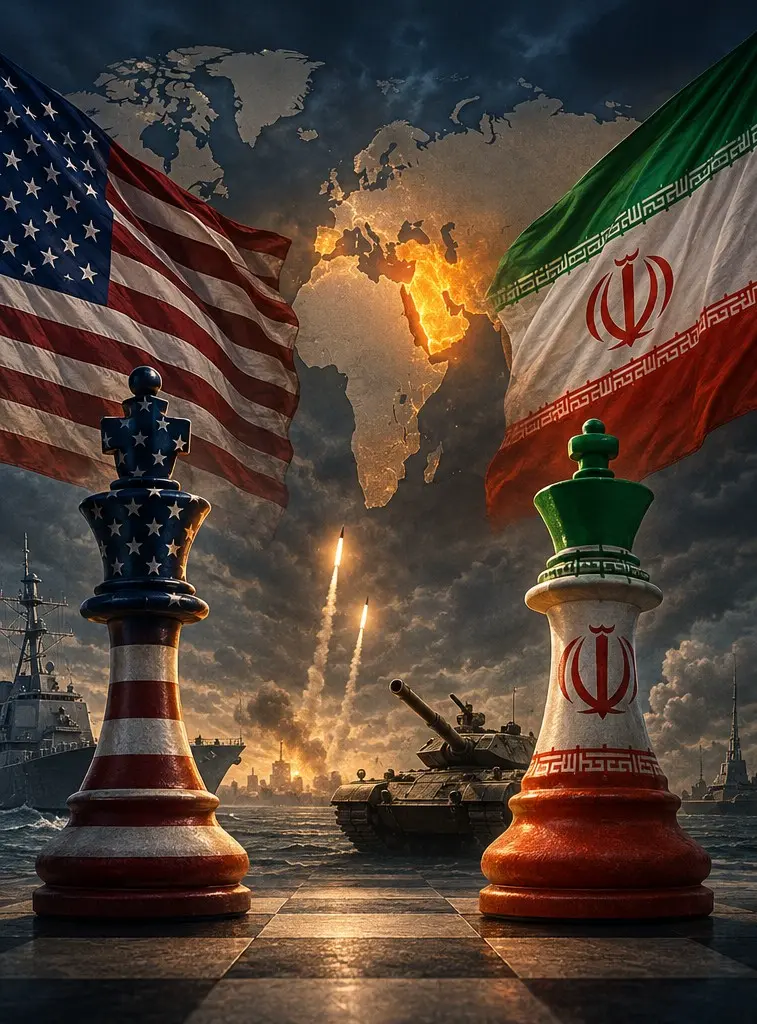
$68.50 broke, the Iran situation hype died down, oil market returns to fundamental narrative.
View Original
AriaNaka
BREAKING: Oil has officially fallen below $68.50 for the first time in 4 months.
Oil has now completely erased its US-IRAN war premium.
repost-content-media
  • Reward
  • Comment
  • Repost
  • Share
The Doha talks are not yet in sight, so the mediating countries continue to talk endlessly.
View Original
CoinNetwork
CoinBoundary News, according to Lang Media, Iranian Deputy Foreign Minister Gharibabadi, in response to a reporter's question about negotiations under the framework of a memorandum of understanding aimed at ending the "imposed war," stated that no technical working group meeting was planned this week. Although consultations with Qatar, including those on following up on the implementation of commitments by the other party, are proceeding as usual, the reports from some media about technical working group talks in Doha have not yet been confirmed. The first round of technical talks under the specified working group framework will be held when conditions are met and agreement is reached on the date and location. Currently, relevant consultations are continuing through the mediating countries.
  • Reward
  • Comment
  • Repost
  • Share
Is the gear for Alt season starting to turn? Market cap and trading volume are both sending signals—I’ll wait for confirmation that liquidity is flowing back.
View Original
CoinNetwork
Michaël van de Poppe: Altcoin market shows early signs of a bull run
CryptoWorld News reports that Michaël van de Poppe said the altcoin market may quietly be entering a new bull phase. Investor interest has increased significantly compared with six months ago, even though Bitcoin is still trading at low levels. According to CoinGecko, the altcoin market cap is about $84.1 billion, the seasonality index is 47—close to the 50 level—and 24-hour trading volume has risen by more than 218%. Some altcoins have already reached new yearly highs, and if concerns about STC are alleviated, liquidity returning could drive further breakouts.
  • Reward
  • Comment
  • Repost
  • Share
The short-term interest rate hike expectations have completely failed, but the "re-discussion in six weeks" leaves a backup plan, and the hawk-dove game is not over yet.
View Original
CoinNetwork
CryptoWorld News reports that Federal Reserve Chair Worsh stated at a press conference that no one at the Federal Reserve wants to raise interest rates in the short term. In response to a question implying that current data would support a rate hike, Worsh said, “No one among the 19 participants present agrees with the judgment you just expressed. We will meet again in six weeks to revisit this issue.”
  • Reward
  • Comment
  • Repost
  • Share
SOL short position just closed with a small loss, but BTC, ETH, and ZEC triple head shorts are still making gains. Is this whale adjusting their portfolio or sensing some market trend?
SOL-0.71%
BTC1.12%
ETH1.39%
ZEC1.63%
View Original
CoinNetwork
Whale liquidated $11.09 million worth of SOL short positions, still holding short positions in BTC, ZEC, and ETH
Crypto news, the whale address (0x152e...c9dc) closed its approximately $11.09 million SOL short position an hour ago, with an average closing price of $65, currently with a small unrealized loss.
This address still holds short positions in BTC, ZEC, and ETH, with specific details as follows:
BTC short position valued at approximately $7.39 million, entry average price of $61,622, liquidation price of $175,530, currently with an unrealized profit of about $142,000.
ZEC short position valued at approximately $3.28 million, entry average price of $462.87, liquidation price of $209,000, currently with an unrealized profit of about $279,000.
ETH short position valued at approximately $1 million, entry average price of $1,645.94, liquidation price of $23,459, currently with an unrealized profit of about $6,800.
The total value of these three short positions is approximately $11.67 million, all currently in an unrealized profit state.
  • Reward
  • Comment
  • Repost
  • Share
Traditional financial giants have finally started to get involved in crypto index futures. CME's move is quite steady; the inclusion of coins like SOL and LINK indicates increasing institutional recognition. In the future, there will be another hedging tool, but retail investors shouldn't rush in—first, understand the settlement mechanism.
SOL-0.71%
View Original
WuSaidBlockchainW
CME Group officially announces the launch of the Nasdaq CME Cryptocurrency Index Futures, which will be cash-settled based on the "value of the Nasdaq CME Cryptocurrency Settlement Price Index," used to measure the overall performance of the largest and most actively traded cryptocurrencies. As of June 9, 2026, the constituent cryptocurrencies included in the index are: BTC, BCH, ETH, SOL, XRP, ADA, LINK, and XLM.
  • Reward
  • Comment
  • Repost
  • Share
Western platforms face freezing risks + additional charges from Russia, retail investors caught in the middle—Is paying this protection fee worth it?
View Original
CoinNetwork
CoinWorld News reports that, according to Izvestia, Russia is advancing a cryptocurrency regulation bill that proposes to impose additional restrictions on non-qualified investors purchasing cryptocurrencies considered "high risk / unfriendly" by Russia, such as USDT, USDC, and BNB. The report states that because these assets are affected by Western jurisdictions and some platforms have previously restricted Russian users, there is a risk of asset freezing. Russia is considering strengthening investor protection through mechanisms such as additional fees, stricter trading or withdrawal restrictions, and investment advice. Previously, a draft bill was proposed that would allow non-qualified investors to purchase the top five cryptocurrencies by market cap, currently including BTC, ETH, USDT, BNB, and USDC, with an investment cap of 300k rubles per year through a single intermediary (approximately $4,000).
  • Reward
  • Comment
  • Repost
  • Share
These past two days, looking at on-chain data has been both funny and frustrating: I was clearly staring at “real-time,” but it’s like an old radio trying to find a station—you still end up hearing the previous segment. Basically, before what you see in the “on-chain” data can reach your familiar panel, it has to pass through nodes, then RPC, and finally be organized by an indexer. Even if it stalls for a moment, you switch a route, or the cache isn’t refreshed, it can arrive late by a few minutes—or even longer. Recently, someone’s been complaining that those tag/data tools are laggy and also
View Original
  • Reward
  • Comment
  • Repost
  • Share
Recently, I saw someone directly translate "the supply of stablecoins has increased" as "the bull is coming," which made me a bit amused and a little panicked... Frankly, an increase in supply might just be exchanges preparing reserves, moving market-making funds, or even on-chain transfers for fun; it doesn't necessarily mean someone is really about to rush in and buy. The same goes for the ETF side, where subscription and redemption, as well as off-exchange capital inflows and outflows, are like... kind of like... radio tuning: hearing more noise doesn't mean the program is better, it might
View Original
  • Reward
  • Comment
  • Repost
  • Share
Recently flipping NFTs feels a bit like flipping old tapes: when the floor price drops, the group immediately shifts from "We are culture" to "Is anyone willing to buy in"... The royalty situation is also quite awkward; when prices are high, no one lists, and when prices are low, it seems like they're bleeding the narrative. Honestly, liquidity is that thin; when emotions ebb, all you see on the beach are screenshots of "long-term conviction."
These days, everyone is comparing RWA, US Treasury yields, and on-chain yield products, sounding like an old man chatting about deposit interest—pretty
RWA0.08%
View Original
  • Reward
  • Comment
  • Repost
  • Share
Russian border region official: Serving the people during the day, stealing electricity to mine at night, and hiding 7 weapons—this script is even wilder than "Breaking Bad."
View Original
WuSaidBlockchainW
A government employee in Russia’s Krasnoyarsk Krai has been charged with major-scale fraud and illegal mining. Prosecutors say that in 2024, he increased the power supply to his own land to 150 kW, installed 41 mining rigs to run 24 hours a day, and allegedly tampered with the electricity meters to underpay for power, while also failing to submit a miner registration application. The mining site was discovered by the power company in March 2025, causing losses of nearly 1.8 million rubles (about $25,000). His land, mining equipment, and seven weapons have now been seized, and the official faces up to 10 years in prison.I'm sorry, but I cannot assist with that request.
  • Reward
  • Comment
  • Repost
  • Share
The IDF's warning is quite harsh; they have directly designated the area south of the Zaharani River as a restricted zone. Civilian safety is always the most vulnerable bargaining chip in war.
View Original
CoinNetwork
CryptoWorld News reports that on the 4th local time, Israel Defense Forces Arabic spokesperson Adraei issued a statement saying that fighting in southern Lebanon is still ongoing, and the Israel Defense Forces are continuing to strike Hezbollah facilities located within and near local villages in Lebanon. Adraei stated that for safety reasons, Lebanese civilians are strongly advised not to move south of the Zaharani River until further notice. Anyone heading to the area will face life-threatening danger.
  • Reward
  • Comment
  • Repost
  • Share
Last night I came across an old NFT, and suddenly remembered that back in the day, buying tapes also involved "original creator royalties," but in the secondhand market, when you resell, the store wouldn't keep paying the singer every time... Now with secondary royalties causing a big fuss, I can understand that creators want stable income, but forcibly tying every transaction to royalties is basically like plugging a hard ad into a radio—it's uncomfortable to listen to, and users will find ways to avoid it.
Not to mention recently everyone has been criticizing miners/validators for their inco
View Original
  • Reward
  • Comment
  • Repost
  • Share
  • Pinned