



Square
Following
Hot
News
Notifications
Profile
Share your thoughts
placeholder
Article
gm ct
can’t wait to see everyone tonight at the @joinfrontier event ✨✨
see u in london! 🇬🇧
post-image
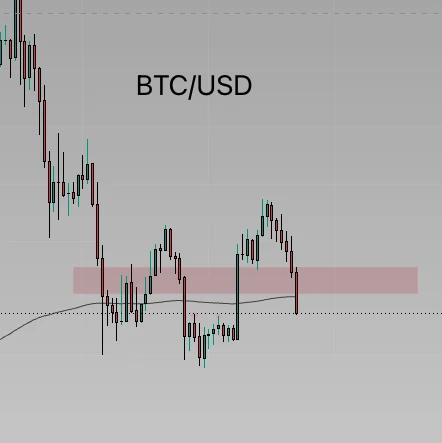
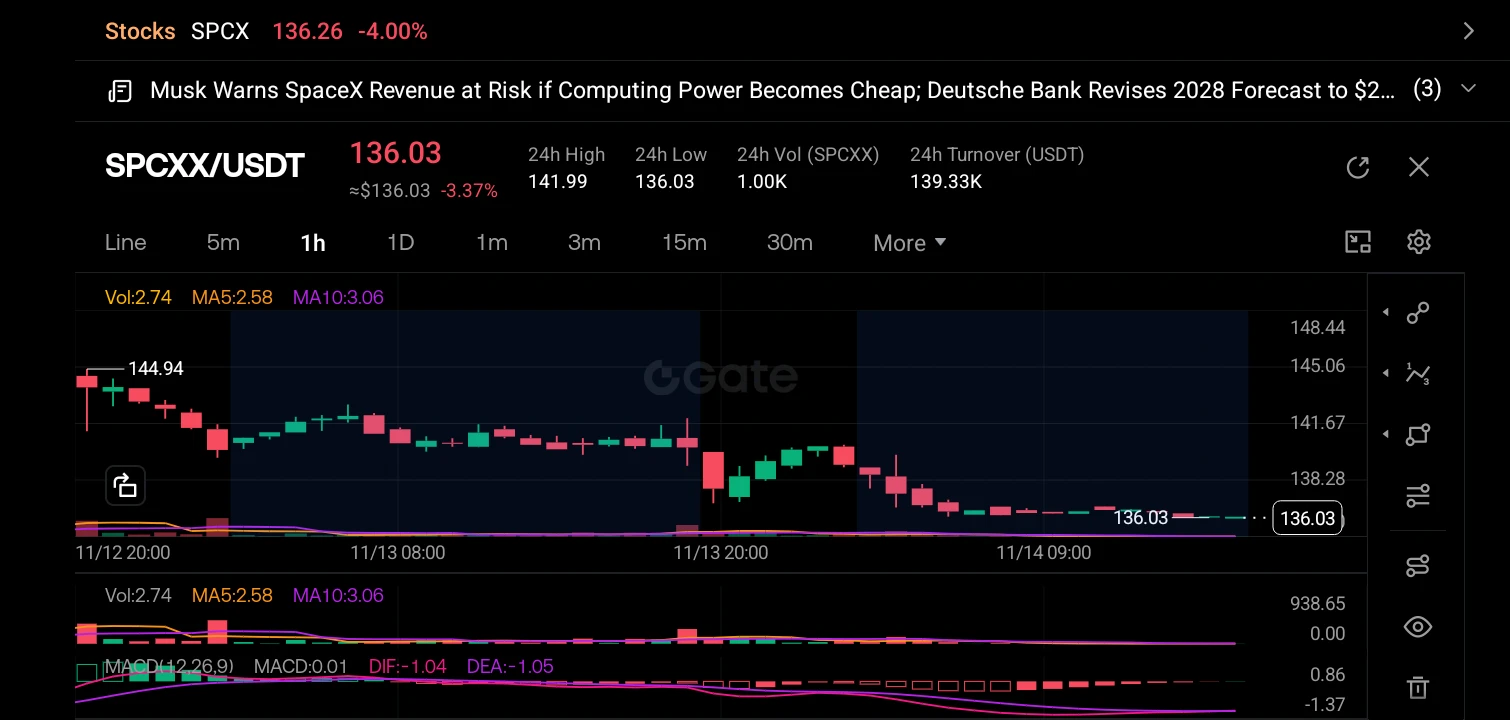
$SPCX ‌
The market structure has shifted from a clear bearish breakdown to a consolidation phase. After the sharp drop from the 144.94 high down to the 136.03 low, the aggressive selling pressure has paused. We are currently seeing a "bearish pennant" or a low-volatility flag formation, where price is compressing near the lows. The structure is currently neutral-to-bearish; it is not a freefall anymore, but it lacks the higher highs and higher lows required to call a reversal.

The 1-hour candles show a series of small-bodied dojis and spinning tops hovering just above the 136.00 psychologica
post-image
SPCX+0.78%
  • 1
Trenches
mihao
m
bade
b
mihao
4Cxj...pump
Market Cap
$.
Change
.
24h Vol
$.
Holders
.
IDOL
I
bade
b
IDOL
0x3b...ab07
Market Cap
$.
Change
.
24h Vol
$.
Holders
.
FOOD
F
bade
b
FOOD
FTu5...pump
Market Cap
$.
Change
.
24h Vol
$.
Holders
AGT
A
bade
b
AGT
0x5d...e274
Market Cap
$.
Change
.
24h Vol
$.
Holders
.
NIO
N
bade
b
NIO
7SL2...pump
Market Cap
$.
Change
.
24h Vol
$.
Holders
.
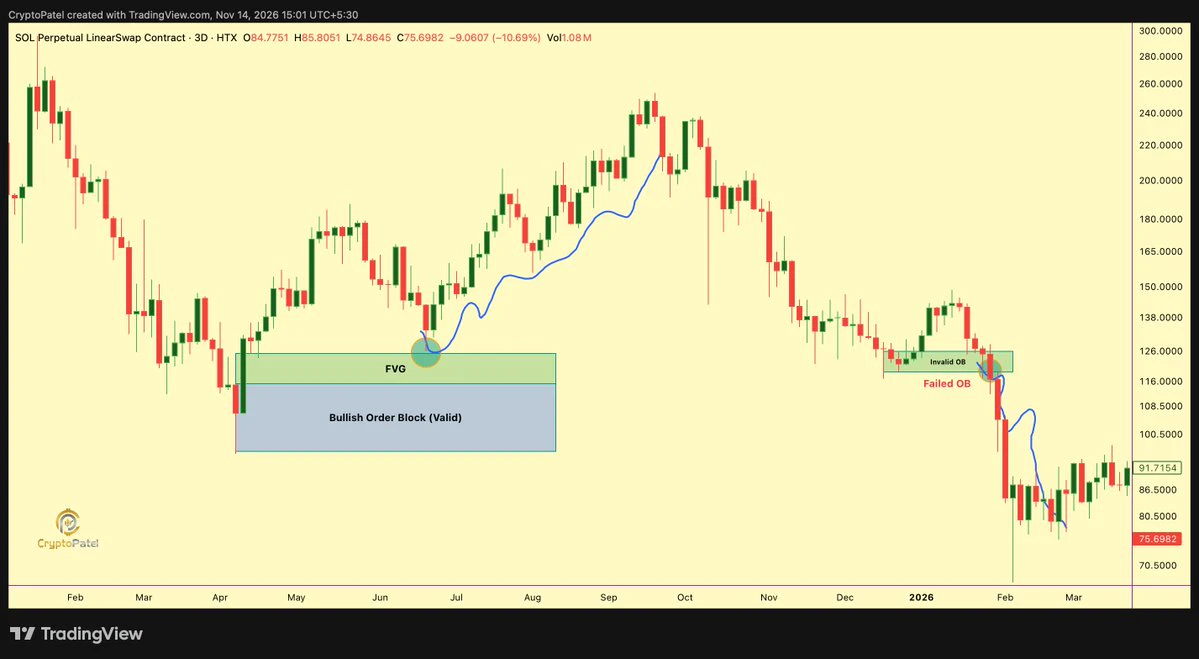
THE BIGGEST MISTAKE IN ORDER BLOCK TRADING?
Marking every opposite-coloured candle as an Order Block.
My quality checklist:
✅ Strong displacement away from the zone.
✅ Clear BOS or MSS.
✅ FVG formation adds confluence.
✅ Fresh and unmitigated zone.
✅ Alignment with higher-timeframe bias.
If price closes through the zone in the wrong direction, I stop treating it as a valid OB.
Quality over quantity.
#OrderBlock #SMC
post-image
$XRP Current price $0.983: Fierce battle around the golden $1 threshold; after major players lock up supply to the extreme, the main rally is imminent!

Ultimate premium for a global financial settlement network and compliance powerhouse:
Don't get shaken out by the swings around the $1.00 threshold! As traditional banking giants and cross-border payment institutions accelerate their integration with Ripple's global settlement network, alongside the full rollout of spot ETFs and a compliant stablecoin ecosystem, XRP has long moved beyond the realm of ordinary altcoins—it is the sole bridge cu
XRP-1.15%
It's done—what does everyone think?
market update
live-cover
LIVE1,889
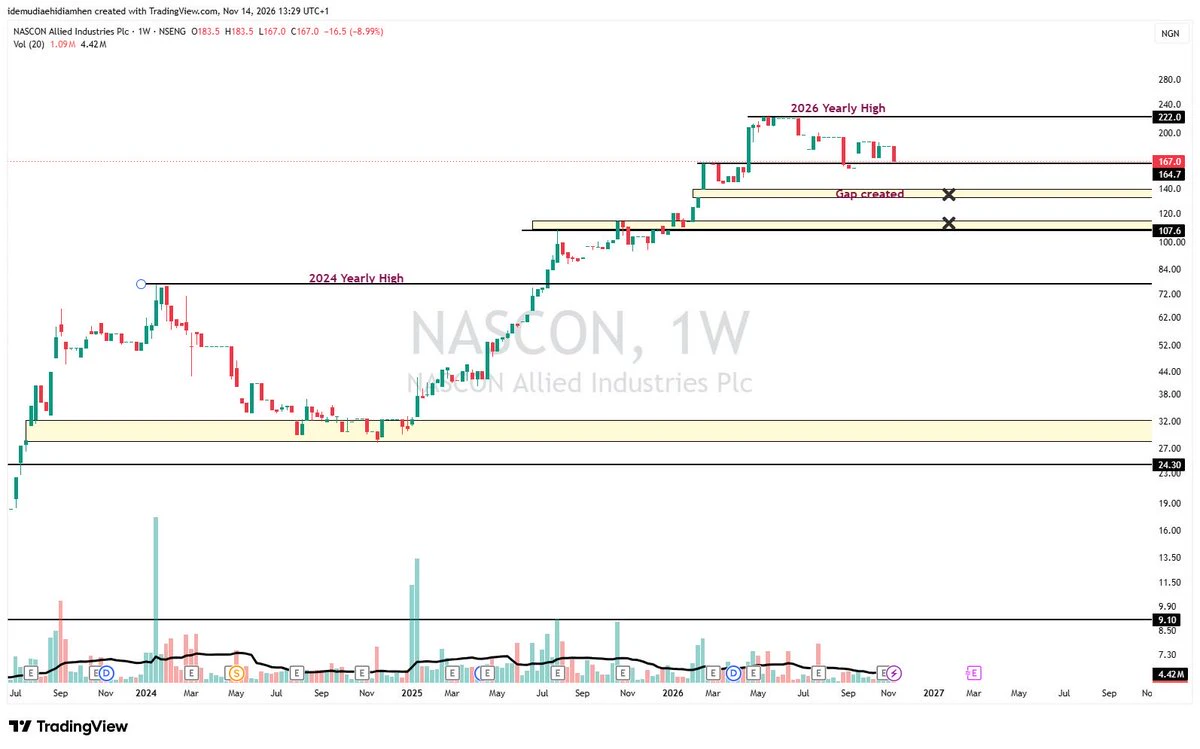
NASCON
The Bulls must not lose the N164.7/share support zone, or I am looking at two regions:
1. The gap closure of N132-N140 per share, which happened in February 2026.
and
2. The demand zone of N108.7-N114.5 per share, which I doubt we might play, but it is the market, and we are open to any form of possibilities
#NFA
post-image
#Gate直通IPO第三期Anthropic Is Anthropic’s $1 trillion market cap worth it?

A $1.4 trillion market cap isn’t outrageous, but it’s only justifiable with difficulty. It’s based on rapidly growing revenue, not profits already earned at this scale.

Why it has some support
· Revenue is growing rapidly: Annualized revenue was about $81 billion at the end of October, up about 47% quarter over quarter in Q3.
· The revenue multiple isn’t high: $1.4 trillion divided by annualized revenue is about 17x, compared with about 60x for SpaceX.
· Strong institutional demand: The IPO was about six times oversubscri
post-image
ThisIsTranslateContent:
#Gate直通IPO第三期Anthropic Is Anthropic’s $1.4 trillion market cap worth it?
A $1.4 trillion market cap isn’t exactly outrageous, but it’s only justifiable on a stretch. It’s supported by fast revenue growth, not profits already earned at that scale.
Why it has some support
· Revenue is growing rapidly: Annualized revenue was about $81 billion at the end of October, up about 47% quarter over quarter in Q3.
· The revenue multiple isn’t high: $1.4 trillion divided by annualized revenue is about 17x, compared with about 60x for SpaceX.
· Institutional demand is strong: The IPO was about six times oversubscribed, with most shares bought by large institutions.
· Higher than its May private valuation: Its post-money valuation in May was about $965 billion; on a fully diluted basis, it rose about 46% in six months.
Where the case falls short
· Growth has slowed significantly: Quarter-over-quarter growth was about 144% in Q2, falling to about 47% in Q3[5].
· Compute bills are largely locked in: Purchase and lease commitments total about $895.4 billion, most of which must be paid “whether used or not.”
· Revenue could shrink at any time: 80% of revenue is usage-based, so customers can use less; compute costs, however, are contractually committed in advance.
· Profits are not yet stable: Q3 operating loss was $567 million, and the full-year net loss is about $23.3 billion.
· Shareholders have no say: The public will never hold majority voting rights, so the valuation deserves a governance discount.
What the market thinks
· Morningstar: Considers it undervalued, with a fair value of about $1.7 trillion, though its reasonable range spans from $500 billion to $3 trillion.
· HSBC: Considers around $1 trillion a more comfortable valuation.
· Huxiu: After discounting for profitability, revenue attribution, and voting rights, values it at $1.11 trillion–$1.48 trillion.
So, for $1.4 trillion to hold up, revenue must continue growing rapidly and gradually spread out the compute bills. If growth slows significantly, the valuation could easily be revised downward.

repost-content-media
SPCX-0.63%
  • 3
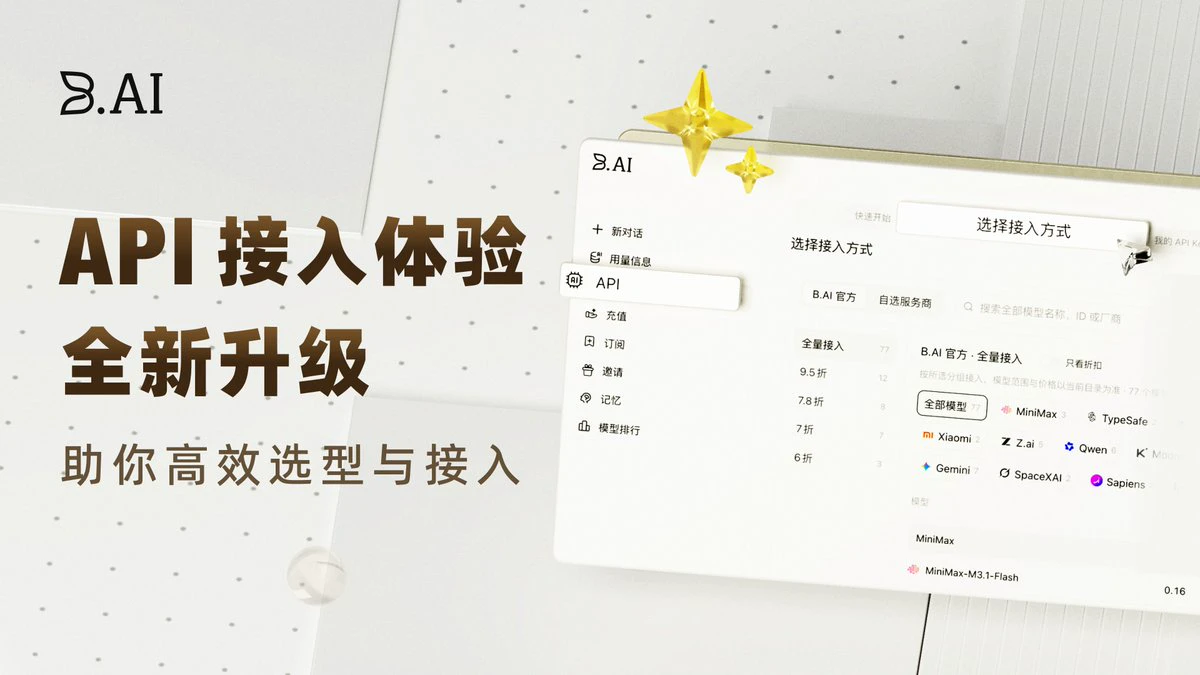
When building Agents and connecting models, the most frustrating thing is having to keep searching through backend pages, with versions, prices, and access points not lining up. This time, the API management page has received a comprehensive experience upgrade, focused on three things: find things faster, filter more precisely, and get clearer information👇
1️⃣ Why the upgrade: to make the automation ecosystem run more smoothly
The official explanation is straightforward: to help developers build a smoother automation ecosystem, the API management page has now received a comprehensive experien
post-image
Bitcoin just hit its lowest level since August.
Down to around $67.4K.
Here's what happened in the last 24 hours:
BTC lost $72K in the US session.
Then broke $70K overnight in Asia.
That triggered a wave of forced selling.
About $1.47 billion in liquidations.
$1.31 billion of that was longs.
Over 175,000 traders wiped out.
Why it's happening:
Traders now expect the Fed to HIKE rates in December, and some fear 50 basis points instead of 25.
The dollar is at its strongest since April 2025.
The 10 year Treasury yield is above 5%.
Nvidia's CEO Jensen Huang resigned amid an internal investigation,
post-image
BTC-0.67%
NVDA-1.92%
  • 1
#黄仁勋辞职 #每周来晒 Old Huang passes the baton—does NVIDIA still dare to bet on tomorrow?

People often say the world keeps turning without anyone. It does keep turning, but it matters how. In politics, that saying usually proves true. Look at presidents and prime ministers: they change so often you can't even remember their names, and none seems much better than another. But industry is different. The head of an outstanding company needs the nerve to stake everything on the future. That's "entrepreneurial spirit."
Jensen Huang is a tough character who has this spirit in his bones. That's why there's
post-image
ThisIsTranslateContent:
#黄仁勋辞职 #每周来晒 Old Huang hands over the reins: Will Nvidia still dare to bet on tomorrow?
People often say the world keeps turning no matter who leaves. It does keep turning, but how it turns matters. In politics, this saying usually holds true. Presidents and prime ministers come and go so often you can barely remember their names, and none seems much better than the others. But industry is different: the heads of outstanding companies need the nerve to stake their fortunes on the future. That's the "entrepreneurial spirit."
Jensen Huang is a tough character who has that spirit in his bones. That's why there's a saying online: once Huang hands over the reins, Nvidia will sooner or later become mediocre. It's not that he's without precedent or peer; it's just incredibly hard to find another person like him. At least within Nvidia, there are no signs of one yet.
Some people push back by citing Apple: Jobs has been gone for years, and Apple is still doing just fine, with its stock hitting record highs time and again.
By the time Jobs left, Apple was already a finely tuned money-printing machine that had been running for more than a decade. The iPhone had fixed the definition of a smartphone, the iOS ecosystem had become a closed loop, the App Store collected its 30% toll year after year, and Cook had whipped the supply chain into shape.
What he left Cook was a product kingdom that could run on autopilot—there was no need to bet on tomorrow every day; as long as the wheel wasn't turned the wrong way, momentum could keep it going for years. The Cook era was essentially about "protecting the legacy and selling phones well." Add a Dynamic Island or switch to a titanium frame now and then, and consumers would still line up to pay. When Cook hands over to Ternus, what he passes on is still a closed-loop ecosystem: consumers care about the brand and their habits, not who the CEO is.
Nvidia is nothing like that. What Huang leaves behind isn't a self-driving car, but a game of Texas Hold'em where every move requires a decision and every hand raises the stakes. GPU iterations have been compressed to around two years, rivals are closing in at every turn, TSMC capacity must be secured, HBM locked down, export controls navigated, and custom requirements from cloud providers met. B2B customers have no sentimentality: if performance slips a notch today, tomorrow's orders are gone. In this situation, the new CEO's job isn't to "hold the line" but to "bet"—on architecture, capacity commitments, and geopolitical maneuvering.
Huang spent 33 years betting on CUDA, betting on the AI computing-power wave, and betting on securing TSMC CoWoS capacity. If his successor is a career executive skilled at balancing the books, they'll most likely turn "daring to bet" into "playing it safe": the short-term financial reports may look fine, but in the long run Nvidia will retreat from rule-maker to rule-follower.
The succession challenges at Apple and Nvidia aren't even in the same league. One is about holding on to an empire; the other is about opening up new worlds—and people who open up new worlds can't be picked from HR's candidate pool.
Let's not be too categorical.
The power of momentum shouldn't be underestimated either.
The real variable is strategic boldness at the top. At many past life-or-death moments, Huang made the call himself: daring to pour huge sums into a new architecture, daring to lock in priority TSMC capacity in advance, and daring to work the political and industry circles to tightly bind GPUs to the AI wave.
One lucky hit is luck; repeatedly catching the wave is skill. That kind of decisiveness is hard to replicate inside the company. A conservative successor can keep the business going; the hard part is developing the guts to make big bets and redefine the field. Preserving what exists is easy; pioneering is hard.
How can we tell whether Nvidia is sliding toward mediocrity? Three visible signposts.
1. The boldness of capital expenditure.
Huang's boldest move was to sign long-term capacity commitments before the market caught on—CoWoS, HBM, advanced packaging, all bets placed two or three years ahead. If his successor starts "flexibly reallocating capital expenditure," postponing non-urgent capacity, and replacing major capacity commitments with on-demand purchases, translated, that means: they no longer dare to bet. A CEO focused on preserving the status quo will always first think about optimizing cash flow, not capturing the future.
2. Are there still "projects no one else understands" in the architecture roadmap?
Huang spent more than a decade nurturing CUDA despite shareholders' criticism. If the R&D roadmap becomes increasingly "explainable" and increasingly tailored to current customer tastes, that should actually raise concerns—no one is betting on obscure fields that nobody understands anymore. When a genuine frontier breakthrough is approved, someone will inevitably say, "This maniac is burning money again."
3. How it weathers the next darkest hour.
When the crypto mining boom faded, revenue plunged, and the data center business had yet to take off. Each time, Huang proactively pivoted instead of waiting for the market to provide an answer. When the next downturn comes, will the successor raise the stakes against the tide or passively retrench? Will they nurture long-term projects or cut "non-core" areas to protect profits? That reaction will determine whether Nvidia is driving manually or sliding downhill.
These three signposts boil down to one question: is it still "betting on tomorrow," or has it switched to "calculating what's right in front of it"?
As long as it is willing to pour money into Capex, nurture obscure fields, and bet against the tide during downturns, Nvidia is not yet mediocre. Conversely, the three signposts don't carry equal weight: Capex is the baseline, obscure fields are the backbone, and betting against the tide is the ultimate test.
If the first two are gone, it means management no longer has any offensive line in motion, and the computing-power machine is beginning to degenerate from "defining the field" to "following the field."
So the conclusion isn't "it will collapse as soon as he leaves," but that there are two possible paths: on the momentum of CUDA, Nvidia's core business can remain stable for many years; but continuing to stand at the forefront of the technology wave and consistently surprise the market will be a lot harder.
In short, a gradual slide into mediocrity is a possibility that cannot be ignored.
What Jobs left Apple was a self-sustaining product kingdom. What Huang leaves Nvidia is a high-stakes game still running at full speed, with decisions required at every turn. No matter how deep the moat, it cannot withstand a long-term absence at the top of a leader willing to bet. Nvidia's most valuable asset isn't its chips; it's the person willing to stake everything on the unknown. That kind of person doesn't show up in financial reports or KPIs, but without him, Nvidia's stock-price ceiling will be a lot lower.
Change the dealer and the game goes on. But with the top poker player gone, who will still dare to go all in?$NVDA
repost-content-media
AAPL+0.41%
TSM-1.70%
NVDA-1.92%
  • 2
By this time, I had become a calm person.
So quiet that there was virtually no social interaction or social engagements.
Aside from exercising, I don't engage in any other social activities every day.
I don't want to make new friends.
The people I can still call out to now are a few old friends of over ten years. Occasionally, after drinking, I'll think about having a relationship, but then I think about all the adjustments, tolerating each other's bad habits, managing emotions, solving problems, and persuading the other person not to have children.
You'll find everything too troublesome!
I fe
post-image
BTC-0.67%
BNB-0.76%
Start dollar-cost averaging into XRP and ADA now
These are both coins endorsed by the U.S. Treasury
Buy a little spot every day
You’ll take off in the next bull run!
The price is so attractive
Once you buy, be sure to hold
Don’t use leverage
The price hasn’t bottomed yet
Buy spot, build positions in the bear market, sell in the bull market
Buy gradually, dollar-cost average daily, don’t go all in at once
XRP will rise 5x in the next bull run
ADA at least 10x
Remember, don’t use leverage. No one knows how long the bear market will last
post-image
XRP-1.15%
ADA-1.48%
  • 2
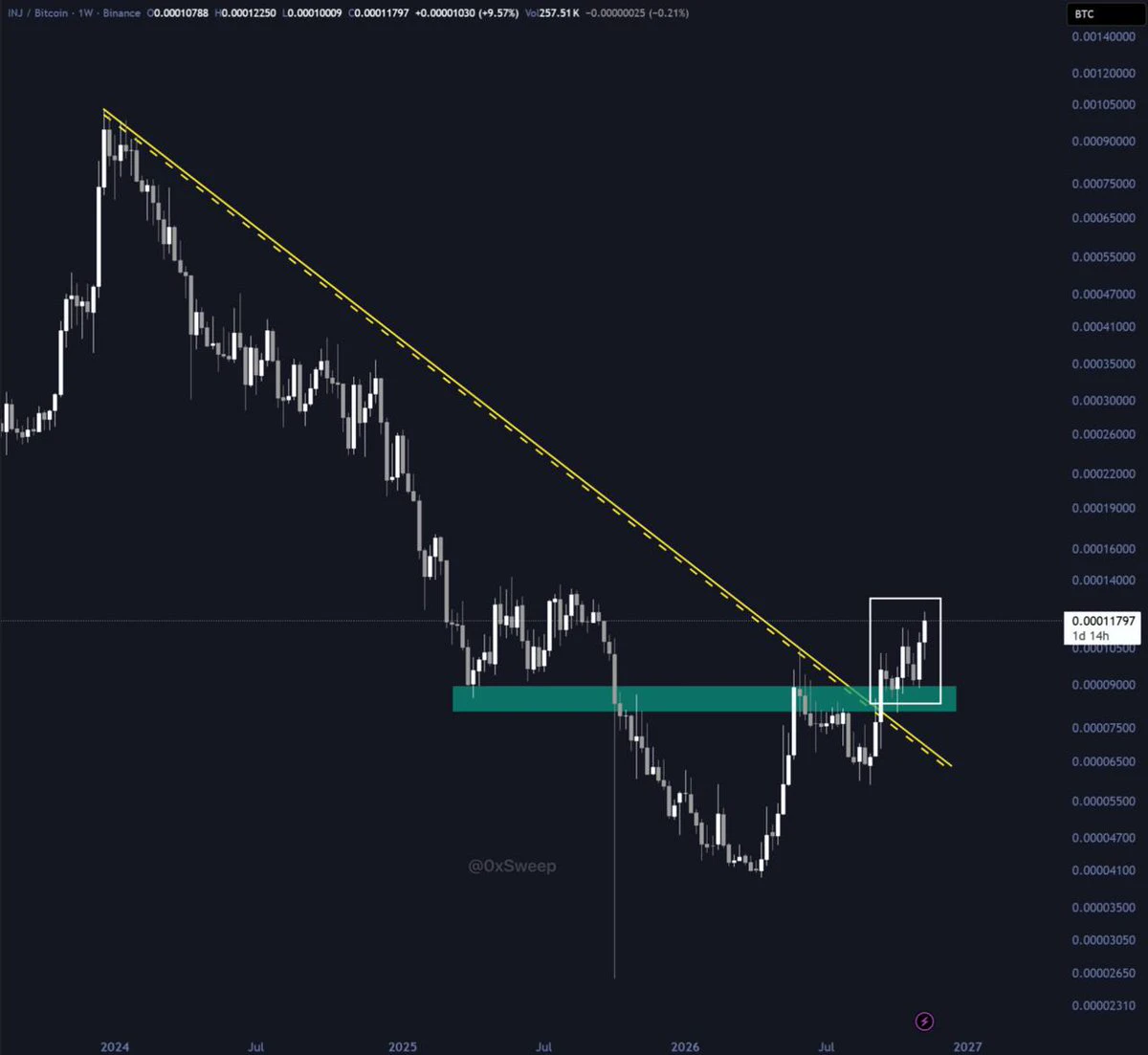
INJ/BTC has hit a 14 month high
Unreal strength
post-image
INJ-1.67%
BTC-0.67%
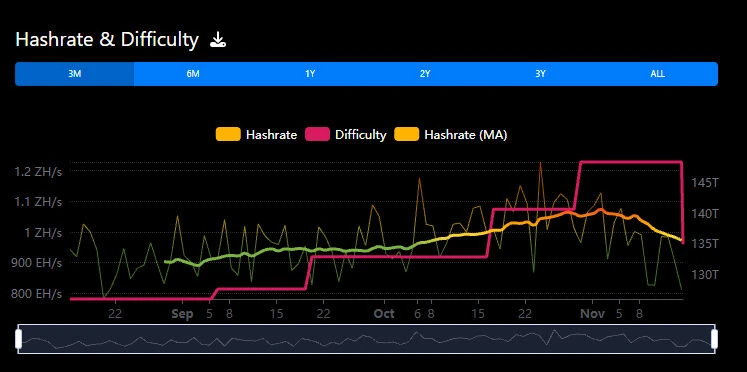
Bitcoin mining difficulty has dropped by 9.13%, reaching 134.82 trillion, marking its biggest decline since June.

This adjustment means mining Bitcoin has become relatively easier for miners. Those who remain active may benefit from lower competition and improved mining conditions.

However, lower difficulty does not automatically mean higher profits. Electricity costs, mining efficiency, and Bitcoin's market price still play a major role.

It is a notable shift in Bitcoin's mining landscape, showing how the network adjusts as mining conditions change.

DYOR. NFA.
#GateIPOAccessAnthropic $BTC
post-image
BTC-0.67%
  • 1
  • 1
Market Latest Update
live-cover
LIVE4,523
$SUI Shows Early Recovery Signs – Is a Bullish Bounce Building?
SUI is showing signs of a potential recovery after recent selling pressure. Buyers appear to be stepping back into the market, suggesting that bearish momentum may be weakening in the short term.

However, the recovery still needs confirmation. Holding above the $0.7700 area could help strengthen bullish sentiment and create room for further upside.

Key figures

$0.7700–$0.7730 — Important recovery zone

$0.7640 — Key support level

$0.7780 — First upside resistance

$0.7830 — Next resistance area

$0.7900 — Higher recovery targ
post-image
SUI-1.05%
  • 1
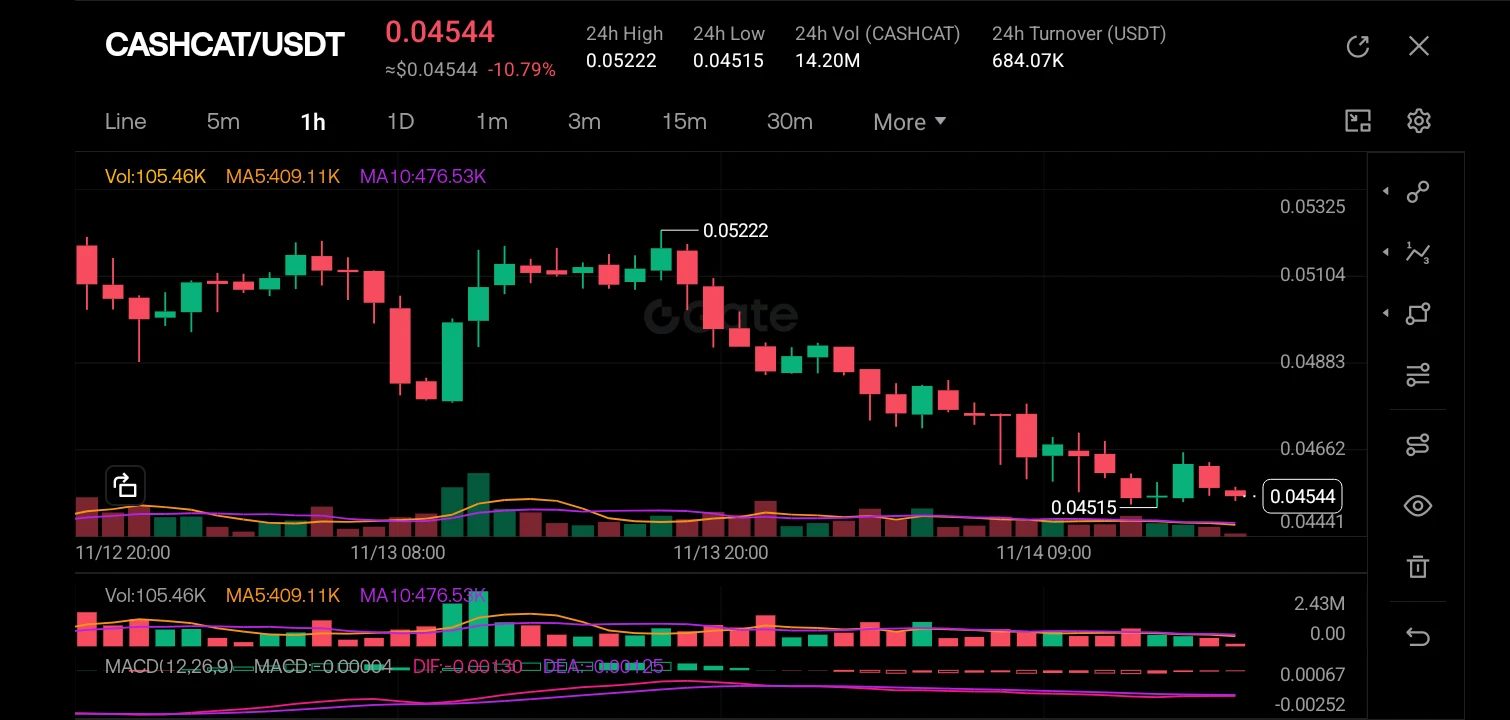
$CASHCAT ‌
The market structure has shifted from a bullish consolidation phase to a clear bearish downtrend. After failing to sustain the high of 0.05222, the price has broken below previous higher lows, establishing a sequence of lower highs and lower lows. The current price action at 0.04544 indicates a strong bearish momentum with the price trading below the short-term moving averages, suggesting sellers are currently in control.

The K-line analysis shows a significant breakdown from the 0.05000 psychological level. We observed a series of consecutive red candles (a "red cascade") pushing
post-image
CASHCAT-0.08%
  • 2
The SUI wallet shuts down today, and the price crashes back to its starting point.

The current price is 0.7732, down 3.8% in 24 hours and 22.9% over 30 days, and 86% below its all-time high. Suiet’s official wallet will shut down all APIs after November 14, so users will need to move their assets to another Sui wallet themselves.

It traded sideways between 0.66 and 0.78 for three months, surged 106% in September, and has now fallen back to its starting point. Whether it can hold the key level at 0.750693 remains a question.

At this level, is it worth buying in? Tap the tag to check token tu
post-image
SUI-1.05%
2Z-3.17%
Load More

Join 40 M users in our growing community

⚡️ Join 40 M users in the crypto craze discussion

💬 Engage with your favorite top creators

👍 See what interests you

Trending Topics

GateIPOAccessAnthropic

312.3K Views2.8K Discussing

Gate IPO Access Phase 3 features Anthropic (ANT), with USDT subscription interest starting from 100 USDT. Successful allocations will be delivered as real shares to Gate Stock Accounts. Indicative price: $70–$78/share Subscription: Nov 12–17 (UTC+8) Allocation is not guaranteed. Please manage risk accordingly.

Dr.HanOxfordUnionSpeech

147.8K Views604 Discussing

USOctoberPPIBelowExpectations

463.7K Views1.5K Discussing

View More