AutumnTranquility

vip
Active for: 0.5y
Peak Tier 0
A bear market is like autumn scenery—observe calmly, watch the market’s ups and downs with a clear mind and composure.
Gate’s recent capital inflow data looks impressive—let’s also check out everyone’s favorite stock picks 👀
Cryptoguider
$SKHY ‌STOCKS are beautiful ❤️ a long investment is also better in trusted stocks
write your favorite list of stocks
and why you select them
#MSTRTopsNasdaq100 #GateTops24HNetInflowsAmongExchanges #BTCRetakes80K #GateSquareMidAutumnReunion #ShareWeekly
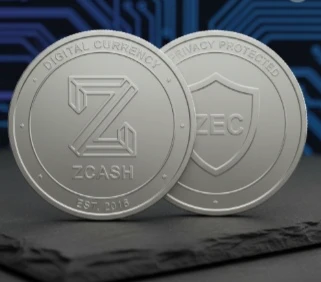
ZEC’s price action is interesting. 1200 is a key hurdle—there’s no rush to chase until it breaks through. Don’t blindly chase the top.
ForestCrypto
#ShareWeekly
🔥 ZEC/USDT — ZCASH TECHNICAL ANALYSIS
ZEC is showing strong bullish momentum after a major upside move. The price is currently holding above the key psychological $1,000 area, keeping the short-term structure bullish.
📊 KEY LEVELS
🟢 Support Zones
• $1,050–$1,080
• $1,000–$1,020
• $920–$950
🔴 Resistance Zones
• $1,200–$1,220
• $1,300–$1,350
• $1,450–$1,500
🎯 Bullish Scenario
If ZEC breaks and holds above $1,220, the next potential targets are:
➡️ TP1: $1,300
➡️ TP2: $1,400
➡️ TP3: $1,500+
📉 Bearish Scenario
A strong rejection from resistance could trigger a pullback toward $1,050–$1,000. Losing $1,000 could open the door toward the $920–$950 region.
💡 Strategy
Avoid chasing a vertical pump. A safer approach is to wait for either:
✅ A confirmed breakout + retest
or
✅ A controlled pullback into support.
⚠️ Risk Management: Crypto is highly volatile. Always use a stop-loss and manage position size carefully.
🚀 ZEC remains one of the coins worth watching closely.
#ZEC #Zcash #ZECUSDT
repost-content-media
ZEC+6.84%
As interest rates move up and down, capital keeps shifting around—in the end, it still comes down to risk appetite. When the macro environment tightens, everyone hunkers down and avoids taking on overly large positions; I’m pretty much the same. These days, the news is all noise. AI Agent automated trading is being hyped to the skies, but if you actually look closely on-chain, how many projects are seriously scrutinizing the security details of the user interaction experience? Anyway, I’m not too comfortable throwing money directly at a narrative. I’d rather inspect the contract logic myself f
Seeing people in the group argue so fiercely over privacy coins and mixers, I’m honestly a little envious of those with such firmly held positions. I’m the type who lurks and watches the show, thinking both sides make sense while also feeling that something is off about both of them. Whatever—maybe that’s cynicism. In any case, I don’t dare take sides casually.
As for data like stablecoin supply and ETF inflows, people have been bringing them up every day lately. It seems that as long as there’s new issuance or net ETF inflows, it means outside capital is about to enter the market. But I think
Free airdrops often hide a hook. Before signing, ask yourself one more question: Do I really understand this transaction? Don’t let one careless tap become an expensive lesson. Security is never magic—it’s a habit.
Original content no longer visible
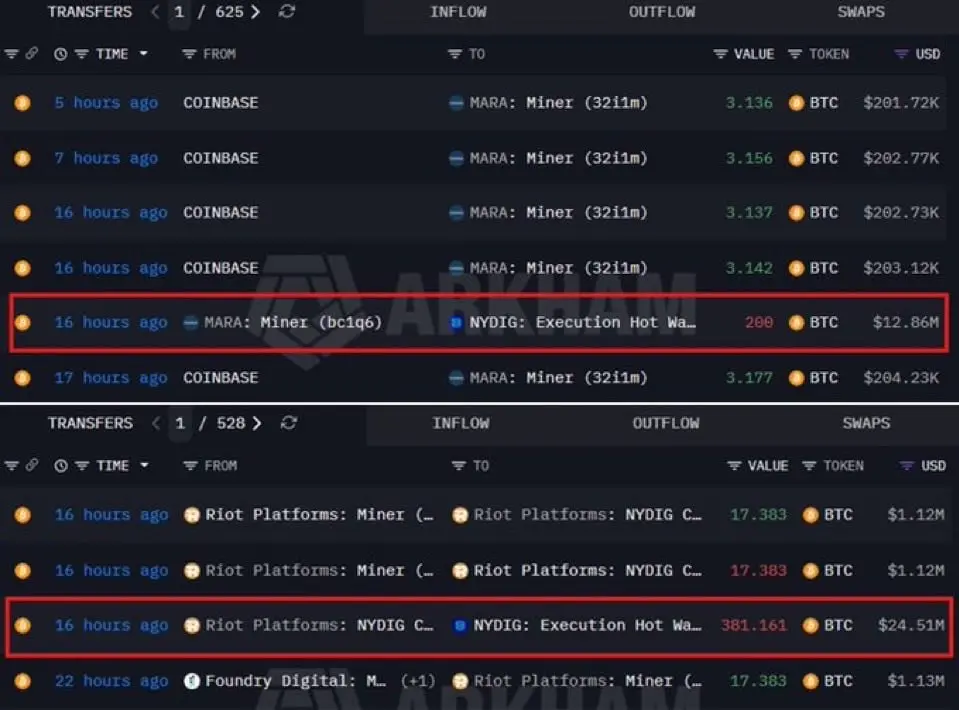
Miners transferring BTC into institutional custody is not a sell-off, but rather a prelude to institutional-level entry. MARA and Riot’s moves are worth watching closely.
Crypto_WolfOG
🚨 Bitcoin Miners Just DUMPED Millions into Institutional Custody! 💸
MARA just transferred 200 BTC ($12.8M) to NYDIG! 📉
Riot Platforms moved a MASSIVE 381 BTC ($24.5M)! 🚀
This is the HUGE institutional-grade custody adoption signal the market has been waiting for! 👀🔥 #Bitcoin #CryptoNews $BTC
repost-content-media
BTC+5.67%
MARA+13.59%
RIOT+8.47%
Just saw a liquidation case: the oracle’s price feed was delayed by a few minutes, and the liquidation threshold was immediately broken through. Honestly, I used to think things like this were far from me, since I’m not someone who runs high leverage. But think about it— even if you only trade spot, the momentary price movement caused by the delayed quote can still affect your limit orders.
Recently, a bunch of people have been talking about modular blockchains and the DA layer—whatever, the developers are all excited out of their minds, and as an old user I’m completely lost. I still prefer t
Just saw someone asking on Gate how long it takes to bridge to a certain chain, and someone replied below: “After 24 confirmations, it’ll be fine.” I couldn’t help laughing. Whether it’s “safe” or not doesn’t really depend on the number of confirmations. It’s determined by the number of multisig signers, the oracle feed prices, and who’s actually in control behind the bridge governance. Over the past few years, I’ve seen too many cross-chain bridges get “taken over.” So I’ve set a rule for myself: no matter how safe others claim it is, once my funds are bridged, I’ll watch first for at least h
Watching the candlestick chart and scrolling past a bunch of Meme coins pumping feels lively, but every time this happens, I remember the days when I used to get trapped by narratives. To put it bluntly, no matter how sweet the story is, it has to have a bottom line. These past couple of days, the whole issue around NFT royalties has flared up again—creators say their income is down. The secondary-market liquidity is really cold, but who honestly treats money as a faith? Anyway, I quietly closed that so-called “faith” stop-loss order. Instead of believing the story, I chose to trust the line I
MEME+7.04%
I just saw a post about another cross-chain bridge incident, and my heart skipped a beat. This combination of multi-signature schemes and oracles looks solid on the surface, but once any single link is breached, it’s over. Anyway, as a small retail investor, what I fear most in cross-chain activity is “waiting for confirmation”—how many blocks do you actually need to wait for it to be considered safe? To put it plainly, sometimes you can’t even figure out whether the problem is on the chain or with the bridge.
Recently, expectations of interest rate cuts and the tug-of-war with the U.S. dollar
I just saw an on-chain transfer. The timing matched like it had been calculated, but when I traced the address forward a few layers, it turned out to be nothing more than a regular cross-chain arbitrage plus back-and-forth trading. To put it simply, most so-called “coincidental transfers” are really just a segment of a longer path, with the earlier groundwork ignored. The more you look at this on-chain stuff, the clearer it becomes—and the less mysterious it feels.
Recently, around the upgrade of that public chain, people in the group have been speculating again about whether ecosystem project
Sigh, over the past few days I’ve been looking at the project team’s treasury spending and its milestones—and the more I look, the more interesting it feels. Some project teams write whitepapers so beautifully, and they constantly hype “ecosystem building.” But when you check the treasury, you find that all the money is spent on marketing and community subsidies, while the actual development progress moves along like a snail. Others keep postponing milestones again and again—every time you ask, they say they’re “optimizing.” Optimizing my ass.
I made a rule for myself: only look at on-chain da
Just saw a new pool in a chain game—its reward model is unbelievably good, and the production curve looks like it was drawn straight from a textbook. I initially thought it was solid, but then I realized—once the inflation rate is right there, no matter how high the output is, it can’t withstand sell pressure. Put simply: the water in the pool keeps being poured in, but there are only so many fish, and sooner or later it will run dry. And that “shared security” re-staking setup sounds similar too: everyone piles on to earn more, but in the end it’s all nested leverage—when something really goe
Everyone’s been talking lately about how ETFs and the US stock market affect the tape—honestly, I’m just numb at this point. In the short term, price swings are impossible to predict. What I do pay attention to, though, is looking back at the projects I hold: what they’re actually doing.
I’m pretty annoyed by the kind of “milestone” announcement that’s sent out every so often, with some flashy graphics—how much funding they raised, which exchange they’re listing on. But when you look closely at on-chain treasury spending, the money ends up going to places nobody can tell. What I find truly cre
I stumbled upon that thing about NFT creators’ royalties, and the controversy is pretty big. Honestly, from a creator’s perspective, secondary-market royalties do count as a bit of ongoing income, helping you last longer. But from a trader’s perspective, you buy and sell and get charged a few percent each time—who wouldn’t be annoyed? Both sides have their reasons, but I still feel like the whole ecosystem hasn’t quite worked out yet, and the system design itself hasn’t figured out clearly how profits should be allocated fairly.
Recently I’ve been seeing social mining and fan tokens—basically,
Just saw a friend repost a screenshot of a phishing site, saying, “the icon is the same as the one I used before”… Later I thought about it—it’s pretty ridiculous. No matter how good the on-chain data tools look, and no matter how complete the tagging system is, can they guarantee that every single link is real? Anyway, I’m really afraid of that kind of thing where “once you click to authorize, it’s gone.” I’ve been coldly watching from the sidelines for years, and it turns out the red line isn’t really technical—it’s just a case of bad hands. What I can do myself is: don’t click random unfami
The AI memory-stock frenzy came fast and faded just as quickly. SK Hynix’s 15% drop wiped out all of Friday’s IPO gains, and behind the $26.5 billion fundraising, the market’s tolerance for high valuations is rapidly shrinking.
CoinNetwork
CoinWorld News: The share price of South Korean memory manufacturer SK Hynix fell 15% in pre-market trading on Monday, dragging the chip industry as a whole lower. Investors, concerned that the market was becoming overly crowded, took profits, and reports also indicated that SK Hynix’s operating profit for this quarter could be below market expectations. Rival Samsung Electronics also fell in the Korea stock market, and AI memory stocks including Micron, SanDisk, and Western Digital all dropped by more than 5%. This selloff marked a sharp reversal for SK Hynix after it listed in the United States—its US depository receipts rose 13% on their debut on Friday. The company raised $26.5 billion in this offering, becoming the largest IPO by a foreign company in the United States.
SK Hynix+0.59%
SKHY+2.61%
SKHYV-0.98%
Just finished reviewing the rules—everything about the lock-up period and the rewards structure is clearly spelled out, unlike those platforms that keep things under wraps. Already taken action.
Ai_Power
  • 2
6557 liquidation price—ETH would need to double to get him liquidated; a veteran swing trader really does have the nerve to play.
CoinNetwork
CoinWorld News: ETH short positions increased by 2,438.11 ETH, approximately $4,349,810.71, with a position size of $6,420,104.34. The average price was adjusted from $1,783.60 to $1,781.99. Current profit/loss is -$3,265.17 (-1.02%). The current coin price is $1,782.90, and the liquidation price is $6,557.93. The address is 0x4e23288cee4960f9f962195c22948e4bc7ae20c3. Note: This is a swing trader with a fund size of $30 million, who commonly opens a $25 million-sized semiconductor position with high leverage, and simultaneously places take-profit or reverse-entry orders. Overall leverage is 0.8, with monthly profits in the tens of millions of dollars.
ETH+5.65%
  • 2
Paolo's words are harsh. The depreciation cycle and capital misallocation in the AI track are indeed overlooked by many.
CoinNetwork
CoinWorld news, Tether CEO Paolo Ardoino stated that the AI industry expands its user base through subsidized computing power, relies on high capital expenditure to drive infrastructure expansion, with assets depreciating rapidly within 3 to 5 years, creating mismatches between token prices and real value, profit cycles and capital investment cycles, capital costs and debt maturities, as well as the trend of open-source AI eroding revenue space, and industry risks are accumulating.
  • 2