GateUser-fe543c7b

vip
Active for: 5.6y
Peak Tier 5
No content yet
After reading the token listing sheet in Slack, he turned around and opened a long on Hyperliquid.
The U.S. Department of Justice charged two former Robinhood engineers on Tuesday, Hefu Chai and Huaisong "Jerry" Xiang, with commodities fraud and wire fraud.
Robinhood internally designated the two as "Coin Aware Individuals," giving them access to a private Slack channel exclusively for listing schedules. The rules were crystal clear: no trading on any platform within 24 hours before or after an announcement. The pair bypassed their own product and opened perpetual long positions on Hyperliquid
post-image
HYPE+10.75%
MEW+4.26%
MOODENG+3.27%
ASTER+2.19%
XPL+1.92%
Solana made more money than the other four chains combined—whose money is it making?
Ours—the people aping into memecoins.
Last month, I aped into more than 40 launches on Pump, with $30,000 in principal.
Fees, priority fees, and slippage eaten by sandwich bots added up to more than $4,000, and I didn’t hold onto a single coin.
Break down this revenue ranking, and the bulk comes from three sources: launchpad fees, trading bot fees, and promotional fees paid by devs to charting websites to generate hype.
Which of these isn’t squeezed out of memecoin traders???
At least ETH has lending and stabl
SOL+5.82%
PUMP+9.80%
ETH+1.69%
The nerve is unbelievable. SBF has gone to the Supreme Court, claiming customers ultimately didn’t lose money.
According to The New York Times, FTX founder SBF filed a petition with the U.S. Supreme Court on September 10, seeking to overturn his 2023 convictions for fraud, conspiracy, and money laundering in full. He’s still in prison, serving a 25-year sentence.
His lawyers said the trial judge at the time wouldn’t let them present evidence that “customers ultimately suffered no losses.” They also want the approximately $11 billion forfeiture order revoked, arguing that the penalty is excessi
BTC+1.30%
Bought a hardware wallet? Pay attention—don’t get burned by a single email.
Trezor issued a warning today: Brevo, the email service it outsourced to, was hacked. Attackers used Trezor’s official domain to send phishing emails to 347k customers, tricking them into downloading a “new app” and entering their wallet backups. The domain was taken down within 20 minutes, but around 2,500 people still clicked it.
1. A company that sells security has suffered three incidents in just over a month. Absurd. Last month, its shipping provider ShipMonk exposed 11,742 customers, and last week, the phone numb
ETH+1.69%
Who would pay $42k in fees just to swap ETH for ZEC?
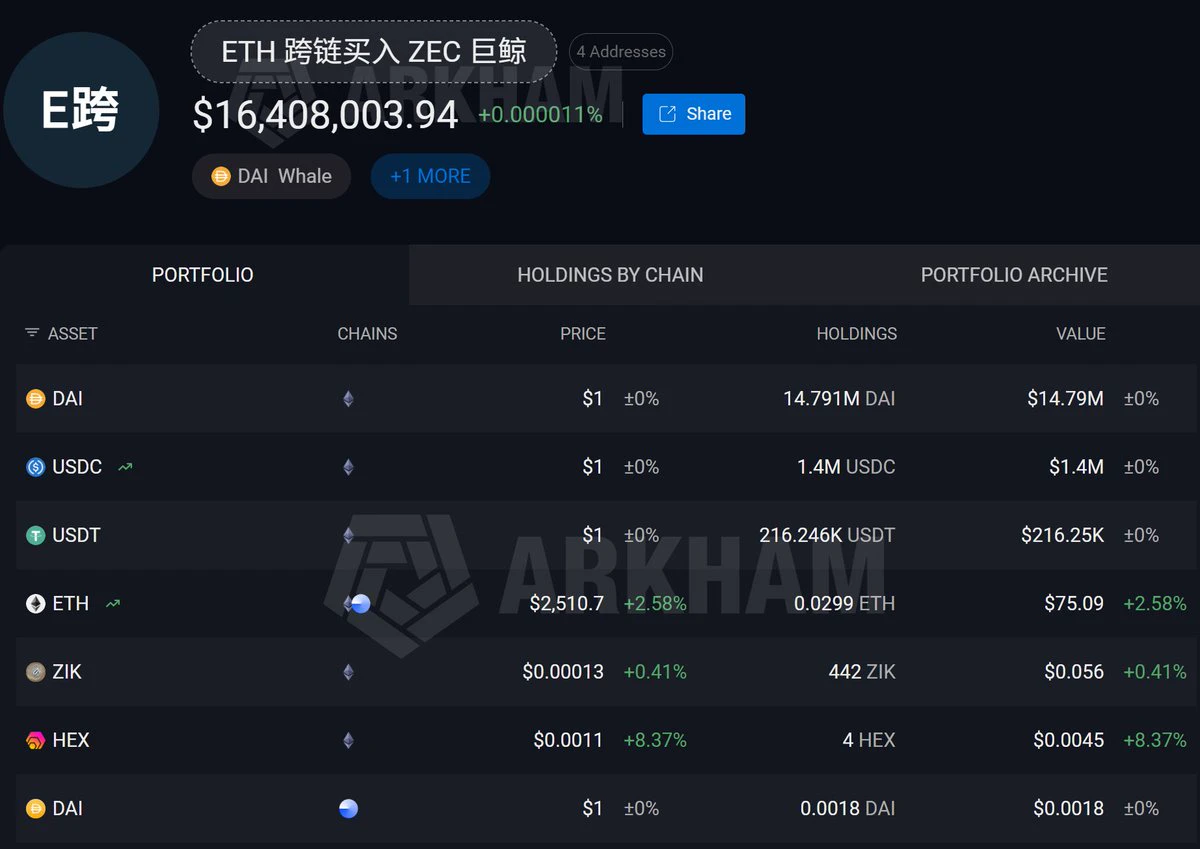
This afternoon, an on-chain sleuth dug up an entity: four addresses had been dormant for a full six months and all woke up yesterday.
First, they scooped up 13,290 ETH on Cowswap at an average price of 2,511, spending $33.37 million. Then they took 2,500 ETH through Near Intents for a cross-chain swap into 6,601 ZEC, worth $8.21 million. The cross-chain service fee alone came to 16.75 ETH.
I’m not interested in what they bought. I’m watching how much they’re willing to pay for it.
A $42k toll just to get through. This person doesn’t care abo
post-image
ETH+1.69%
ZEC+9.85%
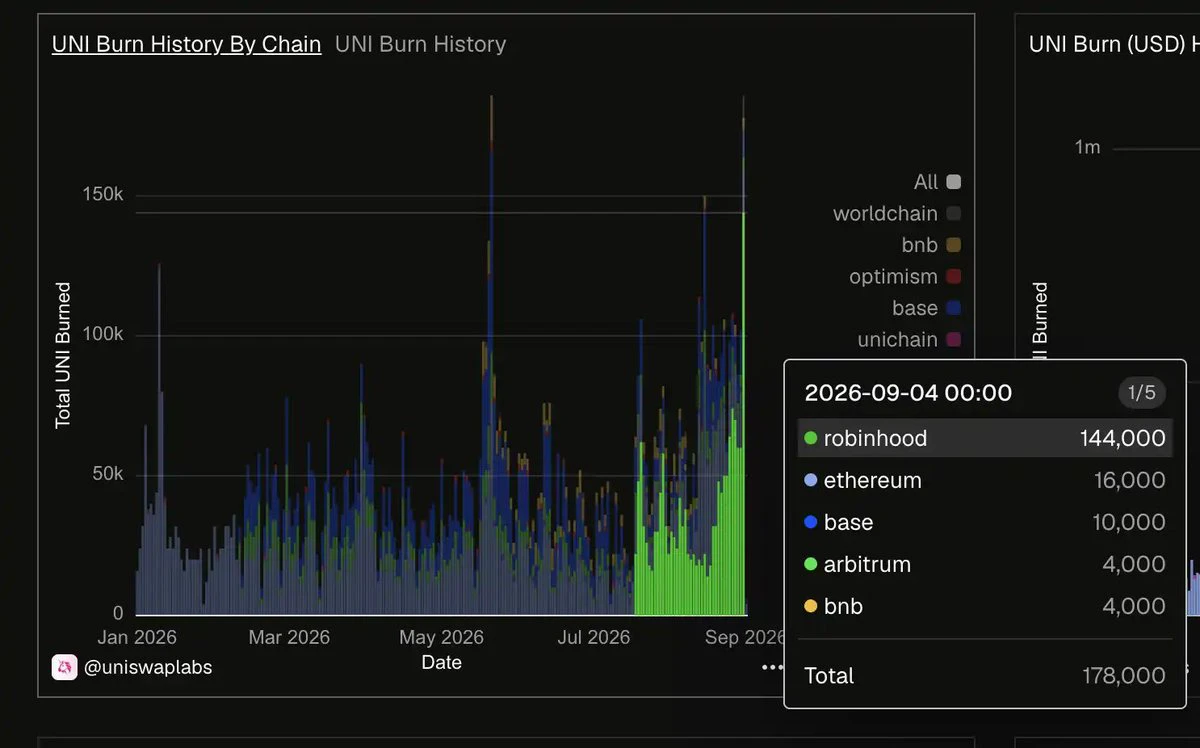
Uniswap’s burn mechanism burned 178k UNI yesterday, with more than 80% of the contribution coming from Robinhood Chain.
DUNE data shows that Uniswap’s official burn mechanism burned a total of 178k UNI yesterday, worth over $1.11 million. Robinhood Chain alone contributed 144k UNI, accounting for over 80% and leaving established chains such as Ethereum and Base far behind.
The mechanism comes from a governance proposal passed on July 15—Uniswap extended protocol fee collection and UNI burns to Robinhood Chain, covering versions v2, v3, and v4. Protocol fees generated on the chain flow into the
post-image
UNI+26.07%
ETH+1.69%
A trader entered a position near LIT’s bottom and has now achieved returns of over 10x.
TradingBeats monitoring shows that the address starting with 0xbf34 currently holds a 151,515 LIT long position, worth approximately $588.6k, with an average entry price of $1.2643 and unrealized gains of approximately $397k. Based on 5x leverage, the return is approximately 1036%.
Interestingly, it did not get the trade right from the start. On January 31, it briefly attempted to go long, but eventually closed the position at $1.37, losing approximately $17.9k.
The real turning point came two months later.
post-image
LIT+4.91%
The first inscription launchpad $ROBS is here@Robscriptions—fair minting. A brand-new asset distribution model; if you're looking for self-protection, don't miss it. It goes live at 9 p.m. tonight, so it's worth checking out for yourself. Website:
post-image
Hayes pulled out a major move for his new project: a 20% airdrop.
He revealed on the Altcoin Daily podcast that his new personal venture, Flop Network, is expected to allocate 20% of its total 10-year supply to the airdrop. He also said this figure could be adjusted later and was announced mainly to gather user feedback.
At the same time, he painted an ambitious picture for the FLOP token, saying it could become one of the top two tokens in the crypto market.
A 20% airdrop allocation is indeed substantial—enough to attract plenty of people to wait for it. But when a project founder himse
HYPE+10.78%
WLD+12.78%
After I posted the panel for cross-asset hedging last time, someone asked: If you don't trade U.S. stocks or forex and only run Crypto altcoins on it, what's the experience like? This account has net assets of about $400k and currently has nearly $300k allocated on the platform. As you can see from the positions at the bottom, 132 concurrent positions have been opened at once. From recently popular KAITO and TAIKO to established names like FIL and BCH, it has essentially cast a very wide net.
In the past, trading such a spread of altcoin positions on-chain was extremely cumbersome. You had to
KAITO+5.23%
TAIKO+0.77%
FIL+8.27%
BCH+11.52%
USDC+0.01%
The cross-chain protocol MAYAChain was exploited, sending its token plunging nearly 90% at one point.
Founder AaluxxMyth confirmed in a post that the protocol suffered a vulnerability attack, with the attacker withdrawing approximately 20 BTC (about $1.4 million) and another roughly $300k in assets within an hour. The team has implemented a global halt, temporarily bringing the losses under control, and is working to fix the vulnerability.
The attack method was highly sophisticated. The attacker chained together six vulnerabilities in the Trade Account and outbound processing workflows, constr
BTC+1.30%
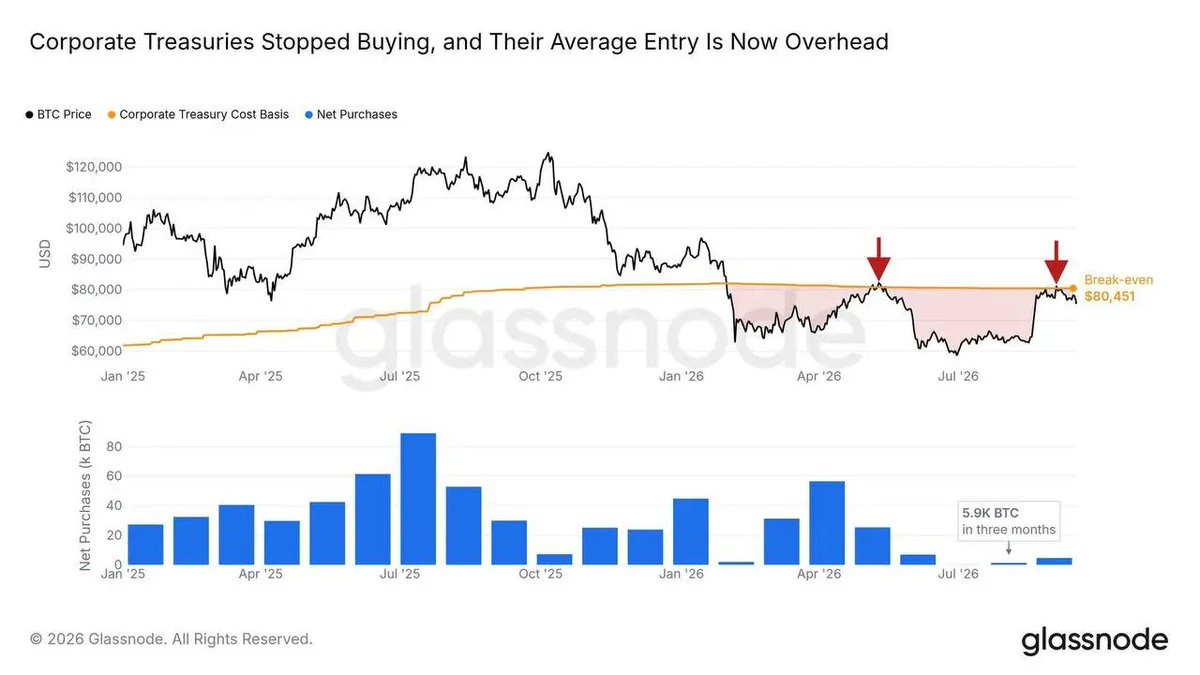
Strategy’s BTC selling can no longer be explained as “testing the process.”
Last week, it sold another 1,690 BTC, bringing its total sales over the past two weeks to 3,327 BTC. During the same period, the company’s dollar reserves increased by $650 million to $4.65 billion.
Compared with its statements a few months ago, the contrast is striking. When it sold 32 BTC back then, the CEO explained that it was to “let the market adapt and test internal processes,” while Saylor also emphasized that the company would still be a net buyer overall. Now, however, it has been selling more than 3,000 BTC
BTC+1.30%
STRC+1.10%
@BTC_Alert_ @Gate_zh Indeed, a 4.5% base yield is really not enough anymore.
BTC+1.30%
Buffett’s biggest secret may have had nothing to do with “knowing how to invest.”
It may simply be that he lived long enough.
Many people study every day how Buffett picks stocks, reads financial reports, and assesses economic moats, yet overlook one of the most brutal facts:
More than 99% of Buffett’s wealth was earned after he turned 50.
Even more strikingly, when he was 60, his net worth was only around $3.8 billion, whereas today it is approximately $140 billion.
In other words, based roughly on today’s wealth scale, more than 97% of his current wealth was accumulated after he turned 60.
S
100k, at an annualized return of 15%, compounded for 30 years—how much would it be in the end?
The answer is: 6.62 million.
But the truly important question is not how to calculate it, but:
Where can ordinary people find an asset that can be held and compounded over 30 years?
My answer is simple: the Nasdaq 100.
Of course, the Nasdaq 100 cannot possibly guarantee 15% every year over the next 30 years. It will inevitably experience crashes, bear markets, and even 50% drawdowns along the way.
But for ordinary people, rather than studying the next 100x coin every day, chasing hot trends, and gues
A US programmer earns a $150k annual salary, but the actual quality of life is worse than that of a Chinese person making $30k a year in a third-tier city.
Not nitpicking—let’s do the numbers:
Start by cutting the 150k: deduct 35% tax.
A $500k house looks cheap? Property tax + insurance are $20k a year—pay it until the end. In the US, you’re never the owner; you’re a permanent tenant paying rent to the government.
Haircut $40, a plumber’s visit from $150, babysitter pay $25 per hour, and a normal takeout meal costs $25.
Get sick once, and the medical bills become the #1 reason Americans person
When he made 439% in the first half of the year, they called him a prophet.
When he got liquidated today, they called him a gambler.
Same person, same set of positions—only thirty days in between.
@leopoldasch At 25 years old, an 8-person team, starting with $225 million in 2024, reaching 45 billion in two years. Stripe brothers, Nat Friedman, and Jane Street were all his LPs. On July 24, he was still writing to investors saying this pullback was the most attractive opportunity since 2025, and that the subscription window would open on August 1—welcome to add more money.
Six days after the let
post-image
GS+1.29%
JPM+0.05%
BEG+2.59%
SNDKG+7.16%
CRWV-4.17%
@BTC_Alert_ This logic is too clear and seamless.
The people who keep shouting that AI will boost his efficiency by 10x—you ask him one question: how many times has his income gone up?
He goes silent.
The truth is hard to hear:
When office workers use AI to increase productivity 10x, none of the additional output pays you—your boss grabs it for free. Your only “reward” is that the boss realizes three people can do the work of ten, and then lays off the other seven.
The more you work hard using AI, the faster your coworkers get laid off—the next one could be you.
Efficiency is yours, profits are his. That’s the wage-setting rule for employees,