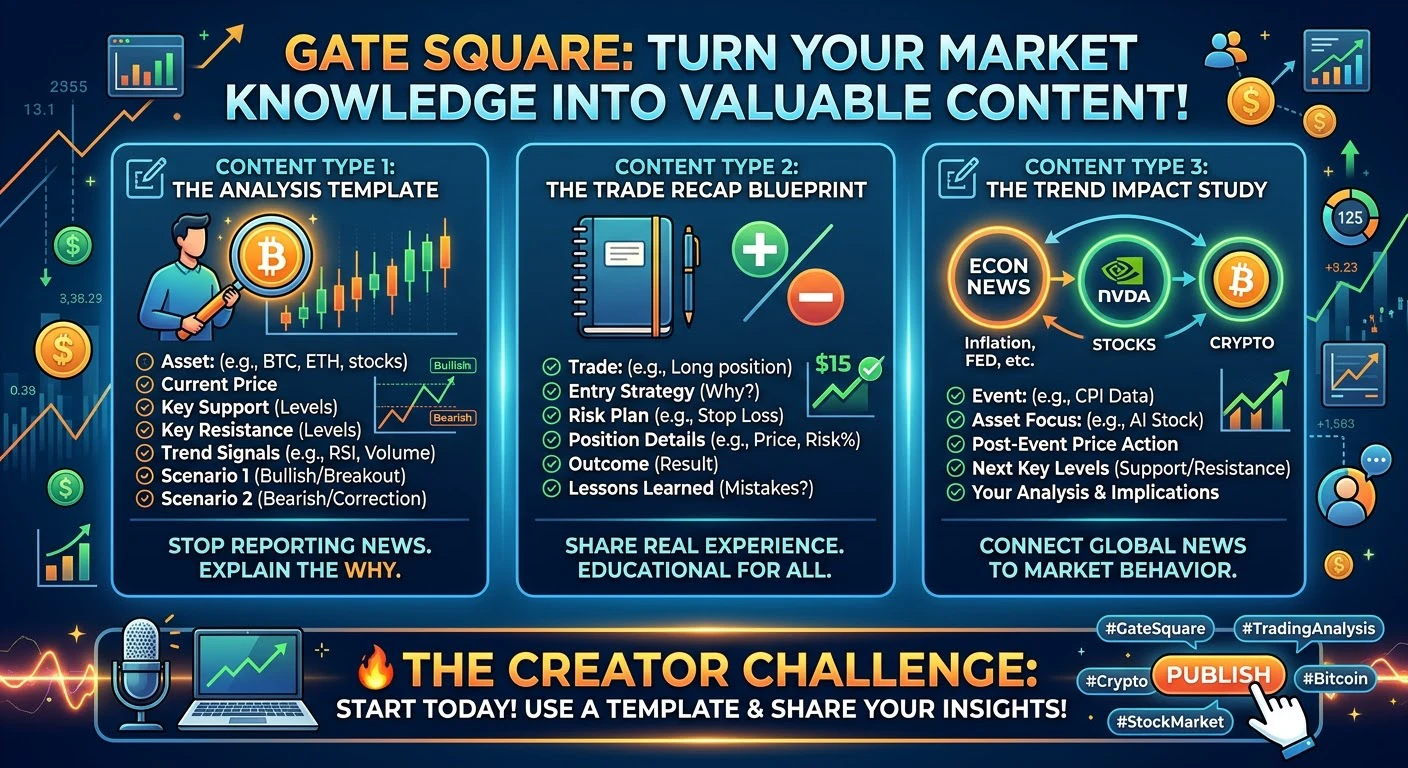
#GateSquareNewCreatorProgram 🧧 Gate Square: Turn Your Market Knowledge into Valuable Content!
The financial markets create new opportunities to learn, analyze, and share ideas every day. From Bitcoin's price movements to stock market rallies, AI developments, and major economic announcements, every market event can become an opportunity to create meaningful content.
Gate Square provides a platform for sharing market insights, trading experiences, and original opinions with a community interested in financial markets. For creators, the goal should be more than simply reporting news. It should be explaining what happened, why it matters, and what traders should watch next.
📊 1. Share Market Analysis That Adds Value
A good market analysis goes beyond saying that an asset is bullish or bearish. It explains the factors behind the movement and identifies the levels that could influence the next move.
When analyzing Bitcoin, consider:
• Current price action and market structure.
• Important support and resistance levels.
• Trading volume and liquidity conditions.
• Market sentiment and derivatives positioning.
• Possible breakout and breakdown scenarios.
For example, if Bitcoin approaches a major resistance level, increasing volume and a confirmed breakout could indicate strengthening buying pressure. However, repeated rejection could signal that sellers remain active.
Explaining both possibilities helps readers understand the market without treating predictions as guaranteed outcomes.
📈 2. Discuss Bullish and Bearish Scenarios
Markets rarely move in a straight line. Even strong uptrends experience corrections, while bearish markets can produce temporary recoveries.
A bullish analysis might focus on improving momentum, stronger demand, or a breakout above resistance. A bearish analysis might highlight weakening support, declining volume, or increasing selling pressure.
Consider an asset trading at 100 USDT, with resistance at 105 USDT and support at 95 USDT. A confirmed breakout above 105 USDT could open the door to further upside, while a breakdown below 95 USDT could indicate additional weakness.
These are illustrative levels, not live market signals. The important lesson is to identify potential scenarios and wait for confirmation before making decisions.
₿ 3. Share Your Trading Experiences
Real trading experiences can provide valuable lessons for other traders. A useful trade recap explains the entry decision, market conditions, exit strategy, and final outcome.
You can discuss:
• Why you entered a position.
• Which technical signals influenced your decision.
• How you managed risk and leverage.
• What went according to plan and what did not.
• What you learned from the experience.
Losing trades can be educational too. Sometimes a trader enters too early, ignores resistance, or uses excessive leverage. Explaining these mistakes honestly can help others avoid similar problems.
The purpose is not to make every trade look successful. It is to share practical lessons that improve trading discipline.
🛡️ 4. Make Risk Management a Priority
Risk management is one of the most important subjects in financial markets. Even a strong trading setup can fail when unexpected news or sudden volatility changes market conditions.
Suppose a trader has 1,000 USDT in account equity and plans to risk 1% on a trade. That represents a planned loss of 10 USDT if the stop-loss executes at the intended level, excluding fees and slippage.
This example shows why position sizing and predefined exit plans matter.
Avoid presenting leverage as an easy way to increase profits. Higher leverage also increases liquidation risk and can magnify losses. A responsible trading post explains both the potential opportunity and the downside.
📉 5. Connect Crypto Markets with Economic News
Cryptocurrency markets are influenced by more than token-specific developments. Inflation, employment reports, central bank decisions, Treasury yields, and changes in the US dollar can all affect investor sentiment.
For example, stronger inflation data may reduce expectations for interest-rate cuts and put pressure on risk-sensitive assets. Softer inflation may support market optimism, although the actual reaction depends on investor expectations and the wider economic environment.
When discussing important economic announcements, explain how Bitcoin, major cryptocurrencies, technology stocks, gold, and bond yields react when reliable data is available.
The goal is to connect the news with actual market behavior instead of assuming that every positive headline automatically produces higher prices.
🔍 6. Use Technical Indicators with Context
Technical indicators can help traders understand market trends, but no indicator guarantees a particular outcome.
Moving averages can help identify trends, the Relative Strength Index provides momentum information, and the MACD can help evaluate changes in momentum.
Support, resistance, and volume can provide additional context.
For example, an RSI reading above 70 does not automatically mean that an asset must decline. Strong trends can maintain elevated momentum for extended periods.
The strongest analysis combines indicators with price action, market structure, and broader market conditions.
📰 7. Turn Breaking News into Useful Insights
Simply copying a headline is not enough to create meaningful market analysis. Explain what happened, compare the development with market expectations, and discuss its possible implications.
A company may report higher revenue but experience a stock-price decline if its earnings guidance disappoints investors. Similarly, a crypto project may announce a partnership without generating immediate demand for its token.
A valuable news post should include verified facts, relevant price movements, percentage changes when available, and your independent interpretation.
Always distinguish confirmed information from speculation. Accurate analysis builds credibility and helps readers make better-informed decisions.
💻 8. Explore Stocks, AI, and Emerging Trends
Gate Square content can cover stocks and technology alongside cryptocurrency.
AI infrastructure, semiconductor manufacturers, cloud computing, and data-center investments are important topics because they influence expectations about future corporate growth.
However, growing demand does not automatically make every company a good investment. Valuation, earnings, margins, competition, and capital expenditure also matter.
When analyzing a stock, consider its latest reported results, guidance, trading volume, price reaction, and important technical levels.
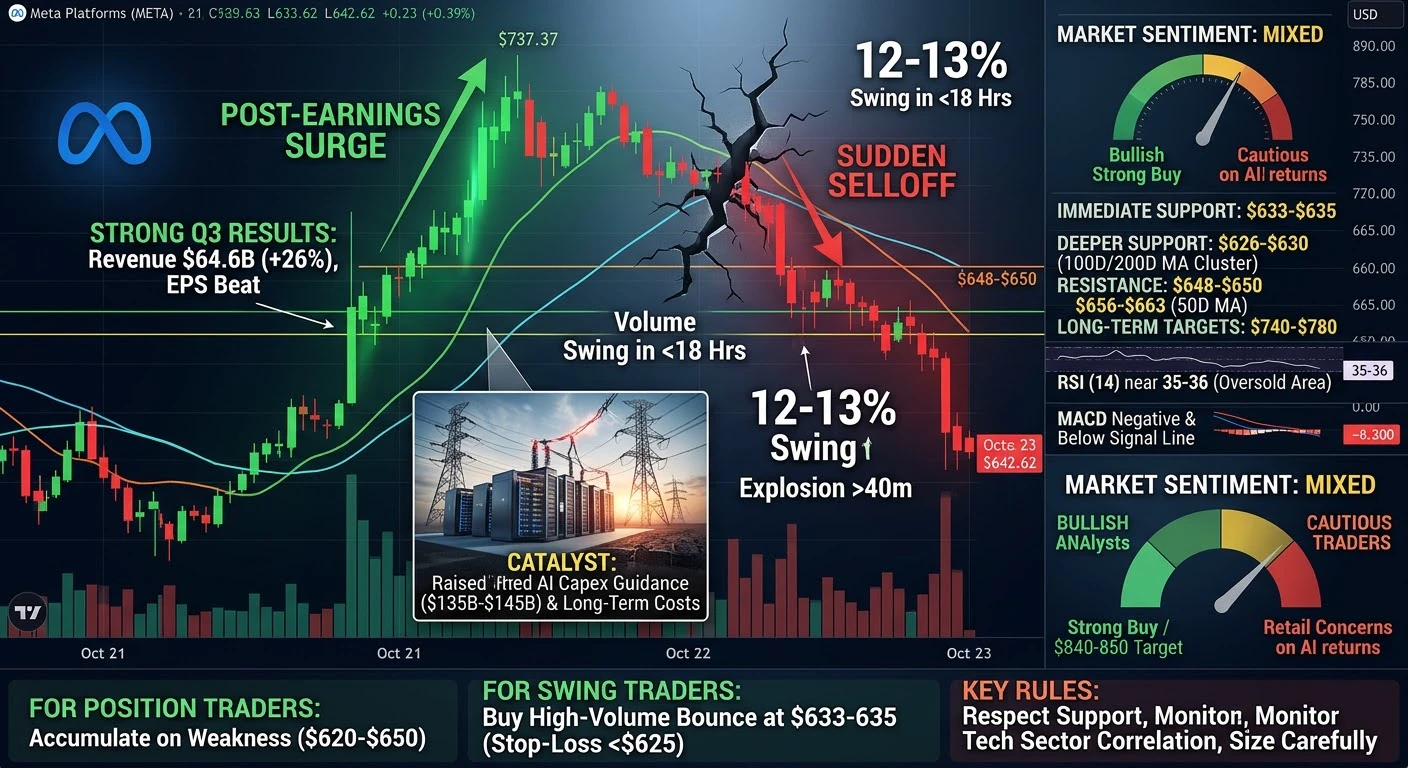
A strong earnings report can still lead to a selloff when investors expected even better results. Understanding this difference between business performance and market expectations can make your analysis more useful.
💬 9. Build Meaningful Community Discussions
A strong creator community grows through original ideas and respectful discussion.
Instead of simply asking whether Bitcoin will rise or fall, ask readers which support or resistance level they consider important and what confirmation they would need before entering a trade.
When discussing stocks, invite different perspectives on earnings growth, valuation, and market sentiment.
Constructive disagreement can help everyone understand alternative scenarios. No single trader has all the answers, and markets remain uncertain even when the available evidence appears convincing.
🏆 10. Grow Through Consistency and Originality
Building a creator presence requires patience. Focus on producing useful content rather than chasing engagement with exaggerated predictions.
Before publishing, ask yourself:
• Is the information accurate? • Have I included my own market perspective? • Are the prices and percentages verified? • Have I explained both opportunities and risks? • Will readers learn something useful?
Experiment with market updates, educational posts, trade recaps, technical analysis, and macroeconomic discussions. Review feedback and keep improving your writing style.
Consistency, originality, and clarity can help you develop a recognizable voice within the community.
🔥 My Personal Market View
I believe valuable trading content combines three essential elements: real market observations, independent analysis, and disciplined risk management.
A headline can attract attention, but explaining price action, liquidity, market sentiment, and possible scenarios creates greater value. The best analysis does not promise that a trade will succeed. It explains what the market is doing, what could happen next, and which signals might confirm or invalidate the current view.
This approach is useful for both cryptocurrency and stock market analysis because every asset involves uncertainty and changing expectations.
🚀 Final Thoughts
Gate Square offers an opportunity to share knowledge, discuss financial developments, and learn from different market perspectives.
Whether you analyze Bitcoin, review a stock's earnings, explain a technical pattern, or share lessons from a trading experience, focus on creating original and useful content.
Don't just report the market. Explain it. Don't simply make predictions. Support your views with evidence. And never ignore the importance of risk management.
#GateSquareHalloween #ShareWeekly