Square
Following
Hot
News
Notifications
Profile

Sophiee

vip
No content yet
Peak Tier VIP 01.7 Year(s)
0
Following
7
Followers
34
Liked
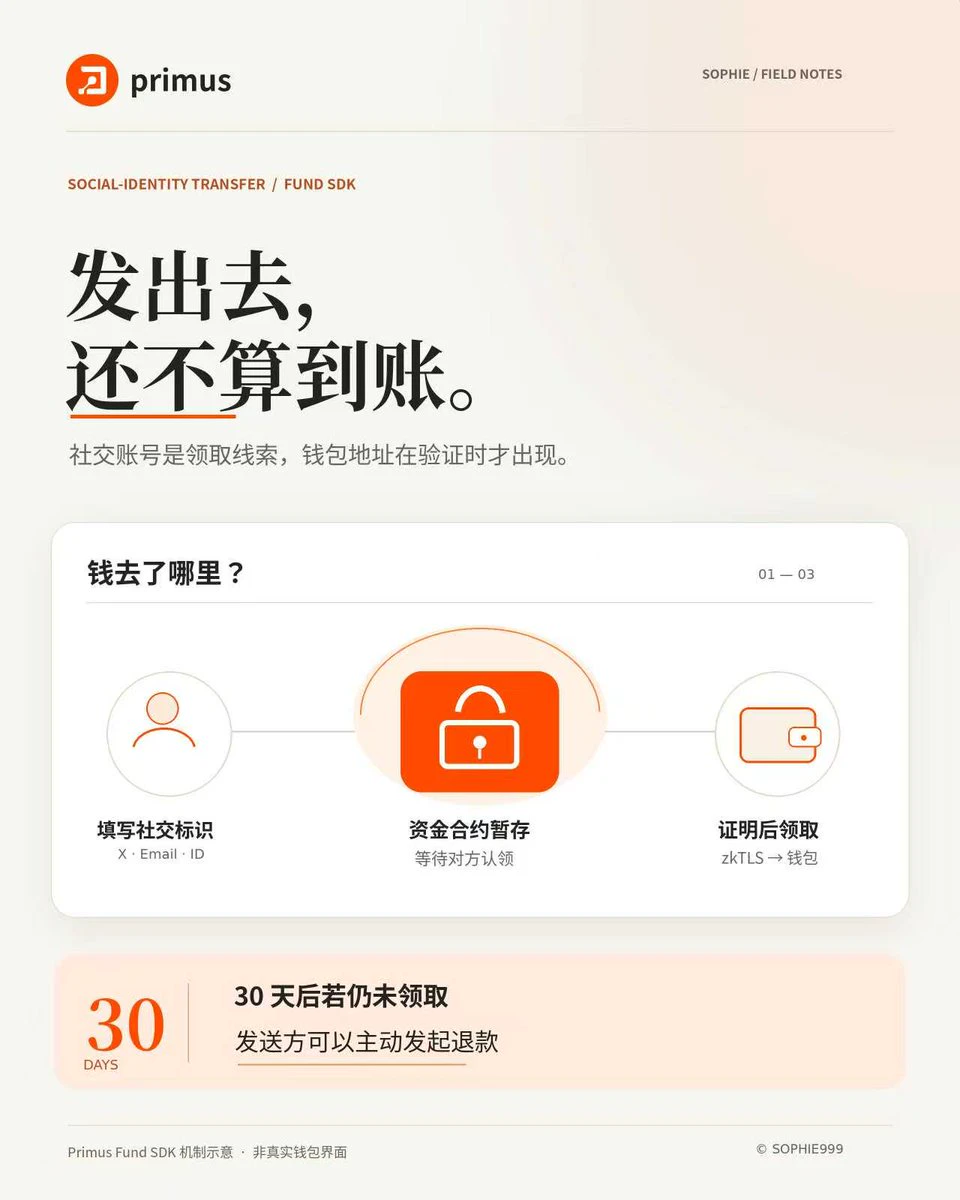
Why do tokens sent to social accounts need a special rule to refund them if nobody claims them within 30 days?
When you send funds directly to someone else’s wallet address, the money reaches their account once the transaction is confirmed. There’s no such thing as an expired, unclaimed transfer being returned.
But the official @primus_labs Fund SDK example includes a dedicated refund method: under the SDK’s rules, once the 30-day processing period has elapsed, if the tokens remain unclaimed, the sender can initiate a refund transaction to return the funds to the original wallet address.
The r
post-image
GOOGLG+0.09%
There’s an interesting number on @termix_ai’s search page.
In previously captured public search snapshots, Video Editing showed 197 services but only 10 live backend matches; another snapshot for AI Automation showed 312 versus 10.
The two sets of numbers come from different times and shouldn’t be treated as current live results. As for why only 10 are shown, the specific ranking and pagination logic still needs official clarification.
Still, it got me thinking about a very real question: As AI Agents become more numerous, is it really getting easier for ordinary people to find the right helpe
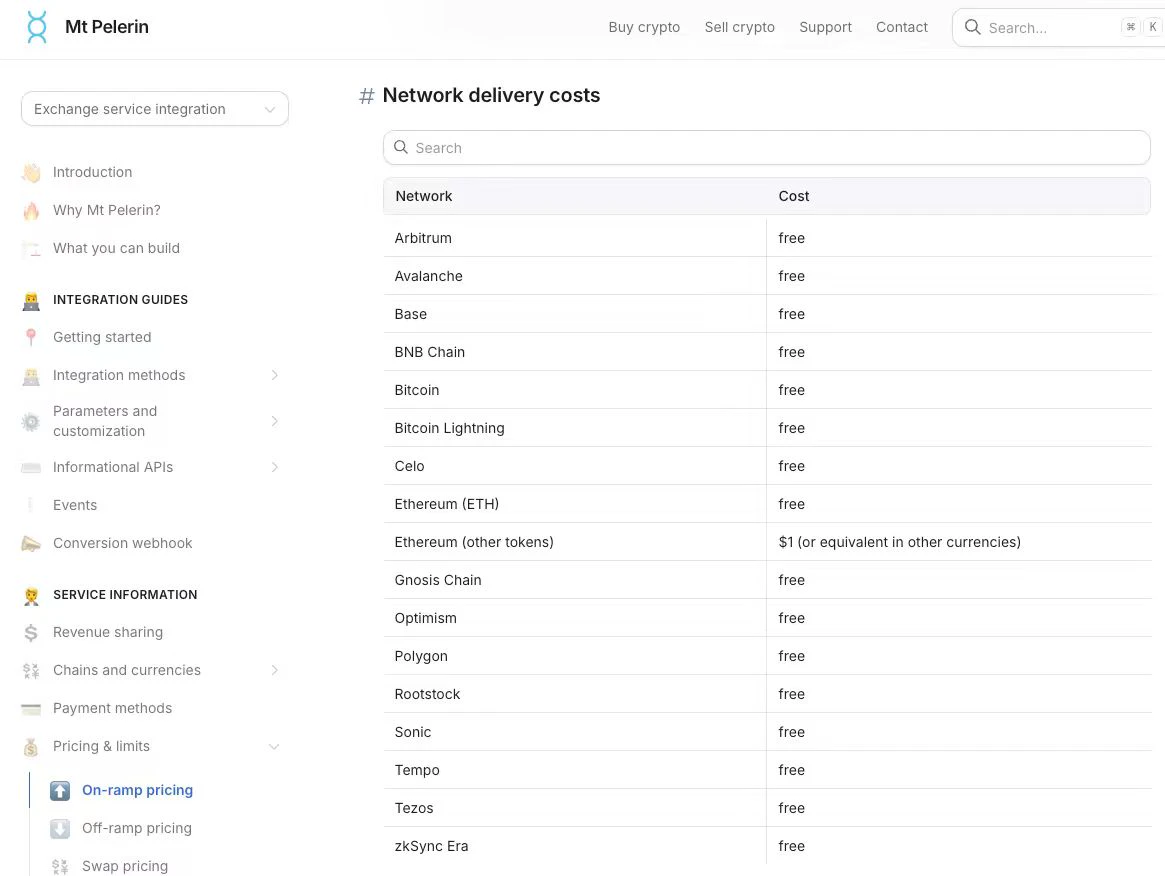
f(x) Protocol @protocol_fx's fxUSD can connect directly to bank accounts through Mt Pelerin, but completing an actual fiat on-ramp or off-ramp involves several separate steps.
When buying, users send fiat to Mt Pelerin via bank transfer or another method. Mt Pelerin converts it into fxUSD at the prevailing exchange rate, then sends it to the wallet specified by the user.
The official page says buying fxUSD by bank transfer has a 0% conversion fee, while the card FAQ lists a 2.5% fee. Selling works in reverse: users send fxUSD from their wallet to the service provider, which converts it to fiat
post-image
ETH-1.26%
BTC-0.67%
Red broth nine-grid hot pot is still so satisfying!
People from elsewhere think hot pot just needs to be numbing and spicy enough and tasty!
But that's not the case—hot pot places can differ a lot.
If the hot pot base is stir-fried well and the ingredients are fresh, it's delicious.
post-image
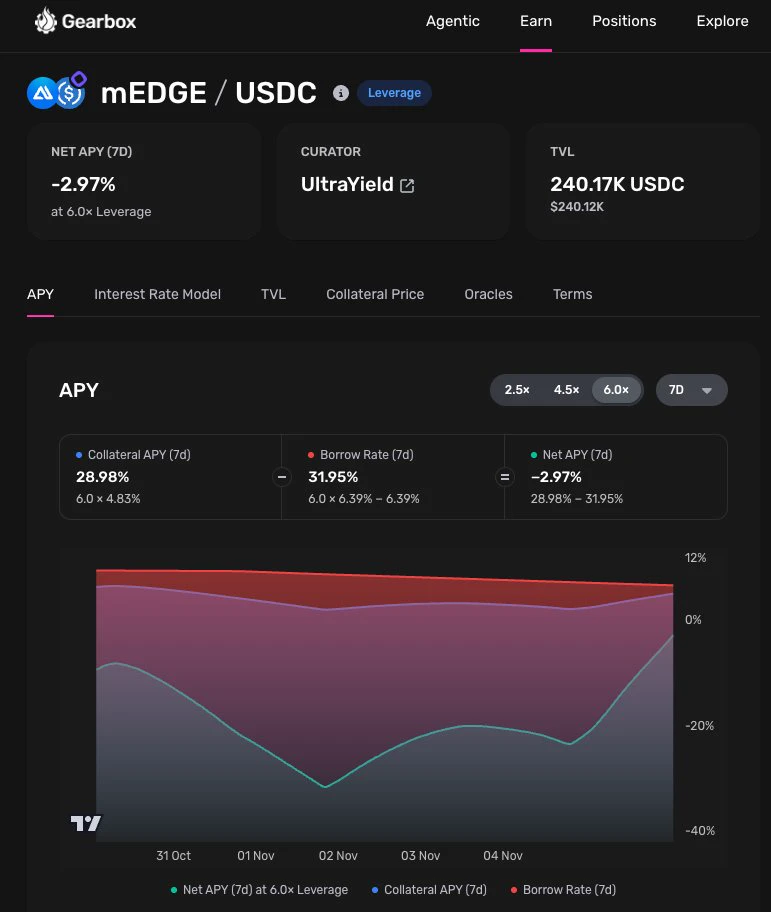
On Gearbox’s mEDGE / USDC page, Net APY (7D) at 6.0x leverage was shown as -2.97%.
Collateral APY (7D) was 28.98%, while Borrow Rate (7D) was 31.95%, making the difference negative. The APY on the list or strategy page combines collateral yield and borrowing costs; it is not a standalone figure.
A strategy appearing on the page does not mean you can open a position at your desired size right now. The SDK’s maxBorrowAmount indicates the maximum amount you can currently borrow to add to a position, taking available liquidity and debt caps into account.
The actual return on an existing position s
post-image
USDC+0.01%
A small studio is preparing to launch a collection on FungoLabs. When will the fees be finalized?
The Launchpad page says studios can create their own Drop, rehearse on testnet, and then officially deploy the Collection and Sale contracts using their own wallet. The contracts belong to the studio, sales revenue goes to its own wallet, and platform fees are deducted on-chain.
There are two different points in time here. When creating a Drop, the studio first sets a cap on the platform fees holders will pay. Once the official Sale begins, the platform fee in that sale contract is fixed according
post-image
Even with the same mGLOBAL, KPK paused two different Gearbox Credit Managers in a single risk response.
Take a look at the review published by KPK on November 4.
After 2.08 million mGLOBAL were redeemed and flowed out on October 29, the two mGLOBAL Credit Managers in the Gearbox frxUSD pool were paused 36 and 48 seconds later, respectively. These timings come from KPK’s report and have not been independently verified against the full on-chain transactions.
At @GearboxProtocol, the same collateral can correspond to different Credit Managers, each of which carries out its own risk-control action
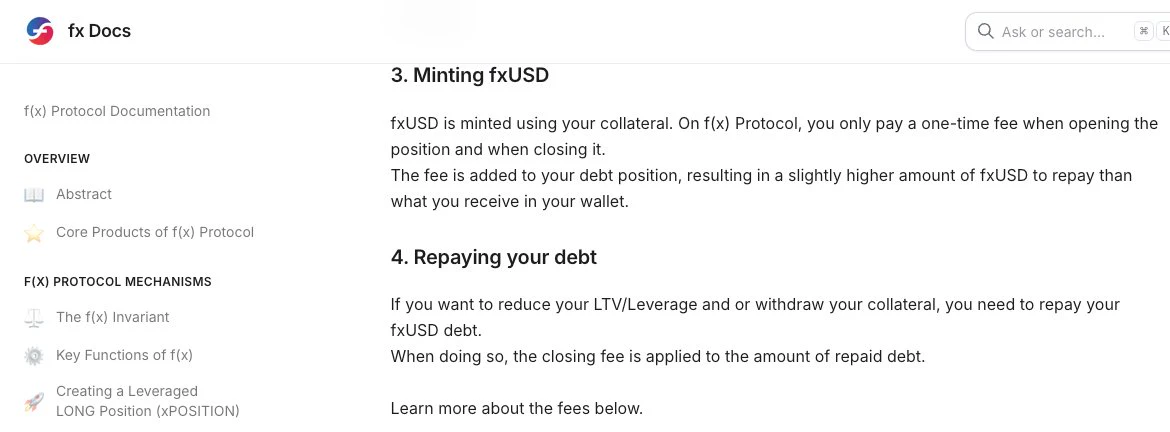
fxMINT says 0% annual interest, but the fxUSD received in your wallet may be slightly less than the recorded debt from the moment you open the position.
@protocol_fx's documentation makes it clear: a one-time fee is charged when you open the position and added directly to the debt, so the amount the system records as owed will be somewhat higher than the fxUSD you actually receive.
When you repay, a closing fee is calculated separately based on the repayment amount.
0% annual interest means there is normally no interest accruing continuously each year, though temporary borrowing costs may stil
post-image
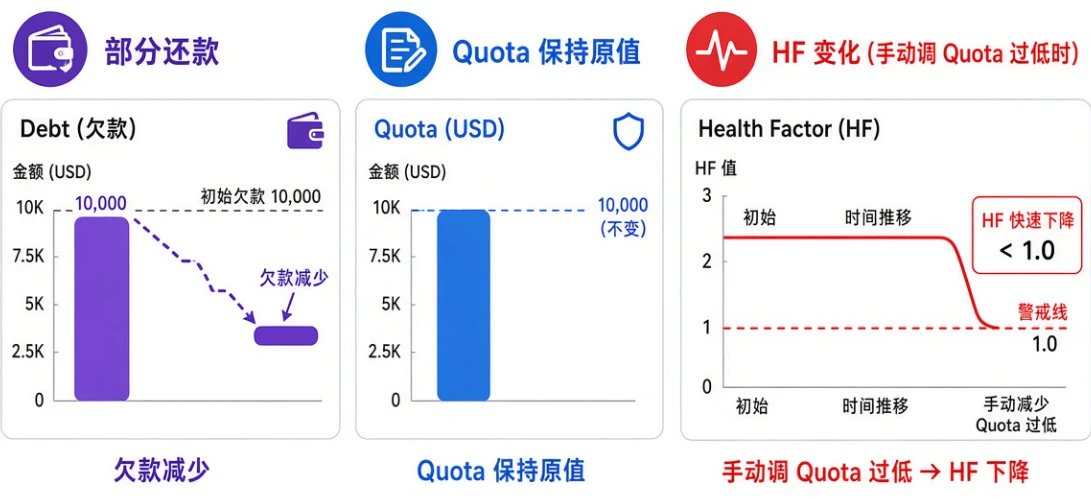
Gearbox repays part of its loan. The debt is indeed lower, but the collateral Quota will not automatically decrease along with it.
@GearboxProtocol The official documentation is clear: partial repayment reduces the debt and corresponding base interest, while the Quota remains at its original value. It is only cleared automatically once the loan is fully repaid. For assets with a nonzero Quota Rate, the associated fees also will not automatically decrease just because you have repaid part of the loan.
To lower these fees, you need to adjust the Quota separately.
But don't lower it too much at o
post-image
Accustomed to the numbing spice of Sichuan and Chongqing,
try the gentle comfort of Cantonese congee.
Seeing 1:1 redemption, you might instinctively think 1 PT can be redeemed for 1 USDC?
I noticed that @protocol_fx's PT-fxSAVE on Pendle expires on October 29. Looking closer, I realized that 1:1 here refers to the accounting unit: at maturity, 1 PT corresponds to fxSAVE worth 1 fxSP.
fxSP is the share unit of the Stability Pool, so it can't be directly understood as 1 USDC, nor does it mean you can always redeem it for 1 fxSAVE.
Also, stablecoins won't automatically be deposited into your wallet at maturity. If you hold PT, you can select Redeem on the Pendle Dashboard, then choose which asset
USDC+0.01%
PENDLE-1.93%
NeoSoul previewed Trade Card a few days ago: AI analyzes first, then gives its suggestions to users, who choose take or skip.
I'm quite interested in this design, but I also have a question: if the AI gave its recommendation ten minutes ago and the market has changed since then, is the card still useful?
Prediction markets in particular can see odds change with a single new piece of information. The AI may have analyzed things carefully at the time, but by the time users are actually ready to act on its recommendation, the original assumptions may no longer hold.
NeoSoul's technical documentat
post-image
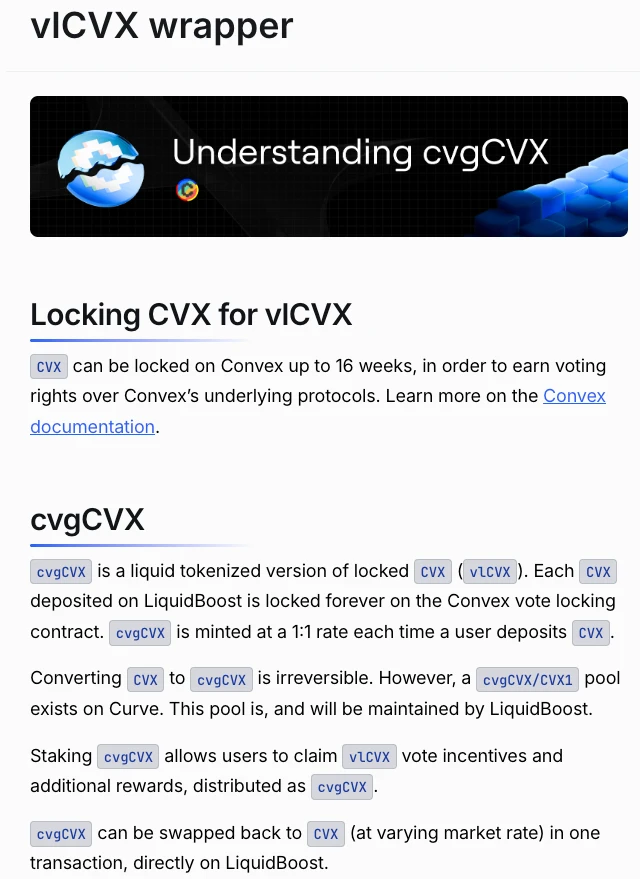
I saw LiquidBoost say you can exit at any time and wondered how much you could get back when exiting.
@Tangent_fi One line in the official risk disclosure is important: wrapped tokens are not guaranteed to be redeemable for the underlying assets at a 1:1 ratio.
LiquidBoost wraps liquidity for SDT and C, and also maintains the corresponding stablepool. How much you can actually get back depends on the pool's exchange rate at the time. Being able to exit at any time doesn't mean you can exit at a 1:1 ratio.
This is a risk highlighted by the official notice; it doesn't mean there is already a dis
post-image
Nightshift KOL 验证 NS-2171 @nightshift_fans
NS-2.18%
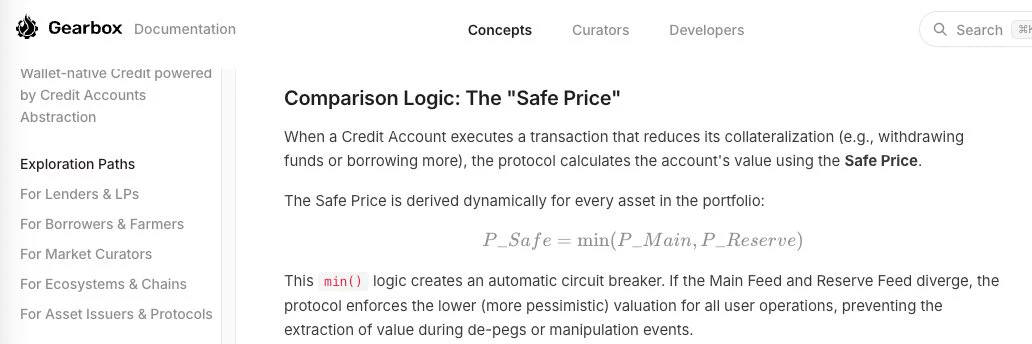
The collateral price has gone up, so can you borrow more? On @GearboxProtocol, it’s really not that simple.
It has a rather distinctive dual-price design: Main Feed calculates account health and determines liquidations; to increase your borrowing or withdraw part of your collateral, you also need to refer to Reserve Feed, using the lower of the two quotes for the safety check.
I think this design makes a lot of sense. Market prices sometimes rise very quickly, but you still need to be cautious about using that collateral to borrow more. What if it was only a temporary spike?
There’s also an im
post-image
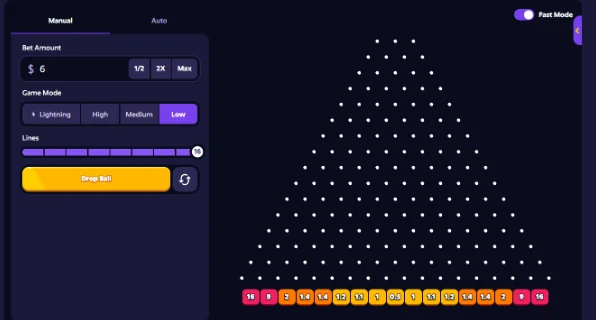
When this Plinko ball fell, the audio suddenly became entirely my voice 😂
Headphone users, sorry for your ears. @Roobet
post-image
Whether the little chicken should keep going was already enough for us to discuss in voice chat. Now @Roobet has launched Jackpots too, giving us one more topic for the next chat 😂
Participation is optional, but you need to add an extra amount on top of the normal bet. After joining, every qualifying bet will have a chance to win a Jackpot, and the added amount will also count toward the total bet.
I can already imagine how chaotic the voice chat will get if someone actually wins a jackpot.
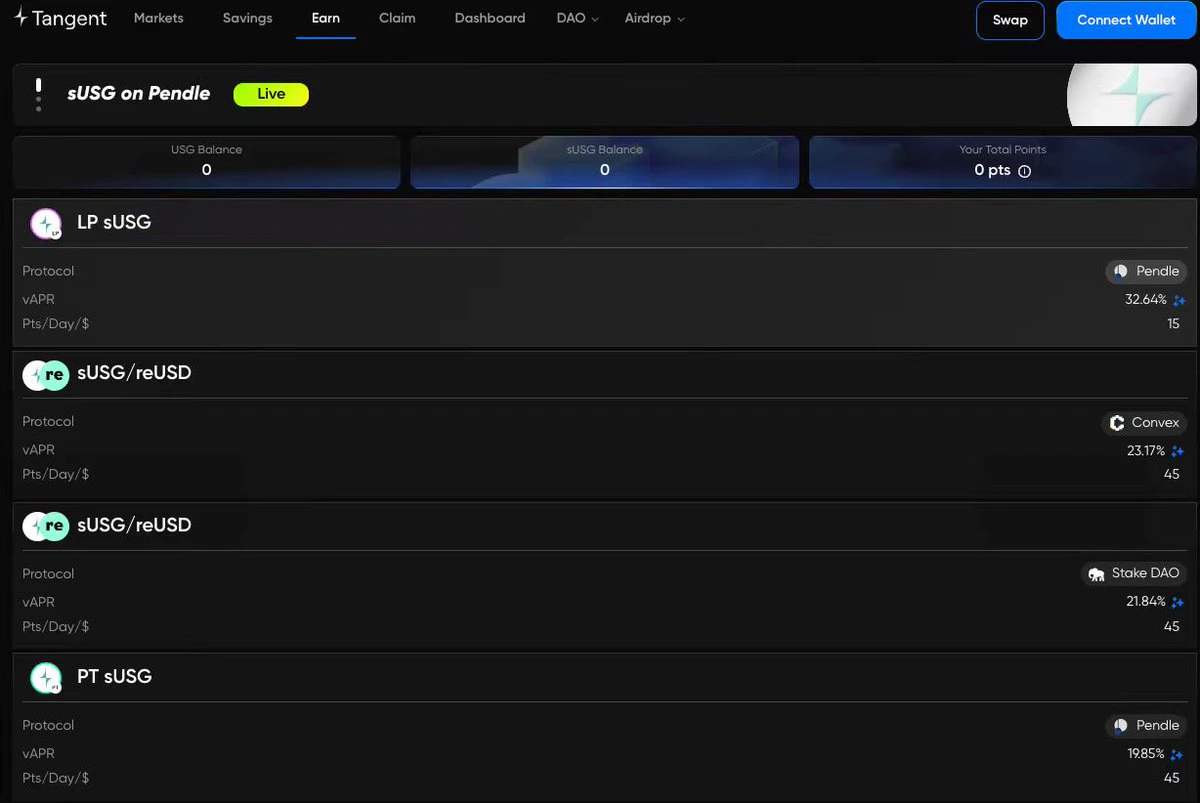
On the Tangent page, the Savings and Earn entry points sit right next to each other.
At first glance, they look like two more or less similar ways to earn yield.
But once you look closely at the details, you’ll find that the two differ quite a bit—the core difference is where the money in your hands is going to be parked.
Savings has a clean logic: stake USG into sUSG, and as long as you hold sUSG, yield quietly accrues automatically. In other words, ordinary USG becomes a yield-bearing asset, without the need to move between other DeFi protocols.
Earn takes a different route, opening channels
post-image
CRV-2.21%
Load More