PayneResearch

vip
Web3 Creator
Market Analyst
Sharing personal analysis logic and researching undervalued value investing.
What is your salary? $BTC
BTC0.34%
View Original
post-image
  • Reward
  • Comment
  • Repost
  • Share
History always repeats itself in astonishingly similar ways.
I dug through the stories of those mythologized genius traders.
In 2006, Brian Hunter, 32, a master’s degree in mathematics, ranked 29th globally by Trader Monthly.
He made $2 billion for his company in the first four months.
When it reached $3 billion in September, it lost $6.6 billion half a month later, and the fund went bankrupt.
In 2021, Bill Hwang, a disciple of Tiger Fund, with annualized returns of over 40%, was known as the “Hand of God.”
Within a year, his personal wealth rose from $1.5 billion to $36 billion.
5x leverage.
View Original
  • Reward
  • 1
  • Repost
  • Share
MamaLineGuru:
Leverage merely accelerates greed into bankruptcy; no one can win forever, especially when everyone else thinks they are the exception.
AI demand hasn’t disappeared, but the logic behind capital expenditures is changing. In the past it was about crazy building new data centers; now it’s more likely to be increasing the utilization rate of existing data centers, with the proportion of leased capacity rising and new build speed slowing.
GPUs still need to be purchased, but the marginal demand for data centers, power, optical modules, and storage has already started to shift.
The biggest feature of storage is that price increases suppress demand, while expansion drives supply. Once cloud providers’ capital expenditures enter a st
SK Hynix-4.88%
SKHY-4.90%
MSFT2.54%
ORCL-0.63%
META0.18%
View Original
post-image
post-image
  • Reward
  • 4
  • Repost
  • Share
GateUser-558eaf11:
Marginal changes are what matter—that’s true.
View More
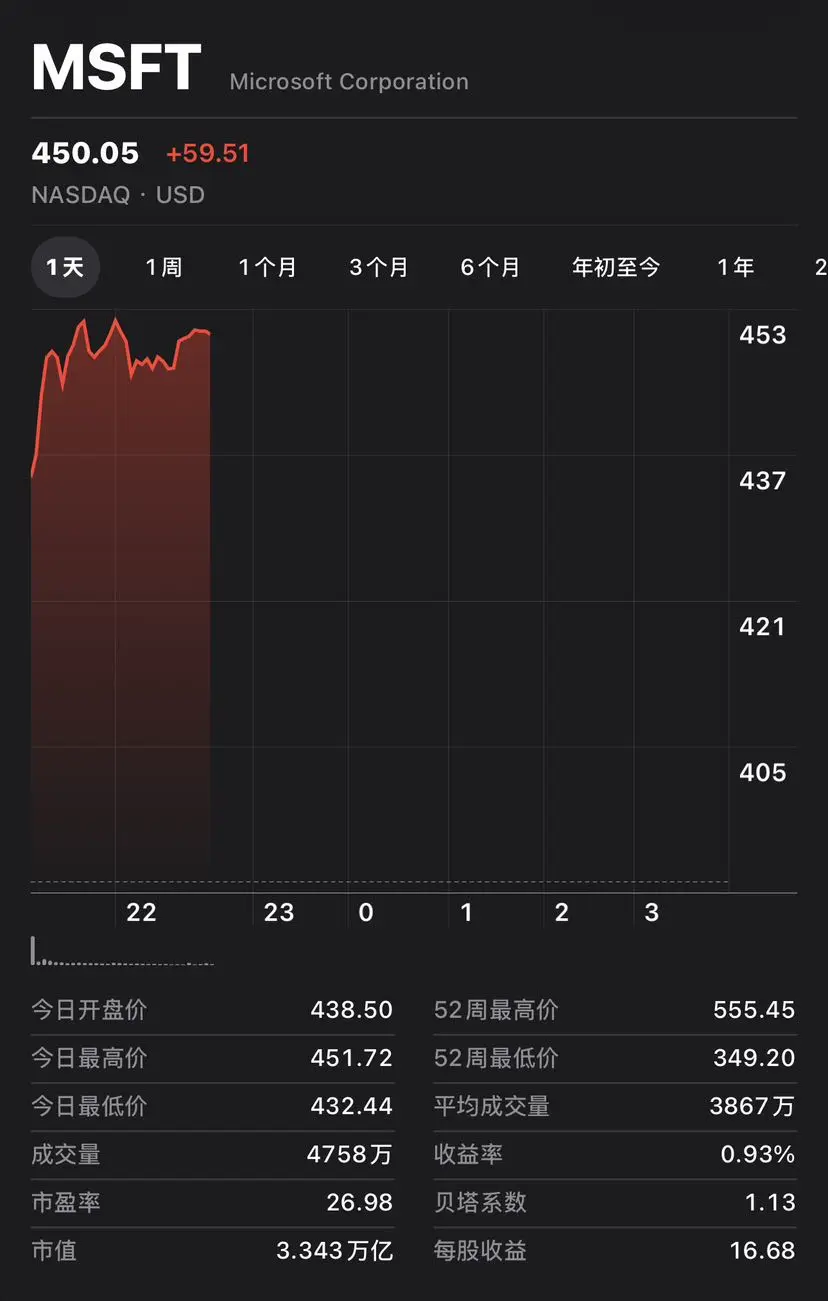
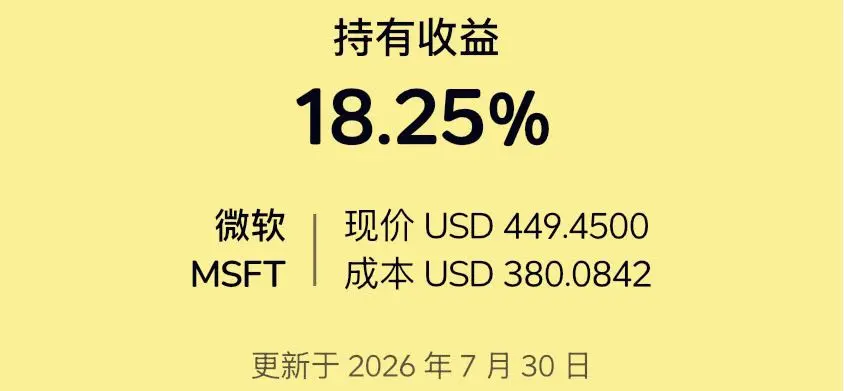
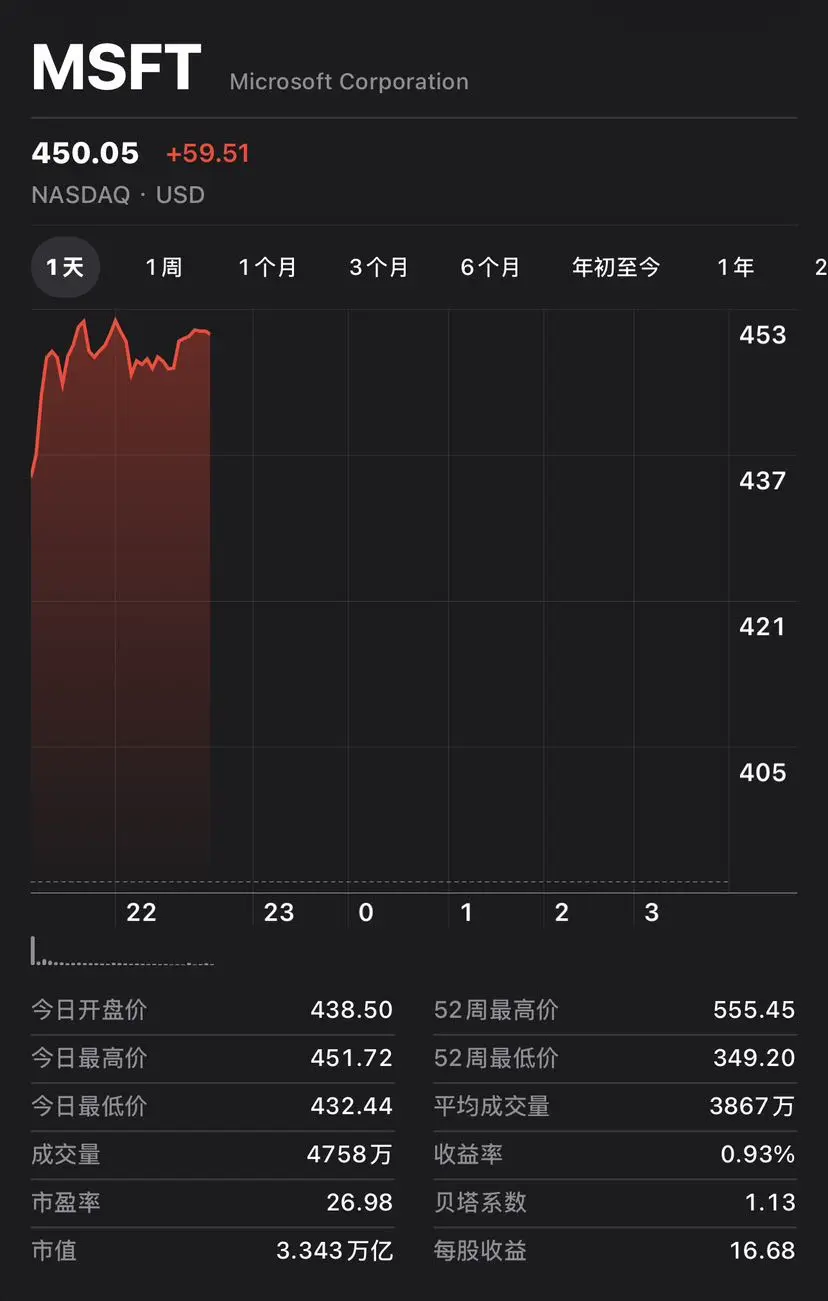
$MSFT
From wild expansion to meticulous spending: Microsoft is changing its AI investment logic
What’s most worth paying attention to in Microsoft’s latest earnings report is not only that capital expenditures have been adjusted from $190 billion to $175 billion, but that the logic behind AI infrastructure investment is also changing.
In the past, the market logic was:
AI demand growth → cloud providers massively build data centers → large-scale purchases of GPUs, CPUs, HBM, servers, optical modules, and power equipment.
Now Microsoft may be shifting to:
AI demand increases → first rent e
MSFT2.23%
View Original
post-image
post-image
  • Reward
  • 2
  • Repost
  • Share
MockSigner:
This analysis is spot on. Microsoft has shifted from spending heavily to build data centers to renting GPUs first and installing them later, indicating that AI investment is starting to focus on ROI.
View More
$BTC
Kevin Warsh :
* Inflation still hasn’t reached the 2% target.
* There’s no rush to cut interest rates.
* If future data is weak, it’s not ruling out further rate hikes.
* There is still a possibility of a rate hike at the September meeting.
BTC0.34%
View Original
  • Reward
  • 1
  • Repost
  • Share
GasGuru:
The chances of further rate hikes have come up again—BTC bulls should be careful. The market may still need to trade in a range for a while.
$ORCLX Will the AI bubble burst—and will Oracle go bankrupt?
I think it probably won’t.
Many people confuse a sharp drop in the stock price with company bankruptcy, but in capital markets, these are completely different things.
If the AI bubble really bursts, the first to burst won’t be Oracle—it will be those AI companies that have no revenue, no cash flow, and survive on funding. In essence, Oracle is still a mature business with steady cash flows such as databases, enterprise software, cloud services, and government customers. AI is only its new growth engine, not its only pillar.
What trul
ORCLX2.81%
View Original
  • Reward
  • 3
  • Repost
  • Share
DoubleBottom:
The analysis is very thorough. Many people only look at the stock price and not the fundamentals. Oracle’s databases and enterprise customers are the foundation; AI is just icing on the cake. What you should truly focus on is the growth rate of OCI revenue and RPO—these hard metrics are more reliable than candlestick charts (K-line).
View More
The market has been talking up AI development, believing that storage will always be scarce.
But the wind direction has started to change.
Samsung and SK hynix continue to expand production, and CXMT has also gone public. Although they can’t make HBM for now, DRAM will catch up sooner or later. Once competition in the mid- and low-end market intensifies, the three major original manufacturers will be able to free up more capacity for high-end products.
Downstream NAND is starting to cut prices—this is how the market works.
The story is valuable; the facts aren’t.
When everyone believes storage
MU4.01%
SNDK5.21%
View Original
  • Reward
  • 2
  • Repost
  • Share
PurpleMistLily:
Indeed, the market digests expectations in advance; once the facts come out, the good news is already fully priced in.
View More
In the past few hundred years, transactions among humans have all been completed between people.
In the future, another kind of economic relationship may emerge: machines will start to earn, spend, and make decisions on behalf of people.
**Al** truly changes isn’t just production efficiency, but the redefinition of “who can participate in economic activity.”
When agents have wallets, funds, and payment capabilities, they are no longer merely tools—they will gradually become a new role in the economic system.
Just as the internet changed the relationship between people and information, mobile i
BTC0.34%
View Original
  • Reward
  • 3
  • Repost
  • Share
DividendHunter:
When AI can all have wallets that autonomously execute trades, the era in which humans are the only economic actors ends—this is more paradigm-shifting than any technological revolution.
View More
Chinese people like to say “At thirty, one stands on their own,” but I think “standing on one’s own at thirty” isn’t that important.
Because for many people, the starting point of life is already different at birth.
Some are born in first-tier cities, with parents who have resources, education, and connections; others are born in remote areas, with ordinary families, and even from childhood have to hustle for a living.
When a person is already thirty but still hasn’t found their footing, put down roots, or gained social status, the reason is often not thirty, but everything they’ve experienced
View Original
  • Reward
  • Comment
  • Repost
  • Share
Making money is a kind of ability; protecting your wealth is another kind of ability.
Many people mistake success in one field for success in all fields.
So they keep starting businesses, investing, and expanding—until, in the end, they don’t lose their ability, but their risk management.
Wealth doesn’t disappear in a day; it slowly leaks away each time you overestimate yourself and step outside your comfort zone.
Warren Buffett’s biggest advantage isn’t that he gets every investment right, but that he rarely makes mistakes that can destroy him.
True wealth isn’t how much you earned in a singl
View Original
  • Reward
  • Comment
  • Repost
  • Share
Zou Shiming’s story tells us: making money and keeping @财富 are two different abilities.
In wealth management, there’s a phenomenon that keeps showing up again and again.
Many people spend their whole lives studying how to make money, but very few seriously study how to keep wealth.
After you make your first bucket of gold, the real test only begins.
When an athlete wins a world championship, it proves athletic ability.
When an entrepreneur grows a company to success, it proves business management ability.
When an investor makes money, it proves investing ability.
But these abilities don’t auto
View Original
  • Reward
  • Comment
  • Repost
  • Share
  • Pinned