PaperImperium

vip
Active for: 1.9y
Peak Tier 0
No content yet
Maybe this is a naive question, but if AI could kill a ton of people, why haven’t there been incidents where it’s killed 5 or 10 or 100 people?
With dozens of models and tens of thousands of agents (more?) that are heterogeneous, it seems like we’d see the smaller body counts in bulk before spawning a serial killer.
Does anyone have a good thesis here?
I was skimming this new economics working paper on whether AI helps or hinders patent lawyers.
It’s most robust finding basically plays to my own priors and is consistent with related literature on this topic: junior practitioners bifurcated into being much better or much worse post AI.
This seems to be the generalizable story emerging across disciplines, from grade school students to lawyers, and the mechanisms are quite intuitive.
When given the opportunity to offload difficult portions of a task, you naturally get less practice at it.
Some people choose to go behind the AI to verify its out
Many people debating AI safety weren’t alive for or don’t remember the early years of the Global War on Terror that began 25 years ago today.
I think it has some relevant lessons.
First, 9/11 was executed by using a widely available technology - box cutters. There’s just no practical way to keep box cutters from being available to anyone with $5.
AI seems likely to have a trajectory of lower costs, lower barriers to entry (you can run a good-enough model on your own machine).
The immediate response was to form the TSA and airport security protocols we all know and hate today. Even at its best,
“DeFi is speed running economic history” is something I regularly assert.
I think it’s time we start to internalize the key concept of “thinking on the margin”.
There’s a great economics blog named Marginal Revolution (@MargRev), because thinking on the margin absolutely was a revolutionary idea.
But I’ll be more specific to crypto: learn to identify when per-unit costs fall (economies of scale) and when per-unit costs rise (diseconomies of scale).
I regularly see on the timeline an investment thesis on some token or protocol or DAT or whatever predicated upon future growth.
Future growth is o
Genuine question: What is the AI-specific risk for humans?
Not the number, but articulate how it works. What can AI do to humans that can’t happen from giving the same permissions to a villain or an inept dufus?
We don’t give a single human system control to launch codes or bioweapons labs (I don’t think). Is the fear that our brains fall out and forget that practice with AI or that AI has some specific powers to move molecules around in meatspace that is independent of the systems that are guarded?
Kind of amazing how the Medici operated a kind of holding company instead of all siloed individual partnerships, as was the style at the time.
On the one hand, this exposed the whole organization to liability, but given the lending between branches, contagion was always going to be possible.
It’s really amazing to me that the Rome branch of the Medici bank operated with zero equity almost from the start.
It was such a large source of funds from the Papacy and cardinals looking for yield that it financed other branches’ activities without feeling the need to retain an equity buffer.
True degens.
People are aware they can deposit directly into a Morpho market if they wish?
You may not want/need the vault curator’s active management that justifies their fee.
User interfaces are scarce to do this, but we live in a world of AI where a simple personal UI just needs chain id, market address, a public rpc, and vercel or another place to host (latter mostly because many wallets won’t let you connect without https)
The main benefits are eliminating cash drag at the vault level, curator fees, and exposure to a portfolio broader than you want.
The downside is you don’t have a curator monitoring
MORPHO-4.52%
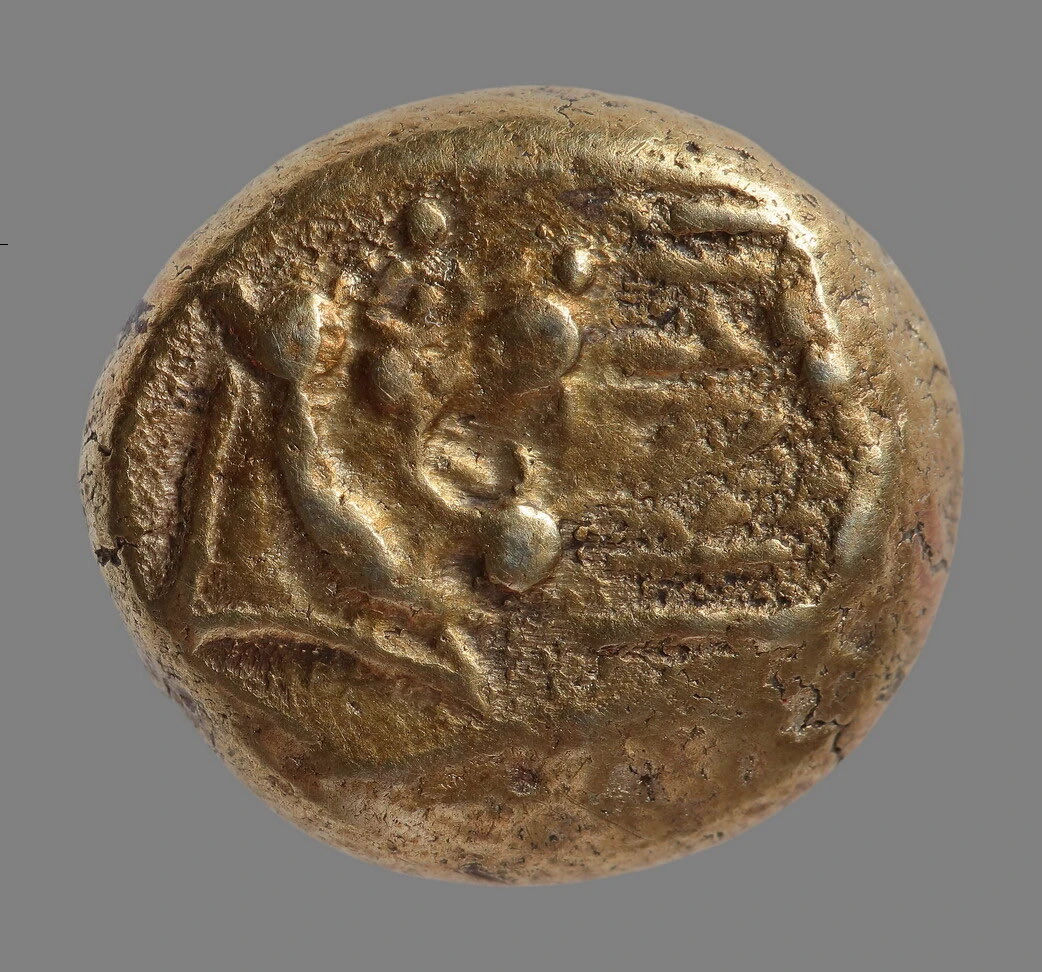
The MakerDAO x Near East archaeology crossover I wasn’t wasn’t expecting
post-image
This is a good moment to thump the desk again that oracles do not all have to follow the two designs that dominate: hard coding and variations of live-pricing.
It’s instructive to think about how a bank would have lent against Pendle tokens in the @Morpho market.
This is a classic Lombard loan - a discounted advance against assets that mature in ~160 days.
The lender would likely pay a specialist (like an exchange or ratings service) to produce an evaluated price - a model using prices from comparable assets. This is not unlike how houses are appraised.
Obviously this is less useful than a liv
PENDLE-4.81%
MORPHO-4.52%
I can still school my kids 3 vs 1 at Smash Bros 64. And other vintage games. But in newer games? I have to fight hard to get 2nd in Kirby mini games or “chaotic coop games” like Rubber Bandits or carry my weight in Overcooked and Plate Up.
It reminds me of playing my own dad. He was always good enough to enjoy competing against but never *great*.
Except at Bushido Blade. It was a fighting game where if you were dishonorable (throw your weapon, throw sand, hit the opponent from behind, etc) you lost in single player. But event pulling all the dirty tricks, I could only beat him maybe 1 in 4 tim
People this week: Paper, why are bond rates doing what they’re doing?
Me: If we knew why prices moved, communism would have worked. I can give an educated guess (like anyone else) but it’s a guess.
People: What about all the people saying inflation, the federal deficit, no Fed credibility, or even vibes?
Me: People know why *they* acted. But whether it’s Bitcoin or carrots or bonds or oil, it’s a bajillion views and constraints and needs that all combine to give us a market price.
People: … can you just guess, please?
Me: It’ll make me sound old, but … it’s just normal rates. It was the low ra
BTC-3.06%
  • 1
Finding out that the famous medieval banks (e.g. the Medici Bank) were clearing the mighty profit of <$300k/year in dollars today is a good reminder that even the very rich were not especially rich by today’s standards, even ignoring the lack of antibiotics, air conditioning, etc
I know both El Salvador and Central African Republic made BTC legal tender and later demonetized it.
Are there any other countries that currently have or had a crypto asset (other than CBDC) as legal tender? Private stablecoins would count.
BTC-3.06%
The foundations of modern Western finance were built by regulatory arbitrage - but around Church regulations, not governmental!
The bill of exchange is the basic building block of what we can recognizably call banking and finance in the West.
Why? Because it allowed for lending without being branded usurer. Usury, even when legal and licensed, kept you outside polite society and deprived you of certain rights. How bad this was depended upon where you lived.
So how to lend out money today and be compensated for the use of that money tomorrow?
Enter the bill of exchange. Ostensibly, it solved f
post-image
It’s not often I come across a word I don’t know in a book. This was definitely a new one for me and I haven’t found anyone else who knew it, either!
post-image
Most people in crypto know me as a kind of economics-special situations-accounting type person, but I used to be an archaeologist.
I recently had a new archaeologist (kid of a client of a friend) ask me for advice as they start their first private sector archaeology project.
One of the defining features of private contracting in archaeology is that work is measured in weeks or months, not years. So you need to constantly be prospecting for work.
I explained to this kid that, as the end of a project is on the horizon, you need to email 5+ clients per day, and after 48 hours pick up the phone an
One of the great interoperability experiments in financial history occurred in mid-to-late 1800s Europe, and was ruthlessly exploited by none other than the temporal arm of the Catholic Church: The Papal States.
In the US we have “In God We Trust” on our currency, but 150 years ago, God proved to be pretty untrustworthy with currency.
To set the stage, the year was 1865. America and China, both recently emerged from lengthy civil wars, are still putting themselves back together. The European powers are still the stars of the economic stage.
France, Belgium, Italy, and Switzerland sign a treaty
post-image
UNION-10.45%