OwlMarketMonitoringLamp

vip
Active for: 0.4y
Peak Tier 0
Night owl, enjoys watching on-chain liquidation cascades during late-night settlement periods. Speaks little but loves sharing screenshots, letting the data speak for itself.
After spending so long farming testnet points, I increasingly feel that mindset matters more than technical skill. At first, it was just clicking around and claiming faucet tokens for fun. Now that the points can be converted into expectations, I’m instead becoming a little anxious about gains and losses. I’ve set a cut-off for myself: I’ll spend no more than two hours a day on testnets, and when time’s up, I’ll shut everything down and go to sleep. The interactions aren’t difficult anyway; the hard part is not letting “practice” turn into “overtime.” What I fear most isn’t losing money, but l
View Original
  • Reward
  • Comment
  • Repost
  • Share
Just finished watching the liquidation cascade, and the group has started sharing those screenshots about stablecoin depegging again. Honestly, seeing too many rumors like this can numb people; whether they’re true or false, in the end they all just become emotion. The meme side is even livelier: once a narrative takes off, everyone across the internet waits for a pullback to get in, but when the pullback actually comes, no one dares to buy—they’re all waiting for the next confirmation.
My own simple approach: before entering, first decide how much I’m willing to lose, then set a stop-loss o
MEME0.18%
View Original
  • Reward
  • Comment
  • Repost
  • Share
During late-night chart-watching, the options data is pretty interesting. Buyers always feel, “There’s still plenty of time,” while sellers just slowly harvest the time value. Anyway, with options, the longer it goes, the less friendly it is for buyers—time itself is the cost. Sellers feel like they’re just collecting rent: every day they eat up a little, steady as it goes.
Recently, the developers behind modular blockchains and the DA layer have been pretty excited, constantly hyping new narratives every day, but I think ordinary users are basically clueless—what problems is this actually sup
View Original
  • Reward
  • Comment
  • Repost
  • Share
While watching the liquidation late at night, I also took a glance at the NFT market—floor prices have dropped another layer, and even the blue chips can’t hold it up, let alone those little picture projects. They’ve tweaked the royalty mechanism again and again, and in the end it either goes to zero or just lies flat. No matter how loudly the community narrative is shouted, it can’t withstand liquidity drying up. It feels like we’ve gone back to the early-year rhythm: prices drop hard enough and only then do people come in to scoop up bargains.
I don’t regret the outcome—I regret that even af
View Original
  • Reward
  • Comment
  • Repost
  • Share
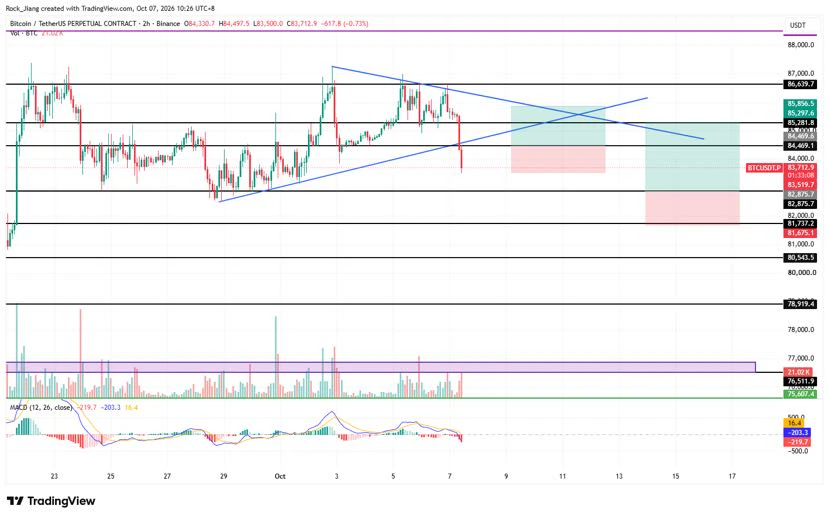
I watched the liquidation list late at night and got stunned—seriously, my brain’s fried from looking at it. To be honest, I’m just a normal player; I don’t have the nerve to go all-in. Try grids and DCA—at least you won’t have to get up in the middle of the night to stare at the charts after getting liquidated. Going all-in is that kind of thing: either you take off or you end up in the ground, and it’s entirely a matter of timing and luck. Like that wave of celebrity calls in the market—old players were already saying don’t be the one to take the last baton. I don’t buy that superstition eit
View Original
  • Reward
  • Comment
  • Repost
  • Share
Late at night I was watching the liquidation waterfall, only to find that the mempool was even more spectacular than the waterfall. Gas surged—one transaction worth 0.01 ETH got stuck for ten minutes before it finally moved. I watched it go from queued to jumping the line, and then getting pushed back behind new transactions… pretty damn frustrating. Recently, these new L1/L2s have been rolling out incentives to drive TVL, and longtime users are farming while grumbling “mine to sell,” which has made the chain even more congested. Anyway, I’m just obsessed with watching the data speak for itsel
ETH0.35%
View Original
  • Reward
  • Comment
  • Repost
  • Share
Late at night, I caught another batch of on-chain flow on a certain chain—several addresses transferring back and forth, looking like coincidence. Tracing along the path, though, it turned out to be an arbitrage fund “patching” something. The few trades on 1inch were pretty clear: first, a whale transfers in to a new wallet, then it branches and jumps three layers, and finally returns to the main pool. It never went through a CEX the entire time, and the on-chain traces were wiped clean, but the block heights and timestamps are right there—no matter how hard you try to force it, you can still
1INCH0.49%
View Original
  • Reward
  • Comment
  • Repost
  • Share
Watched another round of liquidation waterfall late at night. Concepts like bundles and block builders—honestly, for us retail traders, it’s enough to know that there are people front-running in the mempool and liquidation snipers. I’m just someone who watches the market; if I really go dig into how those builders piece together transactions and bribe validators, I’ll end up falling into a trap of details.
That said, recently it’s been getting talked about that on-chain data labeling is lagging and can be misleading—kind of interesting. I’m used to pulling the raw data myself. I don’t need any
View Original
  • Reward
  • Comment
  • Repost
  • Share
The parallelization and sharding narrative is heating up again. Everyone in the different groups is talking about technical breakthroughs and just how high TPS can go. I, however, have been keeping an eye on the on-chain asset inflows and outflows of these new public chains—sure, it’s lively, but on the other side of the cross-chain bridges, the big holders’ funds have been shrinking instead of growing, and I don’t know if they think the exit route isn’t stable enough. Anyway, I’m not too comfortable going heavy on this kind of narrative right now. Rate-cut expectations are tugging back and fo
USIDX-0.03%
View Original
  • Reward
  • Comment
  • Repost
  • Share
Staying up late and watching the data, I saw that a certain yield aggregator’s pool APY had surged again. But when I clicked in, the contract was layered three or four levels deep, and the bottom layer was all kinds of unknown little protocols. I did the math: the headline annualized figure looks pretty convincing, but with slippage, redemption fees, and even the risk that the counterparty might run off, it’s not impossible to lose it all in one go.
Tonight is another liquidation waterfall. On-chain data will speak for itself, so I won’t write too much. Still, there are really a lot of people
View Original
  • Reward
  • Comment
  • Repost
  • Share
Everyone basically knows this: when it comes to security, at the end of the day it’s all about how much of your assets are backing it. Back when I used to stay up late staring at liquidation waterfall charts, I got into the habit of using a cold wallet with multisig—anyway, the on-chain data will speak for itself. If someone has a few hundred thousand U and still dares to use a single-sign hot wallet, I’m just not that brave. For hardware wallets—those are suitable if you’re heavily positioned and want to hold firmly, like locking an insurance box. As for multisig, you need a few people to coo
View Original
  • Reward
  • Comment
  • Repost
  • Share
Staring at the liquidation waterfall late at night, I suddenly felt like venting. The group chat scrolls so fast that it’s “99+” at the drop of a hat—nothing but “this coin is going to pump,” “that KOL posted a trading call.” If I had followed the group’s rhythm and rushed in, I probably would’ve been bleeding losses until there was nothing left but my underwear.
I just saw a new L2 release with incentives, and veteran users are complaining about “mine, withdraw, then sell.” Honestly, who hasn’t been pushed along by FOMO? When it comes to trading impulse—do you blame the group messages, or the
View Original
  • Reward
  • Comment
  • Repost
  • Share
Staring at charts late into the night, my brain feels a bit worn out… I just looked at the voting data from a few recent governance proposals—participation is pitifully low. A few big-holder addresses give a wave and the votes already cross halfway; the small retail holders’ voting power is basically nonexistent. As for governance tokens, if you put it plainly, they’re just toys for big holders—retail votes are pointless.
People have also been saying that ETF inflows and risk appetite in the US stock market can affect crypto’s rise and fall, right? I’ve noticed many project teams follow the sa
View Original
  • Reward
  • Comment
  • Repost
  • Share
Late at night I waited for another liquidation waterfall, and while I was at it I checked my options account. The difference between the buyer and seller sides really is pretty jarring. The little bit of buyer exposure I have—the time value bleeds away every day like an hourglass. Staring at Delta and Theta, I feel like a gambler just trying to outlast time. Meanwhile, my friends on the seller side are calmly collecting time premium. Even if the market doesn’t move, their days are still better than mine.
Lately I keep hearing people say “attention is mining”—social mining, fan tokens, and so o
View Original
  • Reward
  • Comment
  • Repost
  • Share
I lurked in the group all night watching the discussion about staking unlocks, and I really couldn’t hold it in anymore—I just want to say a couple of things.
Staking this stuff again and again looks great on the surface. You get yields that seem pretty attractive, plus you can have LST and stack rewards. When calculating the APY, it’s definitely tempting. But if you think it through, where does the yield actually come from? It’s basically just other people rotating old tokens into new ones, while your side locks up and then borrows out—plainly speaking, it’s liquidity going in circles across
ETH0.35%
View Original
  • Reward
  • Comment
  • Repost
  • Share
Honestly, everyone knows this: grids and DCA are basically just making peace with your own sleep. You go all-in at once, wake up at 3 a.m., and the first thing you do is grab your phone to check the K-line—your heartbeat is even more intense than a waterfall. As for me, I’m a night owl, used to watching liquidations at around midnight; I set up the grid and let it run by itself, and I can still pour myself a cup of water and slowly “watch” the on-chain data dance. But last night, someone in the group shared that de-pegging screenshot again, and my emotions instantly blew up—panic posts flooded
View Original
  • Reward
  • Comment
  • Repost
  • Share
Just watched that liquidation wave on-chain. The waterfall was pretty, and the resting orders took a bite of small meat.
The recent hotspots keep cutting like flipping through a book—social mining, fan tokens, and whatever “attention mining” too… It feels like every one of them is an assembly line: you queue for half a day, then the novelty wears off and it cools down. I tried a few—bottom line is everyone rushes in at once, and then you just wait to get harvested. It’s pretty boring. To put it bluntly, attention is also a resource, but hotspot switching is too fast—chasing it turns you into f
View Original
  • Reward
  • Comment
  • Repost
  • Share
Late last night, I was sorting my wallets again—one for the ETH chain, one for Arb, one for OP, a little for Base too, and then there’s the BTC side as well. Switching networks alone took me half a night. My assets are scattered like LEGO pieces tossed all over the floor. To work out a total, I have to keep shuffling back and forth, checking Debank. Anyway, I’m too lazy to open any new chains now—unless there’s truly something that’s impossible to use without it.
Just now I came across someone comparing RWA and on-chain yield products side by side—things like U.S. Treasury yields versus all ki
ETH0.35%
ARB1.51%
OP2.76%
BTC0.00%
RWA-1.49%
View Original
  • Reward
  • Comment
  • Repost
  • Share
At 2 a.m., I was watching a liquidation waterfall and enjoying it when I suddenly thought about this thing called “sandwiches.” When I first got into the space, I used to think arbitrage was a skill. Later I realized that what you call “opportunities” are, in essence, helping people get their orders filled and earning yourself a bit of slippage. It’s pretty surreal—after staring at on-chain data for a long time, I started to feel that these machines are the real “digital miners,” while most of what we do manually is basically fronting fees for someone else.
Recently, social mining stuff has st
View Original
  • Reward
  • Comment
  • Repost
  • Share
Wait for daylight, wait for settlement, wait for yourself to think it through.
I took a look at the chain in the middle of the night—over here in options, the time value really is like an hourglass: the buyer is waiting for a sudden explosive run up, while the seller is waiting for it to slowly run out. To put it plainly, the buyer is betting on time—but in most cases, time is helping the seller sharpen the blade.
Recently, when people keep re-staking those nested “matryoshka” structures, some say the time value is playing stacking blocks—layer by layer locked up, layer by layer with retur
View Original
  • Reward
  • Comment
  • Repost
  • Share
  • Pinned