Moood10207

vip
Active for: 1y
Peak Tier 5
No content yet
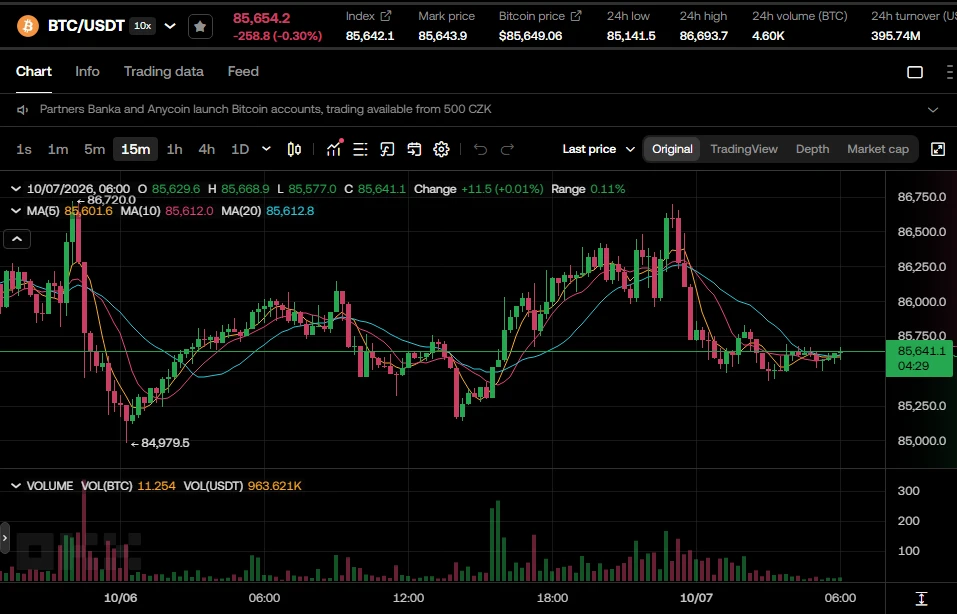
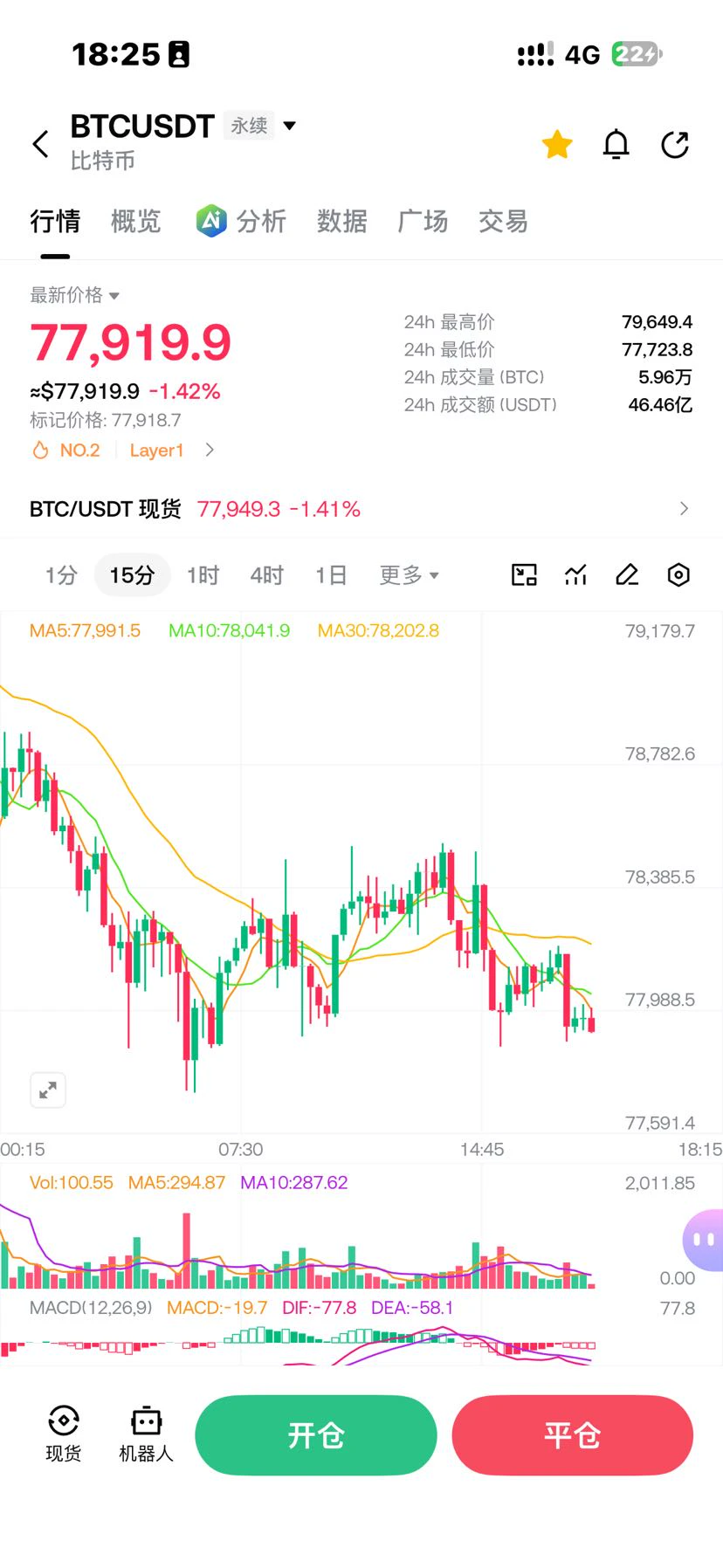
$SNDK (SNDK) has approximately $6.37 billion in perpetual futures trading volume on Binance, surpassing the approximately $5.96 billion trading volume of the BTC USDT perpetual contract and becoming one of Binance’s highest-volume perpetual futures products.
Notably, traditional financial assets are becoming increasingly active in Binance’s perpetual futures market, with 10 of the top 15 perpetual futures contracts by trading volume related to traditional financial assets. Trading volume for the single SNDK US stock contract has surpassed
BTC, reflecting that traditional financial assets such
SNDK5.66%
View Original
  • Reward
  • Comment
  • Repost
  • Share
It is it true?
GateInstantTrends
Why Are Software Stocks Falling in 2026? Can Workday and Adobe’s Rebound Continue as Concerns Over AI Disrupting SaaS Ease?
In 2026, the software sector underwent a dramatic valuation reset. Traditional enterprise software giants such as Workday, Adobe, and Autodesk generally fell 30% to 50% from their year-to-date highs, significantly underperforming the Nasdaq Index over the same period. However, in stark contrast to their weak share prices, these companies’ revenue growth, operating margins, and free cash flow have not deteriorated in tandem—and some indicators have even continued to improve. The market is pricing
repost-content-media
  • Reward
  • Comment
  • Repost
  • Share
The analysis is very good.
View Original
JsBigShark
《ZEC: A Big Shark That Has Manipulated ZEC Multiple Times Tells You What Stage It Has Reached》
In 2016, ZEC was born.
At that time, the market needed a new story.
BTC solved decentralization, but not privacy.
Then ZEC arrived.
A 21 million supply cap, zero-knowledge proofs, anonymous digital cash, a star cryptography team...
The story was almost flawless.
More importantly, when it first launched, the circulating supply was extremely small.
A sufficiently big story collided with a sufficiently small float.
The result was predictable.
The price was quickly pushed to an extremely outrageous level.
Many people encountered ZEC for the first time not because they had studied zero-knowledge proofs, but because:
It went crazy.
This is actually very important.
In financial markets, the best advertising has never been a white paper.
It is rising prices.
Once the price rises, people will naturally come along to explain why it is worth so much.
But as more and more ZEC was mined, the circulating supply expanded, and the initial scarcity began to disappear.
The price collapsed accordingly.
The first act ended.
But the story did not die.
The bull market arrived in 2017.
Privacy became a story again.
ZEC rose again.
The bull market ended, and it fell back down.
Then it happened again in 2020–2021.
BTC rose, market liquidity flooded in, and capital once again began looking for altcoin opportunities.
The story that had been told for many years was brought out again:
If all transactions can be tracked in the future, will humanity inevitably need a truly private asset?
ZEC came back to life.
The price once again rose from dozens of dollars to hundreds of dollars.
Then the bull market ended.
It was forgotten by the market once again.
What is truly interesting is not these rallies.
It is the silence of 2022–2024.
ZEC fell all the way down.
In 2024, it bottomed at only around $16.
Few people discussed it.
Few people believed in it.
Those who had chased it to several hundred dollars no longer had any interest in talking about a “privacy revolution.”
An asset reached its coldest moment.
But from another perspective:
This was precisely the best time for the chips to be reshuffled.
Because truly cheap chips never appear when everyone believes in the story.
They usually appear when:
No one is watching.
No one is talking.
No one is willing to buy.
Even those who criticize it cannot be bothered to do so.
Then 2025 began.
ZEC did not simply repeat the story from ten years ago.
It changed the way it told the story.
Previously, it was:
“Anonymous digital cash.”
Later, it became:
“In the AI era, privacy itself is a scarce asset.”
This statement clearly offered far greater room for imagination.
At the same time, Zashi, Shielded Pool, and privacy usage data began to become topics of market discussion.
For the first time, the story had some data that could be quantified.
Then the price began to move.
Once the price moved, all the market memories that had been dormant for years returned.
What came next was the truly exciting part of the entire story.
Capital began to enter.
Winklevoss Capital appeared.
Cypherpunk Technologies began building a ZEC Treasury.
It was not merely bullish talk.
It began buying ZEC with real money.
Then it publicly proposed a highly imaginative target:
Ultimately accumulating 5% of the ZEC supply.
After the market heard this, the story had completely changed.
Previously, people bought ZEC because:
“Privacy coins might rise.”
Now it became:
“Institutional investors are competing for a digital privacy asset with limited supply.”
Pay attention.
From this point onward, the relationship between price and the story reversed.
At the beginning:
The story drove the price.
Later:
The price began to validate the story.
At $50, no one cared about privacy.
At $100, some people began researching it.
At $300, the market began saying that the privacy sector was making a comeback.
At $500, people began discussing digital privacy gold.
The higher the price went, the easier it became to believe the story.
This is the most interesting thing about financial markets.
Many people think:
The price is rising because the fundamentals are getting better and better.
But often the real sequence is:
The price keeps rising, so more and more people begin looking for reasons why it should be even more expensive.
By 2026, the game had upgraded another level.
Capital was no longer satisfied with merely buying the coin.
It began entering the mining industry.
Cypherpunk began building ZEC mining capacity.
Capital's reach thus extended further upstream from the secondary market:
Buy coins.
Hoard coins.
Invest in the ecosystem.
Enter mining.
Influence new supply.
At this point, what the market saw was no longer an ordinary altcoin.
It was an increasingly complete story:
The supply is only 21 million.
Demand for privacy is returning.
Shielded Pool is growing.
Institutions are hoarding coins.
Capital is entering mining.
The AI era needs privacy.
The chips are becoming increasingly scarce.
Institutions are still buying.
When all these things are stacked together, the most powerful thing emerges:
Faith.
And once faith takes shape, it creates a very beautiful positive feedback loop.
Price rises

More people believe institutions are competing for chips

Holders become increasingly unwilling to sell

The market's circulating supply decreases

Less money can drive a larger increase

The price continues rising

Media and social platforms begin discussing it frantically

New capital enters

The price rises again
At this point, no one needs to actively tell the story anymore.
The market will tell it by itself.
Holders will tell it.
People making money will tell it.
KOLs will tell it.
The media will tell it.
Even those who enter later will actively seek out more evidence proving that their purchases were correct.
This is when an asset is at its strongest.
It is also when it is most deserving of caution.
Because there is one question that capital markets can never avoid:
If a large fund accumulated a massive amount of chips at low prices.
And ultimately wants to realize its profits.
Who will it sell to?
The answer is two words:
Liquidity.
And when is liquidity at its greatest?
Usually not when the market is at its most fearful.
Precisely when everyone believes in the story the most.
Therefore, large-scale distribution does not necessarily come with bad news.
Quite often, the opposite is true.
Good news keeps coming.
The media keeps reporting on it.
Price targets keep rising.
Trading volume keeps growing.
Everyone is discussing how much further it can rise.
Because only at this time does the market have enough people to absorb the chips that need to be realized.
So if we compress ZEC's ten-year story, there is really only one thread:
Create expectations

Create scarcity

Initiate the price

The price attracts attention

Attention brings capital

Capital pushes up the price

The price reinforces the narrative

Institutional entry provides credibility

The chips become further concentrated

The circulating supply decreases further

The price accelerates

The market develops faith

Everyone searches for reasons for a higher valuation

Liquidity reaches a climax

Only then might distribution take place
Pay attention.
I said “might.”
Because there is not yet enough evidence to prove that ZEC has entered the final distribution phase.
This is also what I am focusing on most in my current study of ZEC.
I no longer care much whether it rises 5% or falls 10% today.
What I want to examine are several other things:
Are institutions still buying continuously?
Is Shielded Pool still growing?
Are the chips continuing to become concentrated?
Is mining capital continuing to enter?
Has regulation begun cutting off institutional funding channels?
And most importantly:
When trading volume continues to grow, can the price continue making new highs?
If one day a very interesting phenomenon appears:
The news keeps getting better.
Discussion keeps heating up.
Trading volume keeps increasing.
Everyone begins believing in ZEC's future.
But the pace of institutional buying begins to decline.
Chip concentration stops.
The price can no longer be pushed higher despite massive trading volume.
That is when I would truly become cautious.
Because the most dangerous moment in the market has never been when no one believes in the story.
It is when everyone finally believes in the story.
In 2016, ZEC sold technological expectations.
In 2017, it sold the privacy revolution.
In 2021, it sold the revival of the bull market.
In 2025, it sold the repricing of privacy.
By 2026:
Institutional hoarding, concentrated capital, mining expansion, AI privacy, digital privacy gold...
The story has become increasingly complete.
At this point in the story, the ending is becoming increasingly clear.
ZEC's biggest problem has never been whether it has privacy value.
It is whether that privacy value can enter the mainstream financial system.
Over the past ten years, ZEC has been able to reprice itself again and again through narrative, scarcity, bull-market liquidity, and capital concentration.
But this time, it is facing something entirely different:
Regulators are beginning to block funding channels.
The EU anti-money-laundering framework has directly written anonymity-enhancing coins into its restricted scope.
The room for banks, financial institutions, and compliant crypto service providers to handle anonymity-enhancing assets is becoming increasingly narrow.
What does this mean?
It means ZEC can continue to be pushed higher.
It may even produce a short squeeze more extreme than that of ordinary altcoins because its chips are becoming increasingly concentrated.
But how high the price can be pushed and whether anyone will support it over the long term are two different things.
For an asset to maintain a valuation of tens of billions of dollars or more over the long term, it absolutely cannot rely only on retail investors.
It needs banks.
It needs funds.
It needs asset managers.
It needs ETFs.
It needs market makers.
It needs custodians.
It needs a continuous inflow of compliant capital.
If these funding channels are ultimately blocked one by one by regulators, who will be ZEC's largest remaining buyer?
Retail investors.
And the greatest characteristic of retail investors is that they can create sentiment, but cannot absorb massive capital exits over the long term.
Thus, the entire ten-year story ultimately forms a highly ironic closed loop:
2016
Create expectations.

Create scarcity.

Push up the price.

The price creates sentiment.

Bull markets repeatedly revive the narrative.

Bear markets complete the transfer of chips.

Capital becomes concentrated again.

Institutional endorsement.

Mining expansion.

The circulating supply contracts.

The price skyrockets.

Faith reaches a climax.

Regulators begin blocking institutional funding channels.

In the end, only retail investors bear the liquidity burden.
This is my judgment of ZEC's ultimate fate:
It may not fall immediately.
Indeed, under conditions of highly concentrated holdings and an increasingly thin circulating supply, it may continue producing extremely outrageous rallies.
But the crazier this rise becomes, the more liquidity will ultimately be needed to support it.
And a privacy asset whose funding channels are gradually being restricted by the mainstream financial system cannot rely on retail investors forever to sustain an increasingly high valuation.
Without a continuous inflow of new capital, even the most beautiful narrative will eventually lose its pricing power.
Without institutional liquidity, even the highest price will ultimately be nothing more than paper wealth.
Therefore, ZEC's true risk has never been the sudden appearance of a large bearish candle one day.
It is that one day you will discover:
The price is still there.
The story is still there.
Faith is still there.
But the money can no longer get in.
Once the capital entrance is blocked, all that remains is existing capital taking turns supporting one another's positions.
And retail investors cannot support a high-valuation market abandoned by institutional capital.
So my long-term judgment has not changed:
ZEC can continue to be traded speculatively.
It can continue to be pushed higher.
It may even continue to go crazy.
But if privacy coins are ultimately isolated from the mainstream compliant financial system,
then this decade-long capital game will not end with the stars and the sea.
It will end with liquidity drying up.
Then valuation collapsing.
And finally, going to zero.
The bottom needs chips.
A rise needs a story.
A climax needs faith.
Distribution needs liquidity.
And going to zero,
only requires the last buyer to disappear.
repost-content-media
  • Reward
  • Comment
  • Repost
  • Share
Bitcoin (BTC) and Ether ((ETH) recovered slightly to $78,791 and $2,477, respectively, while the total cryptocurrency market capitalization fell 2.56% to $2.65 trillion, with industry share shifting toward DePIN, RWA, DeFi, PayFi, and Layer2. Federal Reserve officials, including former Vice Chair Donald Kohn, signaled a hawkish stance; unless the August CPI data released on September 11 show otherwise, rate hikes will become the default position, introducing liquidity risks for cryptocurrencies. Cosmos Labs failed to properly disclose and coordinate a fix, resulting in a critical integer under
BTC-0.82%
ETH0.02%
RWA1.88%
ATOM1.22%
View Original
  • Reward
  • Comment
  • Repost
  • Share
The CME FedWatch tool shows that the probability of the Federal Reserve raising the federal funds rate by 25 basis points at the September 16 FOMC
meeting has risen to 57%, with the target rate range potentially rising to 3.75%–4%; the probability of maintaining the current 3.5%–3.75% range is 43%. The probability of a rate hike on August 21 was 39.9% and rose to 57% after the August 28 Jackson Hole speech, with market bets on a rate cut in September essentially disappearing.
Polymarket data shows that the probability of the federal funds rate remaining unchanged is 52%, while the probabil
View Original
  • Reward
  • Comment
  • Repost
  • Share
On July 15, 2026, the Ethereum crypto trading price was $1,885.58, exactly positioned at its daily pivot level of $1,881.09. This level reflects the tension between improving trend structure and extreme fear in the market. The outcome of this standoff will determine the next direction of the directional move.
$ETH /USDT — daily chart, including candlesticks, EMA20/EMA50 and
volume.
Key summary
- Daily MACD histogram: 22.71, showing true momentum acceleration rather than a weak bounce
- Fear and Greed Index is 25, in the deep extreme fear zone, sharply contrasting with improving technical struct
ETH0.02%
UNI11.79%
FLUID-2.20%
CRV16.10%
View Original
  • Reward
  • 1
  • Repost
  • Share
TheGoldenKeyOpensTheDoorTo:
Whoever is getting back on it is getting rich 💰
  • Reward
  • Comment
  • Repost
  • Share
#Gate13週年 Gate is getting stronger and stronger, everyone support together, continue to grow this community
View Original
  • Reward
  • Comment
  • Repost
  • Share
$RAVE Short when the price rises, enter short positions and exit quickly; do not hold positions for too long.
RAVE0.22%
View Original
  • Reward
  • Comment
  • Repost
  • Share
$RAVE DogZhuang is starting to pump again!
The bears are gathering!! Short this trash coin!
RAVE0.22%
View Original
  • Reward
  • Comment
  • Repost
  • Share
$RAVE Everyone, look quickly, the dog house is pulling the market down, find a chance to short again
RAVE0.22%
View Original
  • Reward
  • Comment
  • Repost
  • Share
$RAVE Shitcoins are going to zero now
RAVE0.22%
View Original
  • Reward
  • 5
  • Repost
  • Share
GateUser-2b948fc4:
The Air Force is all getting rich.
View More
$RAVE Partners, short on rallies, quick in and out, don't hold onto meme coins for too long.
RAVE0.22%
View Original
  • Reward
  • Comment
  • Repost
  • Share
$RAVE That's right, just empty.
RAVE0.22%
View Original
  • Reward
  • Comment
  • Repost
  • Share
#Gate13週年 I hope GATE becomes stronger and stronger. Having the opportunity to participate in this grand event is an honor!
View Original
  • Reward
  • Comment
  • Repost
  • Share
#Gate13 I hope more and more people join the platform, and it gradually expands to become the number one exchange. GATE Exchange is very friendly to traders, with plenty of benefits, responsive customer service, thumbs up!
View Original
  • Reward
  • Comment
  • Repost
  • Share
  • Reward
  • 1
  • Repost
  • Share
ThisIsTranslateContent::
Just go for it 👊
$RIVER Air Force, assemble!!
RIVER-6.02%
View Original
  • Reward
  • 1
  • Repost
  • Share
ThisIsTranslateContent::
Just go for it 👊
$RIVER Everyone, look! The dog whale is starting to push the market up again.
RIVER-6.02%
View Original
  • Reward
  • Comment
  • Repost
  • Share
$RIVER Wasn't it previously announced that the funding rate period would change from 1 hour to 8 hours? Why has it been changed back?
RIVER-6.02%
View Original
  • Reward
  • Comment
  • Repost
  • Share
  • Pinned