#CLARITYActVoteWindowClosing CLARITY Act Vote Window Closing, What Happens Next for Crypto Regulation
The CLARITY Act has entered one of the most important stages of its journey through the United States Congress. The immediate August window for a full Senate vote has closed, but the legislation remains alive and attention is now shifting toward September. Recent Senate action has kept the bill moving procedurally, creating another important opportunity for lawmakers to debate and potentially advance comprehensive digital asset market structure legislation.
This development matters because the CLARITY Act is not simply another crypto-related proposal. It is designed to establish a broader regulatory framework for digital assets and clarify the roles of the Securities and Exchange Commission and the Commodity Futures Trading Commission.
1. What Is the CLARITY Act
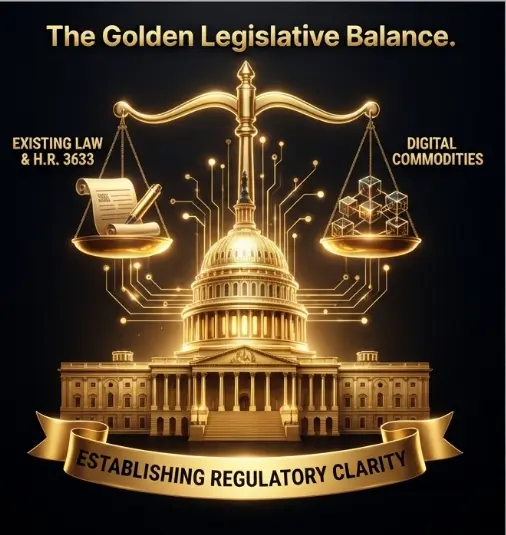
The Digital Asset Market Clarity Act, known as the CLARITY Act, is a major U.S. market structure bill focused on establishing clearer rules for digital assets.
The House passed H.R. 3633 on July 17, 2025, by a bipartisan vote of 294 to 134. The legislation was subsequently received by the Senate and referred to the Senate Banking Committee.
At its core, the legislation attempts to answer one of the crypto industry's biggest questions, which regulator should have primary responsibility for different types of digital assets and market activities.
That question has remained important for exchanges, developers, investors, financial institutions and technology companies operating in the digital asset sector.
2. Why the Current Vote Window Matters
The August opportunity was significant because lawmakers had hoped to move the legislation before the Senate's summer recess.
However, the Senate did not complete a full floor vote before the recess. Instead, Senate leadership took a procedural step designed to keep the legislation alive and prepare the way for further consideration after lawmakers return.
This changes the timeline rather than ending the process.
The next major focus is September, when lawmakers are expected to return and continue negotiations and procedural work around the bill.
3. The September Stage Could Be Critical
Recent reporting indicates that Senate Majority Leader John Thune filed a motion to proceed, setting up a September confrontation over the legislation. Reports indicate a September 15 procedural vote is expected.
However, investors and market participants should understand the difference between a procedural vote and final passage.
A procedural vote does not automatically mean that the CLARITY Act becomes law.
There can still be debate, amendments, negotiations, voting requirements and additional legislative steps before a bill reaches the final stage.
Therefore, September should be viewed as an important decision point rather than a guaranteed approval date.
4. What the Bill Is Trying to Change
The broader objective of the CLARITY Act is to create clearer regulatory boundaries for digital assets.
The House version establishes provisions involving digital commodities, regulatory responsibilities, registration requirements and coordination between agencies. The legislation also contains provisions concerning implementation and financial compliance requirements.
The Senate's work has involved additional negotiations and revisions.
In May 2026, Senate Banking Committee leadership released market structure bill text intended to serve as the basis for committee consideration. The committee said the proposal reflected negotiations with lawmakers and input from regulators, financial institutions, innovators, law enforcement and consumer advocates.
This shows that the final legislation may not be identical to the original House-passed version.
5. Why Regulatory Clarity Matters
One of the biggest problems facing the digital asset industry has been uncertainty over regulatory classification and jurisdiction.
Clearer rules could potentially make it easier for legitimate businesses to understand their responsibilities.
For financial institutions, clearer requirements could improve the ability to evaluate digital asset-related activities.
For technology companies, predictable rules could potentially make long-term planning easier.
For market participants, greater regulatory clarity could reduce some of the uncertainty surrounding how different digital assets and platforms are treated.
However, clarity does not automatically mean that every crypto asset becomes safer or more valuable.
Regulation can establish rules, but market risk remains.
6. Potential Impact on Bitcoin and Ethereum
The CLARITY Act is primarily a regulatory development rather than a direct price catalyst.
Nevertheless, major regulatory developments can influence market sentiment.
If investors interpret progress as a sign that the United States is moving toward a clearer digital asset framework, sentiment around the broader crypto sector could improve.
Bitcoin could benefit indirectly through stronger institutional confidence in the digital asset ecosystem.
Ethereum could also attract attention because regulatory clarity surrounding blockchain networks, digital commodities and market infrastructure could influence how institutions approach blockchain-based assets.
But it would be incorrect to assume that passage of the bill automatically guarantees higher prices.
Crypto prices remain influenced by liquidity, interest rates, economic conditions, institutional flows, market positioning and investor sentiment.
7. Possible Bullish Scenario
A bullish scenario would involve several developments occurring together.
First, Senate negotiations could produce sufficient bipartisan support.
Second, procedural votes could successfully move the legislation toward full consideration.
Third, disagreements over remaining provisions could be resolved.
Fourth, the House and Senate could ultimately align on a final version.
Such progress could be interpreted by the market as a major step toward regulatory certainty.
In that environment, crypto-related companies and blockchain projects could potentially experience stronger investor confidence.
The key word is potentially.
The market may react positively to progress, but expectations can also become priced in before final approval.
8. Possible Delayed Scenario
Another possibility is continued negotiation.
If lawmakers disagree over important provisions, the process could take longer than expected.
This would not necessarily mean that the legislation is permanently finished.
Instead, the market could experience another period of uncertainty while participants wait for lawmakers to reach a compromise.
This is particularly important because the Senate requires significant bipartisan support for major legislation to advance.
Therefore, political negotiations remain one of the most important variables to watch.
9. Why the House Vote Is Important
The House already approved the CLARITY Act in 2025 with a substantial bipartisan majority.
The 294 to 134 vote demonstrated that the legislation could attract support from lawmakers across party lines.
However, Senate consideration introduces a different challenge.
The Senate must work through its own legislative process, and any substantial changes could create another stage of negotiations between the two chambers.
This means that even a successful Senate vote would not necessarily represent the final step.
10. What Investors Should Watch Next
The most important developments to monitor are procedural and legislative rather than short-term price movements.
The first is whether the September procedural process moves forward as expected.
The second is whether lawmakers can maintain bipartisan support.
The third is whether amendments significantly change the legislation.
The fourth is whether the Senate can eventually approve a version that can move through the remaining congressional process.
The fifth is how financial institutions and the broader digital asset industry respond to the evolving framework.
These factors will provide a clearer picture than simply watching headlines about a single vote.
11. Market Sentiment Could Become Volatile
Regulatory headlines can create short-term volatility because traders may react to expectations before an actual law exists.
Positive headlines could strengthen sentiment.
Negative headlines could produce temporary pressure.
A delay could also generate mixed reactions because some market participants may view it as uncertainty while others may see additional time for negotiations as constructive.
This is why headline-driven decisions can be risky.
The most important distinction is between proposed legislation, procedural progress, Senate passage, final congressional approval and legislation becoming law.
These are different stages.
12. The Bigger Picture for the Crypto Industry
The CLARITY Act represents a broader shift in how the United States approaches digital asset regulation.
For years, the crypto industry has argued that clearer rules are necessary for innovation and long-term investment.
At the same time, lawmakers and regulators have emphasized consumer protection, market integrity, financial stability and compliance.
A successful market structure framework would therefore need to balance both objectives.
Too much uncertainty can discourage legitimate innovation.
Too little oversight can create problems for consumers and financial markets.
The challenge is finding a workable middle ground.
13. Why September Could Be More Important Than August
The closing of the August vote window does not mean the story is over.
In fact, the procedural action taken before the recess suggests that lawmakers intend to keep the legislation active.
That makes September particularly important.
The next stage could reveal whether the Senate has enough support to move from procedural progress toward substantive consideration.
The market will likely pay close attention to every major development because regulatory clarity has become an increasingly important part of the digital asset investment narrative.
14. Final Analysis
The CLARITY Act remains one of the most significant pieces of U.S. crypto market structure legislation.
The August window closed without a full Senate vote, but the bill has not disappeared. Senate leadership has taken steps to preserve a path toward further consideration in September.
The biggest opportunity is clear regulatory guidance that could provide businesses and market participants with greater certainty.
The biggest challenge is equally clear, lawmakers still need to resolve political and policy disagreements and secure enough support for the legislation to move forward.
For the crypto market, the next major question is therefore not simply whether the CLARITY Act receives attention.
The real question is whether September can convert procedural momentum into meaningful legislative progress.
If that happens, the development could become an important milestone for the U.S. digital asset industry.
If negotiations stall again, uncertainty could remain a major theme.
For now, the most balanced conclusion is that the CLARITY Act is delayed, not dead.
September could be the next major test.
Ai_Power