Kumar_Sanu

vip
Age 0.2 Year
Peak Tier 0
No content yet
#IntroducingGateStocks
#Gate正式推出股票交易
#Gate美股
NVIDIA has evolved far beyond its original identity as a gaming graphics card manufacturer and is now considered one of the most strategically important technology companies in the global artificial intelligence industry. The company has positioned itself at the center of the AI revolution, supplying the advanced computing infrastructure required to train and operate large-scale artificial intelligence systems. As global demand for AI services accelerates across industries such as healthcare, finance, robotics, cybersecurity, cloud computing, and
Ai_Power
#IntroducingGateStocks
#Gate正式推出股票交易
#Gate美股
NVIDIA has evolved far beyond its original identity as a gaming graphics card manufacturer and is now considered one of the most strategically important technology companies in the global artificial intelligence industry. The company has positioned itself at the center of the AI revolution, supplying the advanced computing infrastructure required to train and operate large-scale artificial intelligence systems. As global demand for AI services accelerates across industries such as healthcare, finance, robotics, cybersecurity, cloud computing, and autonomous driving, NVIDIA continues to strengthen its dominance in high-performance computing and AI acceleration. Investors are no longer viewing NVIDIA as a traditional semiconductor stock because the company is increasingly becoming the foundation of next-generation digital infrastructure. The rapid expansion of AI applications worldwide has created extraordinary demand for advanced GPUs, and NVIDIA currently controls a major share of this critical market.
One of the strongest reasons behind NVIDIA’s explosive growth is its unmatched position in AI data center infrastructure. Modern AI models require enormous computational power to process billions or even trillions of parameters, and NVIDIA’s GPUs remain the preferred solution for major technology companies, AI startups, cloud service providers, and enterprise software developers. The company’s CUDA software ecosystem also gives it a massive competitive advantage because developers globally have built their AI systems around NVIDIA architecture. This creates a strong technological moat that is difficult for competitors to overcome. NVIDIA is not simply selling hardware; it is building a complete ecosystem that integrates hardware acceleration, AI networking, cloud infrastructure, and software optimization into one powerful platform. This ecosystem effect has allowed NVIDIA to maintain strong pricing power and dominant market positioning despite rising competition in the semiconductor sector.
The company’s data center business has now become the primary driver of revenue growth, surpassing its gaming segment in importance. Major cloud providers and enterprise AI platforms continue purchasing massive quantities of NVIDIA GPUs to support generative AI applications, large language models, machine learning systems, and AI inference services. The current AI boom has effectively created a global race for computing power, and NVIDIA sits directly at the center of that race. Demand for advanced AI chips continues exceeding supply in several areas, demonstrating how aggressively institutions and corporations are investing in AI infrastructure. Many analysts compare the current AI expansion to the early stages of the internet revolution or the rise of cloud computing, but some believe AI could eventually become even more transformational because it has the potential to reshape nearly every major industry simultaneously.
Another major factor supporting NVIDIA’s bullish outlook is institutional capital flow. Large hedge funds, pension funds, ETFs, sovereign wealth funds, and global asset managers continue increasing exposure to AI-related companies, and NVIDIA remains one of the largest beneficiaries of this trend. The company has become a core holding for many growth-focused portfolios because investors view it as one of the strongest long-term opportunities tied directly to artificial intelligence expansion. Strong institutional participation also contributes to sustained upward momentum because many large investors operate on multi-year investment horizons rather than short-term trading cycles. This long-term accumulation trend continues supporting NVIDIA’s overall market structure despite periods of volatility and profit-taking.
From a technical perspective, NVIDIA has consistently demonstrated exceptional relative strength compared to broader market indices. The stock repeatedly attracts aggressive dip-buying activity during pullbacks, indicating strong investor confidence in the long-term AI narrative. Important technical areas include major support levels, earnings gap zones, moving averages, and institutional accumulation regions. As long as the stock continues forming higher lows on larger timeframes, the broader bullish trend remains intact. However, investors should also understand that powerful momentum stocks often experience sharp corrections after extended rallies. Short-term volatility should not automatically be interpreted as a breakdown of the long-term trend because high-growth technology leaders frequently experience periods of consolidation before continuing upward expansion.
Despite its impressive growth trajectory, NVIDIA also faces important risks that investors must monitor carefully. The company’s valuation has expanded significantly due to extremely optimistic expectations surrounding artificial intelligence growth. High valuation multiples increase sensitivity to earnings disappointments, slowing revenue growth, or broader market weakness. Competition is also intensifying as companies such as AMD, Intel, Google, Amazon, and several emerging semiconductor firms attempt to capture portions of the AI accelerator market. Some major technology companies are also developing custom AI chips internally to reduce dependence on NVIDIA hardware. Regulatory challenges, export restrictions, supply chain disruptions, and geopolitical tensions could additionally impact future performance. Because NVIDIA has become one of the most crowded institutional trades globally, market expectations remain extremely high, making earnings announcements especially important for future price action.
The broader macroeconomic environment also plays a major role in NVIDIA’s market performance. Interest rate policy, inflation expectations, economic growth conditions, and technology sector sentiment all influence investor appetite for high-growth equities. During periods of aggressive monetary tightening, growth stocks often face valuation pressure because future earnings become discounted more heavily. However, NVIDIA’s extraordinary earnings expansion has allowed it to outperform many traditional technology companies even in uncertain macroeconomic environments. Investors increasingly view the company not only as a semiconductor manufacturer but also as a direct proxy for global AI adoption and future technological transformation.
One of the most important long-term investment arguments for NVIDIA is the belief that artificial intelligence remains in the early stages of a multi-decade growth cycle. AI integration continues expanding across enterprise software, automation systems, robotics, industrial manufacturing, financial analysis, defense systems, healthcare diagnostics, and autonomous transportation. Every major AI advancement requires increasing computational power, and NVIDIA currently remains one of the most critical suppliers of that infrastructure. If AI adoption continues accelerating globally, NVIDIA may continue benefiting from one of the most powerful technological megatrends of the modern era. The company’s influence over the future direction of computing and automation gives it strategic importance that extends far beyond traditional semiconductor manufacturing.
Market sentiment surrounding NVIDIA remains overwhelmingly bullish overall, although periods of volatility are likely to continue due to elevated expectations and macroeconomic uncertainty. Bullish investors believe the company is still in the early stages of monetizing the AI revolution, while bearish analysts warn that current valuations already price in years of future growth. The battle between these opposing views will likely determine the next major phase of price action. Nevertheless, NVIDIA’s combination of technological leadership, AI infrastructure dominance, institutional support, and strong revenue expansion continues making it one of the most closely watched stocks in global financial markets.
NVIDIA has transformed itself into one of the defining companies of the artificial intelligence era. The company now represents much more than a semiconductor business because it sits at the intersection of AI, automation, cloud computing, robotics, and next-generation digital infrastructure. Its GPUs power many of the world’s most advanced AI systems, and its ecosystem continues expanding across industries globally. While risks related to valuation, competition, and market volatility remain important considerations, NVIDIA’s strategic position within the AI economy continues supporting a powerful long-term growth narrative. As artificial intelligence reshapes the global economy over the coming years, NVIDIA is likely to remain one of the central companies driving that transformation.
#Gate美股

  • Reward
  • Comment
  • Repost
  • Share
#Gate正式推出股票交易 Gate Square "Stock Trading Sharing Challenge" is in full swing
Post content related to US stocks with the hashtag #Gate正式推出股票交易 for a chance to win Nvidia stock rewards.
Event Highlights
- Top 1–3: Each wins $50 worth of Nvidia stock
- Daily Best Trading Analysis (7 winners): Each wins $20 worth of Nvidia stock
- Sunshine Award for 100 people + Newcomer First Post Award for 100 people: Each wins $2 worth of Nvidia stock
Gate stocks support direct trading of stocks and ETFs on major exchanges like NASDAQ and NYSE using USDT, connected to compliant brokers, with real d
NVDA-0.46%
Ai_Power
#Gate正式推出股票交易 Gate Square "Stock Trading Sharing Challenge" is in full swing
Post content related to US stocks with the hashtag #Gate正式推出股票交易 for a chance to win Nvidia stock rewards.
Event Highlights
- Top 1–3: Each wins $50 worth of Nvidia stock
- Daily Best Trading Analysis (7 winners): Each wins $20 worth of Nvidia stock
- Sunshine Award for 100 people + Newcomer First Post Award for 100 people: Each wins $2 worth of Nvidia stock
Gate stocks support direct trading of stocks and ETFs on major exchanges like NASDAQ and NYSE using USDT, connected to compliant brokers, with real dividends automatically credited.
📅 Event duration: June 1, 16:00 to June 8, 23:59 (UTC+8)
Event details https://www.gate.com/announcements/article/51466
#Gate正式推出股票交易 #Gate美股
  • Reward
  • Comment
  • Repost
  • Share
#DailyPolymarketHotspot are
2026 FIFA World Cup Golden Boot Market Update: Kylian Mbappé Emerges as Early Favorite While Harry Kane Remains a Strong Contender in the Race for Top Goalscorer
The market for the 2026 FIFA World Cup Top Goalscorer (Golden Boot) is already attracting significant attention from football fans, analysts, and prediction market participants, with early probabilities highlighting some of the game's most prolific finishers.
According to current market pricing:
Kylian Mbappé — 18% Probability
Harry Kane — 14% Probability
Mbappé currently leads the market following his e
Ai_Power
#DailyPolymarketHotspot are
2026 FIFA World Cup Golden Boot Market Update: Kylian Mbappé Emerges as Early Favorite While Harry Kane Remains a Strong Contender in the Race for Top Goalscorer
The market for the 2026 FIFA World Cup Top Goalscorer (Golden Boot) is already attracting significant attention from football fans, analysts, and prediction market participants, with early probabilities highlighting some of the game's most prolific finishers.
According to current market pricing:
Kylian Mbappé — 18% Probability
Harry Kane — 14% Probability
Mbappé currently leads the market following his exceptional World Cup pedigree, including his Golden Boot-winning performance in 2022 and continued elite scoring output at both club and international levels. His combination of pace, finishing efficiency, and France's projected deep tournament run makes him a compelling favorite among traders.
Kane remains firmly in contention at 14%. As England's all-time leading scorer and primary penalty taker, his consistent goal production and ability to convert high-quality chances continue to make him one of the most statistically attractive candidates in the field.
From an analytical perspective, Golden Boot markets are influenced by several key variables:
Expected Team Progression – Players representing teams projected to reach the semifinals or final generally benefit from additional match opportunities.
Goal Conversion Rate – Historical finishing efficiency, shot volume, and expected goals (xG) metrics are critical indicators.
Set-Piece Responsibility – Penalty and free-kick duties can significantly increase a player's scoring potential throughout the tournament.
Market Sentiment & Trading Activity – Prediction market prices continuously adjust as new information emerges regarding form, injuries, squad selection, and tournament expectations.
While Mbappé and Kane currently lead the market, other elite attackers remain under close observation as the tournament approaches. Any changes in international form, qualification campaigns, injuries, or team strength could materially impact market probabilities.
Who do you believe will finish as the 2026 FIFA World Cup Golden Boot winner?
Will Mbappé extend his World Cup scoring legacy, or can Kane capitalize on England's ambitions and claim football's most prestigious individual scoring honor?
Predict the outcome and follow the market today:
https://gate.onelink.me/Hls0/prediction?page=detail&event_ticker=413862&source=cex
  • Reward
  • Comment
  • Repost
  • Share
#Gate正式推出股票交易
Gate Square "Stock Trading Sharing Challenge" is in full swing
Post content related to US stocks with the hashtag #Gate正式推出股票交易 for a chance to win Nvidia stock rewards.
Event Highlights
- Top 1–3: Each wins $50 worth of Nvidia stock
- Daily Best Trading Analysis (7 winners): Each wins $20 worth of Nvidia stock
- Sunshine Award for 100 people + Newcomer First Post Award for 100 people: Each wins $2 worth of Nvidia stock
Gate stocks support direct trading of stocks and ETFs on major exchanges like NASDAQ and NYSE using USDT, connected to compliant brokers, with real
NVDA-0.46%
Ai_Power
#Gate正式推出股票交易
Gate Square "Stock Trading Sharing Challenge" is in full swing
Post content related to US stocks with the hashtag #Gate正式推出股票交易 for a chance to win Nvidia stock rewards.
Event Highlights
- Top 1–3: Each wins $50 worth of Nvidia stock
- Daily Best Trading Analysis (7 winners): Each wins $20 worth of Nvidia stock
- Sunshine Award for 100 people + Newcomer First Post Award for 100 people: Each wins $2 worth of Nvidia stock
Gate stocks support direct trading of stocks and ETFs on major exchanges like NASDAQ and NYSE using USDT, connected to compliant brokers, with real dividends automatically credited.
📅 Event duration: June 1, 16:00 to June 8, 23:59 (UTC+8)
Event details https://www.gate.com/announcements/article/51466
#Gate正式推出股票交易 #Gate美股
  • Reward
  • Comment
  • Repost
  • Share
#IntroducingGateStocks
#Gate正式推出股票交易
#Gate美股
Market analysis threads focused on bullish and bearish predictions are widely used in US stock markets because they help traders and investors understand potential future price direction based on a combination of technical structure, macroeconomic conditions, sector trends, and investor sentiment. These threads are not just simple forecasts; they are structured analytical narratives that evaluate multiple scenarios and outline possible outcomes depending on how market conditions evolve. In highly liquid markets like NASDAQ and NYSE, where volatili
ShainingMoon
#IntroducingGateStocks
#Gate正式推出股票交易
#Gate美股
Market analysis threads focused on bullish and bearish predictions are widely used in US stock markets because they help traders and investors understand potential future price direction based on a combination of technical structure, macroeconomic conditions, sector trends, and investor sentiment. These threads are not just simple forecasts; they are structured analytical narratives that evaluate multiple scenarios and outline possible outcomes depending on how market conditions evolve. In highly liquid markets like NASDAQ and NYSE, where volatility is influenced by earnings, interest rates, AI developments, and institutional flows, such analysis becomes especially important for decision-making.
A bullish market outlook typically forms when multiple factors align in favor of continued upward momentum. These factors may include strong corporate earnings, positive forward guidance from major companies, increasing institutional investment, favorable macroeconomic conditions, and strong sector-specific trends such as artificial intelligence or cloud computing growth. In bullish scenarios, price action generally shows higher highs and higher lows, indicating sustained buying pressure. Traders and investors in bullish environments often focus on breakout strategies, trend continuation setups, and buying dips near strong support zones. Sentiment in such conditions is usually driven by optimism, innovation cycles, and capital inflows into growth sectors.
In contrast, a bearish market outlook emerges when negative factors dominate market behavior. These may include weaker earnings results, rising interest rates, economic slowdown fears, geopolitical tensions, or declining investor confidence. Bearish markets are often characterized by lower highs and lower lows, signaling persistent selling pressure. In such environments, traders may adopt defensive strategies such as short-selling, hedging, or moving capital into safer assets like dividend stocks or bonds. Bearish sentiment is typically driven by uncertainty, risk aversion, and capital outflows from high-growth sectors.
One of the most important elements in bullish and bearish prediction threads is the role of macroeconomic indicators. Interest rates set by central banks significantly influence market direction because they affect borrowing costs, liquidity conditions, and valuation models for growth stocks. When interest rates are low or expected to decrease, equity markets—especially technology stocks—tend to perform strongly due to higher future earnings valuations. Conversely, rising interest rates often put pressure on high-growth equities, leading to bearish or corrective market phases.
Inflation data also plays a critical role in shaping market expectations. High inflation can reduce consumer purchasing power and increase operational costs for companies, potentially leading to margin compression. However, moderate and stable inflation is generally considered healthy for economic growth. Investors closely monitor inflation reports to assess whether central banks may adjust monetary policy, which in turn affects market direction.
Sector rotation is another key concept in bullish and bearish analysis. Markets rarely move uniformly; instead, capital flows between different sectors depending on economic conditions and investor sentiment. For example, during bullish AI-driven cycles, technology and semiconductor stocks may outperform broader markets. During defensive periods, capital may shift toward utilities, healthcare, or dividend-paying stocks. Understanding sector rotation helps investors anticipate which areas of the market are likely to outperform under different conditions.
Institutional investor behavior also heavily influences bullish and bearish trends. Large funds and asset managers control significant capital flows and often set the overall direction of the market. When institutions accumulate positions in growth sectors, bullish momentum strengthens. When they reduce exposure or shift toward defensive assets, bearish pressure increases. Tracking institutional sentiment through volume patterns, ETF flows, and earnings positioning is a key part of market prediction analysis.
Technical analysis complements macro and fundamental perspectives in bullish and bearish threads. Key indicators such as trendlines, moving averages, RSI, MACD, and support/resistance levels help identify whether momentum is strengthening or weakening. Breakouts above resistance levels often confirm bullish continuation, while breakdowns below support levels may signal bearish reversal. Combining technical signals with macroeconomic context improves the reliability of market predictions.
Investor sentiment is another major driver of market direction. Fear and greed cycles often push markets beyond rational valuation levels in both directions. In bullish phases, excessive optimism can lead to overvaluation and speculative bubbles, while in bearish phases, panic selling can create oversold conditions and potential recovery opportunities. Sentiment indicators such as volatility indices, put-call ratios, and market breadth data help analysts measure emotional extremes in the market.
Risk management is essential in both bullish and bearish predictions. No market outlook is guaranteed, and unexpected events such as geopolitical crises, economic shocks, or corporate failures can quickly change market direction. Traders and investors use diversification, position sizing, and stop-loss strategies to manage risk across different market scenarios. Preparing for both bullish and bearish outcomes ensures more stable long-term performance.
Overall, market analysis threads that focus on bullish and bearish predictions provide a structured framework for understanding potential future market behavior. By combining macroeconomic data, technical indicators, sector trends, and investor sentiment, these analyses help traders and investors navigate complex financial markets more effectively. Whether the market is trending upward or downward, understanding both scenarios allows for better decision-making and improved risk-adjusted returns.
#Gate美股
  • Reward
  • Comment
  • Repost
  • Share
#ShareYourUSStocksWinNvidia 1️⃣ Define Your Investment Goals Determine whether you are investing for long-term wealth creation, passive income, or short-term opportunities.
2️⃣ Research Before Investing Study company fundamentals, revenue growth, earnings reports, and industry trends before making decisions.
3️⃣ Focus on Quality Companies Look for businesses with strong financial performance, competitive advantages, and sustainable growth potential.
4️⃣ Diversify Your Portfolio Spread investments across different sectors to reduce risk and improve stability.
5️⃣ Monitor Economic Indicators Int
ShainingMoon
#ShareYourUSStocksWinNvidia 1️⃣ Define Your Investment Goals Determine whether you are investing for long-term wealth creation, passive income, or short-term opportunities.
2️⃣ Research Before Investing Study company fundamentals, revenue growth, earnings reports, and industry trends before making decisions.
3️⃣ Focus on Quality Companies Look for businesses with strong financial performance, competitive advantages, and sustainable growth potential.
4️⃣ Diversify Your Portfolio Spread investments across different sectors to reduce risk and improve stability.
5️⃣ Monitor Economic Indicators Interest rates, inflation data, employment reports, and GDP growth can significantly influence stock performance.
6️⃣ Stay Updated on Market News Keep track of corporate announcements, earnings releases, and major economic developments.
7️⃣ Manage Risk Properly Never invest more than you can afford to lose and always maintain a disciplined strategy.
8️⃣ Think Long-Term Successful investing often requires patience and the ability to stay focused despite short-term market volatility.
9️⃣ Learn From Market Cycles Bull and bear markets both provide valuable lessons that help investors improve decision-making.
🔟 Share Your Experience Discuss your favorite U.S. stocks, investment strategies, and market insights with the community to help others learn and grow.
Why Investors Love U.S. Stocks
✅ Access to world-leading companies
✅ Strong market liquidity
✅ Diverse sector opportunities
✅ Continuous innovation and technological advancement
✅ Global investment appeal
Artificial intelligence, cloud computing, semiconductor technology, renewable energy, and digital transformation continue to shape the future of global markets. Investors closely watch these sectors for potential opportunities while balancing risk and reward.
The most successful investors are often those who remain disciplined, continue learning, and focus on long-term objectives rather than reacting to short-term market noise.
💡 What U.S. stock are you most optimistic about for the future, and why? Share your thoughts, market outlook, and investment experience with the community while exploring new opportunities in one of the world's most influential financial markets.
📈 Stay informed. Stay disciplined. Keep learning. Build your future one investment decision at a time. 🚀
repost-content-media
  • Reward
  • Comment
  • Repost
  • Share
#WinGoldBarsWithGrowthPoints Step 1: Understand the Reward System
Before participating, take time to understand how Growth Points are earned. Most reward programs allocate points based on activity, consistency, learning achievements, trading participation, referrals, or community engagement.
Step 2: Set Clear Financial Goals
Define what you want to achieve. Whether your objective is portfolio growth, market education, or reward accumulation, clear goals help maintain focus and improve decision-making.
Step 3: Stay Consistent
Consistency is one of the most important factors in any reward progra
ShainingMoon
#WinGoldBarsWithGrowthPoints Step 1: Understand the Reward System
Before participating, take time to understand how Growth Points are earned. Most reward programs allocate points based on activity, consistency, learning achievements, trading participation, referrals, or community engagement.
Step 2: Set Clear Financial Goals
Define what you want to achieve. Whether your objective is portfolio growth, market education, or reward accumulation, clear goals help maintain focus and improve decision-making.
Step 3: Stay Consistent
Consistency is one of the most important factors in any reward program. Small daily actions can accumulate significant Growth Points over time and often outperform irregular bursts of activity.
Step 4: Participate in Educational Activities
Many platforms reward users for completing courses, attending webinars, reading market updates, or passing educational assessments. Knowledge can become one of the most valuable assets in your financial journey.
Step 5: Monitor Market Trends
Keeping track of major developments in stocks, commodities, cryptocurrencies, and global economics helps improve awareness and may lead to more informed participation in platform activities.
Step 6: Engage with the Community
Community discussions, market analysis sharing, and participation in events can contribute to Growth Point accumulation while helping users learn from one another's experiences.
Step 7: Complete Available Challenges
Reward programs often introduce missions, campaigns, or milestone challenges. Completing these objectives can significantly increase Growth Point earnings and accelerate progress toward rewards.
Step 8: Track Your Progress
Review your Growth Point balance regularly. Monitoring progress helps identify opportunities for improvement and keeps motivation levels high throughout the campaign period.
Step 9: Practice Responsible Risk Management
Regardless of the reward opportunity, responsible decision-making remains essential. Focus on sustainable participation, proper planning, and long-term thinking rather than short-term excitement.
Step 10: Redeem Rewards and Continue Growing
Once sufficient Growth Points have been accumulated, eligible participants may qualify for exciting rewards, including Gold Bars and other incentive programs. The key is to continue learning, growing, and building positive financial habits.
Conclusion
The journey toward earning Gold Bars through Growth Points is about much more than rewards. It encourages discipline, education, consistency, and active participation. Every point earned represents progress, every challenge completed represents growth, and every lesson learned contributes to stronger financial awareness. By following these ten steps, participants can maximize opportunities, improve their understanding of financial markets, and work steadily toward valuable rewards while developing skills that may benefit them for years to come.
repost-content-media
  • Reward
  • Comment
  • Repost
  • Share
#NvidiaSurges6PercentToRecordHigh Step 1: Understanding the Market Reaction
The latest rally demonstrates strong investor confidence in NVIDIA's future growth potential. Market participants continue to view the company as one of the leading beneficiaries of the AI revolution.
Step 2: AI Demand Remains Strong
Artificial intelligence continues to be a major growth engine. Businesses across multiple industries are investing heavily in AI infrastructure, creating sustained demand for advanced computing solutions.
Step 3: Data Center Expansion
The expansion of global data centers has significantly
NVDA-0.46%
ShainingMoon
#NvidiaSurges6PercentToRecordHigh Step 1: Understanding the Market Reaction
The latest rally demonstrates strong investor confidence in NVIDIA's future growth potential. Market participants continue to view the company as one of the leading beneficiaries of the AI revolution.
Step 2: AI Demand Remains Strong
Artificial intelligence continues to be a major growth engine. Businesses across multiple industries are investing heavily in AI infrastructure, creating sustained demand for advanced computing solutions.
Step 3: Data Center Expansion
The expansion of global data centers has significantly increased the need for high-performance chips. This trend continues to support NVIDIA's long-term business outlook.
Step 4: Cloud Computing Growth
Major cloud providers are increasing investments in AI-powered services. As cloud adoption grows, demand for advanced processing technology also rises.
Step 5: Investor Confidence
Strong earnings reports and positive forward guidance have strengthened investor sentiment. Confidence often attracts additional capital into leading technology stocks.
Step 6: Institutional Buying Activity
Large investment firms frequently increase exposure to companies showing strong momentum and innovation leadership. Institutional participation can amplify market moves.
Step 7: Innovation Leadership
NVIDIA's commitment to research and development has helped it maintain a competitive advantage. Continuous innovation remains a key factor behind its market success.
Step 8: Global Technology Adoption
The adoption of AI technologies is expanding across healthcare, finance, manufacturing, education, and entertainment sectors, creating additional growth opportunities.
Step 9: Market Outlook
Many analysts believe that AI infrastructure spending may continue for years, potentially supporting further growth in companies that provide critical technology solutions.
Step 10: Key Takeaway for Investors
NVIDIA's record-high performance highlights the growing importance of AI and advanced computing technologies. While market opportunities appear strong, investors should always evaluate risk, diversification, and long-term objectives before making financial decisions.
Conclusion
NVIDIA's 6% surge to a new record high reflects optimism surrounding artificial intelligence, cloud computing, and next-generation technology infrastructure. The company's strong position within these rapidly growing markets continues to attract investor attention. As AI adoption accelerates worldwide, NVIDIA remains one of the most closely watched technology companies in the global stock market.
Disclaimer: This content is for educational and informational purposes only and should not be considered financial advice. Always conduct your own research and assess risk before making investment decisions.
repost-content-media
  • Reward
  • Comment
  • Repost
  • Share
#AnthropicFilesConfidentialIPO Anthropic Files Confidential IPO Documents: What It Could Mean for the AI Industry
The artificial intelligence sector continues to attract global attention as reports suggest that Anthropic has confidentially filed documents related to a potential Initial Public Offering (IPO). While confidential filings are a common step before a company officially announces plans to go public, such a move would represent another major milestone in the rapidly evolving AI industry.
1. Understanding a Confidential IPO Filing
A confidential IPO filing allows a company to submit fi
ShainingMoon
#AnthropicFilesConfidentialIPO Anthropic Files Confidential IPO Documents: What It Could Mean for the AI Industry
The artificial intelligence sector continues to attract global attention as reports suggest that Anthropic has confidentially filed documents related to a potential Initial Public Offering (IPO). While confidential filings are a common step before a company officially announces plans to go public, such a move would represent another major milestone in the rapidly evolving AI industry.
1. Understanding a Confidential IPO Filing
A confidential IPO filing allows a company to submit financial and regulatory documents to authorities for review before publicly disclosing detailed information. This process gives businesses time to address regulatory questions and prepare for a potential public market debut.
2. Why This Matters
Anthropic has become one of the most closely watched AI companies in the world. Any indication of a future public offering attracts attention from investors, technology enthusiasts, and market analysts who are monitoring the growth of artificial intelligence.
3. Growing Demand for AI
The global demand for AI-powered tools continues to expand across industries including finance, healthcare, education, customer service, software development, and scientific research. Companies developing advanced AI systems are increasingly viewed as key players in the future digital economy.
4. Investor Interest Remains Strong
Interest in AI-related investments has remained significant over the past few years. Market participants continue to evaluate opportunities connected to technological innovation, infrastructure development, and next-generation computing platforms.
5. Competitive AI Landscape
The AI sector features competition among several leading organizations. Companies are investing heavily in research, computing power, talent acquisition, and product development as they seek to strengthen their positions within the industry.
6. Potential Benefits of Going Public
A public listing can provide access to additional capital, improve brand visibility, increase market credibility, and support future expansion initiatives. It can also offer existing investors a pathway to realize value from their early investments.
7. Challenges Ahead
Public companies face increased transparency requirements, regulatory oversight, quarterly reporting obligations, and greater scrutiny from shareholders and analysts. Successfully navigating these responsibilities is an important part of long-term growth.
8. Impact on the AI Ecosystem
A successful IPO could further validate the commercial potential of artificial intelligence and encourage additional investment across the broader technology ecosystem. It may also inspire more startups to pursue innovation in AI-related fields.
9. Market Watchers Are Paying Attention
Financial analysts will likely focus on revenue growth, customer adoption, operating costs, infrastructure spending, and long-term business strategy when evaluating any future public offering connected to the company.
10. Looking Ahead
Whether or not an IPO occurs in the near future, the development highlights the growing influence of AI companies in global markets. As artificial intelligence becomes increasingly integrated into everyday life and business operations, industry leaders are expected to play an even greater role in shaping the future of technology.
Conclusion
The possibility of a confidential IPO filing reflects the continued momentum surrounding artificial intelligence and the companies driving its advancement. Investors, technology professionals, and market observers will be closely watching future developments as the AI industry enters its next phase of growth. The coming years could redefine how businesses, consumers, and governments interact with intelligent technologies, making this one of the most important sectors to watch in the global economy.
repost-content-media
  • Reward
  • Comment
  • Repost
  • Share
#MicroStrategySells32Bitcoins MicroStrategy Sells 32 Bitcoins: What It Means for the Market
Step 1: Understanding the News
MicroStrategy, one of the world's most well-known corporate Bitcoin holders, has reportedly sold 32 Bitcoin. While the amount is relatively small compared to the company's massive holdings, the move has attracted attention from investors, traders, and crypto enthusiasts worldwide.
Step 2: Why This Matters
MicroStrategy has built its reputation around a strong Bitcoin accumulation strategy. Any sale, regardless of size, naturally sparks discussions about market sentiment, p
BTC-0.14%
ShainingMoon
#MicroStrategySells32Bitcoins MicroStrategy Sells 32 Bitcoins: What It Means for the Market
Step 1: Understanding the News
MicroStrategy, one of the world's most well-known corporate Bitcoin holders, has reportedly sold 32 Bitcoin. While the amount is relatively small compared to the company's massive holdings, the move has attracted attention from investors, traders, and crypto enthusiasts worldwide.
Step 2: Why This Matters
MicroStrategy has built its reputation around a strong Bitcoin accumulation strategy. Any sale, regardless of size, naturally sparks discussions about market sentiment, portfolio management, and future corporate adoption of digital assets.
Step 3: Scale of the Transaction
When compared with the company's overall Bitcoin reserves, 32 BTC represents only a tiny fraction of its holdings. This suggests that the transaction is unlikely to indicate a major change in long-term strategy.
Step 4: Market Reaction
Crypto markets often react quickly to headlines involving major institutional holders. News of a sale can create short-term uncertainty, but experienced investors usually examine the broader context before drawing conclusions.
Step 5: Potential Reasons Behind the Sale
There are several possible explanations:
Portfolio rebalancing
Operational expenses
Strategic financial planning
Tax-related considerations
Liquidity management
Without official confirmation, market participants should avoid making assumptions.
Step 6: Impact on Bitcoin Price
A sale of 32 BTC is not large enough to significantly affect Bitcoin's overall market liquidity. However, news-driven sentiment can influence short-term price movements as traders react to headlines.
Step 7: Institutional Investment Perspective
Institutional investors continue to view Bitcoin as a unique asset class. A small transaction by a large holder does not necessarily weaken the broader trend of institutional participation in the cryptocurrency market.
Step 8: Key Lessons for Investors
Investors should focus on:
Long-term market trends
Adoption metrics
Blockchain activity
Macroeconomic conditions
Risk management strategies
Making decisions based solely on headlines can lead to unnecessary emotional trading.
Step 9: What Traders Should Watch
Important factors to monitor include:
Bitcoin price support and resistance levels
Trading volume
Institutional fund flows
Regulatory developments
Corporate treasury strategies
These indicators often provide more meaningful insights than a single transaction.
Step 10: Final Outlook
The reported sale of 32 Bitcoin by MicroStrategy is noteworthy because of the company's influence within the crypto industry. However, the transaction appears minor when viewed against its overall holdings. Long-term investors will likely focus on broader adoption trends, market fundamentals, and future corporate involvement in digital assets rather than a relatively small sale.
As the cryptocurrency ecosystem continues to evolve, events involving major institutional players remain important signals for market participants. The key takeaway is that context matters. A single transaction rarely defines the future direction of Bitcoin, but it can provide valuable insight into how large organizations manage their digital asset portfolios in a rapidly changing financial landscape.
repost-content-media
  • Reward
  • Comment
  • Repost
  • Share
#TONRenamesNativeTokenToGram TON Renames Native Token to Gram
1. Introduction
The blockchain industry continues to evolve as major ecosystems refine their branding, technology, and long-term vision. One of the latest developments attracting attention is the decision by the The Open Network ecosystem to rename its native token to Gram. This move has generated discussions among investors, developers, traders, and blockchain enthusiasts worldwide.
2. Why the Name Change Matters
A token's name is more than just branding. It represents identity, recognition, and community value. The transition to G
TON-2.43%
ShainingMoon
#TONRenamesNativeTokenToGram TON Renames Native Token to Gram
1. Introduction
The blockchain industry continues to evolve as major ecosystems refine their branding, technology, and long-term vision. One of the latest developments attracting attention is the decision by the The Open Network ecosystem to rename its native token to Gram. This move has generated discussions among investors, developers, traders, and blockchain enthusiasts worldwide.
2. Why the Name Change Matters
A token's name is more than just branding. It represents identity, recognition, and community value. The transition to Gram aims to strengthen the project's connection with its original vision while creating a more recognizable global identity for future adoption.
3. Historical Background
The name "Gram" has historical significance within the ecosystem. Many early supporters remember the original concept associated with the network's development. Bringing back the Gram name reflects continuity between the project's roots and its future ambitions.
4. Market Reaction
Whenever a major blockchain project announces a rebranding initiative, market participants closely monitor the impact. Traders often evaluate whether such changes can improve visibility, attract new users, and strengthen investor confidence. Initial reactions have been mixed, with some viewing it as a positive strategic move while others focus on the practical implications.
5. Impact on Existing Holders
For token holders, the most important question is whether the change affects ownership or utility. In most rebranding cases, the underlying technology, balances, and network functions remain unchanged. Users continue interacting with the ecosystem while benefiting from updated branding and communication strategies.
6. Ecosystem Growth Opportunities
The Gram branding could help the ecosystem expand into new markets by creating a simpler and more memorable identity. Strong branding often supports:
Increased community engagement
Better marketing opportunities
Improved ecosystem awareness
Greater developer interest
Enhanced global recognition
7. Developer Perspective
Developers are expected to focus primarily on network performance, scalability, security, and adoption rather than branding alone. However, a clear and consistent identity can make ecosystem promotion easier and encourage broader participation in decentralized applications and blockchain innovation.
8. Investor Considerations
Investors should evaluate the broader fundamentals of the ecosystem, including:
Network activity
User growth
Development progress
Partnerships
Long-term adoption potential
Branding changes may create short-term attention, but sustainable value typically comes from technological advancement and real-world utility.
9. Future Outlook
The transition to Gram may represent the beginning of a broader strategy aimed at strengthening the ecosystem's global position. If supported by continued innovation, user adoption, and ecosystem expansion, the rebranding could become an important milestone in the network's development journey.
10. Conclusion
The renaming of TON's native token to Gram marks a notable chapter in the ecosystem's evolution. While the immediate focus is on branding, the long-term success of the initiative will depend on community support, technological progress, and adoption across the blockchain industry. Market participants will continue watching closely to see how this change influences the ecosystem's future growth, visibility, and competitive position in the rapidly expanding digital asset landscape.
repost-content-media
  • Reward
  • Comment
  • Repost
  • Share
#ArthurHayesSeesHYPEOvertakingSOL Arthur Hayes Sees HYPE Overtaking SOL
1. Introduction
The cryptocurrency market is constantly evolving, with new projects emerging and established networks facing fresh competition. Recently, well-known crypto entrepreneur and market commentator Arthur Hayes shared a bold perspective: HYPE could potentially outperform and overtake SOL in terms of market attention, adoption, and long-term growth potential. This statement has sparked intense discussion across the digital asset community, as both ecosystems continue to attract investors, developers, and traders w
HYPE-6.25%
SOL-1.07%
ShainingMoon
#ArthurHayesSeesHYPEOvertakingSOL Arthur Hayes Sees HYPE Overtaking SOL
1. Introduction
The cryptocurrency market is constantly evolving, with new projects emerging and established networks facing fresh competition. Recently, well-known crypto entrepreneur and market commentator Arthur Hayes shared a bold perspective: HYPE could potentially outperform and overtake SOL in terms of market attention, adoption, and long-term growth potential. This statement has sparked intense discussion across the digital asset community, as both ecosystems continue to attract investors, developers, and traders worldwide.
2. Why This Prediction Matters
Predictions from influential market participants often shape investor sentiment. When a respected figure highlights a project with strong potential, traders begin evaluating its technology, ecosystem growth, liquidity, and community strength. The discussion around HYPE versus SOL is not simply about price action; it is about the future direction of blockchain innovation and decentralized finance.
3. Understanding HYPE's Momentum
HYPE has been gaining significant traction due to its growing user base, increasing trading activity, and expanding ecosystem. Supporters believe the project offers a fresh approach to scalability, efficiency, and user engagement. As adoption grows, many investors view HYPE as a strong contender among next-generation blockchain assets.
4. The Strength of SOL
Despite the excitement around HYPE, SOL remains one of the most recognized blockchain networks in the industry. Its fast transaction speeds, low fees, active developer community, and expanding decentralized application ecosystem have helped it maintain a strong market position. SOL continues to attract users across DeFi, NFTs, gaming, and payment solutions.
5. Key Factors Supporting HYPE
Several factors could contribute to HYPE's rise:
Strong community engagement.
Increasing market visibility.
Growing ecosystem partnerships.
Rising developer interest.
Expanding liquidity and trading volume.
Improved infrastructure and network capabilities.
These elements often play a major role in determining long-term blockchain success.
6. Challenges Ahead
While optimism remains high, every emerging project faces challenges. HYPE must continue delivering technological improvements, maintaining network reliability, and attracting sustainable adoption. Competition within the blockchain industry remains fierce, and long-term success depends on execution rather than speculation alone.
7. Market Impact
If HYPE successfully captures a larger share of users, developers, and capital flows, the competitive landscape could shift significantly. Such a development may encourage further innovation across the industry as projects compete to offer better products and services.
8. Investor Perspective
Investors should evaluate fundamentals rather than relying solely on market narratives. Important considerations include ecosystem growth, token utility, security, developer activity, user adoption, governance structure, and long-term sustainability. Balanced research remains essential before making any investment decisions.
9. Future Outlook
The coming months will be critical in determining whether HYPE can maintain its momentum. Continued ecosystem expansion, strategic partnerships, and growing user adoption could strengthen its position. At the same time, SOL's established infrastructure and loyal community provide a solid foundation for continued growth.
10. Conclusion
Arthur Hayes' view that HYPE could overtake SOL highlights the dynamic nature of the cryptocurrency market. Whether this prediction becomes reality will depend on technology, adoption, innovation, and market confidence. For now, both projects remain important players in the blockchain ecosystem, and the competition between them is likely to drive further progress across the industry. Investors, traders, and enthusiasts will be watching closely as the next chapter of this rivalry unfolds.
repost-content-media
  • Reward
  • Comment
  • Repost
  • Share
#StockTradingChallengeUpTo17000U Step 1: Start with Discipline Begin with a fixed capital (any amount you can afford). Do not rush. Focus on survival first, not profit.
Step 2: Choose the Right Market Trade only high-liquidity stocks or CFDs. Avoid low-volume or unpredictable assets.
Step 3: Risk Management Setup Never risk more than 1–2% per trade. Protect your capital before chasing gains.
Step 4: Build a Strategy Use a simple strategy: trend following, breakout, or support/resistance. Avoid overcomplicating.
Step 5: Entry Confirmation Wait for confirmation signals (candle patterns, volume s
ShainingMoon
#StockTradingChallengeUpTo17000U Step 1: Start with Discipline Begin with a fixed capital (any amount you can afford). Do not rush. Focus on survival first, not profit.
Step 2: Choose the Right Market Trade only high-liquidity stocks or CFDs. Avoid low-volume or unpredictable assets.
Step 3: Risk Management Setup Never risk more than 1–2% per trade. Protect your capital before chasing gains.
Step 4: Build a Strategy Use a simple strategy: trend following, breakout, or support/resistance. Avoid overcomplicating.
Step 5: Entry Confirmation Wait for confirmation signals (candle patterns, volume spikes, or indicators). No emotional entries.
Step 6: Set Stop Loss & Take Profit Every trade must have SL and TP defined before entering. No exceptions.
Step 7: Scale Gradually Reinvest profits slowly. Increase position size only when consistent wins are achieved.
Step 8: Avoid Overtrading Maximum 2–4 trades per day. Quality over quantity is the key to survival.
Step 9: Review Performance Daily Track every trade. Learn from losses and improve your system continuously.
Step 10: Scale to 17,000U Target Once consistent profitability is achieved, scale position sizes carefully to reach the long-term goal of 17,000U.
⚠️ Golden Rules
Never trade without a plan
Never revenge trade
Never ignore risk management
Patience = profit
🎯 Final Mindset
“Small disciplined wins create massive long-term wealth.”
repost-content-media
  • Reward
  • Comment
  • Repost
  • Share
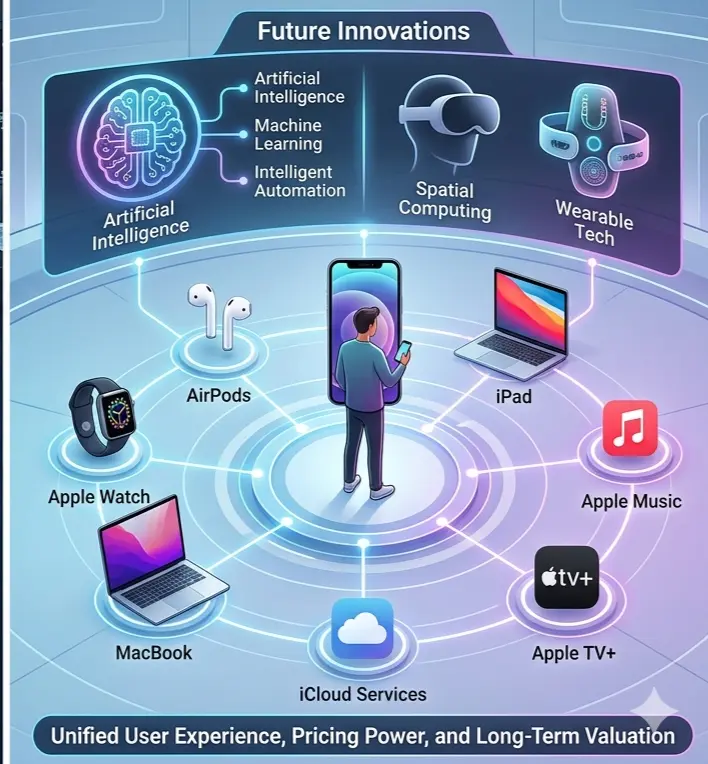
#Gate正式推出股票交易 #Gate美股 Apple (AAPL) iPhone Ecosystem & Services Revenue Analysis
Apple continues to demonstrate remarkable resilience and growth across its iPhone ecosystem and Services segment, positioning the company as a dominant force in the consumer technology landscape through 2026.
Record-Breaking Financial Performance
Apple delivered its best quarter ever in Q1 FY2026, with total revenue reaching $143.8 billion. iPhone demand surged 23% year-over-year to $85.3 billion, driven by the successful launch of the iPhone 17 family. CEO Tim Cook confirmed an all-time record for upgraders acros
AAPL-0.71%
ShainingMoon
#Gate正式推出股票交易 #Gate美股 Apple (AAPL) iPhone Ecosystem & Services Revenue Analysis
Apple continues to demonstrate remarkable resilience and growth across its iPhone ecosystem and Services segment, positioning the company as a dominant force in the consumer technology landscape through 2026.
Record-Breaking Financial Performance
Apple delivered its best quarter ever in Q1 FY2026, with total revenue reaching $143.8 billion. iPhone demand surged 23% year-over-year to $85.3 billion, driven by the successful launch of the iPhone 17 family. CEO Tim Cook confirmed an all-time record for upgraders across the iPhone 17 lineup, while CFO Kevan Parekh guided Q2 revenue growth of 13% to 16% despite acknowledged supply constraints on advanced 3-nanometer SoCs.
Services Revenue: The High-Margin Engine
Services revenue reached approximately $30 billion in Q1 FY2026 at an impressive 76.5% gross margin. This segment, encompassing the App Store, Apple Music, Apple Pay, iCloud, and advertising, now represents roughly 26% of total revenue but contributes approximately 42% of gross profit. The March quarter saw Services hit a new all-time high of ~$31 billion, surpassing the combined revenue of Mac, iPad, and Wearables segments.
The iPhone ecosystem's stickiness is evident in Apple's 2.5 billion active device base, generating recurring, high-margin subscription and advertising income. Services gross margins are projected at 75.4% compared to 36.8% for hardware products, underscoring the strategic importance of this segment.
China Market Strength
Apple's China smartphone sales surged 23% in the first nine weeks of 2026, even as the broader China market contracted 4%. Greater China revenue jumped 38%, demonstrating Apple's strong competitive position. Counterpoint Research noted Apple is better positioned than Android rivals to absorb soaring memory chip costs due to its tight supply chain control.
2026 Outlook and Analyst Sentiment
Wall Street remains firmly constructive on AAPL stock. The Street's consensus includes 25 buys and 6 outperforms against 15 holds and just 2 sells among 41 analysts. The mean price target of $295.44 implies 18.7% upside potential. EPS is forecast to grow 14% in FY2026, climbing from $7.46 in FY2025 to an estimated $8.51.
Analysts highlight Apple's platform dominance in the "agentic AI" era, where control of endpoints, payments, and user intent supports continued Services growth. BofA raised its price target to $380, citing potential net incremental revenue of $15-30 billion base case from AI workflows.
Strategic Initiatives
Apple's competitive position rests on three compounding advantages: a $600 billion four-year U.S. investment commitment anchoring domestic manufacturing, a Google collaboration to build next-generation Apple Foundation Models powering a personalized Siri, and a robust capital return program that returned $25 billion in Q1 alone through buybacks.
Free cash flow is projected to jump 39.2% in FY2026 to $137.49 billion, driven by operating leverage from the iPhone 17 supercycle and Services mix shift. The company announced up to $100 billion in additional share buybacks, reinforcing confidence in long-term value creation.
Investment Considerations
The fundamental investment case for Apple rests on the dual engine of iPhone's upgrade supercycle and Services revenue expanding at 14% annually. Memory cost inflation and 3-nanometer SoC supply constraints remain key variables to monitor, though Apple's supply chain control provides competitive advantages.
With normalized EPS growth projected at 14.1% for FY2026, strong Services margins, and an unmatched ecosystem of 2.5 billion active devices, Apple continues to demonstrate why it remains the world's largest consumer technology company by market capitalization.
repost-content-media
  • Reward
  • Comment
  • Repost
  • Share
#IntroducingGateStocks
#Gate正式推出股票交易
#Gate美股
NVIDIA has evolved far beyond its original identity as a gaming graphics card manufacturer and is now considered one of the most strategically important technology companies in the global artificial intelligence industry. The company has positioned itself at the center of the AI revolution, supplying the advanced computing infrastructure required to train and operate large-scale artificial intelligence systems. As global demand for AI services accelerates across industries such as healthcare, finance, robotics, cybersecurity, cloud computing, and
Vortex_King
#IntroducingGateStocks
#Gate正式推出股票交易
#Gate美股
NVIDIA has evolved far beyond its original identity as a gaming graphics card manufacturer and is now considered one of the most strategically important technology companies in the global artificial intelligence industry. The company has positioned itself at the center of the AI revolution, supplying the advanced computing infrastructure required to train and operate large-scale artificial intelligence systems. As global demand for AI services accelerates across industries such as healthcare, finance, robotics, cybersecurity, cloud computing, and autonomous driving, NVIDIA continues to strengthen its dominance in high-performance computing and AI acceleration. Investors are no longer viewing NVIDIA as a traditional semiconductor stock because the company is increasingly becoming the foundation of next-generation digital infrastructure. The rapid expansion of AI applications worldwide has created extraordinary demand for advanced GPUs, and NVIDIA currently controls a major share of this critical market.
One of the strongest reasons behind NVIDIA’s explosive growth is its unmatched position in AI data center infrastructure. Modern AI models require enormous computational power to process billions or even trillions of parameters, and NVIDIA’s GPUs remain the preferred solution for major technology companies, AI startups, cloud service providers, and enterprise software developers. The company’s CUDA software ecosystem also gives it a massive competitive advantage because developers globally have built their AI systems around NVIDIA architecture. This creates a strong technological moat that is difficult for competitors to overcome. NVIDIA is not simply selling hardware; it is building a complete ecosystem that integrates hardware acceleration, AI networking, cloud infrastructure, and software optimization into one powerful platform. This ecosystem effect has allowed NVIDIA to maintain strong pricing power and dominant market positioning despite rising competition in the semiconductor sector.
The company’s data center business has now become the primary driver of revenue growth, surpassing its gaming segment in importance. Major cloud providers and enterprise AI platforms continue purchasing massive quantities of NVIDIA GPUs to support generative AI applications, large language models, machine learning systems, and AI inference services. The current AI boom has effectively created a global race for computing power, and NVIDIA sits directly at the center of that race. Demand for advanced AI chips continues exceeding supply in several areas, demonstrating how aggressively institutions and corporations are investing in AI infrastructure. Many analysts compare the current AI expansion to the early stages of the internet revolution or the rise of cloud computing, but some believe AI could eventually become even more transformational because it has the potential to reshape nearly every major industry simultaneously.
Another major factor supporting NVIDIA’s bullish outlook is institutional capital flow. Large hedge funds, pension funds, ETFs, sovereign wealth funds, and global asset managers continue increasing exposure to AI-related companies, and NVIDIA remains one of the largest beneficiaries of this trend. The company has become a core holding for many growth-focused portfolios because investors view it as one of the strongest long-term opportunities tied directly to artificial intelligence expansion. Strong institutional participation also contributes to sustained upward momentum because many large investors operate on multi-year investment horizons rather than short-term trading cycles. This long-term accumulation trend continues supporting NVIDIA’s overall market structure despite periods of volatility and profit-taking.
From a technical perspective, NVIDIA has consistently demonstrated exceptional relative strength compared to broader market indices. The stock repeatedly attracts aggressive dip-buying activity during pullbacks, indicating strong investor confidence in the long-term AI narrative. Important technical areas include major support levels, earnings gap zones, moving averages, and institutional accumulation regions. As long as the stock continues forming higher lows on larger timeframes, the broader bullish trend remains intact. However, investors should also understand that powerful momentum stocks often experience sharp corrections after extended rallies. Short-term volatility should not automatically be interpreted as a breakdown of the long-term trend because high-growth technology leaders frequently experience periods of consolidation before continuing upward expansion.
Despite its impressive growth trajectory, NVIDIA also faces important risks that investors must monitor carefully. The company’s valuation has expanded significantly due to extremely optimistic expectations surrounding artificial intelligence growth. High valuation multiples increase sensitivity to earnings disappointments, slowing revenue growth, or broader market weakness. Competition is also intensifying as companies such as AMD, Intel, Google, Amazon, and several emerging semiconductor firms attempt to capture portions of the AI accelerator market. Some major technology companies are also developing custom AI chips internally to reduce dependence on NVIDIA hardware. Regulatory challenges, export restrictions, supply chain disruptions, and geopolitical tensions could additionally impact future performance. Because NVIDIA has become one of the most crowded institutional trades globally, market expectations remain extremely high, making earnings announcements especially important for future price action.
The broader macroeconomic environment also plays a major role in NVIDIA’s market performance. Interest rate policy, inflation expectations, economic growth conditions, and technology sector sentiment all influence investor appetite for high-growth equities. During periods of aggressive monetary tightening, growth stocks often face valuation pressure because future earnings become discounted more heavily. However, NVIDIA’s extraordinary earnings expansion has allowed it to outperform many traditional technology companies even in uncertain macroeconomic environments. Investors increasingly view the company not only as a semiconductor manufacturer but also as a direct proxy for global AI adoption and future technological transformation.
One of the most important long-term investment arguments for NVIDIA is the belief that artificial intelligence remains in the early stages of a multi-decade growth cycle. AI integration continues expanding across enterprise software, automation systems, robotics, industrial manufacturing, financial analysis, defense systems, healthcare diagnostics, and autonomous transportation. Every major AI advancement requires increasing computational power, and NVIDIA currently remains one of the most critical suppliers of that infrastructure. If AI adoption continues accelerating globally, NVIDIA may continue benefiting from one of the most powerful technological megatrends of the modern era. The company’s influence over the future direction of computing and automation gives it strategic importance that extends far beyond traditional semiconductor manufacturing.
Market sentiment surrounding NVIDIA remains overwhelmingly bullish overall, although periods of volatility are likely to continue due to elevated expectations and macroeconomic uncertainty. Bullish investors believe the company is still in the early stages of monetizing the AI revolution, while bearish analysts warn that current valuations already price in years of future growth. The battle between these opposing views will likely determine the next major phase of price action. Nevertheless, NVIDIA’s combination of technological leadership, AI infrastructure dominance, institutional support, and strong revenue expansion continues making it one of the most closely watched stocks in global financial markets.
NVIDIA has transformed itself into one of the defining companies of the artificial intelligence era. The company now represents much more than a semiconductor business because it sits at the intersection of AI, automation, cloud computing, robotics, and next-generation digital infrastructure. Its GPUs power many of the world’s most advanced AI systems, and its ecosystem continues expanding across industries globally. While risks related to valuation, competition, and market volatility remain important considerations, NVIDIA’s strategic position within the AI economy continues supporting a powerful long-term growth narrative. As artificial intelligence reshapes the global economy over the coming years, NVIDIA is likely to remain one of the central companies driving that transformation.
#Gate美股

repost-content-media
  • Reward
  • Comment
  • Repost
  • Share
#IntroducingGateStocks
#Gate正式推出股票交易 #Gate美股
Tesla remains one of the most controversial and closely watched companies in global financial markets because investors are no longer evaluating it as a traditional automobile manufacturer. The company has transformed itself into a technology-driven ecosystem focused on electric vehicles, artificial intelligence, autonomous driving, robotics, energy storage, and next-generation transportation infrastructure. While many traditional car manufacturers continue competing in the electric vehicle market, Tesla’s long-term vision extends far beyond simply
Vortex_King
#IntroducingGateStocks
#Gate正式推出股票交易 #Gate美股
Tesla remains one of the most controversial and closely watched companies in global financial markets because investors are no longer evaluating it as a traditional automobile manufacturer. The company has transformed itself into a technology-driven ecosystem focused on electric vehicles, artificial intelligence, autonomous driving, robotics, energy storage, and next-generation transportation infrastructure. While many traditional car manufacturers continue competing in the electric vehicle market, Tesla’s long-term vision extends far beyond simply selling cars. The company is attempting to reshape the future of transportation, automation, and sustainable energy simultaneously. This ambitious strategy is one of the primary reasons Tesla continues attracting massive institutional attention despite periods of extreme volatility and market skepticism.
The electric vehicle industry has entered a highly competitive phase globally, but Tesla still maintains major advantages in brand recognition, software integration, charging infrastructure, production scale, and autonomous driving technology. The company’s ability to manufacture electric vehicles at large scale while maintaining strong consumer demand has allowed it to become one of the most influential companies in the global EV transition. Governments worldwide continue promoting clean energy policies and electric transportation adoption, creating long-term structural support for companies operating within the EV ecosystem. Tesla has positioned itself as one of the leading beneficiaries of this global transformation.
One of Tesla’s most important growth drivers remains its dominance in the electric vehicle sector. The company has successfully expanded production capacity through Gigafactories located in multiple strategic regions, including the United States, China, and Europe. This global manufacturing presence allows Tesla to reduce supply chain risk while serving major international markets more efficiently. Production scalability remains critical because the worldwide EV market continues growing rapidly as consumers shift away from traditional internal combustion engine vehicles. Tesla’s manufacturing innovation, battery optimization, and vertical integration strategies continue supporting operational efficiency compared to many competitors.
However, Tesla’s future growth story is increasingly centered around artificial intelligence and autonomous driving technology rather than vehicle production alone. The company’s Full Self-Driving system represents one of its most important long-term opportunities. Tesla is collecting enormous amounts of real-world driving data from millions of vehicles globally, giving it a significant advantage in training AI models for autonomous navigation. If Tesla successfully develops fully autonomous driving capabilities at scale, the company could fundamentally transform transportation economics. Autonomous ride-sharing networks, AI-powered logistics systems, and robotic mobility services may eventually create entirely new revenue streams far larger than vehicle sales themselves.
Many bullish investors believe Tesla should be valued more like an artificial intelligence and robotics company rather than a conventional automaker. This distinction is critical because traditional car companies typically trade at lower valuation multiples due to slower growth expectations and cyclical industry risks. Tesla, by contrast, is attempting to position itself within several high-growth technological megatrends simultaneously, including AI automation, renewable energy infrastructure, battery storage systems, robotics, and autonomous transportation networks. This broader vision continues attracting long-term investors who believe Tesla may become one of the defining technology companies of the future economy.
Tesla’s energy business is another major area of future growth that often receives less attention compared to its vehicle operations. The company’s battery storage products, solar energy solutions, and grid-scale energy systems are becoming increasingly important as governments and corporations accelerate renewable energy adoption. Global electricity demand is rising rapidly due to AI data centers, industrial electrification, and digital infrastructure expansion. Efficient battery storage technology is expected to become one of the most critical components of future energy systems, and Tesla is aggressively expanding its presence within this market. Some analysts believe Tesla’s energy division could eventually become one of the company’s largest long-term profit drivers.
The role of Elon Musk also remains central to Tesla’s market identity. Supporters view him as one of the most innovative entrepreneurs of the modern era, capable of driving disruptive technological change across multiple industries simultaneously. Critics, however, argue that Tesla’s valuation depends excessively on market optimism surrounding Musk’s long-term promises and ambitious projections. This creates a highly emotional investment environment where sentiment can shift rapidly based on public statements, product announcements, earnings reports, or macroeconomic developments. Tesla’s stock has historically demonstrated extreme volatility because investor expectations remain extraordinarily high.
Competition within the EV market is increasing aggressively. Traditional automotive giants such as Ford, General Motors, Volkswagen, BMW, Mercedes-Benz, Toyota, and Hyundai continue expanding their electric vehicle lineups. Chinese EV manufacturers are also rapidly growing market share through lower-cost production models and aggressive international expansion strategies. Companies like BYD have become particularly important competitors due to strong manufacturing scale and pricing efficiency. As competition intensifies, Tesla may face increasing pressure on pricing, margins, and market share in certain regions. This is especially important because price reductions designed to stimulate demand can directly impact profitability.
Macroeconomic conditions also play a major role in Tesla’s future growth outlook. Interest rates, inflation, consumer spending trends, and global economic growth all influence demand for high-priced consumer products such as electric vehicles. During periods of economic uncertainty or tighter monetary policy, consumers may delay large purchases, potentially affecting Tesla’s sales growth. Rising borrowing costs can additionally impact vehicle financing demand, which is especially important for the broader automotive sector. Nevertheless, long-term EV adoption trends continue supporting structural growth expectations for the industry overall.
From a technical market perspective, Tesla remains one of the most actively traded and closely monitored stocks globally. The stock frequently experiences sharp momentum-driven rallies and corrections due to high retail participation, strong institutional positioning, and heavy options market activity. Important technical areas include major support zones, resistance levels, moving averages, volume accumulation regions, and psychological price thresholds. Tesla’s price action is often highly sensitive to earnings results, production delivery numbers, autonomous driving updates, AI developments, and broader technology sector sentiment.
Institutional investors continue maintaining substantial exposure to Tesla despite volatility because many funds still view the company as one of the strongest long-term innovation plays in global markets. Tesla’s inclusion in major indices and ETFs has also increased its importance within passive investment flows. Large institutional ownership can provide structural support for the stock over longer timeframes, although periods of aggressive profit-taking can still create substantial downside volatility. Tesla’s ability to maintain growth while protecting margins will likely remain one of the most important factors determining future institutional confidence.
The long-term bullish thesis for Tesla ultimately depends on whether the company can successfully execute across multiple transformational industries simultaneously. Investors are not simply betting on electric vehicle sales growth; they are betting on Tesla’s ability to dominate the future of autonomous transportation, AI-driven mobility systems, robotics, and sustainable energy infrastructure. If Tesla successfully achieves even a portion of these ambitions, the company could potentially justify its premium valuation over time. However, execution risks remain significant because many of these technologies are still evolving and highly competitive.
Market sentiment surrounding Tesla continues fluctuating between extreme optimism and deep skepticism. Bulls argue that Tesla remains years ahead of competitors in AI integration, autonomous driving data collection, battery innovation, and software-driven transportation systems. Bears counter that competition, valuation concerns, slowing growth rates, and execution challenges could pressure future returns. This ongoing battle between bullish innovation narratives and bearish valuation concerns is one of the primary reasons Tesla remains one of the most debated stocks in financial markets.
Tesla’s future growth story represents much more than the evolution of an automotive company. It reflects a broader transformation involving artificial intelligence, renewable energy, robotics, automation, and next-generation transportation infrastructure. The company sits at the intersection of several major technological megatrends that could reshape the global economy over the coming decades. While significant risks and volatility remain unavoidable, Tesla continues positioning itself as one of the most ambitious and disruptive companies of the modern technological era.
#Gate美股
repost-content-media
  • Reward
  • Comment
  • Repost
  • Share
#IntroducingGateStocks
#Gate正式推出股票交易 #Gate美股
Apple remains one of the most financially powerful and strategically influential companies in the global technology sector. Unlike many high-growth technology firms that depend heavily on future projections and speculative narratives, Apple has built its dominance through a combination of massive ecosystem control, premium product positioning, extraordinary brand loyalty, and consistent revenue generation. The company’s earnings reports are closely watched not only by Apple investors but also by global financial markets because Apple’s financial pe
Vortex_King
#IntroducingGateStocks
#Gate正式推出股票交易 #Gate美股
Apple remains one of the most financially powerful and strategically influential companies in the global technology sector. Unlike many high-growth technology firms that depend heavily on future projections and speculative narratives, Apple has built its dominance through a combination of massive ecosystem control, premium product positioning, extraordinary brand loyalty, and consistent revenue generation. The company’s earnings reports are closely watched not only by Apple investors but also by global financial markets because Apple’s financial performance often serves as a broader indicator of consumer spending strength, technology demand, supply chain conditions, and institutional confidence in the overall market. When Apple reports earnings, the impact frequently extends far beyond a single stock because the company occupies one of the largest weightings in major market indices and ETFs globally.
Apple’s earnings performance has become increasingly important in the current macroeconomic environment because investors are trying to determine whether global consumer demand remains resilient despite inflation pressures, interest rate uncertainty, and slowing economic growth in certain regions. As one of the world’s most valuable companies, Apple’s ability to continue generating strong revenue and profitability is often interpreted as a sign of broader economic stability within the technology and consumer sectors. Strong earnings reports from Apple typically strengthen bullish sentiment across the Nasdaq and broader US equity markets, while disappointing results can create widespread pressure on technology stocks due to Apple’s enormous influence on investor psychology and institutional positioning.
One of Apple’s greatest strengths remains its ecosystem strategy. The company has successfully created a tightly integrated environment connecting hardware, software, services, cloud infrastructure, entertainment, payments, and wearable technology into a unified user experience. This ecosystem creates exceptionally high customer retention rates because consumers using multiple Apple products often become deeply integrated into the company’s platform. iPhones, MacBooks, iPads, Apple Watches, AirPods, iCloud services, Apple Music, Apple TV+, and the App Store all contribute to a recurring revenue structure that strengthens long-term financial stability. This interconnected ecosystem also provides Apple with powerful pricing power, allowing the company to maintain premium product margins even during periods of broader economic uncertainty.
The iPhone business continues serving as Apple’s primary revenue engine, although the company has gradually diversified into services and subscription-based revenue streams. Every major iPhone launch cycle remains a critical market event because it directly impacts quarterly earnings expectations, supply chain activity, semiconductor demand, and broader smartphone market trends. Investors closely monitor iPhone sales performance in key regions such as the United States, China, Europe, and India because these markets significantly influence Apple’s long-term growth trajectory. China remains particularly important because it represents both a major consumer market and a central manufacturing hub for Apple’s global supply chain operations.
Apple’s services division has become one of the company’s most strategically important growth areas in recent years. Services revenue includes the App Store, iCloud, Apple Music, Apple TV+, Apple Pay, licensing agreements, and other subscription-based offerings. This segment is especially valuable because services typically generate higher profit margins compared to hardware sales. As Apple continues expanding its subscription ecosystem, investors increasingly view the company as transitioning toward a hybrid model that combines premium hardware manufacturing with recurring digital service revenue. This shift is important because recurring revenue streams often provide stronger long-term valuation support and reduce dependence on cyclical hardware upgrade cycles.
Artificial intelligence is also becoming a major focus for Apple’s future market positioning. While competitors such as Microsoft, Google, NVIDIA, and Meta have aggressively marketed AI development publicly, Apple has historically preferred a more controlled and integrated approach toward emerging technologies. Investors are now closely watching how Apple incorporates generative AI, machine learning, and intelligent automation into future iPhone updates, operating systems, and ecosystem services. The company’s ability to integrate AI seamlessly across devices without compromising user privacy may become a key competitive advantage in the coming years. Apple’s enormous installed user base gives it a unique opportunity to deploy AI features across hundreds of millions of active devices globally.
Another critical factor influencing Apple’s earnings and market impact is capital allocation strategy. Apple generates enormous cash flow and has consistently returned capital to shareholders through share buybacks and dividend payments. The company’s aggressive buyback program reduces outstanding shares over time, increasing earnings per share and strengthening investor confidence. Institutional investors often view Apple as one of the most financially stable technology companies because of its massive cash reserves, strong profitability, and disciplined balance sheet management. This financial strength allows Apple to continue investing heavily in research, product development, semiconductor design, artificial intelligence, and ecosystem expansion while maintaining operational stability during uncertain economic periods.
Apple’s influence on financial markets extends far beyond its own stock performance because the company carries enormous weighting in major ETFs and stock indices such as the Nasdaq and S&P 500. Significant price movements in Apple often influence the direction of broader equity markets due to passive investment flows and institutional portfolio exposure. When Apple rallies strongly after earnings, technology sector sentiment frequently improves across the market. Conversely, weak earnings guidance or slowing sales growth can trigger broader risk-off sentiment within growth equities. This market influence makes Apple one of the most systemically important companies within modern financial markets.
Despite its strengths, Apple also faces several important risks that investors continue monitoring carefully. Slowing smartphone market growth, increasing competition, regulatory pressure, geopolitical tensions, and supply chain concentration risks all remain significant concerns. Regulatory scrutiny surrounding the App Store, digital payments, and ecosystem control could potentially impact future services revenue growth. Additionally, tensions between the United States and China create ongoing uncertainty because Apple relies heavily on Chinese manufacturing infrastructure while also generating substantial revenue from Chinese consumers. Any major disruption involving trade policy, tariffs, or geopolitical conflict could significantly affect operational efficiency and profitability.
Macroeconomic conditions also remain highly important for Apple’s earnings outlook. Consumer spending trends, inflation rates, employment conditions, and interest rate policies directly influence demand for premium consumer electronics. During periods of economic slowdown, consumers may delay device upgrades or reduce discretionary technology spending. However, Apple’s premium brand positioning and loyal customer base have historically allowed the company to outperform many competitors even during challenging economic environments. Investors often view Apple as one of the most defensive large-cap technology stocks because of its financial strength, recurring revenue ecosystem, and global brand dominance.
From a technical market perspective, Apple continues demonstrating strong institutional support over long timeframes. The stock frequently acts as a leadership indicator for the broader technology sector due to its enormous market capitalization and investor participation. Key technical factors traders monitor include earnings gaps, major moving averages, support and resistance zones, institutional accumulation patterns, and broader Nasdaq sentiment. Apple’s relatively stable earnings consistency compared to many high-growth technology companies has helped maintain strong long-term investor confidence despite periodic volatility.
The long-term investment thesis for Apple remains centered around ecosystem expansion, services growth, AI integration, financial strength, and global consumer brand dominance. While growth rates may not match smaller emerging technology companies, Apple’s scale, profitability, and operational stability continue making it one of the most important companies in global markets. Investors are increasingly evaluating whether Apple can successfully enter the next phase of technological transformation involving artificial intelligence, spatial computing, wearable devices, and next-generation digital services.
Apple’s earnings reports will likely remain among the most influential events in financial markets because the company serves as both a technology leader and a macroeconomic signal for broader consumer and institutional sentiment. Its ability to maintain premium margins, ecosystem loyalty, and innovation leadership continues supporting long-term investor confidence. While competitive pressures and macroeconomic uncertainties remain important risks, Apple’s unmatched combination of financial power, global reach, ecosystem integration, and brand loyalty ensures that it will remain one of the most closely watched and strategically significant companies in the world economy.
#Gate美股
repost-content-media
  • Reward
  • Comment
  • Repost
  • Share
#IntroducingGateStocks
#Gate正式推出股票交易 #Gate美股
Microsoft has emerged as one of the most dominant forces in the global artificial intelligence revolution, transforming itself from a traditional software giant into one of the most strategically important AI infrastructure and cloud computing companies in the world. The company’s aggressive expansion into artificial intelligence, enterprise automation, cloud ecosystems, and advanced computing platforms has significantly strengthened its position within global financial markets. Investors increasingly view Microsoft not simply as a software company
Vortex_King
#IntroducingGateStocks
#Gate正式推出股票交易 #Gate美股
Microsoft has emerged as one of the most dominant forces in the global artificial intelligence revolution, transforming itself from a traditional software giant into one of the most strategically important AI infrastructure and cloud computing companies in the world. The company’s aggressive expansion into artificial intelligence, enterprise automation, cloud ecosystems, and advanced computing platforms has significantly strengthened its position within global financial markets. Investors increasingly view Microsoft not simply as a software company but as one of the primary long-term beneficiaries of the AI transformation currently reshaping the global economy. The company’s integration of AI across cloud services, enterprise software, productivity tools, cybersecurity systems, and digital infrastructure has created a powerful growth narrative supported by both strong financial performance and massive institutional confidence.
One of Microsoft’s greatest strengths is its ability to combine artificial intelligence with an already dominant enterprise ecosystem. Unlike many AI-focused companies that rely heavily on speculative future adoption, Microsoft possesses an enormous existing customer base through products such as Windows, Microsoft 365, Azure, LinkedIn, Dynamics, Teams, and enterprise cloud infrastructure. This existing ecosystem gives Microsoft a major advantage because the company can integrate AI directly into products already used daily by corporations, governments, educational institutions, and businesses worldwide. The company’s AI strategy is not limited to experimental innovation; it is deeply integrated into commercial software ecosystems generating stable recurring revenue streams.
The partnership between Microsoft and OpenAI has become one of the most important developments in the global AI industry. Microsoft’s investment in OpenAI positioned the company at the center of the generative AI boom, allowing it to rapidly integrate advanced language models and AI assistants across multiple products and services. The launch of AI-powered Copilot features across Microsoft’s ecosystem represents a major shift in enterprise productivity software. AI is no longer being treated as a separate experimental technology; it is becoming embedded directly into workplace operations, software workflows, cloud services, and enterprise automation systems. This integration has the potential to fundamentally reshape how businesses operate globally, increasing demand for Microsoft’s AI-enabled infrastructure and software solutions.
Azure remains one of the company’s most important long-term growth drivers. As one of the world’s leading cloud computing platforms, Azure benefits directly from rising demand for AI infrastructure, enterprise cloud migration, and large-scale data processing capabilities. Artificial intelligence systems require enormous computing power, storage capacity, networking infrastructure, and cloud scalability, all of which strengthen demand for Microsoft’s cloud ecosystem. Enterprises adopting AI technologies increasingly rely on cloud providers capable of supporting advanced AI workloads securely and efficiently. Microsoft’s ability to combine AI capabilities with enterprise-grade cloud infrastructure positions Azure as a central player in the future expansion of AI services worldwide.
The AI transformation is also significantly enhancing Microsoft’s competitive position within enterprise productivity software. AI-powered automation tools integrated into Word, Excel, PowerPoint, Teams, and Outlook are changing how businesses manage workflows, analyze data, create content, and improve operational efficiency. Companies adopting AI-enhanced productivity systems may eventually reduce operational costs while improving output and decision-making capabilities. Microsoft’s ability to monetize AI features through enterprise subscriptions creates a highly scalable recurring revenue model that strengthens long-term financial stability. This is particularly important because subscription-based enterprise software generates predictable cash flow and supports premium valuation multiples within financial markets.
Another major advantage for Microsoft is its financial strength and balance sheet stability. The company generates enormous cash flow from its diversified business operations, including software licensing, enterprise subscriptions, gaming, cloud computing, cybersecurity, and digital services. This financial power allows Microsoft to invest aggressively in AI infrastructure, semiconductor partnerships, data centers, cloud expansion, and research development without placing significant stress on its balance sheet. Institutional investors often favor companies capable of funding long-term innovation internally rather than relying on speculative financing. Microsoft’s strong profitability and disciplined capital allocation strategy continue strengthening investor confidence during periods of broader market volatility.
Artificial intelligence is also reshaping Microsoft’s competitive relationship with other major technology companies. The AI race involving Microsoft, Google, Amazon, Meta, NVIDIA, and Apple has become one of the defining themes of the modern technology sector. Microsoft’s early and aggressive integration of generative AI tools gave the company a temporary leadership advantage within enterprise AI deployment. However, competition continues intensifying rapidly as other technology giants invest heavily in AI infrastructure, large language models, cloud computing, and semiconductor development. Maintaining leadership in such a rapidly evolving technological environment will require continuous innovation, massive infrastructure spending, and strategic execution.
Cybersecurity is another important area where Microsoft’s AI capabilities are creating long-term growth opportunities. As global cyber threats become increasingly sophisticated, enterprises require advanced AI-powered security systems capable of detecting and responding to attacks in real time. Microsoft’s security ecosystem already serves a massive global enterprise customer base, and AI integration may significantly improve threat detection, automation, and digital infrastructure protection. Rising cybersecurity demand strengthens Microsoft’s long-term positioning because digital transformation and cloud adoption continue increasing worldwide.
Despite its strong position, Microsoft still faces several important risks that investors must consider carefully. Regulatory scrutiny surrounding artificial intelligence, data privacy, cloud dominance, and antitrust concerns may intensify as the company expands its influence across global digital infrastructure. Governments and regulators worldwide are increasingly monitoring the power of large technology companies, especially those controlling AI systems and cloud ecosystems. Additionally, AI infrastructure expansion requires enormous capital expenditure, particularly in data center construction, semiconductor procurement, and cloud networking systems. Maintaining profitability while scaling AI infrastructure globally will remain an important challenge.
Macroeconomic conditions also influence Microsoft’s future growth outlook. Enterprise technology spending often depends on broader economic stability, corporate profitability, and business investment trends. During periods of economic slowdown, some corporations may delay large-scale software upgrades or cloud migration projects. However, Microsoft’s diversified revenue streams and enterprise-focused business model provide a relatively defensive position compared to many smaller technology firms. The company’s recurring subscription revenue also helps stabilize financial performance during uncertain market conditions.
From a technical market perspective, Microsoft remains one of the strongest institutional growth stocks within the Nasdaq and broader US equity markets. The stock consistently demonstrates strong relative strength, steady institutional accumulation, and long-term upward momentum. Investors frequently view Microsoft as a core technology holding because of its combination of stable profitability, AI exposure, cloud leadership, and enterprise dominance. Important technical indicators include major moving averages, institutional support zones, earnings reactions, cloud growth trends, and broader AI sector sentiment. Strong earnings performance and positive AI guidance often strengthen bullish momentum within both Microsoft shares and the broader technology sector.
One of the most important long-term investment arguments for Microsoft is the belief that artificial intelligence adoption is still in its early stages globally. AI integration across enterprise software, automation systems, cybersecurity, digital communication, cloud infrastructure, and productivity platforms is expected to accelerate significantly over the coming decade. Microsoft’s strategic positioning across multiple layers of the AI ecosystem gives it exposure to nearly every major segment of this technological transformation. The company is not relying on a single AI product or service; instead, it is embedding AI across its entire global business infrastructure.
Market sentiment surrounding Microsoft remains strongly bullish overall because investors view the company as one of the safest and most financially stable ways to gain long-term exposure to artificial intelligence growth. Unlike many speculative AI companies, Microsoft combines AI innovation with consistent profitability, recurring enterprise revenue, global software dominance, and strong institutional trust. This combination continues making Microsoft one of the most attractive large-cap technology investments within global financial markets.
Microsoft’s AI business expansion represents far more than a temporary technology trend. It reflects a fundamental shift toward AI-driven enterprise infrastructure, cloud computing, digital productivity, and intelligent automation systems. The company’s integration of AI across software, cloud ecosystems, cybersecurity, and enterprise operations positions it at the center of one of the largest technological transformations of the modern era. While competition, regulation, and infrastructure costs remain important risks, Microsoft’s scale, financial strength, enterprise ecosystem, and strategic AI partnerships continue supporting a powerful long-term growth narrative that could shape the future direction of global technology markets for years to come.
#Gate美股
repost-content-media
  • Reward
  • Comment
  • Repost
  • Share
#IntroducingGateStocks
#Gate正式推出股票交易 #Gate美股
Amazon has evolved far beyond its original identity as an online retail company and is now considered one of the most powerful technology-driven ecosystems in the global economy. The company operates across e-commerce, cloud computing, artificial intelligence, logistics infrastructure, digital advertising, entertainment, smart devices, and enterprise technology services. Investors increasingly view Amazon not simply as a retail giant but as a long-term infrastructure company positioned at the center of global digital commerce and cloud transformati
Vortex_King
#IntroducingGateStocks
#Gate正式推出股票交易 #Gate美股
Amazon has evolved far beyond its original identity as an online retail company and is now considered one of the most powerful technology-driven ecosystems in the global economy. The company operates across e-commerce, cloud computing, artificial intelligence, logistics infrastructure, digital advertising, entertainment, smart devices, and enterprise technology services. Investors increasingly view Amazon not simply as a retail giant but as a long-term infrastructure company positioned at the center of global digital commerce and cloud transformation. The company’s ability to dominate multiple industries simultaneously has allowed it to become one of the most strategically important businesses in modern financial markets.
One of Amazon’s greatest strengths is its unmatched global e-commerce ecosystem. The company has fundamentally transformed consumer purchasing behavior by building a highly efficient digital marketplace supported by advanced logistics, data analytics, warehouse automation, and global delivery infrastructure. Millions of consumers worldwide rely on Amazon for convenience, product selection, fast shipping, and digital services. This enormous consumer base creates powerful network effects because third-party sellers, advertisers, brands, and logistics providers increasingly depend on Amazon’s platform to access global markets. As more businesses integrate into Amazon’s ecosystem, the company continues strengthening its competitive moat within global retail infrastructure.
However, the most important driver of Amazon’s long-term profitability is no longer retail alone. Amazon Web Services has become the company’s primary profit engine and one of the most dominant cloud computing platforms in the world. AWS powers a massive portion of the global internet infrastructure by providing cloud storage, computing power, networking systems, cybersecurity services, database management, and artificial intelligence capabilities to corporations, startups, governments, and enterprises globally. The rapid expansion of cloud computing and AI infrastructure demand has significantly increased the strategic importance of AWS within the broader technology sector.
Artificial intelligence is now accelerating Amazon’s cloud business even further. AI systems require enormous computational power, scalable data processing infrastructure, advanced networking systems, and high-performance cloud environments. As corporations globally race to adopt generative AI technologies, demand for cloud providers capable of supporting AI workloads continues increasing rapidly. AWS benefits directly from this transformation because companies building AI applications require reliable and scalable infrastructure to train, deploy, and operate advanced models. The AI boom is therefore not only strengthening Amazon’s technology positioning but also creating long-term structural demand for AWS services across multiple industries.
Amazon’s cloud dominance also provides significant financial flexibility because AWS generates much higher profit margins compared to the company’s retail operations. While e-commerce involves substantial logistics costs, warehouse management expenses, transportation infrastructure, and labor investment, cloud computing offers a more scalable and highly profitable business model. This profitability allows Amazon to continue investing aggressively in expansion, automation, AI infrastructure, robotics systems, digital advertising, and future technologies while maintaining strong long-term growth potential. Many investors believe AWS alone represents one of the most valuable technology assets in the global market.
Another major growth area for Amazon is digital advertising. The company has quietly become one of the world’s largest advertising platforms by leveraging its massive consumer purchasing data and marketplace ecosystem. Brands selling products on Amazon increasingly spend heavily on sponsored product placements, targeted advertising campaigns, and marketplace visibility. Amazon’s advertising business benefits from highly valuable consumer intent data because users visiting Amazon are often already in active purchasing mode. This gives Amazon a significant advantage compared to traditional digital advertising platforms focused primarily on user engagement rather than direct purchasing behavior.
Amazon’s logistics and supply chain infrastructure also remain key competitive advantages supporting long-term growth. The company has built one of the most advanced fulfillment and delivery networks globally, including warehouses, distribution centers, delivery fleets, automation systems, and AI-driven inventory management platforms. This infrastructure allows Amazon to maintain rapid delivery capabilities while reducing operational dependence on external logistics providers. The company continues investing heavily in robotics, warehouse automation, drone delivery research, and AI-powered logistics optimization to improve efficiency and reduce costs over time.
The Prime membership ecosystem further strengthens Amazon’s long-term market position. Prime members receive benefits including fast shipping, entertainment streaming, music services, cloud storage, gaming content, and exclusive shopping access. This subscription model creates recurring revenue streams while increasing customer loyalty and ecosystem retention. Consumers deeply integrated into the Amazon ecosystem are more likely to continue spending across multiple company services, strengthening long-term monetization opportunities. Subscription-based ecosystems also provide greater revenue predictability, which institutional investors typically value highly.
Artificial intelligence integration across Amazon’s operations continues expanding rapidly. The company is deploying AI across logistics optimization, warehouse automation, personalized recommendations, cloud services, customer support systems, cybersecurity, and enterprise infrastructure. Amazon’s AI investments are not limited to consumer-facing applications because the company is embedding machine learning and intelligent automation throughout its operational systems. This large-scale AI integration could significantly improve efficiency, reduce operating costs, and strengthen long-term scalability across both retail and cloud operations.
Despite its strengths, Amazon also faces several important risks that investors continue monitoring carefully. Competition within both e-commerce and cloud computing remains extremely intense. In cloud infrastructure, Microsoft Azure and Google Cloud continue aggressively competing for enterprise market share. In retail, companies globally are investing heavily in digital commerce capabilities and supply chain modernization. Regulatory scrutiny also remains a major concern because governments worldwide are increasingly examining Amazon’s market dominance, competitive practices, labor policies, and data control. Antitrust investigations and regulatory restrictions could potentially impact future business operations or expansion strategies.
Macroeconomic conditions also significantly influence Amazon’s performance. Consumer spending trends, inflation levels, employment conditions, and global economic growth directly affect retail demand and advertising activity. During economic slowdowns, discretionary spending often weakens, potentially impacting e-commerce growth. However, cloud computing demand may remain relatively resilient because digital infrastructure and enterprise cloud services have become essential operational components for modern businesses. Amazon’s diversified business model provides some protection against economic volatility because weakness in one segment can sometimes be offset by strength in another.
From a technical market perspective, Amazon remains one of the most important large-cap growth stocks within global equity markets. The stock is heavily owned by institutional investors, ETFs, hedge funds, and long-term technology portfolios. Strong earnings reports, AWS growth acceleration, AI-related developments, and improving operating margins often drive bullish momentum across Amazon shares and the broader Nasdaq. Traders closely monitor cloud revenue growth, e-commerce profitability trends, AI infrastructure investment, advertising expansion, and macroeconomic consumer spending indicators when evaluating Amazon’s future price action.
Institutional investors continue viewing Amazon as one of the most strategically valuable technology ecosystems globally because of its diversified revenue structure and exposure to multiple long-term growth industries simultaneously. The company participates directly in cloud computing, AI infrastructure, digital commerce, subscription services, advertising technology, logistics automation, and enterprise cloud transformation. Few companies possess similar scale across so many critical sectors of the modern digital economy. This diversification strengthens Amazon’s long-term investment appeal because growth opportunities exist across multiple independent business segments.
The long-term bullish thesis for Amazon depends heavily on the continued expansion of cloud computing, artificial intelligence adoption, digital commerce growth, and enterprise digital transformation. As businesses increasingly migrate operations to the cloud and consumers continue shifting toward online commerce ecosystems, Amazon remains positioned to benefit from several major global technological trends simultaneously. AWS alone may continue serving as one of the primary foundations of the AI economy due to rising demand for scalable computing infrastructure and enterprise cloud services.
Market sentiment surrounding Amazon remains strongly bullish overall because investors view the company as both a technology infrastructure leader and a long-term digital economy powerhouse. While concerns related to regulation, competition, infrastructure costs, and macroeconomic uncertainty remain important, Amazon’s combination of global scale, cloud dominance, AI integration, logistics infrastructure, and recurring ecosystem monetization continues supporting a powerful long-term growth narrative.
Amazon is no longer simply an e-commerce company. It has become a central pillar of global digital infrastructure, cloud computing, and AI-driven enterprise transformation. Its influence now extends across retail, cloud technology, logistics, entertainment, advertising, and artificial intelligence systems worldwide. As digital transformation accelerates across industries over the coming decade, Amazon’s strategic position within the global technology ecosystem may continue strengthening, making it one of the most important companies shaping the future of the modern economy.
#Gate美股
repost-content-media
  • Reward
  • Comment
  • Repost
  • Share
#Gate正式推出股票交易
The relationship between geopolitics and Bitcoin has become one of the most influential forces shaping global cryptocurrency markets in recent years. Bitcoin, originally designed as a decentralized digital asset independent of traditional financial systems, has increasingly evolved into a macro-sensitive asset influenced by global political tensions, economic uncertainty, monetary policy shifts, and cross-border financial dynamics. As geopolitical instability increases across different regions of the world, Bitcoin is often analyzed not only as a speculative asset but also as a
BTC-0.14%
Vortex_King
#Gate正式推出股票交易
The relationship between geopolitics and Bitcoin has become one of the most influential forces shaping global cryptocurrency markets in recent years. Bitcoin, originally designed as a decentralized digital asset independent of traditional financial systems, has increasingly evolved into a macro-sensitive asset influenced by global political tensions, economic uncertainty, monetary policy shifts, and cross-border financial dynamics. As geopolitical instability increases across different regions of the world, Bitcoin is often analyzed not only as a speculative asset but also as a potential hedge against systemic risk and currency instability.
One of the primary ways geopolitics affects Bitcoin is through economic uncertainty and risk sentiment. During periods of geopolitical tension such as conflicts, trade wars, sanctions, or diplomatic breakdowns, global financial markets often experience heightened volatility. Investors typically reassess risk exposure and may shift capital between traditional assets like equities, bonds, and commodities. In some cases, Bitcoin is viewed as an alternative store of value outside traditional financial systems, leading to increased demand during periods of uncertainty. However, in other cases, heightened risk aversion can also lead to liquidity outflows from all risk assets, including cryptocurrencies.
Currency instability is another major factor connecting geopolitics and Bitcoin. In countries experiencing inflation, capital controls, or currency depreciation, Bitcoin can become an attractive alternative for preserving purchasing power or transferring value across borders. Because Bitcoin operates on a decentralized network without reliance on central banks or government institutions, it is often seen as a financial tool that can bypass traditional monetary restrictions. This dynamic becomes particularly relevant in regions facing economic instability or restrictive financial policies.
Sanctions and international financial restrictions also contribute to Bitcoin’s geopolitical relevance. When countries or entities face sanctions limiting access to global banking systems, digital assets can sometimes emerge as alternative channels for value transfer. While regulatory oversight has increased significantly, Bitcoin’s decentralized nature still makes it an important topic in discussions around cross-border finance, financial sovereignty, and global payment systems. These geopolitical conditions often influence market perception and demand dynamics for cryptocurrencies.
Monetary policy decisions by major global central banks, particularly the US Federal Reserve, also play an indirect but powerful role in Bitcoin’s geopolitical positioning. Interest rate changes, liquidity conditions, and quantitative tightening or easing policies influence global capital flows across risk assets. When liquidity is abundant and interest rates are low, investors tend to allocate more capital toward high-growth and speculative assets, including Bitcoin. Conversely, tighter monetary conditions often lead to reduced risk appetite and downward pressure on cryptocurrency markets.
Institutional adoption has further strengthened the connection between Bitcoin and global geopolitics. Large financial institutions, hedge funds, and asset managers now include Bitcoin in their portfolios as part of broader diversification strategies. This institutional participation means that Bitcoin is increasingly influenced by macroeconomic trends, regulatory developments, and global political events. As a result, Bitcoin’s price behavior is no longer isolated from traditional financial markets but is instead deeply interconnected with global economic systems.
Geopolitical narratives such as digital sovereignty and financial independence also contribute to Bitcoin’s long-term appeal. Some governments and policymakers view blockchain-based financial systems as part of the future of global finance, while others express concerns regarding regulatory control, monetary policy effectiveness, and financial stability. This divergence in perspectives creates ongoing uncertainty around regulation, which directly influences investor sentiment in the cryptocurrency market.
Another important factor is the role of Bitcoin as a hedge against systemic financial risk. During periods of extreme uncertainty in traditional banking systems or global financial institutions, some investors view Bitcoin as a non-sovereign asset that is not directly controlled by any single government or central authority. While this narrative strengthens Bitcoin’s appeal during certain crisis periods, its effectiveness as a hedge is still debated, as Bitcoin often behaves like a risk asset during broader market selloffs.
Geopolitical developments also influence cryptocurrency regulation worldwide. Governments are continuously developing frameworks to regulate digital assets, focusing on areas such as taxation, anti-money laundering compliance, investor protection, and financial stability. Regulatory clarity or uncertainty in major economies can significantly impact Bitcoin adoption and market sentiment. Positive regulatory developments often support price stability and institutional adoption, while restrictive policies can create short-term market pressure.
Market volatility in Bitcoin is often amplified during geopolitical events due to its relatively high sensitivity to global news flow. Unlike traditional assets that may have established valuation models, Bitcoin is still largely driven by sentiment, liquidity conditions, and macro expectations. This makes it particularly responsive to sudden geopolitical shocks, leading to sharp price movements in either direction depending on investor interpretation.
Technological adoption and global payment innovation also intersect with geopolitical factors. As digital payment systems evolve, Bitcoin continues to be evaluated as a potential component of future financial infrastructure. Cross-border transactions, remittances, and decentralized financial systems all contribute to discussions about Bitcoin’s role in a globally interconnected economy.
Overall, the relationship between geopolitics and Bitcoin reflects the broader integration of digital assets into global financial systems. Bitcoin is no longer viewed purely as a speculative instrument but as an asset influenced by macroeconomic conditions, political stability, regulatory frameworks, and international financial dynamics. As global geopolitical complexity continues to increase, Bitcoin’s role in financial markets is likely to remain a key topic of discussion among investors, policymakers, and institutions.
#Gate美股
repost-content-media
  • Reward
  • Comment
  • Repost
  • Share
  • Pinned