Square
Following
Hot
News
Profile

AirdropOrganizer

vip
Active for: 0.6y
Peak Tier 0
Treat airdrop tasks like organizing: sort by chain, by project, by time. Frequently share interaction routes and pitfall checklists, occasionally complain about sore hands.
75
Following
10
Followers
3
Liked
$0.08182, up 3%, outperforming BTC but underperforming PEPE—very meme
JAM007
$DOGE — Green, With Room to Prove More
DOGE is quoted at $0.08182, up 2.94%. It is outperforming BTC, but its move is smaller than PEPE’s in the supplied snapshots. Meme-coin performance is uneven rather than moving at one shared pace.
BTC-1.25%
PEPE+3.09%
I used to think privacy was a standard feature on-chain, so I took turns trying mixers, privacy coins, and cross-chain bridges. Then I realized I’d burned through plenty of gas while becoming more and more anxious about using my wallet. Now the community argues every day about where the compliance boundaries are, but I’ve come around to the idea that ordinary users should set smaller goals first—that way, they can keep playing for longer.
I now split things across three accounts: one fully exposed for everyday interactions and airdrops, one used only with KYC-compliant CEXs, and the last one…
What I’m most afraid of missing isn’t an airdrop, but those few minutes of node synchronization delay…
Yesterday I came across a post raving about how great modularity is and how powerful the DA layer is, and I was like: mm-hmm, mm-hmm, mm-hmm. But honestly, from the user side, the most obvious experience is the RPC acting up. You’ve clearly gotten on-chain confirmation, but it just refuses to show up in your wallet. You refresh ten times, switch nodes, and suddenly it’s there again.
I’ve developed a pretty pathological habit: I keep at least two backup RPCs for the same address, and save one
ETH-1.38%
ARB+0.38%
OP-2.83%
This combination sounds really bad (but very profitable)
Holaitsak47
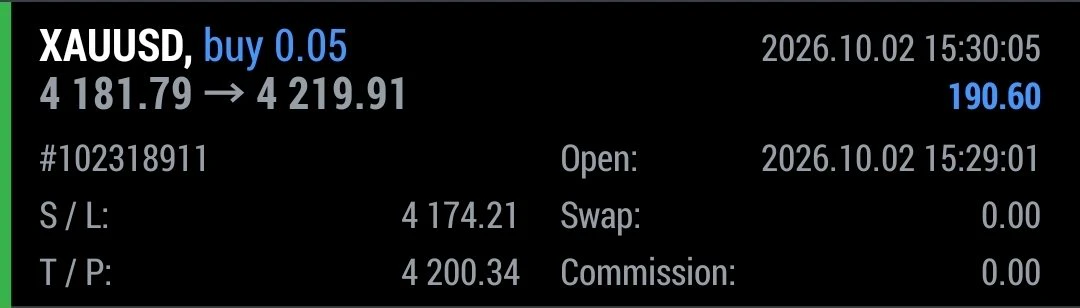
NFP + Gold… you already know things can get wild 😂🔥
repost-content-media
Gate zero-gas rushes into new coins; this SOPH trade is maxed out at 75x leverage, and a 1-3% position is considered conservative. Just set your stop-loss and leave the rest to the market🎯
VF5Trader
📉 LONG $SOPH 75x
📌 Entry: 0.010339
🎯 TP: 0.066000
⛔️ SL: 0.0095400
🛡 Account Usage: 1-3%
⚠️ According to your risk management
#GateLaunchesTrenchesWith0GasFee
SOPH+2.34%
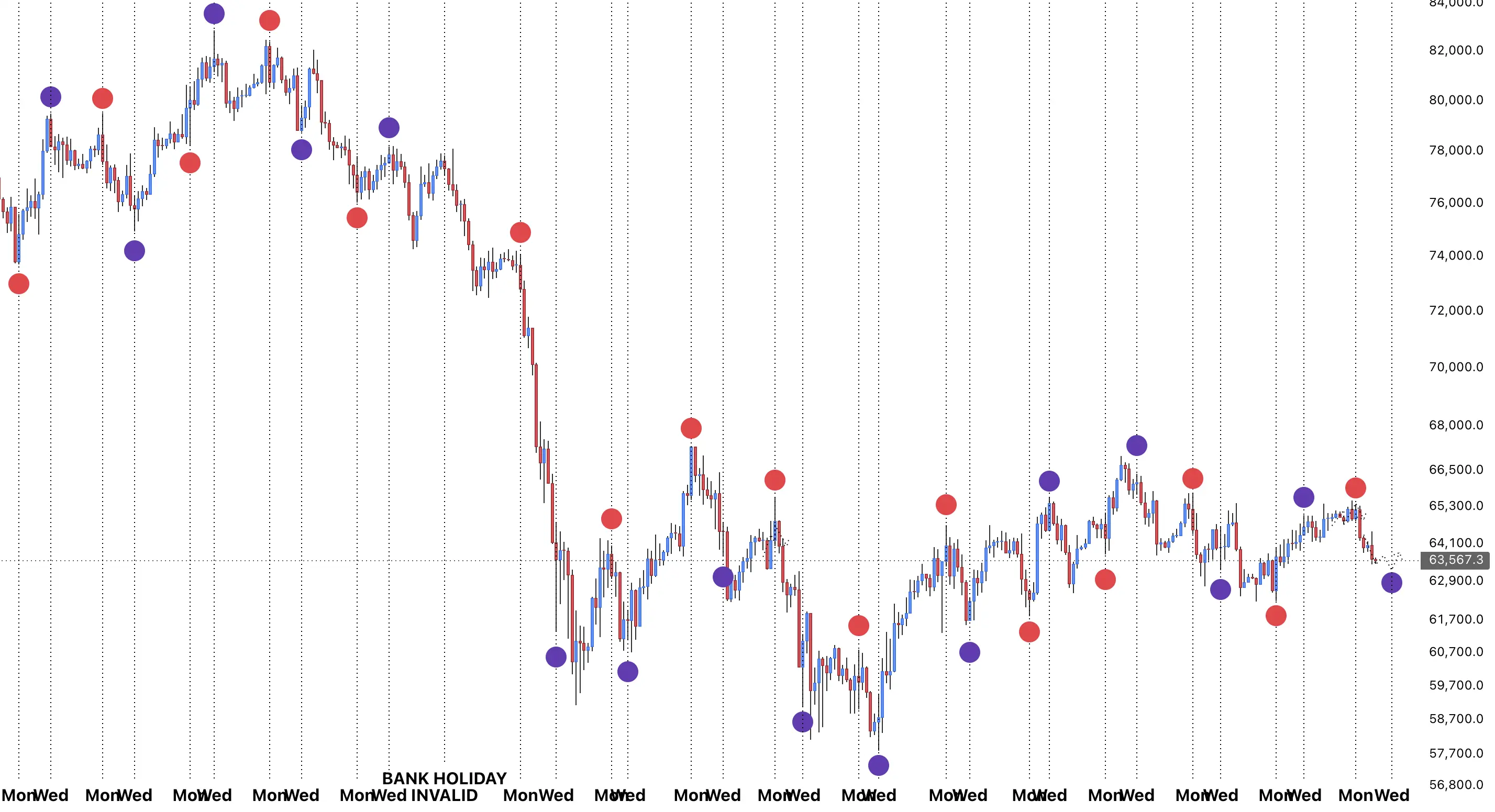
Monday pivot high, Wednesday pivot low—historically, this has pushed price higher into Thursday 12 out of 15 times. Tomorrow will most likely follow the same script, so I choose not to go against the midweek pattern.
CryptoZeno
$BTC Monday pivot high.
Wednesday pivot low.
The Wednesday pivot typically pushes price higher into Thursday.
Tomorrow is the day...
Not fading an intra-week pattern that's played out 12/15 times.
repost-content-media
When funding rates go to extremes, my first reaction is actually to open my little notebook and jot it down, because it often means sentiment has gone completely crazy. I could take the opposite side, but I’d be worried about getting wicked so hard I’d question my life choices; I could sit out the volatility, but then I’d feel like I was missing out on $100 million. Later, I lowered my expectations—not expecting to catch the bottom or escape at the top, just hoping not to get liquidated and to save some bullets for airdrop tasks—and things became much easier. In any case, with the market like
MEME+0.02%
Just saw someone complaining that on-chain data tools are lagging, and that the labeling system is being misled. Honestly, I really relate. In the past couple of days, I almost got tricked by an interactive page disguised as a “phishing site.” The address looks exactly the same—down to the icon differing by just a pixel. Thankfully, I have the habit of first clicking “signature approval” to check, and it turned out that the approval would transfer all gas fees away. I instantly snapped out of it.
As for seed phrases, don’t store them on your phone—no matter what you do, even if you screenshot
Just saw someone in the group chat discussing stablecoin reserve transparency. Honestly, ever since the last de-pegging incident, I’ve been taking extra care every time I do interaction tasks. Now some project teams say their reserves are sufficient, but the audit reports are ambiguous—who would dare to trust that completely? Anyway, for now I personally only feel safe splitting my funds up. I’ll choose a few mainstream stablecoins and go with the ones that have higher audit frequency; as for the rest, I really don’t dare to get too deep.
Recently, it’s all been about competing among Layer 2s
Everyone basically knows this: when you look at the APY numbers on those yield aggregators that are ridiculously high, your stomach drops a bit. Every time I click in now, my first reaction isn’t “wow how much can I make,” but to review the contract audit first, then check which underlying protocol the interactions are actually using—afraid that any step could rug liquidity or have a code flaw. I used to step on a mine: a pool that looked extremely solid turned out to be a brand-new scam project launched just two weeks earlier. The funding rate went to an extreme and it crashed immediately. No
I just adjusted the liquidation line for lending by another step. When you’re three steps away from the red line, you really need to think about your fallback plan in advance.
Recently I saw people discussing ETF fund flows together with US stock risk appetite—plainly put, the market’s up or down depends on how the Americans are feeling. And me, a little retail “weed,” I end up blindly messing around and following along like an idiot. Last time, I almost got liquidated. Back then I hadn’t set up the alerts properly, so I ended up getting up in the middle of the night to cover my position—my ar
Lately I’ve been seeing a lot of people rushing into new contracts, and honestly it makes me a bit panicky. To be honest, before I do any airdrop interactions, I’ll first go through the project team’s GitHub—checking the commit frequency, whether the documentation connects properly, and whether there’s anything like “deploy code first and then modify later.” I also skim the audit reports—not just whether there are “the three major audits,” but what specific findings and vulnerabilities are listed, and also that last section about “code consistency,” whether they truly ran through it. Upgrading
Just saw that post about the lending liquidation line, and it suddenly reminded me of my near-liquidation experience a while back. 😅 Back then I added ETH to AAVE as LP, but when the market moved, my health factor dropped straight down to around 1.2. It was only three steps away from the red line. Honestly, I was really panicked at the time—like I was being chased, but also like I was standing in place being punished. In my head I kept calculating how much longer I could hold. Later I quickly topped up some collateral and also withdrew any positions I could. I spent all night messing with it
ETH-1.38%
AAVE-0.14%
RWA+0.31%
Stop-loss—just like breaking up. The longer you拖, the more you feel like you can still hold on a bit longer, but the interest gets burned first. When you look back, you realize it’s actually better to cut it cleanly from the start—it’s quicker and more decisive. Lately I’ve been seeing on-chain AI Agents being hyped pretty hard: automated trading, leaving it running to interact… honestly, it’s a little tempting. But then I look at those security audit reports and I get a bit nervous… you really need to keep your eyes open. Whoever’s actually taking security seriously and whoever’s just selling
I was just about to interact with a transaction after the gas dropped, but an MEV bot “cut in line.” My side’s transaction hadn’t been confirmed yet, while theirs had already run. To be honest, getting jumped like this on-chain is pretty annoying, but on the other hand, if I were the one who got ahead, I might be laughing too. Fair? There’s no absolute fairness on-chain—it's all about ordering and games.
Lately, all those modular blockchain things have come up again. Developers are talking about them like crazy—DA layers, data availability—I listened and ended up completely confused. Anyway, I
I stared at it for ages, and I almost got itchy to chase the move. Today I saw a celebrity calling out that meme, and I got carried away thinking about going in—then I calmed down and asked myself: Is this information actually real? Or am I just being pushed around by emotions? Anyway, lately veteran players keep saying not to take the last one, and I know that too—but sometimes I just can’t help it.
What I learned isn’t a technique—it’s… first, control your hands, and distinguish what’s real data from what’s just market noise. In plain terms, treat yourself like a storage box: separate impuls
MEME+0.04%
I just looked at the APY of a yield aggregator and almost got tempted. But once I opened the contract address and took a look around, it just felt like I was flipping through an enormous buffet—every item in the ingredient list was something I’d never heard of. To put it plainly, behind those high APYs isn’t any DeFi magic. It’s contract risk plus a contest against the counterparty. The interest you end up getting is really someone else on the other side shouldering the bigger blast.
Anyway, for now I’m just treating this kind of thing as a “blind box”—it looks appealing, but nobody knows what
MEME+0.04%
I just looked into options, and it really feels like being a market maker on the sell side is basically collecting rent—the time value keeps dropping into your pocket every day. The buyer is like running against the clock, getting chipped away little by little every day… In any case, for someone like me who messes around with airdrops, I think I’m still better suited to be the seller? But recently hard wallets have been out of stock pretty badly, and phishing links are flying everywhere. It’s gotten to the point where I have to confirm interactions two or three times over, and my hand aches an
After every interaction, there’s a bunch of hashes sitting in my cold wallet, and seeing year-end tax filing is a headache. I now keep an Excel for each chain—split by time, split by task type, note when I interacted, how much GAS I consumed, and how many tokens I ended up receiving, and have everything marked. In any case, when new L1/L2 incentive rewards are rolled out, a lot of people shout “mine it, then sell it.” If the record-keeping doesn’t keep up, recalculating the costs later really makes you want to cry.
Especially for the kind of interaction that involves dozens of transactions—if
These parallel and sharding projects have been pretty lively lately—new chains keep popping up one after another, but honestly, what I still care about is asset security and how to get out. I tried once: I moved part of my assets to a newly launched L2, hoping to catch an early-interaction airdrop. The withdrawal path, though, was extremely complicated, and I almost got stuck in the middle. In the end, I still had to manually switch a few RPCs to get it done, and it made me kind of anxious. Anyway, the noise is one thing—don’t just rush in; you need to think through how you’ll run out (exit) f
Load More