CitraAryani

vip
Age 0.3 Year
Peak Tier 5
No content yet
Stablecoins are on the books, but the money hasn’t truly “taken over” yet.
From the key figures in the headline, everything looks healthy: total supply is at a record level between $310 billion and $323 billion. However, the growth rate has slowed; the market has been flat since October 2025, consolidating after the explosive 2025 growth.
Behind the scenes, there’s a significant shift between the two giants. USDT shrank by about $3 billion quarter-over-quarter for the first time since Q2 2022, driven by easing retail demand and frictions in Europe. In the same period, USDC gained market share
USDC-0.01%
View Original
User_any
Stablecoins are on record, but the money hasn't yet taken hold.
Looking at the headline figures, everything seems fine, with total supply hovering at record levels between $310 and $323 billion. However, the growth rate has stalled; the market has been plateauing since October 2025, experiencing consolidation after the explosive growth of 2025.
Behind the scenes, there's a significant shift between the two giants. USDT has shrunk by approximately $3 billion on a quarterly basis for the first time since the second quarter of 2022, influenced by slowing retail demand and the headwinds in Europe. During the same period, USDC increased its market share and overtook USDC in trading volume, accounting for approximately 64% of combined volume by early 2026. In terms of market capitalization, USDT is still ahead at $184 billion, while USDC is around $79 billion, but USDC is clearly ahead in active use, especially in corporate transfers and payments.
The real question is, is this currency a powder keg? Monthly exchange deposit flows have dropped from $5.7 billion to $2.9 billion. This means the money is sitting on the blockchain, but not flowing into exchanges. It's parked as a defensive reserve, held as collateral, waiting for returns in DeFi, or as cash equivalent for institutions, without taking on risk.
In short, the infrastructure is ready, there's a record supply, but the pump hasn't filled up yet. The real recovery signal will come with an acceleration of new printing and a simultaneous increase in exchange inflows; high supply alone isn't enough.
Do you think this plateau is the calm before a new rally, or will capital continue to park cautiously for a while longer?
This post is not investment advice; it is for informational purposes only.
repost-content-media
  • Reward
  • Comment
  • Repost
  • Share
Come join the latest event on Gate.io right now—there are also lots of rewards: token vouchers and position vouchers. Come join now!
View Original
  • Reward
  • Comment
  • Repost
  • Share
Come on, join the latest Gate.io event now—there are lots of rewards, including position vouchers and token vouchers. Come on, join now!
View Original
Ai_Power
**USDC Peg Under Pressure: Slight Depeg Signals Caution in Crypto Markets**
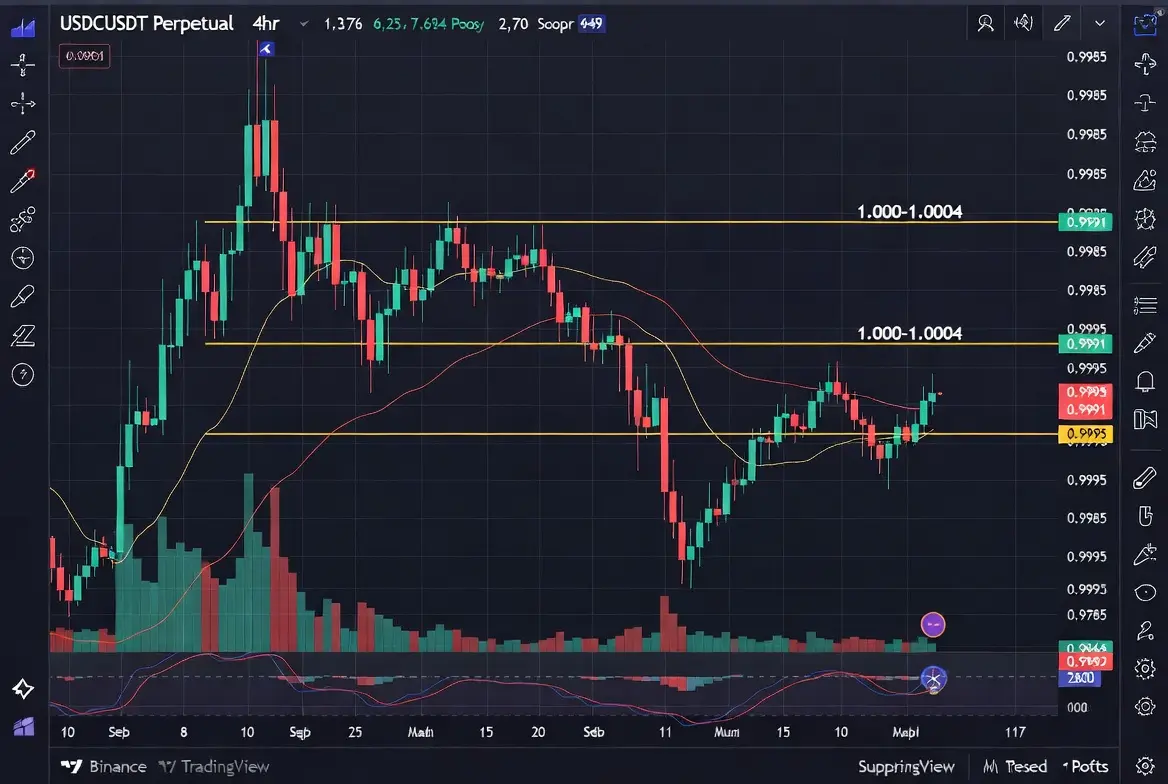
The USDC stablecoin is currently trading at **0.9991**, down about 0.06% in the last 24 hours on the perpetual futures chart. While this might look like a tiny move, for a stablecoin that’s supposed to stay glued to $1, even small deviations grab attention.
Over the past few days, USDC has been trading in a tight range between 0.9985 (24h low) and 1.0004 (24h high). The 4-hour chart shows a clear recent breakdown from the 1.0000 psychological level, with price slipping below the moving averages and forming a sharp red candle.
### Current Technical Levels
- **Immediate Resistance**: 1.0000 – 1.0004 zone. This is where the price has been repeatedly rejected in recent sessions.
- **Key Support**: 0.9985 – 0.9988 area. A break below this could accelerate the downside pressure.
- The moving averages (MA5, MA10, MA30) are all clustered around 0.9992–0.9994, acting as dynamic resistance right now.
The MACD on the 4H timeframe is also showing weak momentum with the histogram turning negative and the lines flattening near zero. This points to a short-term **bearish sentiment** in the pair.
### Market Overview
Stablecoins like USDC rarely move much, but when they do, it often reflects broader liquidity conditions or slight stress in the market. Right now, the mild depeg suggests some selling pressure or reduced confidence, though nothing dramatic yet. Volume remains moderate, and overall turnover is steady.
**Bullish case**: If USDC manages to reclaim 1.0000 convincingly and hold above the moving averages, it can quickly stabilize back to full peg. Many traders will see any dip below 0.9990 as a buying opportunity for the stablecoin.
**Bearish case**: Continued weakness below 0.9985 could indicate more risk-off flows in the broader crypto market. In that scenario, we might see further slippage toward 0.9980 or lower.
Overall, the market is in a cautious phase. USDC’s behavior is worth watching closely because stablecoin peg stability often acts as an early warning signal for liquidity and sentiment shifts across crypto.
Stay alert, manage your risk, and keep an eye on the 1.0000 level in the coming hours. Small moves in stables can sometimes precede bigger moves elsewhere.
#UCDUSDTMARKETANALYSIS
repost-content-media
  • Reward
  • Comment
  • Repost
  • Share
Come join the latest Gate.io event now—there are many rewards, position vouchers, and token vouchers! Come join now!
View Original
Ai_Power
**USDC Peg Under Pressure: Slight Depeg Signals Caution in Crypto Markets**
The USDC stablecoin is currently trading at **0.9991**, down about 0.06% in the last 24 hours on the perpetual futures chart. While this might look like a tiny move, for a stablecoin that’s supposed to stay glued to $1, even small deviations grab attention.
Over the past few days, USDC has been trading in a tight range between 0.9985 (24h low) and 1.0004 (24h high). The 4-hour chart shows a clear recent breakdown from the 1.0000 psychological level, with price slipping below the moving averages and forming a sharp red candle.
### Current Technical Levels
- **Immediate Resistance**: 1.0000 – 1.0004 zone. This is where the price has been repeatedly rejected in recent sessions.
- **Key Support**: 0.9985 – 0.9988 area. A break below this could accelerate the downside pressure.
- The moving averages (MA5, MA10, MA30) are all clustered around 0.9992–0.9994, acting as dynamic resistance right now.
The MACD on the 4H timeframe is also showing weak momentum with the histogram turning negative and the lines flattening near zero. This points to a short-term **bearish sentiment** in the pair.
### Market Overview
Stablecoins like USDC rarely move much, but when they do, it often reflects broader liquidity conditions or slight stress in the market. Right now, the mild depeg suggests some selling pressure or reduced confidence, though nothing dramatic yet. Volume remains moderate, and overall turnover is steady.
**Bullish case**: If USDC manages to reclaim 1.0000 convincingly and hold above the moving averages, it can quickly stabilize back to full peg. Many traders will see any dip below 0.9990 as a buying opportunity for the stablecoin.
**Bearish case**: Continued weakness below 0.9985 could indicate more risk-off flows in the broader crypto market. In that scenario, we might see further slippage toward 0.9980 or lower.
Overall, the market is in a cautious phase. USDC’s behavior is worth watching closely because stablecoin peg stability often acts as an early warning signal for liquidity and sentiment shifts across crypto.
Stay alert, manage your risk, and keep an eye on the 1.0000 level in the coming hours. Small moves in stables can sometimes precede bigger moves elsewhere.
#UCDUSDTMARKETANALYSIS
repost-content-media
  • Reward
  • Comment
  • Repost
  • Share
Come join the latest Gate.io event right now—there are lots of rewards, position vouchers, and token vouchers. Join now!
TOKEN1.52%
View Original
  • Reward
  • Comment
  • Repost
  • Share
Analisis SUI per 2 Juli 2026* + 2 gambar ya kak 👇
*Gambar 1: Chart SUI 24h*
*Gambar 2: Data Market SUI*
*1. Data SUI Terbaru*
*Harga:* $0.6889 - $0.7569 | *24h:* +1.53% sampai +2.38%
*Market Cap:* $2.78B - $3.00B, Rank #31-#32
*Volume 24h:* $230.84M - $254.89M
*Supply:* 4.03B beredar dari 10B total supply 4c05e9a9f64c
*2. Analisis Teknikal - Netral ke Bearish Tipis*
*Yang Bagus / Bullish:*
1. *Momentum Mingguan Naik:* +9.74% dalam 7 hari, +8.91%
2. *Sentimen Bullish Jangka Pendek:* MACD Bullish, RSI 52.0 Netral
3. *TVL & Ekosistem:* Pernah tembus $2.6B di Okt 2025. Ada kerja sama Sui Foundati
SUI2.11%
HighAmbition
#ETH
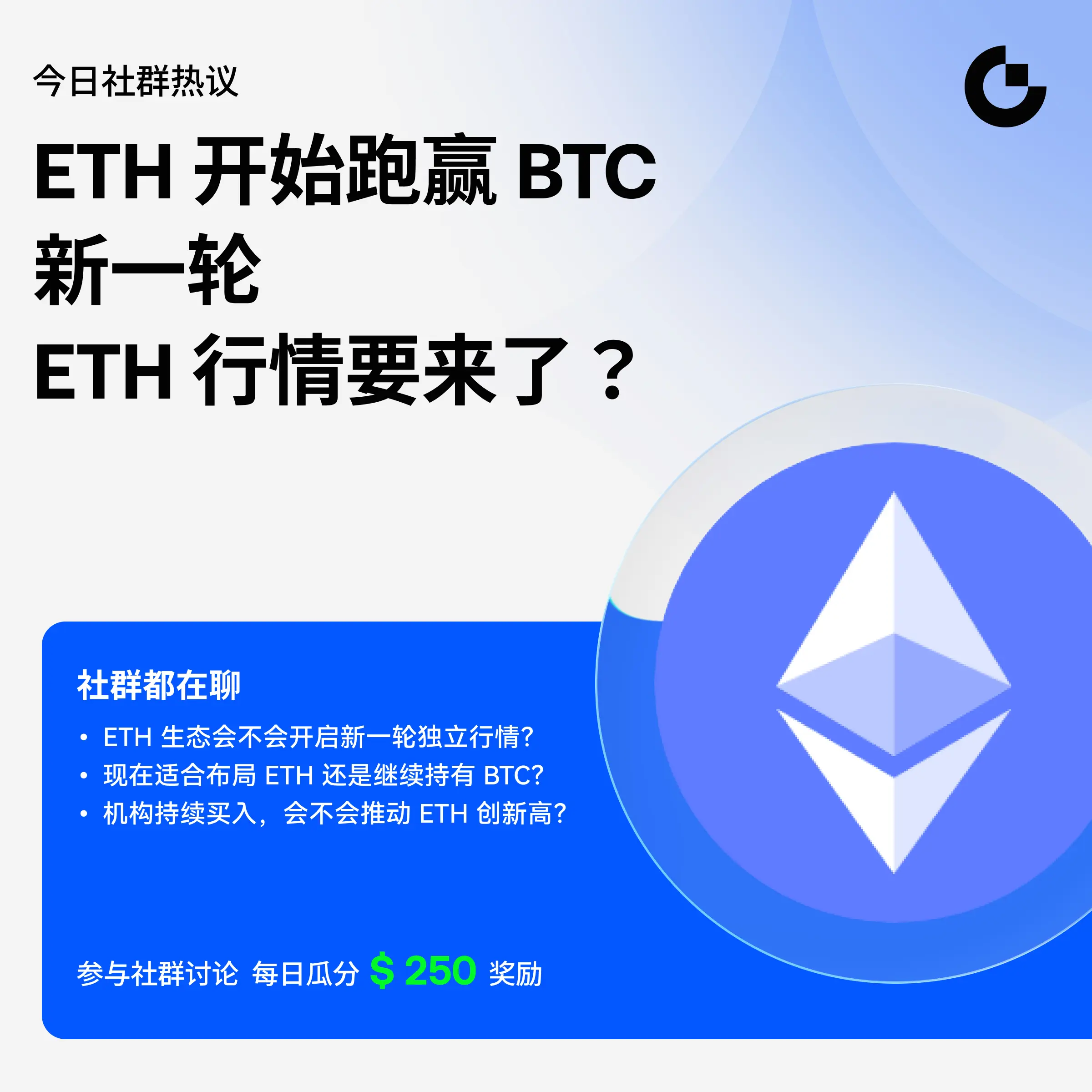
ETH Outperforms BTC — Is a New Independent Rally Coming?
Ethereum surged over 6 percent in 24 hours, currently trading near 1746, while Bitcoin only gained about 0.87 percent during the same period. This sudden outperformance has ignited intense community discussion about whether ETH is finally breaking free from BTC's shadow or if this is just another temporary bounce inside a broader bear market.
How Much Has ETH Increased?
From recent local lows near 1610, ETH has rallied roughly 80 to 130 dollars, approximately a 5 to 8 percent recovery. From the critical 1500 support zone, ETH has recovered nearly 16 percent. However, ETH remains approximately 64 percent below its August 2025 all-time high of 4953, and about 17 percent below the 2100 to 2250 range it held earlier in 2026. The bounce feels exciting, but ETH is still in recovery mode from a significant downtrend.
Institutional Holdings — The 880k ETH Story
Institutional investors now hold over 10 percent of Ethereum's circulating supply through treasuries and ETFs. Bitmine Immersion Technologies alone has accumulated 4.326 million ETH, representing 3.58 percent of total supply. BlackRock's ETHA and Fidelity's FETH continue leading ETF inflows. On July 1, ETH ETFs recorded 29 million dollars in net inflows, reversing the prior week's outflows. Cumulative ETH ETF inflows have surpassed 4 billion dollars.
What matters most is the rotation signal — on several recent days, ETH ETFs attracted inflows while BTC ETFs saw outflows, with one window showing 310 million dollars flowing into ETH products while BTC experienced corresponding outflows. Institutions are discriminating between assets, treating ETH as a separate allocation rather than just a Bitcoin proxy.
Technical Levels — Resistance and Support
Support levels:
1610 to 1660 — Recent local support. A daily close below 1610 signals weakness.
1500 — Major structural support. A break below confirms bearish acceleration toward 1200 to 1400.
Resistance levels:
1800 — First hurdle. ETH must clear and hold above this on a daily basis.
2000 — The critical level. Kitco's July 2 analysis identifies the weekly Fast line just above 2000 as the larger target. ETH has not sustainably held above 2000 since mid-May.
2350 to 2500 — Major resistance zone where selling pressure increases. ETH must reclaim 2000 first, then challenge this zone.
2600 to 2800 — Extended targets that would represent genuine trend reversal.
Is a New Independent Rally Coming?
Possibly, but not yet confirmed. Today's Kitco analysis reports ETH has printed a TBT Bullish Divergence and closed inside the daily TBO Cloud for the first time since May 15. OBV confirmed a bullish cross above its moving average line. These are genuine technical improvements.
However, this is a bounce setup, not a confirmed bottom. Only one Glassnode bottom signal has fired. Historical Bottom Year data shows July averaging 10 to 19 percent bounces, but August averages approximately negative 14 percent. The current rally window is real but potentially short-lived.
The ETH/BTC ratio sits near multi-year lows around 0.029, and analysts have identified cup-and-handle and bull flag patterns suggesting 30 to 55 percent upside potential on a breakout. Institutional rotation and ETF divergence provide structural support. But ETH must close above 2000, BTC dominance must drop below 58 percent, and ETF inflows must sustain consistency for a confirmed independent rally.
Trading Strategy
Conservative: Enter 1720 to 1760, stop below 1610 on daily close, target 2000 then 2350. Small position size — this is a bounce not a confirmed bottom.
Aggressive: Enter near 1746, stop below 1500, targets 2000 then 2350 to 2500. Moderate position with tolerance for deeper drawdowns.
Monitor ETH ETF daily inflows, BTC dominance, and the ETH/BTC ratio breakout above 0.032.
How High Can ETH Go?
Immediate bounce targets: 2000 first milestone, potential extension to 2350 to 2500 — approximately 15 to 43 percent upside from current levels. Prediction market traders price year-end ETH between 3000 and 3500 as most likely. Longer-term bullish scenarios cite 5000 if staked ETF approvals and corporate treasury adoption accelerate.
What Traders Are Thinking
Three camps dominate: Rotation believers accumulating ETH on institutional divergence signals. Skeptics viewing this as a trading opportunity with profits at 2000, awaiting confirmed bottom signals. Balanced traders maintaining core BTC while adding tactical ETH exposure, demanding confirmation before committing more capital.
My position aligns with the balanced approach — trade the bounce, monitor signals, adjust when confirmed bottom signals accumulate. Gate provides the reliable and secure platform to execute this strategy, with deep liquidity across ETH spot and perpetual markets, competitive fees, and institutional-grade security protecting your assets during volatile conditions like these.@Gate_Square
repost-content-media
  • Reward
  • Comment
  • Repost
  • Share
Come join the latest Gateio event right now—there are also many other attractive rewards. Come join right now!
View Original
  • Reward
  • Comment
  • Repost
  • Share
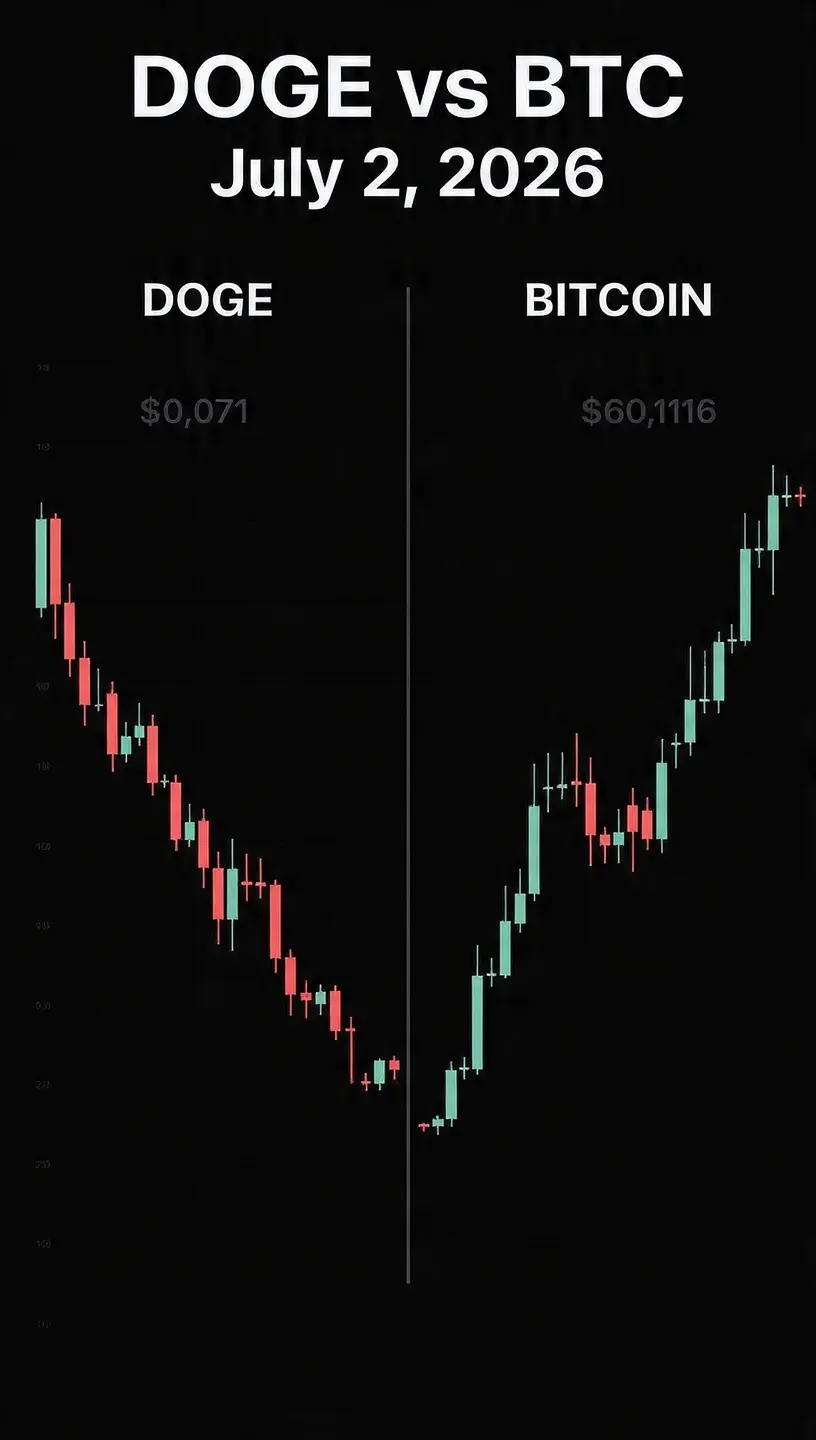
DOGE vs BTC Analysis as of July 2, 2026* + 2 images 👇
*Image 1: 24h Chart Comparison*
DOGE red -2.35% while BTC green +4.17%. Their directions are very different.
*Image 2: DOGE vs BTC Market Data*
Comparison of Market Cap, Volume, and Supply.
*1. Bitcoin (BTC) - Neutral to Slightly Bearish*
*Price:* $60,116 - $61,218 | *24h:* +4.17%
*Market Cap:* $1.20 Trillion
*Volume 24h:* $80.60M
*Analysis:*
- Just rebounded from support $58,326, but still below EMA 20/50/100 at $72K-$75K
- 1-month trend down -8.95%
- Negative ETF sentiment makes institutions cautious
- *Support:* $58,326 | *Resistance:*
DOGE2.04%
BTC3.76%
View Original
Getz28
Analysis of DOGE vs BTC as of July 2, 2026* + 2 images 👇
*Image 1: 24h Chart Comparison*
DOGE red -2.35% while BTC green +4.17%. Very different directions.
*Image 2: DOGE vs BTC Market Data*
Comparison of Market Cap, Volume, and Supply.
*1. Bitcoin (BTC) - Neutral to Slightly Bearish*
*Price:* $60,116 - $61,218 | *24h:* +4.17%
*Market Cap:* $1.20 Trillion
*Volume 24h:* $80.60M
*Analysis:*
- Just rebounded from support $58,326, but still below EMA 20/50/100 at $72K-$75K
- 1-month trend down -8.95%
- Negative ETF sentiment makes institutions cautious
- *Support:* $58,326 | *Resistance:* $61,437
*2. Dogecoin (DOGE) - Bearish*
*Price:* $0.071 - $0.072 | *24h:* -2.35% to -3.69%
*Market Cap:* ~$11 Billion | *Volume 24h:* $756 Million
*Supply:* 171 Billion DOGE, inflation 10,000 DOGE/minute
*Analysis:*
- Down -9.56% in 7 days, -28.15% in 1 month
- Still -55.84% from ATH $0.6468
- *Support:* $0.069 | *Resistance:* $0.074
- No strong catalyst yet, following altcoin market correction
*Direct Comparison*
**Aspect** **BTC** **DOGE**
**24h Trend** Up +4.17% Down -2.35%
**Size** $1.20T - Crypto King $11B - Meme Coin #11
**Volatility** More stable More wild
**Fundamentals** Store of value, ETF Meme, no max supply
**Sentiment** Neutral-Bearish Bearish
*Conclusion:* BTC is stronger than DOGE today. BTC is attempting a bounce, DOGE is still declining. If BTC breaks $58K, DOGE will likely plunge deeper due to its high beta.
$BTC $DOGE ‌ ‌
repost-content-media
  • Reward
  • Comment
  • Repost
  • Share
Fulan is very strong—the community gathers and discusses. .. Let’s go, Fulan, you become a hero/warrior. .. We’re behind you and firmly support you all the way to the top ..
#fulan #GateCompletesDividendDistribution #CirclePlunges17% #PredictWorldCupShare20000U #GateCardPointsSystemLaunched
View Original
HighAmbition
#CryptoSurvivalGuide
The cryptocurrency market represents one of the most dynamic and potentially rewarding financial landscapes in modern history. With Bitcoin currently trading at $60,150, the market continues to attract both seasoned investors and newcomers seeking financial growth. However, navigating this volatile terrain requires knowledge, discipline, and a comprehensive understanding of risk management principles.
Understanding the Crypto Market Landscape
The cryptocurrency market operates 24/7, unlike traditional financial markets, creating unique opportunities and challenges. Bitcoin, as the pioneer digital currency, often sets the tone for the entire market. When BTC moves, altcoins typically follow, making it essential to understand market correlations. The current price of $60,150 places Bitcoin in a critical zone where technical analysis becomes paramount for trading decisions.
Market cycles in cryptocurrency typically follow patterns of accumulation, markup, distribution, and markdown phases. Understanding where we are in these cycles helps inform better trading decisions. Currently, with Bitcoin testing key support levels, traders must exercise caution while remaining alert to potential opportunities.
Risk Management: The Foundation of Survival
Risk management stands as the most critical component of successful cryptocurrency trading. Without proper risk controls, even the most skilled traders can face catastrophic losses. The fundamental principle is simple: never risk more than you can afford to lose. Professional traders typically risk only 1-2% of their total portfolio on any single trade.
Position sizing represents a crucial aspect of risk management. Rather than investing your entire capital in one asset, diversify across multiple cryptocurrencies while maintaining appropriate position sizes. This approach ensures that a single adverse move doesn't devastate your portfolio. Calculate your position sizes based on your stop-loss distance and the percentage of capital you're willing to risk.
Stop-loss orders serve as your primary defense mechanism in crypto trading. These automated orders sell your position when prices reach predetermined levels, limiting potential losses. Set stop-losses based on technical support levels, percentage-based thresholds, or volatility metrics. Never move your stop-loss further away from your entry point once set, as this defeats the purpose of risk management.
Technical Analysis for Better Decision Making
Technical analysis provides traders with tools to identify potential entry and exit points. Key indicators include moving averages, which smooth price data to identify trends; the Relative Strength Index (RSI), which measures momentum and potential overbought or oversold conditions; and support and resistance levels, which represent price zones where buying or selling pressure has historically emerged.
For Bitcoin at $60,150, monitoring the 200-day moving average, key Fibonacci retracement levels, and volume profiles becomes essential. These technical tools help identify whether current price action represents a buying opportunity or a warning sign for further decline.
Chart patterns also provide valuable insights. Bullish patterns like ascending triangles, cup and handle formations, and double bottoms suggest potential upward moves. Conversely, bearish patterns including head and shoulders, descending triangles, and double tops warn of potential declines. Learning to recognize these patterns takes time but significantly improves trading outcomes.
Fundamental Analysis and Market Sentiment
Beyond technical indicators, understanding the fundamental factors driving cryptocurrency prices proves invaluable. Bitcoin's value proposition includes its limited supply of 21 million coins, institutional adoption trends, regulatory developments, and macroeconomic factors affecting global liquidity.
Market sentiment plays an outsized role in crypto price movements. Social media trends, news cycles, and fear and greed indices can drive prices far beyond what fundamentals might suggest. Monitoring sentiment indicators helps traders identify when markets become excessively bullish or bearish, often signaling potential reversals.
Keep track of major institutional announcements, regulatory changes, and technological developments. Events like ETF approvals, central bank policies, and network upgrades can significantly impact prices. Staying informed allows you to anticipate market moves rather than simply react to them.
Security Best Practices for Asset Protection
Protecting your cryptocurrency holdings requires implementing robust security measures. Exchange security begins with choosing reputable platforms with strong track records. Enable two-factor authentication on all accounts, use unique and complex passwords, and consider whitelisting withdrawal addresses for additional protection.
Wallet security represents another critical consideration. Hardware wallets provide the highest level of security for long-term holdings by keeping private keys offline. For active trading, use hot wallets only for funds needed immediately, keeping the majority of holdings in cold storage. Never share your private keys or seed phrases with anyone, and store backup phrases in secure, offline locations.
Beware of phishing attempts, fake websites, and social engineering attacks. Verify URLs carefully before entering credentials, and never click suspicious links in emails or messages. Scammers constantly evolve their tactics, making vigilance essential for asset protection.
Emotional Discipline and Trading Psychology
Successful trading requires mastering your emotions. Fear and greed drive most trading mistakes, causing traders to buy at tops and sell at bottoms. Develop a trading plan with clear rules for entries, exits, and position sizes, then follow it consistently regardless of emotional impulses.
Avoid revenge trading after losses, which often leads to further mistakes. Accept that losses are part of trading and focus on maintaining positive expectancy over time. Similarly, don't let winning trades inflate your confidence to dangerous levels. Stay humble, stick to your system, and remember that the market can humble even experienced traders.
Keeping a trading journal helps identify patterns in your decision-making. Record your reasons for entering trades, emotional states, and outcomes. Review this journal regularly to identify strengths and weaknesses in your approach.
Portfolio Diversification Strategies
While Bitcoin remains the cornerstone of most crypto portfolios, diversification across different asset classes can improve risk-adjusted returns. Consider allocating portions of your portfolio to large-cap cryptocurrencies like Ethereum, which offers smart contract functionality; mid-cap projects with strong fundamentals; and small allocations to emerging tokens with high potential but higher risk.
Stablecoins serve important roles in crypto portfolios, providing stability during volatile periods and enabling quick deployment of capital when opportunities arise. However, choose stablecoins backed by transparent reserves and avoid those with questionable backing.
Consider the correlation between different cryptocurrencies when diversifying. Many altcoins move in tandem with Bitcoin, so true diversification may require looking beyond crypto into traditional assets or different sectors within the crypto ecosystem like DeFi, NFTs, or layer-2 solutions.
Market Timing and Entry Strategies
Timing entries and exits significantly impacts trading profitability. Dollar-cost averaging represents an excellent strategy for beginners, involving regular purchases regardless of price. This approach removes the stress of timing the market and smooths out volatility over time.
For active traders, various entry strategies exist. Breakout trading involves entering when prices move above resistance levels with volume confirmation. Pullback trading waits for prices to retreat to support levels before entering in the direction of the trend. Range trading works in sideways markets, buying at support and selling at resistance.
Regardless of strategy, patience proves essential. Not every market condition presents good opportunities, and sometimes the best trade is no trade. Wait for setups that meet your criteria rather than forcing trades out of boredom or FOMO.
Understanding and Avoiding Scams
The crypto space unfortunately attracts numerous scams and fraudulent schemes. Ponzi schemes promising guaranteed returns, fake ICOs, phishing attacks, and pump-and-dump groups target unsuspecting investors. Remember that if something sounds too good to be true, it almost certainly is.
Conduct thorough research before investing in any project. Verify team credentials, examine the whitepaper for technical feasibility, check for code audits, and assess community engagement. Legitimate projects welcome scrutiny, while scams often rely on pressure tactics and vague promises.
Be particularly cautious of projects promising guaranteed returns, those lacking transparent team information, and those with anonymous developers unless they have established reputations. The crypto community generally polices itself, so searching for project names plus terms like "scam" or "review" often reveals red flags.
Regulatory Considerations and Compliance
Cryptocurrency regulations vary significantly across jurisdictions and continue evolving. Understanding the regulatory environment in your country helps ensure compliance and protects you from potential legal issues. Keep records of all transactions for tax purposes, as most jurisdictions require reporting of cryptocurrency gains.
Regulatory developments can significantly impact prices and market access. Stay informed about proposed legislation, exchange licensing requirements, and tax reporting obligations. While regulation may seem burdensome, increased clarity often brings institutional investment and market stability.
Long-Term vs. Short-Term Trading Approaches
Decide whether you're a trader or investor, as these require different mindsets and strategies. Investors focus on long-term fundamentals, holding through volatility with conviction in their thesis. Traders capitalize on shorter-term price movements, requiring more active management and technical skills.
Both approaches can succeed, but mixing them without clear distinctions often leads to poor results. If you're primarily an investor, resist the urge to panic sell during normal corrections. If you're a trader, don't hold losing positions hoping they'll recover, as this turns trades into unintended investments.
Building a Sustainable Trading Career
Sustainable success in crypto trading requires continuous learning and adaptation. Markets evolve, strategies that worked in the past may fail in new conditions, and technological developments constantly create new opportunities and risks. Commit to ongoing education through books, courses, and engagement with trading communities.
Start small and scale gradually as you gain experience and confidence. Many successful traders blew up multiple small accounts before finding consistency. Treat early losses as tuition in the expensive school of trading experience, but never risk amounts that would cause financial hardship.
Network with other traders to share insights and learn from their experiences. However, be selective about whose advice you follow, as many self-proclaimed experts lack real trading success. Focus on learning principles rather than following specific trade calls.@Gate_Square
repost-content-media
  • Reward
  • Comment
  • Repost
  • Share
Go join the latest Gate.io event now. Also join the event and items join the event. Come on, lots of rewards.
View Original
  • Reward
  • Comment
  • Repost
  • Share
Come join the latest Gate.io event now—there are many fantastic rewards and vouchers. For the biggest positions, come join from now.
View Original
JustinWuToken2049
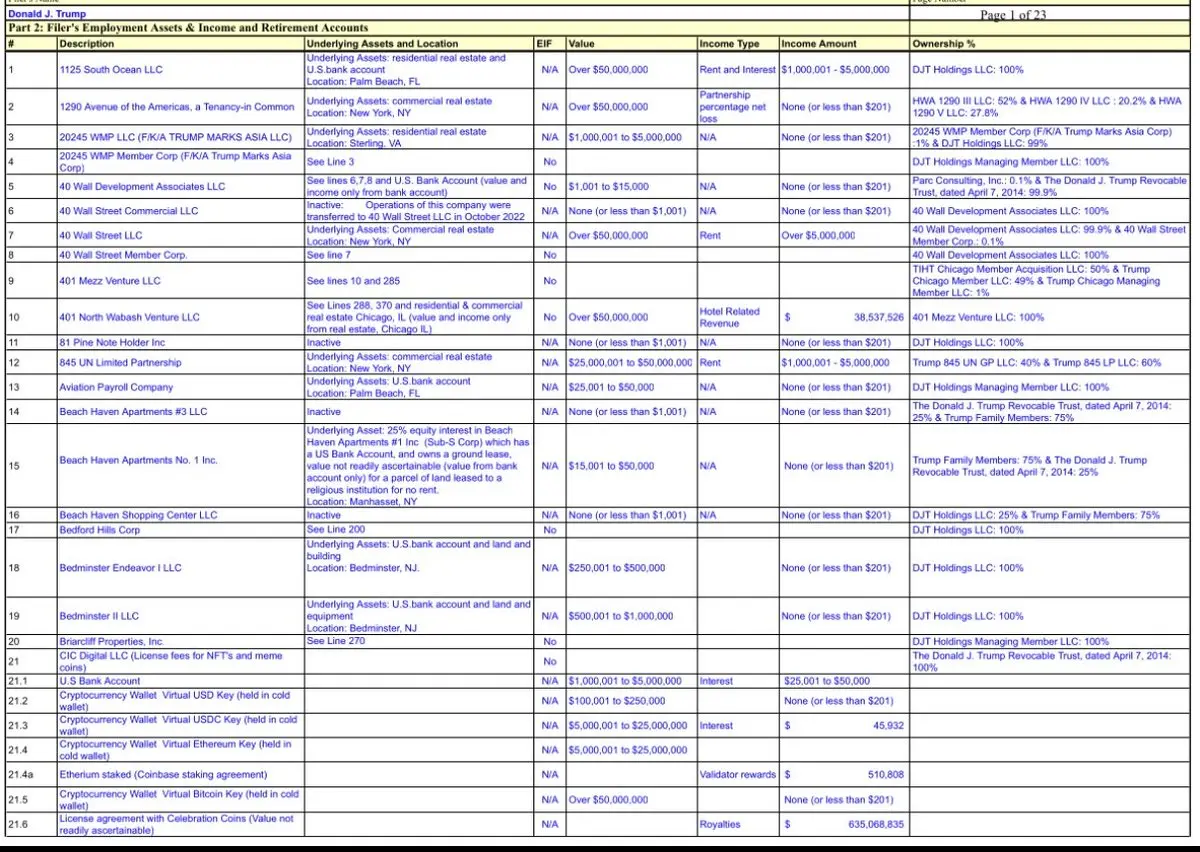
900+ pages
One conclusion
Over $1.1 BILLION reportedly extracted from crypto
$635.1M → TRUMP memecoin
$236.3M → WLFI token sales
$196.9M → USD1 venture
$65.6M → WLFI stake sale
$6.0M → Melania NFTs
$1.82M → ETH staking
This may go down as one of the most controversial wealth transfers in crypto history
That figure is larger than most crypto projects will ever generate
repost-content-media
  • Reward
  • Comment
  • Repost
  • Share
Hey, join Gate.io’s latest event right now! There are lots of fantastic rewards and vouchers—together with the biggest deals—so come join from now!
View Original
HighAmbition
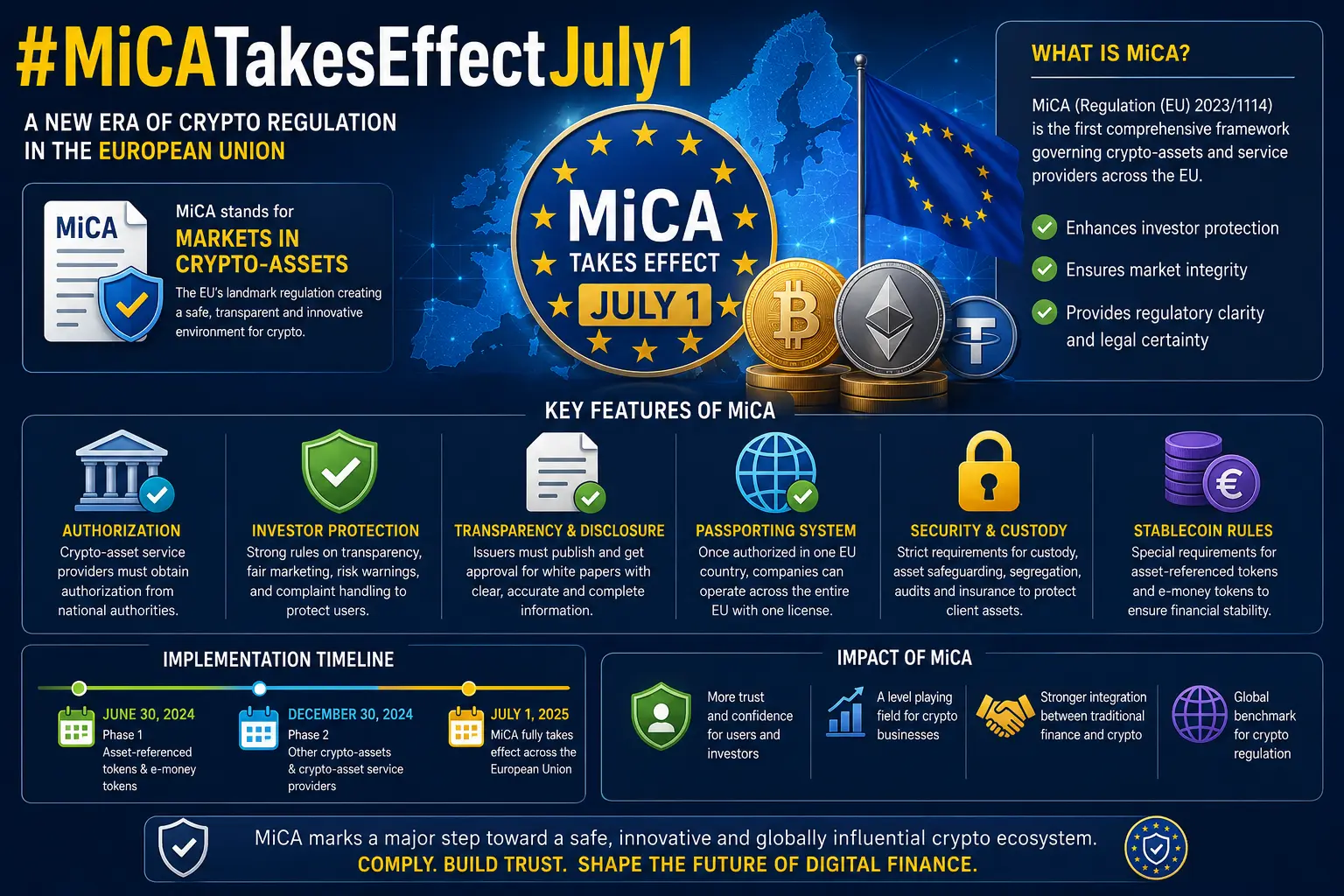
#MiCATakesEffectJuly1
The hashtag MiCATakesEffectJuly1 represents one of the most significant developments in cryptocurrency regulation history. MiCA, which stands for Markets in Crypto-Assets, is the European Union's comprehensive regulatory framework designed specifically for the crypto industry. The regulation officially became enforceable on July 1, marking a transformative moment that will reshape how digital assets are traded, managed, and protected across the European Economic Area.
Understanding MiCA requires examining its fundamental purpose and scope. The Markets in Crypto-Assets Regulation, officially known as Regulation (EU) 2023/1114, was passed by the European Parliament and Council on May 31, 2023. This landmark legislation represents the first comprehensive attempt by a major economic bloc to create a unified regulatory framework for crypto assets. The regulation aims to accomplish several critical objectives that address long-standing concerns in the digital asset space.
The primary goals of MiCA center on three pillars: investor protection, market integrity, and regulatory clarity. For years, the cryptocurrency industry operated in a regulatory gray zone, with different countries implementing disparate rules that created confusion for both businesses and consumers. MiCA eliminates this fragmentation by establishing a single set of rules that apply uniformly across all European Union member states. This harmonization brings much-needed legal certainty to an industry that has historically struggled with jurisdictional complexities.
The implementation of MiCA follows a phased approach designed to allow market participants adequate time to adapt. The first phase, which became effective on June 30, 2024, focused on regulating asset-referenced tokens and e-money tokens. These categories include stablecoins and other digital assets that reference traditional currencies or commodities. The second phase, taking effect on December 30, 2024, extended coverage to other crypto-assets and crypto-asset service providers. This staggered implementation demonstrates the EU's recognition that different types of crypto assets present varying levels of risk and complexity.
The regulatory framework established by MiCA introduces several groundbreaking requirements that fundamentally change how crypto businesses operate. Companies seeking to provide crypto-asset services must now obtain authorization from their national competent authority. This authorization process involves rigorous scrutiny of the company's governance structures, financial resources, operational capabilities, and compliance systems. The requirement for authorization ensures that only reputable and well-capitalized entities can offer services to European consumers.
MiCA mandates that crypto-asset service providers maintain robust internal controls and risk management frameworks. These requirements include implementing effective anti-money laundering measures, conducting thorough customer due diligence, and establishing clear procedures for handling complaints and disputes. The regulation also requires service providers to maintain adequate capital reserves and insurance coverage to protect against operational failures and financial losses.
One of MiCA's most innovative features is the passporting system, which allows authorized crypto-asset service providers to operate across all EU member states under a single license. This provision eliminates the need for companies to obtain separate authorizations in each jurisdiction, significantly reducing regulatory burdens and operational costs. The passporting mechanism promotes competition by enabling smaller firms to access the entire European market while maintaining consistent consumer protection standards.
The regulation places particular emphasis on transparency and disclosure requirements. Crypto-asset issuers must publish comprehensive white papers containing detailed information about their projects, including technical specifications, risk factors, and tokenomics. These white papers must be approved by national competent authorities before the tokens can be offered to the public. This requirement addresses the long-standing problem of inadequate disclosure in the crypto space, where investors often made decisions based on incomplete or misleading information.
MiCA also establishes strict rules for marketing communications and advertising of crypto-assets. Service providers must ensure that all promotional materials are fair, clear, and not misleading. The regulation prohibits aggressive marketing tactics and requires that risk warnings accompany all promotional content. These provisions aim to protect retail investors who may lack the technical expertise to fully understand the risks associated with crypto investments.
The impact of MiCA extends beyond the European Union's borders. As one of the world's largest economic blocs, the EU's regulatory approach often influences global standards. Many jurisdictions around the world are closely studying MiCA as they develop their own crypto regulations. The regulation's comprehensive nature and emphasis on consumer protection provide a template that other countries may adopt or adapt to their specific circumstances.
For crypto-asset service providers, MiCA compliance represents both a challenge and an opportunity. The authorization process requires significant investment in compliance infrastructure, legal expertise, and operational systems. However, companies that successfully obtain MiCA authorization gain a competitive advantage by demonstrating their commitment to regulatory standards and consumer protection. This compliance credential can enhance trust among institutional investors and mainstream users who have been hesitant to engage with unregulated platforms.
The enforcement provisions of MiCA are designed to ensure effective compliance. National competent authorities have broad powers to supervise crypto-asset service providers, conduct investigations, and impose sanctions for violations. The regulation establishes significant penalties for non-compliance, including fines and the suspension or withdrawal of authorizations. These enforcement mechanisms create strong incentives for companies to maintain high standards of conduct.
MiCA's implementation has already begun to reshape the European crypto landscape. Several major exchanges and service providers have obtained MiCA authorization, while others have exited the European market rather than invest in compliance. This consolidation trend is likely to continue as the regulatory framework matures and enforcement actions increase. The result will be a more professional and trustworthy crypto industry that can better serve mainstream users and institutional investors.
The regulation also addresses emerging technologies and business models in the crypto space. MiCA includes provisions for decentralized finance protocols, non-fungible tokens, and other innovative applications of blockchain technology. While the regulation does not cover all aspects of these emerging areas, it provides a foundation for future regulatory development as the technology evolves.
From a global perspective, MiCA represents a significant step toward the mainstream acceptance of cryptocurrency. By providing clear legal definitions and regulatory requirements, the EU has legitimized crypto assets as a recognized asset class subject to appropriate oversight. This recognition may encourage greater institutional participation in the crypto markets, potentially leading to increased liquidity and price stability.
The consumer protection aspects of MiCA deserve particular attention. The regulation establishes rights for crypto-asset holders, including the right to clear information about their investments, the right to complain about service providers, and the right to seek redress for losses caused by regulatory violations. These protections address historical concerns about the lack of recourse for crypto investors who suffered losses due to fraud, hacks, or operational failures.
MiCA also introduces requirements for custody arrangements that enhance the security of crypto assets held by service providers. Crypto-asset service providers must implement robust custody solutions that protect against theft, loss, and unauthorized access. These requirements include segregation of client assets, regular audits, and insurance coverage. The custody provisions significantly reduce the risk of catastrophic losses that have plagued the crypto industry in the past.
The regulation's approach to stablecoins reflects concerns about financial stability and monetary sovereignty. Asset-referenced tokens and e-money tokens must meet stringent requirements regarding their reserves, redemption mechanisms, and operational capabilities. Issuers of significant stablecoins face additional obligations, including maintaining adequate reserves, limiting their size, and cooperating with central banks. These provisions aim to prevent stablecoins from undermining monetary policy or creating systemic risks to the financial system.
MiCA's implementation has implications for the broader financial services industry. Traditional banks and financial institutions that wish to offer crypto-related services must comply with the same authorization and operational requirements as dedicated crypto companies. This leveling of the playing field may encourage greater integration between traditional finance and the crypto economy, potentially accelerating mainstream adoption.
The regulation also addresses environmental concerns associated with cryptocurrency. MiCA requires crypto-asset service providers to disclose information about the environmental impact of the consensus mechanisms used by the crypto assets they support. This disclosure requirement reflects growing awareness of the energy consumption associated with proof-of-work mining and may influence the development of more sustainable blockchain technologies.
Looking ahead, MiCA will likely undergo revisions and updates as regulators gain experience with its implementation and as the crypto industry continues to evolve. The European Securities and Markets Authority and the European Banking Authority will play key roles in developing technical standards and guidelines that flesh out the regulation's requirements. This ongoing regulatory development will ensure that MiCA remains relevant and effective in a rapidly changing technological landscape.
For investors and users of crypto services, MiCA provides important safeguards while preserving access to innovative financial products. The regulation does not ban any particular type of crypto asset or service, but rather ensures that these products meet appropriate standards of safety and transparency. This balanced approach allows the crypto industry to continue innovating while protecting consumers from the worst excesses of an unregulated market.
The global significance of MiCA cannot be overstated. As the first comprehensive crypto regulation from a major economic jurisdiction, it sets a precedent that other countries will likely follow. The regulation's emphasis on harmonization, consumer protection, and market integrity provides a model for international cooperation on crypto oversight. This leadership position enhances the EU's influence in shaping the future of digital finance.
@Gate_Square
repost-content-media
  • Reward
  • Comment
  • Repost
  • Share
Come join the latest Gate.io event now! There are also many fantastic rewards and vouchers, including vouchers with the biggest positions—come join now!
View Original
  • Reward
  • Comment
  • Repost
  • Share
$DOGE dropped 2.15 percent in the last day, trading between $0.06952 and $0.07414 and ending the session near the lower boundary. This is part of a heavier period recently, with the token falling sharply over the past week and month as the broader crypto market has gone through a series of risk-off days, including a major selloff that also hit Ether and XRP in the last session.
The daily chart shows some really extreme readings. The RSI dropped to 22.46, which is deep in oversold territory, and both the CCI and Williams Percent Range confirm the same picture. When the RSI is pushed this low,
DOGE2.04%
XRP4.60%
View Original
Falcon_Official
Daily Convert Check-In Challenge: Convert Daily and Get Up to 140 USDT per Day https://www.gate.com/campaigns/5303?ref=VLIWBLOKUW&ref_type=132
repost-content-media
  • Reward
  • Comment
  • Repost
  • Share
$DOGE fell 2.15 percent in the last day, trading between $0.06952 and $0.07414 and ending the session near the lower end of that range.
This is part of a heavier period recently, with the token falling sharply over the past week and month as the broader crypto market has gone through a series of risk-off days, including a massive sell-off that also hit Ether and XRP in the last session.
The daily chart shows some truly extreme readings. The RSI fell to 22.46, which is deep in oversold territory, and both the CCI and Williams Percent Range confirm the same picture.
When the RSI is pushed this
DOGE2.04%
XRP4.60%
View Original
Zafsan
$Velvet reminds me of $Rave, what is your view on $Velvet?
  • Reward
  • Comment
  • Repost
  • Share
$DOGE fell 2.15% in the last day, trading between $0.06952 and $0.07414 and ending the session near the lower boundary. This is part of a heavier period lately, with the token dropping sharply over the past week and month as the broader crypto market has gone through a series of risk-off days, including a massive sell-off that also hit Ether and XRP in the recent session.
The daily chart shows some truly extreme readings. RSI fell to 22.46, which is deep in oversold territory, and both CCI and Williams Percent Range confirm the same picture. When the RSI is pushed this low, it usually means s
DOGE2.04%
XRP4.60%
View Original
GateUser-99b4152d
#StrategyBuybackSurges12% 2 weeks ahead likely still sideways 56-60 range $BTC
  • Reward
  • Comment
  • Repost
  • Share
$DOGE fell 2.15% in the last day, trading between $0.06952 and $0.07414 and ending the session near the lower bound. This is part of a heavier period recently, with the token dropping sharply over the past week and month as the broader crypto market has gone through a series of risk-off days, including a major sell-off that also hit Ether and XRP in the last session.
The daily chart shows some truly extreme readings. The RSI dropped to 22.46, which is deep in oversold territory, and both the CCI and Williams Percent Range confirm the same picture. When the RSI is pushed this low, it usually m
DOGE2.04%
XRP4.60%
View Original
nancinancy
$SAGA Still drawing attention with SAGA, looking at whether its future prospects are good or not—hopefully by 2030 to the moon, high ATH.
  • Reward
  • Comment
  • Repost
  • Share
$DOGE fell 2.15% in the last day, trading between $0.06952 and $0.07414 and ending the session near the lower boundary. This is part of a heavier period recently, with the token dropping sharply over the past week and month as the broader crypto market has gone through a series of risk-off days, including a massive selloff that also hit Ether and XRP in the last session.
The daily chart shows some truly extreme readings. The RSI dropped to 22.46, which is deep in oversold territory, and both the CCI and Williams Percent Range confirm the same picture. When the RSI is pushed this low, it usual
DOGE2.04%
XRP4.60%
View Original
GateUser-448fbc09
$BTC
BTC will definitely rise to 610000 today ‌#StrategyBuybackSurges12%
  • Reward
  • Comment
  • Repost
  • Share
$DOGE fell 2.15% in the last day, trading between $0.06952 and $0.07414 and ending the session near that lower boundary. This is part of a heavier period lately, with the token dropping sharply over the past week and month as the broader crypto market has gone through a series of risk-off days, including a massive selloff that also hit Ether and XRP in the last session.
The daily chart shows some truly extreme readings. The RSI dropped to 22.46, which is deep in oversold territory, and both the CCI and Williams Percent Range confirm the same picture. When the RSI is pushed this low, it usuall
DOGE2.04%
XRP4.60%
View Original
GateUser-0834a1ba
📊 $DATA Technical Analysis | Testing Key Support After Sharp Drop
Data Network is trading around $0.29–$0.30 after a heavy correction.
Key Levels:
• Support: $0.25 – $0.27 (critical to hold)
• Stronger Support: $0.22 – $0.24
• Resistance: $0.35 – $0.38 | Next targets: $0.48 – $0.52
High-Risk Bullish Setup:
Entry: $0.26 – $0.29
SL: $0.24
TP1: $0.35+ | TP2: $0.48+
Major support test in progress. Only for aggressive traders with tight risk management.
What’s your view on $DATA? 👇
#DATA #Crypto #TechnicalAnalysis #GateSquare
  • Reward
  • Comment
  • Repost
  • Share
$DOGE fell 2.15 percent in the past day, trading between $0.06952 and $0.07414 and ending the session near the lower boundary. This is part of a heavier period recently, with the token dropping sharply over the past week and month as the broader crypto market has gone through a series of risk-off days, including a massive sell-off that also hit Ether and XRP in the last session.
The daily chart shows some truly extreme readings. The RSI dropped to 22.46, which is deep in oversold territory, and both the CCI and Williams Percent Range confirm the same picture. When the RSI is driven this low,
DOGE2.04%
XRP4.60%
View Original
CryptoRevolutionMaster
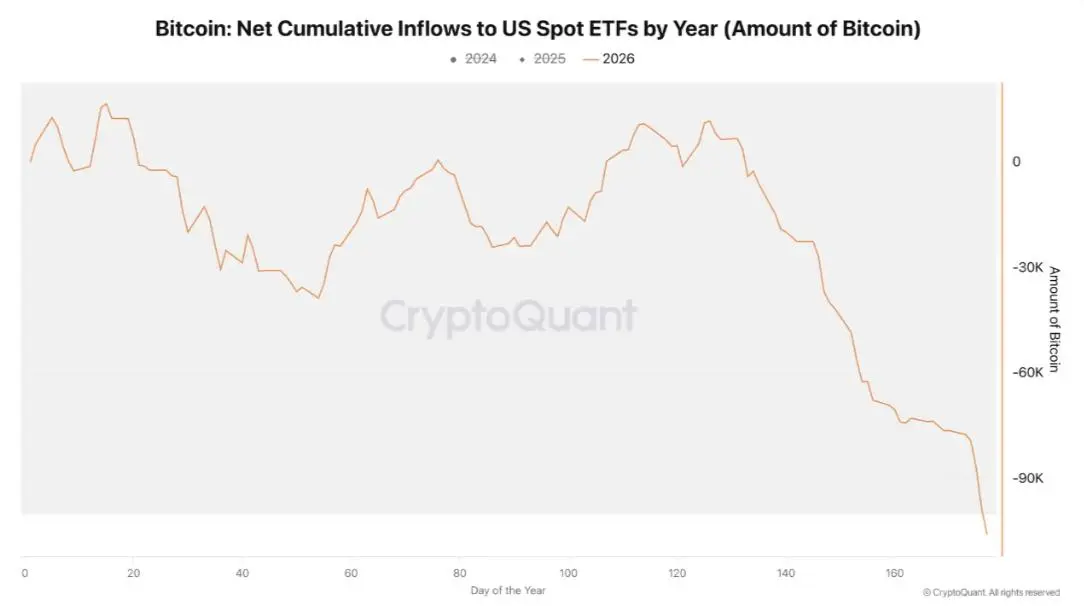
📊 #BTC 100,000 BTC Leave the ETFs
“In terms of drawdown, this is the largest ETFs have ever experienced. It’s estimated at over $11B in losses, a historic record.”. #etf
$BTC
repost-content-media
  • Reward
  • Comment
  • Repost
  • Share
  • Pinned